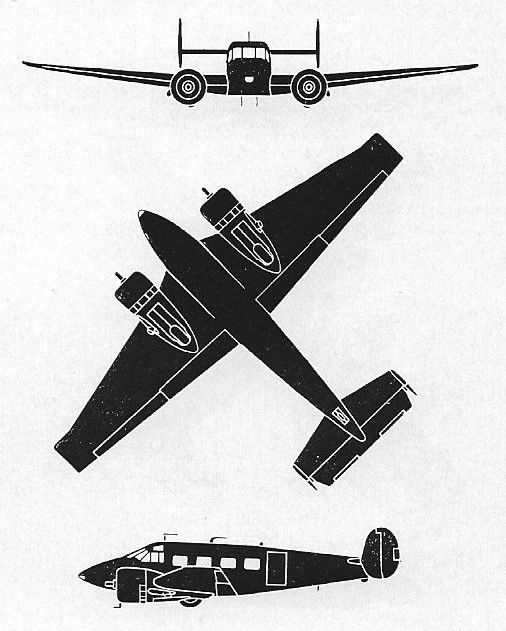
Beechcraft 18 / C-45 Expeditor / AT-11 Kansan

H18

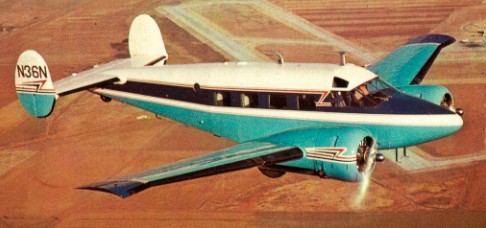
Beech began in 1935 the development of a six/eight-seat commercial transport identified as the Beech Model 18. Designed by Ted Wells, this was a a low-wing monoplane of all-metal construction, with a semi-monocoque fuselage of light alloy, a cantilever tail unit incorporating twin end-plate fins and rudders, and electrically retractable tailwheel landing gear. Float or ski landing gear later became optional. The initial engine installation was two 239kW Wright R-760-E2 radial engines mounted in wing leading-edge nacelles, and accommodation for two crew and six passengers.

Beechcraft 18 / C-45 Article

The initial 1937 Model 18A (ATC 630) was first flown on 15 January 1937 (certified on 4 March 1937) and the first one, NC15810, was delivered to the Ethyl Corporation in that year at an equipped price of $32,752. It was later converted to a model 18B. About five were built, the rest going to Canada.

An improved Model 18B (ATC 656) with lower-powered 285hp Jacobs engines also sold in small numbers in 1937 for $33,500. Four were built; NC15810, NC18567, NC18569, and NC18583.

By the time war had broken out in Europe, only 39 Model 18 had been sold, even with five versions powered by Wright, Pratt & Whitney and Jacobs engines had been manufactured.

The ability to operate on skis and floats was an advantage in Canada.
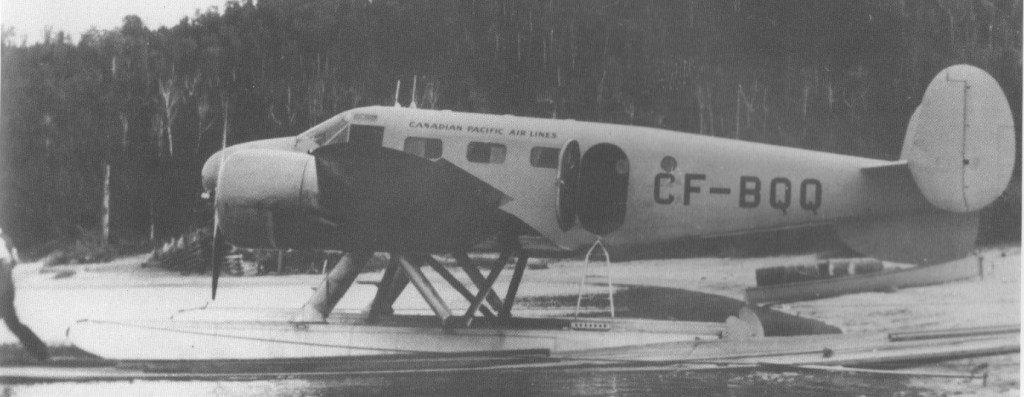
A-18A CF-BQQ

The Model D18-C Expeditor could be converted to a Model E18-S if Pratt & Whitney engines replaced the original Continentals.

The Model 18D (ATC 684) of 1939 had 200hp / 246kW Jacobs L-6 engines, giving improved performance. Only 34 of these were sold in 1940, for $37,000 but the wartime demand for these aircraft was to total more than 4,000. A18D also amended under this ATC issued in 1940.

Beech 18G N6B

The first military version was supplied to the Philippine Army Air Corps. Dwight D. Eisenhower, as Chief of Staff of the American mission to the Philipines, selected the Beech 18 for service with the Army Air Corps.

In total the US forces used purchase-built and impressed Model 18s as light transports under the overall designations C-45 (1,401 USAAF aircraft) and JRB (377 US Navy aircraft), the same basic airframe was used in larger numbers as a trainer.
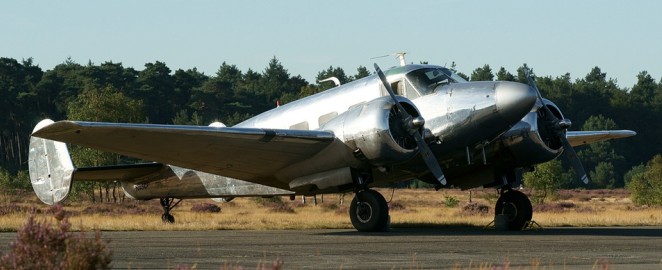
A total of 5,200 1939 18S model (ATC 710) were built going to the Army Air Corp as AT-7, AT-11, C-45, and F-2; and to USN as JRB-1 and SNB-1.
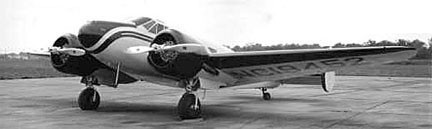
Beech 18-S NC19452

The 1938 A18D (ATC 684) was powered by 330hp Jacobs and sold for $37,000. Sixty-six were built, including SA18D float version under an ATC amendment in 1940.

The first US Army Air Corps order, placed during 1940, was for 11 aircraft under the designation C-45, for use as staff transports. These were similar to the civil Model B18S. Subsequent procurement covered 20 C-45As for use in a utility transport role, with interior and equipment changes being made in the 223 C-45Bs that followed. Some of these aircraft were supplied to the UK under Lend-Lease, being designated Expediter I in RAF service. The USAAF designations C-45C, C-45D and C-45E were applied respectively to two impressed B18S civil aircraft, two AT-7s completed for transport duties, and six AT-7Bs similarly modified. Major and final production version for the USAAF was the seven-seat C-45F, with a slightly longer nose and of which at least 1,137 were built. Lend-Lease deliveries served with the Royal Navy and RAF as Expediter Iis, and with the Royal Canadian Air Force as Expediter IIIs. All of the C-45 designations were changed to a new UC-45 category in January 1943.

The RCAF received its first Expeditors in 1939 and flew them until the Services were unified in 1968. Retirement from the Canadian Forces came in 1970.

In 1940 six were delivered to the Nationalist Chinese government as M18R (or AT18R) with bomb racks, machineguns and a bombardier position in the nose, and one delivered to Sweden equipped as a flying hospital. Sixty-one were built with six M-18R appearing on the US civil register (NX25474 to 25479), possibly the Chinese airplanes.

In 1941, the Beech AT-7 Navigator was introduced to provide navigation training, equipped with three positions for trainee navigators, plus a dorsal astrodome and 336-kW (450-hp) R-985-25 radials. A total of 577 were built, being followed by six AT-7As with float landing gear and a large ventral fin. Nine AT-7Bs, basically winterized AT-7s were built to USAAF order: five were supplied to the UK, one being used by Prince Bernard of the Netherlands during his wartime exile. The AT-7C final version of the Navigator had R-985-AN-3 engines, production totalling 549.

The AT (advanced trainer) version of the Model 18 appeared during 1941. The AT-11 Kansan (originally named Kansas) with R-985-AN-1 engines, for the USAAF was a bombing and gunnery trainer. It incorporated a small bomb bay capable of holding up to 1000 lb of light bombs, had small circular portholes in place of the standard rectangular cabin windows, a redesigned nose to provide a bomb aiming position, and two 7.62mm machine-guns, one in the nose, the other in a dorsal turret.
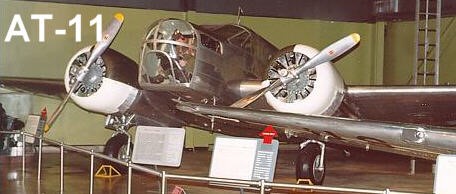
AT-11 Kansan

The AT-11 was the standard WW II bombing trainer; about 90 percent of the more than 45,000 AAF bombardiers trained in AT-11s. Student bombardiers normally dropped 100-lb. sand-filled practice bombs. In 1943, the AAF established a minimum proficiency standard of 22 percent hits on target for trainees. Combat training missions were flown taking continuous evasive action within a ten-mile radius of the target and final target approaches had to be straight and level and no longer than 60 seconds. After September 30, 1943, these missions were generally flown using the Norden Bombsight and the C-1 automatic pilot, the aircraft being guided by the bombardier student during the bombing run.

Production from 1941 to USAAF orders totalled 1,582 and of them, 36 were converted for navigation training as AT-11As. Twenty-four AT-11s ordered by the Netherlands for service in the Netherlands East Indies were, instead, taken on charge by the USAAF. They were delivered to the Royal Netherlands Military Flying School at Jackson, Mississippi, in early 1942.

The 1942 B18S featured an upgrade interior and electric system. Fourteen went to USAAF as C-45.

The last of the US Army Air Force’s wartime versions of the Beech Model 18 were photographic reconnaissance F-2s. 14 civil Model B18S were purchased and converted with cabin-mounted mapping cameras and oxygen equipment. They were supplemented later by 13 F-2As with four cameras, converted from C-45As, and by 42 F-2Bs, which were conversions from UC-45Fs: these had additional camera ports in both sides of the fuselage.

The 1944 C18S Expediter (ATC 757) sold from $63,000, going to USAAF as C-45/AT-7 and to USN as JRB/SNB.

Beech built a total of 4,526 C-45 military version for the Army Air Forces between 1939 and 1945 in four versions, the AT-7 “Navigator” navigation trainer, the AT-11 “Kansan” bombing-gunnery trainer, the C-45 “Expeditor” utility transport anf the F-2 for aerial photography and mapping. The AT-7 and AT-11 versions were well-known to WW II navigators and bombardiers, for most of these men received their training in these aircraft. Thousands of AAF pilot cadets also were given advanced training in twin-engine Beech airplanes.

The 1947 D18C Feeder Twin (ATC 770) was designed as a short-route air carrier. Powered by 525hp Continental engines, four were built, priced at $64,250. The D18CT Feeder Twin had added equipment, and increased baggage area. Sixteen sold at $64,890.

In June 1948, under a general revision of the USAF designation system, all of the surviving F-2 photo/reconnaissance aircraft were redesignated RC-45A. Similarly, AT-7, AT-7C and AT-11 s dropped their A prefix: at the same time a small number of drone-directors converted from UC-45Fs and given the designation CQ-3 became instead, DC-45Fs.

The US Navy and US Marine Corps used more than 1,500 Model 18s. Initial versions were similar to the US Army’s F-2, this being designated JRB-1, and followed by a JRB-2 transport, and JRB-3s and JRB-4s equivalent to the C-45B and UC-45F respectively. The designations SNB-1 (320 aircraft), SNB-2 (509 aircraft and 376 SNB-2C) and SNB-3 were applied respectively to aircraft that were equivalent to the USAAF’s AT-11, AT-7, and AT-7C. US Navy ambulance and photographic versions were the SNB-2H and SNB-2P respectively; the SNB-3Q was an electronic counter-measures trainer.

During 1951-2, about 900 in-service USAF UC-45E, T-7 and T-11 aircraft were re-manufactured to zero-time condition and modernised, and given the new designations C-45G and C-45H. The C-45G had an autopilot and R-985-AN-3 engines, the C-45H no autopilot and R-985-AN-14B engines. At the same time, US Navy SNB-2s, SNB-2Cs, and SNB-2Ps were remanufactured under the designations SNB-5 and SNB-5P. Later, with introduction of the tri-service unified designation scheme in 1962, in-service SNB aircraft were redesignated TC-45J and RC-45J respectively in the training and photographic roles.
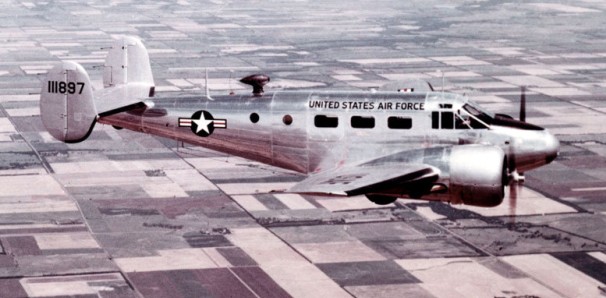
Post war Beech resumed manufacture of the civil Model 18, and in 1953 introduced a larger and improved version of the D18S.
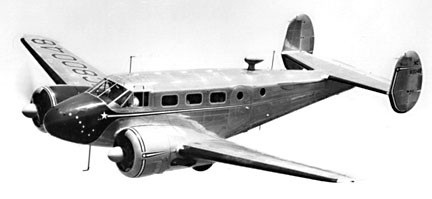
Beech D18S NC80048

Known as the Super 18 (E18S), the prototype was flown for the first time on 10 December 1953. Structural improvements included external refinements to reduce drag, Geisse safety landing gear for cross-wind operations, a separate flight deck, and improved soundproofing. Wingspan was increased and integral steps fitted. All-up weight was increased with the cabin accommodating five to seven passengers. Some were supplied to the French Armee de l’Air.

The 1946 D18S Executive (ATC 765) sold from $63,550 with around 1,000 by 1953. USAF version was the C-45G.
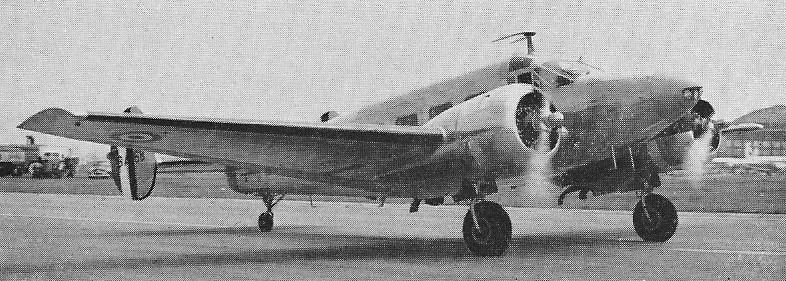
E18S Super 18

The 1953 E18S Executive Super Twin, or Super 18 (ATC 765) first flew on 10 December 1953. Selling for $61,500, 464 were built before replaced in 1962 by the H18. Powered by 450hp P&W R-985 Wasp Jr engines they were nine-place.

The 1959 G18S were an improved E18S with two-piece windshield and a large center cabin window. One hundred and fifty-six were built.

The last of the model 18 were the 1962 H18 ten-place. One hundred and forty-nine were built, priced at $179.500.
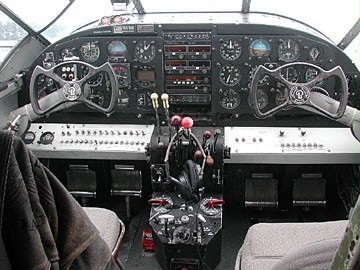
Beech H18 Panel

Progressive improvements continued throughout the production of 754 Super 18s, the last examples of the final Model H18 version being built during 1969. The H18 Super-Liner is an advanced version with more engineering improvements than any previous model, including electric cowl flaps, a redesigned exhaust system, lightweight props, and automatic oil coolers.

In September 1963 Beech introduced optional factory-installed retractable tricycle landing gear which had been developed by Volpar Inc. of Los Angeles, California. Some other options include fuel injection, air conditioning, an autopilot and weather radar.
Post-war production of the Model 18 finally come to an end in with the tri-gear H18S Super 18 leaving the factory in 1969. In 1969, the last 10 planes were sold to Japan, ending a 32-year production cycle.

In total, the Beech 18 line had 32 variants, and more than 9,000 civil and military planes had been built when the last one (a Super 18H) rolled off the assembly line on 26 November 1969, accounting for the longest production run in aviation history.
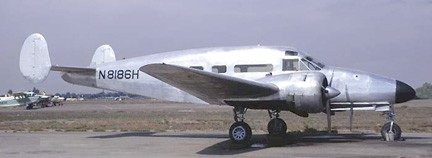
Beech D18S Rausch “headroom” conversion N8186H
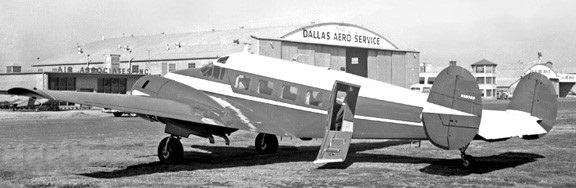
Pacific Airmotive Super 18S N36068

In 1940 Volpar offered conversion of Beechcraft 18 to executive light transport with tricycle or conventional gear, redesigned nose, custom interior etc.
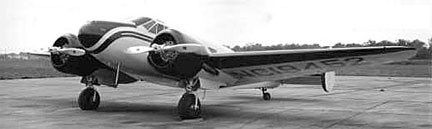
Volpar 18 NC19452
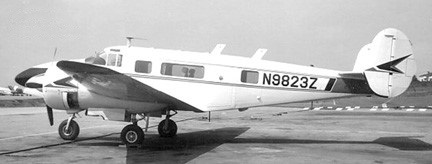
C-45G N8823Z

Volpar also offered conversions of standard Beech 18s to Volpar Turbo 18 standard, with tricycle landing gear and TPE331 turboprop engines kits, and also the lengthened turboprop-powered 15-passenger Volpar Turboliner, first flying in December 1964. Conversions offered by other manufacturers have included the nine-passenger Dumod I and 15-passenger Dumod Liner retaining the original Pratt & Whitney R 985 radial piston engines, offered by Dumod Corporation with larger windows and glass-fiber control surfaces; and Pacific Airmotive Corporation’’ 10-passenger PAC Tradewind and turboprop-powered PAC Turbo Tradewind. The Tradewind, a re-manufactured D-18, offering tricycle gear, new windscreen, increased fuel capacity and other updated equipment.
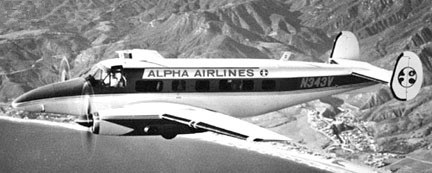
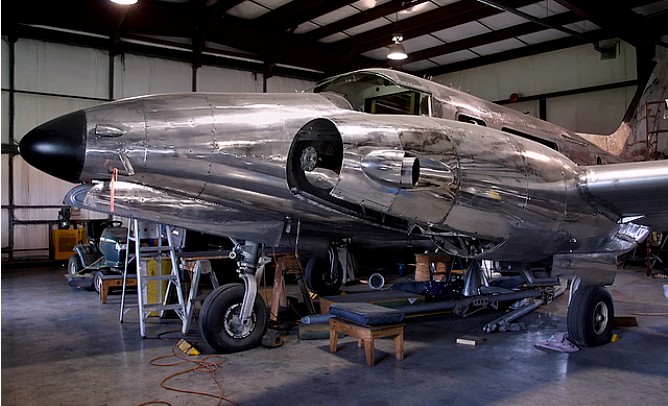
Volpar Super 18 NC343V
Pacific Airmotive Tradewind

Available from Hamilton Aviation in late 1981 were the Hamilton Westwind II STD and Westwind III turboprop-powered conversion of 17-and eight-passenger capacity respectively. The Westwind III was powered by 579 ehp United Aircraft of Canada turboprops.
In production for over 32 years, more than 9100 airplanes in 32 variants were built.
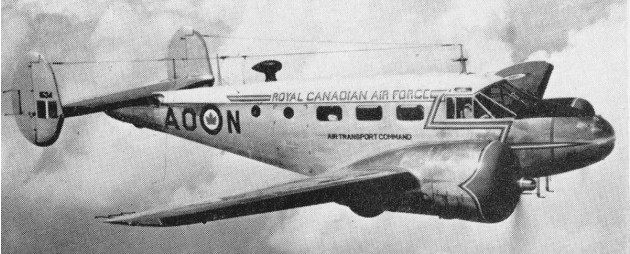
Around 1960 Rausch Engineering modified Beech 18 with a tricycle undercarriage and extended nose. The cabin windows were altered in shape and the fuselage deepened.
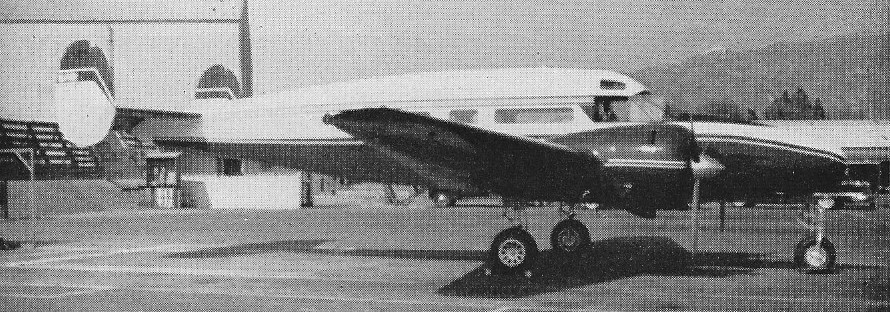
Rausch Engineering modified Beech 18

In 1964 Conrad International Corp offer an FAA certified re-worked C-18S, Certified at 10,200 MTOW, modifications at Ft. Lauderdale included tricycle gear, oval passenger windows, airstair door, cargo door and executive interior for nine passengers.

Gallery

18
Engines: two 320hp Wright
Wingspan: 47’8″
Length: 31’11”
Seats: 4-11

18A
Engines: 2 x Wright R-760-E2, 320 hp / 239kW
Useful load: 2400 lb
Max speed: 202 mph
Cruise: 167 mph
Cruise: 55 mph
Range: 800 mi
Crew: 2
Passengers: 6

Beechcraft A-18A
1940
Engines: 2 x Wright Whirlwind, 350 hp
Wingspan: 47 ft 8 in
Length: 34 ft 3 in
Height: 9 ft 5 in
Empty weight: 4600 lb
MAUW: 7500 lb
Cruise: 205 mph
Range: 1200 mi
Crew: 1-2
Max passengers: 9

18B
Engines: 285hp Jacobs
Useful load: 2580 lb
Max speed: 190 mph
Cruise: 180 mph
Stall: 56 mph
Range: 900 mi
Seats: 8

B18S / C-45C / F-2 / RC-45A / UC-45 / JRB-1

JRB-2

D18C Expeditor
Engines: 2 x Continental

A18D / SA18D
Engines: 330hp Jacobs
Length: 31’11”
Useful load: 2864 lb
Max speed: 205 mph
Cruise: 195 mph
Stall: 59 mph
Range: 800 mi
Seats: 8-10

C18S Expediter
1944 (ATC 757)
Engines: 450hp P&W Wasp
Wing span: 47’8″
Length: 34’6″
Useful load: 2900 lb
Max speed: 230 mph
Cruise: 210 mph
Stall: 65 mph
Range: 1000 mi
Seats: 7-10

18R
Engines: 2 x 420hp Wright R-975

18S
Engines: 450hp P&W Wasp
Length: 34’3″
Useful load: 2450 lb
Max speed: 240 mph
Cruise: 220 mph
Stall: 60 mph
Range: 1000 mi
Seats: 8

D18C Feeder Twin
Engines: 525hp Continental
Length: 34’2″
Useful load: 3450 lb
Max speed: 240 mph
Cruise: 224 mph
Stall: 68 mph
Range: 900 mi
Seats: 9

18D
1938
Engines: 2 x Jacobs L-6, 300 hp / 246kW
Wingspan: 47 ft 8 in
Length: 31 ft 11 in
Height: 9 ft 5 in
Empty weight: 4336 lb
MAUW: 7200 lb
Cruise: 195 mph
Range: 800 mi
Crew: 1-2
Max passengers: 9

D18S
Engines two 450-hp Pratt & Whitney R-985-AN-14B Wasp Junior.
Gross Wt. 8750 lbs.
Empty Wt. 5770 lbs.
Fuel capacity 206-286 USG.
Wing Span: 47ft 7in (14.5m)
Length: 32ft (9.74m)
Height: 9ft 8in (2.95m)
Top speed: 230 mph.
Cruise: 211 mph.
Stall: 77 mph.
Initial climb rate 1190 fpm.
Range 985 sm.
Ceiling 20,500 ft.
Takeoff distance (50’) 1760 ft.
Landing distance (50’) 1460 ft.
Seats 5-7.

E18S
Engines: 2 x Pratt & Whitney R-985, 450 hp.
Prop: Hamilton Standard Constant speed 95 in.
Pwr loading: 17.7 lbs/hp.
Wing span: 49 ft 8 in.
Wing area: 310 sq.ft.
Wing loading: 31.2 lbs/sq.ft.
Length: 35 ft 2.5 in.
Height: 10 ft 5 in.
Seats: 5 pax.
Crew: 2.
MTOW: 9700 lbs.
Max ldg wt: 9400 lbs.
Empty wt: 5910 lbs.
Fuel cap: (Std) 198 USG, (with aux.) 318 USG.
Max cruise: 214 mph.
Maneuvering speed: 153 mph.
Stall, clean: 93 mph, Flap & U/c: 84 mph.
Vmc: 94 mph.
T/o dist: 1455 ft, (50 ft) 1980 ft.
Ldg dist: 1036 ft, (50 ft) 1850 ft.
ROC S/L: 1410 fpm.
SE ROC: 255 fpm.
Service ceiling: 21,000 ft.
SE Service ceiling: 7750 ft.
Max endurance @ 155 mph, std fuel, no res: 4.2 hr, 651 sm.
Max range with aux fuel, no res: 6.7 hr, 1038 sm.

C-45 Expeditor / 18S
Engines: 2 x 450 h.p. Pratt & Whitney R985-AN-1
Wingspan: 47 ft. 8 in.
Length: 33 ft. 11.5 in.
Loaded weight: 8,727 lb.
Max. Speed: 218 m.p.h.
Ceiling: 26,000 ft.
Typical range: 1,200 miles at 160 m.p.h. at 5,000 ft. with normal load.
Seats: 2 plus 6 passengers.

E18S Super 18
Engines: 2 x Pratt & Whitney R-985-14-ANB
Empty weight: 6150 lb
Loaded weight: 9300 lb
Max speed: 234 mph at 5000 ft
Cruise: 207 mph at 5000 ft
ROC: 1250 fpm
Wingspan: 49 ft 8 in
Length: 35 ft 2.5 in
Height: 9 ft 6 in
Wing area: 361 sq.ft

H18S Super 18
Engines: 2 x Pratt & Whitney R-985-AN-14B, 336kW
Take-off weight: 4491 kg / 9901 lb
Empty weight: 2651 kg / 5844 lb
Fuel capacity: 198-318 USG
Wingspan: 15.15 m / 49 ft 8 in
Length: 10.73 m / 35 ft 2 in
Height: 2.84 m / 9 ft 4 in
Wing area: 33.51 sq.m / 360.70 sq ft
Max. speed: 354 km/h / 220 mph
Cruise speed: 298 km/h / 185 mph
Stall: 87 mph
Initial climb rate: 1400 fpm
Ceiling: 6525 m / 21400 ft
Range: 3060 km / 1901 miles
Takeoff distance (50’) 2072 ft.
Landing distance (50’) 1850 ft.
Seats 9-10
Undercarriage: tri-gear

Beechcraft UC-45 Expeditor
Engines: 2 x Pratt & Whitney R-985-AN-1 Wasp Junior radial, 450hp each.
Length: 34.15ft (10.41m)
Width: 47.67ft (14.53m)
Height: 9.68ft (2.95m)
Maximum Speed: 224mph (360kmh; 194kts)
Maximum Range: 1,181miles (1,900km)
Rate-of-Climb: 1,850ft/min (564m/min)
Service Ceiling: 26,017ft (7,930m)
Accommodation: 2 + 8
Empty Weight: 6,173lbs (2,800kg)
Maximum Take-Off Weight: 7,496lbs (3,400kg)

C-45A / F-2A / RC-45A / UC-45A
Range: 850 mile (with 2,500 pounds of cargo or six pax).

C-45B Expediter I / UC-45B / JRB-3

C-45F Expediter II / Expediter III / F-2B / RC-45A / UC-45F / JRB-4
Seats: 7

AT-7 Navigator / T-7 / C-45D / SNB-2
Navigation trainer.
Engines: 2 x 336-kW (450-hp) R-985-25
Seats: 3.

AT-7A / T-7A
Engines: 2 x 336-kW (450-hp) R-985-25
Undercarriage: floats

AT-7B / T-7B / C-45E
Number built: 9

AT-7C Navigator / T-7C / SNB-3
Engines: 2 x R-985-AN-3

AT-11
Engine: 2 x Pratt & Whitney R-985-14B

AT-11 Kansan / Kansas / T-11 / SNB-1
six/seven-seat bombing and gunnery trainer
Engines: 2 x Pratt & Whitney R-985-AN-1, 336kW (450 hp)
Span: 14.50m (47ft 8in).
Length: 10.41 m (34ft 2in).
Height: 9 ft. 7 3/4 in
Max T/O weight: 3959 kg (8,727 lb).
Max speed: 215 mph at sea level.
Cruising speed: 150 mph
Operational range: 850 miles
Service Ceiling: 20,000 ft
Bomb load: 1000 lb
Armament: 2 x 7.62mm (0.3-in) machine-guns
Original Cost: $67,000

AT-11A / T-11A
Navigation training conversion of AT-11.
Engines: 2 x R-985-AN-1

C-45G
Engines: 2 x R-985-AN-3, 450 hp
Empty weight: 5,785 lb (2624 kg)
Loaded weight: 9,000 lb (4082 kg)
Span: 47 ft 7 in (14.5 m)
Length: 33 ft 11 in (10.3 m)
Height: 9 ft 3 in (2.8 m)
Wing Area: 349 sq ft (32.4 sq m)
Undercarriage: tailwheel.

C-45H Expeditor
Engines: Two Pratt & Whitney R-985, 450 hp
Span: 47 ft 8 in
Length: 34 ft 2 in
Height: 9 ft 2 in
Max weight: 9,300 lb
Maximum speed: 219 mph
Cruising speed: 150 mph
Range: 1,140 miles
Service Ceiling: 18,200 ft
Original Cost: $57,838

UC 45J
Undercarriage: tricycle

CQ-3 / DC-45F
Drone-directors converted from UC-45Fs

SNB-2

SNB-2C

SNB-2H

SNB-2P

SNB-3Q

SNB-5

SNB-5P

TC-45J
Trainer

RC-45J Expediter
Photographic role

Volpar Turboliner II / Beechcraft 18
Engines: 2 x Garrett TPE 331-1-101B, 705 shp.
Seats: 17
Wing loading: 30.75 lb/sq.ft.
Pwr loading: 8.15 lb/hp.
Max TO wt: 11,500 lb.
Empty wt: 6820 lb.
Equipped useful load: 4442 lb.
Payload max fuel: 206 lb.
Range max fuel/cruise: 2041 nm/7.7 hr.
Service ceiling: 24,000 ft.
Max cruise: 243 kt.
Vmc: 84 kt.
Stall: 80-84 kt.
1.3 Vso: 104 kt.
ROC: 1500 fpm.
SE ROC: 225 fpm @ 111 kt.
SE ceiling: 13,000 ft.
Min field length: 3245 ft.
Fuel cap: 2025/3654 lb.

Volpar Turbo 18 / Beechcraft 18
Engines: 2 x Garrett TPE 331-1-101B, 705 shp.
Seats: 9.
Wing loading: 27.51 lb/sq.ft.
Power loading: 7.3 lb/hp.
Max TO wt: 10,286 lb.
Empty wt: 6200 lb.
Equipped useful load: 3844 lb.
Payload max fuel: 190 lb.
Range max fuel/cruise: 1822 nm/6.5 hr.
Service ceiling: 26,000 ft.
Max cruise: 253 kt.
Vmc: 85 kt.
Stall: 77-80 kt.
1.3 Vso: 100 kt.
ROC: 1700 fpm.
SE ROC: 560 fpm @ 109 kt.
SE ceiling: 14,000 ft.
Min field length: 2380 ft.
Fuel cap: 2025/3654 lb.
Undercarriage: tricycle

Dumod I
Engines: Pratt & Whitney R 985 radial
Passenger capacity: 15

Dumod Liner
Engines: Pratt & Whitney R 985 radial
Passenger capacity: 15

Hamilton Westwind II STD
Engines: 2 x 579 ehp United Aircraft of Canada turboprops
Passenger capacity: 17

Hamilton Westwind III
Engines: 2 x 579 ehp United Aircraft of Canada turboprops
Passenger capacity: 8

Pacific Airmotive Corp Tradewind
Engines Two 450hp P&W R-985-AN-4
Wingspan: 47’3″
Length: 37’9″
Useful load: 2200 lb
Max speed: 240 mph
Cruise speed: 219 mph
Stall sped: 78
Range: 1110-2000 mi
Ceiling: 17,000′
Passenger capacity: 10
Undercarriage: tricycle

Pacific Airmotive Corp Turbo Tradewind
Engine: 2 x turboprop
Undercarriage: tricycle
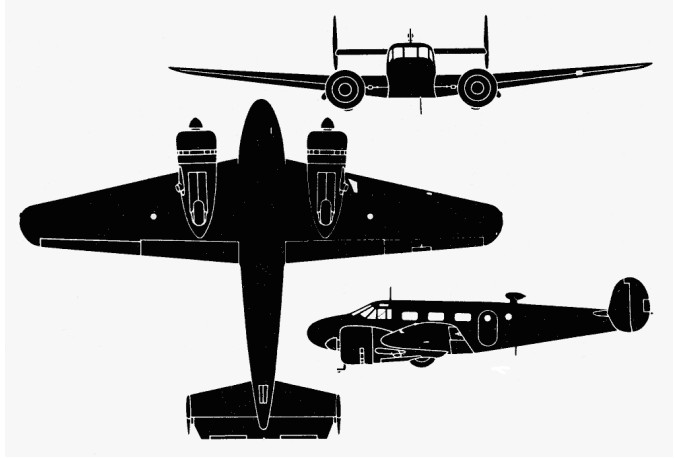
E18S Super 18

Beechcraft 17 Staggerwing

Beechcraft D17S

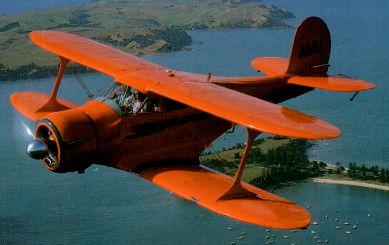
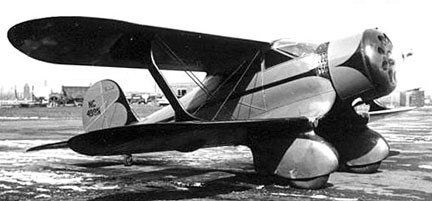
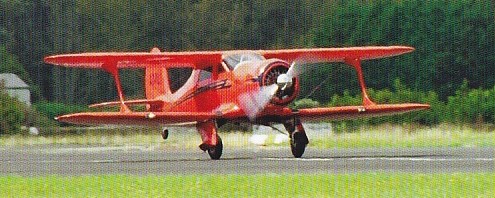
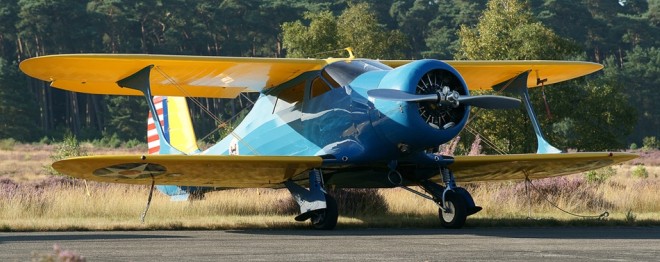
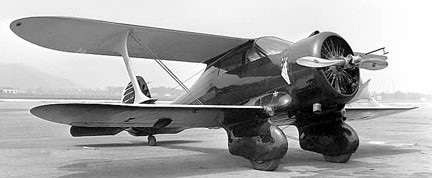
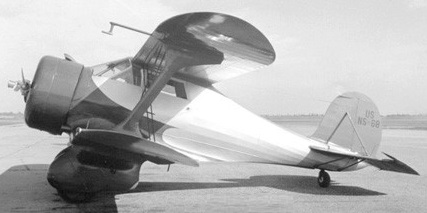
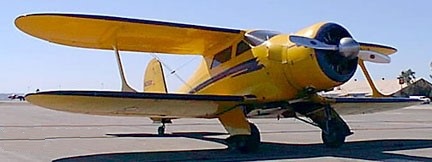
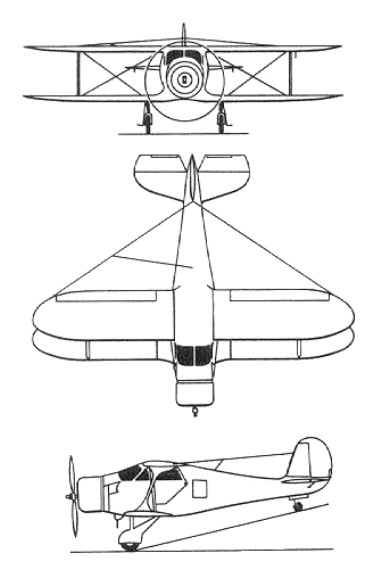
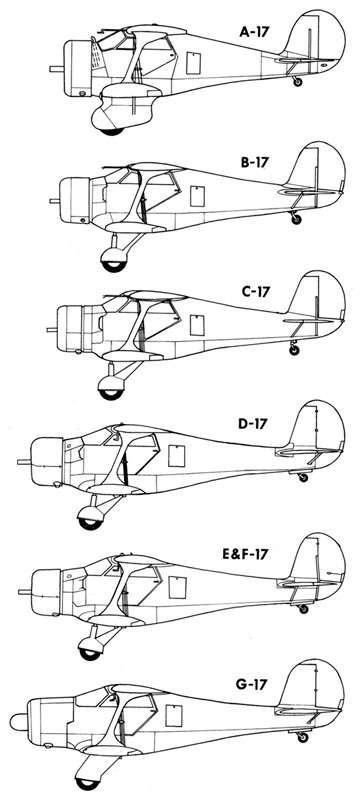
By 1931 Beech resurrected a cabin biplane design started by engineer Ted Wells at Travel Air but rejected by that company’s Curtiss-Wright owners. Aimed at the business executive end of the private owner market — a bold move at the height of the Depression — was the Beech Model 17, continuing the by now-defunct Travel Air series numbers which had ended at CW-16. Apart from its compact dimensions, the four-to-five-seat radial-engine biplane had the unusual layout of its top wing set behind the bottom. This negative or backward stagger arrangement offered several advantages over the more common forward stagger, providing an elegant solution to such problems as pilot visibility and undercarriage location, as well as providing good stall and recovery characteristics.

Beechcraft 17 Staggerwing Article
On paper, the 17 promised to be an airplane of outstanding performance for any category, let alone a four-place commercial biplane. A top speed of 200 mph and landing speed of 60 was what they were looking for. The powerplant would be a 420 hp Wright R-975-E2 radial with a Smith controllable prop. While the narrow landing gear was basically fixed, it has enormous streamlined fairings that al¬lowed room for the wheels themselves to retract 0.15m (6in) in flight. The basic structure was welded steel tube, largely fabric-covered; the braced tail unit was conventional; but with a non-swivelling tail-wheel.

Rather than having a neutral stagger the upper wing stacked directly above the lower wing or a positive stagger, with the upper wing leading, as it did on most biplanes, the 17 had a negative stagger: the lower wing was almost 26 inches farther forward than the upper one. The unique wing configuration had three immediate advantages. Visibility had always been a problem with biplanes and high wing monoplanes, but with the upper lead¬ing edge so far back, the pilot had an excellent view. There was an aerodynamic benefit, too: the center of lift of the upper wing was behind the center of gravity, and that of the lower wing was in front of the CG. The lower wing let go first in an approach to a stall, and since the upper wing was still flying, the rearward cen¬ter of lift would automatically bob the nose down, the plane would pick up speed, and the lower wing would be flying again. At the time, this docile stall was an unusual feature for an airplane of such high performance.

A third benefit of the lower wing’s for¬ward position was that it allowed the gear to be wing mounted rather than attached to the fuselage with drag producing struts and brac¬es. This foresight led to the complete retrac¬tion of the gear into the wing and belly, begin¬ning with the B17 model in 1934.

The nickname Staggerwing was soon coined and shows no signs of going away after almost 65 years. The airframe broke no new structural grounds, having wooden wings and steel tube load-bearing fuselage with wooden formers to carry the aerodynamic shape, all but the forward fuselage covered in fabric. Cessna let his old partner use part of the Cessna plant, temporarily closed by the Depression, to begin building Beechcrafts. Careful attention to streamlining achieved Walter Beech’s specifications of 200 mph top speed while landing at 60 mph, a speed range unknown in 1932, on the 420 hp of a Wright R-975 Whirlwind. On 4 November 1932, six months after the factory opened, test pilot W H “Pete” Hill flew the number one Model 17R, NC499N, at a top speed clocked at 201.2 mph.

Beech 17R NC499N

NC499N was destroyed in a crash on 10 December 1936. In its first two years, the Beech Aircraft Company sold just one airplane, NC58Y. Beech demonstrated the 17R to Tom Loffland who ran a Tulsa oil drilling outfit and had shown an interest during the construction stage. He paid a large deposit and also paid the Beech payrolls while it was being constructed. Work started on the second Model 17 early in 1933, and by July that year the finished aircraft was delivered to its new owner. For his first hundred hours in the airplane, the pilot reported laconically, he had very little idea where it was going during takeoff or landing. It was returned to Beech Co as a trade in mid-1935 and reportedly dismantled

The airplane would have to be improved. As a first step just to see what would happen, he advertised the plane, which already had 420 hp, as available also with the 700 hp Wright Cyclone engine. What happened was an order for one such model from a worsted mill in Maine. Beech built the airplane, but just running up the engine shook the airframe so badly that it continually broke weld joints. In the air it was smoother, and could hit 250 mph, which was faster than any fighter of the time. The pilot who flew it for the customer was given one hundred days to live by his friends, but he confounded them by flying it safely for a year. Thereafter it was sold to Howard Hughes, in whose service it was cracked up on takeoff in the 1937 Bendix Race.

The preproduction model, the A17F with fixed undercarriage, was fitted with a 690-hp Wright R-1820-F11 Cyclone, but although the basic design would appear to give stable flight characteristics, the horsepower was excessive, resulting in “porpoising” due to the short fuselage. There were four fixed gear 17s built – ¬the two 17Rs, an A17F and an A17FS. The A17FS powered with an SR-1820-F3 super-charged Cyclone engine of 710 hp. All stood on tall, stiff, narrow gear and had short coupled fuselages. It was a beautiful airplane in the air but it was very touchy taking off and landing If you were just a second off your timing on the use of the rudder, you were in trouble.

The word on the plane’s high speed spread quickly, and it got a reputation as a hot ship. This notoriety, plus its ground handling characteristics, didn’t help sales. You might also note that the A17F and A17FS had modest little Wright Cyclone engines of 690 and 710 hp, respectively. They went 250 mph, though faster than many military ships and in the air were said to be just as sweet as all models of the Staggerwing were. The A17F, incidentally, was owned at one time by a well known pilot named Howard Hughes.

Meanwhile, Waiter Beech reversed direction, and designed a lightweight, low powered Staggerwing, the B model.

The first production model, built from March 1934 to 1936, was the B17 powered by a 285-hp JacobsR-830-1 L-5 (B17B), a 285-hp Wright R-760-E1 Whirlwind (B17E), a 225-hp Jacobs R-755 L-4 (B17L) or a 420-hp Wright R-975-E2 or 450 hp E3 (B17R). Wingspan was reduced to 32 feet and electrically operated flaps replaced the split rudder for landing drag, but the biggest change was to the undercarriage; a wider, shorter and which now retracted, again by electrical means but with hand-crank backup, folding inwards to house the wheels under the forward fuselage. Other changes included the use of wooden wing spars instead of metal, and a different airfoil. This machine was much more accurately tuned to the market in those still depressed times, and Beech at last began to sell Staggerwings: 18 in 1934 and twice that in 1935 when business began to pick up, as it did for everyone. The Staggerwing had finally achieved commercial success. Commercial success was helped when B17R G-ADLE piloted by H.L.Farquhar completed a 21,332 mile around the world flight in 1935.

Structurally, the Staggerwing uses a mixture of materials and methods. The fuselage has a basic framework of welded steel tube over which is a web of wooden formers and stringers to shape the fabric covering. The wings are all wood: wood spars, wood truss ribs, and, again, fabric skin. The landing gear em¬ploys big metal springs instead of oleos, and is electrically operated. The structure proved strong, except for an era of flutter failures of the top wing, which Beech cured by aileron balancing and plywood stiffening for the wing tips.

The 1936 C model Staggerwing gained a shorter landing gear and had the flaps on the lower wing to improve ground handling which was still a little hairy. A negative four degree angle of incidence was introduced to the tailplane to keep the tail down while landing. Other than these changes, the C17 was identical to the B17, including the choice of engines (with the C17B, E, L and R having the same engines as the respective B17s). Walter Beech never lost an opportunity to market his airplane.

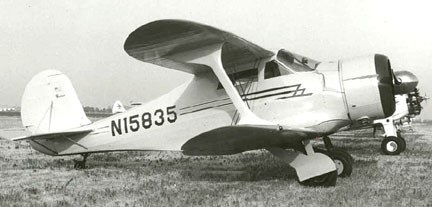
Staggerwings were regularly seen at air shows and did well in racing. The 1936 New York to Los Angeles Bendix cross country race was won by Louise Thaden and copilot Blanche Noyes in a C17R, in 14 hours 44 minutes.

Introduced in 1936 (to 1937), more than 60 C17 were made, but the following year the D17 brought in a number of changes. The most obvious was a rear fuselage extension of 18 inches, while the windscreen profile was altered and the tailplane made a cantilever unit. By now the peripatetic flaps had migrated to their final place on the bottom wing and the ailerons, of similar shape and length, were on the top, while the wings had a new NACA 23012 section and plywood covering outboard of the I-struts. Toe brakes replaced the unloved Johnson bar.

The D17 was built with a range of engines starting with the D17A with 350 hp Wright R-975-E2, followed by the D17R with a 420 hp Wright R-975-E2.

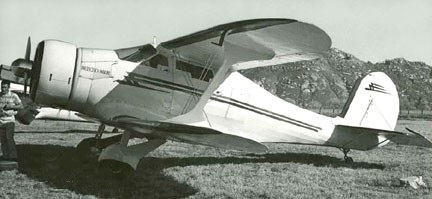
D17S

The most popular model was the D17S introduced in 1937, with a 420-hp Pratt & Whitney R-985 Wasp Junior nine-cylinder, air-cooled radial engine, built from 1937 to 1945. The D-17-S obtained its type certificate on 16 July 1937. 66 of the D-17-S had been sold by the time the US entered WW2.

Wartime production of USAAF UC-43 Traveller (based on the D-17S) and USN GB-1s and GB-2s amounted to 412.

When in 1939 the US Army Air Corps needed a small communications aircraft, the excellent performance of the Model 17 resulted in the procurement of three Model D17s for evaluation under the designation YC-43.

However, it was not until expansion of the USAAF began during 1941-2 that an initial production order for 27 was received, this leading to a total procurement of 207 Beech 17s under the designation UC-43, these being powered by the 336kW Pratt & Whitney R-985-AN-1 engine. After the United States became involved in World War II, an additional 118 civil Model 17s were impressed for military service, and comprising D17R, D17S, F17D, E17B, C17R, D17A, C17B, B17R, C17L, and D17W variants under the respective designations of UC-43A, UC-43B, UC-43C, UC-43D, UC-43E, UC-43F, UC-43G, UC-43H, UC-43J and UC-43K.

The US Navy had acquired a single example of the Staggerwing as early as 1939. This was a 1937 civil C17R which became designated JB-1 [0801]. The designation GB-1 applied to 10 more, equivalent to the civil D17, acquired in 1939 and, later, to eight civil D17s impressed for military service, plus 63 from USAAF inventory [1589/1595, 1897]. Wartime procurement totalled 342 GB-2s (first flying in 1941), of which 105 were supplied to the UK under Lend-Lease, used primarily by the Royal Navy which named them Traveller, a name adopted also by the US Navy, and the RAF. Some went to Brazil.

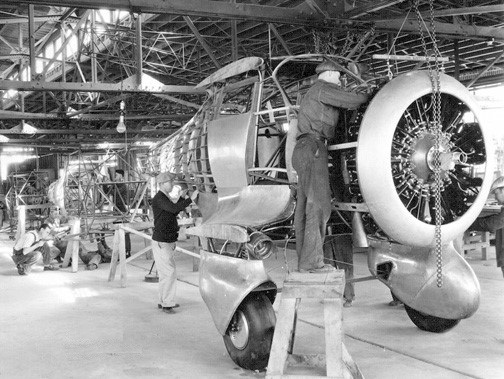
Beech 17R assembly line

The E17, built from 1937 to 1944, and the F17, built for the military from 1938 to 1944, were cheaper versions powered by Jacobs with strut-braced tailplane. A 1940 price list shows that an E17B went for $12,380, while the higher ¬powered D17S listed at $18,870. The price in 1936 was $14,500.

The last in the series was the G17 built from 1946 to 1948. The postwar model was the G17S. Based on the D17S with Pratt & Whitney R-985 Wasp Junior, it was fitted with enclosed gear fairings, cowl flaps, a longer windshield, larger vertical fin, and the engine was moved forward 12 inches with a longer, low-drag engine cowl and more modern disc brakes. At 9700 feet, pulling 65 per cent power, the G17 exceeds 200 mph. Most of the time it cruises at 53 per cent power and 185 mph, burning around 22 gph, with its 450-hp radial. Six fuel tanks (one in each wing, one forward fuselage tank, and one rear fuselage tank) carry 170 gallons to yield a seven-hour endurance or 1300-mile range. Approximately 20 G17 models were built and sold new for $29,000.
Its labour-intensive production methods worked against it, especially when Beechcraft introduced its Model 35 Bonanza at only $8,000. Only 20 of the final model were made in 1946, but were not assembled and sold until orders were received over the next two years. The last G17S, serial number B20, assembled from parts in Texas, flew in 1949.

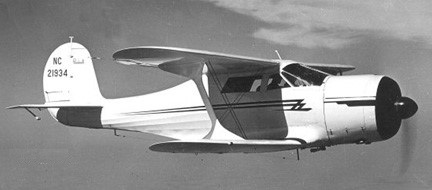
Beech G17 NC21934

In all, a total of 781 Staggerwings were built, of which 353 were commercial and 105 to USAF and 320 to USN, excluding 20 built in Japan as C17E.

Gallery

Beech 17
Wingspan: 32ft 10in
Wing area: 273 sq.ft.
Empty wt: 1600 lb
Normal useful load: 1130 lb.
Normal MAUW: 2730 lb
Max speed: 175 mph.
Cruise: 152 mph
Landing speed: 45 mph.
Climb with full load: 1100 fpm
Service ceiling: 15,000 ft.
Power loading: 14 lb/hp.

17R / 17A
1932 ATC 496
Engine: Wright R-975 Whirlwind, 420 hp.
Wing span: 34’4″
Length: 24’2″
Useful load: 1800 lb
Max speed: 201 mph
Cruise speed: 180 mph
Stall speed: 60 mph
ROC: 1,600 fpm
Ceiling: 21,500 ft.
Range: 960 mi
First flight: 4 Nov 32
Price: $19,000

A17F / A17J
1934 (ATC 548)
Engine: Wright R-1820-F11 Cyclone, 690 hp.
Wingspan: 34’6″
Length: 24’2″
Max speed: 240 mph
Cruise speed: 212 mph
Stall speed: 65 mph
Useful load: 1915 lb
Range: 780 mi
Ceiling: 18,500′
U/C: fixed.
Price $24,500
No. built: 1 NX/NC/NR12583
purchased by Howard Hughes

Beech A17F NC12583

A17FS
1935 (ATC 577)
Engine: Wright SR-1820-F3 Cyclone, 710 hp.
Wingspan: 34’6″
Length: 24’3″
Max speed: 235 mph
Cruise speed: 215 mph
Stall speed: 65 mph
Range: 750 mi
Ceiling: 20,000′
U/C: fixed.
Price: $30,000
No built: 1 registered by Beech NR12569
transferred to the Bureau of Commerce as NS68
Dismantled c.1937

Beech A17FS NS68

B17B / SB17B
1934 (ATC 560)
Engine: Jacobs R-830-1 (L-5), 285-hp
Wingspan: 32 ft
Length: 24’6″
Useful load: 1300 lb
Max speed: 185 mph
Cruise speed: 173 mph
Stall speed: 45 mph
Range: 500 mi
Ceiling: 18,000′
U/C: retractable.
Price: $9,000
No built: 2 NC14408, CZ116
CZ116 converted to B17L
SB17B was the twin-float designation

B17E
1935 (ATC 566)
Engine: Wright R-760-E1 Whirlwind, 285-hp
Wingspan: 32 ft
Length: 24’5″
Useful load: 1263 lb
Max speed: 185 mph
Cruise speed: 165 mph
Stall speed: 50 mph
Range: 680 mi
Ceiling: 18,000′
U/C: retractable.
Price: $12,980
No built: 4, NC12593, NC14413, NC14458, NC15412
NC14413 converted to B17R

B17L / SB17L
1934 (ATC 560)
Engine: Jacobs R-755 L-4, 225-hp.
Wingspan: 32 ft.
Useful load: 1350 lb
Max speed: 166 mph / 282 kph
Cruise: 130 kt / 150 mph.
Stall speed: 39 kt / 45 mph / 72 kph
Range: 560 mi
Ceiling: 15,500′
U/C: retractable.
Price: $8,000-8,550
No built: 45
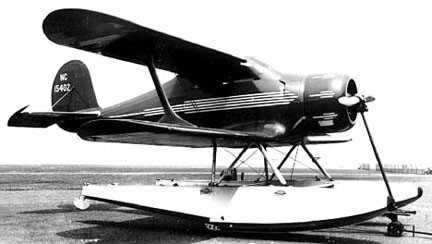
the first Staggerwing on floats, SB17L

Beech SB17L NC15402

B17R / UC-43H
1935 (ATC 579)
Engine: Wright R-975-E3 Whirlwind, 420-hp.
Wingspan: 32 ft.
Useful load: 1362 lb
Max speed: 211 mph
Cruise speed: 202 mph
Stall speed: 55 mph
Range: 760 mi
Ceiling: 22,000′
U/C: retractable.
Price: $14,500
No built: 16
3 to USAAF as C-43H
1 converted from B17E, NC14413

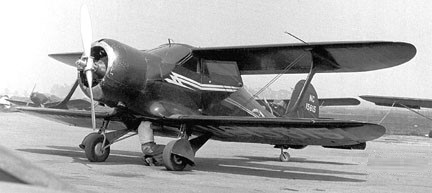
Beech B17R NC15815

C17B / SC17B / UC-43G
1936 (ATC 602)
Engine: Jacobs L-5, 285 hp
Wing span: 32’0″
Length: 24’5″
Max speed: 185 mph
Cruise speed: 165 mph
Stall speed: 45 mph
Range: 480-680 mi
Price: $9,250
No built: 39, including conversions to C17L, of which 10 to USAAF as UC-43G
1 built as experimental amphibian NC16440
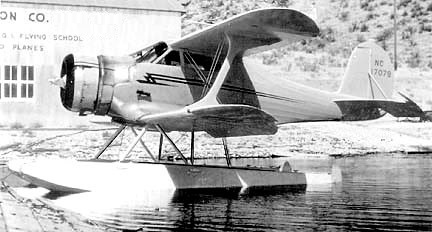
SC17B was twin-float version

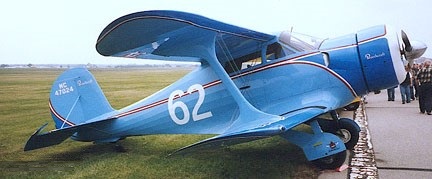
Beech C17B NC47024
Beech SC17B NC17078

C17E
1936 (ATC 615)
Engine: Wright R-760-E1, 285 hp
Useful load: 1550 lb
Max speed: 185 mph
Cruise speed: 165 mph
Stall speed: 48 mph
Range: 865 mi
Seats: 4
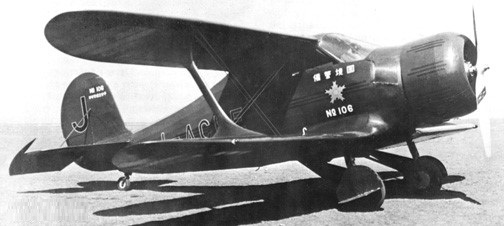
No built: 3, NC15487 plus 2 exported to Japan in 1937, incl. NC15836/J-BAOI
Japanese construction under license of 20 C17Es from 1938-40

Beech C17E Japanese assembly

C17L / UC-43J
1936 (ATC 602)
Engine: Jacobs L-4, 225hp
Wing span 32ft
MAUW 3165lbs
Useful load: 1340 lb
Max speed: 175mph.
Cruise speed: 166 mph
Stall speed: 45 mph
Range: 560 mi
Price: $8,550
Seats: 4
U/C: retractable
No built: 5, of which 3 to USAAF as UC-43J, 1 converted to C17B, NC16441

Beech C17L NC15846

C17R / UC-43E / JB-1
1936 (ATC 604)
Engine: Wright R-975-E2, 420 hp
Wingspan: 32’0″
Length: 24’5″
Useful load: 1650 lb
Max speed: 211 mph
Cruise speed: 185 mph
Stall speed: 59 mph
Range: 800 mi
Seats: 4
U/C: retractable
Price: $14,500
No built: 17 of which 1 to USN as JB-1, and five to USAAF as UC-43E
Winner of 1936 Bendix Trophy [NC15835] (p: Louise Thaden & Blanche Noyes)
SC17R with Edo ponyoons.

Beech C17R N15835

D17 / GB-1

D17A / UC-43F
1939 (ATC 713)
Engine: Wright R-975-3, 350 hp
Wingspan: 32’0″
Length: 26’11”
Useful load: 1733 lb
Max speed: 180 mph
Cruise speed: 170 mph
Stall speed: 50 mph
Range: 850 mi
Price: $16,350
Seats: 4
U/C: retractable
No built: 8, of which 1 to USAAF as UC-43F
First of the lengthened fuselage models (D-17 through E-17)

Beech D17A NC582

D17R / UC-43A
1937 (ATC 638)
Engine: Wright, 420 hp
Wingspan: 32’0″
Length: 26’11”
Useful load: 1680 lb
Max speed: 211 mph
Cruise speed: 202 mph
Stall speed: 60 mph
Range: 825 mi
Seats: 4
U/C: retractable
Price: $18,870
No built: 28, of which 13 to USAAF as UC-43A, plus 2 conversions from D17W – NC17081, NR18562

D17S / UC-43B / SD17S / GB-1
1937 (ATC 649)
Engine: Pratt &Whitney R 985-AN-1 Wasp Junior, 424 hp
Span: 32ft (9.75m)
Wing area: 296.01 sq.ft / 27.5 sq.m
Wing load: 15.79 lb/sq.ft / 77.0 kg/sq.m
Length: 25ft 9in (7.85m)
Height: 10.236 ft / 3.12 m
Max take off weight: 4681.2 lb / 2123.0 kg
Weight empty: 3084.8 lb / 1399.0 kg
Max speed: 212mph (341kmh)
Cruising speed 65%: 148 kt / 274 km/h / 202 mph
Vne: 256mph.
Stall: 61 mph.
Service ceiling: 19997 ft / 6095 m
Range: 840 miles (1350 km)
Seats: 4
U/C: retractable
Price: $18,870
No built: about 50, of which 13 to USAAF as UC-43/UC-43B, 11 to USN as GB-1
SD17S was floatplane
The last D17S NC34R became prototype for G17S

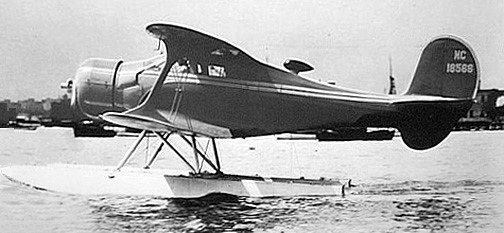
Beech SD17S NC18562

D17W / UC-43K / GB-1
1937
Engine: supercharged P&W R-985-SC-G Wasp, 525-600 hp
Seats: 4
U/C: retractable
No built: 2
1 for Jacqueline Cochran to set speed and altitude records in 1937-38 – NX/NR18562
1 for Frank Hawks, NC17081, later repowered with 420hp Wright R-975
Both converted to D17R, the NX/NR18562 serving in USAAF as UC-43K, NC17081 serving in USN as GB-1

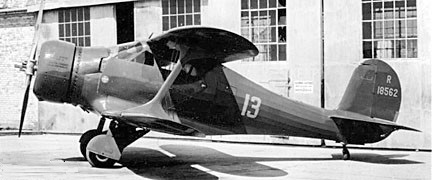
Beech D17W NC18562

E17B / UC-43D / SE17B
1937 (ATC 641)
Engine: Jacobs L-5, 285 hp
Wingspan: 32’0″
Length: 25’11”
Useful load: 1270 lb
Max speed: 188 mph
Cruise speed: 177 mph
Stall speed: 50 mph
Range: 700 mi
Seats: 4-5
U/C: retractable
Price 1937: $10,490
Price 1939: $12,380
No built: about 52, of which 31 to USAAF as UC-43D

E17L
1937 (ATC 641)
Engine: Jacobs L-4, 225 hp
Useful load: 1335 lb
Max speed: 175 mph
Cruise speed: 166 mph
Stall speed: 50 mph
Seats: 4
U/C: retractable
No built: about 3 – CF-BHA, NC17071, NC18785
Similar to E17B

Beech E17L N41663

F17D / UC-43C
1938 (ATC 689)
Engine make/model: 915-cu Jacobs L6MB, 330 hp
Wingspan: 32 ft
Length: 25 ft 11.5 in.
Height: 8 ft
Wing area: 296.5 sq. ft
Max gross weight: 3550–3590lb
Empty weight, std: 2155lb
Fuel capacity: 125 USgals
Wing loading: 10.75 lbs./hp
Seating capacity: 6
Cruise speed: 182 kts
Max speed: 195 mph
Cruise speed: 18 mph
Stall speed: 50 mph
Range: 600 sm
Rate of climb: 1300 fpm
Service ceiling: 18,000 ft
U/C: retractable
Upper-wing ailerons, lower-wing flaps
Price: $13,980
No built: about 60, of which 38 to USAAF as UC-43C

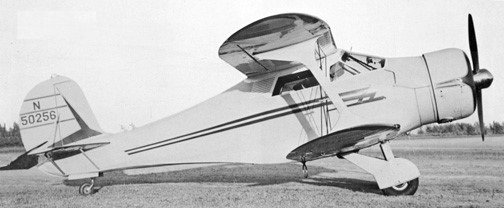
Beech F17D NC50256

G-17S
1946 (ATC 779)
Engine: 1 x Pratt & Whitney R-985-AN-4 Wasp Junior, 336kW / 450 hp
Max Take-off weight: 1928 kg / 4251 lb
Empty weight: 1270 kg / 2800 lb
Useful load: 1,450 lbs.
Wingspan: 9.75 m / 32 ft 0 in
Length: 8.15 m / 26 ft 9 in
Height: 2.44 m / 8 ft 0 in
Wing area: 27.65 sq.m / 297.62 sq ft
Max. speed: 341 km/h / 212 mph
Max cruise (65% @ 9,700ft.): 175 kts.
Cruise speed: 298 km/h / 185 mph
Normal cruise (53% @ 9,500 ft.): 161 kts.
Stall: 60 mph
Fuel consumption @ normal cruise: 22 USG/hr.
Range @ normal cruise, no res: 1,242 nm.
Seats: 4-5
Fuel capacity: 170 USgals
Initial climb rate: 1,500 fpm
Service ceiling: 20,000 ft
Takeoff distance, 50 ft.: 1,130 ft
Landing distance, 50 ft.: 980 ft
Baggage capacity: 125 lbs.
Endurance: 7 hour
Range: 1300 sm
Price: $29,000
U/C: retractable
No built: 17 to 20
Post-war model, and last of the “Staggerwings,” the final one built in 1949 – NC80321

Bedunkovich LK-4 / NIAI-4

LK-4-3

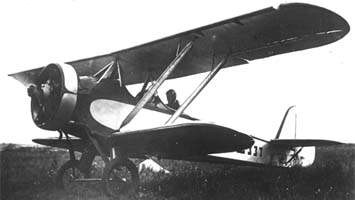
Among the light aircraft created in the early years of the Second Five Year Plan of the USSR stands a small airplane built by a group of engineers from the Fleet Civil Aviation of Leningrad. The Bedunkovich LK-4 (Leningrad Combined – 4) / NIAI-4 (Russian: Бедункович ЛК-4 (НИАИ-4)) training aircraft designed and built in Leningrad in 1934 at the GVF Air Science-Research Institute in Leningrad (later Academy of Civil Aviation).

The aircraft could, depending on its wing configuration, be used for the different stages of pilot training, lowering production and operating costs.

The designer was the 30-year-old engineer Anatoli Georgevich Bedunkovich and, by keeping the same fuselage and exchanging the wing configuration, the LK-4 could be converted into four aircraft with different performance and behaviour. This made it an ideal model for the preparation of pilots, since with a single aircraft the entire course program could be covered, thus saving not only the number of aircraft, but also the costs related to maintenance.

The LK-4 was designed as a tandem two-seater with basically wood construction with fabric covering in the rear region of the fuselage, wings and tail.

The wings were conceived in the form of easily removable individual fixed rope consoles, with a double wooden stringer structure. The upper wing was supported by a cabin-like structure located in the forward part of the fuselage, in front of the cockpit and featured two rigid struts located parallel to each side. The upper plane featured louvered ailerons. Removable plywood flaps designed to reduce landing speed were included in the basic version. A little later on the lower planes, adjustable louver flaps were installed.

The tail unit was of the conventional monoplane type with the horizontal stabilizers braced by struts.

The LK-4 was powered by a 100 hp M-11 radial engine fitted with a Townend ring and driving a two-bladed propeller.

The landing gear was of a fixed type with rubber shock absorbers. The main landers were linked by a bar and featured single wheels with aerodynamic drop-shaped fairings. A fixed skid was located in the tail.

The crew members were in tandem, with the student in the front seat. The cabin equipment was similar to that of the U-21 training aircraft.

LK-4 / LK-4-1
The main or basic version was known simply as LK-4, although in many sources it is named LK-4-1. This sesquiplane device was extremely easy to pilot and was designed for basic training. The upper wing featured large offset and the addition of flaps. This wing was located in a sunshade composition on a cabin-type structure and was braced to the fuselage structure by a pair of parallel rigid struts. The lower wing had a cantilever configuration.

The LK-4-1 was characterized by its great stability in the air and did not go into a spin or stall even in the face of the grossest errors of the students. The empty weight reached 565 kg, while the take-off weight was 790 kg.

Version LK-4-2

LK-4-2

This version was also conceived for basic training, but its piloting was slightly more demanding than that of the LK-4-1 model. The model maintained the sesquiplan configuration but the upper plane lacked offset and did not present the flaps. To achieve this, the upper plane was moved backwards and the lower plane was fixed in an advanced position.

This model was characterized by the ease in the exit of the bit and was able to carry out almost all the high school piloting figures, except the Inmelman due to the lack of motor power

Version LK-4-3

LK-4-3

This third version was configured in the form of a high-wing monoplane with a sunshade braced by uprights. The lower wing was removed.

This model was much more demanding in piloting and only those students who had passed the basic preparation stages qualified for its flight. Cruising speed was also higher as a result of decreased aerodynamic drag.

Version LK-4-4
The fourth version was designed for advanced training and featured a monoplane configuration with a low-set wing. In this configuration, the aircraft, both visually and due to its behaviour, was close to the new models of monoplane fighters. This version was quite demanding in the flight technique and for this reason it was only intended for the final stage of the preparation program.

All the transformations were designed to be carried out by the technical personnel of operational aerodromes.

The LK-4 was a collaboration between the LARM (Leningradskie Avioremontnie Masterskie or Leningrad Aviation Repair Shops) and the NIAI. The model was built and successfully tested in 1934 at the NII GVF facilities. During the tests in which 40,000 km were covered, a maximum speed between 150 and 180 km / h was obtained depending on the configuration and a ceiling between 3300 and 4500 meters. These results led the GVF to request serial production of the model.

The LK-4 in a parasol wing monoplane version successfully participated in two competitive flights for light aircraft. Between 1934 and 1936 the aircraft was widely used in the GVF system but the long-awaited series production never materialized.

LK-4-1 – Basic Training Version
Powerplant: 100 hp М-11
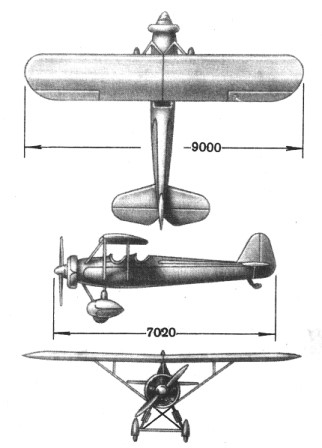
Upper plane span: 9.0 m
Lower plane span: 5.7 m
Length: 7.0 m
Wing area: 20.0 m²
Empty weight: 565 kg
Maximum takeoff weight: 790 kg
Fuel + oil weight: 45 kg
Maximum load capacity: 225 kg
Wing loading: 39.5 kg / m²
Power load: 7.9 kg / hp
Weight delivery: 28.45%
Maximum speed: 157 km / h
Landing speed 60 km / h
Ascent time to 1000 m: 6 min
Ascent time to 2000 m: 15.1 min
Ascent time to 3000 m: 30 min
Practical ceiling: 3300 m
Endurance: 2 h
Range: 250 km
Spin time: 21s
Take-off run: 70 m
Landing run: 100 m
Accommodation: 2

LK-4-2 – Sesquiplan version
Powerplant: 100 hp М-11
Upper plane span: 9.0 m
Lower plane span: 5.7 m
Length: 7.0 m
Wing area: 20.0 m²
Empty weight: 558 kg
Maximum takeoff weight: 783 kg
Fuel + oil weight: 45 kg
Maximum load capacity: 225 kg
Wing loading: 39.2 kg / m²
Power load: 7.83 kg / hp
Weight delivery: 28.72%
Maximum speed: 168 km / h
Landing speed 70 km / h
Ascent time to 1000 m: 6 min
Ascent time to 2000 m: 15.3 min
Ascent time to 3000 m: 30 min
Practical ceiling: 3300 m
Endurance: 2 h
Range: 280 km
Spin time: 20s
Take-off run: 80 m
Landing run: 150 m
Accommodation: 2

LK-4-3 – High wing version
Powerplant: 100 hp М-11
Wingspan: 9 m
Wing area: 13 m²
Length: 7 m
Empty weight: 517 kg
Maximum takeoff weight: 742 kg
Fuel + oil weight: 45 kg
Maximum load capacity: 225 kg
Wing loading: 57 kg / m²
Power load: 7.42 kg / hp
Delivery weight:% 30.3
Maximum speed: 177 km / h
Landing speed 80 km / h
Ascent time to 1000 m: 5 min
Ascent time to 2000 m: 13 min
Ascent time to 3000 m: 21.5 min
Practical ceiling: 4500 m
Endurance: 2 h
Range: 300 km
Spin time: 18s
Take-off run: 90 m
Landing run: 170 m
Accommodation: 2

LK-4-4 – Low wing version
Powerplant: 100 hp М-11
Wingspan: 9.7 m
Wing area: 13 m
Length: 7 m
Empty weight: 510 kg
Maximum takeoff weight: 735 kg
Fuel + oil weight 45 kg
Maximum load capacity: 225 kg
Wing loading: 56.6 kg / m²
Power load: 7.35 kg / hp
Delivery weight: 30.6%
Maximum speed: 180 km / h
Landing speed: 90 km / h
Ascent time to: 1000 m: 4.6 min
Ascent time to: 2000 m: 10 min
Ascent time to: 3000 m: 20.2 min
Practical ceiling: 3,815 m
Endurance: 2 h
Range: 300 km
Spin time: 24s
Take-off run: 130 m
Landing run: 220 m
Accommodation: 2

Bedunkovich P-3 / LIG-5

Bedunkovich P-3 (LIG-5) (Russian: Бедункович П-3 (ЛИГ-5)) light training aircraft was designed in 1936 as a development of the LK-4. The aim was to build a single model destined for aviation schools and which would be capable of covering all the stages of preparation of young military pilots in reconnaissance aircraft, biplane fighters and monoplanes. This was intended to lower operating and maintenance costs and reduce the number needed for training. This model was also known as LIG-5 according to the internal numbering of the Leningrad Civil Aviation Fleet Institute.

The change from one version to another was achieved by modifying the wing composition and quantity. The P-3 could be converted into three different versions of the trainer:

P-3 two-seater sesquiplane
Designed as a reconnaissance trainer, this version, due to its characteristics, was quite close to the Polikarpov R-5 reconnaissance biplane. A synchronized firing machine gun was installed on the aircraft through the propeller, an annular mount in the rear cockpit, and underwing mounts for four practice bombs. The cabin equipment included a radio station and a camera.

P-3 single-seat biplane
Designed as a biplane hunting trainer. This version was obtained by disassembling the upper center plane section together with the braces. The consoles of the upper wing were fixed one to the other and the braces were tensioned. A biplane box was obtained with the upper wing type parasol braced and the lower cantilever. The rear cabin was closing.

P-3 single-seater monoplane
Conceived as a monoplane hunting trainer. This model was obtained by eliminating the upper wing in the biplane configuration and replacing the tail empennage. You got an aircraft somewhat similar to the Polikarpov I-16.

The P-3 was designed as a two-seater tandem aircraft built primarily of wood. The powerplant selected was the 330 hp MG-31F engine.

The wing composition varied depending on the version. The wings were constructed of wood with a fabric covering. The cantilever-type lower plane featured trailing edge mechanization and was fixed in all versions. The upper wing was made up of a centroplane and two consoles braced by uprights that were shaped depending on the type of training.

With a detachable monoplane tail structure, it featured conventional type landing gear with tail skid and fixed main landings with aerodynamic fairings.

The construction of the prototype was developed in the workshops of the LII GVF. The aircraft was ready by the summer of 1936 and by February 1937 it had successfully passed factory tests. It was decided to carry out the state tests in Moscow, and airlift it to Moscow. During the flight and due to a pilot error, the plane had an accident in which it was destroyed. It was decided not to rebuild it.

P-3 in sesquiplan configuration
Powerplant: 330 hp MG-31F
Wingspan: 10.6 m
Wing area: 30 m²
Length: 7.5 m
Empty weight: 1100 kg
Maximum takeoff weight: 1560 kg
Fuel + oil weight: 220 kg
Maximum load capacity: 460 kg
Wing loading: 52 kg / m²
Power load: 4.73
Delivery weight: 29.5%
Maximum speed: 210 km / h
Landing speed 80 km / h
Autonomy: 3 h
Range: 500 km
Accommodation: 2

P-3 in biplane configuration
Powerplant: 330 hp MG-31F
Wingspan: 9 m
Wing area: 26 m²
Length: 7.5 m
Empty weight: 960 kg
Maximum takeoff weight: 1260 kg
Fuel + oil weight: 110 kg
Maximum load capacity: 300 kg
Wing loading: 48.4 kg / m²
Power load: 3.82
Delivery weight: 23.8%
Maximum speed: 220 km / h
Landing speed 75 km / h
Autonomy: 1.5 h
Range: 280 km
Accommodation: 1

P-3 in low wing monoplane version
Powerplant: 330 hp MG-31F
Wingspan: 9 m
Wing area: 14 m²
Length: 7.5 m
Empty weight: 850 kg
Maximum takeoff weight: 1150 kg
Fuel + oil weight: 110 kg
Maximum load capacity: 300 kg
Wing loading: 82 kg / m²
Power load: 3.49 kg / hp
Delivery weight: 26%
Maximum speed: 280 km / h
Landing speed 100 km / h
Autonomy: 1.5 h
Range: 300 km
Accommodation: 1

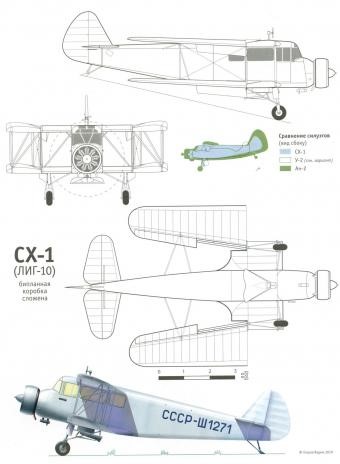
Bedunkovich SJ-1 / LIG-10

In 1937 a group of engineers from the Civil Air Fleet scheme under the leadership of Anatoli Georgevich Bedunkovich began the development of a new multipurpose aircraft model. This aircraft was designed primarily as an agricultural model, hence its designation SJ-1 (Sielkojozyaisvenni or Agricultural). The projection of the model was carried out in correspondence with the resolution of the GVF of the 26 of August of 1935.

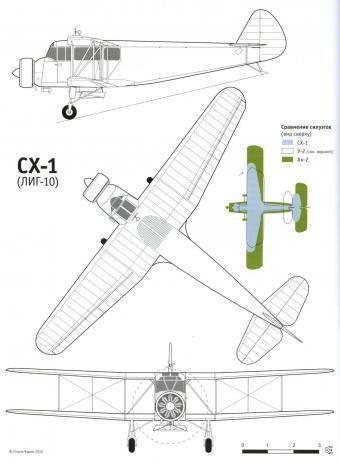
The SJ-1, also known as LIG-10 (Russian: Бедункович СХ-1 (ЛИГ-10)) according to the internal numbering of the Leningrad Civil Aviation Fleet Institute, was designed as a biplane with N-braces and wings without offset. The planes presented a similar configuration with a trapezoidal shape in the constant chord plane. The model was characterized by its good aerodynamics.

The construction of the airplane was mixed, with the use of steel, wood and fabric and it was conceived with all the simplicity that could be tolerated to achieve a cheap and mass-use airplane.

The wings, measuring 41.17 m² in area, had a 12% R-II profile and were made of wood, with a double-spar structure. The shape of the planes was trapezoidal, with a straight leading edge and a trailing edge with a slight inverted arrow. At the trailing edge all half planes had similar ailerons and flaps. The covering of both the wing and the ailerons and flaps was made of fabric.

The wing consoles could be folded back to allow the aircraft to be stored in small hangars or medium-sized barns.

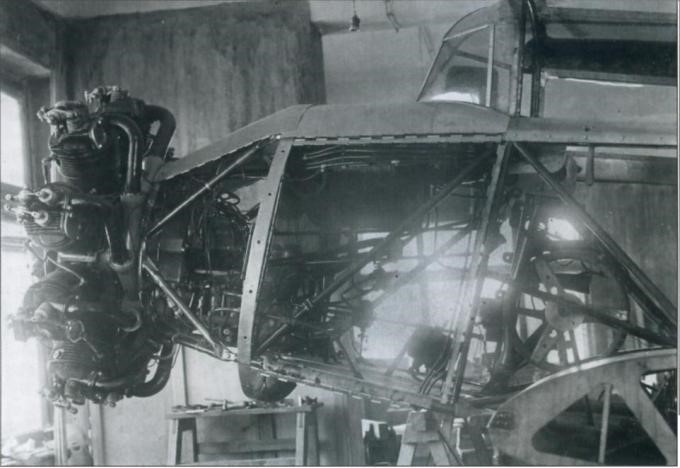
The ample fuselage featured a heavily glazed crew cabin in the position behind the engine. The fuselage structure was skeletal, constructed of lightweight fabric-coated welded steel tubes. The wing bracing tubes were metallic and had a drop-like profile.

The tail unit was made of wood, covered with fabric. The stabilizer could modify its angle of incidence in flight.

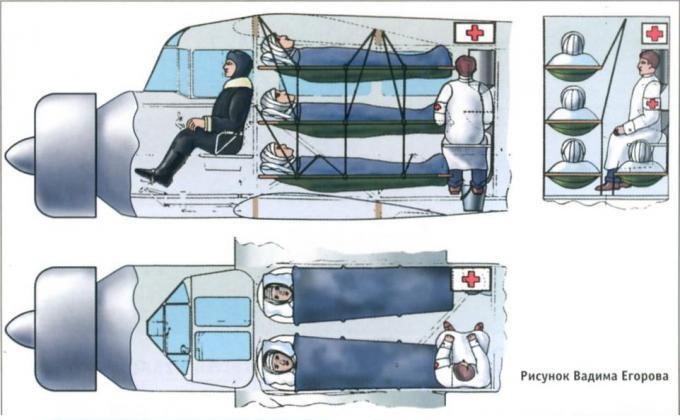
A mechanic or a nurse (in ambulance version) could sit next to the pilot in the flight deck. The cargo cabin, with a capacity of 4.25 cu.m, could be configured in different ways depending on the mission. In the agricultural version, the fuselage housed a 1.8 m3 tank for chemicals or fertilizers. In passenger transport configuration it could accommodate 6 people in two rows of seats. In an ambulance configuration, the possibility of transporting four stretchers and a nurse was foreseen. Depending on the mission, the takeoff weight of the SJ-1 reached 1975 kg (passenger version) or 2150 kg (agricultural version).

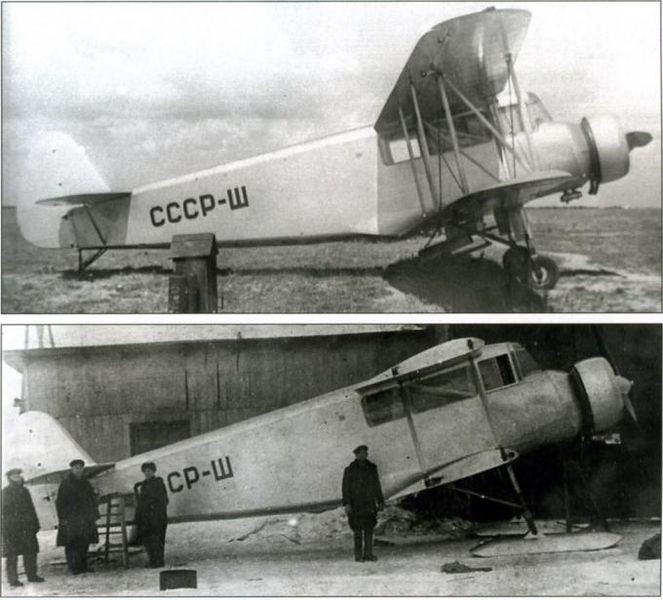
The landing gear was of the conventional and fixed type, with single units on the main pyramidal landers and tail skid. In winter the wheels could be replaced by skis. These units were characterized by the wide path of the shock absorbers, which allowed operation on unprepared fields.

The powerplant consisted of a MG-31F piston engine carefully enclosed by a ring-type bonnet. The fuel system consisted of aluminum tanks located in the upper wing centerplane and on both sides of the fuselage.

MG-31D engine

The aircraft featured a fairly complete set of instrumentation and a well-crafted distribution system for chemicals for fumigation.

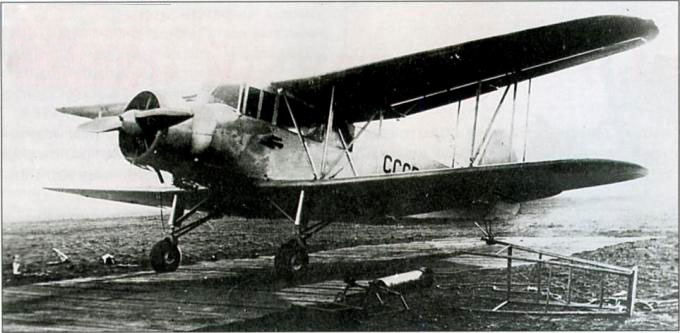
Built at the Leningrad Aviation Repair Shops, three experimental prototypes were built, which were tested between 1937 and 1938, demonstrating the validity of the concept. Upon completion of the tests, the SJ-1 was handed over to the civil aviation system for testing of the spray systems, as well as the cargo and ambulance variants.

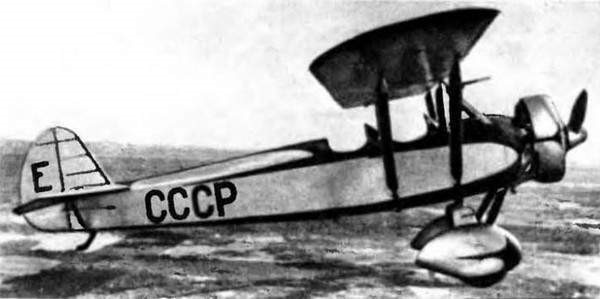
The third prototype, registered СССР Ш in configuration with wheel and skis during the development of the tests.

With full load the speed of the SJ-1 exceeded 180 km / h, while the landing speed was only 60 km / h. The model could take off and land on small runways as its run did not exceed 200 meters. With an auxiliary fuel tank the flight range could be extended to 1000 km.

For about a year the position towards the SJ-1 did not change. Only 21 of November of 1939 the President of the Defense Committee VM Molotov received a letter (registered with 04628 no.) Of the NKO substitute AD Loktionov and the head of the GUGVF VS Molokov in which he excelled:

“ The SJ-1 aircraft has been designed, built and tested in the Aeroflot system.
This aircraft is a biplane of simple construction, made of wood and with a 330 hp MG-31 engine.
The SJ-1 is capable of lifting a ton of payload. The results obtained during the state tests show a positive assessment of the aircraft in the different directions of its use.
Maximum speed: 210 km / h
Landing speed: 62 km / h
Take-off run: 150-200 m
Landing stroke: 135-180 m
Practical ceiling: 3000 m
Range with normal fuel: 600 km

These results ensure a wide use in the following variants:
Liaison plane on short lines for 6 passengers;
Ambulance plane – 2 injured on stretchers, two sitting, a doctor and a nurse;
Aircraft specialized in agricultural tasks (fight against harmful species, soil enrichment, fire fighting);
Aerial photography plane;
Thanks to its high load capacity and ability to take off and land in unprepared conditions, the SJ-1 can be used as:
Plane for supplying fuel to aviation and mechanized units.
Technical support plane (transfer of engines, wheels, propellers, etc.
Chemical warfare plane.
The series production of the SJ-1 does not require complex or specialized equipment and can be organized in any aeronautical factory that works with wood or mixed constructions, allowing the S-1, AP and SP models to be taken out of production.
The MG-31 engine installed in the SJ-1 has been extensively tested in the Putilov Stal-2 and according to the special government decision No. 203ss of June 16, 1939 its series production is guaranteed at Factory No. 16.

Taking into account the great need and the wide possibilities of use of the SJ-1 in both the VVS and Aeroflot, the NKO and the GUGVF request to include the SJ-1 in the construction plan for 1940 in one of the factories. “

Unfortunately, this letter was of no consequence. No one specifically can be blamed for this decision. Among the causes we could place that the MG-31 engine was not available, the aeronautical industry management was no longer interested in the biplane scheme and the SJ-1’s performance, despite being good, no longer corresponded to the requirements. of the moment.

In ambulance configuration the SJ-1 was used during the Winter War with Finland in 1940.

Ten years later and using this same scheme, the Antonov An-2 would see the light, one of the most successful biplanes in the history of aviation, with an operating record of almost 70 years. The design of the An-2 prototype drew on the experience accumulated with Bedunkovich’s design.

Bedunkovich SJ-1 (LIG-10)
Powerplant: 330-hp MG-31F
Wingspan: 12.80 m
Wing area: 41.10 m²
Length: 10.70 m
Height: 3.70 m
Empty weight: 1215 kg
Maximum takeoff weight: 2150 kg
Fuel + oil weight: 175 kg
Maximum load capacity: 935 kg
Wing loading: 51.5 kg / m²
Power load: 7.17kg / hp
Delivery weight: 43.5%
Maximum speed: 182 km / h
Landing speed 65 km / h
Practical range: km 350
Practical ceiling: 3,800 m
Take-off run: 210 m
Landing run: 180 m

Bedunkovich, Anatoli Georgevich 

Anatoli Georgevich Bedunkovich (in Russian: Анатолий Георгиевич Бедункович, born 1903) graduated from the Leningrad Polytechnic Institute (LPI) as an engineer. In his first years of professional work, he worked in factories No.23 and No.47.

Since 1930 he began his work, initially at the Leningrad Institute of Communication Engineers (LIIPS) and later at the Civil Air Fleet Engineers Institute. In parallel, work began on the projection and construction of aeronautical technology.

In 1930 he designed and built an aviation engine known as the 55 hp AB-55 from the cylinders of an old Anzani engine from 1910, of which there were a large number in the warehouses of the old aviation factories from before the war. This engine worked successfully, but was never produced.

In 1934 and as part of the collective of the Aerial Scientific-Research Institute (NIAI) created the LK-4 (NIAI-4) light aircraft with variable wing structure, which was successfully tested in the NII GVF and recommended for production. This model participated in two light aircraft competitions, showing excellent performance. In 1936 he developed a more powerful model based on the LK-4, which was known as the P-3.

In 1937 at the head of a group of specialists from the Leningrad Civil Aeronautical Fleet Institute, he designed a biplane specialized in agricultural tasks, the SJ-1.

After the war he continued dedicated to teaching, being known for his books and works related to aviation and used in the aeronautical teaching centers of Leningrad.

Anatoli Georgevich Bedunkovich died in 1978.

Beardmore Tornado

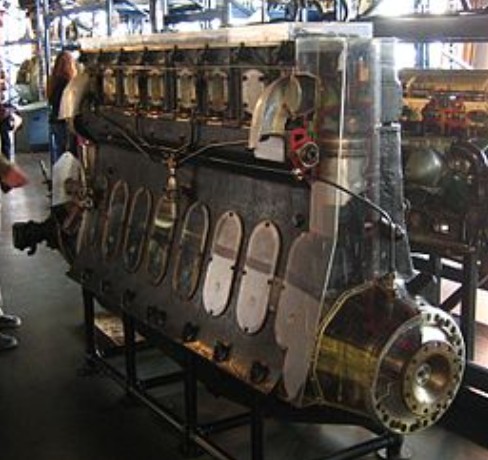
The Beardmore Tornado was an eight-cylinder inline aircraft Diesel engine built in 1929 by William Beardmore and Company of Glasgow, Scotland, and used in the British R101 airship when petrol engines were thought unsafe in the tropics. The model is given as Tornado IIIA or Tornado III C.I. The fuel is described as Diesel heavy-oil.

The engine was designed by combining two four-cylinder units used for railcars into the eight-cylinder (MkI) engine. These were intended to give an output of 700 bhp (520 kW) at 1,000 rpm but in practice had a continuous output rating of only 585 bhp (436 kW) with a maximum of 650 hp. At 17 tons for the five, they were six tons above design weight. The weight with the power car was over three tons per engine. The big end bearings were also found to be prone to early failure, and it was reported gold plating had to be used to lengthen their life. In addition, there were two critical vibration frequencies which coincided with idling and cruising speeds, to unfortunate effect.

The Tornado had steam cooling; water in the cylinder jackets was allowed to come to boiling point, and then condensed in three small triangular radiators on the hull above the power cars, or for the two midships engines was condensed in a retractable radiator and used to heat the passenger accommodation. Running the engines at a relatively high thermal temperature was expected to improve the specific fuel consumption. The Tornado engines used Ricardo petrol starting engines, and there had only been time to replace one with a Beverley heavy-oil starting engine (itself started by compressed air) on one Tornado.

The engines were intended to have reversing propellers, but they failed. At one point during development of R101, one engine was to be used for only astern running, at the start and finish of flights, a decision that astonished Nevil Shute and the other engineers on the R100 team. Later two engines were made reversible by an adjustment to the camshaft.

The R101 had five Tornado engines. The proposed R102 airship was to have seven engines of an improved version of the Tornado, having an output of 850 bhp (630 kW, maximum) or 700 bhp (520 kW, cruising, continuous). But the project was cancelled in 1931 after the crash of the R101. The R100 would have used the Tornado, but petrol engines were chosen to avoid delays.

Specifications:

Tornado III
Type: 8-cylinder liquid-cooled inline upright layout engine
Bore: 8.25 inches (210 mm)
Stroke: 12.0 inches (304.8 mm)
Displacement: 5,130.8 in3 (84.125 L)
Dry weight: 4,733 lb (2150 kg) bare engine, 8,580 lb (3890 kg) installed
Fuel type: Diesel heavy-oil
Cooling system: Water/steam cooling (see above)
Power output: 650 bhp (480 kw) at 935 rpm maximum; 475 bhp (350 kw) at 825 rpm cruise
Compression ratio: 12.25:1
Fuel consumption: 279 lb/hr maximum; 200 lb/hr cruise
Specific fuel consumption: 0.429 lb/bhp/hr maximum, 0.421 lb/bhp/hr cruise

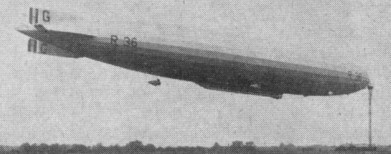
Beardmore R36 / H.M. Balloon Factory R36

R36 was a British airship designed during World War I by the new Airship Design Department, work commencing in November 1917. She was a lengthened version of the R33 class. These had been influenced by the design of the German Zeppelin LZ 76 that had been forced to land in England. The LZ 96, which was forced down at Bourbonne-les-Bains in June 1917, provided yet more input into the design.

The R36, along with a second ship the R37 were to be a stretched version of the R33, getting more lift by adding another 33 feet (10 m) gas bag. Two of her five engines were German Maybach engines, recovered from the downed LZ 113. Construction began before the end of the war, but the design was altered to include accommodation for 50 passengers.

Unlike the R33 class, the control car was not suspended below the hull but directly attached to it, and formed the forward section of the elongated passenger compartment. The engines were housed in five engine cars, one pair (containing the Maybach engines) either side of the hull forward of the control car, a second pair either side of the passenger compartment and the fifth on the centreline in front of the tail surfaces. Unlike previous British airship designs, the fins and horizontal stabilisers were cantilevered structures, with no external bracing.

R36 was launched for her maiden flight on 1 April 1921 from the Beardmore works at Inchinnan near Glasgow. Late the following day she flew on to RNAS Pulham in Norfolk. When she first flew in 1921, it was not in her originally intended role as a patrol aircraft for the Royal Navy, but as an airliner, the first airship to carry a civil registration (G-FAAF).

On 5 April it left Pulham at 07:25am bound for London. After making its appearance over the city it proceeded to Salisbury Plain, where it climbed to 6,000 ft (1800 m) and began manoeuvring trials. Starting a fast turn of 130 degrees it encountered windshear, which overstressed the rudder, damaging the top rudder and starboard elevator. This made the ship adopt a nose down attitude and rapidly lose height, but it was brought under control at around 3,000 feet. Emergency repairs were made to the damaged control surfaces and the ship limped home on her one remaining rudder and elevator, using differential engine control to help with directional control, reaching Pulham at 9.15pm.

After repairs and strengthening work she re-emerged in June for a successful series of test flights, including an endurance trial starting on 10 June which lasted nearly 30 hours, covering 734 miles (1,174 km) over land and sea. She was also used by the Metropolitan Police for observing traffic congestion caused by the Ascot Races. Journalists and senior police representatives were entertained in great comfort on the day, and the journalists stories were dropped by parachute over Croydon airfield.

On 21 June, returning from another trial flight, she suffered damage during landing. The release of emergency ballast caused a sharp pitching up, straining the ship against the mooring line. The nearest unoccupied sheds were at Howden in Yorkshire since the Pulham sheds were holding German Zeppelins handed over as war reparations. The wind increased and it was decided that the LZ 109 (L 64) would have to be sacrificed to save the R36. Within 4 hours L 64 had been cut into pieces and cleared to give enough room for R36. Even then she was damaged by a gust of wind during the manoeuvre into the shed.

Repairs were delayed while policy on airships was reviewed because of the R38 disaster and economic conditions. In 1925 she was refurbished for an experimental flight to Egypt as part of the Imperial Airship Scheme, but calculations cast doubt on her ability to make the trip and in the light of her age and condition she was scrapped in 1926.

Engines: 3 × Sunbeam Cossack, 350 hp (260 kW) each / 2 × Maybach, 260 hp (190 kW) each
Volume: 2,101,000 ft3 (59,500 m3)
Length: 675 ft 0 in (206 m)
Diameter: 78 ft 6 in (23.9 m)
Height: 91 ft 7 in
Maximum speed: 65 mph (105 km/h)
Range: longest flight, 734 miles (1181 km)
Endurance: 29 hours 54 min
Service ceiling: highest attained, 6000 ft (1829 m)
Crew: 28
Capacity: 50 passengers

Beardmore Inverness

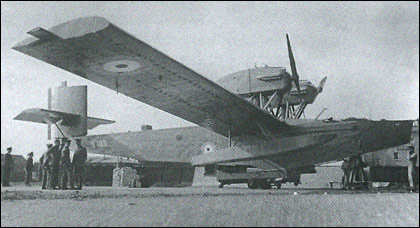
The Inverness is the Rohrbach RoIV all-metal flying boat designed by Adolf Rohrbach. The first aircraft (N183)was built in the Rohrbach factory in Denmark from parts manufactured in Berlin before being sent to Beardmore. The second aircraft (N184) was built by Beardmore.Both aircraft had short lives and were scrapped in 1925.
The Inverness was equipped with two large masts and sails to get it home in the event of a forced water landing.