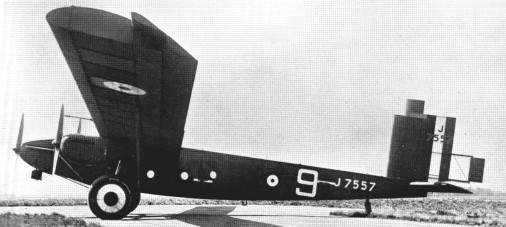
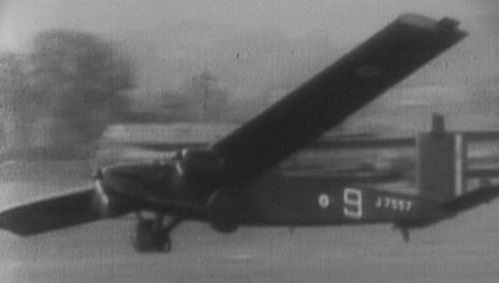
The Inflexible was designed by Adolf Rohrbach as the Rohrbach Ro VI. The Beardmore Company (mainly shipbuilders by the 1920s) developed the Inflexible to demonstrate the then-innovative stressed-skin metal construction. Unusually for 1928 it was also a mid-wing monoplane at a time when most large aircraft were still wood and fabric biplanes. With a wingspan of 158 ft it was the biggest aircraft of it’s day. Before being allowed to make the attempt to fly it had to be fitted with support cables from the wing roots to nearly the wingtips. It was also decided that it would need more than the length of the existing airfield at Martlesham Heath to take off and an extra 400 yards of heath was cleared for the initial flight.
The extra 400 yards was not nearly needed and the Inflexible took off well before the end of the existing runway, no strain was evident on the cables and according to those on board, the flight was uneventful and the aircraft flew well.
The Inflexible’s maiden flight proved it was too heavy for its three Rolls Royce Condor engines.
Beardmore Inflexible Serial n° J7557
Within two years its flying career was over and it was dismantled to save space, ending its days in experiments to investigate airframe corrosion.
Engines: 3 x Rolls-Royce Condor, 650 hp. Take-off weight: 16783 kg / 37000 lb Wingspan: 48.01 m / 157 ft 6 in Length: 23.01 m / 75 ft 6 in Height: 6.40 m / 20 ft 12 in Max. speed: 175 km/h / 109 mph Crew: 2
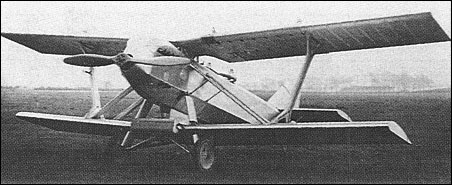
In 1924, the Scottish shipbuilding company of William Beardmore and Company designed a two-seat fighter for Latvia, the W.B.XXVI. Beardmore’s chief designer, W.S. Shackleton produced a wooden single-bay biplane, powered by a Rolls-Royce Eagle engine. The slab-sided fuselage was of hexagonal section, with the crew of two seated in separate cockpits. To reduce drag, the wings had no bracing wires, bracing being solely by means of struts, with a large inter-wing gap. A Lamblin radiator was installed in the leading edge of the lower wing. Instead of the normal Vickers and Lewis machine guns, the aircraft was armed by Beardmore’s own gas-operated Beardmore-Farquhar machine guns.
The prototype first flew some time in 1925. While it proved to be manoeuvrable, it was underpowered, and performance was poor, with the Latvians unwilling to pay for replacement of the Eagle with a more powerful Napier Lion engine. It was sent to Latvia for evaluation in 1926, but was only flown three times in Latvia before it was rejected, and was eventually sent back to Beardmore and scrapped. No more W.B.XXVIs were built.
Engine: 1 × Rolls-Royce Eagle IX, 360 hp (269 kW) Wingspan: 37 ft 0 in (11.28 m) Wing area: 356 sq ft (33.1 sq.m) Length: 27 ft 10½ in (8.50 m) Empty weight: 2,555 lb (1,162 kg) Loaded weight: 3,980 lb (1,809 kg) Maximum speed: 145 mph (233 km/h) Endurance: 4 hr Service ceiling: 20,000 ft (6,100 m) Wing loading: 11.2 lb/sq ft (54.7 sq.m) Power/mass: 0.09 hp/lb (0.15 kW/kg) Climb to 15,000 ft: 20 min Crew: 2 Guns: 2× fixed forward firing Beardmore-Farquhar machine guns and 1 or two flexibly mounted Beardmore-Farquhar machine guns on Scarff ring
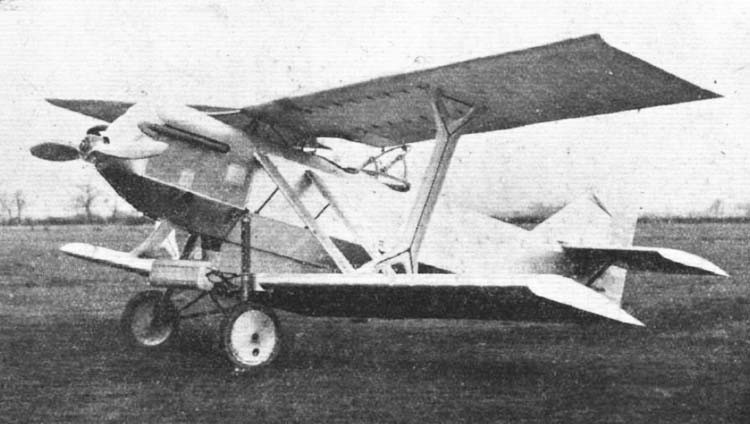
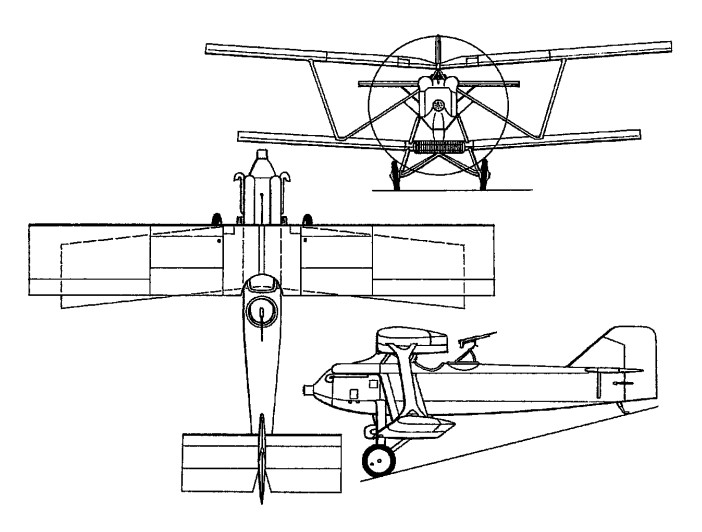
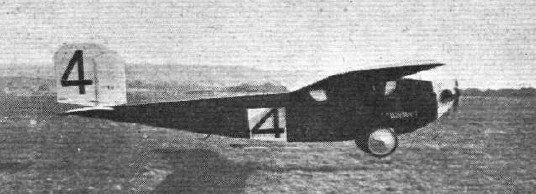
The Beardmore W.B.XXIV Wee Bee I was the company’s winning entrant to the Lympne Aerodrome light aeroplane trials of 1924. The competition rules were framed to encourage more robust designs than those that had competed as “motor-gliders” at Lympne the previous year; they were to be single engined two seaters, with engine capacities up to 1,1000 cc allowed. The total prize money was £3,600; the first prize £2,000. The Wee Bee was a high wing monoplane designed by W.S.Shackleton, its aerodynamically thick wing divided at the centre and braced, close to the fuselage, by pairs of parallel struts to the lower longerons. The wings were of two spar construction with plywood skinning between the two spars out as far as the bracing; outboard, only the leading edges were plywood covered, with fabric elsewhere. The outboard ailerons were mounted on false spars (stringers). In plan, the wings were almost rectangular, with an aspect ratio of about 5.5. The fuselage was built up on six spruce longerons, with bulkheads (formers) of spruce and three-ply. The Wee Bee’s decking was concave as it reached the flat fuselage sides, making for a better view from the two tandem cockpits. These were positioned at the leading edge and just behind mid-chord, fitted with dual controls. Both cockpits were semi-enclosed and faired into the upper fuselage/ wing surface. The front one was entered by lifting up a small hinged part of the leading edge, which was locked down for flight; this gave excellent visibility with the help of the “hollow ground” decking. The aft cockpit had a roof hatch with a transparent celluloid window in the upper wings, with good views though openings in the sides below the wing. The 32 hp (24 kW) Bristol Cherub flat twin engine was hung from a duralumin sheet bracket fixed to the engine bulkhead and positioned below with a pair of duralumin tubes, themselves braced to the lower longerons with steel tubes. It was enclosed in a smooth, streamlined cowling, with the upper cylinder heads protruding for cooling. The fin and tailplane were both integral with the fuselage and narrow in chord, carrying wider control surfaces. Both horizontal and vertical surfaces were rectangular, but the rudder had a noticeable horn balance. The main undercarriage was very simple, with two wheels mounted on a bent chrome-nickel alloy tube which passed through the fuselage bottom. This placed the wheels well clear of the fuselage horizontally (the track was 3 ft 9 in / 1.14 m) but left the Wee Bee sitting close to the ground. Landing loads were absorbed by elastic axle bending. The only Wee Bee first flew in the late summer of 1924, ready for the Lympne competition. The preliminary trial for this were held at the weekend of 27-8 September, where only seven of the initial nineteen entrants did enough to go to the competition proper. As well as the Wee Bee, the other competitors were the Bristol Brownie, two Hawker Cygnets, the Parnall Pixie, the Cranwell CLA2 and the Westland Woodpigeon. The Wee Bee was flown by Maurice Pearcy. The aircraft were given marks for four tasks: speed over two sets of five laps, slow speed flying and take off and landing distances. Only the Wee Bee and the Brownie, both Cherub engined, had the reliability to complete the speed tests, in which the Wee Bee achieved 70.1 mph (112.8 km/h), about 5 mph faster than the Bristol. It flew at just under 40 mph (64 km/h) and took off to clear a 6 ft (1.83 m) barrier with a run of 705 ft (215 m). Given the Wee Bee’s clean aerodynamics it was not surprising to find it took to greatest distance to pull up at landing; wheel brakes were not fitted. Despite the long landing, the Wee Bee ended the competition well ahead in marks of the Brownie, its nearest rival, winning the Air Ministry first prize of £2,000. At Lympne in 1924 the Wee Bee flew as no.4, but at the Royal Aero Club meeting of August 1925, also held at Lympne, it appeared as G-EBJJ. At that meeting, with an aluminium front cockpit hatch in place of the earlier wooden one, it won the light two seater race and came fourth in the Grosvenor Cup, both times piloted by A.N Kingswill. In December 1933 it was sold to Percy Parker of Warrnambool, Victoria, Australia, where it was registered as VH-URJ. Mr. Parker sold it prior to 1939. It flew until 1939 and was then stored, but probably flew again a few years after the end of World War II, though exact dates are uncertain.
Engine: 1 × Bristol Cherub I air cooled flat twin, 32 hp (24 kW) Length: 22 ft 2 in (6.76 m) Wingspan: 38 ft 0 in (11.58 m) Height: 7 ft 2 in (2.18 m) Wing area: including ailerons 208.5 sq.ft (19.37 sq.m) Empty weight: 465 lb (211 kg) Gross weight: 840 lb (381 kg) Maximum speed: 87 mph (140 km/h) Crew: 2
In 1913, pre-empting The Great War, William Beardmore & Co ventured into aircraft production, building Sopwith Pup aircraft at Dalmuir under licence. Later, a shipborne version of the Pup – the Beardmore W.B.III – was designed in-house. A hundred of these aircraft were produced and delivered to the Royal Naval Air Service (RNAS). The company built and ran the Inchinnan Airship Constructional Station at Inchinnan in Renfrewshire. It produced the airships R27, R32, R34 and R36. Beardmore obtained a license to build German DFW biplanes to be powered by Beardmore-built Austro-Daimler engines, and built large numbers of aircraft under sub-contract during war. In 1924, the company acquired a licence for stressed skin construction using the Rohrbach principles. An order for two flying boats using this construction idea was placed with Beardmore. It had the first aircraft built for it by the Rohrbach Metal Aeroplane Company in Copenhagen, building the second itself and they were delivered to the RAF as the Beardmore Inverness. In addition, a large, experimental, all-metal trimotor transport aircraft was designed and built at Dalmuir and delivered to the Royal Air Force as the Beardmore Inflexible. Beardmore produced a line of aircraft engines, including the Cyclone, Meteor, Simoon, Tornado (used in the R101 airship), Typhoon and Whirlwind. Under the leadership of G. Tilghman Richards, produced original aircraft, including the W.B.III, a redesigned Sopwith Pup with folding wings and folding or jettisonable landing gear. Designed and built a small number of civil and military aircraft in the interwar years.
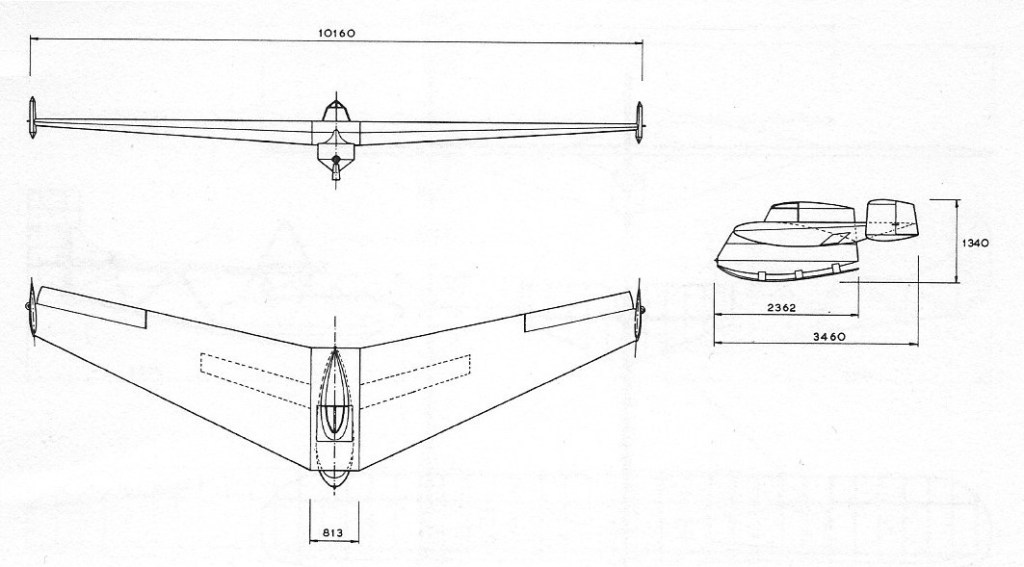
In the late 1930s, armies were looking for a way to airlift heavy military units. There were then no cargo aircraft big enough to lift a tank. A solution which was explored during the Second World War was to tow tanks as gliders, and for this wings had to be added. Most designs were based on straight wings with extended empennage and stabilizers. The design of L.E. Baynes in 1941 was for a 100 ft wing-span “Carrier Wing Glider” consisting chiefly of a swept wing with vertical stabilizers on the wing-tips.
A one-third scale prototype was built entirely of wood in 1943 by Slingsby Sailplanes at Kirkbymoorside, and the Baynes Bat made its first flight in July 1943 at the Airborne Forces Experimental Establishment at RAF Sherburn-in-Elmet, Yorkshire. Most of the test flights were piloted by Flight Lieutenant Robert Kronfeld.
Tests were successful, but the project was abandoned because a suitable tank was not then available and a decision had been made to develop gliders which could carry heavy equipment within their fuselages.
The one Bat which had been built was the first tailless flapped monoplane to be available for research and it was flown extensively by the Royal Aircraft Establishment to test the stability and control of tailless aircraft. The Bat was last seen in 1958, lying behind a hangar at Croydon Airport.
Wingspan: 33 ft 4 in (10.16 m) Length: 11 ft 4 in (3.46 m) Wing area: 160.0 sq ft (14.86 m2) Aspect ratio: 7 Height: 4 ft 4.8 in (1.340 m) Empty weight: 763 lb (346.1 kg) Gross weight: 963 lb (436.8 kg) Maximum speed: 120 mph; 104 kn (193 km/h) Cruising speed: 80 mph; 70 kn (129 km/h) Stall speed: 40 mph; 35 kn (64 km/h) Wing loading: 6.0 lb/sq ft (29.3 kg/m2) Crew: 1
This company was founded by Herr Baumer, who was killed in July 1927 while flight-testing a high-performance monoplane. In addition to operating a flying school at Hamburg, the company designed and manufactured a number of lightweight aircraft. Best known was the Baumer Sausewind, a two-seat low-wing monoplane.
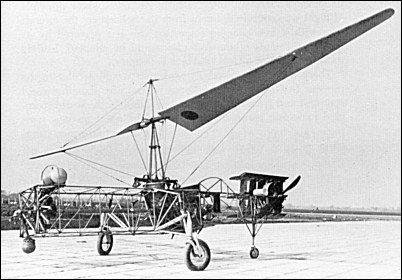
Dutchman A. G. von Baumhauer built a helicopter in 1925 that flew in a very limited fashion. Able to stay in the air only briefly, this unsuccessful machine had a single main rotor and a small vertical tail rotor to offset torque. It needed the weight of dangling chains at each corner to keep level. A separate engine powered the tail rotor, which operated independently of the main rotor.
In the mid-1930s this company built a two-seat tailless monoplane aircraft to the design of W. F. McGinty, a member of the instructional staff of the Boeing School of Aeronautics. It had a 75 hp Pobjoy engine with a pusher propeller.