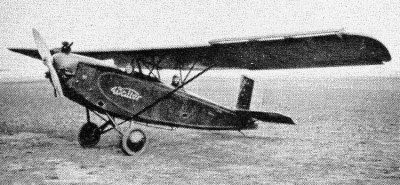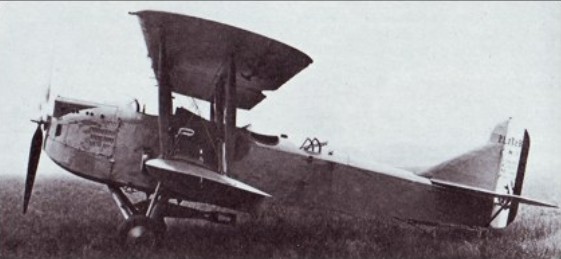
Levasseur PL.7

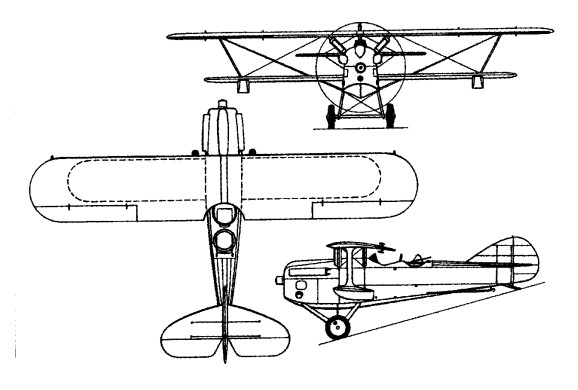
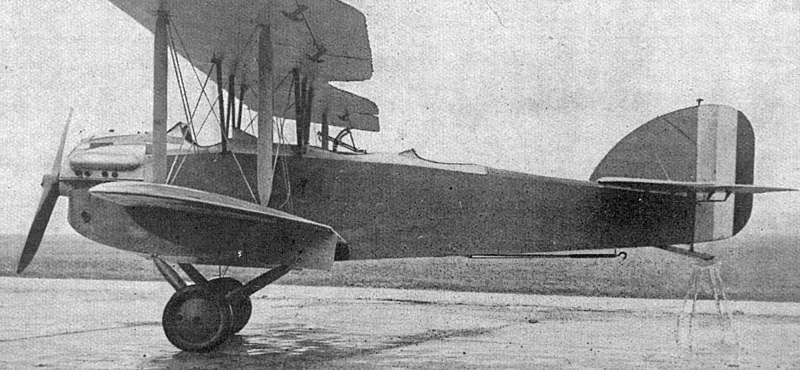
As a replacement torpedo-bomber for the PL 2, the prototype Levasseur PL 7 was a development of the PL 4. A a two-seat sesquiplane spanning 18.00m which was powered initially by a 410kW Farman 12We engine. The PL 7.01 was flown subsequently with both Hispano-Suiza and Renault powerplants; the wing struts were redesigned, the structure simplified, and the fin modified. Test flying in this revised form was resumed in 1928, two years after the prototype had first flown.
A series of 15 aircraft was ordered in 1929. Nine were delivered with the 18m wing but the French admiralty, uncertain of the more effective wing design, ordered five of the remaining aircraft to be delivered with 16.50m span wings of varying areas, the final machine having a span of 17.25m.

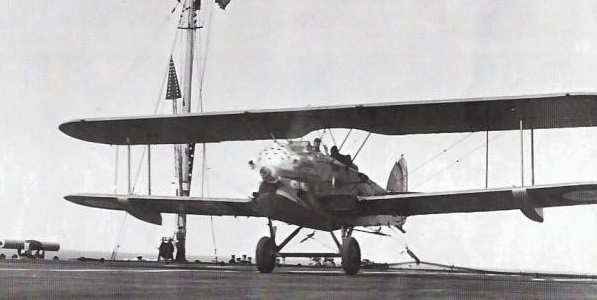
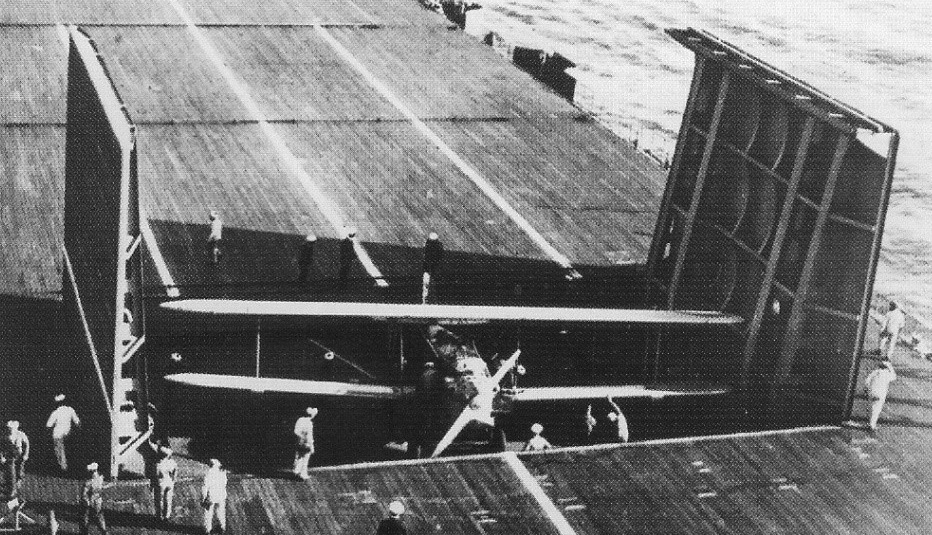
The various PL 7s went into service with Escadrille 7B1 on the carrier Beam from July 1930 and, after comparative tests, the 16.50m span wing with square-cut tips was selected for the definitive PL 7 T2B2b. The tips of the upper wing were hinged to fold downwards to fit the lifts aboard the Beam. Ten of the original PL 7s were modified to this new configuration and 30 new aircraft were ordered. When vibration problems resulted in the disintegration of two PL 7s in flight the type was grounded from June 1931. With strengthened wing bracing, reinforced engine bearers and three-bladed propellers they were returned to service from September 1932 onwards. In this final modified version the PL 7 had a maximum speed of 170km/h and maximum take-off weight of 3950kg. Armament comprised two 7.5mm machine-guns on a ring mounting operated by the observer, plus either a 670kg Type 400 torpedo or up to 510kg of bombs. Although totally obsolete, the PL 7 was still in first-line service aboard the Beam when war broke out in September 1939.
A PL 7T transport displayed at the 1926 Salon de I’Aeronautique was in fact a PL 4 with a Gnome-Rhone Jupiter 9ab radial and a deepened fuselage accommodating pilot and mechanic in side-by-side open cockpits, and with an enclosed cabin for six passengers. The PL 7T never flew and was scrapped when the salon closed.
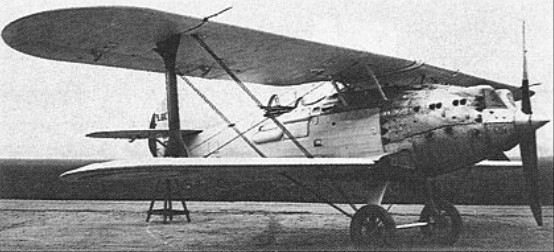
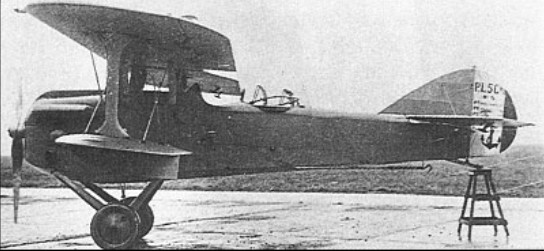
Levasseur PL.6

Designeded to meet the requirements of the 1925 C2 programme calling for a night/day two-seat fighter and reconnaissance aircraft, the P.L.6 C2 was a single-bay biplane powered by a 500hp Hispano-Suiza 12Hb twelve-cylinder Vee-type water-cooled engine. It carried an armament of two fixed forward-firing Vickers guns and two Lewis guns on a ring mounting in the rear cockpit.
The P.L.6 prototype entered flight test in 1926 and was displayed at the Salon de l’Aeronautique of that year in Paris. The P.L.6 was in competition with the Avimeta 88, the Mureaux 3 and 4, the Bleriot-SPAD 60, the Villiers 24 and the Wibault 12. In the event, the C2 programme was abandoned in 1928, and further development of the P.L.6 was discontinued.

Max take-off weight: 2175 kg / 4795 lb
Empty weight: 1350 kg / 2976 lb
Wingspan: 12.20 m / 40 ft 0 in
Length: 8.75 m / 28 ft 8 in
Height: 3.10 m / 10 ft 2 in
Wing area: 40.00 sq.m / 430.56 sq ft
Max. speed: 215 km/h / 134 mph
Range: 700 km / 435 miles

Levasseur PL.5

Designed by Jean Biche to meet a Navy requirement for a shipboard two-seat fighter from the carrier Beam, the P.L.5 C2b was a single-bay sesquiplane. Of wooden construction, the fuselage was watertight, the undercarriage jettisonable. Flush-fitting stabilising floats were provided to allow the aircraft to land on water in an emergency.

Four prototypes were built in 1924, the first, second and fourth having a 450hp Hispano-Suiza 12Ha and the third having a 480hp Renault 12Kd engine.

After successful trials at Saint-Raphael, a series of 20 aircraft was ordered, these being delivered between July and December 1926. The series version of the P.L.5 carried an armament of two forward-firing 7.7mm Vickers machine guns and twin Lewis guns of similar calibre on a ring mounting in the rear cockpit. Power was provided by a 450hp Lorraine- Dietrich water-cooled engine.

Max take-off weight: 1800 kg / 3968 lb
Empty weight: 1150 kg / 2535 lb
Wingspan: 12.40 m / 40 ft 8 in
Length: 8.80 m / 28 ft 10 in
Height: 3.10 m / 10 ft 2 in
Wing area: 37.00 sq.m / 398.26 sq ft
Ceiling: 7000m
Max. speed: 225 km/h / 140 mph
Range: 800 km / 497 miles

Levasseur PL.4

The Levasseur PL.4, aka Levasseur Marin, was a carrier-based reconnaissance aircraft produced in France in the 1920s.

The PL.4 was a conventional, single-bay biplane that carried a crew of three in tandem, open cockpits. Purchased by the Aéronavale to operate from the aircraft carrier Béarn, it incorporated several safety features in case of ditching at sea. Apart from small floats attached directly to the undersides of the lower wing, the main units of the fixed, tailskid undercarriage could be jettisoned in flight, and the underside of the fuselage was given a boat-like shape and made watertight.

To meet the 1924 A.3/R.3b (three seat observation and gunnery spotter aircraft) specification from the Service technique de l’aéronautique (STAé), one PL.4 A3 R3b was built.

Forty PL.4 were built, first flying in 1926.

PL 4 aboard Bearn

PL.4
Powerplant: 1 × Lorraine-Dietrich 12Eb W-12 340 kW (450 hp)
Propeller: 2-bladed fixed-pitch
Wingspan: 14.6 m (47 ft 11 in)
Wing area: 60 m2 (650 sq ft)
Width: 5.67 m (18 ft 7 in) wings folded
Length: 9.7 m (31 ft 10 in)
Height: 3.915 m (12 ft 10 in)
Empty weight: 1,650 kg (3,638 lb)
Gross weight: 2,550 kg (5,622 lb)
Maximum speed sea level: 175 km/h (109 mph, 94 kn)
Maximum speed 3,000 m (9,800 ft): 170 km/h (110 mph; 92 kn)
Range: 900 km (560 mi, 490 nmi)
Endurance: 5 hours
Service ceiling: 5,000 m (16,000 ft)
Time to 3,000 m (9,800 ft): 20 minutes
Wing loading: 43 kg/m2 (8.8 lb/sq ft)
Power/mass: 0.1337 kW/kg (0.0813 hp/lb)
Crew: 3

Letov Š.39 / Š.139 / Š.239

A two-seat, parasol monoplane sports plane (with HP slats) of 1931. After a prototype with a 36.8kW Orion LL-50 engine, 23 aircraft were built in 1934, powered by a 55 hp 3-cyl Walter Polaris radial engine.

An Š.139 development prototype (OK-ELA) of 1933 was powered by an 80 hp 7-cyl Pobjoy R radial.
Sixteen Š.239 developments were built, powered by an 85 hp 4-cyl Walter Minor 4. Ten went to flying clubs.

Engine: Walter Polaris, 40.5 kW / 55 hp
Propeller: two-blade wooden
Wingspan: 10,00 m
Length: 6,14 m
Wing Area: 14,00 m2
Empty Weight: 270 kg
Maximum Take-off Weight: 515 kg
Wing Loading: 36,8 kg/m2
Maximum Speed: 150 km/h
Cruise Speed: 130 km/h
Service Ceiling: 3300 m
Range: 480 km
Crew: 2-3
Undercarriage: fixed