Pottstown
PA
USA
Circa 1920s built aero engines
Pottstown
PA
USA
Circa 1920s built aero engines
Luftfarhzeug GmbH was founded by Krupp from the Flugmaschine Wright GmbH (originally Motorluftschiff Studiengesellschaft, 1906). PreFirst World War manufacturer of Parseval airships at Adlershof, subsequently adopted Roland as trade name.
Built Albatros B and C types under license at Charlottenberg until their own Roland C.ll of 1915. Built a series of 12 fighter designs, of which only the D.II was built in quantity during First World War.
Produced the V-19 Stralsund, the first aircraft designed for carriage by submarines. After the war converted and built civil aircraft until 1925, including singie-engined landplanes and seaplanes for civil airlines.
Operated a number of shorthaul routes around the Baltic.
Went into liquidation 1928.
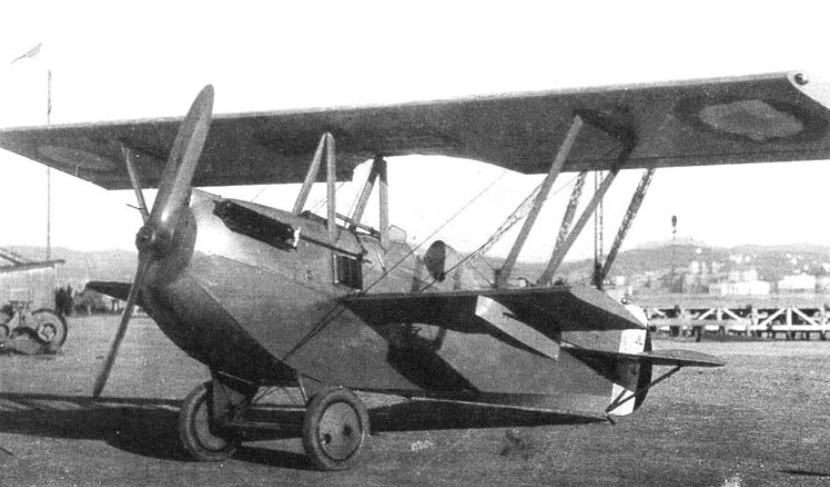
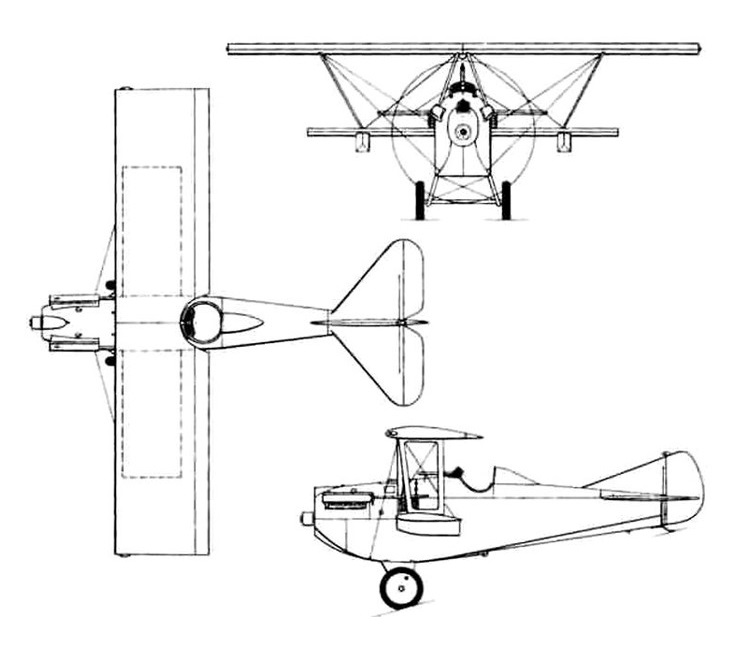
The Levy Biche LB.2 was a single seat French sesquiplane fighter aircraft designed to be used from aircraft carriers. With a watertight fuselage, jettisonable wheeled undercarriage and small under-wing floats, it could survive emergency sea touchdowns; it could also be fitted with seaplane type floats.
The LB.2 was designed as a shipboard fighter. It was a single bay sesquiplane, with outward leaning parallel pairs of interplane struts and wire cross bracing. The wings were strictly rectangular in plan, the lower plane smaller in both span and chord. The upper wing carried full span ailerons. Its flat sided fuselage was watertight and its belly deep; in emergency touchdowns at sea the undercarriage could be jettisoned with the aircraft stabilised with two small rectangular cross section, planing floats mounted on the lower wing underside below the interplane struts.
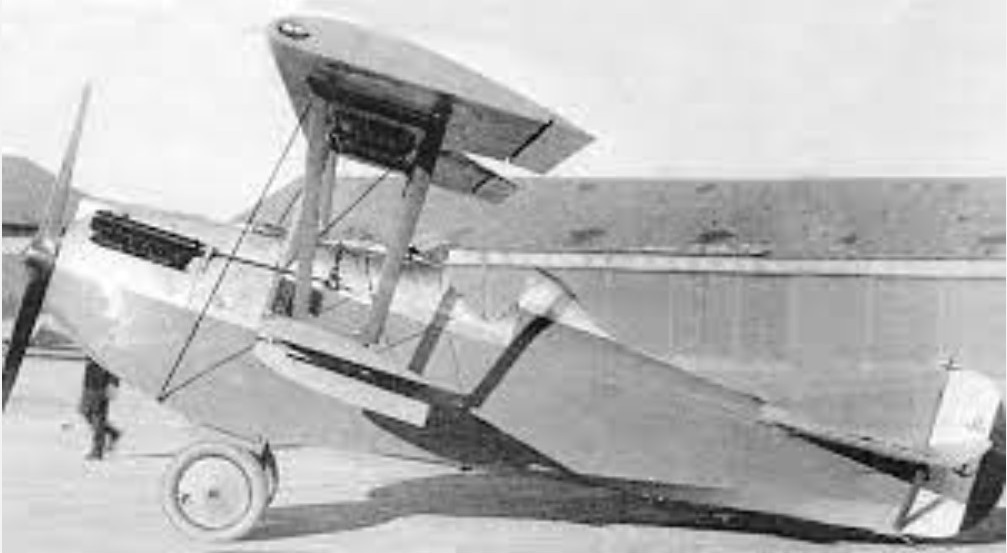
The LB 2 was powered by a 246 kW (330 hp) Hispano-Suiza 8Fe upright water-cooled V-8 engine. The upper wing was high above the fuselage on cabane struts and had a rounded cut-out in the trailing edge over the pilot’s open cockpit to enhance his view. He had a short, faired headrest. The fuselage tapered aft and had distinct narrow keel to enhance its water surface behaviour. The braced tailplane was wide chord and triangular in plan, carrying split elevators; the fin was also broad and triangular, with a deep, curved rudder that reached down to the bottom of the extreme keel, where there was a very small tailskid. The jettisonable main fixed conventional undercarriage structure had two short V-struts, supporting a wire cross braced single axle and mainwheels. Armament consisted of a pair of 7.7 mm (0.303 in) Vickers machine guns.
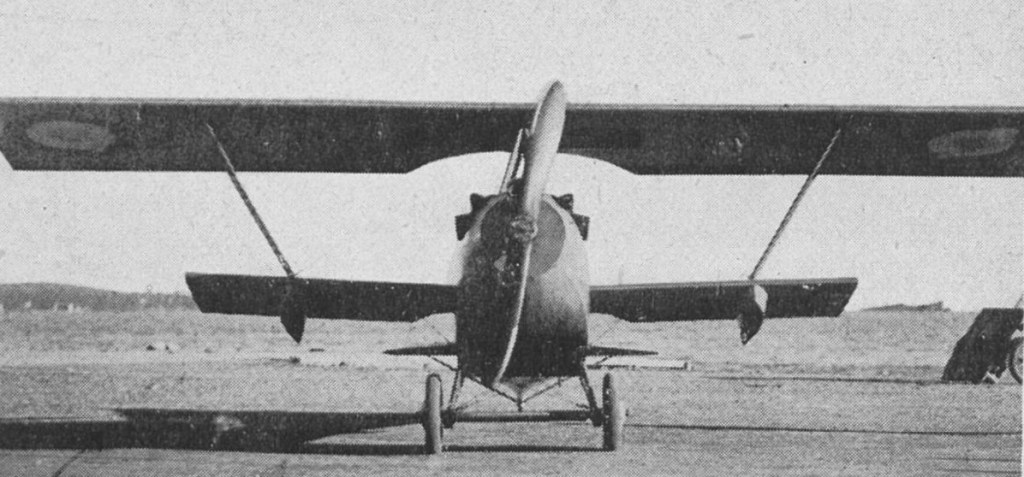
The first flight was in 1927 and by October that year it had also flown with seaplane style floats. Soon after, Constructions Aéronautiques J Levy became bankrupt and production rights were purchased by Etablissements P. Levasseur. The latter built twenty production aircraft during 1928-9, designated LB.2 AMBC.1, which served on the experimental French aircraft carrier Béarn, commissioned in May 1927, as well as from shore bases.
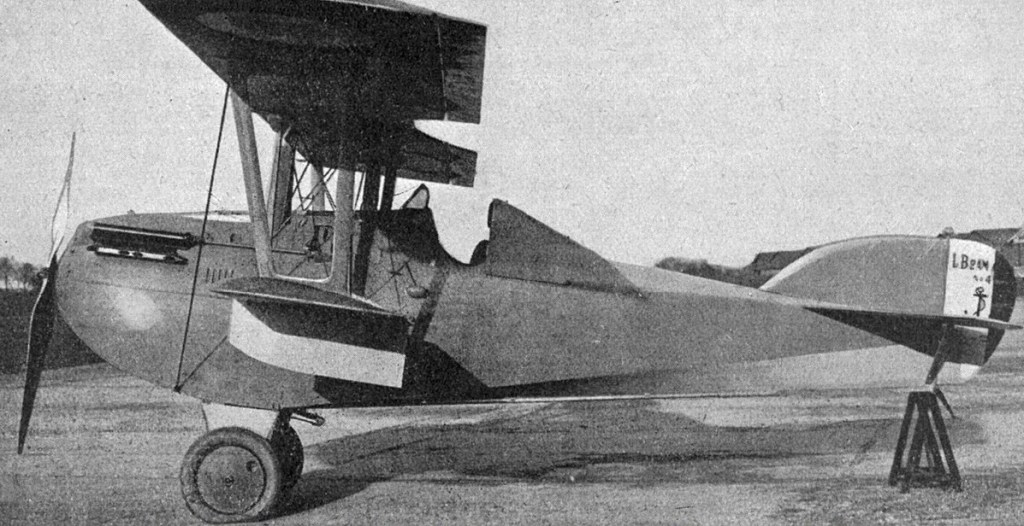
The LB.2 remained in service with French Naval Aviation until 1932, when they were replaced by Wibault 74 fighters.
Powerplant: 1 × Hispano-Suiza 8Fe, 250 kW (330 hp)
Propeller: 2-bladed fixed pitch
Wingspan: 10.40 m (34 ft 1 in)
Wing area: 24.00 m2 (258.3 sq ft)
Length: 7.525 m (24 ft 8 in)
Height: 3.488 m (11 ft 5 in)
Empty weight: 920 kg (2,028 lb)
Gross weight: 1,350 kg (2,976 lb)
Maximum speed: 219 km/h (136 mph, 118 kn)
Stall speed: 88 km/h (55 mph, 48 kn)
Time to 5,000 m (16,000 ft): 25 minutes
Wing loading: 55.4 kg/m2 (11.3 lb/sq ft)
Power/mass: 0.182 kW/kg (0.111 hp/lb)
Crew: One
Armament: 2× 7.7 mm (0.303 in) Vickers machine-guns
Twelve Levy-Lepen HB-2 reconnaissance flying-boats were operated in France by the U.S. Navy, and three were taken to U.S.A.
In 1915 Marcel Besson designed his first flying-boat, the development work and later production being carried out in the aircraft factory of Georges Levallois, a financier (Hydravions Georges Levallois et Levy). During First World War flying-boats and bombers were produced for the French Navy by Levy-Besson, the latter setting up in his own name after the war. Twelve Levy-Lepen HB-2 reconnaissance flying-boats were operated in France by the U.S. Navy, and three were taken to U.S.A.. Levy-Biche marine aircraft were built for French Navy to 1927, when production was taken over by Levasseur.
Final product of the company was the PL 400, built to an Armee de I’Air requirement, inspired by the German Fieseler Fi 156 Storch, for a STOL observation machine. A high-wing cabin monoplane powered by a Potez 9C radial of 164kW, the PL 400 flew for the first time on 19 December 1939, but German occupation put an end to construction of the PL 401 development with a Renault 6Q-09 engine of similar power.
The PL 200 monoplane was intended as an advanced reconnaissance seaplane, with a shoulder-wing mounted on a short nacelle for the three crew members, at the front of which was the 537kW Hispano-Suiza 9Vbrs radial engine.
Test-flown in February 1935, the PL 200 achieved a maximum speed of 225km/h by comparison with the 208km/h of the production PL 15. It was re-engined with a 552kW Gnome-Rhone 9Kfr engine in October 1935 as the PL 201, but development was abandoned soon afterwards
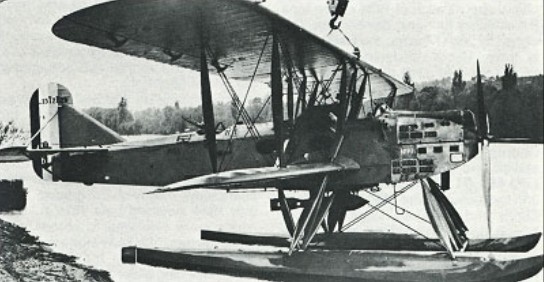
The prototype Levasseur PL 15 twin-float biplane flew for the first time with temporary wheel landing gear in October 1932. A production order for 16 aircraft as PL 15 T2B2b followed, these entering service from 1934 onwards with navy Escadrille 7B2 aboard the seaplane-carrier Commandant Teste. By comparison with the earlier PL 14, the PL 15 had a redesigned slender fuselage without the ‘avion marin’ type hull. Power was provided by a 485kW Hispano-Suiza 12Nbr engine, and the wings folded for storage aboard ship.
Surviving PL 15s, taken out of service at the end of 1938, formed Escadrille 3S6 for anti-submarine patrol along the Atlantic coast from September 1939 onwards. The PL 15 was armed with two 7.5mm machine-guns, and a torpedo or up to 450kg of bombs.
The PL 15 was developed into the PL 151, a mid-wing monoplane with a small stabilising plane mounted over the fuselage. A full-scale mock-up was built, but no further development was undertaken. The PL 154, converted from the fourth PL 15, was a three-seat landplane torpedo-carrier which was abandoned after limited test flying.
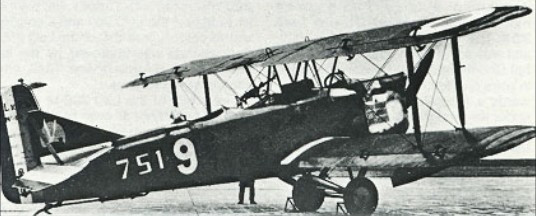
The PL 10 had equal-span folding wings, and the deep slab-sided fuselage had a hull-shaped undersurface. Armament comprised a single 7.5mm machine-gun operated by the pilot, plus twin 7.5mm guns operated by a gunner, whose cockpit was immediately behind that of the pilot. The observer, in the rear cockpit, had a Cayere-Montagne bomb-sight, and six 10kg bombs could be carried on underwing racks.
The prototype of the Levasseur PL 10 three-seat carrier reconnaissance (R.3b) biplane flew for the first time in the spring of 1929. Production of the PL 10 totalled 30 aircraft, and these began to enter service with carrier Escadrille 7S1 in 1931.
The PL 101.01 made its first flight in March 1933 differing from, the PL 10 in having wide-track landing gear and limited sweepback on the wings. Thirty production aircraft followed, these weighing 270kg more than the PL 10s in overload condition, but being credited with a maximum speed of 220km/h. PL 101s replaced the PL 10s on the Beam during 1935, and five were still in service at the outbreak of World War II.
Several projects were developed from the PL 101, the only ones built being the PL 107 (two prototypes) and the PL 108. They introduced a fuselage of improved aerodynamic shape, had wheel fairings for the fixed landing gear and a glazed crew canopy. Powered by a 552kW Gnome-Rhone 9Kfr, the PL 107 had a maximum speed of 235km/h, and the PL 108 with a 537kW Hispano-Suiza 9Vbrs radial could attain 266km/h.
Engine: 1 x Hispano-Suiza 12Lb, 447kW
Max take-off weight: 2880 kg / 6349 lb
Wingspan: 14.20 m / 46 ft 7 in
Max. speed: 198 km/h / 123 mph
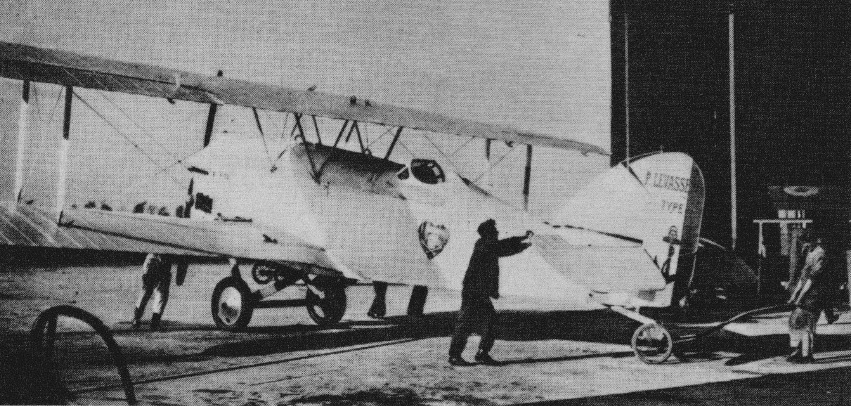
Upon his return to France Nungesser became interested in the possibility of being the first to fly between Paris and New York non-stop. Raymond Orteig had offered $25,000 to the first to accomplish this feat. Nungesser engaged Captain Francis Coli to act as navigator and approached the Levasseur Airplane Company to build a craft capable of the voyage.
By the spring of 1927 the plane was ready. It was a re-designed version of a three-place torpedo carrier plane powered by a single Lorraine-Detriech engine of 450 hp.
The large biplane contained many watertight compartments to ensure its safety if forced down en-route. In fact, Nungesser planned to land in the waters of New York harbour since the plane’s gear was to be jettisoned immediately after takeoff to save weight.
The machine was painted pure white and sported Nungesser’s wartime insigbia on its fuselage sides. Named “L;Oiseau-Blanc: (The White Bird) it took off from Le Bourget airfield at dawn on 8 May 1927. The craft with its two man crew was last seen at 6:48am over Le Harve heading westward across the Atlantic Ocean. Nothing more was ever heard of men or machine.

