A five-passenger high-wing monoplane tri-motor airliner of 1931. Power was by a 3 x 140 hp 14-cyl Walter Mars. Four were built.
The Š.328/528 series were reconnaissance/light bomber biplane developments of the Š.32.
Inter-Wars
Letov Š.231
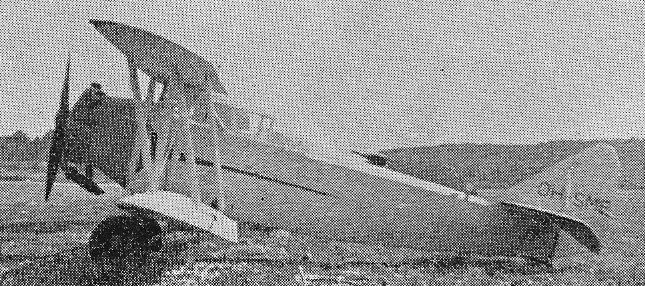
A 1933 development of the Š.31 with a new wing profile, the aircraft is open cockpit and radial engine with a separate exhaust collector ring and Townend ring cowling. Power was a 550 hp Bristol Mercury.
The single-bay wings have N-type interplane struts and centre section struts.
Only one prototype and 23 production examples were produced, and the Š.231 was briefly used by the 35th and 36th Squadrons of the 2nd Air Regiment of the Czechoslovak Air Force.
Characteristics being somewhat short of the desirable and an opportunity presenting itself to cut losses, the fighter was withdrawn, crated and shipped to Spain where circumstances were dictating a more generous attitude to the shortcomings of flying equipment. In Spain, it was assigned to the 2a Escuadrilla of the Grupo de Gaza nüm 71 of the Republican air arm. The operational career of the š -231 was to be less than outstanding in Spain, a number being lost in training accidents and lack of spares back¬ing resulting in something of a nightmare for the maintenance personnel.
The Czech-designed, Finnish-built S.231 Smolik OH-SME was fitted with an enclosed canopy.
Letov Š.31 / Š.131 / Š.331 / Š.431
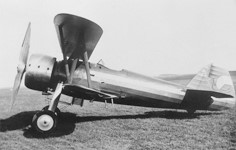
An all-metal single-engine, single-seat, biplane fighter/trainer of 1929. The Š.31 was based on S-20J with a 450 hp 9-cyl Walter Jupiter radial. Thirty-three were built.
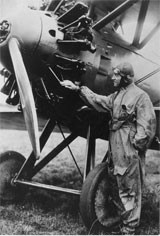
Variants:
Š.31A, Bristol Mercury (becomes S-231)
Š.131, 500 hp 9-cyl BMW Hornet, 3 built.
Š.331, prototype fighter, 1935 (sold to Spain), 880 hp 9-cyl Walter K-14 radial
Š.431, prototype fighter, 1936 (crashed on trials), 14-cyl AS Tiger III
Specifications:
S-131
Engine: 500 hp 9-cyl BMW Hornet
Wingspan: 9.8 m
Length: 7.15 m
Empty weight: 970 kg
Maximum speed: 292 kph
Climb to 5000m: 6 min 50 sec
Range: 450 km
Service ceiling: 10000 m
S-431
Engine: Armstrong Siddeley Tiger, 680 hp
Propeller: wooden two-blade
Wingspan: 10.06 m
Length: 7.9 m
Empty weight: 1310 kg
Top speed: 370 kph
Climb to 5000m: 6 min 58 sec
Service ceiling: 9500 m
Letov S.239
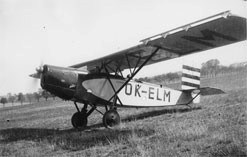
Wood-framed wings and tail-plane and fin covered by plywood, elevator and rudder by fabric. Fuselage steel-tube-framed, fabric-covered.
Letov S-239.16 (the 16th production S-239) was built in 1933. Ten were used by Flying Clubs and Masarykś Flying League units until March 15,1939.
An S-239 was powered by a British radial Pobjoy R engine. But the Pobjoy licence was not purchased and that reason for a Pobjoy-powered production of S-239s was not undertaken.
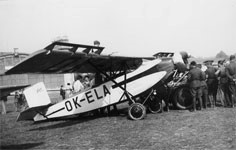
Engine: Walter Minor 4, 85 hp
Span : 10 m
Length: 6.14 m
Empty weight: 375 kg
Top speed: 174 kph
Climb to 1000 m: 5 min 16 sec
Range: 420 km
Crew: 2
Letov Š.28 / Š.128 / Š.228 / Š.328 / Š.428 / Š.528
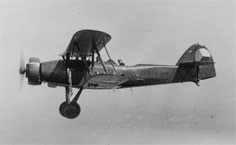
A two-seat reconnaissance biplane of 1928, powered by a 235 hp 9-cyl Walter Castor radial engine.
An Letov S-328 multi-role biplane was used for reconnaissance and light bombing, designed in 1932 for a Finnish customer`s demand to fit an strenghtened engine in the airframe of the S-228. The S-328 one was the most numerous in the Czechoslovak Air Force. Range of the recce and observer version was from 700 to 1280 km, service ceiling from 6300 to 7200 m.
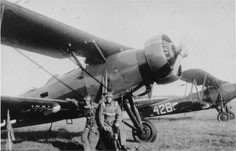
The 108th production S-328 was a bomber version powered by a 580 Walter Pegas II M-2 engine. It could carry a bombload of up to 500 kg, and range of 340 to 1250 km.
An observer of one of seven S-328 biplanes used by the Insurgent Flight during the Slovakian Uprising downed one German recce Focke-Wulf 189 in Sept 1944.
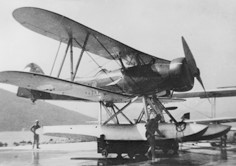
The Š.328V float-version of the S-328 type amounted two machines only, built 1925-1926. These were used for target- tug duties over the Adriatic Sea in the Boka Kotorska Region, where gunnery was practised bby the Czechoslovak artillery. Handling characteristics did not deteriorate by fitting the floats and neither center of gravity nor the fin was in the need of change. Made in the period.
Variants:
Š.128, 1931, 450 hp 9-cyl Walter Jupiter VI radial
Š.128SM with 500 hp 9-cyl Gnome-Rhône Mercure VII radial (became Š.228)
Š.228, 1931, as per Š.128SM (demonstrated to Finns with 500 hp 9-cyl P&W Hornet radial)
Š.228E, 1932, four export aircraft for Estonia
Š.328, reconnaissance aircraft, 1932, 730 hp Walter Pegasus III-M2
Š.328F, engine change prototype, 740 hp V-12 Avia Vr-36
Š.328FM, armaments change (Skoda vz. 30)
Š.328V, twin-float seaplane (Short Bros. floats)
Š.328W (S-328-2), as per Š.328F, 630 hp V-12 Avia Vr-36
Š.328N (Nachtjäger) Luftwaffe conversions for Störkampfstaffeln
Š.428, 1933, S-238W ground attack variant, 650 hp V-12 Avia Vr-36
Š.528, 1934, 800 hp 14-cyl Walter K14 (Gnome-Rhône Mistral Major 14 Krsd)
S-328
Wingspan 13.71 m
Length 10.36
Empty weight 1680 kg
Top speed 380 kph
Climb to 5000m: 17 min
Letov Š.25
A two-seat reconnaissance biplane of 1930, powered by a 295 hp kW V-8 Skoda HS 8Fb engine. Three were built.
Letov Š.24
A light night bomber biplane of 1927, developed from the Š.16.
Letov Š.22
A parasol monoplane fighter of 1926, powered by a 450 hp W-12 Skoda L (HS 50).
Letov Š.21
A single-seat biplane fighter of 1925, powered by a 180 hp V-8 Skoda HS 8Aa.
Generally similar to S-20 but with annular radiator.
Letov Š.20
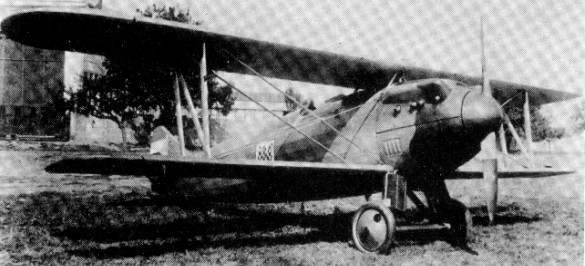
Flown in 1925, the S20 was an unequal-span single-bay biplane of mixed construction with a 300 hp Skoda HS 8Fb water-cooled engine with Lamblin strut-type radiators on the front undercarriage legs, armament comprising two synchro¬nised 7,7-mm Vickers machine guns.
Designed by Alois Smolik, the S-20 had a steel tube framed fuselage as well as fin , rudder and elevator fabric-covered. Wood-framed wings were covered by fabric, and a sheet metal plated cowling. Whereas the upper wing of the first prototype had no gap above the fuselage, the series model introduced a narrow gap and an inverted-vee cabane, the upper fuselage decking being recontoured to improve view from the cockpit.
In 1926, the Š 20 was the winning contender in a contest for a new fighter for the Czechoslovak Air Force, and a total of 105 was to be built for that service. The Š 20 took fourth place at the International Air Meeting in Zurich in 1927, the type serving with all three air regiments of the CzAF.
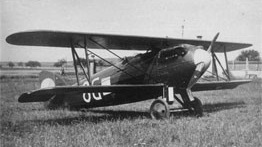
Ten examples were exported to the Latvian Air Force (as the Š 20L) with interchangable ski u/c in 1925, one experimental model was completed with a slimmer fuselage (as the Š 20R, also called S-20M). Another was fitted with a Walter¬built Bristol Jupiter air-cooled radial of 480 hp (as the Š 20J). This led to S-31 fighter. The Š 20J model attaining an altitude of 28,543 ft (8700 m).
S.20
Engine: Hispano Suiza 8 Fb, 300 hp
Wingspan: 9.70 m
Length 7.44 m
Empty weight: 728 kg
Maximum speed: 256 kph
Service ceiling: 7200 m
Range: 528 km
S.20
Engine: Skoda HS 8 Fb, 300 hp
Wingspan: 9.70 m
Length: 7.44 m
Empty weight: 728 kg
Climb to 5 00 m: 13 min 50 sec
Service ceiling: 7200 m
Range: 528 km
Š.20
Engine: 1 x 300 hp kW V-8 Skoda HS 8 Fb
Max speed, 160 mph (257 km/h)
Range, 328 mls (528 km)
Empty weight, 1,631 lb (740 kg)
Loaded weight, 2,315 lb (1 050 kg)
Span, 31 ft 6 in (9,60 m)
Length, 24 ft 4 9/10in (7,44 m)
Height, 8 ft 4.75 in (2,56 m)
Wing area, 198.06 sq.ft (l8,40 sq.m).
Armament: two synchro¬nised 7,7-mm Vickers machine guns
Š.20J
Engine: Walter¬built Bristol Jupiter, 480 hp
Max altitude: 28,543 ft (8700 m)
Š.20L
Undercarriage: ski/wheel
Š 20R / Š.20M

