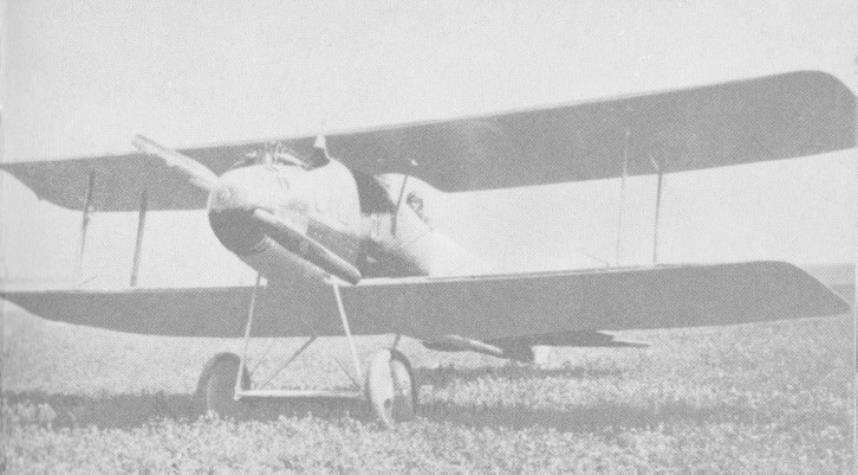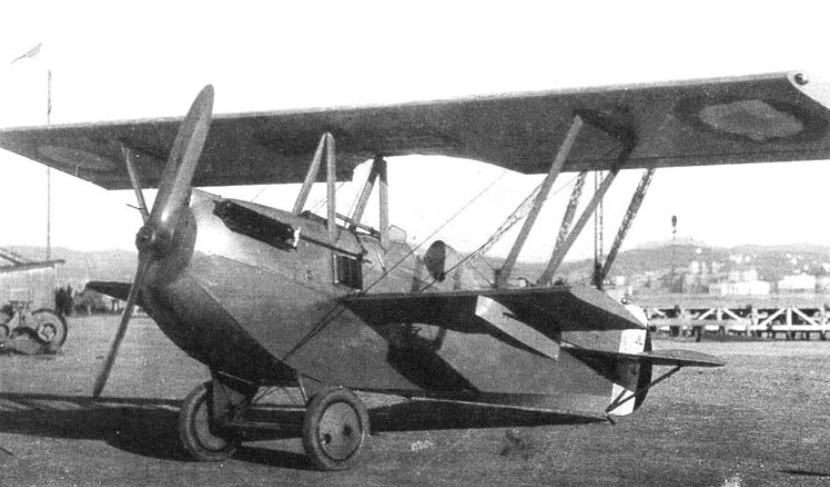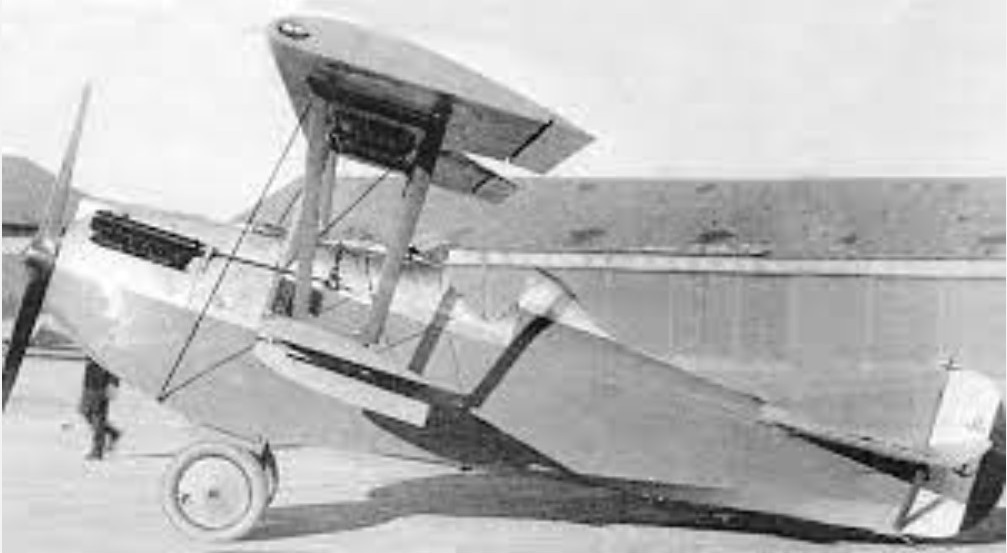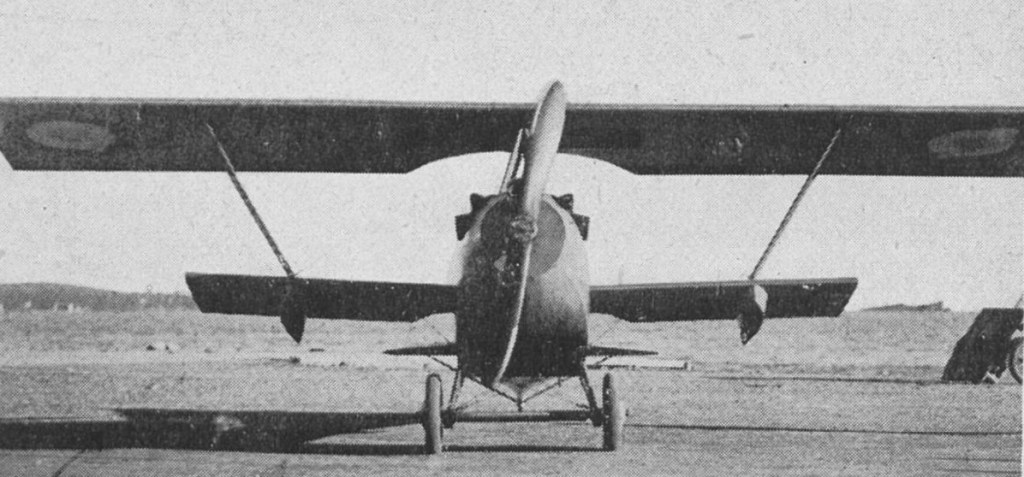
LFG Roland D.VI

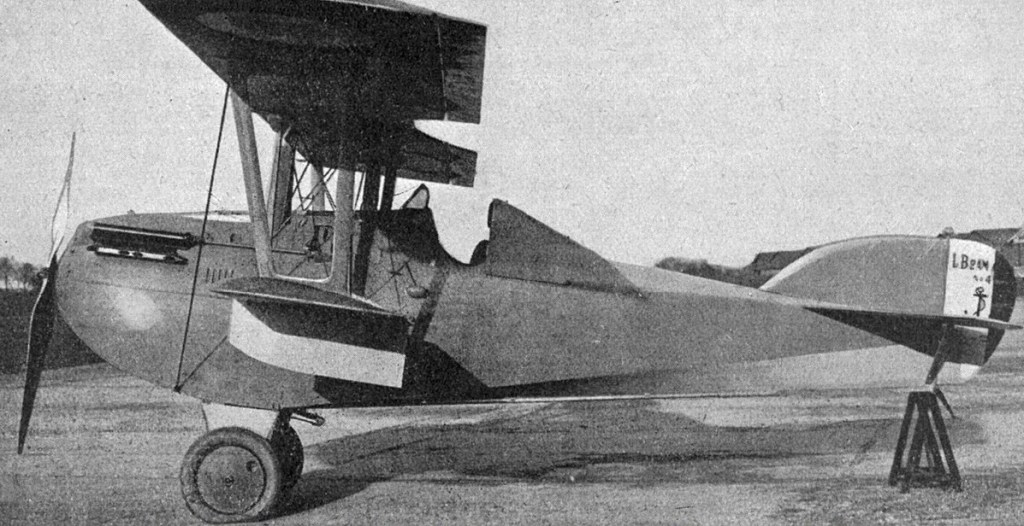
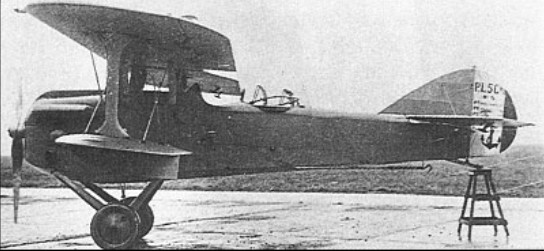
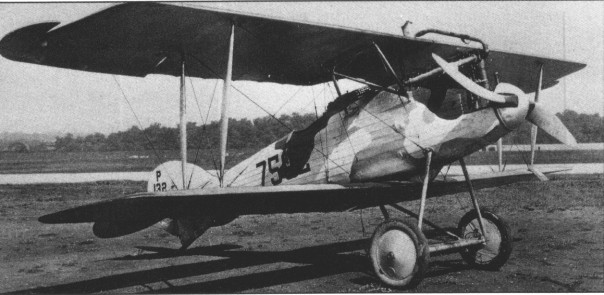
Late D.VIb tested at McCook Field post-war. Engine cowling removed for cooling

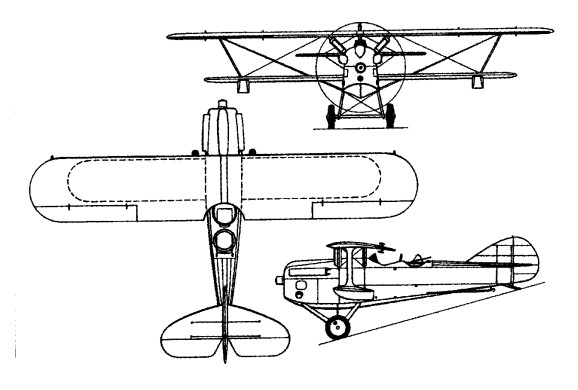
Late in 1917 the prototype D.VI appeared. The D VI followed the D II series and was built for the January 1918 German fighter competition. Two versions, one with a 160 hp water cooled Mercedes DIII engine and another with an improved 180 hp Mercedes, were entered in the fighter design competition of January 1918. There they lost to the Fokker that was to become the D.VII.
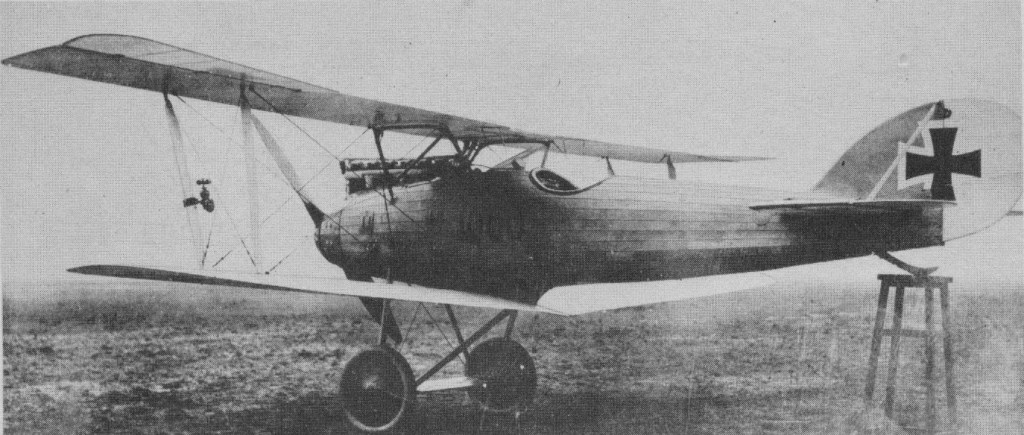
Prototype with original tail configuration and 160-hp Mercedes engine

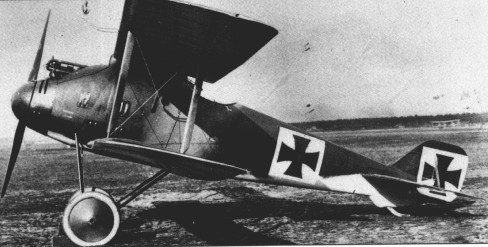
There was little to distinguish the standard production D.VIa from the earlier D.VIb other than the designation lettering on the side of the fuselage and the visible details of the different engines. Early models in each series had the radiator filler cap on the centre line of the upper wing while later models had it at the right side of the radiator. Late V.VI’s and all production S.VIb’s had a diagonal brace wire running from the lower rear wing strut to the upper wing overhang. Late model D.VIb’s were mostly identified by the installation on wider elevators which had aerodynamic balance areas extending forward to the hinge line. Serial numbers were not accurate because many D.VIb’s had earlier serials than late D.VIa’s.
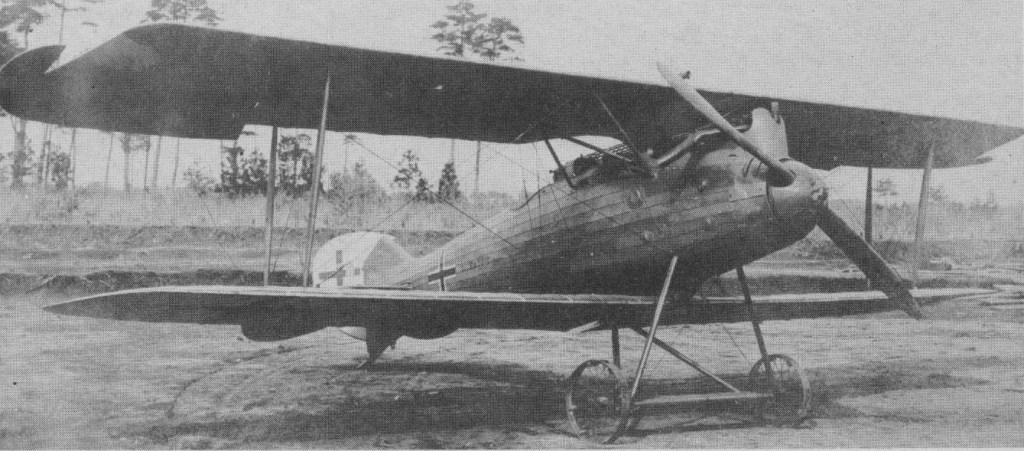
Late D.VIa 5012/18

The D.VI wings were built up of wood spars and ribs, fabric covered. While the stabiliser was wood and fabric, the vertical fin on all but a few of the experimental prototypes was plywood covered. A unique feature was the fuselage construction. Roland used longitudinal strips of solid wood tapered to conform to the fuselage lines and planed to a wedge-shaped cross section to allow overlapping of adjacent strips exactly like shiplap in a “clinker-built” boat. This was officially termed “Klinkerkonstruction” and was exclusive with Roland.

Centre section bracing consisted of two welded steel tube assemblies instead of individual struts; outer wing struts were wood. Landing gear struts were streamlined steel tubing cross-braced with wire. The axle, secured to the landing gear struts with rubber shock cord, was carried inside a streamlined spreader bar fairing hinged at its top to allow upward movement of the axle when under load. The lower wing was not attached to the bottom of the fuselage but mounted on a narrow external keel that projected below the fuselage proper. The rear landing gear struts also attached to this keel where it joined the rear wing spars.
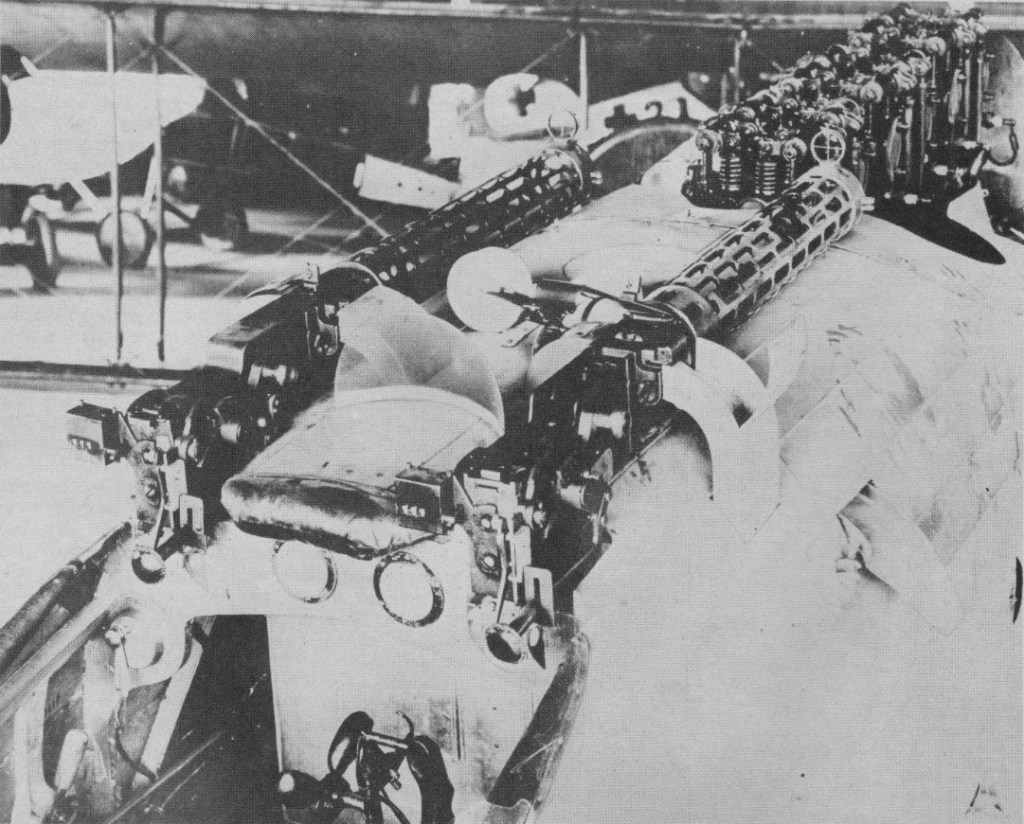
D.VIb – one of thirteen taken to USA

Installation of the radiator in a flat position in the centre section of the upper wing was standard practise. This type of installation was adequate in northern an central Europe but postwar tests of a C.VIb at McCook Field, Dayton, Ohio, revealed the cooling inadequate under American climatic conditions.

The aileron control system was adapted from that of the French Nieuport 11 and 17 in that a steel torque tube projected from the hinge line of the aileron to the centre section over the cockpit. Cables from control horns on the tube connected directly to a rocking beam under the control stick. The D.VI was the first German fighter to feature a horizontal stabiliser that could be adjusted for in-flight trim. The entire stabiliser pivoted about the rear spar. Other fighters with trim control had bungee springs or set screws attached to the stick.
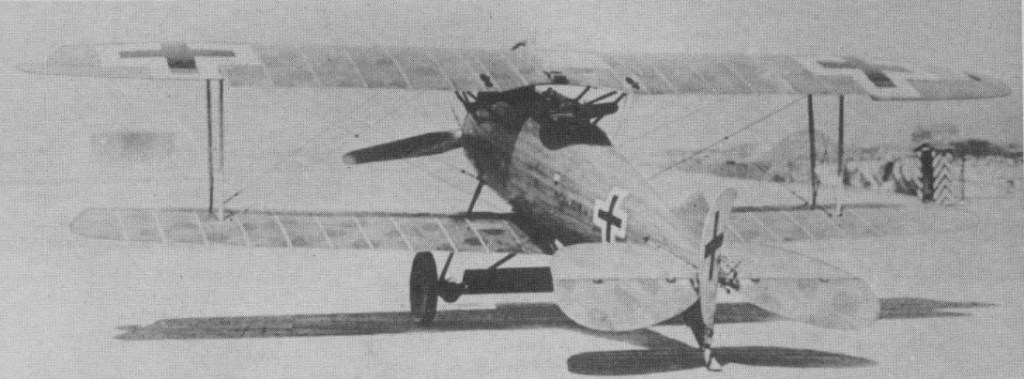
Early production D.VIb 2216/18 shows unbalanced elevators common to all A’s and early B’s.

Later evaluation resulted in production orders for two improved Rolands, the D.VIa with the 180 hp Mercedes and the D.VIb with a new model 185-200 hp Benz, another six cylinder. Both of these engines had been tested in experimental D.VI, which were themselves undergoing considerable aerodynamic refinement, and no special designations were applied to identify the various prototypes by powerplant or other feature.
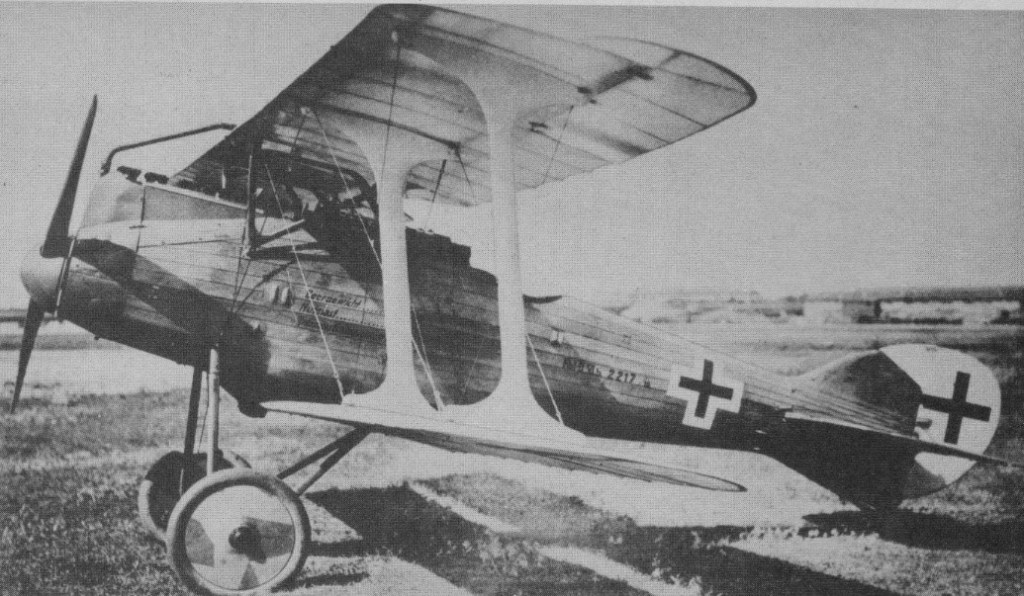
Experimental modification of early D.VIb 2217/18 with double-bay wings and I-struts

The Roland D.VI reached the front in service quantities shortly after the Fokker D.7. A few D VIs were used over the Western Front, while others went to the German navy for the defence of seaplane bases.
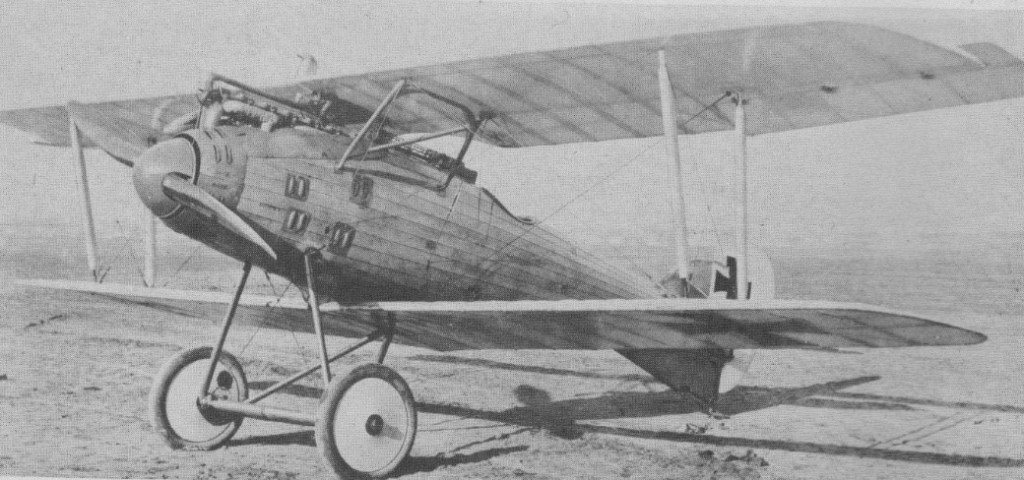
D.VI with original 160-hp Mercedes, vertical tail has added balance area. Balanced ailerons also installed.

Gallery

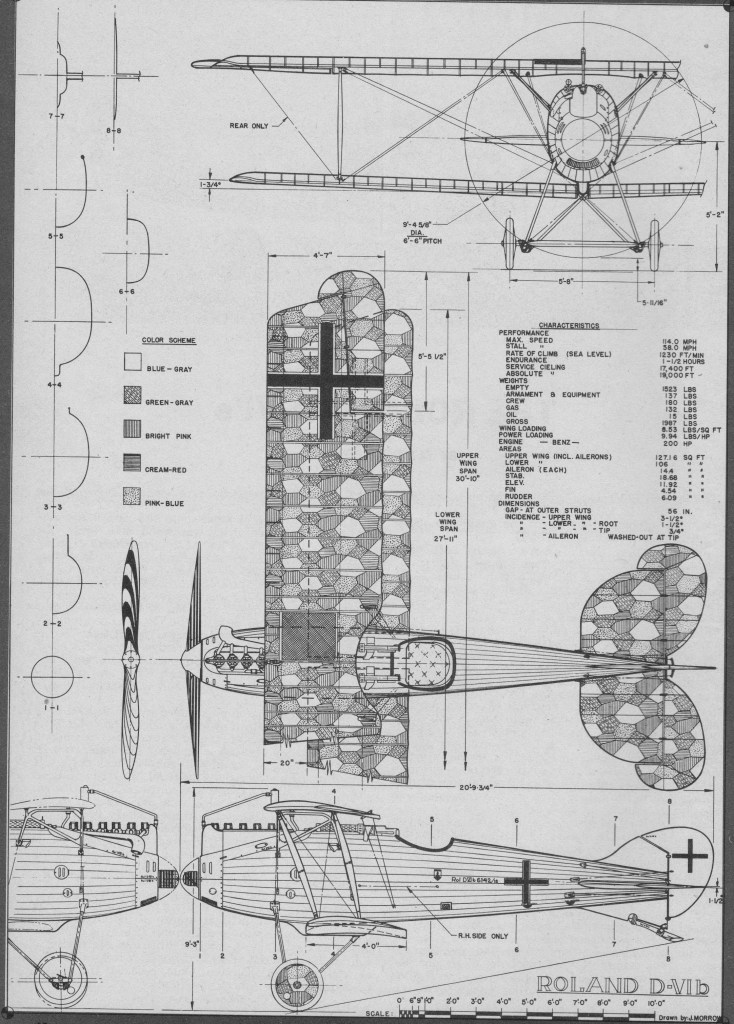
D.VI / D.VIa
Engine: Mercedes DIII, 119-kW (160-hp).

D.VIb
Span: 9.4m (30ft l0in)
Length: 6.3m (20ft 8in)
Powerplant: l x Benz Bz.IIIa, 149kW (200 hp)
Armament: 2 x 7.92-mm (0.312-in) LMG 08/15 mg
Max T/O weight: 860 kg (1,896 lb)
Max speed: 114 mph
Operational endurance: 2 hr
LFG Roland D.II

As a result of the success of the Roland C.II two-seater, Roland began building a single-seat fighter on the same lines. The resulting D.I first flew in July 1916, and after refinement became the D.II.

A single bay biplane, the two-spar wings, with fabric covering, had ailerons on the top wing only. The plywood covered wooden semi-monocoque fuselage with integral fin. The control surface were fabric covered steel tube.

The D II, which retained the same 119-kW (160-hp) Mercedes DIII engine but featured a number of drag-reducing revisions as well as a modified empennage. Armament wa on the top of the forward fuselage.

The D II began to enter service early in 1917, and was complemented by the D lIa with a more powerful 180 hp Argus engine.

D.IIa

They were flown mainly on the quieter sectors of the Western Front and did not normally equip completely any squadrons. The D II and D la were not popular in service, pilots complaining about lack of vision and heavy controls.

About 300 were built.

D.II
Engine: Mercedes DIII, 119-kW (160-hp).

D.IIa
Engine: Argus As.III, 180 hp
Wing span: 29 ft 2.5 in
Wing area: 236.8 sq.ft
Length: 22 ft 9 in
Height: 9 ft 8 in
Empty weight: 1400 lb
MTOW: 1753 lb
Max speed: 112 mph at SL
Endurance: 2 hr
Armament: 2 x Spandau

Levy-Biche LB 2 / Levasseur LB.2

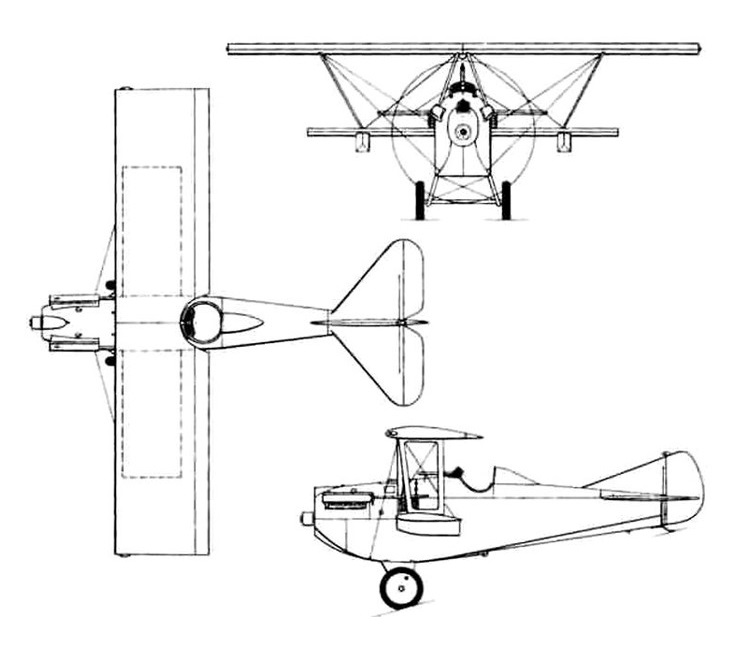
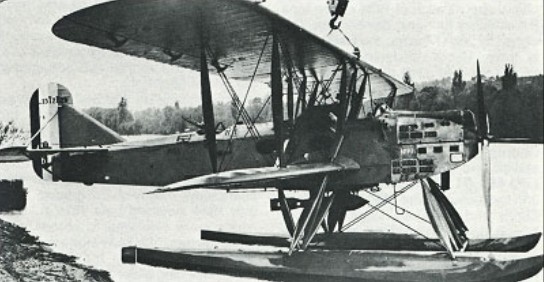
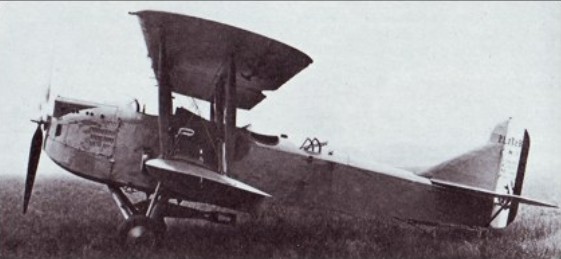
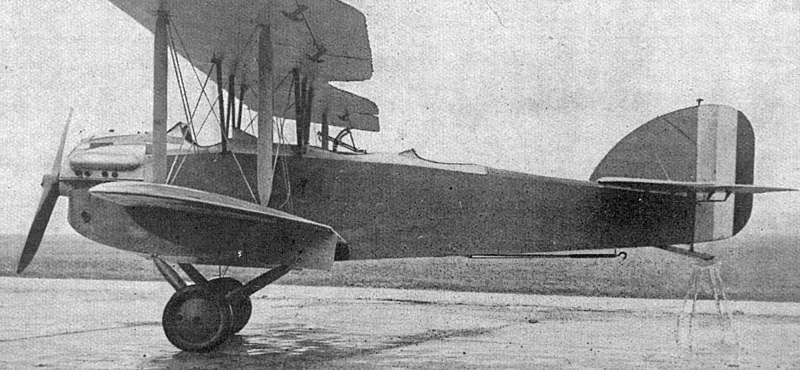
The Levy Biche LB.2 was a single seat French sesquiplane fighter aircraft designed to be used from aircraft carriers. With a watertight fuselage, jettisonable wheeled undercarriage and small under-wing floats, it could survive emergency sea touchdowns; it could also be fitted with seaplane type floats.

The LB.2 was designed as a shipboard fighter. It was a single bay sesquiplane, with outward leaning parallel pairs of interplane struts and wire cross bracing. The wings were strictly rectangular in plan, the lower plane smaller in both span and chord. The upper wing carried full span ailerons. Its flat sided fuselage was watertight and its belly deep; in emergency touchdowns at sea the undercarriage could be jettisoned with the aircraft stabilised with two small rectangular cross section, planing floats mounted on the lower wing underside below the interplane struts.

The LB 2 was powered by a 246 kW (330 hp) Hispano-Suiza 8Fe upright water-cooled V-8 engine. The upper wing was high above the fuselage on cabane struts and had a rounded cut-out in the trailing edge over the pilot’s open cockpit to enhance his view. He had a short, faired headrest. The fuselage tapered aft and had distinct narrow keel to enhance its water surface behaviour. The braced tailplane was wide chord and triangular in plan, carrying split elevators; the fin was also broad and triangular, with a deep, curved rudder that reached down to the bottom of the extreme keel, where there was a very small tailskid. The jettisonable main fixed conventional undercarriage structure had two short V-struts, supporting a wire cross braced single axle and mainwheels. Armament consisted of a pair of 7.7 mm (0.303 in) Vickers machine guns.

The first flight was in 1927 and by October that year it had also flown with seaplane style floats. Soon after, Constructions Aéronautiques J Levy became bankrupt and production rights were purchased by Etablissements P. Levasseur. The latter built twenty production aircraft during 1928-9, designated LB.2 AMBC.1, which served on the experimental French aircraft carrier Béarn, commissioned in May 1927, as well as from shore bases.

The LB.2 remained in service with French Naval Aviation until 1932, when they were replaced by Wibault 74 fighters.

Levy-Biche LB 2 Article

Powerplant: 1 × Hispano-Suiza 8Fe, 250 kW (330 hp)
Propeller: 2-bladed fixed pitch
Wingspan: 10.40 m (34 ft 1 in)
Wing area: 24.00 m2 (258.3 sq ft)
Length: 7.525 m (24 ft 8 in)
Height: 3.488 m (11 ft 5 in)
Empty weight: 920 kg (2,028 lb)
Gross weight: 1,350 kg (2,976 lb)
Maximum speed: 219 km/h (136 mph, 118 kn)
Stall speed: 88 km/h (55 mph, 48 kn)
Time to 5,000 m (16,000 ft): 25 minutes
Wing loading: 55.4 kg/m2 (11.3 lb/sq ft)
Power/mass: 0.182 kW/kg (0.111 hp/lb)
Crew: One
Armament: 2× 7.7 mm (0.303 in) Vickers machine-guns

Levasseur PL.15 / PL.151 / PL.154

The prototype Levasseur PL 15 twin-float biplane flew for the first time with temporary wheel landing gear in October 1932. A production order for 16 aircraft as PL 15 T2B2b followed, these entering service from 1934 onwards with navy Escadrille 7B2 aboard the seaplane-carrier Commandant Teste. By comparison with the earlier PL 14, the PL 15 had a redesigned slender fuselage without the ‘avion marin’ type hull. Power was provided by a 485kW Hispano-Suiza 12Nbr engine, and the wings folded for storage aboard ship.

Surviving PL 15s, taken out of service at the end of 1938, formed Escadrille 3S6 for anti-submarine patrol along the Atlantic coast from September 1939 onwards. The PL 15 was armed with two 7.5mm machine-guns, and a torpedo or up to 450kg of bombs.

The PL 15 was developed into the PL 151, a mid-wing monoplane with a small stabilising plane mounted over the fuselage. A full-scale mock-up was built, but no further development was undertaken. The PL 154, converted from the fourth PL 15, was a three-seat landplane torpedo-carrier which was abandoned after limited test flying.

Levasseur PL.7

As a replacement torpedo-bomber for the PL 2, the prototype Levasseur PL 7 was a development of the PL 4. A a two-seat sesquiplane spanning 18.00m which was powered initially by a 410kW Farman 12We engine. The PL 7.01 was flown subsequently with both Hispano-Suiza and Renault powerplants; the wing struts were redesigned, the structure simplified, and the fin modified. Test flying in this revised form was resumed in 1928, two years after the prototype had first flown.
A series of 15 aircraft was ordered in 1929. Nine were delivered with the 18m wing but the French admiralty, uncertain of the more effective wing design, ordered five of the remaining aircraft to be delivered with 16.50m span wings of varying areas, the final machine having a span of 17.25m.

The various PL 7s went into service with Escadrille 7B1 on the carrier Beam from July 1930 and, after comparative tests, the 16.50m span wing with square-cut tips was selected for the definitive PL 7 T2B2b. The tips of the upper wing were hinged to fold downwards to fit the lifts aboard the Beam. Ten of the original PL 7s were modified to this new configuration and 30 new aircraft were ordered. When vibration problems resulted in the disintegration of two PL 7s in flight the type was grounded from June 1931. With strengthened wing bracing, reinforced engine bearers and three-bladed propellers they were returned to service from September 1932 onwards. In this final modified version the PL 7 had a maximum speed of 170km/h and maximum take-off weight of 3950kg. Armament comprised two 7.5mm machine-guns on a ring mounting operated by the observer, plus either a 670kg Type 400 torpedo or up to 510kg of bombs. Although totally obsolete, the PL 7 was still in first-line service aboard the Beam when war broke out in September 1939.
A PL 7T transport displayed at the 1926 Salon de I’Aeronautique was in fact a PL 4 with a Gnome-Rhone Jupiter 9ab radial and a deepened fuselage accommodating pilot and mechanic in side-by-side open cockpits, and with an enclosed cabin for six passengers. The PL 7T never flew and was scrapped when the salon closed.

Levasseur PL.5

Designed by Jean Biche to meet a Navy requirement for a shipboard two-seat fighter from the carrier Beam, the P.L.5 C2b was a single-bay sesquiplane. Of wooden construction, the fuselage was watertight, the undercarriage jettisonable. Flush-fitting stabilising floats were provided to allow the aircraft to land on water in an emergency.

Four prototypes were built in 1924, the first, second and fourth having a 450hp Hispano-Suiza 12Ha and the third having a 480hp Renault 12Kd engine.

After successful trials at Saint-Raphael, a series of 20 aircraft was ordered, these being delivered between July and December 1926. The series version of the P.L.5 carried an armament of two forward-firing 7.7mm Vickers machine guns and twin Lewis guns of similar calibre on a ring mounting in the rear cockpit. Power was provided by a 450hp Lorraine- Dietrich water-cooled engine.

Max take-off weight: 1800 kg / 3968 lb
Empty weight: 1150 kg / 2535 lb
Wingspan: 12.40 m / 40 ft 8 in
Length: 8.80 m / 28 ft 10 in
Height: 3.10 m / 10 ft 2 in
Wing area: 37.00 sq.m / 398.26 sq ft
Ceiling: 7000m
Max. speed: 225 km/h / 140 mph
Range: 800 km / 497 miles

Levasseur PL.4

The Levasseur PL.4, aka Levasseur Marin, was a carrier-based reconnaissance aircraft produced in France in the 1920s.

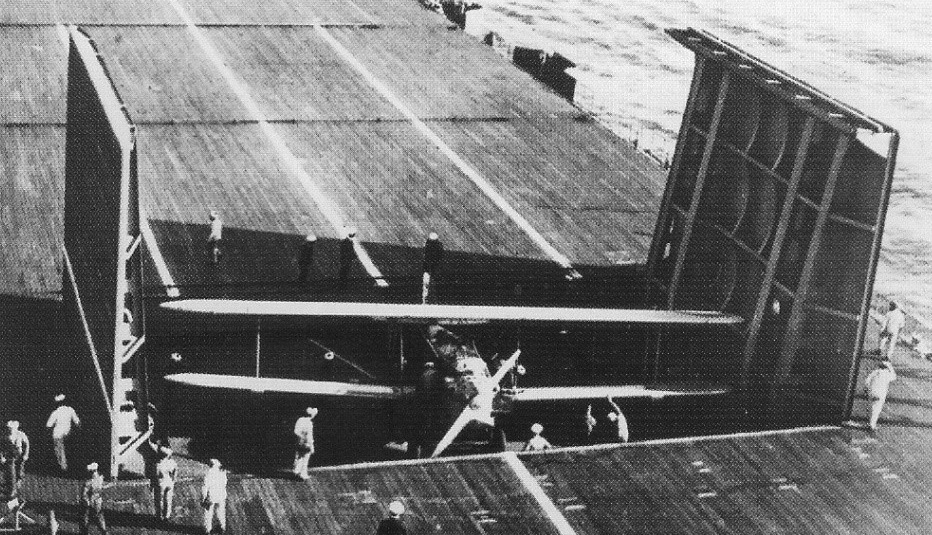
The PL.4 was a conventional, single-bay biplane that carried a crew of three in tandem, open cockpits. Purchased by the Aéronavale to operate from the aircraft carrier Béarn, it incorporated several safety features in case of ditching at sea. Apart from small floats attached directly to the undersides of the lower wing, the main units of the fixed, tailskid undercarriage could be jettisoned in flight, and the underside of the fuselage was given a boat-like shape and made watertight.

To meet the 1924 A.3/R.3b (three seat observation and gunnery spotter aircraft) specification from the Service technique de l’aéronautique (STAé), one PL.4 A3 R3b was built.

Forty PL.4 were built, first flying in 1926.

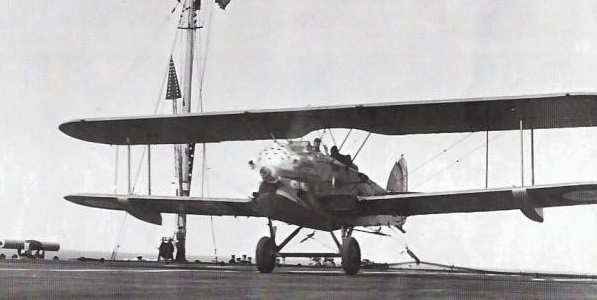
PL 4 aboard Bearn

PL.4
Powerplant: 1 × Lorraine-Dietrich 12Eb W-12 340 kW (450 hp)
Propeller: 2-bladed fixed-pitch
Wingspan: 14.6 m (47 ft 11 in)
Wing area: 60 m2 (650 sq ft)
Width: 5.67 m (18 ft 7 in) wings folded
Length: 9.7 m (31 ft 10 in)
Height: 3.915 m (12 ft 10 in)
Empty weight: 1,650 kg (3,638 lb)
Gross weight: 2,550 kg (5,622 lb)
Maximum speed sea level: 175 km/h (109 mph, 94 kn)
Maximum speed 3,000 m (9,800 ft): 170 km/h (110 mph; 92 kn)
Range: 900 km (560 mi, 490 nmi)
Endurance: 5 hours
Service ceiling: 5,000 m (16,000 ft)
Time to 3,000 m (9,800 ft): 20 minutes
Wing loading: 43 kg/m2 (8.8 lb/sq ft)
Power/mass: 0.1337 kW/kg (0.0813 hp/lb)
Crew: 3

Letov Š.231

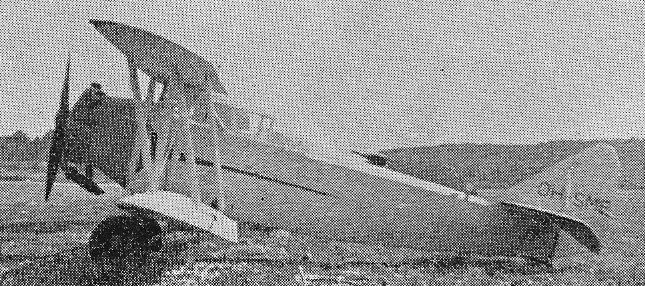
S.231 Smolik OH-SME

A 1933 development of the Š.31 with a new wing profile, the aircraft is open cockpit and radial engine with a separate exhaust collector ring and Townend ring cowling. Power was a 550 hp Bristol Mercury.
The single-bay wings have N-type interplane struts and centre section struts.

Only one prototype and 23 production examples were produced, and the Š.231 was briefly used by the 35th and 36th Squadrons of the 2nd Air Regiment of the Czechoslovak Air Force.
Characteristics being somewhat short of the desirable and an opportunity presenting itself to cut losses, the fighter was withdrawn, crated and shipped to Spain where circumstances were dictating a more generous attitude to the shortcomings of flying equipment. In Spain, it was assigned to the 2a Escuadrilla of the Grupo de Gaza nüm 71 of the Republican air arm. The operational career of the š -231 was to be less than outstanding in Spain, a number being lost in training accidents and lack of spares back¬ing resulting in something of a nightmare for the maintenance personnel.

The Czech-designed, Finnish-built S.231 Smolik OH-SME was fitted with an enclosed canopy.

Letov Š.28 / Š.128 / Š.228 / Š.328 / Š.428 / Š.528

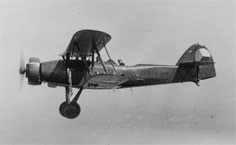
S-328

A two-seat reconnaissance biplane of 1928, powered by a 235 hp 9-cyl Walter Castor radial engine.

Letov S.328 Article

An Letov S-328 multi-role biplane was used for reconnaissance and light bombing, designed in 1932 for a Finnish customer`s demand to fit an strenghtened engine in the airframe of the S-228. The S-328 one was the most numerous in the Czechoslovak Air Force. Range of the recce and observer version was from 700 to 1280 km, service ceiling from 6300 to 7200 m.

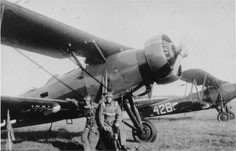
S-328

The 108th production S-328 was a bomber version powered by a 580 Walter Pegas II M-2 engine. It could carry a bombload of up to 500 kg, and range of 340 to 1250 km.

An observer of one of seven S-328 biplanes used by the Insurgent Flight during the Slovakian Uprising downed one German recce Focke-Wulf 189 in Sept 1944.

Š.328V

The Š.328V float-version of the S-328 type amounted two machines only, built 1925-1926. These were used for target- tug duties over the Adriatic Sea in the Boka Kotorska Region, where gunnery was practised bby the Czechoslovak artillery. Handling characteristics did not deteriorate by fitting the floats and neither center of gravity nor the fin was in the need of change. Made in the period.

Variants:

Š.128, 1931, 450 hp 9-cyl Walter Jupiter VI radial
Š.128SM with 500 hp 9-cyl Gnome-Rhône Mercure VII radial (became Š.228)
Š.228, 1931, as per Š.128SM (demonstrated to Finns with 500 hp 9-cyl P&W Hornet radial)
Š.228E, 1932, four export aircraft for Estonia
Š.328, reconnaissance aircraft, 1932, 730 hp Walter Pegasus III-M2
Š.328F, engine change prototype, 740 hp V-12 Avia Vr-36
Š.328FM, armaments change (Skoda vz. 30)
Š.328V, twin-float seaplane (Short Bros. floats)
Š.328W (S-328-2), as per Š.328F, 630 hp V-12 Avia Vr-36
Š.328N (Nachtjäger) Luftwaffe conversions for Störkampfstaffeln
Š.428, 1933, S-238W ground attack variant, 650 hp V-12 Avia Vr-36
Š.528, 1934, 800 hp 14-cyl Walter K14 (Gnome-Rhône Mistral Major 14 Krsd)

S-328
Wingspan 13.71 m
Length 10.36
Empty weight 1680 kg
Top speed 380 kph
Climb to 5000m: 17 min