Arkle (R&D) Ltd was formed by A. Ronald Kellett to undertake the development of the improved Mitchell Kittiwake II, known as the Arkle Kittiwake II.
Manufacturer
Arjanguelsky, Alexander Alexandrovich
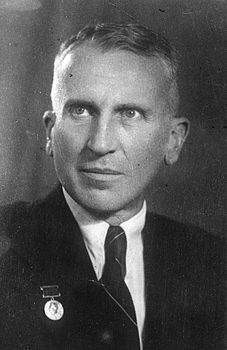
Alexander Alexandrovich Arjanguelsky (Russian: Александр Александрович Архангельский) was born on December 17 (29), 1892 in Kazan. In 1911 he entered the Faculty of Physics-Mathematics of the Moscow State University, but in 1912 he transferred to the Moscow Higher Technical College (MVTU).
During his studies he worked in the aerodynamic laboratory together with N. Ye. Zhukovski in revising the calculations for the gigantic Sviatagor plane. In this period he met important personalities of Soviet aeronautics such as AN Tupolev, BS Stiechkin, VP Vetchinkin and AA Mikulin.
Upon graduation in 1918 he began to work at the newly created State Central Institute of Aerohydrodynamics.
After the was created Bureau of Construction of Tupolev in TsAGI, he joined this and participated in the development of the entire line ANT. In 1922 he was appointed assistant to Andréi Nikoláyevich Túpolev and from 1926 as a substitute for the main builder. As of 1932 he became head of the fast aircraft department. His main works include the direction of the first modern Soviet bomber, the SB (С коростной Б омбардировщик or Fast Bomber) or ANT-40 and its development as a civil transport aircraft called PS-35 (П ассажирский С амолет No. 35 or Passenger Plane No. 35).
Starting in 1936, he went on to direct his own Construction Bureau (KB) located in Factory No.22 and was responsible for the mass production of the SB and the design of the Ar-2 and SB-B aircraft.
In 1938 and as a result of a false accusation, he was arrested. He was assigned to the special construction bureau TsKB-29 NKVD from where he left in 1941, proving blameless.
From 1941 Arjanguelsky was evacuated to Omsk with the Tupolev KB and from 1942 he was appointed chief designer, participating in virtually all projects in the KB, both military and civilian.
In 1943 Alexander Arjanguelsky returned to Moscow and was reassigned to Factory No. 156 which was responsible for the production of parts and maintenance to maintain the existing fleet of SB bombers, as well as the modernization of the Tupolev Tu-2s.
When he received an order from Stalin in late 1945 to work hard on the development of the Tu-4 bomber, Arjanguelsky became Tupolev’s right hand man. In the summer of 1947 the Tu-4 bombers were ready to participate in the air parade over Red Square. For his important contribution to the development of Soviet aeronautical technology, he was awarded the title of Hero of Socialist Labor.
From 1971 Arjanguelsky was selected as president of the Scientific-Technical Council and Principal Constructor of the Bureau of Experimental Constructions (OKB) AN Túpolev.
Alexander Arjanguelsky died on December 18, 1978. He was buried in Moscow.
Awards and distinctions
Hero of Socialist Labor (August 8, 1947) for his decisive participation in the development of the strategic bomber Tu-4.
Six Order of Lenin (1933 for the 15th anniversary of the TsAGI, 1945, 1947, 1957 and 1958).
Order of the October Revolution (1971).
Four Order of the Red Banner of Labor (1939, 1963).
Two Order of the Red Star (1936, 1944).
Honorary Personality of Science and Technology of the Russian Federation (1947).
Lenin’s Prize (1957) for the creation of the Tu-104 jet airliner.
Stalin Second Order Prize (1941) – For work on the Túpolev SB bomber.
Stalin Prize of the First Order – For work in the field of aircraft construction.
Zhukovski Prize.
Zhukovski Gold Medal for the best work in aviation theory (1962).
Aircraft produced
In A. Túpolev’s OKB until 1936
Tupolev ANT-2
Túpolev ANT-4 (TB-1)
Túpolev ANT-6 (TB-3)
Túpolev ANT-9 “Krylia Sovietov”
Túpolev ANT-20 “Maxim Gorki”
Tupolev ANT-21 (Mi-3)
Túpolev ANT-29 (DIP)
Túpolev ANT-35 (PS-35)
Tupolev ANT-40 (SB)
Tupolev SB bis
In the OKB under your direction of Factory No.22
Arjanguelsky MMN
Arjanguelsky SB-RK or Ar-2
Arjanguelsky SB-B
Arjanguelsky USB
Arjanguelsky / Mozharovski / Venievidov MoV-2 (BSh-MV)
Arjanguelsky T
In A. Túpolev’s OKB since 1941
Tupolev Tu-2
Tupolev Tu-4
Tupolev Tu-104
Tupolev Tu-114
Tupolev Tu-124
Tupolev Tu-134
Tupolev Tu-154
Arizona Powerchutes
1995: 1738 W. Taro Lane, Phoenix, AZ 85027, USA.
Trike builder
Ariel Aircraft Inc
1940: Stearman-Jensen Aircraft Co/Ariel Aircraft Inc
Glenn A Stearman, pres
Coffeyville KS.
USA
Formed in 1940 to produce a light two-seat cabin monoplane of semi-cantilever low-wing configuration, externally braced below the wing only.
1942: Stearman Aviation Inc, Enid OK (no production). 1942: Ended operations.
Argus Motoren
Argus Motoren was a German manufacturing firm known for their series of small inverted-V engines and the V-1 (flying bomb) pulse jet engine.
Started in Berlin in 1906 as a subsidiary of Henri Jeannin’s automobile business, Argus Motoren company spun off entirely in November 1906. Their early products were car and boat engines, but later that year they were contracted to produce engines for the French airship, Ville de Paris, supplying them with a converted boat motor. They turned increasingly to the aviation market, and were widely used by 1910, receiving an order from Sikorsky for one of his large airplanes under construction in Russia. During World War I Argus produced engines for the German army and air corps.
After WWI the company manufactured automobile engines and acquired a majority interest in Horch Automobile in 1919. In 1926 they resumed aircraft engine design, producing a series of inverted inline and V engines. Although all were at the “low-power” end of the market by the start of World War II, they saw extensive use in training aircraft and other utility roles. Most famous of these designs are the Argus As 10, used in the Fieseler Fi 156 Storch, in the Arado Ar 66 and in the Focke-Wulf Fw 56 Stösser; and the Argus As 410, used on many German trainers, including the Arado Ar 96.
The Berlin-Reinickendorf subcamp of Sachsenhausen concentration camp provided labor for the Argus-Werke.
The firm became defunct at the end of WW2.
Argonaut Aircraft Inc
USA
First product (1935) was Pirate three-seat monoplane amphibian, with Menasco Pirate engine. Main use of Menasco engines had previously been in racing aircraft.
Argonaut Aircraft Inc (pres: J Leroy Sutton),
North Tonowanda NY.
USA
c.1938: Acquired by White Aircraft Co, Leroy NY.
Argandar, Miguel (Mike)
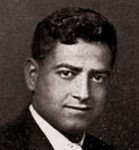
Miguel “Mike Argandar” was born July 25, 1917 at Fracc. Romita, Mexico City, Federal District, Mexico, the son of Dr. Luis Argandar Tello and Josefina Macias
“Mike Argandar” built a midget racer circa 1947 but at age 31, on July 25, 1948 was killed Rosemead Airfield, Rosemead, Los Angeles County, California, United States, in a crash of that plane. He was buried at Glendale, Los Angeles, California, United States.
Area de Material Cordoba
Argentina
Established October 10,1927 as Fabrica Militar de Aviones. In 1928 secured license for Avro Gosport (British biplane trainer) and eventually made 33 for Argentine Air Force. In 1931 made to original designs the first of a number of light single-engined monoplanes (Ao.C.1). On October 20,1943 name became Instituto Aerotfcnico. On January 23,1957 became a State enterprise under the title of Direction Nacional de Fabricaciones e Investigaciones Aeronauticas (DINFIA). Reverted to its original name 1968.
ARDC / Aeronautical Research & Development Corp
Aeronautical Research & Development Corporation acquired all rights to Brantly helicopters from Lear Jet Industries in early 1969, then formed a Brantly Division. Promoted ARDC/Brantly Model B-2E. Five-seat Model 305 with engine of 305 hp first flew in 1964, but is also promoted as ARDC/Brantly type.
Arctic Aircraft Co
1980: PO Box 6-141, Anchorage, Alaska, USA.
Established at Anchorage, Alaska to build and market as the S.1 BE, a strut-braced high-wing monoplane known as the Arctic Tern, a developed version of the Interstate S.1A, first flown in the 1950s.

