Avionnerie Bel-Air
1998:
590, chemin Lavigne Ouest
J9Y 1E6 Ryoun-Noranda
Quebec
Canada
Homebuilt aircraft builder
Avionnerie Bel-Air
1998:
590, chemin Lavigne Ouest
J9Y 1E6 Ryoun-Noranda
Quebec
Canada
Homebuilt aircraft builder
2009: Jl. Letda Sudjono No.#79, Bandung, Propinsi Jawa Barat, Indonesia
Power pack builder
Circa 1938 Beilgard Mechanical Research Laboratory of Hollywood CA., USA, built a 9-cyl barrel engine, possibly the one reportedly fuelled by butane.
Produces the AD-200 Blue Eagle tandem two-seat STOL general-purpose lightplane (first flown September 1988, designed by the Nanjing University of Aeronautics and Astronautics). Features of AD-200 include rear-mounted wings with winglet fins, nose canard and pusher piston engine in the rear of the fuselage pod.
California, USA
Built the Beets G/S Special
In 1918 the (B L) Beecher Co of New Haven CT., USA, built a horizontally opposed, air cooled 8 cylinder aero engine.
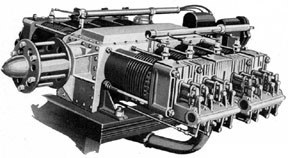
Walter H. Beech formed the Travel Air Manufacturing Company in Wichita, Kansas, USA, in 1924. Following the merger of Travel Air with Curtiss-Wright in mid-1929 Beech was given the position of president of the Aircraft Division.
In April 1932, Beech was back in Wichita with a handful of ex Travel Air workers, founded the Beech Aircraft Company, renting space in the idle Cessna plant, and set about designing a luxury, five place biplane with a high speed of 200 mph, a touchdown not above 60, a range of 1,000 miles at a filling, and the comfort and grande luxe you might expect from the rarest and most elaborate sedan. The Company had Walter as president and his wife, Olive as secretary-tresurer.
Beech’s first Beechcraft flew on November 4, 1932. Its official name was Model 17, simply because Beech’’ last project with Travel Air had been Model 16.
Beech Aircraft Company set up shop optimistically in Wichita but suffered: only one aircraft was sold during the first two years. In 1934, however, sales picked up, and 54 airplanes had been delivered by the end of 1935.
Walter Beech together with his wife Olive established the Beech Aircraft Corporation during 1932. In late 1950 Walter Beech died but in the 1980s, Mrs. Olive Beech remained in office as chairman of the board of the success story that has built some 45,000 aircraft.
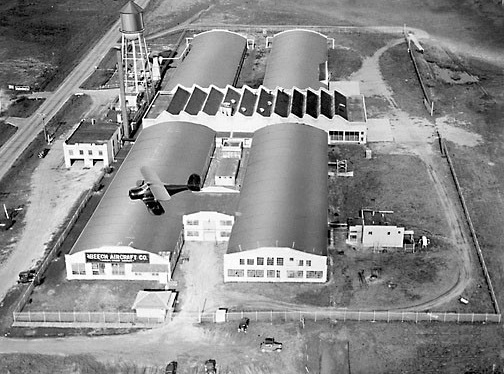
NOTE: Beech dash suffixes signified general engine groups: A = Wright R-760-E2; B = Jacobs L-5; C = Continental R-9A; D = Jacobs L-6; E = Wright R-760-E1; F = Wright R-1820; L = Jacobs L-4; R = Wright R-975-E3; S = P&W R-985; W = P&W R-985-SCG.
Delivered the 10,000th example of its Beechcraft Bonanza Model 35 in February 1977, and the Bonanza celebrated its 50th anniversary in 1995, with production continuing. Company also supplied military aircraft, and became involved in the construction of aircraft and missile components and missile targets for the U.S. Army. Designed, developed, and manufactured the cryogenic gas storage system for NASA’s Apollo and Skylab projects. Other work included provision of power reactant storage assembly for NASA’s Space Shuttle orbiter. On 8 February 1981, after a share exchange, Beech became a subsidi¬ary of the Raytheon Company but continued to be operated as an independent company until 1994.
Hawker Beechcraft filed for bankruptcy in May 2012. The Wichita, Kansas-based company left court protection in February 2013 and exited the jet business with a pledge to keep servicing the planes.
Textron Inc reached a deal to buy Beechcraft Corp. for $1.4 billion in December 2013. The Providence, Rhode Island-based company will purchase all outstanding equity interests in Beech Holdings LLC, the parent of Beechcraft, it said in a statement yesterday. The deal, which includes the repayment of Beechcraft’s working capital debt, will be financed by a combination of available cash and as much as $1.1 billion in new debt.
Adding Beechcraft models such as the twin-engine King Air will complement a Cessna lineup that ranges from two-seaters to the Caravan turboprop. That market segment is less competitive than private jets, where Cessna has struggled because it doesn’t build the large, long-range planes now favored by corporate buyers.
Textron will take over service for Hawker jets and hopes to convert those owners to Cessna jets, Donnelly said. The company is expecting low revenue from the T-6 military training plane as the U.S. military winds down it purchases and foreign sales of the plane would be a plus, he said.
Of the aircraft in service, 6,400 are King Airs and 2,250 are Hawker jets. The Beechcraft business is in good shape even with the bankruptcy and Textron wasn’t expected to invest extra to fix it.
USA
Known originally as Beecraft Associates Inc. this company built the diminutive Wee Bee in 1949, in which the pilot lay in a prone position. It was followed by the larger V-tailed Honey Bee, which first flew on July 12,1952.
Anatoli Georgevich Bedunkovich (in Russian: Анатолий Георгиевич Бедункович, born 1903) graduated from the Leningrad Polytechnic Institute (LPI) as an engineer. In his first years of professional work, he worked in factories No.23 and No.47.
Since 1930 he began his work, initially at the Leningrad Institute of Communication Engineers (LIIPS) and later at the Civil Air Fleet Engineers Institute. In parallel, work began on the projection and construction of aeronautical technology.
In 1930 he designed and built an aviation engine known as the 55 hp AB-55 from the cylinders of an old Anzani engine from 1910, of which there were a large number in the warehouses of the old aviation factories from before the war. This engine worked successfully, but was never produced.
In 1934 and as part of the collective of the Aerial Scientific-Research Institute (NIAI) created the LK-4 (NIAI-4) light aircraft with variable wing structure, which was successfully tested in the NII GVF and recommended for production. This model participated in two light aircraft competitions, showing excellent performance. In 1936 he developed a more powerful model based on the LK-4, which was known as the P-3.
In 1937 at the head of a group of specialists from the Leningrad Civil Aeronautical Fleet Institute, he designed a biplane specialized in agricultural tasks, the SJ-1.
After the war he continued dedicated to teaching, being known for his books and works related to aviation and used in the aeronautical teaching centers of Leningrad.
Anatoli Georgevich Bedunkovich died in 1978.
Developed the BD-10 two-seat supersonic jet for home construction from kits, first flown July 1992 and kit deliveries from August 1993.

