USA
Designed and built in 1947 a single-seat experimental helicopter designated Bendix Model K. A development, the Model J, had completed over 100 hours of flight testing in early 1948 and was to be revised before the start of production.
Manufacturer
Belyayev, Victor Nikolayevich
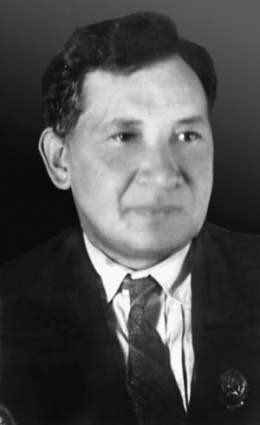
Victor Belyayev was born on March 28, 1886. Between 1920 and 1923 he studied at the Moscow Polytechnic Institute and the MGU. In 1920 he took his first steps in aeronautical construction by building a biplane glider following the NB Delone scheme, but with wheel landing gear.
He began his professional career in aviation in Leningrad in 1925, when he joined to work as an engineer at OMOS led by DP Grigorovich, specializing in issues related to the calculation of aircraft resistance.
In 1926, at the age of 30, he moved to TsAGI, led by AN Tupolev. In this institution he worked on the resistance calculations of the Túpolev ANT-6, ANT-7, ANT-9, ANT-14 and the gigantic ANT-20 planes.
Between 1926 and 1924 Belyayev developed the theory and methodology for the calculation of rectangular wings, which was widely used as a theoretical basis for the calculation of resistance in Soviet aeronautical development for models with straight wings or low sagging. When the Belyayev aeronautical construction resistance department was created in the TsAGI in 1931, he went on to direct a research group, a task that he knew how to combine with his aeronautical projection and construction activity.
Over the years, before aeronautical engineers, he presented the task of overcoming the dangerous effect called “Flutter” as a way to achieve the necessary increases in flight speeds. Belyayev studied the phenomenon and provided fundamental contributions to combat it. For the first time he proposed to use anti-flutter weights as a measure to increase the stability of flight surfaces.
At TsAGI, engineers VN Belyayev and VI Yujarin developed a new wing design capable of moving the center to face this phenomenon without losing the necessary structural strength. The plan view of this configuration resembled an expanded letter M with a slim profile and large wingspan.
The need to confirm the effectiveness of this wing solution led Belyayev back into the field of aircraft construction. In 1934 he designed the BP-2 glider (Besxbosti Planer – Paneador sin tail), also known as TsAGI-2, demonstrating a high level of originality by applying the scheme without tail and its wings with inverted wing tufting. The model was tested towed by a forklift in the TsAGI hydro- channel. The BP-2 participated with great success in the IX National Competitions, held in Koktebel in 1934, showing excellent results. At the end of the competitions he was airlifted to Moscow, towed by aPolikarpov R-5.
With its second design, the glider recordista BP-3 of 1935, Victor Belyayev reaffirm its success. This glider first flew on June 18, 1935 and was characterized by its excellent flight characteristics. It has been claimed that several specimens were built in the workshops of the Yeisk Naval Pilot School. Both gliders demonstrated the accuracy of Belyayev’s calculations and the effectiveness of his original scheme.
In 1935 and in response to a competition launched by the All-Russian Scientific and Technical-Engineering Society of Aviation (AviaVNITO) and the newspaper “Tras el volar” developed a project for a twin-engine transport plane known as AviaVNITO-3, which was characterized also for the originality in the technical solutions. This project won second place in the competition and was proposed for serial construction, but was ultimately not built.
In the late 1930s, Belyayev went on to lead an aeronautical design structure known as OKB-16, located at the No.156 Experimental Building Factory in Moscow. In this factory were established several OKB aircraft building, including those of SA Kochierigin, VV Shevchenko and the famous TsKB-29 of the NKVD.
Among the members of this group were PN Obrubov, LL Selyakov, EI Korzhenievski, DA Zatvan, BS Biekin and NY Leontiev. Most of the works of this group were characterized by the novelty of their designs, apart from traditional schemes.
In 1938, on their own initiative, Belyayev and his collective began the development of a bomber version based on the AviaVNITO-3. Known as DB-LK, this version was tested in 1940 showing better performance than the DB-3M bomber, which was already being built. serially. In this same period, the experimental UK aircraft with an elastic butterfly wing with a Renault engine of 430 hp, which was built at the KAI in 1941, and the EOI experimental fighter with an original double fuselage scheme were projected in this same period. This fighter began to be built in1940, but it was destroyed before the evacuation in October 1941, along with the plans and calculations.
With the start of the war bureau buildings Belyayev was dissolved and he was evacuated to Omsk, where he initially worked in the factory No.166 and later as head of the group of calculations in KB of VM Myasichev, the factory No .288. In 1944 Belyayev worked on calculations for the high-level reactive fighter Bartini R-114.
At the end of the war Victor Belyayev returned to TsAGI where he devoted himself to the study of resistance in aeronautical construction. For his contributions in the field of structural resistance and the theory of the “Flutter” in 1940 he was awarded the category of doctor of technical sciences and in 1949 he received the category of professor.
He died on 25 of July of 1953 at 68 years old.
Bell Helicopter
Bell was responsible for design and construction of the Model 47, the first helicopter to receive Approved Type Certificate from the U.S. Civil Aviation Authority (on March 8,1946), and which remained in production for more than 25 years. Later helicopters of particular importance included the UH-1 Iroquois (Model 204) military utility helicopter (first flown October 1956), and the world’s first purpose-designed tandem two-seat attack helicopter, the Model 209 (military AH-1 HueyCobra), first flown September 1965 and operated by the U.S. Army in Vietnam from 1967. Production of HueyCobra in the U.S.A. ended, but Fuji in Japan still produced examples in the AH-1S version.
Bell programs include remanufacture of 180 AH-1W SuperCobras and 100 UH-1Ns of U.S. Marine Corps into AH-1Zs and UH-1Ys respectively under the H-1 Program, with upgrades common to both helicopter types including the installaton of General Electric T700 engines, four-blade composite hingless and bearingless rotors, and much more besides; upgrade and life-extension of UH-1Hs of other forces to UH-1H-II or Huey II standard (joint Bell and AlliedSignal program) by installation of AlliedSignal T53-L-703 turboshaft engine plus airframe improvements; production of the twin-turboshaft AH-1W SuperCobra for the U.S. Marine Corps (introduced 1986); and upgrade of 411 U.S. Army 0H- 58 Kiowa reconnaissance helicopters to OH-58D Kiowa Warrior armed configuration (also for Taiwan). Also development and production of the BA 609, a civil tiltrotor transport in association with Agusta of Italy, after Boeing’s share in the program was passed to Bell).
Bell participates in the Bell Boeing V-22 Osprey military tiltrotor program (first flown March 1989) to provide the U.S. forces with a vertical-lift transport and multipurpose aircraft capable also of strike, rescue, amphibious combat assault, and anti-submarine work.
Bell Helicopter Company, originally a division of Bell Aircraft, became a branch of Textron Inc. in 1960 and a fully-integrated subsidiary in January 1982. Bell Helicopter Textron Inc. is its current name; Bell has produced well over 33,000 helicopters. In 1986 commercial/civil helicopter production moved to Canada. Came to an agreement with IAR-SA Brasov in 1996 to allow license manufacture of AH-1W SuperCobra in Romania, tied with the purchase of a majority shareholding in IAR-SA Brasov.
A subsidiary of Textron Inc in the USA and Canada.
1995: Bell Helicopter Textron, PO Box 482, Fort Worth, TX 76101, USA, and Bell Helicopter Textron Canada, 12800 Rue de l’Avenir, St Janvier, Quebec J7J 1R4, Canada.
Bell Helicopter Canada was founded in 1984, with a production factory at Mirabel completed 1985 as a division of Textron Canada Ltd. Manufacture of Bell Helicopter Textron Inc. commercial/civil helicopters moved from U.S.A. to Mirabel 1986, leaving U.S. company free to concentrate on military types. Production encompasses Model 206B-3 JetRanger III five-seat light helicopter (first flown 1962 in original form and 1977 as JetRanger III) and its TH-67 military trainer variant; seven-seat Model 206L-4 LongRanger IV (first flown 1974 in original form and certificated 1992 as LongRanger IV); Model 206LT TwinRanger as twin-turboshaft variant of LongRanger (certified 1993); 15-seat Model 212, using twinned turboshafts; Model 230 intermediate- twin ten-seat helicopter (first flown August 1991); Model 407 extra-wide variant of LongRanger with a fourblade main rotor (first flown June 1995); Model 412EP 15-seat utility helicopter, also suited to specialized roles such as law enforcement, SAR, and medical (first flown 1979); Model 427 eight-seater (first flown December 1997) as a lengthened version of Model 407; and Model 430 derived from the Model 230 but with more engine power and a four-blade bearingless composite main rotor (first flown October 1995).
In 1952 Agusta was granted a license to build Bell Model 47 helicopters. First Agusta-built example flew May 1954, and over 1,200 were built before production ended in mid- 1970s. The company also produced Bell Iroquois models as Agusta-Bell 204B and 205, twin-engined Model 212 (still offered as AB-212 Naval/Skyshark) and Model 206 JetRanger (still offered as AB-206B JetRanger III) helicopters. In 1967, under Sikorsky license, production of SH-3D helicopters began, and in 1974 production of HH- 3F (S-61R); production of final HH-3F Combat SAR version lasted into mid-1990s. Together with Elicotteri Meridionali, SIAI-Marchetti, and other Italian companies, Agusta became involved in production of the Boeing Vertol CH-47C Chinook. Other license-built helicopters include AB-412EP/Griffon/Maritime Patrol versions of the Bell 412EP and Griffon, AMD-500E version of the McDonnell Douglas (now Boeing) MD 500E, and Agusta-Boeing 520N NOTAR helicopter.
Bellanger Freres
Once-famous manufacturer of motor cars, built a flyingboat to the design of M. Denhaut, originator of the Donnet-Denhaut aircraft. Subsequently built a number of experimental aircraft designed to improve the lift characteristics of an aircraft’s wing.
Bellanca Inc
Formed out of Viking Aviation. Produced Viking from 1984 and supported Eagle agricultural aircraft after purchasing certificate and jigs in 1984. Ceased operations 1988.
Bellanca Aircraft Engineering Inc
Formed by G. M. Bellanca and his son, August T. Bellanca, researching from 1956 use of glassfiber for aircraft construction. Developed from 1963 a six-seat light aircraft as Model 25 Skyrocket, constructed of high strength glassfiber-epoxy laminates, which made its first flight in March 1975 and was evaluated in Aircraft Energy Efficiency program. Program ended 1986.
Bellanca Aircraft Corp / International Aircraft Manufacturing Inc
The second use of name, though this company was originally known as International Aircraft Manufacturing Inc, becoming first Bellanca Sales Company (a subsidiary of Miller Flying Service) to manufacture and market versions of the Bellanca Model 14 four-seat light business aircraft designed by G. M. Bellanca. Three versions, known as the Bellanca Viking series, became available. Acquired assets of Champion Aircraft Corporation 1970 and changed name to Bellanca Aircraft Corporation, thereafter building and marketing Citabria, Decathlon, and Scout two-seaters produced formerly by Champion Aircraft. Became subsidiary of Anderson, Greenwood and Company, and thereby also became responsible for developing the Aries T-250 five seat cabin Iightpiane (had first flown 1973). Also, in 1979, became responsible for producing Eagle Aircraft Company’s agricultural aircraft. Bellanca went into liquidation 1981 and Viking assets bought by Viking Aviation 1982.
Bellanca Aircraft Corp / Wright-Bellanca / Columbia Aircraft Co / Bellanca Development Co / AviaBellanca
Giuseppe Mario Bellanca was born in 1886 in Sciacca, Sicily. As a young man, he attended the Technical Institute in Milan, graduating with a teaching degree in mathematics in 1908. During his quest for a second mathematics and engineering degree, he became enamoured of aviation, and set out to design and build his own airplane. Bellanca’s first aircraft design was a “pusher” aircraft, somewhat similar to the Wright Flyer. Lacking funds for such an endeavor, he joined with two partners, Enea Bossi, and Paolo Invernizzi. The union of the three produced the first flight of a totally Italian-designed and Italian-built aircraft in December of 1909. Bellanca’s second design, was a tractor-type aircraft. Although the aircraft was successfully constructed, it was never flown due to insufficient funds for an engine.
At the urging of his brother Carlo, who was already established in Brooklyn, New York, Giuseppe Bellanca immigrated to America in 1911. Before the end of the year, he began construction of his third airplane design, a parasol monoplane. After construction was completed, he took the small craft to Mineola Field on Long Island, NY, and proceeded to teach himself to fly. He began by taxiing. He then, taxied faster, which gave way to short hops. The hops got longer, until, on May 19, 1912, there was not enough room to land straight ahead, and Bellanca had to complete a turn in order land safely. Having successfully taught himself to fly, Bellanca then set about teaching others to fly, and from 1912 to 1916, he operated the Bellanca Flying School. One of his students was a young Fiorello La Guardia, the future mayor of New York City. In return for flying lessons, La Guardia taught Bellanca how to drive a car.
In 1917 the Maryland Pressed Steel Company of Hagerstown, MD hired Bellanca as a consulting engineer. While there, he designed two trainer biplanes, the CD, and an improved version, the CE. With the conclusion of WWI, Maryland Pressed Steel’s contracts were cancelled and the company entered into receivership. Thus, the CE never went into production.
In 1921, a group of investors lured Bellanca westward to Omaha, NE, in hopes of establishing that town as a center for aircraft manufacture. Before the aircraft could be built, the company went bankrupt, but construction of the aircraft continued under the financial backing of a local motorcycle dealer named Victor Roos. The resultant aircraft, the Bellanca CF, was called by Janes’s All the World’s Aircraft “the first up-to-date transport aeroplane that was designed, built, and flown with success in the United States.” Among the local people helping to build the aircraft was the daughter of Bellanca’s landlord, Dorothy Brown. Giuseppe and she were married on November 18, 1922.
Despite its advanced design, the Bellanca CF could not compete with the economics of the time. In the days just after World War I, a surplus Curtiss Jenny could be purchased for as little as $250.00. A Bellanca CF, with a price tag of $5000.00, was just too expensive and the aircraft never went into production. After the disappointment of the CF, Bellanca designed wings for the Post Office Department’s DH-4’s. His new wings were a tremendous improvement over the original design, but only a few aircraft were so modified.
In 1925, Bellanca went to work for the Wright Aeronautical Corporation of Paterson, NJ. His assignment there was to develop an aircraft around the new Wright Whirlwind engine. He already had a design in mind, which was an improved version of the CF, called the CG. This design evolved into the Wright-Bellanca WB-1.
The WB-1 enjoyed a short, but successful flying career. The aircraft had already won one race and efficiency contest before an untimely accident destroyed the craft during preparation for an attempt to break the world’s non-refueled endurance record. Fortunately, at the time of the crash, Bellanca was already working on an improved version, of the WB-1 designated the WB-2.
During 1926, the WB-2 won two efficiency trophies at the National Air Races in Philadelphia. Wright considered putting the aircraft into production, but decided against it to avoid alienating other aircraft companies that were potential customers for their engines. Disappointed by Wright’s decision, Bellanca left the company and joined with a businessman named Charles Levine to form the Columbia Aircraft Company. Wright sold the WB-2 and all drawings and production rights to the new company. The WB-2 went on to a long and fruitful flying career starting with establishing a new world’s non-refueled endurance record of 51 hours, 11 minutes, and 59 seconds in April of 1927.
In the latter half of 1926, Charles Lindbergh wanted to buy the WB-2, now named the ‘Columbia’, for his proposed flight from New York to Paris. He was rebuffed by Levine who also had designs on the flight and the $25,000 prize money. Lindbergh then went to Ryan for his “Spirit of St. Louis”. Meanwhile Levine, in choosing the crew, managed to promise two seats to three people. So while the Columbia was grounded by a court order brought by the third party, Lindbergh took off on his successful flight to Paris.
Eventually, the ‘Columbia’ was cleared of litigation and took off on its successful transatlantic flight on June 4, 1927. In the cockpit were Clarence Chamberlin, one of the pilots of the endurance record and Charles Levine, who became the first transatlantic passenger. The plan was to fly all the way to Berlin, and Chamberlin had vowed to fly until they ran out of fuel. Forty-three hours later, they landed in Eisleben, Germany, the first of two successful Atlantic crossings for Bellanca’s most famous aircraft.
Disappointed because the ‘Columbia’ was not the first aircraft to accomplish the New York to Paris flight, Bellanca severed all relations with Levine, and started his own company, the Bellanca Aircraft Corporation of America, and rented facilities on Staten Island, NY. The new Bellanca model was designated the CH, and was basically a commercial version of the WB-2. The new company also had two other models that were built for special orders, the Bellanca Model J and the Model K.
It was not long before Bellanca caught the attention of the Du Pont family of Delaware. They wanted to start aircraft manufacturing in Delaware, and in late 1927, an agreement was made with Bellanca to locate his factory outside of Wilmington. The site was large enough for a first-class airfield, with a seaplane ramp on the nearby Delaware River.
This was a busy time in Bellanca’s life. Along with all that was happening in his professional life, he and Dorothy celebrated the birth of their son August T. Bellanca in March of 1927.
With the exception of a few years immediately before and during the early stages of WWII, Bellanca was President and Chairman of the Board from the corporation’s inception on the last day of 1927 until he sold the company to L. Albert and Sons in 1954. All assets were acquired by Northern Aircraft in 1955 and Bellanca name finally dropped 1959 after merger with non-aviation companies.
After his departure from the company, Giuseppe and his son, August, formed the Bellanca Development Company with the purpose of building a new aircraft. It would have increased performance due to the use of lighter materials for its structure. Work on this aircraft was progressing when Giuseppe Bellanca succumbed to leukemia and died on December 26, 1960. After his father’s death, August continued the project, and under his guidance, the aircraft, a record breaker, first flew in 1973.
Northern Aircraft became Downer, then Inter-Air, and in 1967, Bellanca Sales, a subsidiary of Miller Flying Services. As the company grew, its name became Bellanca Air¬craft Corporation. Champion Aircraft Corporation was merged into it in 1970, adding two place aerobatic, sport and utility aircraft to the line.
1974 closed with the firm still in the busi¬ness only of building Vikings in Alexandria and Champi¬ons in Osceola, Wisconsin, and with sales slowing a bit. In late 1974, Bellanca was forced to suspend production in order to work off an in¬ventory of airplanes.
In 1978 Bellanca became a wholly-owned subsidary of Anderson, Greenwood, of Houston, Texas, subsequently developing the T-250 Aries and Eagle.
Work stopped in 1980 and the firm liquidated in 1981.
Assets were sold to Viking in 1982.
Viking resumed Viking production in 1984. Work stopped in 1988.
The original Bellanca company was restarted by Guiseppe Mario Bellanca and son August in 1968, initially in West Virginia and later Maryland.
Work stopped in 1986.
The firm was resurrected as AviaBellanca.
In 1993, August Bellanca donated his father’s 1920 CF to the Smithsonian along with many personal and corporate papers and correspondence. NASA craftsmen restored the aircraft and it is on display at the Smithsonian Air & Space Museum’s new Steven F. Udvar-Hazy Center near Washington’s Dulles International Airport. The far-sighted, innovative designer and builder of American aircraft, Giuseppe M. Bellanca was enshrined in the National Aviation Hall of Fame in 1993, the Delaware Aviation Hall of Fame in 1999.
1998:
Avia Bellanca Aircraft Corp
11800 Sunrise Valley drive, Suite 322
Reston
Virginia 20191
USA
Bell Aircraft Corp / Bell Aerosystems / Bell Aerospace Corp
Larry Bell had been born in Indiana in 1894, but his family moved to California when he was 13. In 1912, he went to work for aviation pioneer Glenn L. Martin, rising to the vice-president position of the Martin firm by 1920. Martin wasn’t the easiest person to work for and Bell knew he’d never get into a partnership position with the company, so Bell quit in 1925. He couldn’t find steady work for three years, but then he landed a job at Consolidated Aircraft in Buffalo, New York, rising to become general manager.
When Consolidated moved its operations to California, Bell decided to stay in Buffalo along with a cadre of like-minded individuals, forming Bell Aircraft in 1935. Later Bell would admit that naming the company after himself wasn’t a good idea, since it made it more difficult to delegate authority and learned that “when your name’s out front, you have to do a lot of things that are a terrible bore.”
The first product built by Bell was an innovative machine, designed by a team under Bell chief engineer Robert Woods, named the “Airacuda”.
Original company of 1935, Bell Aircraft Corporation, responsible for P-39 Aircobra and P-63 Kingcobra of Second World War. Built first U.S. turbojet, the P-59 Aircomet fighter/trainer. Built the rocket-powered Bell X-1, in which USAF pilot Charles Yeager was the first to exceed the speed of sound, on October 14,1947. Subsequent X- 1A flown at 2,655km/h in 1953.
Company subsequently known as Bell Aerosystems, then on July 5,1960 became Bell Aerospace Corporation, a wholly owned subsidiary of Textron Inc., which had acquired the former Bell Aircraft Corporation.
Responsible for:
Bell Model D2127 tilting-duct research aircraft
Two lunar Landing Research Vehicles (LLRV) for NASA to train astronauts to land safely on the moon
Automatic Carrier Landing System (ACLS), used on U.S. Navy aircraft carriers; and was involved with an air-cushion landing system that was expected to enable military transports to land and take off from practically any surface.
Terminated aircraft production.
Bell Aeromarine
UK
Markets Flitzer single-seat open-cockpit biplane in plans and kit forms (first flown 1995).

