Bede Aircraft Corp

The original Bede Aviation Corporation was established 1960 in Kansas to develop an advanced STOL aircraft. An early type was the BD-1 that first flew 1963 and was later produced by others as Yankee Trainer and Traveler. Subsequent designs included BD-4 two/four-seat sporting monoplane of 1970s, and the BD-5 Micro single-seat pusher-engined monoplane and its turbojet-powered derivative as the BD-5J.

The BD-5 and BD-5J were heavily promoted, and the company accepted thousands of orders and deposits before the project ran out of money, causing customers to lose their deposits. As a result, the Federal Trade Commission banned Bede from accepting aircraft kit investments for a period of 10 years.

Following difficult period, company later reestablished as Bede Aircraft Corporation in Missouri, reviving BD-4 and BD-6 for sale in kits and plans forms. BD-12A of 1994 became tandem two-seat variant of BD-5, with larger four-seat BD-14A then put under development.

Beagle Aircraft

After WW2, Auster Aircraft Ltd was formed and commenced a series of variations on the basic theme. In 1960 it was absorbed into Beagle Aircraft Ltd. Beagle became in 1962 a subsidiary of British Executive and General Aviation Ltd.

In this form it absorbed the two other subsidiary companies, Beagle-Auster Aircraft Ltd. and Beagle-Miles Aircraft Ltd. and acquired the lion’s share of the limited light aircraft production then going on in Britain.

In 1966 the company was still a subsidiary of British Executive and General Aviation Ltd. but the abbreviated name is the one most normally used. The company has two factories, one of 44000 sq.ft at Shoreham and the other, of 128,000 sq.ft, at Rearsby. The former employs 491 people, the latter 1200.

The board was headed by Col. F. T. Davies (chairman), Mr. A. H. Bellhouse and J. R. Edwards (dep. chairmen) and Peter Masefield (managing director), the other directors being P. W. Brooks, A. G. Burney, A. H. P. Harman, E. P. Hewson and J. W. P. Angell. G. C. J. Larroucau is chief engineer.

Administration, sales and publicity were handled at Shoreham, although the head office was in London. Design, development and testing are also done on the South Coast, as is prototype flying. Rearsby was responsible for all production and for service support of the many original Auster aircraft still flying.

Aircraft in production in 1966 were the B.206, B.206S, Basset, Husky and Terrier 2. Under development were the B.121 Pup and the B.242. Also undergoing further development was the AOP Mark Eleven, one of the military observation aircraft which Beagle has been building for some years.

Beagle Aircraft Ltd. was, immediately before its dissolution, a state-owned company, acquired in August 1968 to continue the production and development of light aircraft in Britain. Production of the basic Auster type continued until the low-wing Pup emerged. This evolved into the Bulldog basic military trainer that was taken up by Scottish Aviation Ltd after Beagle went into voluntary liquidation on 27 February 1970 and finally found its last home with British Aerospace.
The Auster interests were disposed of to Hants & Sussex Aviation Ltd which continued to provide spares and modification support to all Auster aircraft in service.
William Beardmore & Co

In 1913, pre-empting The Great War, William Beardmore & Co ventured into aircraft production, building Sopwith Pup aircraft at Dalmuir under licence.
Later, a shipborne version of the Pup – the Beardmore W.B.III – was designed in-house. A hundred of these aircraft were produced and delivered to the Royal Naval Air Service (RNAS). The company built and ran the Inchinnan Airship Constructional Station at Inchinnan in Renfrewshire. It produced the airships R27, R32, R34 and R36.
Beardmore obtained a license to build German DFW biplanes to be powered by Beardmore-built Austro-Daimler engines, and built large numbers of aircraft under sub-contract during war.
In 1924, the company acquired a licence for stressed skin construction using the Rohrbach principles. An order for two flying boats using this construction idea was placed with Beardmore. It had the first aircraft built for it by the Rohrbach Metal Aeroplane Company in Copenhagen, building the second itself and they were delivered to the RAF as the Beardmore Inverness. In addition, a large, experimental, all-metal trimotor transport aircraft was designed and built at Dalmuir and delivered to the Royal Air Force as the Beardmore Inflexible. Beardmore produced a line of aircraft engines, including the Cyclone, Meteor, Simoon, Tornado (used in the R101 airship), Typhoon and Whirlwind.
Under the leadership of G. Tilghman Richards, produced original aircraft, including the W.B.III, a redesigned Sopwith Pup with folding wings and folding or jettisonable landing gear. Designed and built a small number of civil and military aircraft in the interwar years.

Beachey, Lincoln

Lincoln Beachey

Lincoln Beachey grew up racing bicycles down the hills of his hometown. At eighteen he learned to fly powered airships, and experienced his first taste of the aviation spotlight piloting a dirigible at the Lewis & Clark Centennial Exposition in Portland, Oregon in 1905. A year later he made an unauthorized but well-received landing on the White House lawn.

Beachey piloted one of six airships flown at the Dominguez Air Meet of 1910, the first public flying exhibition held in the United States. For Beachey, Dominguez provided a life-changing humiliation. Beachey raced a fellow airship pilot around a closed circuit course and won decisively, yet there was little opportunity to savor the triumph. During the race, French aviator Louis Paulhan took flight in a Farman monoplane. Paulhan had shown a penchant for showmanship throughout the meet, dazzling the crowds with maneuvers more daring than the conservative routines flown by other pilots. As the airship race drew to a close, Paulhan swooped down and circled merrily around the lumbering dirigibles.

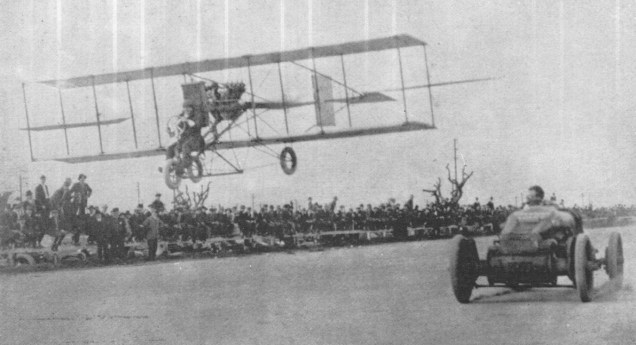
Beachey scooped up handkerchiefs with the wingtips of his Curtiss biplane, flew under Niagara Falls bridge and beat the racing motorist Barney Oldfield in his aircraft vs car race at Los Angeles in February 1914.

Aircraft vs car race at Los Angeles in February 1914

In early 1915 Beachey began flying his design team’s newest creation, a sleek monoplane dubbed the Taube, or dove. Beachey had been drawn to monoplanes since his humiliation at Dominguez in 1910, as they had less drag and greater speed than biplanes. The Taube proved significantly faster than the Little Looper, making for more spectacular maneuvers. It also featured a tractor propeller arrangement, considered safer than the traditional pusher configuration.

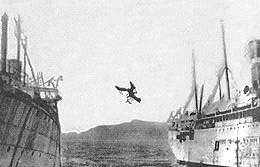
On March 14th, 1915, Beachey flew his Taube in a special routine offshore from San Francisco. In a rapid decent he pulled out too quickly, and the Taube’s wings collapsed from the load. Remarkably, corner reports indicate that Beachey survived the initial impact despite the terrific speed, but drowned before rescuers could reach him.

Beachey crashes to his death

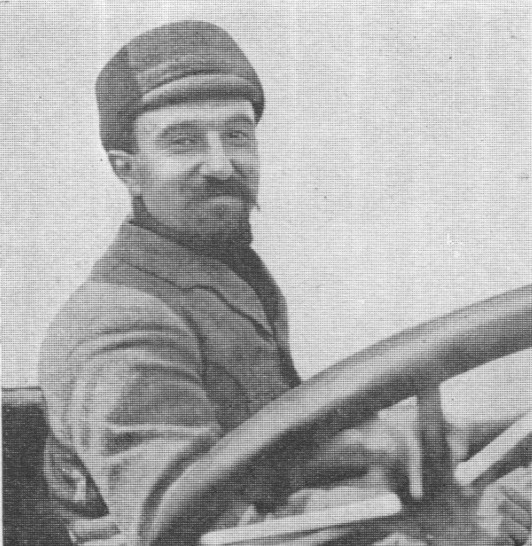
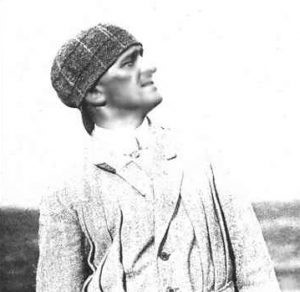
Lincoln Beachey, who by 1914 had been named by Orville Wright as the world’s most outstanding aviator of the age.

Lincoln Beachey