1995: 1370 Howell Rd, Beavercreek, OH 45434-6828, USA.
1996-2002: PO Box 132, Monroe, MI 48161-0132, USA.
LSA builder
1995: 1370 Howell Rd, Beavercreek, OH 45434-6828, USA.
1996-2002: PO Box 132, Monroe, MI 48161-0132, USA.
LSA builder
Established as a building constructor in Norwich, Norfolk, turned to subcontract construction of aircraft in First World War, including RAF F.E.2d, Sopwith 1/2-Strutter and Sopwith Camel. Known originally as Aircraft Department of Boulton & Paul Ltd. As the war neared its end, the company decided to continue in aircraft industry and the aircraft division of Boulton & Paul was incorporated as an independent company, Boulton Paul Aircraft in 1934. First original design P.3 single-seat biplane fighter which did not enter production. Designed and built P.6 research aircraft, which provided much data for later P.9. P.7 Bourges twin-engined fighter-bomber built at the end of 1918, followed later by similar Bugle. Neither entered RAF service. Continued to build small numbers of civil aircraft during inter-war years. Sidestrand 3/4-seat medium bomber entered RAF service with one squadron in April 1928. Replaced by improved Overstrands, with power-operated gun turret, in 1934. When production ended, in 1936, company re-established at Wolverhampton, Staffs. Name of Boulton Paul Aircraft Ltd. adopted 1934. Designed and built P.82 Defiant for RAF, prototype first flew 11 August 1937; two-seat fighter with power-operated gun turret was entirely new concept and enjoyed initial operational success. Production ended 1943 after more than 1,000 built. Designed P.108 Balliol three-seat advanced trainer for RAF, 162 built subsequently as two-seat Balliol T.2, of which 30 built under subcontract by Blackburn Aircraft Ltd. Built P.111 and P.120 for research into behavior of delta wing at transonic speeds.
In 1961 the company became part of the Dowty Group.
St Louis MO.
USA
Built aero engines circa 1910-11.
1910 = 30-35hp four-cylinder water cooled.
1911 = 60-70hp eight-cylinder Vee, water cooled.
1995: PO Box 506, Mesquite, NV 89024, USA.
LSA builder
Professor George de Bothezat fled Russia’s October Revolution in 1917 for the United States.
Built a helicopter in 1921
Headquarters:
Aeulestrasse 1
Triesen
Triesen 9495
Liechtenstein
Manufacturer of ultralight aircraft designed to prepare modern lightweight aircraft with better handling. The company’s ultralight aircraft are made with carbon fiber and the skin is made in optical fiber-glass, enabling pilots to make great movements at higher altitudes.
Reiner Tauern was a co-Founder and Chief Executive Officer, with Erwin Bigger an executive.
Signor Enea Bossi was the Italian representative of the Curtiss Co. and had arranged with the Zari Bros. of Bovisia, Italy, to build the Curtiss type boat from plans sent from Hammondsport. On September 22, 1914, Lanny made a demonstration flight in the first Italian built flying boat on Lake Como before naval officials. The boat was purchased and an order placed for several more. The Italians were convinced that naval aviation was an excellent way to patrol their long and exposed coastlines.

Józef Borzęcki was born on March 19, 1928 in Olszany near Stary Sącz, as a son of Jan and Wiktoria. It was the Father who awakened the five-year-old boy’s imagination and interest in flying, telling about the famous flight of Stanisław Skarżyński across the Atlantic in 1933. The pre-war atmosphere of worship for aviation reached every corner of reborn Poland. The pilots were the heroes of meetings and legends.
Just before the outbreak of World War II, Józek, as a high school student, received a state guardian for his clearly targeted abilities. However, the outbreak of war changed the path of life for all Poles. Instead of studying at his dream school in Austria, 14-year-old Józef spent four years under German occupation, experiencing hunger, hard work in the factory, inhuman humiliation, fear and rebellion.
In 1945, after liberation of the country from the Nazi occupation, he went to Wrocław and began his education at the Technical Secondary School of Mechanical Engineering, obtaining a diploma as a technician in the design of internal combustion engines. In 1947 he completed glider training at the Aero Club of Wroclaw (at that time he performed flights on SG-38 and Grunau “Baby II” gliders). In a sense of lost youth and the desire to fly, he gives up his technical studies, however, the politicised atmosphere of the Aero Club once again turned his thought to independent aviation constructions. In 1951, he began the first calculations and made experimental models.
In the library, reaching for Russian-language textbooks on aviation technology, he meets his future wife – Aniela Plucinska, born in Nieśniew, who knows Russian. In December 1952 he married Aniela. In 1953, her daughter Elżbieta was born. The young couple are moved, together with the wife’s parents, to a new apartment. This is where the first construction begins to appear. In 1954, daughter Barbara was born.
In 1960, the trial take-off of the first glider “Stratus” took place. There are years of balancing passion with family responsibilities.
In July 1966, the designer invited the pilot of the flight and the editor of the newspaper Polish Word – editor Andrzej Macko to perform a test flight in the Stratus. He made several test flights, issuing a very favorable opinion about him. Articles by A. Macko published in Kulisach and the Polish Word about Józef Borzęcki’s motor glider started a nationwide discussion on amateur aviation in Poland. The construction and piloting of own aircraft were strictly prohibited in Poland at that time. In September 1966, J. Borzęcki wrote a letter to the well-known Soviet designer Oleg K. Antonov, who was a great enthusiast of amateur aircraft and glider construction. After two months, he received an answer, Antonov warmly congratulated him on the achievements in construction and encouraged him to continue working.
In May 1967, an extensive article on amateur aviation was published in Winged Poland, a lot of space was devoted to the glider “Stratus”. In the press and everywhere where there were people interested in aviation, from aeroclubs to the Department of Aviation, there was a discussion about the future of amateur aviation in Poland. Some spoke in favor of amateur aviation, others against him. There were moderate voices, but there were also those aimed at causing sensation. Most opinions, however, were evidence of a thorough reflection on the substance, seeing Stratus as a precedent. In Winged Poland of May 21, 1967 there was an article sharp in tone. It expressed views that the development of amateur aviation in Poland has no justification and is not simply needed, and the amateur construction of gliders, airplanes or even helicopters is today an archaic obsolete, economically unjustified and socially unnecessary. Not only with us. And therefore there will be no green light for this movement. J. Borzęcki received a lot of letters from supporters of amateur aviation that came from home and abroad. Everyone wanted to build a small amateur plane that made their innermost dreams come true. They wrote warmly, friendly. He became an example for them. It was the greatest payment for the designer for many years of effort. The letters confirmed his belief that there were many like him and that it was worth working for them.
In 1967, the second motor glider “Cirrus” was completed and flown, and Józef Borzęcki receives the honorable distinction “Blue Wings” from the editorial team of the weekly Skrzydlata Polska for his aviation activities. Until now it was awarded only for outstanding achievements, for his creative contribution to the development of Polish aviation in the professional and sport fields. Awarding them to an amateur, who was often embarrassing, set a precedent for those who had dreamed of their own wings for years. In the press competition for “Good Work” he was selected by the inhabitants of Wrocław to be “Big Twenty Winners”. In 1969, the motor glider “Cirrus” was recognized as the “Wrocław Work” this year. The Wroclaw Aviation Senior Club also awarded J. Borzęcki.
In 1972, the success of the next, third glider – “Altostratus” – is mixed with the sadness of the designer after losing both his parents. In 1974, Polish Television Wroclaw broadcast a film titled Cirrus. At that time, Józef Borzęcki becomes the initiator of the Amateur Constructors’ Club and a co-organizer of amateur air rallies. Domestic press and foreign magazines have published dozens of interviews as well as problem-technical and adventure articles of his authorship.
Borzęcki kept in touch with the Soviet designer Antonov and translated the diary of Antonow into Polish. Ten times from the beginning. An album published in 1976 in West Germany 50 Moderne Motorsegler, which was a kind of review of the world technique in the field of motor-sailing, contained photographs and technical descriptions of Cirrus and Altostratus. Also, the West German airline with international reach, Der Flieger from 1976, posted an extensive article about J. Borzęcki’s micro-planes and a 24 HP 2 RB engine.
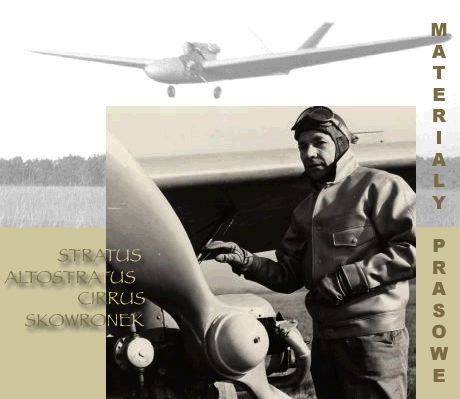
In 1980, the Ossolineum Publishing House of Wrocław published his autobiographical book titled On own Wings. He chooses Olesno Śląskie as his place of residence. There, he also designs and builds the fourth ultra-light structure called JB-4 “Skowronek”.
Józef Borzęcki was a co-designer (next to Tadeusz Dobrociński) of the first “Pterodaktyl 1” soft-wing in Poland. In the 1980s, Józef Borzęcki received from the Amateur Club of Constructors (Aeroclub Opole) glider SZD-10 “Czapla” registered SP-2187. It was a thank you for help in constructing and building amateur aerial constructions. J. Borzęcki wanted to motorize “Heron”. For this purpose, he wanted to use his own drive, based on two MZ-250 engines. The project has not been implemented.
In the fall of October 29, 1989, in the presence of Elżbieta’s daughter, “Skowronek” made several successfully completed take-offs and landings. A year later, on October 14, 1990, he made his last flight. From a height of 200 m, while descending to land, the left wing girder was broken. On this day, Józef Borzęcki died. Grandfather of Magdalena and Samantha.
Borucki, an engineer from Kielce built in 1912 two aircraft, one modelled after Bleriot and another after Farman airplane. Because of his wife’s serious illness he didn’t made any flight attempts on these but the “Farman” plane was purchased my Russian military, thereby suggesting that flights on it were made;
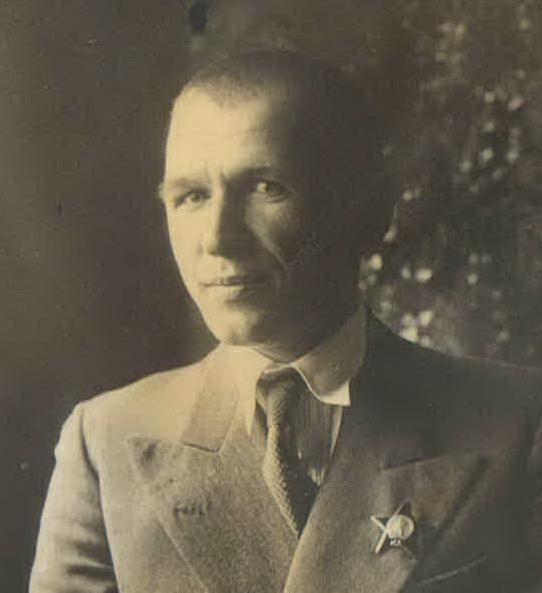
Born in 1903, in 1930 Aleksei Andreevich Borovkov graduated from the aviation department of the Leningrad Institute of Railway Engineers.
After graduation he was a design engineer and the head of the special design bureau at aircraft factories . Since 1938 – the chief designer. Together with L.P. Korotkov, he developed a project for retractable landing gear for the I-16 fighter, which was taken to mass production. In collaboration with Ilya Florov, he designed training aircraft UTI-1 , UTI-2 , UTI-3 , UTI-4 , the fighter – biplane I-207 . Participated in the development of the first Soviet jet fighter D.
Awarded the Order of the Red Star, Aleksei Andreevich Borovkov died in a plane crash in 1945.
Il’ja Florent’evič Florov (also transliterated as Ilya Florentyevich Florov (in Russian : Илья Флорентьевич Флоров) was born on 5 August 1908 on Novocherkassk, USSR.
After graduating from the Novocherkassk Institute of Aeronautics (1931), he worked as a designer, Deputy Chief and Chief of the OKB. He has been involved in creating a series of I-16 edits. Together with AA Borovkov, designed the first Soviet training fighter UTI-1, then UTI-2, -3 and -4, later maneuverable fighter biplane I-207. From 1941 to OKB VF Bolkhovitinov (head of department, deputy chief designer), where he participated in the formation of the first Soviet fighter fighter.
He was the director, together with his colleague Aleksej Andreevič Borovkov , of the Design Office (OKB) number 207, and co-designer of some innovative military aircraft projects that did not enter mass production.
Since 1944, he has been the head of the aerospace sector of the scientific research institute, where he was designed and built an experimental aircraft with a rocket engine for liquids. Since 1948, CIAM has developed theoretical basics of methods for assessing the efficiency of using engines in aircraft for various purposes. He was awarded the Order of the October Revolution, 2 orders of the Red Battalion, the Medal.
Il’ja Florent’evič Florov died in 1983.

