France
Formed in 1909 by Gabriel Borel, Etablissements Borel was an early constructor of floatplanes. One of the first aircraft to serve with the British Navy was a Borel monoplane, purchased in 1912, and at least eight were in service with the Naval Wing before the beginning of the First World War. A high performance two-seat fighter was built to the design of M. Boccacion, but too late for wartime service.
Known subsequently as Societe Generale des Constructions Industrielles et Mecaniques.
Manufacturer
Bordelaise
The naval dockyard Societe Anonyme de Travaux Dyle et Bacalan formed an aeronautical company in Paris in 1925 to develop an all-metal civil and military aircraft. Societe Aerienne Bordelaise was controlled by the Nieuport- Delage company. Production included the Bordelaise D.B.70, a twin-fuselage tri-motor design with accommodation for 20 passengers. A military version, designated A.B.20, had four engines.
Renamed Societe Aerienne Bordelaise in 1930.
Bonomi
In 1929 Aeronautica Vittorio Bonomi built a two-seat cabin monoplane to the design of Ing Abate. This was developed subsequently by Captain Bonomi and produced as the Bonomi 25 Monoplane.
Most construction was carried out by Aeronautica Lombarda (aka AVIA) – hence the common use of Aeronautica Lombarda BS-28, etc.
Designer for Bonomi was Dr Ing Camillo Silva, explaining the BS-xx system used to designate Bonomi glider and sailplane designs. Most were assigned popular names as well.
Prior to becoming part of Aeronautica Lombarda, Bonomi built at least two other designs that are outside of his designation system – the 1929 Bonomi 25 Monoplano and the 1936 Bossi-Bonomi Pedaliante human-powered aircraft.
Bonney, Leonard
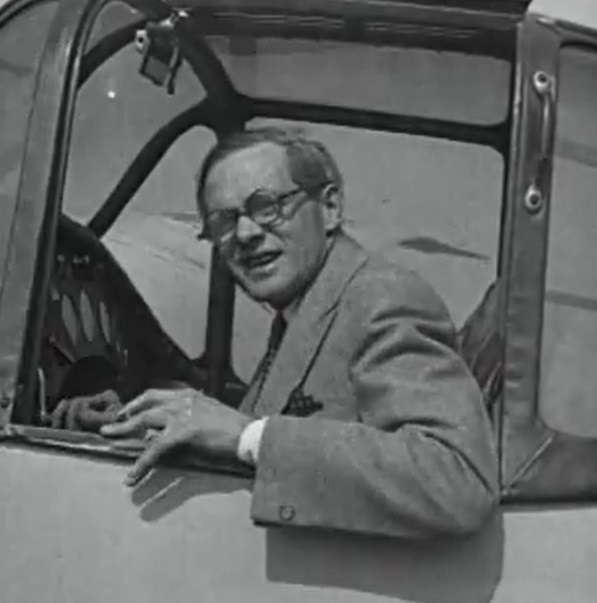
Leonard Bonney, an aviation pioneer and one-time First World War US Army and Navy flying instructor became obsessed with the shape of a gull’s wing, which he believed to be the most efficient and capable wing form in nature. The Bonney Gull was the result.
Bonnet-Labranche, Albert
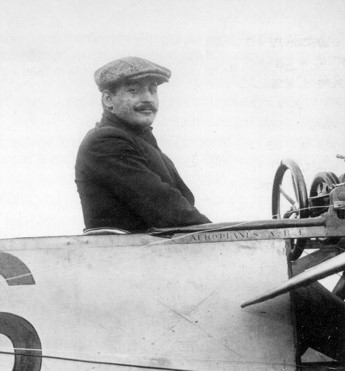
Albert Casimir Marius Bonnet-Labranche was born in Toulouse on September 10th, 1883, the son of an architect and engineer. Aviation ran in the blood of Albert and his younger brother Émile. Their father had tried to build a flying machine already in 1869, and also built a balloon that was used in the 1870-1871 war.
After finishing his studies and military service he moved to Paris and together with his brother formed “Aéroplanes Bonnet-Labranche”. They designed and built their first machine already in 1907, a biplane with a characteristic big long-chord top wing that joined with the horizontal tail, but it never flew. In 1909 they partnered with Charles Roux of Saint-Die to form AVIA, who built several more or less unsuccessful designs.
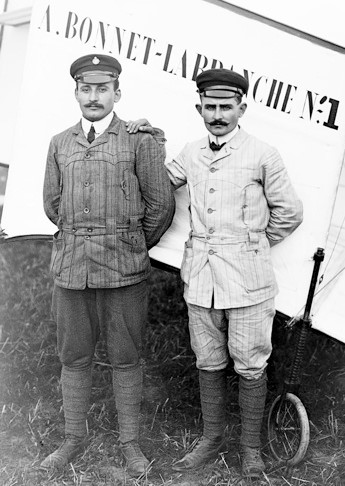
At the October 1909 Paris “Grande Quinzaine” Albert Bonnet-Labranche entered a monoplane, the fourth “ABL” design, but it was untested and only managed short, straight flights. This was his only appearance at an aviation meeting.
The Bonnet-Labranche brothers were involved in all kinds of aviation-related business. They established the “Aéro-Garage” in Paris, where they bought, sold, built, repaired and shipped aeroplanes. In the end of 1910 they claimed to have 31 aeroplanes of different types in the 2,200 square metre halls of the “Aéro-Garage”, and their inventory of machines, engines and spare parts was valued at 512,000 francs. The brothers also published the fortnightly magazine “L’Aviation Illustrée” and manufactured and sold model airplanes. They started flying schools and built hangars at Issy-les-Moulineaux, in Orléans and in Oran in Algeria, and they had big plans for several more schools in France, Belgium and China, which in the end were never realized. They designed seven types of airplanes of different configurations. The last types, Blériot-inspired monoplanes, were produced in several examples during 1911 and flown successfully in many meetings, particularly by Louis Janoir.
Albert moved to Algeria around 1911 and ran the flying school there. It appears that the other Bonnet-Labranche aviation businesses were sold or wound down in the end of 1911, but the “Aéro-Garage” reportedly still existed in 1913.
Albert Bonnet-Labranche was drafted into the infantry when WW1 started, but soon transferred to the air forces. He qualified for his military “brevet” on April 1st, 1915 and served as a pilot with the rank of sergeant. He was wounded on July 18th, 1915 when his machine was attacked by a German fighter during a reconnaissance mission. Despite being hit in the leg he managed to bring his bullet-ridden Voisin LA back to the base, earning a citation. Later during the war he proposed a four-engine triplane long-range bomber to the war ministry, but nothing came out of it.
Little is known about Bonnet-Labranche’s life after the end of the war, but it appears that he spent most of his life in Algeria. In 1943 he went missing there, together with the plane he was piloting.
Bonnet-Labranche did not qualify for a pilot’s license before WW1.
Bombardier
Bombardier was founded in 1942 to manufacture tracked vehicles for snow travel and broke into the aviation scene in the early 1970s when it acquired the Austrian Lohnewerke GmbH and its subsidiary Rotax-Werk AG (later Bombardier-Rotax GmbH), the supplier of snow mobile and microlight engines. In December of 1986 they acquired Canadair; in October 1989 Short Brothers of Northern Ireland; in June 1990 Learjet Corporation and in 1992 purchased 51 percent of de Havilland Canada. In January 1997, they purchased the remaining 49 percent of DHC from the Province of Ontario.
Bombardier’s aerospace operations delivered 227 regional, business and utility aircraft during the organization’s 1998-99 fiscal year, a 28% increase compared with the previous period. The production rate for the CRJ-100/200 was raised to 7.5 aircraft per month from six.
Bolton, R.A.
Rangiora, New Zealand.
Built a trike unit in 1993.
Bolkow
This company was founded on May 1,1956 by Ludwig Bolkow, becoming established at Ottobrunn bei Munchen in 1958. Until January 1,1965 was known as Bolkow Entwicklungen KG. Boeing acquired a one-third interest in the business. Bolkow held a 25% interest in Entwicklungsring Sud EWR). Aircraft produced include the Bo 207 four-seat light aircraft, BO 208 C Junior (a license-built version of the Malmo MFI-9) and the BO 105 five-seat light helicopter, which featured a rigid main rotor of glassfiber-reinforced plastics. This helicopter continued in production under the designation MBB BO 105, signifying that it was then built by Messerschmitt-Bolkow-Blohm, and most recently it became a Eurocopter product.
Messerschmitt joined with Bolkow in 1970 to form Messerschmitt-Bolkow. The Bolkow company was absorbed into Messerschmitt-Bolkow-Blohm which by 1990 was part of Deutsche Aerospace.
Bolkhovitinov, Victor Fiodorovich
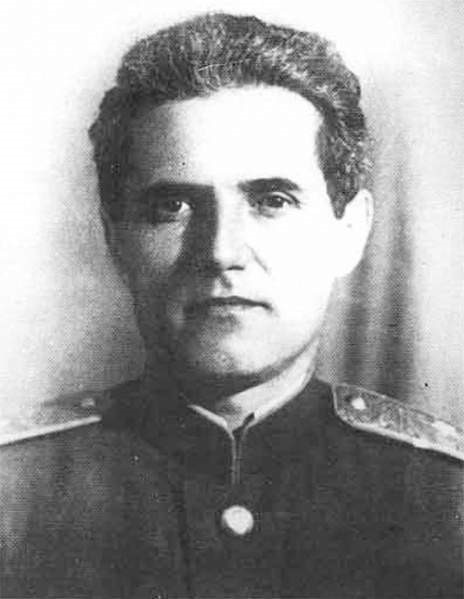
Victor Fiodorovich Bolkhovitinov (Russian: Виктор Фёдорович Болховитинов) was born on January 23 (February 4 according to the new calendar), 1899 in the city of Saratov, in the Soviet Union.
In Saratov Boljovitinov finished elementary studies with a gold medal and entered the medical school of the University of Saratov, but after a semester he understood that medicine was not his profession and requested a transfer to the physical-mathematical faculty. In 1918 he moved to Moscow, joining the MVTU.
In this institution, he listened to various lectures given by Nikolai Egórovich Zhukovski and fell in love with aviation. In 1921 he entered the Institute of Engineers of the Red Air Fleet, which would later become the Zhukovski Military Aeronautical Academy.
As a student, In 1924 he created the AVF-6 Favzayat and AVF-18 Pioner gliders, which participated in the national competitions at Koebel. Later he was part of a group of enthusiasts who designed a small plane.
In 1926 he finished his studies at the Zhukovski Air Fleet Academy and began working as an aviation mechanic at the Sevastopol Military Aviation School. Sometime later, he returned to the Academy, beginning his work as a teacher. From 1931 he was in charge of the projection work of the KB VVIA. From 1933 he directed the OKO de la Fábica No.22 and in 1937 he was appointed head of the Department of Aeronautical Construction.
Between 1934 and 1936 Bolkhovitinov led the work on the long-range heavy bomber DB-A, created as a development of the Tupolev TB-3 and in which between 1936 and 1937 Soviet pilots set 4 world records. The DB-A was produced in small series until 1940, being used as a transport.
Starting in 1936, Bolkhovitinov’s KB-22 was transferred to Kazan. In 1937 he was appointed main builder and entry into the ranks of the Communist Party of the USSR.
In 1939 he was appointed chief of the OKB-293, located in the factory of the same name in Khimki. In that year Bolkhovitinov directed the construction of the original “S” high-speed bomber with two counter-rotating propellers, which reached a speed of 570 km / h during testing. At the beginning of the 1940s, a ramjet took part in the installation tests on this aircraft, but development was abandoned at the beginning of the war.
Between 1941 and 1945 under his direction, engineers A. Ya Bereznyak and A. M Isayev developed the BI reactive engine interceptor fighter. In October 1941 the KB was evacuated to the outskirts of Sverdlovsk.
In 1944 AG Kostikov, head of the NII-3 reactive engine research institute, was arrested and Bolkhovitinov’s OKB-293 was unified with NII-1, a new reactive research institute.
Bolkhovitinov was appointed chief of investigations at NII-1 . In 1946 his OKB became part of the group led by M. Bisnovat, at Factory 293. As head of NII-1, Mstislav Keldish was appointed.
From 1947 Bolkhovitinov returned to work as a professor and chair at the Zhukovsky Military Aeronautical Academy, where he remained until his retirement.
Author of several books and publications related to aeronautical science.
He died on January 29, 1970 in Moscow and is buried in the Vvedienski cemetery.
Awards:
Twice Order of Lenin
Twice Order of the Red Banner
Order of the Red Banner of Labor Medals
Boland, Brian
Brian Boland of Post Mills Airport in Vermont, USA, has been building balloons of all sizes for many years and is well known among the international balloon fraternity for his escapades and in 2003 held three world records for ballooning.

