1983: Dave Bremner, 4 Rowlands Road, Bury, Lancashire, Great Britain.
Trike builder
1983: Dave Bremner, 4 Rowlands Road, Bury, Lancashire, Great Britain.
Trike builder
Louis Breguet, founder of Societe Anonyme des Ateliers d’Aviation Louis Breguet in 1911, was a French pioneer of rotary-wing flight. The aircraft built by the Breguet brothers lifted a man off the ground on September 29,1907, but did not constitute a free flight. BU3 biplane bomber prototype of 1915 built under subcontract by Edouard and Andre Michelin as Breguet-Michelin BUM. Improved SN3 entered production with Michelin 1916 as BUC. Breguet 14 tractor biplane of 1917 was a significant French wartime bomber. Its successor, the Breguet 19 of 1921, remained in service until 1936. One specially prepared Breguet 19 (Question Mark), flown by Costes and Bellonte, made first east-west aircraft crossing of North Atlantic September 1930. Built Short Calcutta flying-boat under license during 1930s as Breguet Bizerte. Breguet elected not to be included in nationalized industry 1936; his factories were, however, incorporated.
Les Mureaux, CAMS, and part of Breguet formed SNCAN in 1938.
Regained some independence in 1939 through purchase of former Latecoere factories. Avions Marcel Dassault became major stockholder June 28,1967. Anglo-French company Societe Europeenne de Production de I’Avion Ecole de Combat et d’Appui Tactique (SEPECAT) formed between British Aircraft Corporation and Breguet Aviation 1966 to design and develop tactical support/advanced trainer. Built four 941 unpressurized cargo/passenger transports, which used deflected slipstream technique to give STOL capability, for French Air Force trials. Breguet Type 1150 Atlantic maritime patrol aircraft selected by NATO, with prototypes ordered 1959; production aircraft built internationally by Belgium, France, Germany, Netherlands, and U.S.A..

Avions Marcel Dassault had merged with Breguet Aviation on 14 December 1971 to become Dassault Breguet Aviation.
In 2000 engineer Ralf Magnussen designed and built the very first Breezer prototype.
In 2006 Breezer Aircraft GmbH & Co.KG was founded to produce high quality units. The production facilities were relocated to Bredstedt, in the north of Germany, where a commercial development area offered ample space to set up our new Breezer Aircraft development and production centre.
By 2005 there were twenty employees, and an aircraft division managed by engineer Ralf Magnussen, geared towards product development and production. A Flight Training Center offers an in-house flight training facility.
There is a Sales & Finance division that markets the Breezer product line, with offerings for leasing or financing.
Circa 1920, Breese built a 226.19 cu.in three-cylinder radial air-cooled aero engine. The engine produced 40hp@1400rpm and had a dry weight of 163 lb.
Breda Nardi Costruzioni Aeronautiche SpA was established on February 15,1971 by Nardi SA per Costruzioni Aeronautiche, and Breda, a member company of the EFIM state-owned financial group, each with a 50 percent holding. Initiated manufacture of helicopters under a license granted by Hughes Helicopters, and is building the Hughes 300C, 500C, 500D, and 500M under the respective designations of Breda Nardi NH-300C, NH- 500C, NH-500D, and NH-500M-D (TOW). The last is a multirole military helicopter armed with TOW missiles.
Societa Italiana Ernesto Breda
The Societa Italiana Ernesto Breda was one of the largest members of Italy’s wartime aircraft industry, having plants at Sesto S. Giovanni (Milan), Torre Gaia (Rome), Apaulia and Brescia. Breda began the construction of aircraft in 1917. In the immediate post First World War years, when no production aircraft were being built, Breda concentrated on research and constructed a number of experimental aircraft, and began the construction of all-metal aircraft in 1922. Production aircraft have included Breda 15 two-seat lightweight sporting aircraft of 1930, Breda 25 and 28 training biplanes, and the Breda 33 two-seat sports monoplane of 1932, from which time production concentrated mainly on military aircraft. From the early ‘thirties this company was preoccupied with the development of ground attack aircraft, and two types were in production when ltaly entered the war, the Breda Ba 88 and the more elderly Ba 65.
Production orders far the Ba 88 were placed for the Regia Aeronautica and assembly lines were established by both Breda and 1.M.A.M. (Meridionali) with deliveries commencing late in 1938. Relatively poor performance and inadequate defensive armament resulted in the Ba 88 being taken out of production after only 105 aircraft had been built. In 1941 the Agusta concern substituted two 840-h.p. Fiat A.74 R.C.38 radials for the Piaggios, increased wing span and fuselage length, and began the construction of a small series under the designation Ba 88M. Only about three aircraft of this type were completed.
Filippo Zappata, responsible far the C.R.D.A. Cant series of bombers, joined the Breda design staff in 1941, and was subsequently responsible far several projects, few of which were actually built. His first design under Breda auspices was the Bz 301 long-range, all-metal medium bomber derived from the Cant Z.1018 but not built. The Bz 302 was a projected twin-engined heavy fighter of all-metal construction abandoned in favour of the Bz 303 night fighter. The Bz 303 was a sleek two-seat, low-wing monoplane of mixed construction with twin fins and rudders. The sole prototype was destroyed by the Germans.
Early Breda designations used prefix letters followed by numbers. But those numbers were duplicated and, in the case of the B.x series and M.1, do not appear to be consecutive with later Breda type numbers. Further duplication occurred when the designation B.1 was applied to an airliner conversion of a Breda-built Caproni Ca.5 bomber, B.1 having been previously applied to the Breda-Pensuit triplane.
Breda, itself, did not apply Ba. abbreviation to its designations, preferring the simpler Breda xx form (the familiar Ba. prefix was applied to Breda designations by the Ministero dell’Aeronautica and Regia Aeronautica). The Breda A.x numbers seem to be consecutive with later designations.
When Breda licenced-built aircraft, these usually retained their original designations. Examples are: the Caproni Ca.5 and Ca.44 bombers; the CAB C.1, C.2, SC.4, SC.5 light aircraft, etc. In other cases, where Breda modified an existing type, the designer’s name was simply added – as with the Breda Tebaldi-Zari fighter.
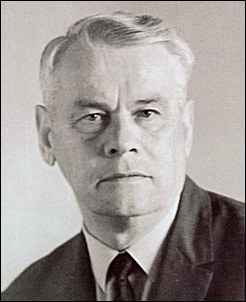
When the WWII started, all helicopter related jobs were concentrated in single OKB-3 headed by Ivan Pavlovich Bratukhin.
Involved in helicopter development since the late 1930s, I. P. Bratukhin first designed a twin-rotor helicopter, with an engine and related rotor mounted at each end of an outrigger. Designated 2MG Omega, this was completed in 1941. Vibration problems resulted in construction of Omega II in 1943. A series of similar twin-rotor helicopters were built up to 1948.
Brantly Helicopter Industries
Founded by N. P. Brantly, who designed the Brantly B-1, with co-axial rotors, in 1943. From this design he developed the improved Model B-2, using the rotor evolved for the B-1, a two-seat helicopter which first flew on August 14,1956. Subsequently entered production as Model B-2A, superseded by B-2B in 1963. Larger Model 305, a five-seat aircraft, first flew in January 1964. Company acquired by Lear Jet Industries Inc in May 1966.
The Brantly helicopter interests, which had been acquired by Lear Jet Industries in 1966, passed to in 1969, and to Brantly Operations Inc in late 1970. On January 1, 1975 Michael K. Hynes founded Brantly-Hynes Helicopter Inc., having gained ownership of the Brantly interests, later becoming just Hynes Helicopter as division of Hynes Aviation Industries Inc. Production of Model B-2B two-seater and Model 305 five-seater continued. Rights to helicopters acquired by businessman James Kimura from Hynes Aviation Industries 1989, forming Brantly Helicopter Industries.
1998:
Brantly Intrnational
Wilbarger County Airport
12399 Airport Dr
TX 76384 Vernon
USA
1995-7: 950 Muir Ave., Chico, CA 95973, USA.
LSA builder
1980-98: Peter M. Bowers, 10458 16th Ave. South, Seattle, WA 98168, USA.
Peter Bowers died in 2003.
2009: David R. Bowers:
13730 Burke Road, Los Altos Hills, CA 94022-3549

