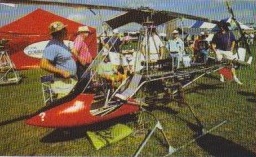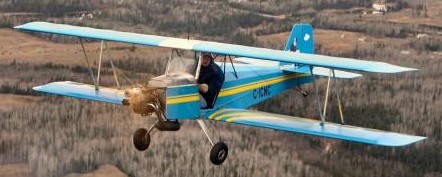
The original single seat Acrolite biplane was designed in 1985 to take full advantage of the regulations governing ultralight aircraft in Canada at that time. Construction was started in January 1986 by Peter Eisenbach and Chris Weiher and the first flight was in October 1986. It was a 22 foot span biplane with an empty weight of 281 lb and powered by a Rotax 447 engine.
The Acrolite 1A was first flown with the Kawasaki 440 but after 50 hours that engine was replaced with a new Rotax 447 40 hp and a ‘B’ reduction drive. The fuselage is constructed of welded 4130 chrome moly steel tube and the tail assembly is constructed of 6061 aluminum tube riveted together with 2024-T3 aluminum gusset plates. The wing is of 2024-T3 aluminum with a channel section main spar, a channel section rear spar, sheeted leading edge D cell and assembled with 1/8 inch diameter stainless steel blind rivets. The airfoil is a NACA4412 semi-symmetrical section. The ailerons are semi-full span aluminum tube, static balanced. The wing, fuselage, empennage and ailerons are fabric covered with 1.7 oz PolyFiber fabric. The landing gear is one piece spring aluminum clamped and bolted directly to the bottom of the fuselage with four bolts. The wheels and tires are 500 x 5 kart type with mechanical drum brakes.
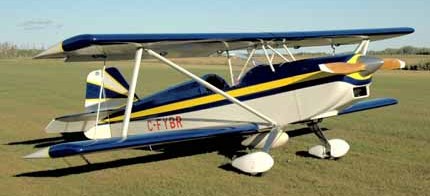
The Acrolite 1B was designed as a good performing entry level aerobatic capable aircraft in a light, low cost package for those pilots that want a more exciting and challenging aircraft to fly than the more common type of light and ultralight aircraft.
Designed by Ron Wilson of Murillo Ontario, it was the winner of the 1995 Scratch Build Design Contest sponsored by Aircraft Spruce and Specialty Co. of Fullerton California and hosted by the Experimental Aircraft Association in Oshkosh Wisconsin. Aircraft Spruce & Speciality became the exclusive supplier of plans and materials packages for the aircraft. Complete construction material packages for the Acrolite (16 total) could be purchased for under $10,000 in 2009. This design won out over 102 entries from all over the world. Aircraft Spruce sponsored the cost of building the airframe and the aircraft was built in one year by Peter Eisenbach of Thunder Bay and Vern Ennis and Harold Spithoff of Kakabeka Falls Ontario. It was designed with strength, ability to take abuse, ease of repair, good short field performance and stable flight characteristics as the most important features. The strut braced staggered wing biplane design affords good visibility and requires a pilot with only average flying ability but with some experience in high performance taildraggers. The design and basic construction is in accordance with standard aircraft practices and aircraft grade materials are used throughout. The aircraft is conservatively stressed for a limit load of 6 G positive and 4 G negative with a 1.5 safety factor at a gross weight of 750 lbs.
Able to be built in a fairly small area, the largest piece is the fuselage which is approximately 12 feet long 2 feet wide and 4 feet high. Built on a 12′ x 2′ table with a minimum of 3 feet of walk around area it can be built in any 17 foot long room. A single car garage is more than adequate and the entire aircraft can be fully assembled in an average 2 car garage. The wing panels are built standing on edge in an 8 foot long jig.
A Rotax 912 the engine was used in the prototype, but the Rotax 582/618 with a “C” or “E” type gear reduction drive will give good aerobatic performance at a lower cost.
The fuselage is constructed of welded 4130 chrome moly steel tube. A welded steel fuselage is generally considered to be the most durable, is easy to repair and provides the best protection against impact damage. Control linkages to the ailerons and elevator are push-pull rods with bearings on each end. Rudder and steerable tailwheel control is via a common cable. The tail assembly is constructed of 6061 aluminum tube riveted together with 2024-T3 aluminum gusset plates.
The wing is of stressed skin wood construction with a built up box section main spar, built up ribs, plywood sheeting and fabric covered. The builder will also have the option of building the wing entirely of 2024-T3 aluminum with a box section main spar, a channel section rear spar, fully sheeted and flush riveted with 1/8 inch diameter stainless steel blind rivets. The airfoil is GA30-212 semi-symmetrical section designed by Harry Ribblett. This airfoil is noted for its low drag and excellent stall characteristics. The ailerons are semi-full span aluminum tube, static balanced. The fuselage, empennage and ailerons are fabric covered with 1.7 oz PolyFiber fabric.
The landing gear is one piece spring aluminum clamped and bolted directly to the bottom of the fuselage with four bolts. This type landing gear has low drag is easy to construct and handles hard landings and rough ground well. The wheels and tires are 500 X 5 aircraft type with cable operated drum brakes. Optionally hydraulic operated disk brakes can also be used. The tailwheel spring is formed from aluminum flat bar and the tailwheel swivel unit is welded from chrome moly sheet steel. The 5 inch diameter tail wheel is molded hi-impact plastic.
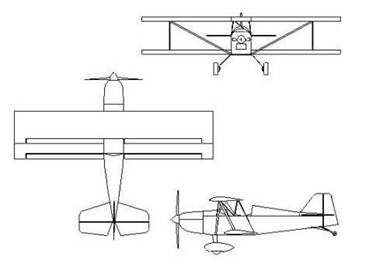
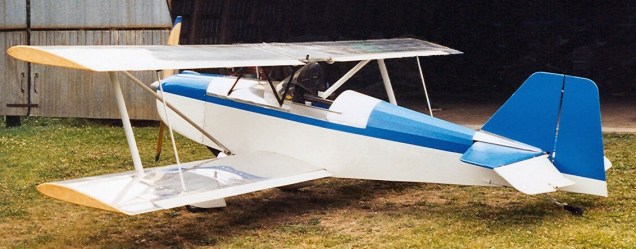
The Acrolite 1C is a higher performance version of the Acrolite 1B with the same fuselage and general configuration, but the wing panels have been shortened to eight feet for an 18 foot wing span and a total of 120 sq. ft. of wing area. The horizontal tail volume has been decreased accordingly and the rudder area has been increased. The builder has the option of building the wings of wood or aluminum and of using a GA30U-212 semi-symmetrical section or a GA30U-012 fully symmetrical section for better aerobatic performance when using the higher horsepower engines.
For the best performance the recommended engines are the four cylinder Rotax 80 hp 912 to the 115 hp 914 or the 80 to 120 hp. Hirth F30. Other engines of similar power and installed weight can also be used. The converted Volkswagon engine or the small four cylinder Continental engines are not recommended as the extra weight would cause a weight and balance problem and the power to weight ratio would not be as good.
The aluminum wing is of stressed skin construction with a box section main spar, a channel section rear spar and strut braced. It is built entirely of 2024-T3 aluminum, fully sheeted and flush riveted with 1/8 inch diameter stainless steel blind rivets. The wood wing uses a built up main spar and ribs, is plywood sheeted and fabric covered. The ailerons are full span aluminum tube, static balanced.
The fuselage is constructed of welded 4130 chrome moly steel tube. Control linkages to the ailerons and elevator are push-pull rods with bearings on each end. Rudder and steerable tailwheel control is via a common cable. The tail assembly is constructed of 6061 aluminum tube riveted together with 2024-T3 aluminum gusset plates. The fuselage, empennage and ailerons are fabric covered with 1.7 oz Polyfiber fabric.
The landing gear is one piece spring aluminum clamped and bolted directly to the bottom of the fuselage with four bolts. The wheels and tires are 500 x 5 aircraft type. Due to the higher output engines hydraulic operated disk brakes are recommended.
The aircraft is conservatively stressed for a limit load of 6 G positive and 4 G negative with a 1.5 safety factor at a flying weight of 750 lbs.
The Acrolite 1C prototype had a 150 hp snowmobile engine, detuned to 120 hp and a new experimental reduction drive. The intent is to test the airframe performance with very high power to weight ratio (less than 6 lb per hp).
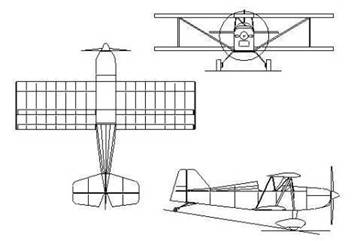
Acrolite
Engine: Rotax 447, 40 hp
Empty Weight: 281 lb
Wing span: 22 ft
Acrolite 1A
Engine: Rotax 447, 40 hp
Reduction: 2.58 to 1
Propeller: 62 x 32
Airfoil: NACA 4412
Wingspan: 22 ft
Wing area: 140 sq.ft
Wing Chord: 3.5 ft
Aspect ratio: 6.3 to 1
Length: 16 ft
Height: 5.75 ft
Fuel capacity: 5 UGS
Wheel & tire size: 500 x 5
Empty weight: 280 lb
Gross weight: 500 lb
Wing loading: 3.6 lb./sq.ft
Power loading: 12.5 lb/hp
Power off stall speed: 32 mph
Power on stall speed: 30 mph
Landing speed: 37 mph
Maneuvering speed: 65 mph
Maximum level speed: 70 mph
Never exceed speed: 80 mph
Cruise speed: 65 mph @ 5000 rpm
Best glide speed: 50 mph
Best rate of climb: 800 fpm
Best climb rate speed: 50 mph
Best climb angle speed: 48 mph
Range: 100 sm
Take off distance: 300 ft
Landing distance: 200 ft
Seats: 1
Engine: 45 hp Rotax 503
Reduction: 2.58 to 1
Propeller: 63 x 36
Airfoil: NACA 4412
Wingspan: 22 ft
Wing area: 140 sq.ft
Wing Chord: 3.5 ft
Aspect ratio: 6.3 to 1
Length: 16 ft
Height: 5.75 ft
Fuel capacity: 5 USG
Wheel & tire size: 500 x 5
Empty weight: 280 lb
Gross weight: 500 lb
Wing loading: 3.6 lb/sq.ft
Power loading: 11.1 lb/hp
Power off stall speed: 32 mph
Power on stall speed: 30 mph
Landing speed: 37 mph
Maneuvering speed: 65 mph
Maximum level speed: 72 mph
Never exceed speed: 80 mph
Cruise speed: 66 mph
Best glide speed: 50 mph
Best rate of climb: 1000 fpm
Best climb rate speed: 55 mph
Best climb angle speed: 48 mph
Range: 100 sm
Take off distance: 250 ft
Landing distance: 200 ft
Seats: 1
Acrolite 1B
Engine: 80 hp Rotax 912
Reduction: 2.43 to 1
Propeller: 68 x 48
Airfoil: GA30U-212
Wingspan: 20 ft x 2
Wing area: 133 sq. ft.
Aspect ratio: 9 to 1
Length: 17 ft.
Height: 6 ft.
Fuel capacity: 9 gal U.S.
Wheel & tire size: 500 x 5
Empty weight: 500 lbs
Gross weight: 800 lbs
Span loading: 20.0 lb/ft
Wing loading: 6.0 lb/sq. ft.
Power loading: 10 lb/bhp
Power off stall speed: 45 mph
Power on stall speed: 40 mph
Landing speed: 55 mph
Maneuvering speed: 85 mph
Maximum level speed: 130 mph
Never exceed speed: 150 mph
Cruise speed@ 5000 rpm: 110 mph.
Best glide speed: 75 mph
Best rate of climb: 1800 fpm
Best climb rate speed: 80 mph
Best climb angle speed: 70 mph
Range: 250 sm
Take off distance: 500 ft
Landing distance: 500 ft
Engine: 75 hp Rotax 618
Reduction: 2.58 to 1
Propeller: 66 x 46
Airfoil: GA30U-212
Wingspan: 20 ft. x 2
Wing area: 133 sq. ft.
Aspect ratio: 9 to 1
Length: 17 ft.
Height: 6 ft.
Fuel capacity: 9 gal U.S.
Wheel & tire size: 500 x 5
Empty weight: 480 lbs
Gross weight: 750 lbs
Span loading: 18.7 lb./ft
Wing loading: 5.6 lb./sq. ft.
Power loading: 10 lb/bhp
Power off stall speed: 42 mph.
Power on stall speed: 38 mph
Landing speed: 53 mph
Maneuvering speed: 85 mph
Maximum level speed: 125 mph
Never exceed speed: 150 mph
Cruise speed@ 5600: 105 mph.
Best glide speed: 75 mph
Best rate of climb: 1900 fpm
Best climb rate speed: 80 mph
Best climb angle speed: 70 mph
Range: 250 sm
Take off distance: 500 ft
Landing distance: 500 ft
Engine: 65 hp Rotax 582
Reduction: 2.58 to 1
Propeller: 64 x 44
Airfoil: GA30U-212
Wingspan: 20 ft. x 2
Wing area: 133 sq. ft.
Aspect ratio: 9 to 1
Length: 17 ft.
Height: 6 ft.
Fuel capacity: 9 gal U.S.
Wheel & tire size: 500 x 5
Empty weight: 480 lbs
Gross weight: 750 lbs
Span loading: 18.7 lb./ft
Wing loading: 5.6 lb/sq. ft.
Power loading: 11.5 lb/bhp
Power off stall speed: 42 mph.
Power on stall speed: 38 mph
Landing speed: 53 mph
Maneuvering speed: 85 mph
Maximum level speed: 110 mph
Never exceed speed: 150 mph
Cruise speed: 90 mph
Best glide speed: 75 mph
Best rate of climb: 1400 fpm
Best climb rate speed: 80 mph
Best climb angle speed: 70 mph
Range: 250 sm
Take off distance: 500 ft
Landing distance: 500 ft
Acrolite 1C
Engine: Rotax 912U, 80 hp
Reduction: 2.27 to 1
Propeller: 65 x 55
Airfoil: GA30U-212
Wingspan: 18 ft. x 2
Wing area: 120 sq.ft
Aspect ratio: 8 to 1
Length: 17 ft
Height: 6 ft
Fuel capacity: 9 gal U.S.
Wheel & tire size: 500 x 5
Empty weight: 525 lb
Gross weight: 800 lb
Span loading: 22 lb/ft
Wing loading: 6.7 lb/sq.ft
Power loading: 10 lb/bhp
Power off stall speed: 48 mph
Power on stall speed: 44 mph
Landing speed: 65 mph
Maneuvering speed: 95 mph
Maximum level speed: 130 mph
Never exceed speed: 160 mph
Cruise speed: 112 mph
Best glide speed: 75 mph
Best rate of climb: 1600 fpm
Best climb rate speed: 80 mph
Best climb angle speed: 70 mph
Range: 250 sm
Take off distance: 500 ft
Landing distance: 500 ft
Engine: Rotax 912S, 100 hp
Reduction: 2.43 to 1
Propeller: 68 x 64
Airfoil: GA30U-212
Wingspan: 18 ft. x 2
Wing area: 120 sq.ft
Aspect ratio: 8 to 1
Length: 17 ft
Height: 6 ft
Fuel capacity: 9 gal U.S.
Wheel & tire size: 500 x 5
Empty weight: 525 lb
Gross weight: 800 lb
Span loading: 22 lb/ft
Wing loading: 6.7 lb/sq.ft
Power loading: 8 lb/bhp
Power off stall speed: 48 mph
Power on stall speed: 44 mph
Landing speed: 65 mph
Maneuvering speed: 95 mph
Maximum level speed: 140 mph
Never exceed speed: 160 mph
Cruise speed: 122 mph
Best glide speed: 75 mph
Best rate of climb: 2100 fpm
Best climb rate speed: 90 mph
Best climb angle speed: 70 mph
Range: 250 sm
Take off distance: 500 ft
Landing distance: 500 ft
Engine: 120 hp Hirth F30
Reduction: 2.43 to 1
Propeller: 64 x 44
Airfoil: GA30U-012
Wingspan: 18 ft. x 2
Wing area: 120 sq.ft
Aspect ratio: 8 to 1
Length: 17 ft
Height: 6 ft
Fuel capacity: 9 gal U.S.
Wheel & tire size: 500 x 5
Empty weight: 525 lb
Gross weight: 800 lb
Span loading: 22 lb/ft
Wing loading: 6.7 lb/sq.ft
Power loading: 6.7 lb/bhp
Power off stall speed: 48 mph
Power on stall speed: 44 mph
Landing speed: 65 mph
Maneuvering speed: 95 mph
Maximum level speed: 150 mph
Never exceed speed: 160 mph
Cruise speed: 130 mph
Best glide speed: 75 mph
Best rate of climb: 2400 fpm
Best climb rate speed: 90 mph
Best climb angle speed: 70 mph
Range: 250 sm
Take off distance: 500 ft
Landing distance: 500 ft