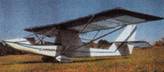
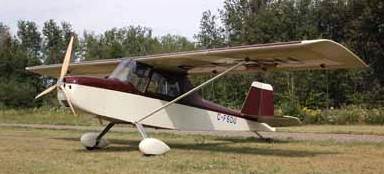
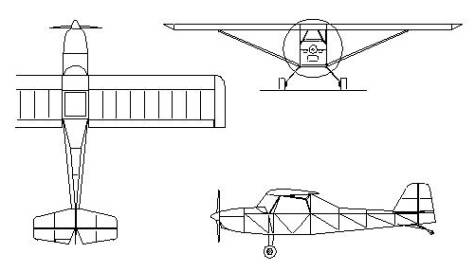
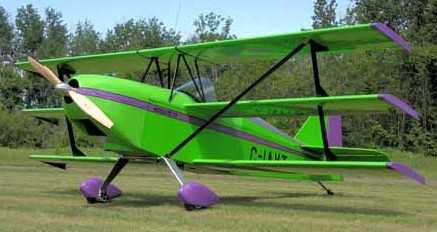
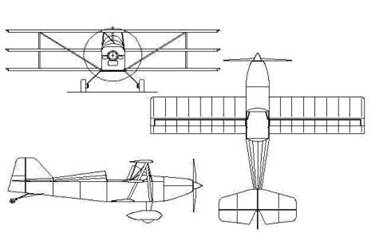
The Carrera was available with a nose wheel or tail wheel, and long or short wings. Options included a 12 USG fuel capacity and twin floats. First flown in 1989.
Advanced Aeromarine Carrera Engine: Rotax 503, 52 hp HP range: 52-65 Speed max: 84 mph Cruise: 68 mph ROC: 1200 fpm Take-off dist: 150 ft Landing dist: 150 ft Service ceiling: 15,000 ft Fuel cap: 12 USG Weight empty: 350 lbs Gross: 625 lbs Height: 6.3 ft Length: 20.1ft Wing span: 29.7 ft Wing area: 145 sq.ft Seats: 1 Landing gear: tail wheel
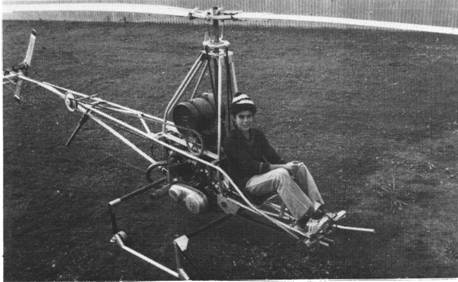
This company was formed by Mr. T.G.Adams and Mr. Paul Wilson to market plans the single-seat helicopter named the HobbyCopter, of which they have built a prototype, N23P, with a 34 hp engine. The company also supplies kits of parts for the Hobby-Copter sold as a kit to amateurs as the Model 101 Hobbycopter, offered in kit (US$900) or plan (US$35) The subsequent Model 102 had a strengthened structure, 50hp Triumph engine and fibreglass cockpit shell. First flown in November 1958, this single seat fully fledged helicopter was powered by a motor cycle engine, rubber mounted and fitting into the frame with no modifications – including starting procedures. Powered by a 40-46hp Triumph 650cc motorcycle engine, the engine, as in its original mount, is kick-started. Fuel is in a single tank above engine with a capacity of 11.4 litres. Oil capacity is 3.8 litres. When the run-up is complete and ready for takeoff, the pilot engages gear through the motorcycle gearbox — the power being transmitted through a one-way drive to the main rotors and by a vee-belt to the tail rotor. An open air machine, the helicopter utilises skids and features a 22 foot laminated spruce wooden main rotor of NACA 0012 aerofoil section (chord 0.20m) and a formed aluminium two ¬bladed tail rotor. Cyclic and collective pitch are controlled by a swash-plate. The rotor drive involves engine-to-gearbox by chain; gearbox-to-main rotor by direct shaft; gearbox-to-tail rotor by belt. The main rotor rpm in flight is 360, and tail rotor rpm in flight 1,800. The fuselage is all aluminium tube structure, bolted together, with tubular skids, with retractable ground-handling wheels. A single fiberglass bucket seat is ahead of the rotor drive shaft. The plans are all to aircraft specifications and the structure is bolted together. The main lift bearing is designed to take six tons.
XH-1 HobbyCopter Engine: 850cc Norton Main rotor dia: 22 ft / 6.55m Tail rotor dia: 0.94 m Fuselage length: 4.27 m Width: 1.52m Height: 1.83m Empty wt: 335 lb MAUW: 600 lb / 252kg Weight empty, equipped: 161kg Max speed: 72 mph / 96km/h Max cruise: 72km/h Econ cruising speed: 64km/h Service ceiling: 2440m Max range: 193km Fuel burn: 1.5 USG/hr Seats: 1
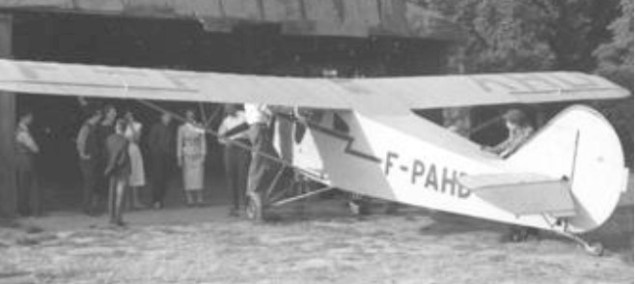
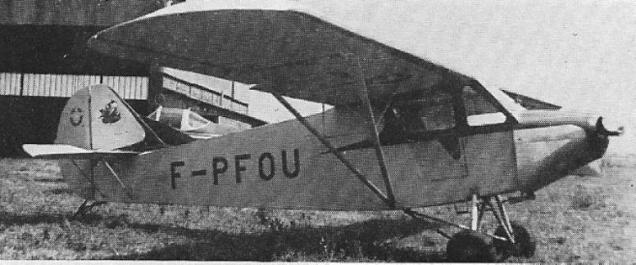
A side-by-side two seater, the RA-14 Loisirs was mainly intended for construction by amateur builders and aero clubs, using Adam-supplied parts and components. The RA-14 was also delivered complete.The RA-14 made the first flight on March 16, 1946 and this aircraft was powered by a 40 hp Train engine. The RA-14 had a fabric covered fuselage and wings and was built in several variants, with engines in the 65-90 hp power range. The type was popular in the immediate post-war years and several dozens were built.
One example of the RA-14S Loisirs was built, featuring a plywood covered fuselage and several other features of the RA-15 model. In 1957 Maranda Aircraft in Canada acquired the marketing rights for the RA-14 and also developed several improved versions. The RA-14 serving as the basis of the AMF S-14. Another homebuilt variant was available from Falconar, also in Canada.
USA Markets plans, and some components for the Aero-Sport single-seat aerobatic/competition biplane and Super Acro-Sport for unlimited aerobatics, two-seat Aero-Sport II aerobatic biplane, Pober Junior Ace two-seat parasol-wing monoplane, Pober Pixie and Pober Super Ace single-seat parasol-wing monoplanes, and Nesmith Cougar I two-seat high-wing cabin monoplane.
The Acrolite 2M aircraft was designed in 1991 and built in 1991 to 1994, it had its first flight in June of 1994. It is a high wing two place tandem seat monoplane powered by a Rotax 582, 65 hp engine. Originally designed for the Rotax 912, performance is surprisingly good with the smaller engine. It was designed as per TP10141 the Canadian specifications for advanced ultralight aircraft and also meets the U.S. Sport Pilot requirements. The aircraft is stressed for this category with a 4 g. limit load and 6 g. ultimate load. The aircraft was designed with strength, ability to take abuse, ease of repair, good short field performance and stable flight characteristics as the most important features with aircraft grade materials used throughout. Tandem seating was selected and most of the popular ultralight twin cylinder two stroke engines can be used from 60 hp on up and the lighter four cylinder aircraft engines like the 80 hp four cylinder Rotax 912 and the 80 hp Jabiru. With an engine of 65 hp or more the aircraft is easily capable of carrying two 180 lb persons of over 6 ft. in height and full fuel. The fuselage is long for better stability and is constructed of welded 4130 chrome moly steel as per standard aircraft methods and covered with Polyfiber 1.7 oz. fabric. The tail assembly is constructed of 6061 aluminum tube riveted together with 2024-T3 aluminum gusset plates and fabric covered. This type construction allows a full cantilever empennage with low drag and light weight. Control linkages to the ailerons and elevator are push-pull rods with bearings on each end for positive control and friction free operation. Rudder and steerable tailwheel control is via a common cable. The wing is of stressed skin construction with a box section main spar, a channel section rear spar and strut braced. It is built entirely of 2024-T3 aluminum, fully sheeted and flush riveted with 1/8 inch diameter stainless steel blind rivets. The ailerons are full span aluminum tube, fabric covered and static balanced. The landing gear is one piece spring aluminum clamped and bolted directly to the bottom of the fuselage with four bolts. This type landing gear has low drag is easy to construct and handles hard landings and rough ground well. The wheels and tires are 600 X 5 aircraft type with cable operated drum brakes. Optionally hydraulic operated disk brakes can also be used. Floats and skis can also be used with a minimum of adapting. On November 2002 the 582 engine was removed for installation in the new Triplane and a new Rotax 912U engine was purchased for it. During the next year the 912 engine was installed, modifications were made to the airframe to strengthen the landing gear area, the fuselage was recovered, wheel fairings were added and the aircraft was painted. The first flight with the new engine was made on Nov. 8, 2003. A set of skis were fitted and flew it on skis through the winter of 2004/2005. After over 200 hours on the airframe, all the restrictions had been flown off and the flight testing had been completed, and the construction drawings and builders manual were completed and the design offered for sale.
Engine: Rotax 912, 80 hp Reduction: 2.23 to 1 Propeller: 68 x 48 Airfoil: GA30U-412 Wingspan: 28.4 ft Wing area: 141 sq.ft Wing chord: 5 ft Aspect ratio: 5.7 to 1 Length: 20.3 ft Height: 6.5 ft Fuel capacity: 14 gal U.S. Wheel & tire size: 600 x 6 Empty weight: 600 lb Gross weight: 1200 lb Span loading: 20.0 lb/ft Wing loading: 8.5 lb/sq.ft Power loading: 15 lb/bhp Power off stall speed: 44 mph Power on stall speed: 40 mph Landing speed: 60 mph Maneuvering speed: 85 mph Maximum level speed: 130 mph Never exceed speed: 150 mph Cruise speed: 110 mph@ 5000 rpm Best glide speed: 75 mph Best rate of climb: 1100 fpm Best climb rate speed: 80 mph Range: 250 sm Take off distance: 750 ft Landing distance: 500 ft Cockpit width: 30 in
Engine: Rotax 618, 75 hp Reduction: 2.58 to 1 Propeller: 66 x 46 Airfoil: GA30U-412 Wingspan: 28.4 ft Wing area: 141 sq.ft Wing chord: 5 ft Aspect ratio: 5.7 to 1 Length: 20.3 ft Height: 6.5 ft Fuel capacity: 14 gal U.S. Wheel & tire size: 600 x 6 Empty weight: 575 lbs Gross weight: 1100 lbs Span loading: 18.7 lb./ft Wing loading: 7.8 lb/sq. ft. Power loading: 14.7 lb/bhp Power off stall speed: 42 mph. Power on stall speed: 38 mph Landing speed: 57 mph Maneuvering speed: 85 mph Maximum level speed: 125 mph Never exceed speed: 150 mph Cruise speed: 105 mph@ 5800 Best glide speed: 75 mph Best rate of climb: 1000 fpm Best climb rate speed: 80 mph Range: 250 sm Take off distance: 750 ft Landing distance: 500 ft
Engine: Rotax 582, 65 hp Reduction: 2.58 to 1 Propeller: 64 x 44 Airfoil: GA30U-412 Wingspan: 28.4 ft Wing area: 141 sq.ft Wing chord: 5 ft Aspect ratio: 5.7 to 1 Length: 20.3 ft Height: 6.5 ft Fuel capacity: 14 gal U.S. Wheel & tire size: 600 x 6 Empty weight: 575 lbs Gross weight: 1100 lbs Span loading: 18.7 lb/ft Wing loading: 7.8 lb./sq. ft. Power loading: 16.9 lb/bhp Maneuvering speed: 85 mph Maximum level speed: 110 mph Never exceed speed: 150 mph Cruise speed: 90 mph Best glide speed: 75 mph Best rate of climb: 750 fpm Best climb rate speed: 80 mph Range: 250 sm Take off distance: 750 ft Landing distance: 500 ft
A modern LSA triplane built using technology and engines from the ultralight industry, the Acrolite 1T is a strut braced, single place light sport triplane. Construction is of welded steel tube fuselage, riveted aluminum tube tail group, full sheeted box spar wing. The high aspect ratio of the wings allows an excellent rate of climb and a good glide ratio if the wing interference drag can be reduced, and give high roll rate from the short span wings. By utilizing a modern airfoil, narrow wing chord, lots of wing stagger and properly shaped wingtips the interference drag and the tip loss is reduced. The “quick build” wings use common wood working tools and full size patterns for all the fittings, controls, ribs, panels and bulkheads are supplied. The Triplane construction is identical to the 1B biplane except that on the prototype we used a fiberglas skin for the wings instead of plywood. This gave a much smoother surface to the wing than the plywood. The wings for the triplane are made with a wooden frame and covered with fiberglass or plywood. The remainder of the construction methods are the same as the biplanes. The aircraft accelerates and lifts off the ground very quickly and climbout is exceptional. With the ailerons on only the center wing the roll rate is still adequate. Compared to the biplanes aileron response is just a bit slow initially but once it starts moving it is quite good. It does not roll as fast as the biplanes but the turning radius is a lot smaller. The stall is more pronounced in the triplane and unlike the biplane that will fly itself out of a stall even with full back stick, the triplane requires proper stall recovery technique. In a 1000 ft climb out contest with the 80 hp biplane the triplane lagged only slightly behind. A full throttle, level flight, speed run showed 115 mph indicated at 6800 rpm. Visibility is very good, especially on approach and it feels easier to land than the biplanes because it does not seem to float as much at touchdown. Rudder authority is very good and it will make a flat turn. Flight testing was completed and the construction drawings and builders manual were completed and made available.
Engine: Rotax 582, 65 hp Reduction: 2.58 to 1 Propeller: 64 x 48 Airfoil: GA30U-211 Wingspan: 18 ft. x 3 Wing area: 111 sq.ft Aspect ratio: 20.8 to 1 Length: 15.5 ft Height: 6 ft Fuel capacity: 8 gal U.S. Wheel & tire size: 500 x 5 Empty weight: 450 lb Gross weight: 720 lb Span loading: 13.3.0 lb/ft Wing loading: 6.5 lb./sq.ft Power loading: 10.8 lb/bhp Power off stall speed: 44 mph Power on stall speed: 40 mph Landing speed: 55 mph Maneuvering speed: 76 mph Maximum level speed: 110 mph Never exceed speed: 130 mph Cruise speed: 93 mph Best glide speed: 65 mph Best rate of climb: 1085 fpm Best climb rate speed: 75 mph Range: 250 sm Take off distance: 500 ft Landing distance: 500 ft Cockpit width: 24 in
Engine: Rotax 503, 50 hp Reduction: 2.58 to 1 Propeller: 62 x 43 Airfoil: GA30U-211 Wingspan: 18 ft. x 3 Wing area: 111 sq.ft Aspect ratio: 20.8 to 1 Length: 15.5 ft Height: 6 ft Fuel capacity: 8 gal U.S. Wheel & tire size: 500 x 5 Empty weight: 450 lb Gross weight: 720 lb Span loading: 13.3.0 lb/ft Wing loading: 6.5 lb./sq.ft Power loading: 14 lb/bhp Power off stall speed: 44 mph Power on stall speed: 40 mph Landing speed: 55 mph Maneuvering speed: 76 mph Maximum level speed: 100 mph Never exceed speed: 130 mph Cruise speed: 85 mph Best glide speed: 65 mph Best rate of climb: 744 fpm Best climb rate speed: 70 mph Range: 250 sm Take off distance: 550 ft Landing distance: 500 ft
Engine: Rotax 582, 65 hp Reduction: 2.58 to 1 Propeller: 64 x 48 Airfoil: GA30U-211 Wingspan: 18 ft. x 3 Wing area: 111 sq.ft Aspect ratio: 20.8 to 1 Length: 15.5 ft Height: 6 ft Fuel capacity: 8 gal U.S. Wheel & tire size: 500 x 5 Empty weight: 450 lb Gross weight: 720 lb Span loading: 13.3.0 lb/ft Wing loading: 6.5 lb./sq.ft Power loading: 10.8 lb/bhp Power off stall speed: 44 mph Power on stall speed: 40 mph Landing speed: 55 mph Maneuvering speed: 76 mph Maximum level speed: 110 mph Never exceed speed: 130 mph Cruise speed: 93 mph Best glide speed: 65 mph Best rate of climb: 1085 fpm Best climb rate speed: 75 mph Range: 250 sm Take off distance: 500 ft Landing distance: 500 ft