Guzzi 1100
Cycle: 4
No cylinders: Vee 2
Bore: 92 mm
Stroke: 78 mm
Compression: 9.8
Displacement: 1036 cc
Cooling: Air
Ignition: Coil
Reduction: Belt
Reduction Ratio: 2.27-1
Dimensions: 450 x 520 x 550 mm
Weight: 71 kg
Max pwr: 80 hp at 6000 rpm
Max torque: 10.2 at 5500 rpm
Fuel consumption: 190 G/hp/hr
Price 1998: 320 500 FB
LSA/UL
AAE srl Guzzi 800
Guzzi 800
Cycle: 4
No cylinders: Vee 2
Bore: 80 mm
Stroke: 74 mm
Compression: 10
Displacement: 796 cc
Cooling: Air
Ignition: Coil
Reduction: Belt
Reduction Ratio: 2.27-1
Dimensions: 420 x 450 x 550 mm
Weight: 58 kg
Max pwr: 65 hp at 6500 rpm
Fuel consumption: 190 G/hp/hr
Aachen FVA 25
Construction of FVA25 (ultralight canard aircraft) began in 1983.
Aachen Flugzeugbau / Aachener Segelflugzeugbau Gmbh / Flugwissenschaftliche Vereinigung Aachen e.V.
Informal beginnings caused the formation of groups of engineers at universities with the aim of scientific and practical education. Aachen built a small series of trainers during 1917-18.
The first groups were formed in 1920 in Aachen, Darmstadt and Berlin-Charlottenburg, but others soon followed.
In 1920 Aachen Flugzeugbau was successful with gliders built to the designs of Prof Klemperer. In 1921 the name was changed to Aachener Segelflugzeugbau GmbH and in 1923 the K. F. glider-related light airplane (also a Klemperer design) was in production. In 1924 a two-seat low-wing monoplane was also flown.
2008: Flugwissenschaftliche Vereinigung Aachen
Templergraben 55
52062 Aachen
Germany
Flugwissenschaftliche Vereinigung Aachen e.V. are a group of students from the RWTH Aachen and the FH who devoted themselves to the research, building and flying of gliders. The Flight Research Association was founded in 1920 and is a club at the RWTH Aachen.
In return for the 300 per year paid flying itself is free for everyone. Aachen trains glider and motor glider pilots, as well as tow pilots.
They organize and support various courses to flight instructors, provide flying training, the training of workshop leaders and parachute packers.
With ties to many institutes of the University and the University of Applied Sciences, there is the opportunity to publish scientific work in the form of Theses. In addition, the activity in the FVA is recognized both at the FH and at RWTH as an internship.
The members can learn a lot about designing and implementing their own ideas and suggestions into action.
Working on a project is with Airbus, which deals with the testing and construction of mini-flaps, an alternative surface flap system for flight control.
With a very diverse fleet of aircraft, members perform all necessary work.
A2 CZ Ellipse Spirit
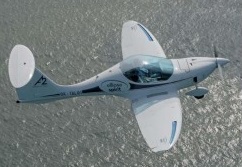
The Czech A2 CZ Ellipse Spirit was designed to comply with the Fédération Aéronautique Internationale ultralight aircraft rules. It features a cantilever low wing, a two seats in side-by-side configuration cockpit, tricycle landing gear and a single engine in tractor configuration.
The aircraft of all-composite construction. Its 8.0 m (26.2 ft) span elliptical wing employs rounded wingtips and fixed slots in the outer portion of the wing and dive brakes. Optional fuel capacity is 100 litres (22 imp gal; 26 US gal) giving a range of 1,730 km (1,075 mi). The standard engine is the ULPower 260iS four-cylinder, four-stroke aircraft engine of 107 hp (80 kW) and other engines available include the 100 hp (75 kW) Rotax 912S and 912iS, plus the 100 hp (75 kW) Lycoming IO-233.
Designed and produced by A2 CZ and first flown in July 2011, the aircraft was introduced at the Aero show in 2011 and was supplied complete and ready to fly or as a kit for amateur construction. The unt cost was € 75,000 in 2011.
The basic fixed gear Ellipse was undergoing development in 2011 into a retractable gear version as well as versions for the US light-sport aircraft category.
Ellipse Spirit
Engine: 1 × ULPower 260iS, 80 kW (107 hp)
Wingspan: 8.00 m (26 ft 3 in)
Wing area: 8.48 sq.m (91.3 sq ft)
Empty weight: 272.5 kg (601 lb)
Gross weight: 472.5 kg (1,042 lb)
Fuel capacity: 100 litres (22 imp gal; 26 US gal)
Maximum speed: 280 km/h (170 mph, 150 kn)
Cruise speed: 250 km/h (160 mph, 130 kn)
Stall speed: 60 km/h (37 mph, 32 kn)
Rate of climb: 7.5 m/s (1,480 ft/min)
Crew: one
Capacity: one passenger
76th Fighter Squadron Inc
1996: 3604 Galley Rd, Colorado Springs, CO 80909, USA.
3xtrim 3X55 Trener / 3X47 Ultra / Navigator 600
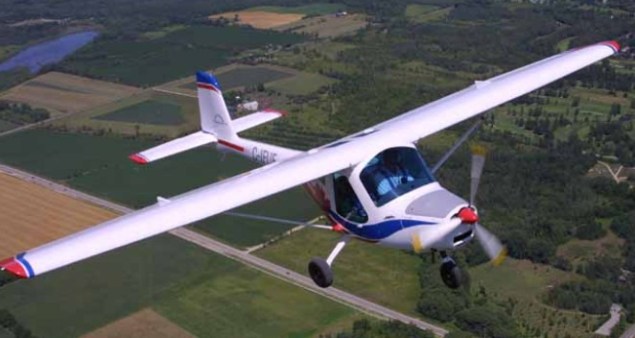
First flown in 1996, the 3X55 Trener (English: Trainer) and 3X47 Ultra are a family of ultralight civil aircraft produced in Poland by the 3Xtrim Aircraft Factory. Both are two-seat, high-wing, strut-braced monoplanes with fixed tricycle undercarriage and available only as completed aircraft. There are also 450 Ultra and 495 Ultra Plus sub-variants of the 3X47 Ultra, with gross weights adjusted for national ultralight regulations.
Former SZD sailplane engineer Adam Kurbiel designed the predecessor of 3X55, the EOL-VLA, to conform to European JAR-VLA rules. That plane was modified through the years to meet Canadian Advanced Ultralight and US Light Sport Aircraft rules. The 3X47 version is specifically for the European market to meet those standards.
The designation 3X55 means “3Xtrim Aircraft – 550 kg gross weight” while the 3X47 refers to its 470 kg gross weight.
The US light sport aircraft version of the 3X55 is known as the Navigator 600 and has a 1320 pound maximum gross take-off weight.
The European versions feature extensive structural use of carbon fibre to achieve lightness, while the 3X55 is predominantly of fibreglass construction. Otherwise the two aircraft are similar in appearance and performance.
The 3X55 powerplant options are the 80 hp (60 kW) Rotax 912UL, the 100 hp (75 kW) 912ULS or the 80 hp (60 kW) Jabiru 2200. The 3X55 can be equipped with either a three-bladed, fixed pitch Czech-made Woodcomp wood/fibreglass SR 200 propeller or an electrically adjustable Woodcomp SR 2000 propeller, with an optional constant speed unit.
The fuselage and vertical tail of the 3X55 is a one-piece structure made from fibreglass. The firewall is a Fiberfrax ceramic/aluminium sandwich. The cockpit is 47.5 inches (1.21 m) wide at the elbows. Crew access is via a door on each side of the cockpit that hinges upwards and is supported by a gas strut.
The control sticks are located conventionally in front of each seat. The standard throttle arrangement is one panel-mounted centre throttle, but a second throttle located on the left side of the panel is optional, allowing the left-seat pilot to fly with either hand on the throttle or stick.
The wings are strut-braced with a single spar and are made from fibreglass and foam with a 15.5% TsAGI.R3 airfoil. The wing has a span of 31 .5 feet and an area of 127.4 sq ft (11.84 m2), which gives it a wing loading of 9.5 lbs/sq ft at gross weight. The aircraft has removable wings, with single locking pins and quick-disconnect controls which can be easily hooked up and inspected from inside the cockpit.
The wings have conventional Frise ailerons and slotted flaps. The elevator and rudder are also conventional. Ailerons and elevator are controlled by dual centre-mounted sticks through push-pull tubes, while the rudder is controlled by cables. The rudder cables attach to the rudder by wrapping around the wide bottom diameter of the rudder itself. The pitot tube is mounted in the left-hand strut.
The flaps are operated by a ceiling-mounted flap handle with detents for 0, 15 and 30 degrees of deflection. The flaps are controlled directly with the handle attached to a flap centre-section behind the fuselage and the wing flaps plug into the flap centre-section. Flaps are normally set to 15 degrees for take-off and 30 degrees for landing.
The fuel tank is located behind the right-hand seat. The quantity can be read directly through a sight gauge behind the seat. The standard tank is 70 litres (18 US gallons) with 87 litres (23 US gallons) optional. The standard fuel is premium auto fuel, but it can run on 100LL as well. Behind the left-hand seat is a small baggage compartment, with additional baggage space above and behind both seats.
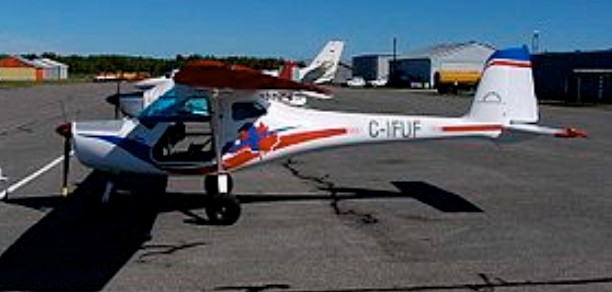
The main landing gear consists of sprung fibreglass gear legs with 5X5.00 tires as standard on graphite wheel rims. Larger 6X6.00 tires are optional. The nose gear is a single-fork design also made from fibreglass. Nose gear suspension is a compressed rubber donut system. The plane comes in one colour – white, but owners can add their own vinyl decals to finish the plane as desired.
The 3X55 first flew in 1996 and by the summer of 2006 about 60 aircraft of both types had been produced with a base price of US$99,900.
Krzysztof Wieczorek won the 16th FAI World Precision Flying Championship in 2004 and took the 3rd place in the 14th FAI World Rally Flying Championship in 2004 flying 3Xtrim aircraft. In the 17th FAI World Precision Flying Championship in 2006, 3Xtrim took the 1st (Krzysztof Wieczorek) and 3rd (Krzysztof Skrętowicz) places.
Specifications:
550 Trener
Engine: 1 × Rotax 912, 73.4 kW (98.6 hp)
Wingspan: 10.03 m (32 ft 11 in)
Length: 6.87 m (22 ft 6½ in)
Height: 2.40 m (7 ft 10¾ in)
Wing area: 12.40 sq.m (133.5 sq.ft)
Empty weight: 325 kg (717 lb)
Max. takeoff weight: 550 kg (1,212 lb)
Never exceed speed: 220 km/h (118 knots, 136 mph)
Cruise speed: 170 km/h (91 knots, 106 mph)
Stall speed: 70 km/h (38 knots, 44 mph)
Range: 750 km (405 nmi, 466 mi)
Service ceiling: 4,000 m (13,120 ft)
Rate of climb: 4.5 m/s (886 ft/min)
Crew: 1
Capacity: 1 passenger
3X55 Trainer
Engine: Rotax 912 ULS
Wing span: 9.60m / 31.5ft
Length: 6.87m / 22.5ft
Height: 2.4m / 7.9ft
Wing area: 11.84sq.m / 127.4sq.ft
Cabin width: 1.2m / 47.2in
Wing load: 46.5 kg/sq.m / 9.52lbs/sq.ft
Max. take-off weight: 550kg / 1212 lbs
Empty weight: 325 kg / 716lbs
Useful load: 225 kg / 496lbs
Fuel tank capacity std: 18.5Impg / 23.2 US gal
Never Exceed Speed (IAS) VNE: 109kts
Cruise speed max. cont. Power (IAS): 100kts
Cruise speed 75% power (IAS): 88kts
Stall speed (IAS) Vso: 39kts
Manoeuvering Speed (IAS) VA: 75kts
Maximum Flap Extended Speed (IAS) VFE full flaps: 62kts
Maximum Flap Extended Speed (IAS) VFE take-off flaps: 74kts
Maximum climb rate: 1000ft/min / 62kts IAS
Take-off distance 50ft obstacle: 918ft / 280m
Range: 388NM / 720km
3xtrim EOL-VLA
Former SZD sailplane engineer Adam Kurbiel designed the predecessor of 3X55, the EOL-VLA, to conform to European JAR-VLA rules. That plane was modified through the years to meet Canadian Advanced Ultralight and US Light Sport Aircraft rules. The 3X47 version is specifically for the European market to meet those standards.
3xtrim 450 Ultra / 3xtrim 495 Ultra Plus
The 3Xtrim is a single-engine, two-seater monoplane with braced high wing, conventional controls and fixed three-wheel landing gear. The front-mounted engine is coupled to a two-blade or three-blade (depending on version) adjustable pulling propeller. A heated and ventilated cockpit with seats in one row and a large baggage compartment make the airplane comfortable, silent and well furbished. Doors are on each side, opening upwards, and are supported in this position by gas springs. Fixed three-wheel landing gear with castoring front wheel, composite main spring and hydraulic disc brakes, allows for safe take-off and landing on all types of airport surfaces, grass included. The Ballistic Rescue System (BRS5) provides protection for the passengers and aircraft at altitudes above 30 m and speeds up to 235 kmph (145 mph). The entire aircraft structure is fabricated from composites based on epoxy resin with glass and carbon fibre, reducing necessary maintenance work to pre-flight inspection and cleaning. The aircraft fully complies with the JAR-VLA requirements and has a Type Certificate of Very Light Airplane. Flight characteristics make this aircraft suitable for primary training, cross-country, and recreation. The aircraft is also suitable for patrol flights and aerial photography. A three-year manufacturer’s warranty is standard. The aircraft is manufactured in three versions: ULA – Ultra Light Aircraft; ULA – Advanced Ultra Light Aircraft; VLA – Very Light Aircraft.
The 450 Ultra and 495 Ultra Plus are sub-variants of the 3X47 Ultra, with gross weights adjusted for national ultralight regulations.
Stall: 34 kt / 39 mph / 63 kph
Cruise: 94 kt / 109 mph / 175 kph
Vne: 117 kt / 134 mph / 216 kph
Empty Weight: 265 kg / 584 lbs
MTOW: 450 kg / 992 lbs
Take-off dist (50ft): 740 ft / 225 m
2Si 808 / Cuyuna 808
The 2si 808 is a family of in-line three cylinder, liquid-cooled, two-stroke, dual ignition, aircraft engines that were designed for ultralight aircraft.
The basic engine was originally designed and produced by JLO of Germany and was later acquired by the AMW Cuyuna Engine Company of Beaufort, South Carolina and marketed under the Cuyuna brand name. Later the engine was marketed by Cuyuna under the Two Stroke International (2si) brand. Cuyuna no longer markets engines for aircraft use and the 808 is out of production.
The 808 is a conventional three-cylinder engine that weighs 130 lb (59 kg) in its L95 and L100 aircraft versions. The engine features dual capacitor discharge ignition, liquid cooling, fuel pump, a cast iron cylinder liner, ball, needle and roller bearings throughout. The aircraft version was offered with an optional gearbox reduction system. Starting is electric starter only.
Variants:
808 L95
Gasoline aircraft engine with three carburetors, 95 hp (71 kW) at 7000 rpm, weight 130 lb (59 kg), out of production.
808 L100
Gasoline aircraft engine with three carburetors, 100 hp (75 kW) at 7000 rpm, weight 130 lb (59 kg), out of production.
Specifications:
808L-95
Cycle: 2
No cylinders: 3
Bore: 75 mm
Stroke: 61 mm
Displacement: 808 cc
Cooling: Liquid
Ignition: Electronic
Reduction: Mechanical Integral damper
Reduction Ratio: 1.66-1 to 3.00-1
Dimensions: 710 x 465 x 390 mm
Weight: 59 kg
Max pwr: 95 hp at 7000 rpm
Max torque: 100 at 5000 rpm
Price 1998: 46,850 Fttc
808L-100
Cycle: 2
No cylinders: 3
Bore: 75 mm
Stroke: 61 mm
Displacement: 808 cc
Cooling: Liquid
Ignition: Electronic
Reduction gear: gearbox
Reduction: Mechanical Integral damper
Reduction Ratio: 1.66-1 to 3.00-1
Dimensions: 710 x 471 x 390 mm
Dry weight: 130 lb (59 kg)
Power output: 100 hp (75 kW) at 7000 rpm
Max torque: 103 at 6500 rpm
Fuel type: Minimum 92 octane
Oil system: premixed oil and fuel
Price 1998: 54,000 Fttc

