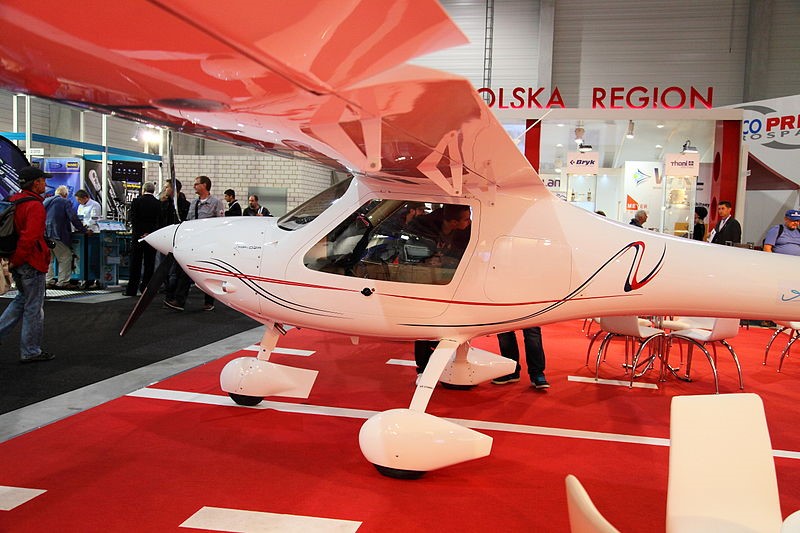
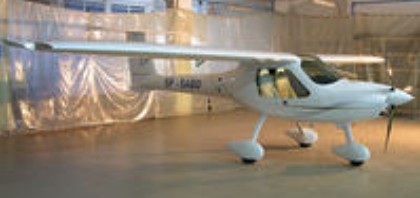
Aero Mirage Mirage TC-2

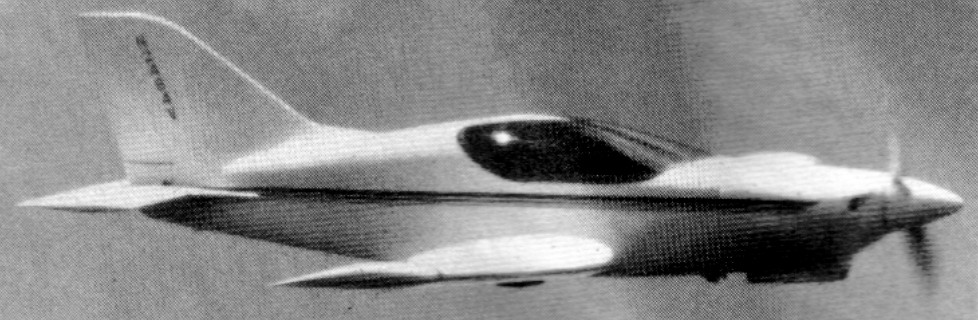
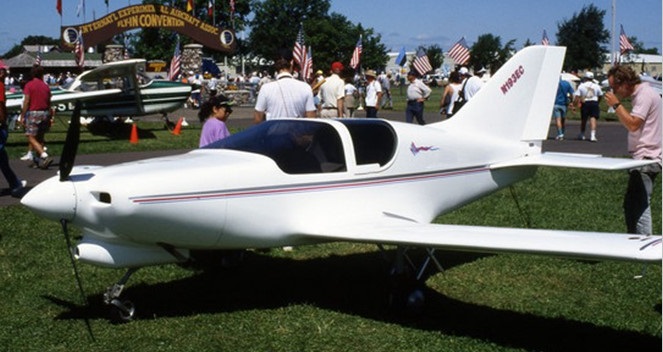
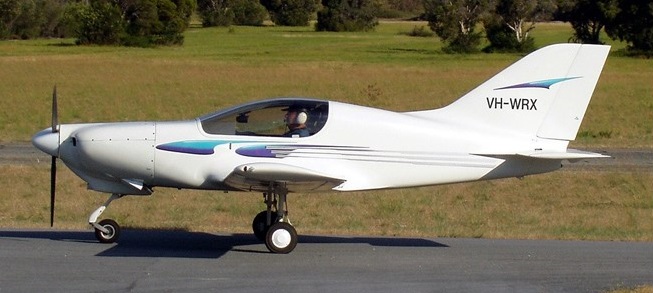
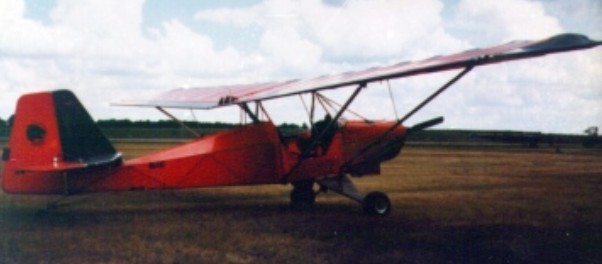
A super-clean, conventional design with quickly removable wings. Instead of small radical wings, this aircraft utilises modern composite materials and straightforward aerodynamic principles to achieve performance. All structural parts are pre-formed, including all spars. Metal fittings are pre-welded and only require some assembly and drilling.

The prototype N2484V first flew on 16 May 1983.

The Team Tango Tango 2 was developed from the 1983 Aero Mirage TC-2.

Gallery

Engine: Continental 0-200, 100 hp
Gross weight: 1140 lb
Empty weight: 640 lb
Fuel capacity: 36 USG
Wingspan: 21 ft
Width (wings off): 7 ft
Top speed: 208 mph
Cruise speed: 196 mph
Stall speed: 57 mph
Climb rate: 1500 fpm
TO dist (50-ft): 850 ft
Landing (50-ft): 950 ft
Range: 1200 sm
U/c: retractable tricycle

Aerolites AeroSkiff

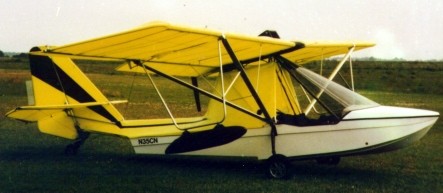
The AeroSkiff features retractable landing gear for water operation, removable wings (30 mins. Typically with 2 persons), quick assembly Dacron slip-on fabric, dual flight controls, high lift flaps, drum brakes, fiberglass fuselage, streamlined struts, and a 12 USgallon fuel tank. Options included an electric starter, Rotax 618, 75 hp, Warp Drive Carbon Fiber Prop, and a bilge pump.
1984 price US$19,990

Engine: Rotax 618, 75 hp
Length: 22 ft 4 in
Height: 7 ft 0 in
Wing Span: 29 ft 8 in / 9.05 m
Wing Area: 156 sq.ft / 14.50 sq.m
Empty Weight: 565 lb / 255 kg
Gross Weight: 1,125 lb / 510 kg
Fuel capacity: 45 lt
Fuel consumption: 18 lt/hr
Cabin Width: 44 in
Cruise Speed: 75 mph / 120 kph
Never Exceed Speed: 95 mph / 144 kph
Stall Speed: 38 mph / 61 kph
Rate of Climb: 800 fpm / 4 m/s
Take off (water): 350 ft
Take off (land): 350 ft
Service Ceiling: 15,000 ft
Seats: 2
Kit price (1998): US$22,475

Engine: Rotax 582, 65 hp
Hp range: 65-75
Length: 22 ft 4 in
Height: 7 ft 0 in
Wing Span: 29 ft 8 in
Wing Area: 156 sq.ft
Empty Weight: 565 lb
Gross Weight: 1,125 lb
Fuel cap: 12 USG
Seats: 1
Cabin Width: 44 in
Max level speed: 90 mph
Cruise Speed: 65 mph
Never Exceed Speed: 95 mph
Stall Speed: 38 mph
Rate Of Climb: 600 fpm
Take off (water): 550 ft
Take off (land): 400 ft
Landing dist land: 300 ft
Landing dist water: 300 ft
Service Ceiling: 10,000 ft
Range: 190 sm
Landing gear: tail wheel / retractable

Aerolites Bearcat

The Bearcat kit was a Baby Ace replica designed by Jack Hutchinson, with full 3 axis controls with a floor mounted joy stick and rudder pedals. Incorporating a 4130 chromolly welded fuselage, a fully cowled engine, and dual surface wings and fuselage, covered with dacron sail cloth.
Optional equipment includes electric starter, ballistic parachute, hydralic disc brakes, and the Rotax 503 2V 53 hp engine. Equipped with shoulder and lap belts, bungee shock landing gear, and a 360 degree roll-cage cockpit construction, the kit major components are pre-welded, machined, sewn, cut and bent, while the fabric slips on components and laces up, no doping required.
The Bearcat is basically a high wing mono configuration, tractor mounted engine, amateur-built aircraft with an all steel 4130 chromolly fuselage frame. The welded fuselage is designed to accommodate all other components by a series of tabs to which the components are bolted.
The wing is a simple ladder construction with strong internal diagonal bracing. This configuration has supported over +6 and -4 G in static load testing. Aluminum ribs placed in upper and lower pockets in the dacron covering shape the airfoil.

Bearcat
Engine: Rotax Model 447, 42 hp @ 6250 rpm
HP range: 42-65
Propeller: 68 x 28
Length: 17 ft 6 in
Height: 6 ft 5 in
Wing Span: 30 ft
Wing Area: 150 sq.ft
Wing Loading: 4.66 lb/sq ft
Seats: 1
Empty Weight: 275 lb
Useful Load: 425 lb
MTOW: 700 lb
Fuel Capacity: 5 USgal
Load Factor: +6, -4
Rate of climb: 750-1200 ft/min
Max level speed: 70 mph
Max level speed: 75 mph
Cruise: 63 mph
Range: 120 sm
Landing gear: tail wheel
Best rate of climb (Vy): 45 mph
Design maneuvering speed (Va): 55 mph
Never exceed speed (Vne): 110 mph
Stall, power off (Vs): 27 mph
Landing approach speed: 45 mph
Takeoff distance, ground roll: 150 ft
Takeoff distance, 50 ft obst.: 400 ft
Landing distance, ground roll: 150 ft
Landing distance, 50 ft obst.: 450 ft

Ag Bearcat
Engine: Rotax 582, 65 hp
Speed max: 90 mph
Cruise: 70 mph
Range: 140 sm
Stall: 35 mph
ROC: 1000 fpm
Take-off dist: 150 ft
Landing dist: 200 ft
Service ceiling: 10,000 ft
Fuel cap: 10 USG
Weight empty: 380 lb
Gross: 900 lb
Height: 6.5 ft
Length: 17.5 ft
Wing span: 30.7 ft
Wing area: 160 sq.ft
Seats: 1
Landing gear: tail wheel

Aerolight Flight Development Aerostat 340

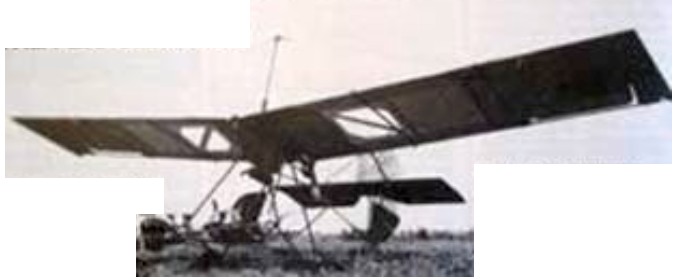
Single seat single engined high wing mono¬plane with conventional three axis control. Wing has unswept leading and trailing edges, and constant chord; cruciform tail. Pitch control by elevator on tail; yaw control by fully flying rudder; roll control by one third span ailerons; control inputs through stick for pitch/roll and pedals for yaw. Wing braced from above by kingpost and cables, from below by cables; wing profile; single surface. Undercarriage has three wheels in tricycle formation with additional tailskid; no suspension on nosewheel and torsion bar suspension on main wheels. No ground steering. No brakes. Aluminium tube framework, without pod. Engine mounted below wing driving pusher propeller. Aluminium tubing to US 6061 T6 specification.
Adjustable trim tabs and wheel spats are fitted as standard equipment.

Engine: Kawasaki TA440, 40 hp
Engine displacement: 440cc
Max static thrust: 240 lb, 109 kg
Reduction ratio: 2.4:1
Prop: 56 x 32
Wingspan: 33 ft
Wing area: 165 sq.ft
Length: 17 ft 9in
Empty weight: 243 lb
Usable payload: 210 lb
Gross weight: 453 lb
Wing loading: 2.74 lb/sq.ft
Glide ratio: 8:1
Cruise speed: 55 mph
Vmax: 65 mph
Stall speed: 23 mph
Takeoff roll: 100 ft
Landing roll: 75 ft
Climb rate: 800 fpm, 4.1 m/s

Aero Kuhlmann Scub

First flown in May 1996, the Scub tandem two-seat braced high-wing cabin lightplane was offered in production form. With spaceframe fuselage and wooden wings the Scrub could be flown with floats or wheels.

Empty weight: 250 kg
Wing span: 11 m
Wing area: 14.3 sq.m
Fuel capacity: 70 lt
Engine: JPX 4TX 75A, 85 hp
MAUW: 550 kg
Seats: 2
Max speed: 200 kph
Cruise speed: 160 kph
Minimum speed: 60 kph
Climb rate: 6 m/s
Fuel consumption: 8 lt/hr
Price (1998): 290 000 Fbc

Aero-Kros MP02 Czajka

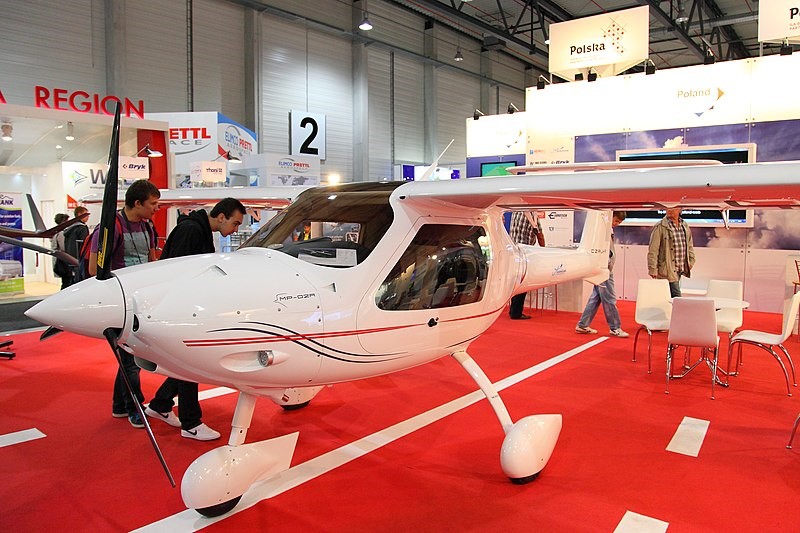
The Aero-Kros MP-02 Czajka (English: Lapwing) was designed and developed by Aero-Kros of Krosno, Poland, to comply with the Fédération Aéronautique Internationale microlight rules and US light-sport aircraft rules.

It features a cantilever high-wing, a two seats in side-by-side configuration enclosed cockpit, tricycle landing gear and a single engine in tractor configuration.

The aircraft is made from carbon-fiber-reinforced polymer. Its 9.72 m (31.9 ft) span wing employs Fowler flaps to keep the stall speed low enough for the FAI microlight category. The standard engine provided is the 100 hp (75 kW) Rotax 912ULS four-stroke powerplant which gives a cruise speed of 230 km/h (143 mph). The cockpit is 1.215 m (48 in) wide.

Introduced at the Friedrichshafen Aero show held in in 2009, the aircraft is supplied ready-to-fly.

Since March 2017 the design has been built by HMS Aviation, which is also located in Krosno, Poland.

Aero-Kros MP-02 Czajka
Powerplant: 1 × Rotax 912ULS, 75 kW (101 hp)
Wingspan: 9.72 m (31 ft 11 in)
Wing area: 10.2 m2 (110 sq ft)
Empty weight: 268 kg (591 lb)
Gross weight: 472.5 kg (1,042 lb)
Fuel capacity: 112 litres (25 imp gal; 30 US gal)
Wing loading: 46.3 kg/m2 (9.5 lb/sq ft)
VNE: 146 kt / 168 mph / 270 kmh
Maximum speed: 230 km/h (140 mph, 120 kn)
Cruise speed: 170 km/h (110 mph, 92 kn)
Stall speed: 65 km/h (40 mph, 35 kn)
Rate of climb: 6.5 m/s (1,280 ft/min)
Crew: one
Capacity: one passenger

Aérokit Industrie Aérokit

A side by side two seat single engined high-wing monoplane with conventional three axis control. The wing has unswept leading and trailing edges, and constant chord; T tail. Pitch control is by elevator on the tail; yaw control by fin mounted rudder; no separate roll control (roll control by one third span spoilers option¬al); control inputs through stick for pitch/yaw (optional: stick for pitch/roll and pedals for yaw). Wing braced from above by kingpost and cables, from below by cables; wing profile single surface. Undercarriage has three wheels in tricycle formation with additional tailskid; no suspension on any wheels (optional torsion bar suspension on main wheels). No ground steering. Optional brake on nose-wheel. Aluminium tube framework, without pod. Engine mounted below wing driving pusher propeller with V belt reduction.
With a configuration very close to that of the Quicksilver MXII, this Aerokit was only at the prototype stage in 1982. Conceived by Olivier Richard and built with the assistance of Hugues Delebard and Christian Risbourg, this machine is a direct result of experience acquired with other microlights used within the framework of one of the first private flying schools to appear in France, the Cenpre National de Formation ULM at Rustrel, Vaucluse, founded and directed by Serge Pellenc.
The Aerokit can be used either as a two axis control machine with elevators and rudders or as a conventional three axis control aircraft by the addition of spoilers, which are optional. Supplied with a central stick, this side by side two-seater machine can be converted to single seat without any difficulty, as the seats are fitted with Velcro, permitting removal of one seat and the re positioning of the other in the central location. The experience accumulated in the flying school by this manufacturer caused it to fit a wide track undercarriage which is specially reinforced. The axle of the main wheels is made of 1.6 x 0.9 inch (40 x 2.5 cm) Duralumin tube with internal bushes and nylon bearing hubs. As an option, the main wheels can have torsion bar suspension.
The Aerokit in its standard version is fitted with a single fuel tank but this can be increased as an option by fitting two supplementary tanks of the same size, tripling its range. The Aerokit is trailer transportable.

Engine: Hirth 2701R 03, 43 hp at 6750 rpm
Propeller: 55 x 24 in, 1.4 x 0.6m
Reduction ratio: 2.4/1
Max static thrust: 232 lb, 105 kg
Power per unit area: 0.25 hp/ sq.ft, 2.7 hp/sq.m
Fuel capacity: 2.6 US gal, 2.2 Imp gal, 10.0
Optional res fuel capacity: 5.3 US gal, 4.4 Imp gal, 20.0 lt
Length overall: 14.6 ft, 4.43 m
Height overall: 9.0ft, 2.75m
Wing span: 32.8ft, 9.95m
Constant chord: 5.3ft, 1.6m
Dihedral: 11 deg
Sweepback: 0 deg
Tailplane span: 9.3 ft, 2.82 m
Fin height: 4.3ft, 1.3m
Total wing area: 17 sq.ft, 16.0 sq.m
Fin area: 2.2 sq.ft, 0.2 sq.m
Rudder area: 10.0 sq.ft, 0.93 sq.m
Tailplane area: 23.1 sq.ft, 2.14 sq.m
Wing aspect ratio: 6.18/1
Total elevator area: 12.7 sq.ft, 1.18 sq.m
Wheel track: 5.5 ft, 1.65 m
Wheelbase: 5.3ft, 1.60 m
Nosewheel dia. overall : 11 in, 28 cm
Main wheels dia. Overall: 16 in, 40 cm
Empty weight: 291 lb, 132 kg
Max take off weight: 623 lb, 282 kg
Payload: 332 lb, 150 kg
Max wing loading: 3.61 lb/sq.ft, 17.8 kg/sq.m
Max power loading: 14.5 lb/hp, 6.5kg/hp
Load factor: +3.5 ultimate
Max level speed: 50 mph, 80 kph
Never exceed speed: 56 mph, 90kph
Max cruising speed: 42mph, 68kph
Economic cruising speed: 34mph, 55kph
Stalling speed: 23 mph, 38 kph
Max climb rate at SL: 680 ft/min, 3.5 m/s
Min sink speed: 37 mph, 60 kph
Min sink rate: 400 ft/min, 2.0 m/s
Best glide ratio: 6/1 at 44 mph, 70 kph
Take off distance: 130 ft, 40 m
Land¬ing distance: 100 ft, 30 m
Service ceiling: 10,000 ft, 3050 m
Range at ave cruise: 50 mile, 80 km