At the Antonov Construction Bureau there was an Ultralight Aircraft Department well-known for its creations: hang gliders Slavutich-UT, Sport-5 and trike T-2. These were created according to aircraft requirements, by people able both to compute endurance of anything and to test a hang glider in CAGI wind-tunnel. In the late 80s there started a co-operative trend and ITACO-CENTER co-operative was organised at the Ultralight Aircraft Department. This co-operative started to produce sports hang gliders C-14 and C-15, and about 150 of them were manufactured. Almost all members of USSR hang gliding national team used these hang gliders and after there appeared cracks in the “iron curtain”, it was attempted to sell these machines to the Western states and they even almost completed their certification in Germany.
32-B Obolonskiy pr Kyiv 254205 Ukraine
In 1991 specialists of the Ultralight Aircraft Department organised Limited Liability Association Aeros and starting from November began to manufacture new wings: sports hang glider Stalker-14 and wings for trike Stranger which became Aeros’ “business cards” for the few next years. In the very first year of the company’s existence its specialists launched hang glider’s safety parachute Down, a prototype of which was German canopy PSR. It was also decided to explore other spheres of ultralight aircraft. Fathers of paragliding theme were originally redesigned copy of a hang glider Airwave Black Magic (called “the Parasol”), which was popular in the West, and the first independent creative work – paraglider Zig-Zag. At that time Aeros’ staff consisted of not more than a dozen enthusiasts. In 1993 the first representatives of the company Aeros appeared abroad – in the UK and in Spain. In 1994, with little experience in paragliders’ manufacture, a decision was taken to start production of designs of АРСО: Starlite, Astra, Supra. These models were not the newest ones, but they fit in excellently for the CIS market. Over 80 paragliders were made, experience was acquired and production was organised. At this stage a framework decision was taken – to manufacture all aircraft only of high quality materials and parts. In most cases these were imported goods: fabric of a German company POLYANT, ropes and wire products LINDEMANN, plastic and special parts FINSTERWALDER, paraglider fabric CARRINGTON and GELVENOR. Full-scale production of harnesses for hang gliders and paragliders began. In 1996, a new, kingpostless design had already completed flight trials – Stealth 14 KPL. By the end of the year the wing was ready for certification in England and there appeared a small model Stealth 12 KPL. While designers and pilots were busy resolving a complex of “kinpostless” problems, motor wings gave stable income to the enlarged staff. In the course of a year 220 wings of Stranger type has been manufactured and the Aeros’ staff expanded to 30 employees. Aeros was noticed not only in the Western Europe – within a year two distributors appeared in the USA, U.S.AEROS, dealing with hang gliders and Sabre Trikes dealing with trikes. 1998: ad32-B Obolonsky Pr., UKR-254205 Kiev, Ukraine By 2001 the team consisted of over 70 specialists.
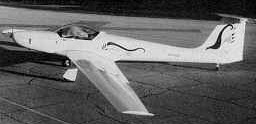
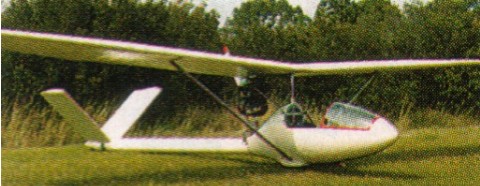
This Argentine single-seater Standard Class sailplane was designed by Ing Teodoro Altinger, the prototype flying for the first time on 5 August 1971; it took part successfully in the following year’s national championships.
The type has an all-moving tailplane mounted on top of a distinctive swept-back fin and rudder, and the pilot is seated in line with the wing leading edge under a long transparent canopy giving excellent visibility. Construction is of glassfibre-reinforced plastic and glassfibre/balsa sandwich throughout and the wings, which have a Wortmann FX-63-168 section, have air brakes in the upper surfaces. The retractable monowheel has an internal brake and there is also a tailskid.
Series production was commenced in 1974 by Aero Saladillo, which had been formed in 1973 to build aircraft of glassfibre-reinforced plastic construction at Saladillo in the province of Buenos Aires, and by February 1977, 12 of an initial order for 20 Lenticulars had been completed, but production was suspended.
Lenticular 15 S Span: 49 ft 2.5 in Length: 21 ft 4 in Height: 4 ft 7 in Wing area: 129.2 sq.ft Aspect ratio: 18.75 Empty weight: 573 lb Max weight: 904 lb Max speed: 152 mph (in smooth air) Max aero-tow speed: 99 mph Min sinking speed: 2.30 ft/sec at 49 mph Best glide ratio: 32:1 at 53 mph
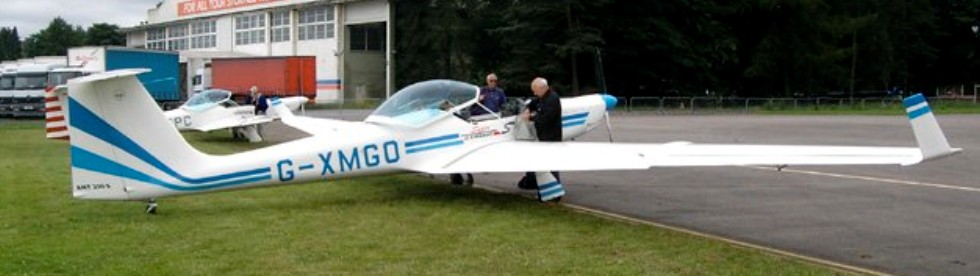
Aeronaves e Motores (Aeromot) acquired the production right to the Aerostructures (Fournier) RF 10 side-by-side two-place self-launching sailplane and built a slightly modified version under the name AMT 100 Ximango with a 80 BHP / 60 kW Limbach L 2000 E01 engine driving a Hoffmann 2 blade 3 position propellor with electric starter. The first AMT 100 flew in 1986. The AMT 200 is a development using the liquid cooled Rotax engine also with a Hoffmann propeller, but of larger diameter. The double main wheel landing gear is manually retractable. The outboard section of the wing folds for hangering. Both are air transport certified.
The Aeromot AMT-200S Ximango is powered by a Rotax 912 engine. The 57 foot wing span can be shortened by folding the outer panels of the wings, which saves hangar space. Since its first flight around 1995, it has proved very popular, with more than 135 sold.
AMT-200S Ximango
AMT 100 Engine: Limbach L 2000 E01, 80 BHP / 60 kW Prop: Hoffmann 2 blade 3 position
AMT 200 Engine: Rotax 912A, 81 bhp / 60 kW Propeller: Hoffman two-blade Wing Span: 17.47m / 57.3ft Wing Area: 18.7sq.m / 201.28 sq.ft Overall length: 26 ft Height: 5 ft Empty Weight: 605kg / 1334lb Payload: 245kg / 540lb Gross Weight: 850kg / 1874lb Max ramp weight: 1874 lb Payload, full fuel: 405 lb Max landing weight: 1874 lb Usable fuel: 23 USG Power loading: 23.1 lb/hp Baggage capacity: 22 lb Oil capacity: 3.1 qts Wheel track: 9 ft Wing Load: 45.45kg/sq.m / 9.31lb/sq.ft Cruise 75% pwr: 110 kt Max range (w/ res) 55% pwr: 650 nm Fuel burn 75%: 4.5USG/h Stall speed (flaps, gear down): 39 kt Best rate of climb: 512 fpm Takeoff ground roll: 738 ft Seats: 2 Aspect ratio: 16.1 L/D Max: 42 Airfoil: NACA 64(3)618 Structure: Glass fiber and carbon fiber
AMT 200 Super Ximango Engine: Limbach L 2000 EO1, 79 hp Length: 25.886 ft / 7.89 m Wingspan: 57.316 ft / 17.47 m Aspect ratio: 16.32 Wing area: 201.287 sq.ft / 18.7 sq.m MTOW: 1764.0 lb / 800.0 kg Weight empty: 1323.0 lb / 600.0 kg Max speed: 132 kt / 245 km/h Stall: 42 kt / 48 mph / 78 kmh Cruising speed: 103 kt / 190 km/h VNE: 132 kt / 152 mph / 245 kmh Climb Ratio: 550 ft/min / 3 m/s Wing load: 8.82 lb/sq.ft / 43.0 kg/sq.m Glide ratio: 30.0 Crew: 2 Take-off distance (50ft obstacle): 1060 ft / 323 m Landing distance (50ft obstacle): 950 ft / 290 m
AMT-200S Ximango Engine: Rotax 912 Top speed: 120mph Range: 550 miles wing span: 57 ft
Aeromot / Aeronaves e Motores S.A. was founded in 1967 for maintenance, recoveries and modifications in aircraft, aircraft sales, and parts and accessories of the main manufacturers’ of aeronautical equipment. 2008: Av. das Industrias 1210 – Bairro Anchieta Porto Alegre 90200-290 Brazil
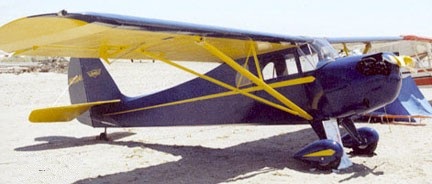
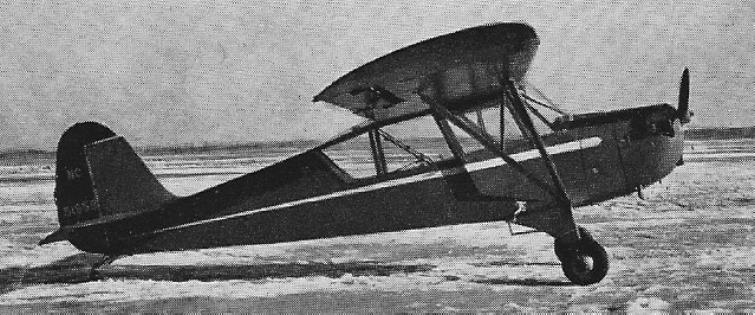
The Aeronca C-3 evolved into the Aeronca K Scout (ATC 634) in 1937, designed by Roger Schlemmer, the prototype being NX17440. A total of 344 were built, priced at $1,480, and $1,745 in 1938.
The 1937 KC Scout (ATC 655) sold for $1,590, and $1,295 in 1939. Thirty-four were built, and the float version was the two-door KC Sea Scout.
Aeronca KC
The 1938 KCA Chief (ATC 675) was priced at $1,695, and with65hp, $1,795. Sixty-two were built, the KCA evolving into the wide-cabin 50C Chief.
Aeronca KCA
The model 50C Chief was the first lightplane to fly non-stop from Los Angeles to New York City, on 19-39 November 1938, covering 2,785 miles in 30h 47m, avg: 90mph (registration NX21300 and piloted by Johnnie Jones).
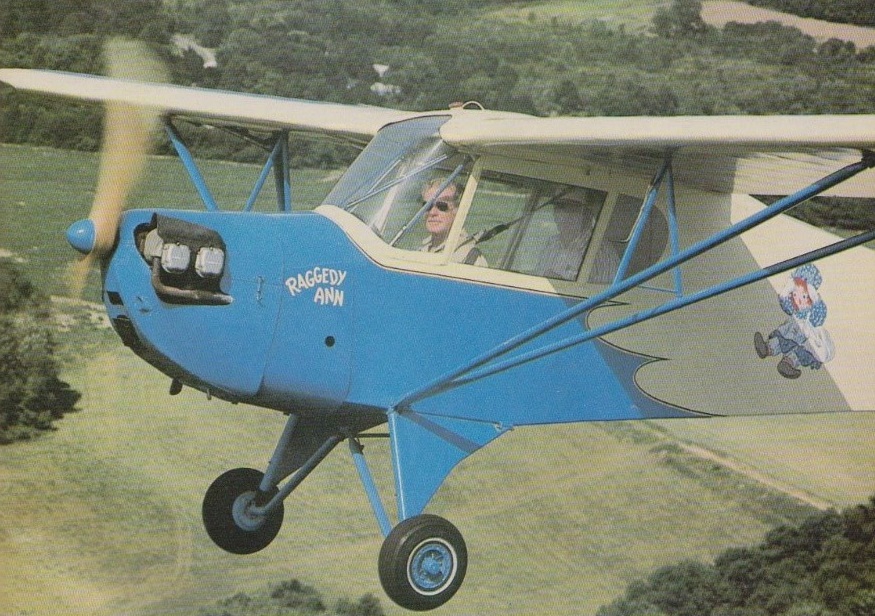
The 1941 L-3 and O-58 Grasshopper was the military version of 65 with a greenhouse cabin and 65hp Continental YO/O-170-3. There were fifty-four; 42-456 to 42-459, and 43-2809 to 42-2858. These were followed by twenty L-3A (O-58A), 42-7793 to 42-7812, and 875 L-3B (O-58B), 42-14713 to 4214797, 42-36075 to 42-36324, 42-38458 to 42-38497, and 43-26754 to 43-27253.
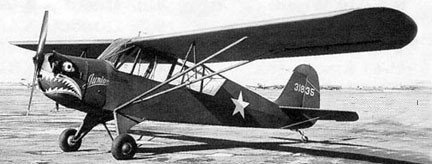
The L-3C had no radio and weight reduction. 490 were built, three to the US Navy as XLNR-1; 36422 to 36424.
Aeronca L-3C 43-1835
Others were;
L-3D = Impressed 65TF with Franklin AC-167. POP: 11. L-3E = Impressed 65TC with Continental A-65-8. POP: 12. L-3F = Impressed Super Chief with A-65-8. POP: 19 including 42-78044 L-3G = Impressed Super Chief with Lycoming O-145-B1. POP: 4. L-3H = Impressed 65TL with O-145-B1. POP: 1. L-3J = Impressed 65TC with A-65-7. POP: 1.
The original model, the YO-58, was a conversion of the civil 65TAC Defender. Production models were the O-58, O-58A and O-59B, later designated L-3, L-3A and L-3B in 1942. L-3D to -3J were impressed by USAAF.
The O-58B differs primarily in having a more extensively glazed cabin.
Performance and specifications were similar to the civil models.
The difference between the 1938 L and LA Chief models (ATC 702) was that the 50L Lycoming O-145 had exposed cylinders, while the 50LA had a closed cowling. Priced at $1,695, there were 65 50L and 20 50LA models built, some for the USAAF as the L-3.
The 50C Chief of 1938 (ATC 675) was an improved KCA with a wider cabin. Priced at $1,795; $1,695 in 1939, 248 were sold. A 50C was the first lightplane to fly non-stop Los Angeles-New York City, on 29-30 November 1938, covered 2,785 miles in 30h:47m, avg: 90mph. NX21300 piloted by Johnnie Jones had a fuel cost-per-mile of about one cent was most impressive, even in 1938 dollars.
Forty of the 1938 50F Chief (ATC 688) were built, powered by a 50hp Franklin 4AC engine.
The 1938 KF Chief (ATC 688) was powered by a 50hp Franklin 4AC engine. Selling for $1,595, five were built, including; NC21067, NC21063, and NC21092. The KF Chief evolved into 50F Chief.
The 1938 KM Chief (ATC 676) was powered by a 50hp Menasco M-50 engine. Priced at $1,590, nine were built. The KM Chief evolved into the one 50M Chief built, NC21070.
The 1937 KS Sea Scout (ATC 634) was a floatplane version of the model K; thirteen were built.
The 50TC and 50TL Tandem (T-series) of 1939 were the first tandem Aeronca as competition for the Piper Cub. A total of 16 were built.
50C
In turn, the K evolved into the SOC Chief in 1938.
The 1940 60TF Tandem (ATC 728) was the same as 50TC, with 60hp Franklin and slightly increased performance. 60TL with 60hp Lycoming. Priced at $1,695, 118 were built, going to USAAF as O-58B with 65hp Continental A-65.
In 1939, the 65-series appeared and featured the 65 hp Continental option. The 65TC Defender (112 built), a tandem two-seat trainer, was widely used throughout the war, particularly in the Civilian Pilot Training Program. The CPTP and CAP versions were the 65TAC of which 154 were built. The Model L-3, the military version of the same airplane, featured a wider fuselage and larger window area to facilitate its role as an observation plane. Although provided with dual controls, the L-3 was designed to be flown from the front seat. The observer’s seat might face forward or aft. Many of the planes reached civilian hands after World War II.
The 1938 65C Chief and 65CA Super Chief (ATC 675) differed by the 65CA having an optional 8-USG auxiliary fuel tank and other deluxe appointments. The 65C price was US$1,795, and the 65CA US$1,895. Of the 279 model 65C built, many were impressed by USAAF as the O-58/L-3 in 1942. A total of 655 65CA models were built.
87 of the 1939 65LA Chief and 199 of the 65LB Super Chief (ATC 702) model were built. The 65LB with 65hp Lycoming O-145 in 1940.
One 50M Chief was built, 1938 (ATC 676), NC21070, priced at $1,695.
65TAF NC36817
65TAF (ATC 728) was CPTP and CAP versions of the 65TF with 59 of the 65TF built, and 115 of the 65TAF during 1940.
The 65TF Tandem and 65TAF Defender of 1940 were powered by 65hp Franklin 4AC engines. Fifty-nine 65TF were built and 115 of the 65TAF CPTP and CAP versions.
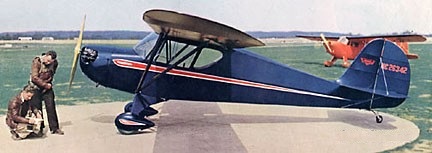
Aeronca 65TL NC24362
299 of the 1940 65TL Tandem and 65TAL Defender (ATC 728) were built plus military versions: 4 YO-58, 20 O-58, 701 L-3B, and 499 L-3C, plus 253 TG-5 gliders to AAF. The 65TAL was CPTP and CAP version with 100 built.
The 1939 models 50TC and 50TL Tandem (ATC 728) designed by James Weagle were the first tandem Aeronca, as competition for the Piper Cub. Sixteen 50TC (50hp Continental) were built, and 33 TL with the 50hp Lycoming engine.
L-3H Engine: Lycoming O-145-B1, 65hp One impressed 65TL
L-3C No radio, weight reduction. 490 built; additionally 253 built as TG-5 gliders
TG-5 / XLNR-1 65TL Tandem / 65TAL Defender Army Air Force glider version. Number built: 253 3 transferred to USN as XLNR-1 (36422/36424).
L-3 (O/YO-58) Engine: Continental O-170-3, 65 hp Length: 20.997 ft / 6.4 m Height: 7.677 ft / 2.34 m Wingspan: 35.07 ft / 10.67 m Wing area: 158.016 sq.ft / 14.680 sq.m MTOW: 1301.0 lb / 590.0 kg Weight empty: 835.7 lb / 379.0 kg Max speed: 76 kts / 140 km/h Cruising speed: 40 kts / 74 km/h Service ceiling: 10007 ft / 3050 m Wing load: 8.2 lb/sq.ft / 40.0 kg/sq.m Range: 174 nm / 322 km Number built: 54 (42-456/459, 43-2809/2858).
L-3A (O-58A) Number built: 20 (42-7793/7812)
L-3B (O-58B) Engine: Continental O-170-3, 65 hp Wing span: 35 ft Length: 21 ft 10 in Empty weight: 835 lb Loaded weight: 1260 lb Max speed: 87 mph Cruise: 79 mph Range: 218 mph Number built: 875 (42-14713/14797, -36075/36324, -38458/38497, 43-26754/27253 )
Formed from Roché-Dohse organization, Lunken Airport, Cincinnati OH originally in November 1928, the Aeronca Aircraft Corporation was founded November 11, 1928 in Cincinnati, Ohio. Backed by the financial and political support of the prominent Taft family and future Ohio senator Robert A. Taft who was one of the firm’s directors, Aeronca became the first company to build a commercially successful general aviation aircraft.
Jean A. Roche was a senior aeronautical engineer for the US Army Air Service, and by 1929 Aeronca had bought production rights to his recreational aircraft design. Production began with the Jean A. Roche-designed Aeronca C-2 monoplane, often called the “Flying Bathtub”, in 1929. The next major model was the Scout of 1937, a two-seater, which was developed into the Chief and Super Chief the next year.
In 1937 there was a major flood at the Lunken Airport, resulting in the entire airport area being washed away. Aeronca’s factory was destroyed, along with the tooling and almost all of the very early blueprints and drawings. At this time a decision was made to move the operation to a more stable area. Middletown, Ohio was chosen, and the company has remained there ever since. All of the airplanes produced from the start of production in 1929 to 1937 are known as the “Lunken” Aeroncas. The first Aeronca built in Middletown was produced on June 5, 1940, and after this time all Aeroncas were built there.
The name was changed to Aeronca Aircraft Corp in 1941. Quantity production of Fairchild trainers and liaison aircraft ceased 1944, and for postwar production the company developed new types. Aeronca had license for the Erco “two control” system.
The Defender, a tandem trainer version of the Chief with a higher rear seat, was used in training many of the pilots who flew in World War II. Several observation and liaison aircraft designs were also produced during and after the war, including the L-3, L-16 and O-58.
In 1945, following the end of World War II, Aeronca returned to civilian production with two new models, the 7AC Champion and the 11AC Chief. While the Champ shared its tandem seating arrangement with the prewar tandem trainer and the Chief shared its name with the prewar Chief designs, both were new designs. A benefit of the concurrent development was that the new designs had about 80% of their parts in common. Nevertheless, the Champ was favoured by the public, evidenced by its outselling its sibling at a rate of 4 to 1. Between 1945 and 1951, nearly 8,000 Champions were manufactured; while over the same period, approximately 2,000 Chiefs were produced.
Ended aircraft production in 1951, but the design was continued by Bellanca and Champion. Since 1950 company has been a subcontractor, but towards the end of the 1960s undertook, in conjunction with American Jet Industries Inc., development of a light strike version of the Super Pinto, built originally as a jet primary trainer. In January 1978 entered an agreement to build the Foxjet ST600 twin-turbofan light transport aircraft designed by Tony Team Industries Inc., but later terminated due to lack of WR-44 engine availability.
Aeronca built components for aerospace companies including Boeing, Northrop Grumman, Lockheed and Airbus. In its 23-year history as a general aviation and military aviation manufacturer, Aeronca produced 17,408 aircraft spanning 55 different models.
In 1954 Aeronca sold the Champion design to the new Champion Aircraft Corporation of Osceola, Wisconsin, which continued building variants of the Champion as well as the derivative design, the Citabria. The aircraft design was acquired again by the Bellanca Aircraft Company in 1970 and again to American Champion in 1988, where it remained in production.
Aeronca became a division of Magellan Aerospace, producing aircraft, missile, and space vehicle components at the same location adjacent to Middletown’s Hook Field.
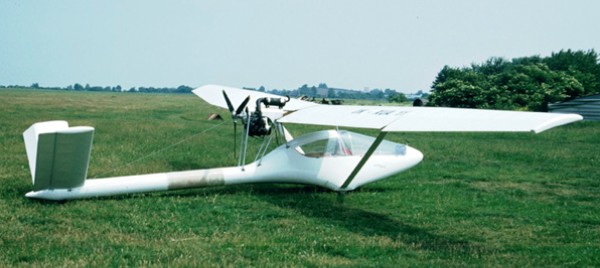
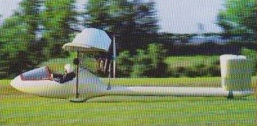
The motorised ultralight sailplane Straton D8 Moby Dick was original driven for a Trabant or Rotax 227-engine. The wood construction V tail design has fibreglass wingtips and weights only 180kg. Like the D7 Mini Straton, the D8 was developed as a homebuilt motorised sail plane in the Czech Republic. It was available in partial kits or factory assembled leading edges, wing spars and ribs. Due to the low cost price, the Straton D8 was an attractive model for the homebuilder. The D8 is not only built in Europe, but also in the U.S.A.
Engine: Trabant, 24 hp Hp range: 20-32 Max speed: 80 mph Cruise: 60 mph Stall: 20 mph Range: 240 sm ROC: 550 fpm TO dist: 250 ft Ldg dist: 280 ft Glide ratio: 18-1 Fuel cap: 5 USG Empty wt: 250 lb Mtow: 470 lb Height: 5.5 ft Length: 20.7 ft Wingspan: 38 ft Wing area: 107 sq.ft Seats: 1 Undercarriage: single wheel.
This motorglider was designed in the Czech Republic in the late 1980’s. It has been certified by the Czech governing body. It has a glide ratio of 17:1, one man field assembly and takeoff. Engine choices are Trabant or Rotax 277. Available as a kit, for approximately US$6995.
The Toresi Straton D7 has a composite fuselage and fabric covered wooden wings.
Engine: Trabant, 24 hp HP range: 18-35 Speed max: 80 mph Cruise: 55 mph Range: 200 sm Stall: 25 mph ROC: 550 fpm Take-off dist: 150 ft Landing dist: 180 ft Fuel cap: 5 USG Weight empty: 250 lb Gross: 470 lb Height: 5.5 ft Length: 19.68 ft Wing span: 36 ft Wing area: 105.5 sq.ft Seats: 1 Landing gear: single wheel
Toresi Straton D7 Engine: Hirth 263, 30 hp Wing span: 10.80 m Wing area: 9.98 sq.m MAUW: 250 kg Empty weight: 100 kg Fuel capacity: 20 lt Max speed: 125 kph Cruise speed: 85 kph Minimum speed: 45 kph Climb rate: 5 m/s Certification: VZ Seats: 1 Fuel consumption: 5.5 lt/hr Kit price (1998): 55 000 Fttc