Carl S. Bates was a farm boy from Clear Lake, IA who became interested in flying at an early age. He was only 14 when he constructed a man-carrying kite in 1898. In 1903, he moved to Chicago to attend the Armour Institute of Technology and there came under the guidance of aeronautical pioneer Octave Chanute.
Bates Aeroplane Co, Chicago IL.
Bates Motorcraft Co, Chicago.
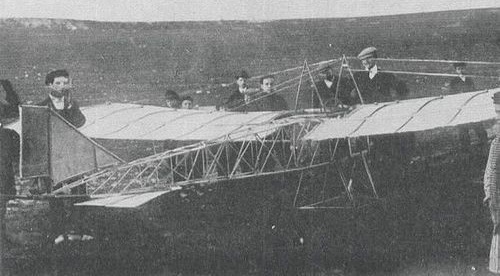
Bates constructed his first airplane in 1908, patterned after the early Curtiss biplanes. He also built aircraft motors and gained a reputation for their lightness and reliability. In 1912 all assets and rights were sold to Heath Aircraft.
Ryszard Bartel was born in Sławniów village near Pilica on 22 March 1897. He was interested in aviation from his youth, and in 1911 he built his own gliders capable of short flights. In 1916, he enrolled in the Warsaw University of Technology, being one of three founders of the Aviation Section of that university’s Students’ Mechanical Club. In 1917, he completed a pilot course, and he joined the underground aviator organization (Warsaw was under German occupation at that time). In 1918, after Poland regained its independence, he volunteered for the Polish Air Force. He completed further military flying courses and he took part in the Polish-Soviet War, flying Breguet 14s in the 16th Reconnaissance Squadron and in the Central Lithuanian Air Squadron. He was demobilized in December 1920, and graduated from the Warsaw University of Technology in 1924 as an Engineer. He also took second place in the first Polish soaring competition in 1923.
In 1925, his design of the Bartel BM-1 Maryla fighter aircraft received an award in the first Polish contest for military aircraft, but the design was not built. In 1924-1926 he worked in France, supervising production of aircraft for Poland and he also undertook research on aerodynamics there. From 1926, he was a chief designer of the Samolot aircraft manufacturer in Poznań. He designed and built there a prototype of a trainer aircraft, the Bartel BM-2 (1926), then trainers Bartel BM-4 (1927) and Bartel BM-5 (1928), built in small series for the Polish Air Force (the BM-4 was Poland’s first domestic design that was put into production).
From 1930 he worked in the Aviation Department of the Polish War Ministry, then, from 1932 to 1937, in the PZL aircraft works in Warsaw, which had obtained several of the Samolot projects upon that company’s closure. His duties included overseeing aircraft production. During 1937-1939 he was a technical director for the Lubelska Wytwórnia Samolotów (LWS) works and supervised licensing some Polish designs to Romania and Turkey. During World War II he stayed in Poland and worked under the German occupation as a teacher in technical schools.
After Poland’s liberation in 1945, Bartel worked in the Polish Civil Aviation Department of Ministry of Communication, but in 1948, with the advent of Stalinism in Poland, the communist authorities removed him from work in aviation, along with many other pre-war experts. He worked among other places in the Polish Normalization Institute. From 1951 he was a professor at the Warsaw University of Technology. He retired in 1966. From the 1960s, his passion became the history of the Polish aviation industry. He was active in aviation associations such as the Polish Aero Club.
He received the Knight’s Cross of the Polonia Restituta and the Polish Cross of Merit (silver in 1927, gold in 1948). Bartel also held a Field Pilot Badge (1922).
Optionally a powered light sailplane circa 1998, the Graal is of plywood construction with carbonfibre longerons. The Graal conforms to french and FAI ultralight rules.
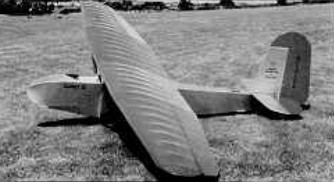
The Cadet was designed in 1929 by Dr. Frank R. Gross, a former member of the Akaflieg Darmstadt, as an improvement offering some soaring capability over the existing primary gliders. Built of steel tube fuselage, wood dual spar/ dual strut wing, wire braced wood tail, all fabric covered. Jack O’Meara, a demonstration pilot for Baker McMillen, flew a Cadet off South Mountain at Elmira, NY for 1 hour and 38 minutes in the summer of 1930 starting what was to become Harris Hill as the home of American gliding. One Cadet even flew on twin floats, and three of them (along with a Sky Gost, another Gross design) were towed at on time by a Goodyear Blimp over Akron, OH. One remained airworthy in the 1990s.
A small ultralight motorglider. This motorglider is available as plans only. It consists of wood and metal construction. The wings are tapered. The landing gear is fixed. Estimated building time is 700 hours. Plans price was $250. 2009 Price: 6000 EURO
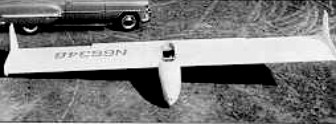
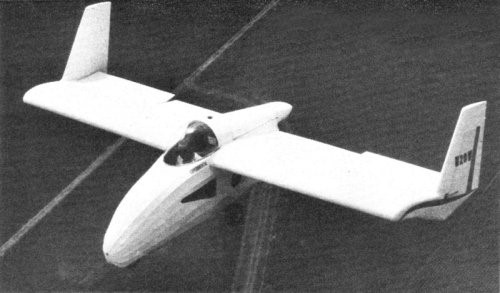
The Flying Plank was developed in 1954 by Al Backstrom, assisted by Phil Easley and Jack Powell. The prototype EPB-1 was used for drag reduction tests at the Mississippi State College, using a modified Abrial reflex airfoil.
Plans for the -1A development were sold and a number built, most with twin wingtip rudders, but some were completed with a central fin and rudder at the end of a lengthened fuselage (EPB1-C) to improve performance and control. Span have varied up to 9.30 m / 30.5 ft. A self-launching model was developed later.
Motorised
Except for the fiberglass nose cap for the fuselage, standard wood structure was used throughout, and construction time for an experience woodworker was in the neighborhood of 600 hours. More than 150 sets of plans were sold.
Central fin
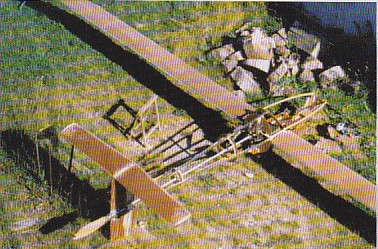
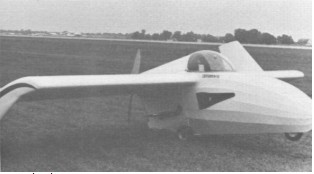
Construction of the powered Plank was begun in 1972, most of the work being done by Van White, a director of the EAA (Experimental Aircraft Association). It was intended originally to fit a Sachs Wanzel or OMC snowmobile Wankel engine, but as neither became available, a fan-cooled single-ignition Kiekhaefer Aeromarine 440 was installed, driving a two-bladed pusher propeller via belts.
WPB-1 Powered Plank
The original tandem-wheel/outrigger undercarriage was replaced by a more robust tricycle unit in 1976.
An improved version, the “Super Plank”, was under development in 1973. At least two of them were built, including N20WB, by Larry Linville and Dennis Harmon. Backstrom also built a motor glider light aircraft called WPB-1 Powered Plank in early 1970s.
The Backstrom WPB-1 is on display at the Airpower Museum in Blakesburg, IA. And the Vintage Sailplane Association has plans.
Founded 1993 and affiliated to Iran’s Ministry of Industries, Iran Industrial Development and Renovation Organization (IDRO), thought to be tasked with establishing maintenance and repair facilities for light/medium aircraft, and overseeing production of aircraft and other air vehicles. Developing the IR-H5 five-seat helicopter, a two-seat piston-engined trainer possibly known as IR-02, a 12-seat STOL transport possibly known as IR-12, and the IR-G1 Nasim/AVA 101 composites two-seat glider (first flown 1996, and possibly marketed by Iran Hava Commercial Services Company).