Borzecki, Józef

Józef Borzęcki

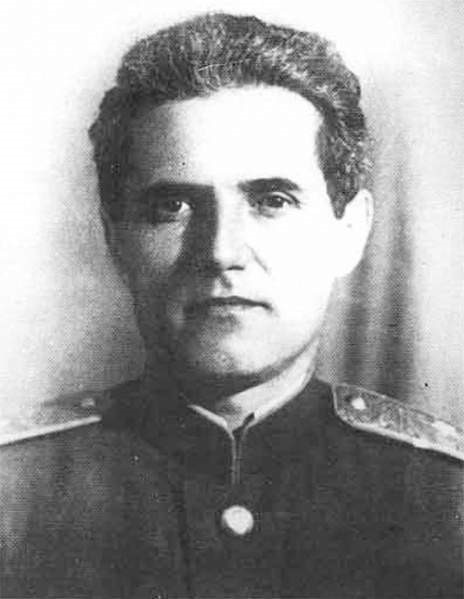
Józef Borzęcki was born on March 19, 1928 in Olszany near Stary Sącz, as a son of Jan and Wiktoria. It was the Father who awakened the five-year-old boy’s imagination and interest in flying, telling about the famous flight of Stanisław Skarżyński across the Atlantic in 1933. The pre-war atmosphere of worship for aviation reached every corner of reborn Poland. The pilots were the heroes of meetings and legends.

Just before the outbreak of World War II, Józek, as a high school student, received a state guardian for his clearly targeted abilities. However, the outbreak of war changed the path of life for all Poles. Instead of studying at his dream school in Austria, 14-year-old Józef spent four years under German occupation, experiencing hunger, hard work in the factory, inhuman humiliation, fear and rebellion.

In 1945, after liberation of the country from the Nazi occupation, he went to Wrocław and began his education at the Technical Secondary School of Mechanical Engineering, obtaining a diploma as a technician in the design of internal combustion engines. In 1947 he completed glider training at the Aero Club of Wroclaw (at that time he performed flights on SG-38 and Grunau “Baby II” gliders). In a sense of lost youth and the desire to fly, he gives up his technical studies, however, the politicised atmosphere of the Aero Club once again turned his thought to independent aviation constructions. In 1951, he began the first calculations and made experimental models.

In the library, reaching for Russian-language textbooks on aviation technology, he meets his future wife – Aniela Plucinska, born in Nieśniew, who knows Russian. In December 1952 he married Aniela. In 1953, her daughter Elżbieta was born. The young couple are moved, together with the wife’s parents, to a new apartment. This is where the first construction begins to appear. In 1954, daughter Barbara was born.

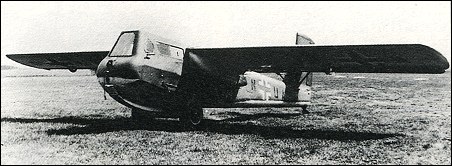
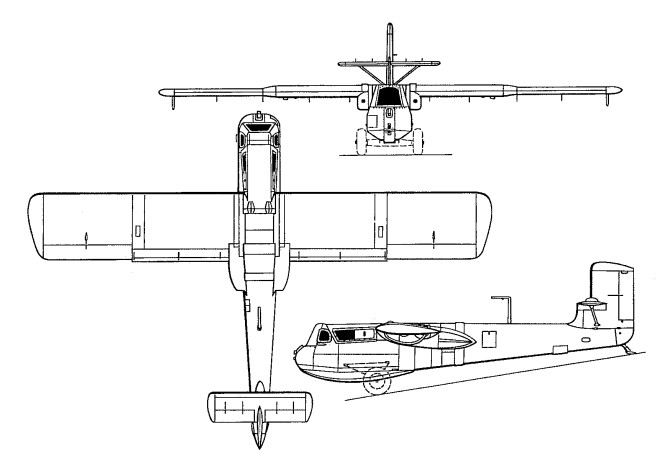
In 1960, the trial take-off of the first glider “Stratus” took place. There are years of balancing passion with family responsibilities.

In July 1966, the designer invited the pilot of the flight and the editor of the newspaper Polish Word – editor Andrzej Macko to perform a test flight in the Stratus. He made several test flights, issuing a very favorable opinion about him. Articles by A. Macko published in Kulisach and the Polish Word about Józef Borzęcki’s motor glider started a nationwide discussion on amateur aviation in Poland. The construction and piloting of own aircraft were strictly prohibited in Poland at that time. In September 1966, J. Borzęcki wrote a letter to the well-known Soviet designer Oleg K. Antonov, who was a great enthusiast of amateur aircraft and glider construction. After two months, he received an answer, Antonov warmly congratulated him on the achievements in construction and encouraged him to continue working.

In May 1967, an extensive article on amateur aviation was published in Winged Poland, a lot of space was devoted to the glider “Stratus”. In the press and everywhere where there were people interested in aviation, from aeroclubs to the Department of Aviation, there was a discussion about the future of amateur aviation in Poland. Some spoke in favor of amateur aviation, others against him. There were moderate voices, but there were also those aimed at causing sensation. Most opinions, however, were evidence of a thorough reflection on the substance, seeing Stratus as a precedent. In Winged Poland of May 21, 1967 there was an article sharp in tone. It expressed views that the development of amateur aviation in Poland has no justification and is not simply needed, and the amateur construction of gliders, airplanes or even helicopters is today an archaic obsolete, economically unjustified and socially unnecessary. Not only with us. And therefore there will be no green light for this movement. J. Borzęcki received a lot of letters from supporters of amateur aviation that came from home and abroad. Everyone wanted to build a small amateur plane that made their innermost dreams come true. They wrote warmly, friendly. He became an example for them. It was the greatest payment for the designer for many years of effort. The letters confirmed his belief that there were many like him and that it was worth working for them.

In 1967, the second motor glider “Cirrus” was completed and flown, and Józef Borzęcki receives the honorable distinction “Blue Wings” from the editorial team of the weekly Skrzydlata Polska for his aviation activities. Until now it was awarded only for outstanding achievements, for his creative contribution to the development of Polish aviation in the professional and sport fields. Awarding them to an amateur, who was often embarrassing, set a precedent for those who had dreamed of their own wings for years. In the press competition for “Good Work” he was selected by the inhabitants of Wrocław to be “Big Twenty Winners”. In 1969, the motor glider “Cirrus” was recognized as the “Wrocław Work” this year. The Wroclaw Aviation Senior Club also awarded J. Borzęcki.

In 1972, the success of the next, third glider – “Altostratus” – is mixed with the sadness of the designer after losing both his parents. In 1974, Polish Television Wroclaw broadcast a film titled Cirrus. At that time, Józef Borzęcki becomes the initiator of the Amateur Constructors’ Club and a co-organizer of amateur air rallies. Domestic press and foreign magazines have published dozens of interviews as well as problem-technical and adventure articles of his authorship.

Borzęcki kept in touch with the Soviet designer Antonov and translated the diary of Antonow into Polish. Ten times from the beginning. An album published in 1976 in West Germany 50 Moderne Motorsegler, which was a kind of review of the world technique in the field of motor-sailing, contained photographs and technical descriptions of Cirrus and Altostratus. Also, the West German airline with international reach, Der Flieger from 1976, posted an extensive article about J. Borzęcki’s micro-planes and a 24 HP 2 RB engine.
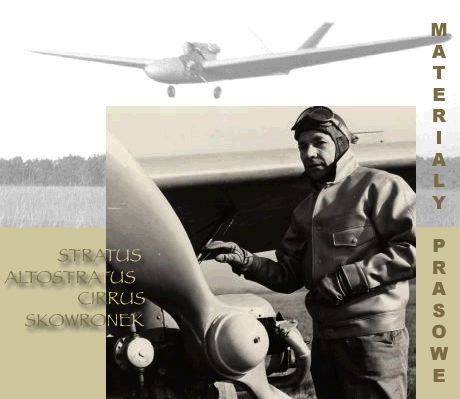
In 1980, the Ossolineum Publishing House of Wrocław published his autobiographical book titled On own Wings. He chooses Olesno Śląskie as his place of residence. There, he also designs and builds the fourth ultra-light structure called JB-4 “Skowronek”.

Józef Borzęcki was a co-designer (next to Tadeusz Dobrociński) of the first “Pterodaktyl 1” soft-wing in Poland. In the 1980s, Józef Borzęcki received from the Amateur Club of Constructors (Aeroclub Opole) glider SZD-10 “Czapla” registered SP-2187. It was a thank you for help in constructing and building amateur aerial constructions. J. Borzęcki wanted to motorize “Heron”. For this purpose, he wanted to use his own drive, based on two MZ-250 engines. The project has not been implemented.

In the fall of October 29, 1989, in the presence of Elżbieta’s daughter, “Skowronek” made several successfully completed take-offs and landings. A year later, on October 14, 1990, he made his last flight. From a height of 200 m, while descending to land, the left wing girder was broken. On this day, Józef Borzęcki died. Grandfather of Magdalena and Samantha.
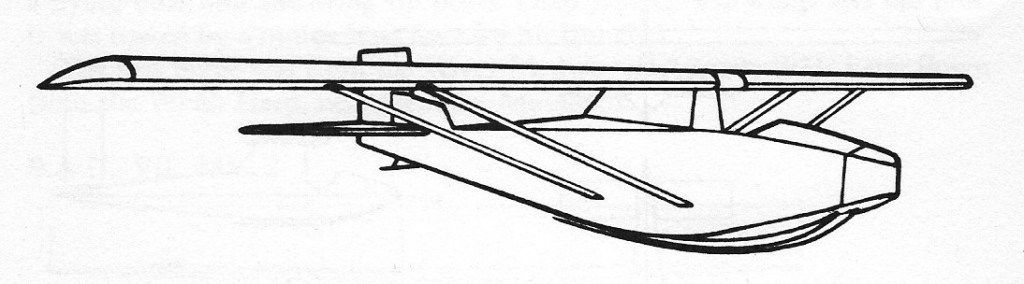
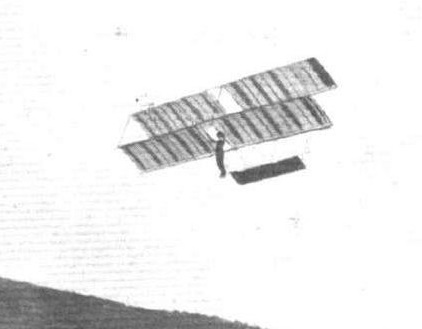
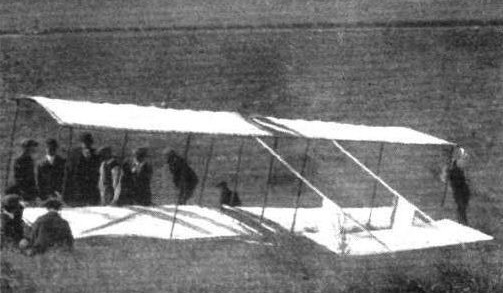
Bolt 1912 Glider

The machine is of Chanute type, built by two Canterbury Aero Club members, Messrs. Bolt and Angus, in New Zealand, in early 1912. Great success was attained in towed flights with passengers, about fifty trips through the air being indulged in before a bad smash through faulty towing put an end to experiments for a week or so. Among the many passengers carried was a lady, the wife of Mr. Johnassen, Club Engineer.

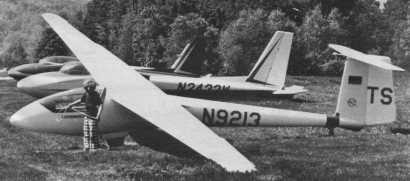
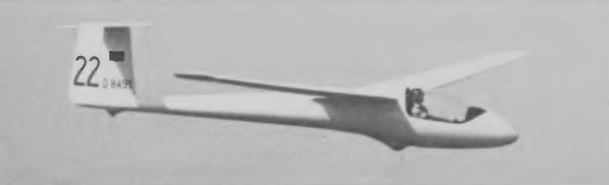
Bolkow L-252 Phoebus

Phoebus A

Derived from the Akaflieg Stuttgart FS-24 Phonix, the first sailplane to be built of glassfibre, the Phoebus high-performance single-seater was designed jointly by R. Under, R. Eppler and H.Nagele, the last two of whom had directed design work on the Phonix. The prototype was built by R.Linder and made its first flight on 4 April 1964; it came third in the Standard Class contest in the 1964 German National championships and 8th in the 1965 World Gliding Championships at South Cerney.

Production of the Phoebus was undertaken by Bolkow GmbH at Ottobrun, and three versions appeared:
the Phoebus A, the initial production Standard Class 15m (49ft 2.5 in) span variant which had a fixed monowheel and tail bumper for landing; the Phoebus B, which appeared in 1967, was the same as the A but with a retractable monowheel, and the Phoebus C was a 17m (55ft 9in) span version with a retractable monowheel and a tail braking parachute.

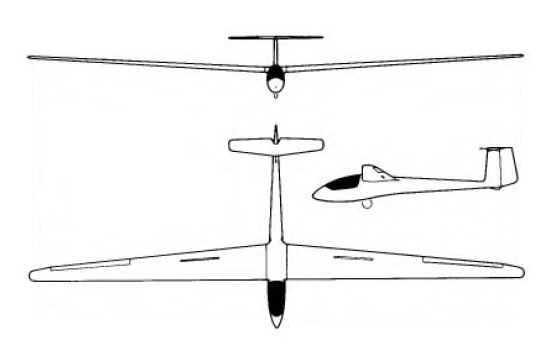
The Phoebus was one of the most commercially successful of postwar German sailplanes, a total of 253 having been built when production ended in 1970, and the type did well in contests; at the 1968 World Gliding Championships at Leszno, Poland, Phoebus C pilots took second and sixth places in the Open class and a Phoebus also took third place in the Standard class. The Phoebus, like the Phonix before it, has a basically balsa wood/glassfibre sandwich structure but with a stronger skin. The shoulder wing has air brakes at the 70% chord line and the one-piece all-moving tailplane is mounted on top of the fin to avoid downdraft from the wing. The fuselage is a monocoque structure similar in outline to that of the Phonix, and the pilot is seated under a one-piece canopy, with a control mechanism which is a simplified development of the Phonix’s. Compared to the latter, the Phoebus also has better high speed performance and improved gust response.

Phoebus C 17m

Gallery

Phoebus C
Wing span: 17.0 m sq / 55ft 9.25 in
Wing area: 14.06 sq.m / 151.4 sq ft
Length: 22 ft / 6.98 m
Aspect ratio: 20.55
Airfoil: Eppler 403
Empty weight: 235 kg / 518 lb
Max weight: 375 kg / 827 lb
Payload: 125 kg / 276 lb
Water ballast: None
Wing Load: 26.71 kg/sq m / 5.43 lb/sq ft
Max speed / Max rough air speed: 124 mph / 108 kt / 200 km/h
Stalling speed: 31 kt / 58 km/h
L/DMax: 42.3 @ 90 kph / 49 kt / 56 mph
MinSink: 0.55 m/s / 1.8 fps / 1.07 kt at 43 kt / 80 km/h
No. of Seats: 1
No. Built: 250

Bolkow

This company was founded on May 1,1956 by Ludwig Bolkow, becoming established at Ottobrunn bei Munchen in 1958. Until January 1,1965 was known as Bolkow Entwicklungen KG. Boeing acquired a one-third interest in the business. Bolkow held a 25% interest in Entwicklungsring Sud EWR). Aircraft produced include the Bo 207 four-seat light aircraft, BO 208 C Junior (a license-built version of the Malmo MFI-9) and the BO 105 five-seat light helicopter, which featured a rigid main rotor of glassfiber-reinforced plastics. This helicopter continued in production under the designation MBB BO 105, signifying that it was then built by Messerschmitt-Bolkow-Blohm, and most recently it became a Eurocopter product.

Messerschmitt joined with Bolkow in 1970 to form Messerschmitt-Bolkow. The Bolkow company was absorbed into Messerschmitt-Bolkow-Blohm which by 1990 was part of Deutsche Aerospace.

Bolkhovitinov AVF-6 Favzayat

The Bolkhovitinov AVF-6 Favzayat single-seater training glider was developed by Victor Fiodorovich Bolkhovitinov, a student of the Air Fleet Academy, in 1924.

Structurally it was a sesquiplane with ailerons on the upper wing and a rear fuselage with a flexible structure. The pilot was located in a small nacelle attached to the lower wing. The landing gear was made up of skis. The tail unit was of the conventional type.

The construction of the glider was carried out at the Duks factory.

In 1924, the AVF-6 participated, together with the AVF-18 “Pioner” in the national competitions in Koktebel.

Only the one was built.

Upper wingspan: 11.5 m
Lower wingspan: 6.2 m
Length: 6.6 m
Height: 2.22 m
Wing area: 25 m²
Empty weight: 68 kg
Seats: 1

Bolkhovitinov AVF-18 Pioner

The Bolkhovitinov AVF-18 Pioner single-seater training glider was built in 1924 at Factory No.1, by Victor F. Bolkhovitinov during his student years at the Air Fleet Academy.

This glider participated in the National Sailing Competitions held in Koktebel together with the AVF-6 “Fazvayat”.

Only the one was built.

Wingspan: 5.64 m
Length: 3.0 m
Wing area: 14.6 sq.m
Empty weight: 24 kg
Accommodation: 1

Bolkhovitinov, Victor Fiodorovich

Victor Fiodorovich Bolkhovitinov (Russian: Виктор Фёдорович Болховитинов) was born on January 23 (February 4 according to the new calendar), 1899 in the city of Saratov, in the Soviet Union.

In Saratov Boljovitinov finished elementary studies with a gold medal and entered the medical school of the University of Saratov, but after a semester he understood that medicine was not his profession and requested a transfer to the physical-mathematical faculty. In 1918 he moved to Moscow, joining the MVTU.

In this institution, he listened to various lectures given by Nikolai Egórovich Zhukovski and fell in love with aviation. In 1921 he entered the Institute of Engineers of the Red Air Fleet, which would later become the Zhukovski Military Aeronautical Academy.

As a student, In 1924 he created the AVF-6 Favzayat and AVF-18 Pioner gliders, which participated in the national competitions at Koebel. Later he was part of a group of enthusiasts who designed a small plane.

In 1926 he finished his studies at the Zhukovski Air Fleet Academy and began working as an aviation mechanic at the Sevastopol Military Aviation School. Sometime later, he returned to the Academy, beginning his work as a teacher. From 1931 he was in charge of the projection work of the KB VVIA. From 1933 he directed the OKO de la Fábica No.22 and in 1937 he was appointed head of the Department of Aeronautical Construction.

Between 1934 and 1936 Bolkhovitinov led the work on the long-range heavy bomber DB-A, created as a development of the Tupolev TB-3 and in which between 1936 and 1937 Soviet pilots set 4 world records. The DB-A was produced in small series until 1940, being used as a transport.

Starting in 1936, Bolkhovitinov’s KB-22 was transferred to Kazan. In 1937 he was appointed main builder and entry into the ranks of the Communist Party of the USSR.

In 1939 he was appointed chief of the OKB-293, located in the factory of the same name in Khimki. In that year Bolkhovitinov directed the construction of the original “S” high-speed bomber with two counter-rotating propellers, which reached a speed of 570 km / h during testing. At the beginning of the 1940s, a ramjet took part in the installation tests on this aircraft, but development was abandoned at the beginning of the war.

Between 1941 and 1945 under his direction, engineers A. Ya Bereznyak and A. M Isayev developed the BI reactive engine interceptor fighter. In October 1941 the KB was evacuated to the outskirts of Sverdlovsk.

In 1944 AG Kostikov, head of the NII-3 reactive engine research institute, was arrested and Bolkhovitinov’s OKB-293 was unified with NII-1, a new reactive research institute.

Bolkhovitinov was appointed chief of investigations at NII-1 . In 1946 his OKB became part of the group led by M. Bisnovat, at Factory 293. As head of NII-1, Mstislav Keldish was appointed.

From 1947 Bolkhovitinov returned to work as a professor and chair at the Zhukovsky Military Aeronautical Academy, where he remained until his retirement.

Author of several books and publications related to aeronautical science.

He died on January 29, 1970 in Moscow and is buried in the Vvedienski cemetery.

Awards:
Twice Order of Lenin
Twice Order of the Red Banner
Order of the Red Banner of Labor Medals

Blohm & Voss Bv.40       

By 1943 the US bombers raiding German cities spurred the Reich Air Ministry (RLM) to seek interesting technical solutions from industry. The theory behind the Blohm und Voss BV 40 was that a single-seat glider, armed with powerful cannon, could swoop through a formation of bombers and knock one or two down almost before it was detected. After its firing pass it was proposed that the BV 40 make a second pass towing a bomb on a cable, but this was rejected in favour of a second 30mm cannon. First towed flight took place in May 1944 and despite losses of several prototypes, the flight test programme proved the basic functionality of the BV 40, but not the feasibility of the concept, and the idea was abandoned in late 1944.
The BV 40 took off on a wheeled dolly, which was then jettisoned. If it survived its mission it landed on a retractable skid. To minimize the frontal area the pilot lay prone in the cockpit with his head resting on a padded support. The small cross-section theoretically enabled the BV 40 to dive from a height onto the bombers at speeds over 805km/h.
To protect the pilot against return fire from massed heavy bombers, the BV 40’s cockpit was heavily armoured on all sides. The windscreen glass was 120mm thick, and armament was a pair of heavy Mk 108 30mm cannon as used in the Me 262, mounted in the wing roots and loaded with 35 rounds each.
The Bv.40 was of steel construction for the fuselage and wood for the aerofoil and empennage.
Total production: 9 prototypes.

Empty weight: 836 kg
Max take-off weight: 950 kg / 2094 lb
Wingspan: 7.90 m / 25 ft 11 in
Length: 5.70 m / 18 ft 8 in
Height: 1.66 m / 5 ft 5 in
Max speed: 900 kph
Tow speed (Me 109): 553 kph
Tow climb to 7000m: 12 min
Armament: 2 x 30 mm MK 108