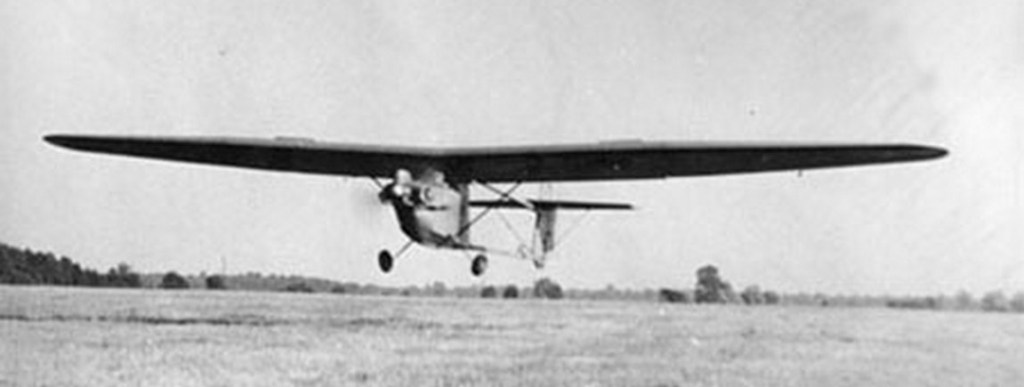
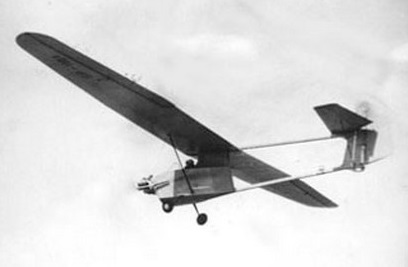
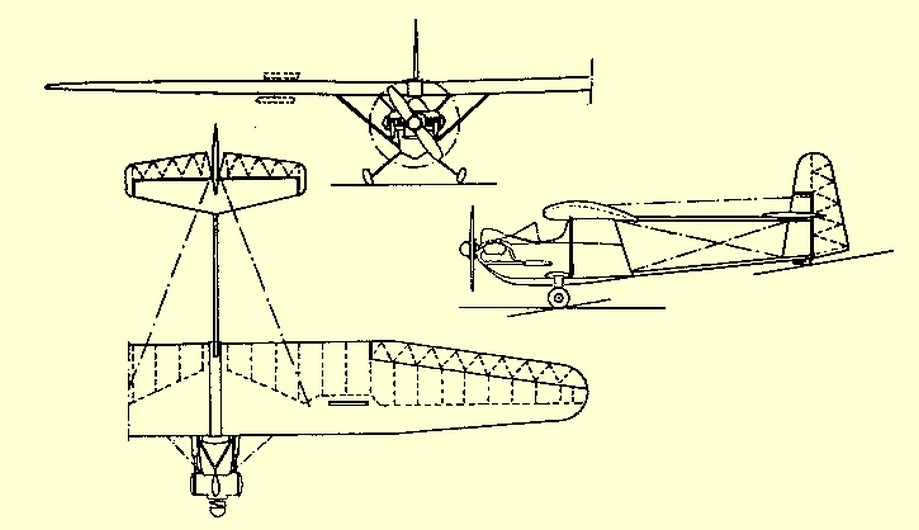
Bowlus Super Albatross BS-100

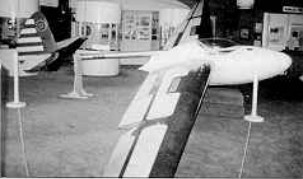
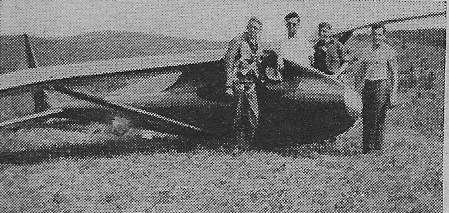
A development of the Baby Albatross, the Super Albatross used the BT-100 Baby Albatross pod and tail, with the boom moved down. The wing is the outer section of the BT-100, mounted in a shoulder position. One belongs to the National Soaring museum.
The BS-100 was constructed with wood and fabric wings and tail, a wood pod, and metal tail boom.

Wing span: 13.72m / 45ft
Wing area: 11.61sq.m / 125sq.ft
Empty Weight: 197kg / 435lb
Payload: 95kg / 210lb
Gross Weight: 292kg / 645lb
Wing Load: 25.15kg/sq.m / 5.25lb/sq.ft
No. of Seats: 1
No. Built: 2
L/DMax: 29 @ 76 kph / 41 kt / 47 mph
MinSink: 0.76 m/s / 2.5 fps / 1.96
Aspect ratio: 15.7
Airfoil: Go 549 tip symmetrical

Bowlus Senior Albatross 1-S-2100

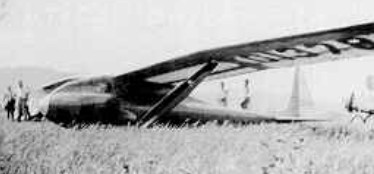
A development of the Bowlus Super Sailplane built by the Curtiss Wright Technical Institute in Glendale, CA in 1932, the senior Albatross had a slightly extended spar and gull wing. No two were completely alike, with flaps on at least one version. The design dominated the U.S. Nationals and held many U.S. records through the 1930’s. Senior Albatrosses were owned and/or flown by notables such as Warren Eaton, Richard du Pont and Chet Decker.
Examples belong to the Smithsonian Air & Space Museum and the National Soaring Museum.
The Senior Albatross has a wood monocoque fuselage, single strut braced wood D-tube wing, wood tail group, and is fabric covered

Wing span: 18.82m / 61.75ft
Wing area: 19sq.m / 204.75sq.ft
Empty Weight: 154kg / 340lb
Payload: 82kg / 180lb
Gross Weight: 236kg / 520lb
Wing Load: 12.42kg/sq.m / 2.54lb /sq.ft
Aspect ratio: 18.72
Airfoil: Go 549 root, symmetrical at tip
No. of Seats: 1
No. Built: 6
L/DMax: 22 @ 64 kph / 35 kt / 40 mph
MinSink: 0.59 m/s / 1.95 fps / 1.56 kt

Bowlus BT-100 / BTS-100 / BA-102 two-place Baby Albatross

BTS

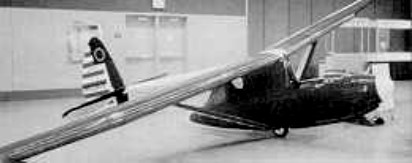
The two-place Baby-Albatross was created by lengthening the molded pod of the BA-100 Baby Albatross approximately two feet for a second seat beneath the monospar strutted wing, with porthole windows on each side. The Baby Albatross was built with an aluminum tube tail boom, wood wing, wood tail group, and fabric covered. The first built had the Bowlus control yokes while the second had conventional sticks. Those built up from BT-100 parts were known sometimes as the BTS-100. There were no approach control devices. One belongs to the National Soaring Museum and the Vintage Sailplane Association has plans.

Wing span: 13.56m / 44.5ft
Wing area: 13.94sq.m / 150sq.ft
Empty Weight: 216kg / 476lb
Payload: 192kg / 424lb
Gross Weight: 408kg / 900lb
Wing Load: 29.27kg/sq.m / 6lb /sq.ft
L/DMax: 20
MinSink: 0.69 m/s / 2.25 fps / 1.33 kt
Aspect ratio: 13.2
Airfoil: modified Go 535
No. of Seats: 2

Bowlus Baby Albatross BA-100

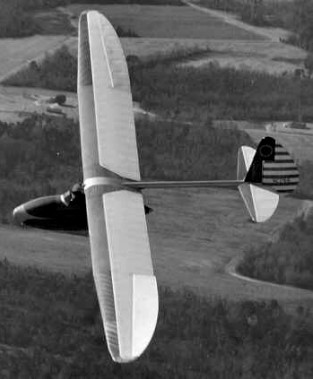
The Baby Albatross, first flown in 1937, was a production design by Hawley Bowlus for both kits and complete sailplanes. Bowlus produced kits until 1942, and in 1944 Laister-Kauffmann bought the rights but produced no aircraft before going out of business. The pod is a molded plywood unit, and no spoilers are provided, but some have been modified by owners. Many other modifications were carried out, including one Baby with a steel tube pod built by Schweizer. Many soaring notables had a Baby Bowlus as their first ship, including Dick Johnson, Dick Schreder and Joe Lincoln, and flights of more than 402 km / 250 miles have been made.

Bowlus Baby Albatross Article 1938

1938

One example belongs to the National Soaring Museum.
The Vintage Sailplane Association has plans and the Baby Albatross is Air Transport Certifie

Wing span: 13.56 m / 44.5ft
Wing area: 13.93sq.m /150sq.ft
Empty Weight: 136kg /300lb
Payload: 93kg /205lb
Gross Weight: 229kg /505lb
Wing Load: 16.44kg/sq.m/ 3.3lb/sq.ft
MinSink: 0.69 m/s / 2.25 fps
L/DMax: 20
Aspect ratio: 13.2
Airfoil: Go 535 (mod)
No. of Seats: 1

No. Built: 156

Borzęcki JB-4 Skowronek               

Józef Borzęcki choose Olesno Śląskie as his place of residence. There, he designed and built the fourth ultra-light structure called JB-4 “Skowronek”.

In the fall of October 29, 1989, in the presence of Elżbieta’s daughter, “Skowronek” made several successfully completed take-offs and landings. A year later, on October 14, 1990, he made his last flight. From a height of 200 m, while descending to land, the left wing girder was broken. On this day, Józef Borzęcki died.

Borzęcki Altostratus

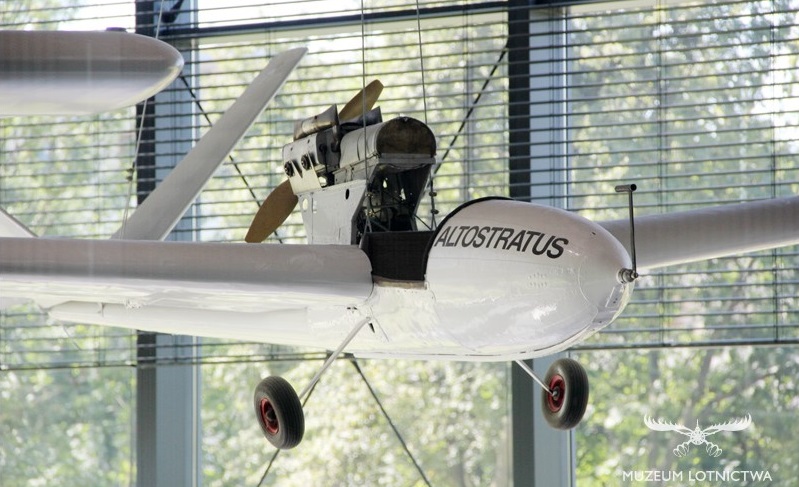
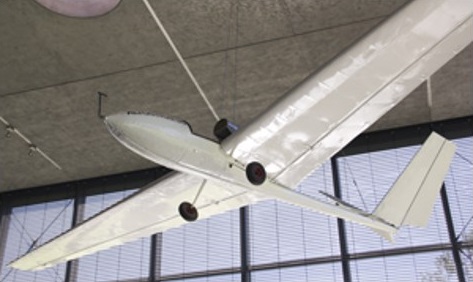
In late 1960s Józef Borzęcki undertook a rebuilding of his Stratus motor glider. The aircraft was fitted with wings from Komar (mosquito) glider, lighter and providing better glide ratio and flat two-stroke four-cylinder RB2 engine, designed by J. Borzęcki out of two connected Riedel starter engines from German Junkers Jumo 004 turbojet engine from World War II.

After this rebuilding the motor glider was named Altostratus and first flew in 1972. It remained in use until 1982.

Since 1994, “Altostratus”, as the only surviving structure of Józef Borzęcki, was transferred to the Polish Aviation Museum in Krakow.

Engine: RB2 Four-cylinder two-stroke, 18 kW (24 hp)
Span: 10 m (32.8 ft)
Length: 5.5 m (18 ft)
Empty weight: 90 kg (198 lb)
Take-off weight: 160 kg (353 lb)
Glide ratio: 20
Sink rate: 0.9 m / s
Maximum speed: 100 km / h (54 kt)
Minimum speed: 48 km / h (30 kt)

Borzęcki Cirrus  

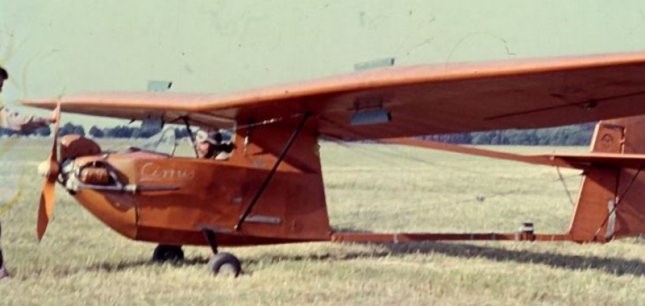
In the autumn of 1967, Józef Borzęcki began preparations for the construction of the “Cirrus” motor glider (“Salamandra moto”). In its construction, he used the experience gained while working on the “Stratus” motor glider. In the airframe, the designer used a number of wooden construction details from the school glider IS-A “Salamandra 53” (SP-1161) Kiibelwagen. He used a Volkswagen Kübelwagen car engine that he converted. A technical curiosity was the so-called elastic chassis, made of special shock-absorbing steel. The chassis on a single spring shank in the shape resembling the letter M was made of railway spring steel. This type of chassis designed and constructed by Borzęcki was the first of its kind in Poland to be used for light aircraft. The plane had, like “Stratus”, coupled control only by means of a joystick.

Looking for new solutions and constructional improvements, he used, among others double engine speed control system. It consisted in the fact that the aircraft also had a gas throttle mounted on the inside of the pilot’s cabin (as in a normal plane), and a car-type foot pedal, whose pressure increased the engine speed. These two control systems operated independently. The builder of Cirrus took the propeller-engine assembly very seriously. He took an exhaust gas analyzer, connected to the engine exhaust system, to the cabin. Flying at different heights, the amateur designer and pilot simultaneously selected the optimal composition of the gas-air mixture. The end result of these efforts was a significant engine economy with good performance of power.

“Cirrus” was flown on October 22, 1967. It had the characteristics of an ordinary glider after switching off the engine in flight. The powered glider carried out many flights in different weather conditions and seasons. Some of them on the ceiling 3000-4000 m and sometimes lasted 2-3 hours, with the engine turned on and off, circling in the thermals, enjoying a slow flight. For several years of using Cirrus, there were no accidents. The constructor flew about 2000 hours on it.

The constructor’s activities were revealed by a press article in 1968 and in 1969, unknown perpetrators destroy the motor glider, which, however, was rebuilt and flown. From 1971, the motor glider was hangar in the hangar of the Wroclaw Aeroclub, where in 1972 unknown perpetrators destroy Cirrus again, this time completely.

Engine: Volkswagen, 21 kW (28 HP).
Span: 12.5 m
Length: 6.5 m
Height: 1.95 m
Wing area: 16.8 sq.m
Empty weight: 200 kg
Total weight: approx. 300 kg.
Permissible speed: 140 km / h
Max speed: 120 km / h
Landing speed: 45 km / h
Minimum speed: 42 km / h
Rate of climb – 1.4 m / s
Glide: 12 / 1.3-1.5 m/s
Theoretical ceiling: 5000 m
Range: 400 km

Borzęcki Stratus

Józef Borzęcki was absorbed in the idea of building a simple, amateur glider for everyone. It was created under the influence of information about the pre-war Polish glider Bąk, designed by Adam Kocjan. His interest in aviation matters grew. He collected aerial books and magazines. He visited libraries and private collections. Despite many classes at work and family responsibilities, he devoted every spare moment to design work on his dream glider. Independently acquired the knowledge necessary to carry out the construction project.

During 1952–1961 Józef Borzęcki designed and built a motor glider called Stratus. He even built his own dyno to choose the right engine. He made this engine himself, based on a Czech circular saw engine. He designed and made the propeller himself, then he began making parts and assembling the airframe. He made all parts, from the smallest ones (e.g. he tapped several thousand rivets!) By himself. The construction of the powered sailplane was carried out in extremely difficult conditions – an apartment and a garage served as a workshop. The designer believed that all parts should be made perfectly, because flight safety depends on them. At the same time, he strived for its construction to be characterized by simplicity of operation and reliability of operation.

It was initially powered by an engine from a Czech chainsaw and wings from Żuraw (crane) glider. It initially featured classic flight control system with a control stick and rudder pedals, subsequently replaced by a “coupled” control system, designed by Borzęcki, in which the stick was used to control the aircraft in all axes (pitch, roll and yaw). It was aimed at facilitating flight training and increasing comfort in non-professional conditions.

The construction of the powered sailplane was completed in 1960 and J. Borzęcki began the first tests. During an attempt to take off, during Easter 1962, the wing was seriously damaged. Failures broke the constructor’s stubbornness. He no longer wanted to repair the glider, but he returned to work on it. He used in it (later used in all its constructions) so-called coupled control, i.e. only with a joystick that deflects the rudders and provides longitudinal and transverse control. Control of this kind, which he developed and developed completely independently, took him two years of hard work. Coupled control system of J. Borzecki’s idea had a number of advantages, especially significant in the case of little experience of amateur pilot. He again began the tests, which showed the correct flight properties of the powered sailplane. Over the next few months, he often performed test flights, which slowly turned into flying for pleasure. During 1961–66 the Stratus was flown illegally and in secrecy.

In July 1966, the designer invited the pilot of the flight and the editor of the newspaper Polish Word – editor Andrzej Macko to perform a test flight. He made several test flights, issuing a very favorable opinion about him. Articles by A. Macko published in Kulisach and the Polish Word about Józef Borzęcki’s motor glider started a nationwide discussion on amateur aviation in Poland.

In May 1967, an extensive article on amateur aviation was published in Winged Poland, a lot of space was devoted to the glider “Stratus”. In the press and everywhere where there were people interested in aviation, from aeroclubs to the Department of Aviation, there was a discussion about the future of amateur aviation in Poland.

In late 1960s the constructor undertook a rebuilding process. After this rebuilding the motor glider became the Altostratus.