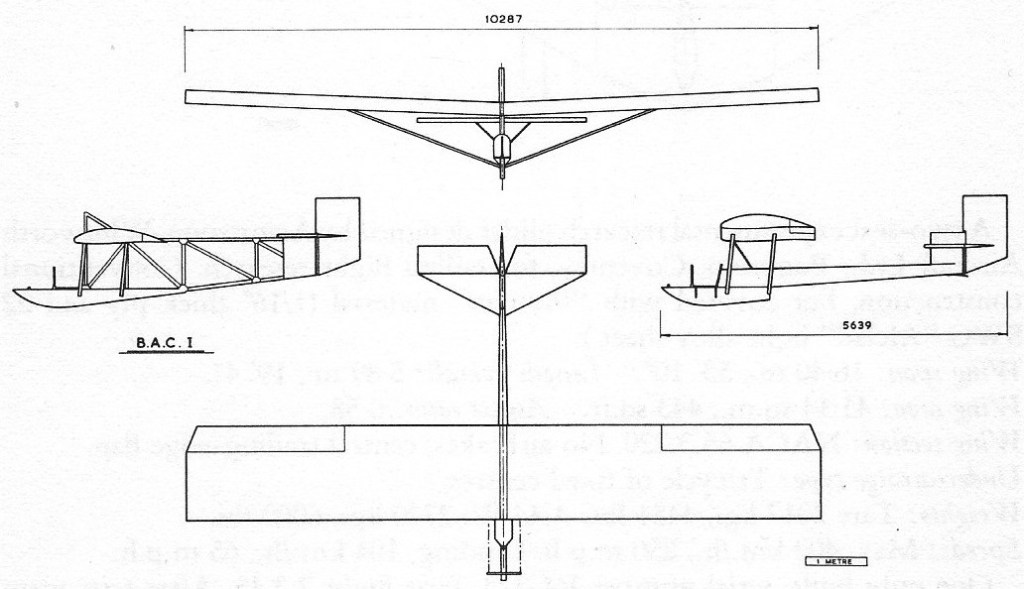
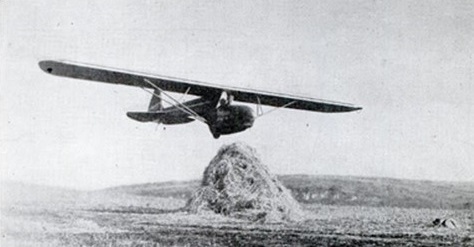
The first true B.A.C. aircraft was the one seat 1930 B.A.C. I primary glider. Designed by C.H. Lowe-Wylde and built by members of the Kent Gliding Club, it was similar to the German S.G.38, with wire braced wings, but two struts were later added each side.
One only was built, named Columbus, and its first flight was on 23 February 1930. It survived until the war when it was impressed into the RAF, serial NF746, and was still flying in 1953 at No. 162 G.S. Hamsey Green.
Born in 1901 at Newcastle-upon-Tyne, C.H. Lowe-Wylde built his first glider at the age of 14. On 3 January 1930 he founded the Kent Gliding Club, then designed the first British Primary glider, the B.A.C.1, which was thwn built bu members of the Kent Club.
The British Aircraft Company (1935) Ltd was founded by C.H. Lowe-Wylde in 1930, the company set up a factory in a disused brewery in Lower Stone Street, Maidstone, Kent, UK.
The British Aircraft Company (1935) Ltd. built a series of eight glider types in the early 1930s. In 1932 one was fitted with landing gear and a Douglas motorcycle engine driving a pusher propeller. A small number were produced before designer and company owner C. H. Lowe Wylde was killed while flying the initial conversion on 13 May 1933. Company taken over by Austrian pilot Robert Kronfeld, becoming Kronfeld Ltd.
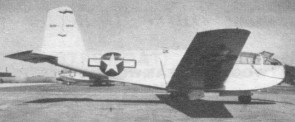
During 1942 the U.S. Navy let contracts for the development of several amphibious transport gliders. Two of the contracts called for twelve¬-seaters manufactured primarily from non¬-strategic materials, these being the Allied XLRA 1 and the Bristol XLRQ 1. The Bristol XLRQ 1 produced by the Bristol Aeronautical Company of New Haven, Conn., was a low wing cantilever monoplane. Its overall span and length were 72 ft (21.94 m) and 40 ft (12.2 m) respectively, and there were four prototypes (BuAer Nos. 11651 54), although it is not certain that all of these gliders were completed. A production order was placed for one hundred LRQ 1 gliders (BuAer Nos. 33715 814), but this was cancelled in 1943.
Wing span: 72 ft (21.94 m). Length: 40 ft (12.2 m).
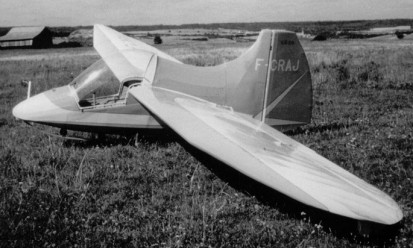
While landing on a wet section of the runway, however, the nosewheel of the GB-6 dug in and it flipped over violently. The pilot was only slightly injured. Only the wing was salvageable. Georges Briffaud considered re-using it by enlarging it for use in a motorglider project, the GB-80. This was a midwing single-seater whose engine, placed near the center of gravity, was to drive via a short driveshaft a two-bladed propeller located between the fixed vertical fin and the rudder. This solution had the advantage of fairing in the propeller during soaring flight without requiring feathering or the retraction of the engine-propeller assembly. The airframe was of fabric-covered wood; the cockpit was equipped with a molded canopy. The GB-80 made its first flight as a glider on 21 September 1960 at Beynes with pilot Jacques Gomy at the controls, pulled by the club towplane. During succeeding flights, several modifications proved necessary, notably an increase in rudder area. Handling of the GB-80 was similar to that of other gliders of the same generation, and the machine’s wing performance was close to that of the Nord 2000 (French version of the German “Meise”), despite a low aspect ratio of only 7.6. It received its certificate of airworthiness (CNRP) on 4 July 1961. On one flight, it was double-towed with another flying wing, the AV-36 flown by Eric Nessler. The motor originally intended for it, a 2-stroke, 18 hp Kroeber, was never installed, being replaced by an equivalent weight of ballast. The engine had no starter, and the development of that accessory was never completed (Charles Fauvel faced similar problems with the AV-45). Georges Briffaud designed a version designated GB-81, with a new, easier to build fuselage, but that project was never realized. Disappointed, Georges Briffaud decided in 1963 to dismantle the GB-80.
Wing span: 11.20 m Length: 4.20 m Wing Area: 15.4 sq.m Airfoil: modified NACA 23012 Aspect ratio: 7.6 Empty weight: 165 kg Max. weight: 260 kg Best glide ratio: 22:1 Minimum sink rate: 0.90 m/s
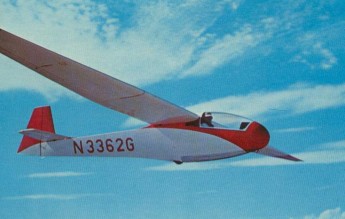
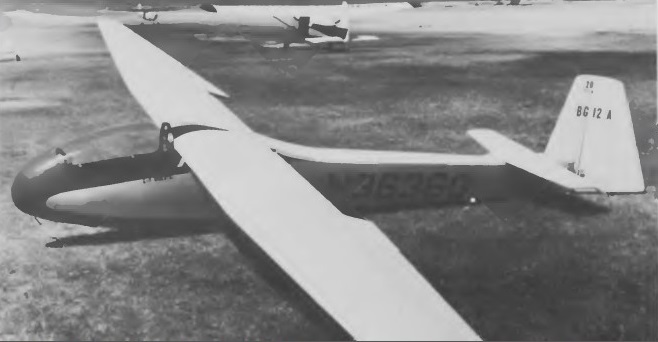
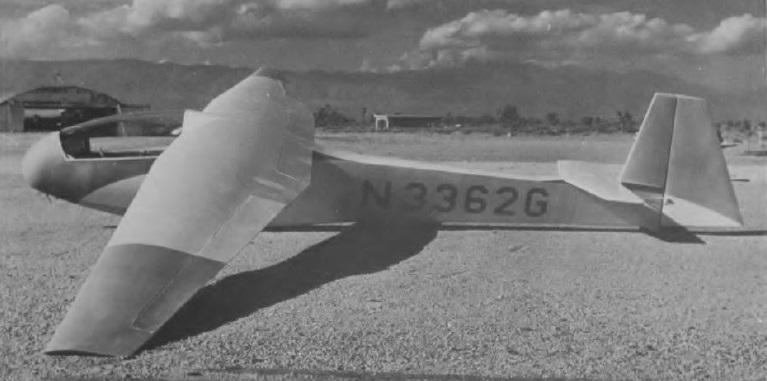
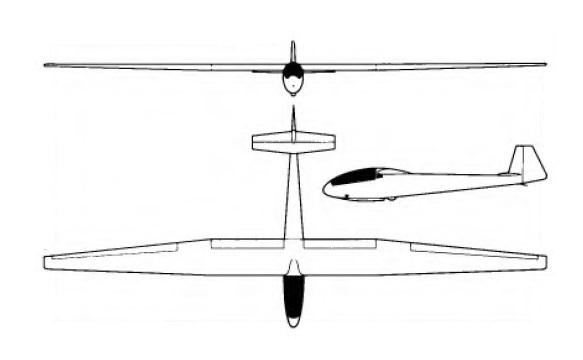
The BG 12 is a single-seat high performance sailplane the sole prototype of which first flew in March 1956, and the basic design was intended especially for homebuilt construction in kit or plan form. Designed by William G. Briegleb, the BG-12 series prototype used a modified BG-6 fuselage. All wing ribs and fuselage bulkheads are cut from plywood and construction is similar to that of a model aeroplane, with spruce longerons being covered with plywood.
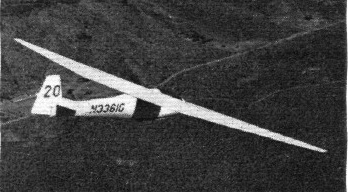
First production version was the BG 12A, first flown in July 1958, which had a three-piece cantilever wooden wing of 15% thickness/chord ratio and NACA 44-series section, the control system utilising aluminium tubes and castings.
Briegleb BG 12A
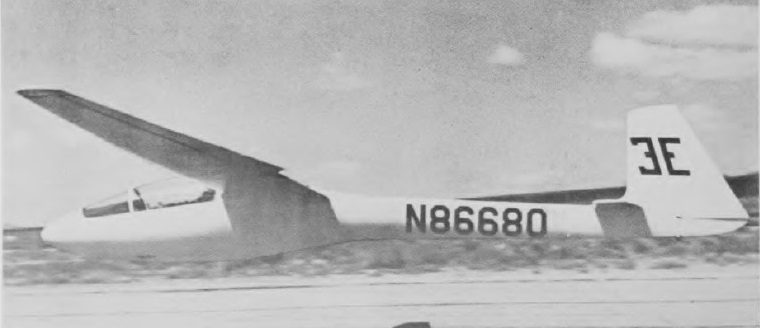
A lighter 2- piece 18% thick wing was developed in 1963 as the BG-12B. Both have flaps for glidepath control. The BG 12B, which first flew in July 1963 and had a two-piece wing with a thicker 18% section at the root, and a welded system of control linkages.
The BG 12C was a Standard Class version with a span of exactly 15m instead of the 15.24m (50ft 0in) of the A and B, and this version also featured air brakes, the flaps being used as air brakes on the A and B models at speeds up to 130mph.
One flapless B-12C model was built with a 2 piece 15-meter span wing with air brakes to meet FAI/OSTIV Standard Class requirements.
The production BG 12BD, which first flew in July 1973 reverts to the 15% wing root section of the A. The BG-12BD model eliminates three degrees of wing twist, accomplishing the same effet by an aileron linkage applicable only in the low-speed range. On all versions, both ailerons and flaps are of wood and covered by plywood, while the tail unit is also of wood; the tailplane incidence can be adjusted on the ground and there are no tabs. The undercarriage consists of a fixed unsprung monowheel with a Briegleb circumferential brake, a shock-mounted nose skid and a spring tail skid. The pilot sits under a large one-piece moulded Plexiglas canopy and has an adjustable seat and rudder pedals.
BG-12BD
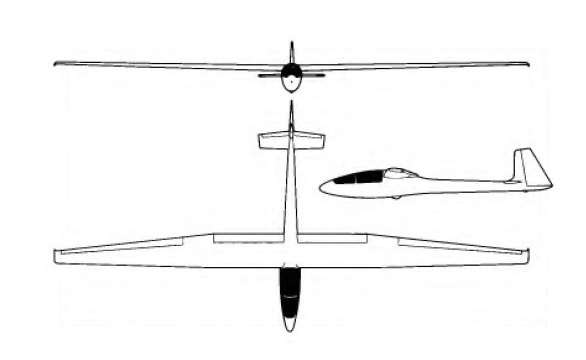
The BG 12-16 was developed from the single-seat BG 12BR, a special contest version of the BG 12 which was flown into seventh place in the 1964 US National Championships by Ross Briegleb. This later damaged its fuselage in a landing accident and was given a new fuselage originally built for the BG 16, a projected new design, thus becoming the BG 12-16 prototype; it made its first flight in this form in June1969. The new low profile fuselage is slimmer than the BG 12’s, with a glassfibre forward section containing the pilot in a semi-reclining seat under a two-piece canopy, the aft section of which is detachable; this tapers into a slim rear fuselage of circular section instead of the rectangular section of the BG 12’s. A distinctive forward-swept fin and rudder is featured, and the all-flying tailplane, built in two halves, is of metal construction with glassfibre covering, and has two anti-balance servo tabs. L/D max. is 36. The wing and its construction is similar to the BG 12’s but with longer span flaps; the flaps, ailerons and rudder are built of ply-covered wood using spruce and Douglas fir. The undercarriage consists of a fixed unsprung monowheel, a shock-absorbing nose skid and a sprung tailwheel or tail skid. By the beginning of 1978 kits and/or plans for homebuilt construction of 58 BG 12-16s had been sold, although Mr William Briegleb has now retired from sailplane design and ceased all advertising.
BG 12-16
Kits and/or plans for a total of 257 BG 12s and 58 of the later BG 12-16 had been sold by early 1978; about 100 of these have been completed. As a homebuilt sailplane, around 350 kits or sets of plans having been delivered to customers. A number of modifications were incorporated by individual kitbuilders. One example is the Niedrauer NG-1 which has a BG-12/16 fuselage with a BG-12B tail and cockpit depth reduced by 9 in /23 cm to 34 in /86 cm, and lengthened to accommodate the pilot in a semi-reclining position.
BG-12C
BG-12BD Wing span: 15.24m / 50ft Wing area: 13.1sq.m / 141sq.ft Length: 6.68 m / 21ft 11 in Height: 1.22 m / 4ft 0in Empty Weight: 227kg / 500lb Payload: 113kg / 250lb Gross Weight: 340kg / 750lb Water ballast: None Wing Load: 25.95kg/sq.m / 5.3lb/sq.ft Aspect ratio: 17.7 Airfoil: NACA 4419R, 4406R Max speed: 140mph / 121 kt / 225 km/h (in smooth air) Max rough air speed: 112 kt / 210 km/h Stalling speed: 33 kt / 61 km/h Min sink: 2.26ft/sec / 0.69m/sec at 47mph / 41 kt / 76 km/h L/DMax: 34 at 90 kph/ 49 kt/ 56 mph No. of Seats: 1
BG 12-16 Span: 15.24 m / 50ft 0in Length: 7.32 m / 24ft 0in Height: 1.27 m / 4ft 2in Wing area: 13.2 sq.m / 142.1 sq.ft Wing section NACA 4415R/4406R Aspect ratio: 17.9 Empty weight: 238 kg / 525 lb Max weight: 385 kg / 850 lb Water ballast: None Max speed: 140 mph / 121 kt / 225 km/h (in smooth air) Stall speed: 29.5 kt / 55 km/h Max rough air speed: 112 kt / 210 km/h Min sinking speed: 0.68 m/sec / 2.23 ft/sec at 48 mph / 41.5 kt / 77 km/h Best glide ratio: 34:1 at 56 mph / 48.5 kt / 90 km/h
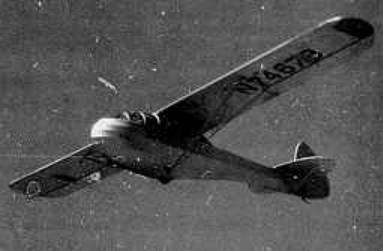
Designed by William G. Briegleb, the BG-7 was developed in 1940 by adding longer, tapered wings to the BG-6. Most have spoilers fitted, which the BG-6 lacked. Modifications were common, frequently in the cockpit area. The added span created some directional instabillity, so many BG-7s had the rear fuselage lengthened or area added to the vertical fin.
Mr Briegleb’s firm re-introduced construction of the BG 6 and BG 7 as a plans-only service to homebuilders, and by the beginning of 1978 59 sets of BG 6 plans and 29 sets of the BG 7 had been sold.
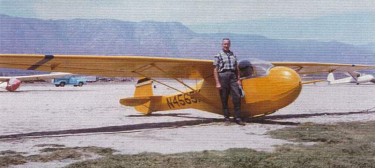
Designed by William G. Briegleb, the BG-6 was introduced in 1939 and produced in both complete and kit form. The structure was 2-Strut-braced, 2-spar, constant chord, wood/fabric wings, and metal/fabric tail; steel-tube/fabric fuselage. It has no devices for glidepath control. A few factory-built ships were used as training gliders in World Was II.
The BG 6 being type certificated in 1941.
Mr Briegleb’s firm re-introduced construction of the BG 6 and BG 7 as a plans-only service to homebuilders, and by the beginning of 1978 59 sets of BG 6 plans and 29 sets of the BG 7 had been sold.
One of the USA’s pioneer sailplane designers, William G. Briegleb built and flew his first glider in 1928, and later formed the Sailplane Corporation of America to market gliders of his own design. Just before World War 2 he produced the BG 6 and BG 7 strut-braced high wing designs with fabric-covered steel fuselages,; a few of these were used by the USAAF for training as well as by private owners and clubs. Recently Mr Briegleb’s firm re-introduced construction of the BG 6 and BG 7 as a plans-only service to homebuilders, and by the beginning of 1978 59 sets of BG 6 plans and 29 sets of the BG 7 had been sold.