The 1957 Adkins Midwing was a one-off example (N2148C) of a single place cabin, midwing monoplane.
Engine: Continental, 65hp
Wingspan: 18’3″
Cruise speed: 110 mph
Range: 250 mi
Seats: 1
The 1957 Adkins Midwing was a one-off example (N2148C) of a single place cabin, midwing monoplane.
Engine: Continental, 65hp
Wingspan: 18’3″
Cruise speed: 110 mph
Range: 250 mi
Seats: 1
Parkston SD.
USA
Circa 1957-73
1916
Loda IL.
USA
First airplane, a glider, was built in 1916 from plans in Aviation Week and flown successfully enough to qualify the teenager for membership in the Early Birds organization.
1920
Judd IA.
USA
c.1955
Atherton CA
USA
On retirement from a career flying for Natl Air Transport and UAL, Addems became well regarded for his faithful reproductions of classic aircraft.
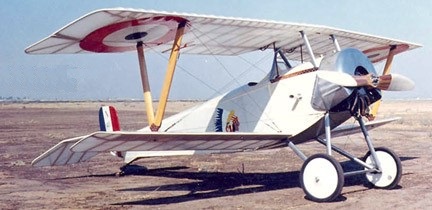
Ing D.Julio Adaro produced the Chirta biplane trainer in 1935.
Spain Produced the Chirta biplane trainer
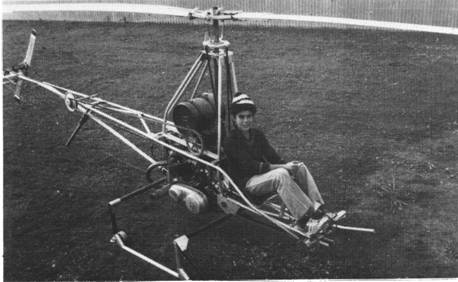
This company was formed by Mr. T.G.Adams and Mr. Paul Wilson to market plans the single-seat helicopter named the HobbyCopter, of which they have built a prototype, N23P, with a 34 hp engine.
The company also supplies kits of parts for the Hobby-Copter sold as a kit to amateurs as the Model 101 Hobbycopter, offered in kit (US$900) or plan (US$35) The subsequent Model 102 had a strengthened structure, 50hp Triumph engine and fibreglass cockpit shell.
First flown in November 1958, this single seat fully fledged helicopter was powered by a motor cycle engine, rubber mounted and fitting into the frame with no modifications – including starting procedures.
Powered by a 40-46hp Triumph 650cc motorcycle engine, the engine, as in its original mount, is kick-started. Fuel is in a single tank above engine with a capacity of 11.4 litres. Oil capacity is 3.8 litres.
When the run-up is complete and ready for takeoff, the pilot engages gear through the motorcycle gearbox — the power being transmitted through a one-way drive to the main rotors and by a vee-belt to the tail rotor.
An open air machine, the helicopter utilises skids and features a 22 foot laminated spruce wooden main rotor of NACA 0012 aerofoil section (chord 0.20m) and a formed aluminium two ¬bladed tail rotor.
Cyclic and collective pitch are controlled by a swash-plate.
The rotor drive involves engine-to-gearbox by chain; gearbox-to-main rotor by direct shaft; gearbox-to-tail rotor by belt. The main rotor rpm in flight is 360, and tail rotor rpm in flight 1,800.
The fuselage is all aluminium tube structure, bolted together, with tubular skids, with retractable ground-handling wheels. A single fiberglass bucket seat is ahead of the rotor drive shaft.
The plans are all to aircraft specifications and the structure is bolted together. The main lift bearing is designed to take six tons.
XH-1 HobbyCopter
Engine: 850cc Norton
Main rotor dia: 22 ft / 6.55m
Tail rotor dia: 0.94 m
Fuselage length: 4.27 m
Width: 1.52m
Height: 1.83m
Empty wt: 335 lb
MAUW: 600 lb / 252kg
Weight empty, equipped: 161kg
Max speed: 72 mph / 96km/h
Max cruise: 72km/h
Econ cruising speed: 64km/h
Service ceiling: 2440m
Max range: 193km
Fuel burn: 1.5 USG/hr
Seats: 1
The RA-17 was a special version for use as ag-plane with spraying equipment under the wings and the chemicals hopper in the fuselage, making it a single-seat aircraft. Only a prototype was built which was modified from the second RA-15/1, and the sole RA-17 made a first flight on June 2, 1949.

A side-by-side two-seater, the RA-15 Major was externally and dimensionally similar to the RA-14, but had a plywood covered fuselage, a much larger vertical tail and also featured improved systems.
The first example made its maiden flight on April 13, 1947. Engine in the RA-15 was a 75 hp Régnier 4D-2.

The RA-15/1 Major was similar to the RA-15, but powered by a 65 hp Continental A65 engine.
RA-15 Major
Engine: 75 hp Régnier 4D-2
Wingspan: 34 ft 9 in
Length: 22 ft 11 in
Empty weight: 616 lb
Loaded weight: 1145 lb
Max speed: 109 mph
Ceiling: 16,400 ft
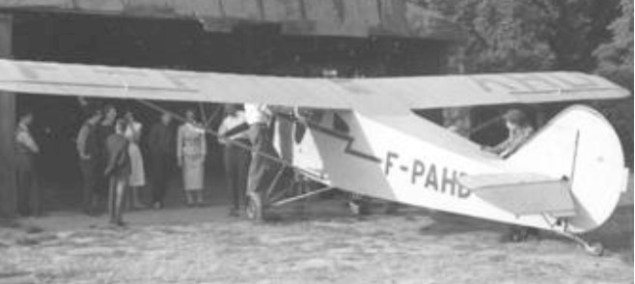
A side-by-side two seater, the RA-14 Loisirs was mainly intended for construction by amateur builders and aero clubs, using Adam-supplied parts and components. The RA-14 was also delivered complete.The RA-14 made the first flight on March 16, 1946 and this aircraft was powered by a 40 hp Train engine. The RA-14 had a fabric covered fuselage and wings and was built in several variants, with engines in the 65-90 hp power range. The type was popular in the immediate post-war years and several dozens were built.
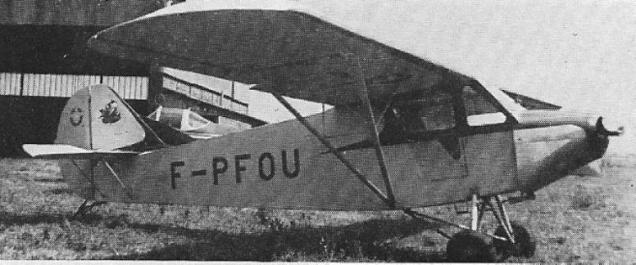
One example of the RA-14S Loisirs was built, featuring a plywood covered fuselage and several other features of the RA-15 model. In 1957 Maranda Aircraft in Canada acquired the marketing rights for the RA-14 and also developed several improved versions. The RA-14 serving as the basis of the AMF S-14. Another homebuilt variant was available from Falconar, also in Canada.
Engine: Continental O-170, 65 hp
Span: 35 ft
Length: 22 ft
Height: 7 ft
Wing Area: 16 sq.m
Empty Weight: 616 lb
Cruise Speed: 75 mph
Gross Weight: 1056 lb
Crew: 2
Range: 280 miles
Max Speed: 87 mph
Ceiling: 4000 m
France
Etablissements Aeronautiques R. Adam, specialists in light aircraft, which were built in small numbers during 1948-55.

