Aeritalia G.222

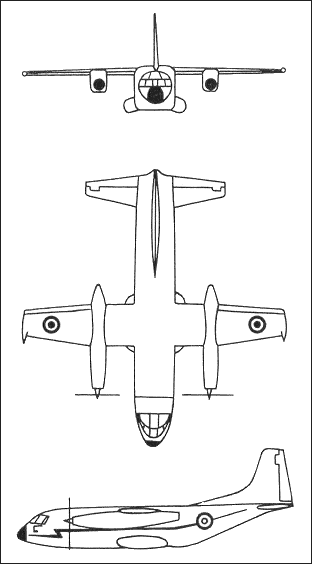
The project began with Fiat’s submission in the NATO NBMR 4 design competition for a tactical V/STOL (vertical/short takeoff and landing) transport with jet lift engines. One of more than 12 entries, it was the only project to be pursued to the hardware stage, though the V/STOL feature was abandoned. Originally the powerplants were all Rolls Royce, the main engines being two Dart turboprops. Four lift jets were to be installed in the rear of each turboprop nacelle. The design changed, lift jets were removed, and new models appeared for including ASW (antisubmarine warfare), military and civil cargo transport, which had outer wings of greater span. In 1966 the design changed to two General Electric T64 main engines and later the 3400 shp T64 P4D single shaft engine with Hamilton propeller, and put into licence production by the Fiat engine company.
The original contract was awarded by the Italian air force in 1963 to what was then Societa per Aviazioni Fiat.
Initially two prototype G222s were built, the first flying at Turin on July 18, 1970. A production programme was agreed in which Fiat make fuselages at Pomiglio d’Arco, Naples. Wing centre sections are made by Piaggio and outer panels by Aermacchi; tails by SIAI Marchetti; landing gear by CIRSEA; and various other airframe sections by SACA. The Italian air force ordered 44 G222 transports, and Aeritalia marketed the aircraft, achieving limited success with orders for three from Argentina and one from Dubai. A prototype ECM version, the 222VS, equipped with extensive electronic installations and with accommodation for 10 systems operators, was also produced in 1978.
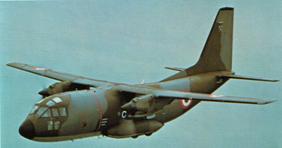
The G.222 entered service in 1976 as a tactical airlifter, certified for operation with a crew of two and can take-off and land on grass strips. Its volumetric capacity allows loads of up to 20,000 lbs, 53 fully equipped soldiers, parachute 42 paratroopers, or to air drop heavy loads up to 11,000 lbs. The plane has a hold accessed by a rear ramp/door for the straight-in loading of bulky items. Production was completed in 1989 with the 90th plane. The type’s major operator was the Italian air force, though smaller quantities were exported to several countries, of which the single largest operator is Libya with a special version produced to avoid export restrictions on American engines and equipment. Principal versions: G222 (basic tactical transport), G222RM (navaid calibration model), G222SAA (firefighting model), G222T (version for Libya with European avionics and engines for improved hot-and-high performance), G222V5 (electronic warfare model).
The transport version had some export success, customers including Argentina (3), Dubai (1), Libya (20), Nigeria (4), Somalia (4), the USA (10) and Venezuela (8). Some G.222s were converted to the radio/radar calibration role and for fire-fighting duties.

G.222
Engine: 2 x 3,400-shp (2,535-kW) Fiat-built General Electric T64-GE-P4D turboprops.
Installed pwr: 5070 kW.
Span: 28.7 m.
Length: 22.7 m.
Height: 32 ft 2 in (9.80 m).
Wing area: 82 sq.m/ 882.67 sq ft.
Empty wt: 14,590 kg.
MTOW: 28,000 kg.
Payload: 9000 kg.
Cruise speed: 440 kph.
Initial ROC: 520 m / min.
Max speed: 336 mph /540 kph / 292kt @ 15,010 ft (4,575 m)
Service Ceiling: 25,000ft / 7,620m
T/O run: 660 m.
Ldg run: 545 m.
Fuel internal: 12,000 lt.
Range/payload: 1371 km with 9000 kg
Range/payload: 851 miles (1,370km) with maximum payload.
Capacity: 53 pax.
Crew: 3.

G222T
Engines: 2 x 4,860-shp/3,624-kW Rolls-Royce Tyne Mk 801 turboprops
Aeritalia

Formed 12 November 1969 by equal shareholding of Fiat and IRI-Finmeccanica to combine Fiat aerospace activities (except engines) and those of Aerfer and Salmoiraghi. Fully operational January 1972. In September 1976 IRIFinmeccanica bought Aeritalia stock owned by Fiat.
Took control of Partenavia in 1981-1992 under its General Aviation Group.
As Panavia partner, designed and developed variable-geometry wing and other important features of Tornado multirole aircraft. Became partner in AMX program (see AMX International), and joined Aerospatiale of France in establishing ATR. Merged with Selenia in December 1990, to form Alenia Aerospazio.

Aerial Distributors Distributor Wing DW-1

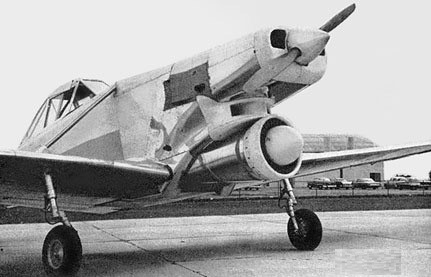
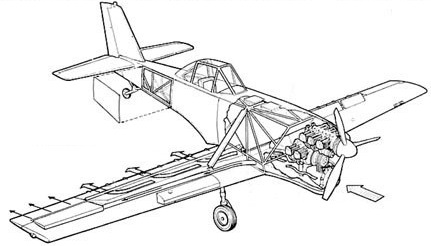
The 1965 Distributor Wing DW-1 was a single place agricultural aircraft with two stacked Lycomings; a 350hp IGO-540 for flight and a 108hp O-235 driving an axial-flow fan internally-mounted spray system.

First flown on 30 January 1965, the plane climbed at 350fpm at gross weight of 5,200 lb with just the O-540; the O-235 powered the spray system and provided thrust augmentation.

The Guide vanes in the wings increased flap effectiveness. Air flows into a hydraulically-run metering gate feeding material from the hopper, through wing ducts and out variable wing slots. The hopper was a drop-in unit, and fuel was in leading-edge tanks.

Engine: Lycoming IGO-540, 350hp
Wingspan: 43’10”
Length: 28’4″
Cruise: 70-150 mph
Stall: 74 mph

Aerial Distributors Inc

Formed in 1967 to develop Distributor Wing DW-1 ag aircraft. First flown in 1965.

1967:
Aerial Distributors Inc
Wichita KS.
USA

In the early 1970s was developing Distributor Wing monoplane, prototype of which had flown in 1965. Agricultural equipment was an integral part of the aircraft; power for spraying and dusting was by a separate engine.

Aereon 26

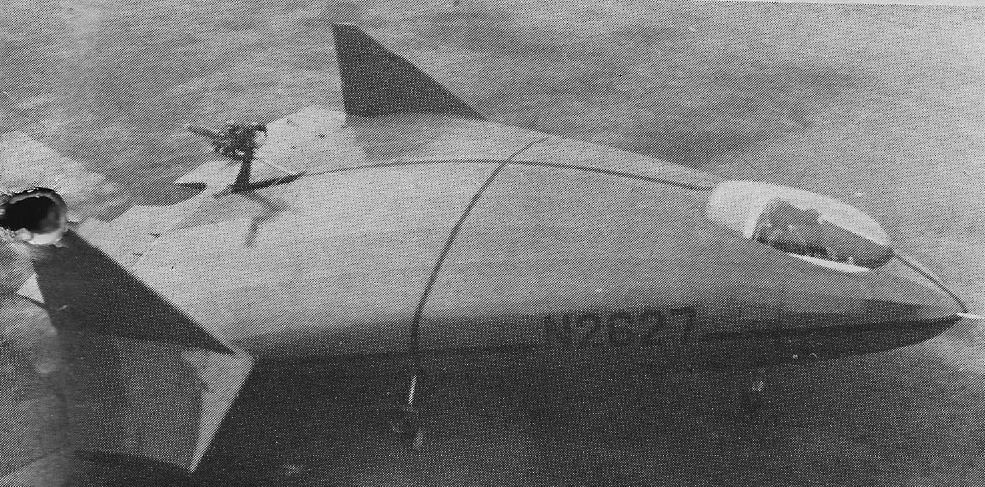
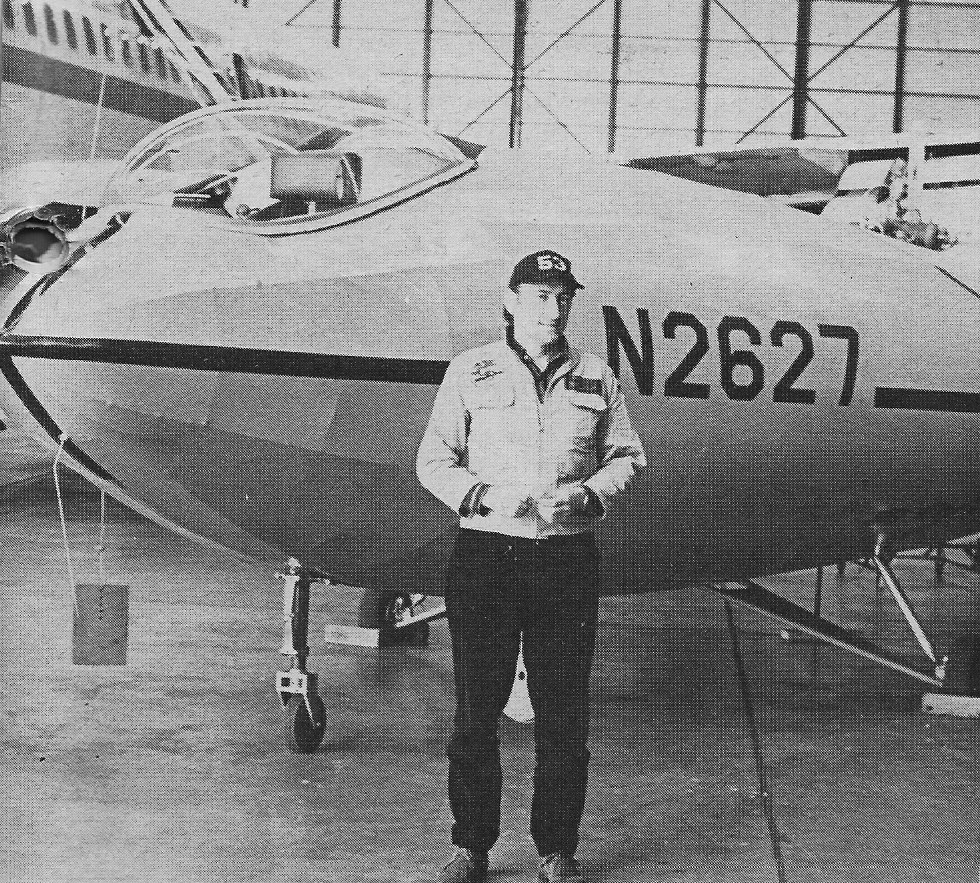
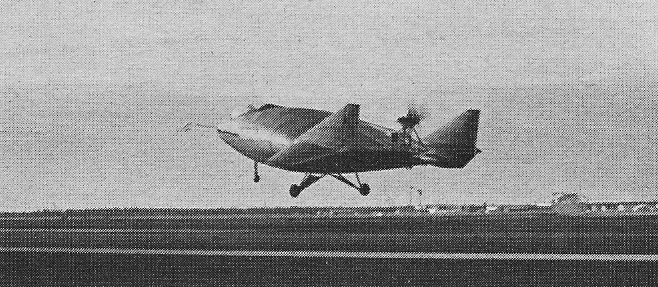
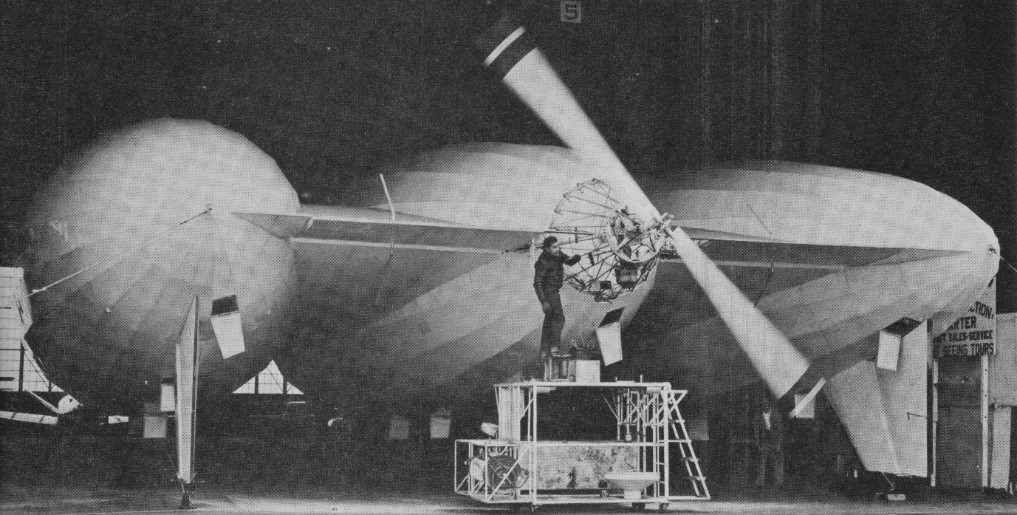
After testing of radio-controlled models, the 26 foot manned Aereon 26 was flown. The model designation indicated the length of the craft. The 26 was originally 26 feet long, but was extended to 27 ft 6 in when more area was added to the control surfaces. The FAA assignment of N2627 as a registration was a coincidence.

Built as a pre-prototype, the Aereon 26 is a hybrid vehicle combining aerodynamic and aerostatic lift.

Flying by December 1970.

Aereon III

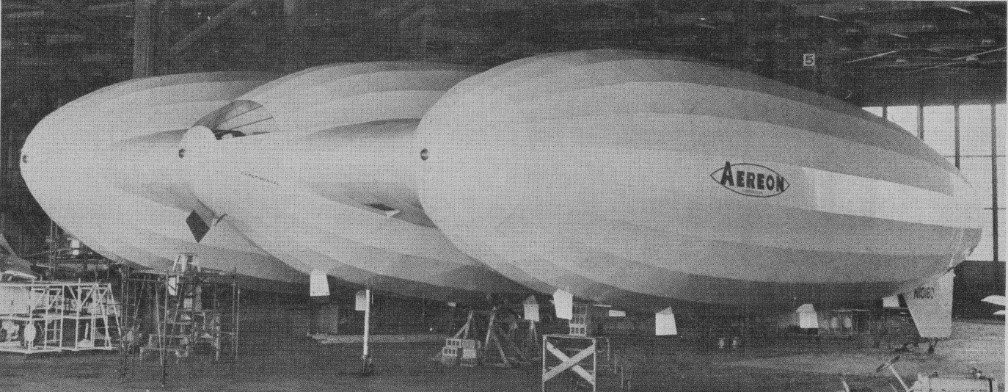
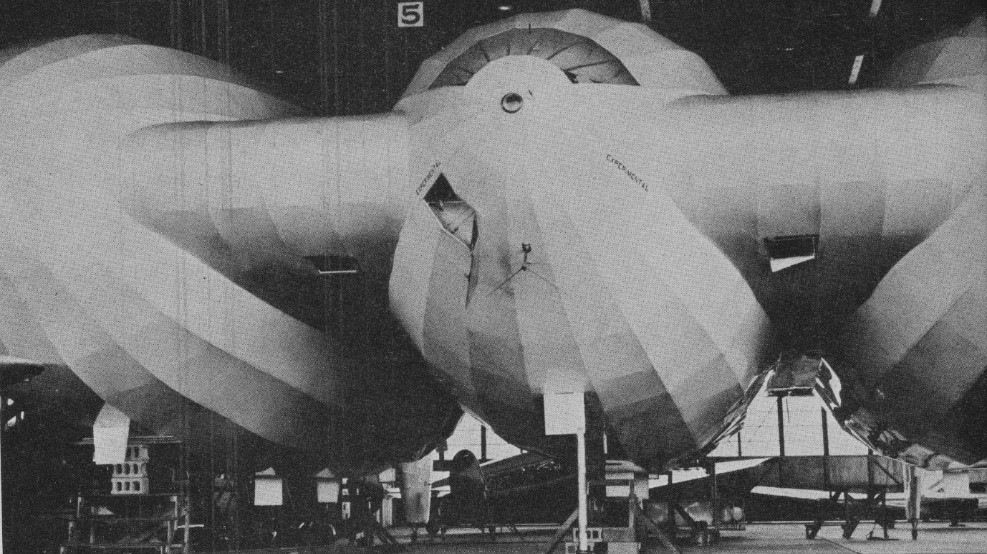
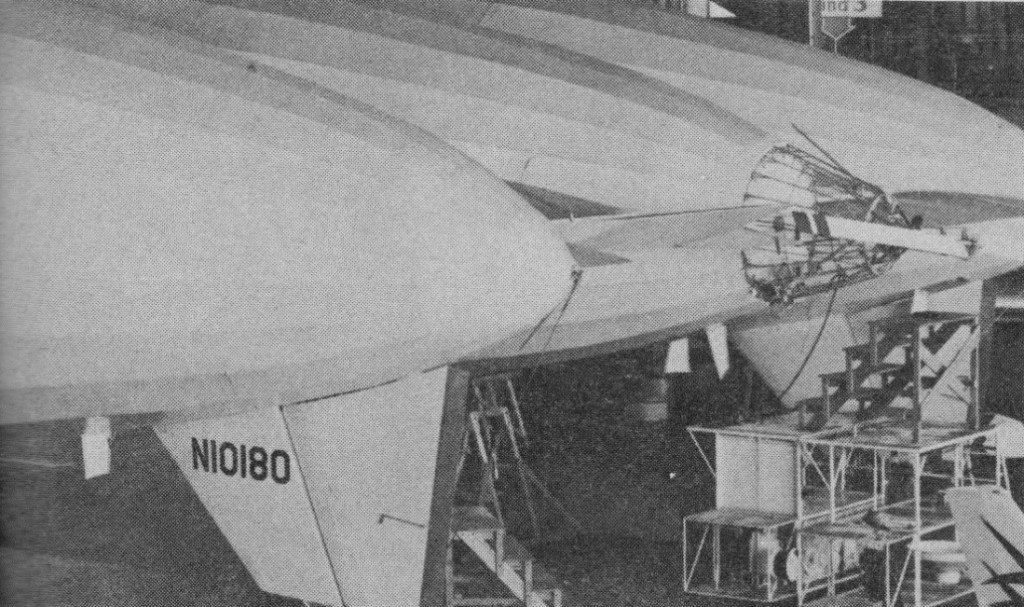
Built by Aereon Corp of Trenton, NJ, in 1964, the rigid lighter-than-air Aereon III is a flying test bed for bigger ships. It is the smallest that could be constructed to provide accurate flight data.

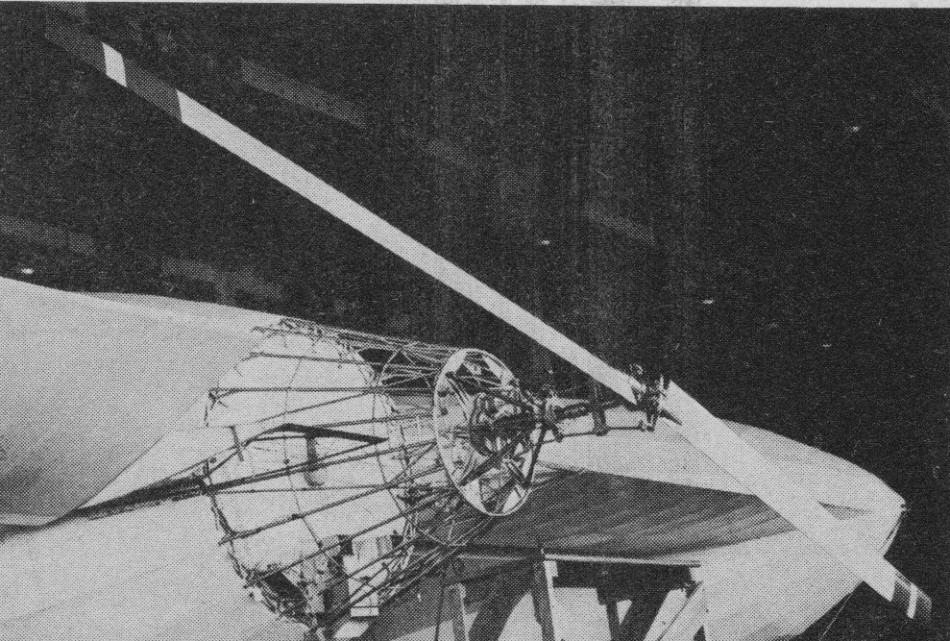
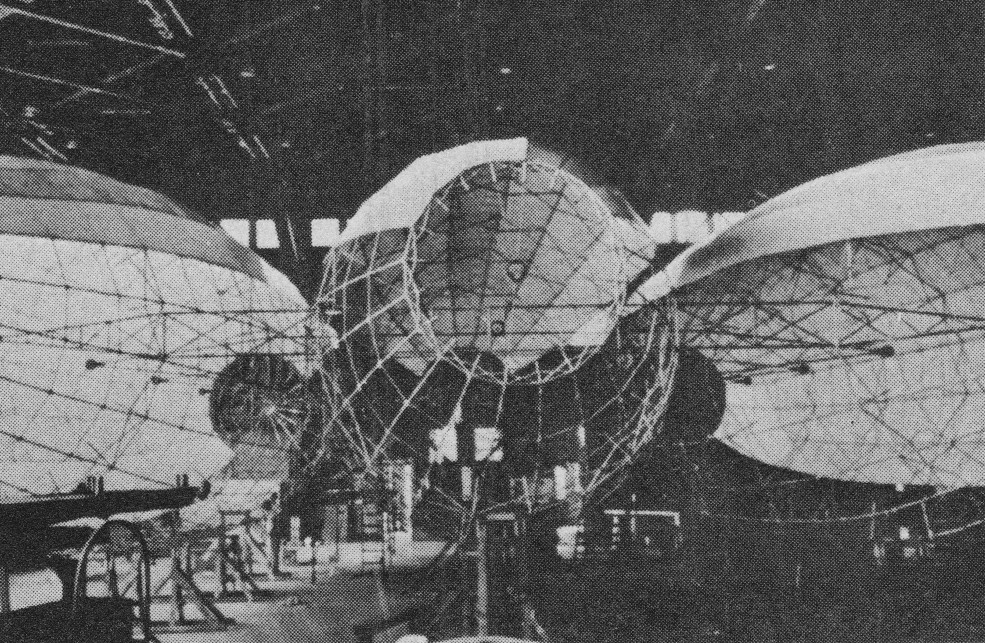
The Solar 70 hp Titan turboshaft engine drives a 8.1 ft diameter, 8 in chord Helicom rotor-prop. The syructure is welded aluminium alloys with an outer covering of Tedlar plastic 1/1000 inch thick. Airspace on 1 inch separates that from nylon covered inner wall. Eighteen Mylar cells hold 30,000 cu.ft of helium.

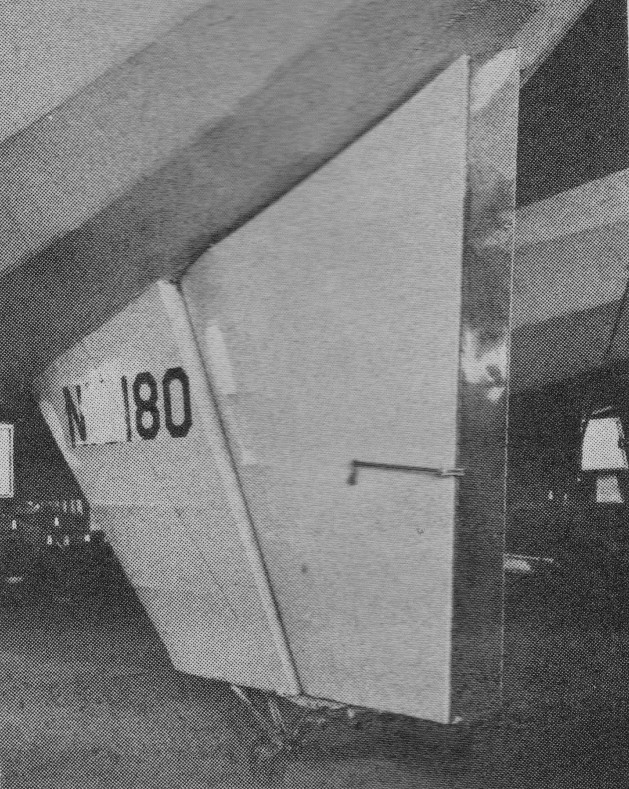
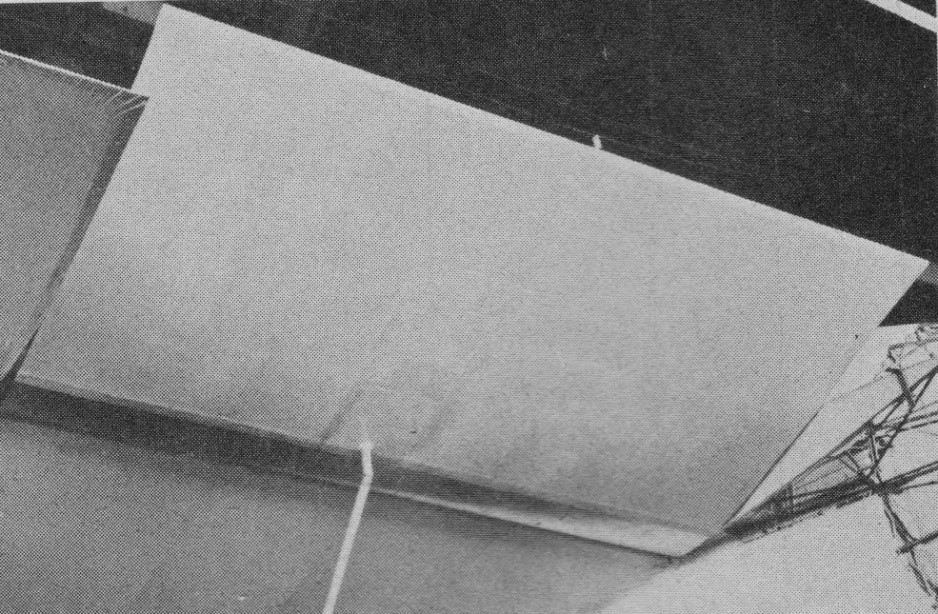
The cockpit, crew of two, is in the upper section of the centre hull nose. Vertical stabilisers and rudders mount steerable tailwheels acting as vertical struts and providing 35 ft tread for maximum ground stability.

The hulls are 20-sided, 18 ft diameter, joined by beams and aerodynamic fillets. Rotor-prop provides variable and reverse movement and thrust through cyclic/collective pitch.

Engine: Solar 70 hp Titan
Length: 85 ft
Width: 56 ft
Empty weight: 2800 lb
Gross weight: 3100 lb
Top speed: 65 mph
Ceiling: 8500 ft
Crew: 2

Aereon

USA 1967-77
Airships

Monroe Drew founded the company in 1959 with John Fitzgerald, was a Presbyterian minister who envisaged a fleet to expand missionary aviation.

Troubles with the Securities and Exchange Commission over sale of stock brought William Miller in control.

March 1974 – William Miller, president of the Aereon Corporation of Princeton, New Jersey, USA.

1974
Aereon Corporation
1 Palmer Square
Princeton
New Jersey
USA

Adkisson SJ-1 Head Skinner

Earl (“Skeezix”) and Jerry Adkisson, two brothers at Tuscola airport, joined the Experimental Aircraft Association (EAA) in 1955 and began gathering material for their construction project in the Autumn of that year. Their aircraft would be patterned after the P.Z.L. P.24, a popular Polish gull-winged fighter aircraft of World War II.

Using wings from a 1946 Luscombe 8, cut and re-formed into the gull-wing configuration, the cabin and forward fuselage section were formed of steel tubes. A Luscombe tailcone was attached to the aft end of the steel-tube frame, and standard Luscombe tail surfaces were adapted, with their tips squared off. The spring-steel main landing gear was taken from a Cessna. The planned engine was a 125 to 145 hp (93 to 108 kW) Warner radial engine, but settled for a 65 hp (48 kW) Continental A65 driving a Beech-Robey controllable propeller in the initial installation.

The craft first flew in 1957 and only one was built. The original 65hp Continental was replaced by a 125hp Lycoming O-290-G4 by John Canfield circa 1963.

Engine: 1 × Lycoming O-290-G4, 125 hp (93 kW)
Capacity: 300 lb (136 kg)
Length: 20 ft 0 in (6.10 m)
Wingspan: 24 ft 6 in (7.47 m)
Useful load: 300 lb
Maximum speed: 156 kn; 290 km/h (180 mph)
Cruise speed: 130 kn; 241 km/h (150 mph)
Stall speed: 52 kn; 97 km/h (60 mph)
Range: 300 mi
Crew: 1