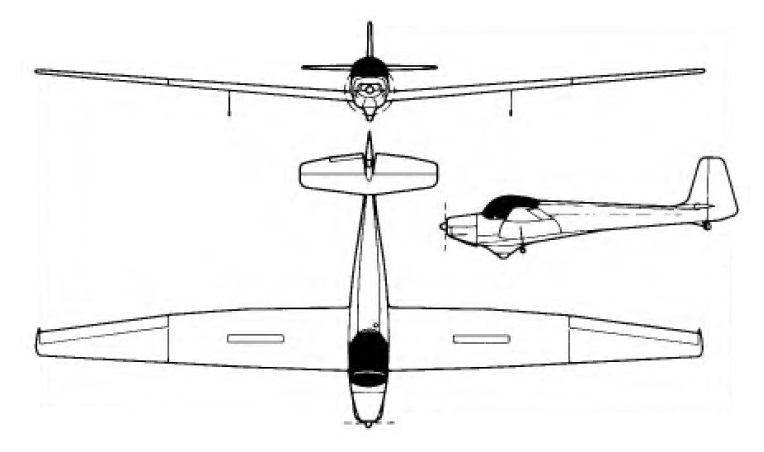
Ambrosini S1001 Grifo / S.1002 Trasimenus

Derived from the S.A.I.2S, the S.1001 was produced in two versions;
A four-seat tourer powered by a 130 hp Alfa 110, and
A two-seat military trainer powered by a 145 hp DH Gipsy Major 10.

In 1948 the S1001 Grifo broke more records.

S.1001

The two seat S.1002 Trasimenus is essentially a variant of the S.1001 Grifo with a modified wing featuring increased span to 35 ft 9 in and area, and markedly increased dihedral. The fuselage of the Trasimenus is identical to that of the Grifo, and a 130 hp Alfa 110ter engine.

S.1001 Tourer
Engine: 130 hp Alfa 110
Wingspan: 32 ft 5.5 in
Length: 25 ft 7 in
Empty weight: 1543 lb
Loaded weight: 2340 lb
Max speed: 149 mph
Cruise: 130.5 mph
Seats: 4

S.1001 Military
Engine: 145 hp DH Gipsy Major 10
Seats: 2

S.1002 Trasimenus
Engine: 130 hp Alfa 110ter
Wingspan: 35 ft 9 in
Seats: 2

Ambrosini (Aerfer) Ariete

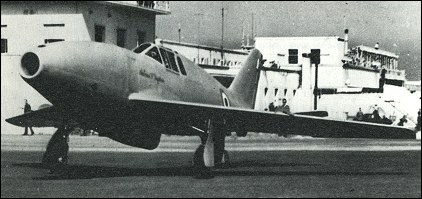
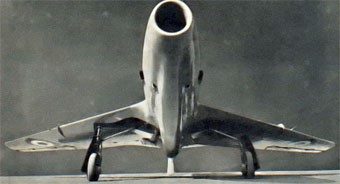
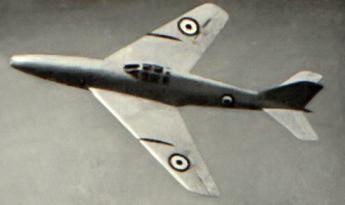
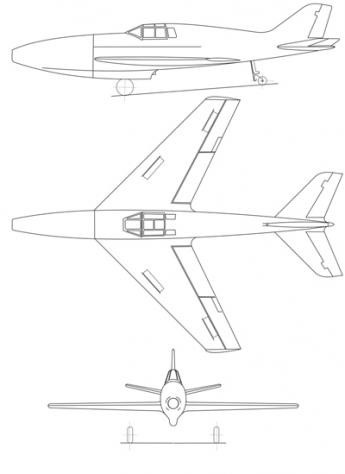
Basically similar to the Sagittario II, the Aerfer Ariete (Battering Ram) was built by Industrie Aeronautiche Meridionali (Aerfer), and represented the next step towards the development of the Leone (Lion) mixed-power light interceptor fighter, which was being worked upon with the financial support of the US government. The Ariete had a deeper rear fuselage and, in addition to the Derwent 9, had an 821kg thrust Rolls-Royce Soar R.Sr 2 auxiliary turbojet, which improved overall performance. The Ariete prototype (MM 568) flew for the first time on 27 March 1958, but the entire project was later abandoned.

Engine: 1 x Rolls-Royce Derwent 9 turbojet, 1633kg and 1 x Rolls-Royce Soar R.Sr 2 auxiliary turbojet, 821 kg
Wingspan: 7.50 m / 24 ft 7 in
Length: 9.60 m / 31 ft 6 in
Wing area: 14.50 sq.m / 156.08 sq ft
Loaded weight: 3535 kg / 7793 lb
Empty weight: 2400 kg / 5291 lb
Max. speed: 1080 km/h / 671 mph

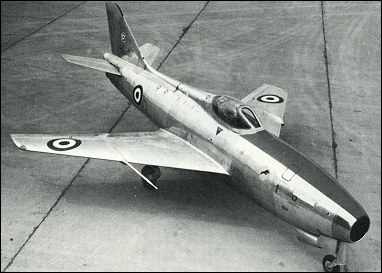
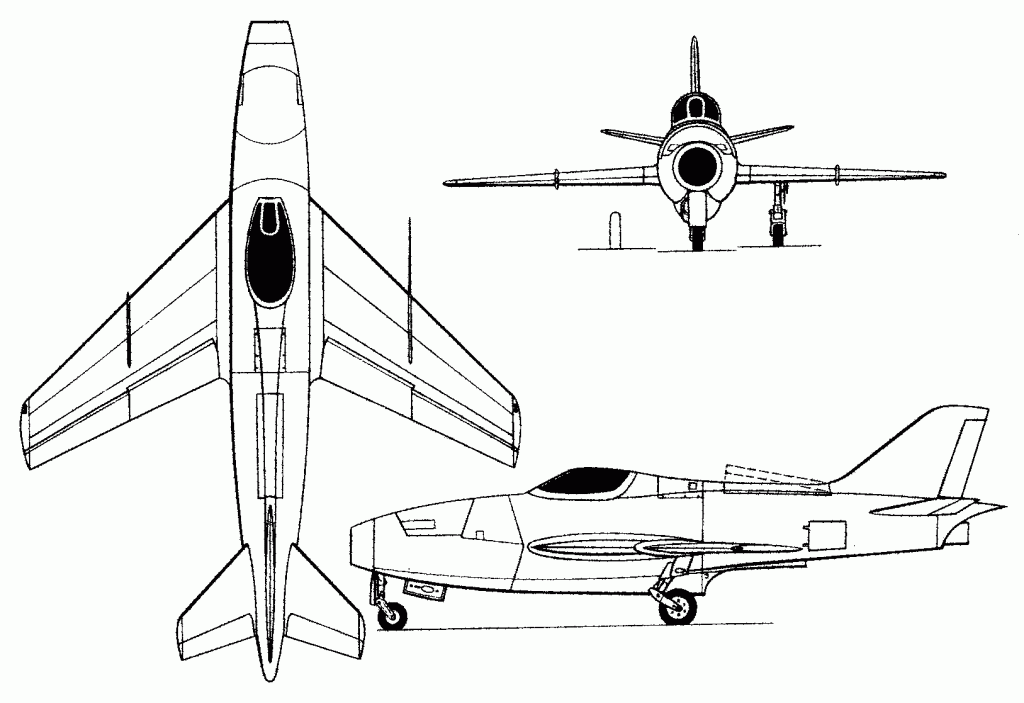
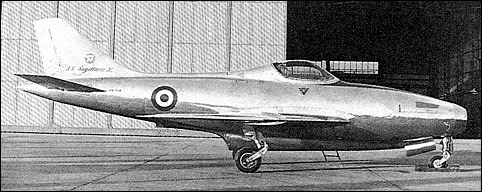
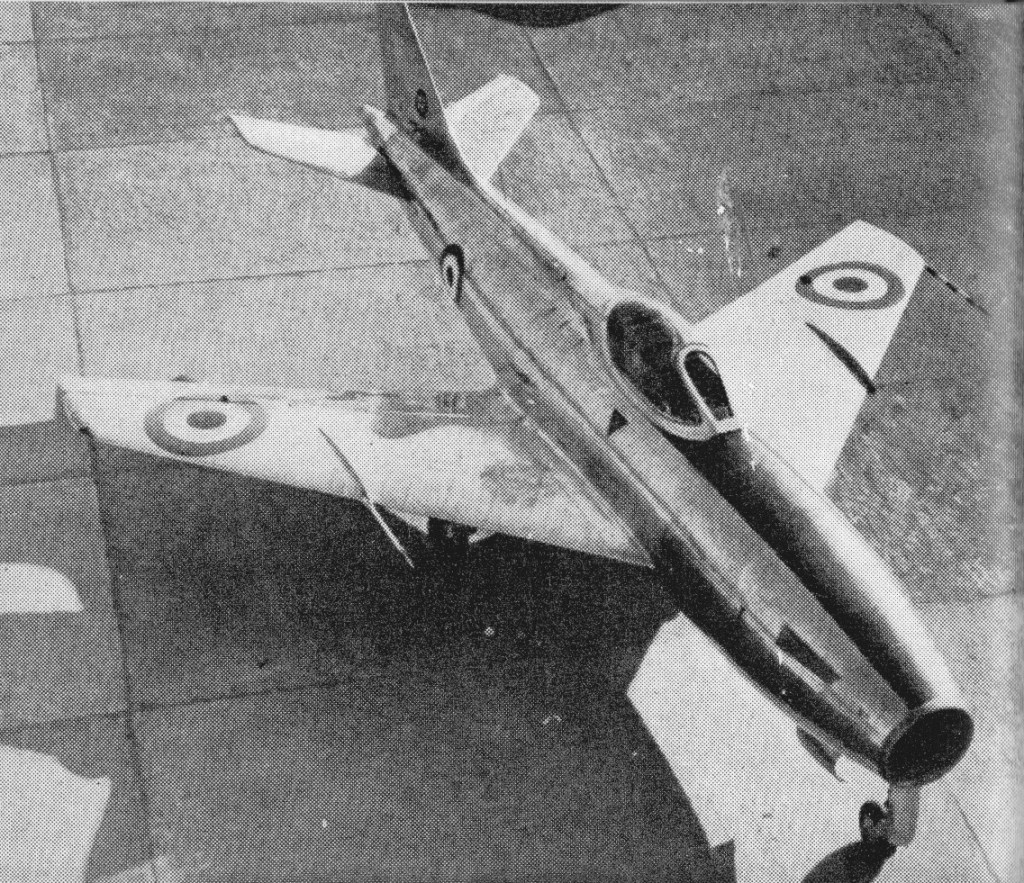
Ambrosini Sagittario II / Aefer Sagittario II

From the initial Sagittario prototype, Sergio Stefanutti subsequently developed the Sagittario II, which made its maiden flight on 19 May 1956. Powered by a Rolls-Royce Derwent 9 turbojet, this more advanced aircraft was virtually a new design and of all-metal construction and built by Aerfer. The Sagittario II was the first aircraft of Italian design to exceed Mach unity when it reached Mach 1.1 in a dive on 4 December 1956.

Gallery

Engine: 1 x Rolls-Royce Derwent 9 turbojet, 1633kg
Wingspan: 7.5 m / 24 ft 7 in
Length: 9.5 m / 31 ft 2 in
Height: 6.627 ft / 2.02 m
Wing area: 14.50 sq.m / 156.08 sq ft
Loaded weight: 3300 kg / 7275 lb
Empty weight: 2300 kg / 5071 lb
Max. speed: 1020 km/h / 634 mph
Service Ceiling: 14000 m / 45950 ft
Range: 413 nm / 765 km / 475 miles
Armament: 2 x 30mm cannon
Crew: 1

Ambrosini Sagittario

After tests with a 45° sweptback wing fitted to an otherwise standard Ambrosini S.7, thus nicknamed Freccia (Arrow), the designer Sergio Stefanutti designed the Sagittario (Archer) while he was director of SAI Ambrosini in Passignano sul Trasimeno in 1951.

Early studies for the new project, named Turbofreccia, instaled two Turbomeca Palas, positioned in the fuselage just behind the pilot’s seat, with air intakes n the wing roots. This arrangement was finally abandoned by Stefanutti who preferred the new Marboré II of 380 kg thrust. The engine is located in the front part of the fuselage, with a nose air inlet. The exhaust nozzle opens behind the trailing edge of the wing.

The construction is entirely of wood. The aircraft retained the basic fuselage of the Super S.7 married at a new 45 degree swept wing and swept tail surfaces. The retractable main landing gear comprises two front wheels and one rear wheel.

Intended mainly for aerodynamic research into transonic compressibility, the Sagittario flew for the first time on 5 January 1953. From this initial prototype Stefanutti subsequently developed the Sagittario II, which made its maiden flight on 19 May 1956, piloted by Guidantonio Ferrari, at Aviano.

Gallery

Engines: 2 x Turbomeca Marboré II, 380 kg thrust
Wingspan: 7.50 m / 24 ft 7 in
Length: 9.32 m / 30 ft 7 in
Wing area: 16.60 m² / 157.15 sq.ft
Normal weight: 1750 kg
Loaded weight: 5070 lb
Maximum level speed: 560 Km / h / 349 mph at 13,123 ft
Time to 6000 m: 16 min 30 sec
Range: 354 mi
Endurance: 1h.35

Ambrosini S.7 Freccia / Super S.7 / Supersette

When SAI Ambrosini embarked on the creation of a light jet with supersonic capabilities, it was decided to proceed step by step, with experimentation.

A standard Ambrosini S.7, named Freccia, was equipped with a 45° swept wing.

First flown on 18 July 1952 on the military base at Aviano, the pilot was Ireneo Di Crescenzo. Test were flown until 1 August 1952. After tests with the sweptback wing, designer Sergio Stefanutti designed the Sagittario (Archer) powered by a 400kg thrust Turbomeca Marbore turbojet.

The S.7 was produced in single- and two seat versions for the Italian Air Force. The two-seater being S.7B.

S.7

A further development of the basic design is the Super S.7, or Supersette, which is slightly larger than the S.7 and powered by a 340 hp de Havilland Gipsy Queen 70-3 engine.

S.7
Engine: 225 hp Alfa 115ter
Wingspan: 28 ft 10 in
Wing area: 137.8 sq.ft
Length: 26 ft 10 in
Empty weight: 2365 lb
Loaded weight: 3030 lb
Max speed: 224 mph
ROC: 1103 fpm

Super S.7 / Supersette
Engine: 340 hp de Havilland Gipsy Queen 70-3
Wingspan: 30 ft 6 in
Wing area: 148,5 sq.ft
Empty weight: 3030 lb
Loaded weight: 4300 lb
Max speed: 267 mph
ROC: 985 fpm

Supersette
Engine: Alfa Romeo 121 C, 395 hp
Wingspan: 30.512 ft / 9.3 m
Length: 26.804 ft / 8.17 m
Max take off weight: 4304.2 lb / 1952.0 kg
Max. speed: 227 kt / 420 km/h
Service ceiling: 24606 ft / 7500 m
Range: 594 nm / 1100 km
Crew: 2

S.7

Ambrosini           

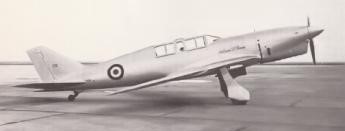
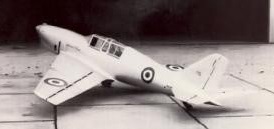
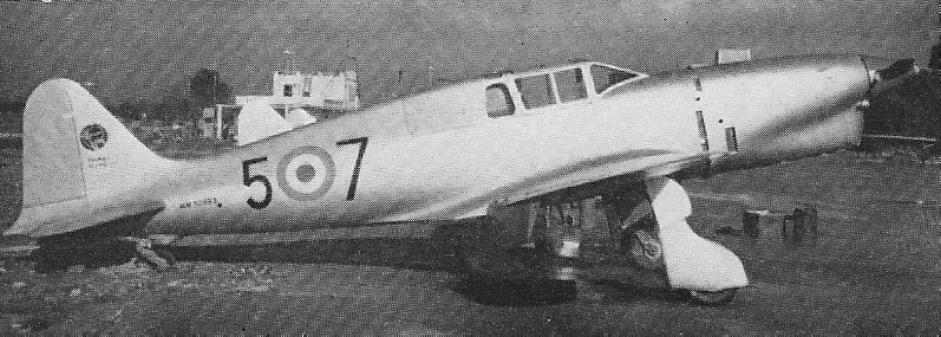
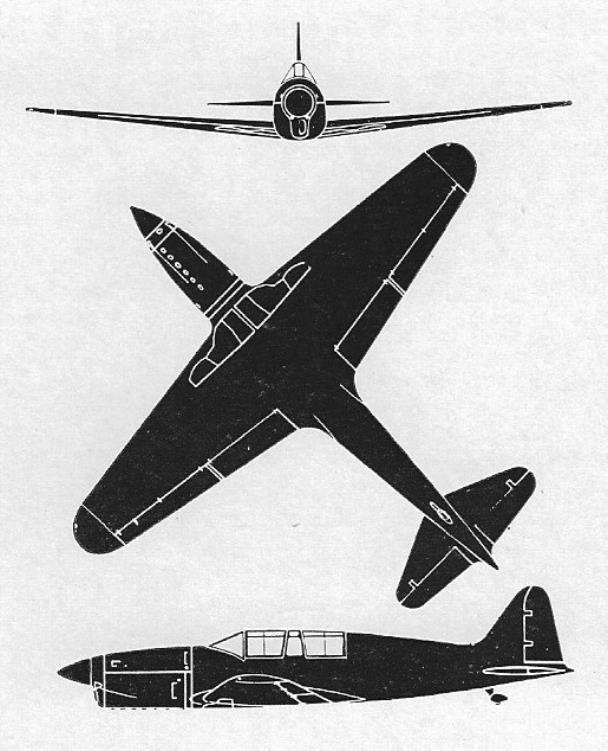
After incorporation of Societa Aeronautica Italians with Ing A. Ambrosini & Cie, they specialised in fast tourers and sporting monoplanes, though SA11 was biplane. In the immediate pre-war years its Passignano plant was responsible for a successful series of light cabin monoplanes.
In 1939, the chief designer, Sergio Stefanutti, developed an unorthodox tail-first, single-seat fighter, the S.S.4.

The series of light monoplanes had culminated in the S.A.I.7, The series of light monoplanes had culminated in the S.A.I.7 which, of exceptionally clean design and powered by a 280-h.p. Hirsh H.M.508D air-cooled engine, gained the 100-km. closed circuit record for F.A.I. Category I aircraft with a speed of 244 m.p.h. in 1939. The S.A.I.7 possessed excellent flight characteristics. Stefanutti had designed the aircraft with the alternative role of fighter trainer in mind, and a fully militarized trainer prototype flew in 1941. The original prototype featured a long, faired windscreen which extended to the front of the engine cowling to reduce drag, but the military trainer had an orthodox cockpit canopy for the tandem-seated pupil and instructor, and the German Hirsh was replaced by a 280-h.p. Isotta-Fraschini Beta R.C.I0.

The S.A.I.7 trainer basic design were such that Stefanutti contemplated its adaptation as a lightweight interceptor fighter. The initial single-seat model, the S.A.I.I07, was built for research purposes.

The S.A.I.I07 was externally similar to the S.A.I.207, which was built to full fighter requirements and carried an armament of two 20-mm. cannon and two 12.7-mm. machine guns. In dives the S.A.I.207 fighter attained an indicated air speed of 466 m.p.h. at 10,000 ft. (representing a true air speed of 596 m.p.h., or Mach 0.86), and maximum level speed was 357 m.p.h., which was attained on the 750 h.p. provided by an Isotta-Fraschini Delta R.C.40 engine. 2,000 were ordered, though only 13 completed. The type being replaced by proposed production of the SAI 403, work on which finished at war’s end.

Encouraged by the performance of the S.A.I.207, Sergio Stefanutti developed the more ambitious S.A.I.403 Dardo, which featured increased wing area and redesigned tail surfaces. Carrying a similar armament to that of its predecessor, the Dardo was powered by a 750-h.p. Delta R.C.21/60 engine which provided a maximum speed of 403 m.p.h. Large-scale production of the Dardo was planned, but the armistice precluded further development.

Other wartime activities of the S.A.I.-Ambrosini concern were the construction of the AL-12P troop- and cargo-carrying glider designed by Aeronautica Lombarda S.A., and the development of the Ambrosini AR “flying bomb”. Conceived by General Ferdinando Raffaelli as an anti-shipping weapon, the flying bomb was powered by a 1,000-h.p. Fiat A.80 radial engine and was to have been flown off the ground by a pilot who would then bail out, the bomb being directed to its destination by remote radio-control. Flight tests began on 13th June 1943, and four further examples were built at the Venegono plant. Flight trials were successful and a speed of 225-230 m.p.h. was expected, but the bomb was too late to see operational service.

In 1948 the S1001 Grifo broke more records. The S 7 was delivered in small numbers and developed into the Super S 7 (1950s). The F 7 Rondone was 3/4-seat cabin tourer.

Alvis Leonides Major

In 1951 Alvis started development of a 14 cylinder, two row radial of 1,118 cu in (18.3 L) displacement, based on the Leonides. Certification covered the Mk. 702/1 for aeroplanes at 875 hp and the 751/1 for helicopters at 850 hp. The only numerous model of the Major was the Mk. 755/1, a medium supercharged, de-rated, obliquely mounted direct-drive and fan cooled engine fitted to the Westland Whirlwind Mks. 5, 6, 7 and 8.

Applications:
Bristol Type 173 Mk1,2 & Mk3 – 2x 755/1 Mk 155, 780hp, 755/2 Mk 160, 780hp or 2x 850 hp
Handley Page Herald – four 870 hp
Handley Page H.P.R.1 Marathon – two
Westland Whirlwind 1 x 755/1 Mk 155, 780hp

Specifications:
Leonides Major, geared, fixed wing version
Type: 14-cylinder, twin-row air-cooled radial piston engine, geared down and supercharged
Bore: 4.80in (122 mm)
Stroke: 4.41 in (112 mm)
Displacement: 1,117 cu in (18.34 L)
Length: 70.9 in (1.80 m)
Diameter: 38.9 in
Width: 988 mm
Dry weight: (dry) 1,200 lb (545 kg)
Valvetrain: 2 sodium cooled valves per cylinder, driven by 2 cam disks
Supercharger: Single speed, single stage diven at 6.5:1
Fuel system: Fuel injection, low pressure via Hobson or SU pump. 2 plugs per cylinder, twin BTH C.14.C/1 magnetos
Fuel type: 100/130 grade
Oil system: Dry sump, pressure and scavenge pumps
Cooling system: Air-cooled
Reduction gear: Farman type epicyclic, ratio 0.533:1
Power output: (international rating) 860 hp (642 kW) at 1,500 ft (457 m)
Compression ratio: 6.8:1
Fuel consumption: (at maximum continuous power) 60 Imp. gal/h (273 L/h)
Oil consumption: 6-12 pint/h (3.4-6.8 L/h)

Alvis Leonides

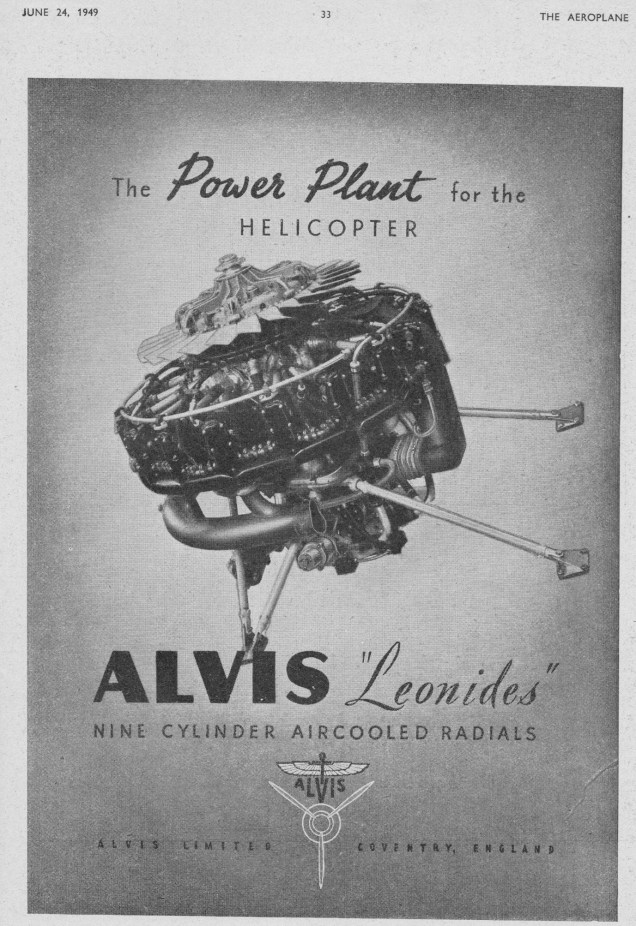
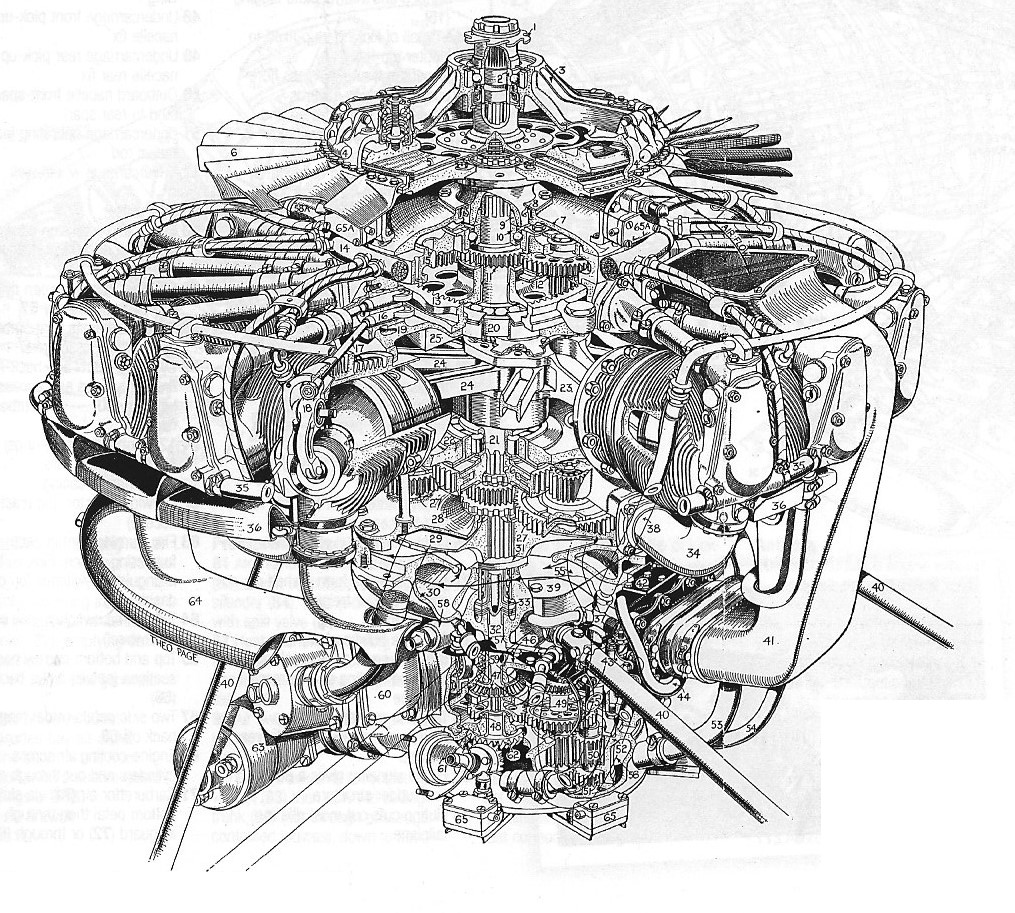
The Alvis Leonides was a British air-cooled nine-cylinder radial aero engines first developed by Alvis in 1936. Development of the nine-cylinder engine was led by Capt. George Thomas Smith-Clarke. The prototype engine, called 9ARS and which weighed 693 lb and developed 450 hp, was run in December 1936.

In 1938 Airspeed (1934) Ltd lent their test pilot, George Errington, and their much rebuilt Bristol Bulldog (K3183), to carry out test flights. Development was continued at a reduced pace during the Second World War and following testing in an Airspeed Oxford and an Airspeed Consul (VX587) Alvis was ready to market the engine in 1947 as the Series 500 (502, 503 and sub-types) for aeroplanes and Series 520 for helicopters. (Most helicopter engines were direct drive – no reduction gearbox – with a centrifugal clutch and fan cooling).

The first production use was the Percival Prince which flew in July 1948 and the Westland Sikorsky S-51 and Westland Dragonfly helicopters.

From 1959 the stroke was increased to 4.8 inch for the Series 530 (mainly the Mk. 531 for Twin Pioneers) rated at 640 hp. It was Britain’s last high-power production piston aero-engine when manufacture ceased in 1966.

Gallery

Applications:

  • Production –
    Bristol Sycamore – 1x Mk. 173, 550 hp (410 kW)
    Percival P.66 President/Prince – 2 x 503/7A, Mk 128 01/2, 540/560 hp (RAF: Pembroke, RN; Sea Prince)
    Percival Provost – 1x 126, 550-hp (410 kW)
    Scottish Aviation Pioneer – 1 x 503/7A, Mk 128 01/2, 540/560 hp
    Scottish Aviation Twin PioneerCC1 – 2 x 514/8, 550 hp
    Scottish Aviation Twin PioneerCC2 – 2 x 531/8,Mk138, 640 hp
    Westland Dragonfly – 1x 521/1, 520shp (388 kW)
    Westland Widgeon – 1x 521/1, 520shp (388 kW)
  • Conversions
    Harker Leo-cat – 1x 560 hp (418 kW)
    Server-Aero Leo-cat – 1x 560 hp (418 kW)
  • Prototypes
    Agusta AZ8-L 4x 503/2
    de Havilland Canada DHC-2 Beaver Mk.2 – 1x 502/4, 520 hp
    Fairey Gyrodyne – one 525 hp to drive rotor and propeller
    Fairey Jet Gyrodyne – one 525 hp to drive air compressor and propellers
    Handley Page H.P.R.2 (WE505 only) – 1 x 502/4 550 hp
    SR-N1 Hovercraft – the first hovercraft

Specifications
Type: 9-cylinder supercharged air-cooled radial piston engine.
Bore: 4.8 inch (122 mm)
Stroke: 4.41 inch (112 mm)
Displacement: 718.6 in3 (11.8 L)
Diameter: 41 inch (1.04 m)
Dry weight: 815 lb (370 kg)
Valvetrain: Two pushrod-actuated poppet valves per cylinder with sodium-cooled exhaust valve.
Supercharger: Single speed, single stage, boost pressure automatically linked to the throttle.
Fuel system: Hobson single-point fuel injection unit.
Fuel type: Petrol, 115 Octane
Oil system: Dry sump
Cooling system: Air-cooled.
Power output: 550 hp (410 kW)

Alvis Leonides 23 HM

Alvarez Cardenian glider

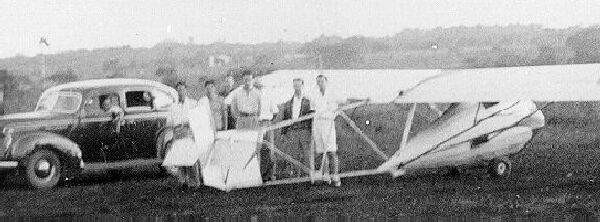
In March 1941, Eugenio Hernández Alvarez, from Carden, completed the calculations and plans, and began the selection and testing of the Cuban woods that would be used in the construction of a glider. Construction began in July 1941 and was completed in November 1945.

The builders were: Eugenio Hernández Alvarez and Mario Ajón. They used the area around Eugenio’s house, as well as their tools and for four years in their free time, it can be said, they built this glider.

Eugenio and Mario with the glider

In December 1945, all the tests required to obtain the certification and license granted by the Cuban Aeronautical Federation were carried out. Eugenio Hernández Alvarez, Pedro de la Fé and Flores, were the two test pilots.

In January 1946, all the details of this glider were made known to the Cuban press. On the demonstration flight, Pedro de la Fé Flores was the pilot and Eugenio Hernández told the press about the entire process of this special flight.

At one o’clock, on the track of the Pilderó farm, using a special rope 1,500 feet long (brought from Manila and paid for by Luis Ramírez) and powered by a Ford car driven by Avilio la Fé, the glider ascended at a height of 800 feet.

Using the thermal currents, the glider flew for 23 minutes, over the southern limits of the city of Cárdenas, Matanzas, Cuba, 5 kilometers from the takeoff place, returning to this place without losing the height of 800 feet, making a perfect landing.

This “Primus in Cuba” glider was a work of engineering and individual Cuban and Cardenian initiative according to the report by René Blázquez de la Grana that appeared in “El Crisol”, Havana, January 9, 1946.

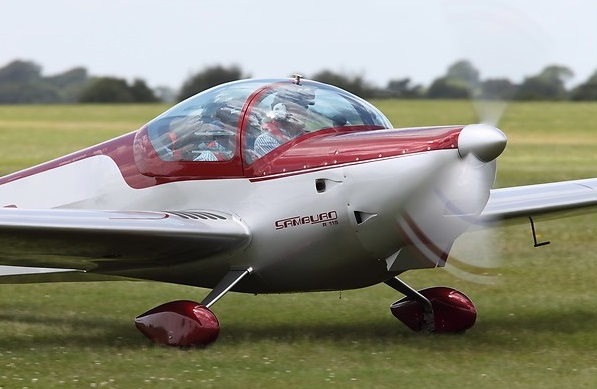
Alpla-Werke Alwin Lechner OHG AVo 60 Samburo / AVo 68V Samburo / M&D Flugzeugbau AVo 60 Samburo / AVo 68 Samburo

AVo 68

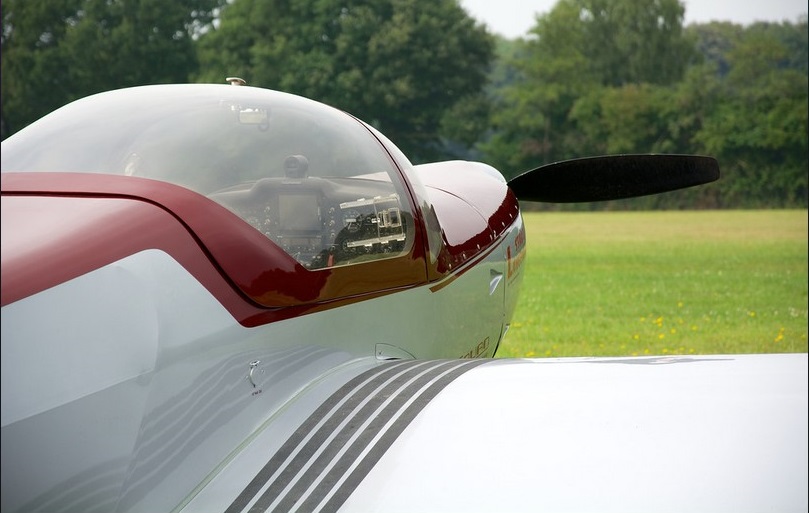
This Austrian side-by-side two-seater motor glider was designed by Werner Vogel with the assistance of Professor Dr Ernst Zeibig, and is intended for training as well as cross-country and pleasure flying.

The cantilever low wings are of conventional wood and fabric construction with spoilers in the upper surfaces, and can be folded back to an overall width of 32ft 9.5 in (10m) for hangar storage. The fuselage is a fabric covered steel tube framework and the rear section of the two-piece cockpit canopy slides backwards for the pilots’ access; the latter have dual controls. The cantilever tail unit has a low-set tailplane with a trim tab in the starboard elevator. The undercarriage consists of a non-retractable monowheel recessed into a fairing under the fuselage, and small outrigger wheels on nylon legs under the wings at about 40% of each half-span; there is also a steerable tailwheel, and the main wheel brake can also be used as a parking brake.

It first appeared as the AVo 60 Samburo with a 60hp Limbach SL 1700EA ‘flat four’ engine driving a two blade fixed-pitch propeller and with a slightly smaller fuel tank. The production AVo 68V first flew in 1977 and has a 68hp Limbach SL 1700E4 engine driving a two-blade variable-pitch propeller, and has higher weights than the AVo 60. As originally designed, it also had a sailplane-like undercarriage consisting of a single mainwheel and a steerable tailwheel; however, later versions have a fixed taildragger undercarriage with two spatted mainwheels.

A total of 16 Samburos had been built by the Alpla-Werke Alwin Lechner OHG by the end of 1977, but production ended in January 1979.

With numerous design changes – including modern Rotax engines, state-of-the-art avionics, and aerotow capabilities, it was in production by the M&D Flugzeugbau company in Germany in 2011.

Variants:

AVo 60 Samburo
The initial prototype powered by a 60 PS (44 kW) Limbach engine.

AVo 68 Samburo
Production aircraft powered by 68 PS (50 kW) Limbach engines.

AVo 68
Engine: Limbach, 60 hp
Wing span: 16.7 m / 54 ft 9.5 in
Length: 7.9 m / 25 ft 11 in
Height: 1.82 m / 5 ft 11.5 in
Wing area: 20.7 sq.m / 222.8 sq ft
Wing section: Gottingen 549/NACA 642
Aspect ratio: 13.6
Empty weight: 470 kg / 1,036 lb
Max weight: 685 kg / 1,510 lb
Water ballast: None
Max wing loading: 31.4 kg/sq.m / 6.43 lb/sq ft
Max speed: 92 kt / 170 km/h
Stalling speed: 32.5 kt / 60 km/h
Min sinking speed: 0.85 m/sec / 2.79 ft/sec at 40 kt / 74 km/h
Best glide ratio: 24 at 43 kt / 80 km/h
T-O run: 150-180 m / 492-590 ft
Rate of climb: 2.8 m/sec / 9.2 ft/sec

AVo 68V
Span: 54 ft 8.75 in
Length: 26 ft 0.5 in
Height: 5 ft 9.75 in
Wing area: 222.8 sq ft
Aspect ratio: 13.6
Empty weight: 1,036 lb
Max weight: 1,510 lb
Max speed: 106 mph
Max cruising speed: 90 mph
Min sinking speed: 2.79 ft/sec at 46 mph
Best glide ratio: 24:1 at 50 mph
Take-off run: 492-500 ft

AVo 68-R 115
Engine: 1 × Rotax 914F, 85 kW (115 hp)
Wingspan: 16.68 m (54 ft 9 in)
Length: 8.05 m (26 ft 5 in)
Height: 1.86 m (6 ft 1 in)
Wing area: 20.7 m2 (223 ft2)
Aspect ratio: 13.6:1
Empty weight: 550 kg (1,212 lb)
Gross weight: 750 kg (1,543 lb)
Maximum speed: 215 km/h (134 mph)
Range: 1000 km (623 miles)
Maximum glide ratio: 25:1
Rate of climb: 6.0 m/s (1,180 ft/min)
Rate of sink: 1.15 m/s (226 ft/min)
Crew: one pilot
Capacity: one passenger

AVo 68