Best-Devereux Eardley-Billing

Best-Devereux & Co were contracted to build one flying replica and two sets of airframe spares of the Eardley Billing 1911 Biplane for the film “Those Magnificent Men in Their Flying Machines”.

The replica resembled the original Eardley Billing but featured many changes. It was to be powered by a Continental A65 but eventually was powered by a C-90.

The flying aircraft was used in the film as the German team’s mount.

One of the sets of airframe parts was assembled to become the slightly altered ‘Japanese’ aircraft. The remaining airframe set was used for static shots.

The ‘German’ version is thought to be the machine that was refurbished to static display at RAF Gatow, Berlin.

Berkshire Concept C-70

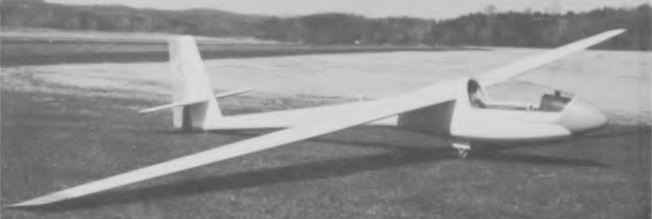
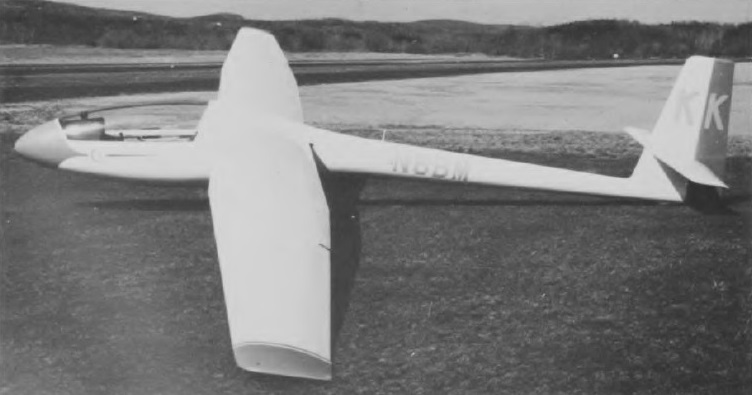
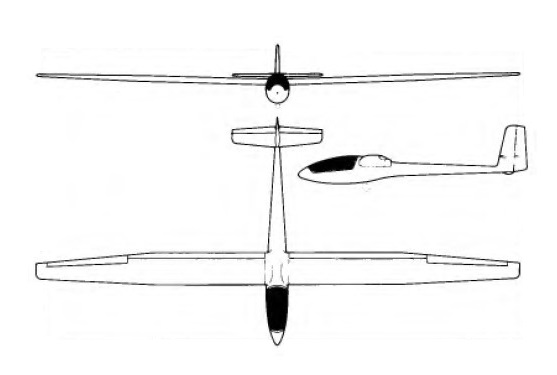
The Berkshire Concept 70, sometimes called simply the C-70, is an American, single seat, high-wing, 15 metre class competition glider that was designed by Arthur Zimmermann and produced by the Berkshire Manufacturing Corporation of Lake Swannanoa, New Jersey between 1971 and 1974.

The first US all-glassfibre sailplane, known as the Concept 70, did not make its first flight until 1970, some 13 years after the Akaflieg Stuttgart FS-24 Phonix had pioneered this material for sailplane structures. The single-seater Standard Class Concept 70 was the responsibility of Arthur Zimmerman and Wolfgang Schaer.

The Concept 70 was intended to be a domestic US fiberglass sailplane that would compete with the best European 15 metre aircraft being produced in the late 1960s.

The cantilever shoulder wings have a constant chord centre section and tapered outer panels, and are of glassfibre/PVC foam sandwich construction, with aluminium flaps lowering to 90°; up to 200lb (91 kg) of water ballast can be carried with optional water ballast tanks. The prototype has an Eppler airfoil and an all-flying horizontal stabilator. Production aircraft featured a Wortmann airfoil, a more conventional tail, and full-span flaps that deploy to 90° for glidepath control.

The glassfibre monocoque fuselage has a steel tube reinforcing frame connecting the retractable monowheel and wing fittings and continuing into the cockpit for greater strength and rigidity. The pilot sits in a semi-reclining seat, recessed for an American type parachute, under a one-piece flush Plexiglas canopy which is hinged and jettisonable. The manually-retractable Tost monowheel has a drum brake.

Differing in a number of respects from the prototype, the production version emerged with a Wortmann airfoil, full-span flaps, no brakes and a conventional horizontal tail.

Production by the Berkshire Manufacturing Corporation got under way in 1973, some 16 Concept 70s having been built by the spring of 1974. Production ceased, when Zimmermann died in 1974, after 21 were built.

The aircraft was never type certified and all aircraft were registered as experimental aircraft in the Racing/Exhibition category.

The Concept-70 molds and tooling were available for about US $35,000 including 40ft container.
ASC kits appear no longer to be in production.

Concept 70
Wingspan: 49 ft 3 in (15.0 m)
Wing area: 132 sq ft (12.3 sq.m)
Aspect ratio: 18.3
Airfoil: Wortmann
Empty weight: 550 lb (249 kg)
Gross weight: 875 lb (397 kg)
Maximum glide ratio: 39:1
Wing loading: 6.6 lb/sq ft (32 kg/sq.m)
Crew: one

Concept 70
Wing span: 15.0 m (49 ft 2.5 in)
Length: 7.31 m (24 ft 0 in)
Height: 1.83 m (6 ft 0 in)
Wing area: 11.52 sq.m (124 sq ft)
Wing section: Eppler/Wortmann
Aspect ratio: 20.0
Empty weight: 226 kg (500 lb)
Max weight: 396 kg (875 lb)
Water ballast: 91 kg (200 lb)
Max wing loading: 34.38 kg/sq.m (7.04 lb/sq.ft)
Max speed: 105 kt (195 km/h)
Stalling speed: 31 kt (58 km/h)
Min sinking speed at 43.5 kt (81 km/h): 0.62 m (2.03 ft)/sec
Max rough air speed: 105 kt (195 km/h)
Best glide ratio at 52 kt (96.5 km/h): 40

Berkshire

The Berkshire company started out as a fiberglass aircraft repair shop founded by Arthur Zimmermann and Wolfgang Schaer, but quickly progressed to aircraft design and construction.

The Concept 70 was produced from 1971. Production ceased, when Zimmermann died in 1974, after 21 were built.

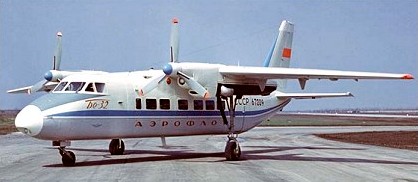
Beriev Be-32

Beriev’s Be-32 were built for the ‘commuter’ programme in the 1970s, first flown in 1976. The LET 410 was selected, ten were built, and the Be-32 was cancelled.

Engine: 2 x Glushenkov TVD-10 turboprops, 708kW
Take-off weight: 5860 kg / 12919 lb
Wingspan: 17.0 m / 55 ft 9 in
Length: 15.7 m / 51 ft 6 in
Height: 5.46 m / 17 ft 11 in
Wing area: 32.0 sqm / 344.44 sq ft
Cruise speed: 480 km/h / 480 km/h
Range: 1300 km / 808 miles
Passenger cap: 16

Beriev Beriev Be-30

The Beriev Be-30 short-haul transport is the first landplane to be designed and developed by the Beriev design bureau. Seen publicly for the first time at the Soviet Aviation Day display at Domodedovo in 1967, it also appeared at the 1969 Paris Air Show. Designated Be-30, and allocated the NATO codename ‘Cuff, it was reported to have flown for the first time on 3 March 1967. A high-wing monoplane, the Be-30 was of all-metal structure and introduced features such as metal bonding, spot welding, and the use of stiffened skin panels of light alloy honeycomb. The retractable tricycle landing gear incorporated stalky main units, retracting into the rear of the engine nacelles. Power-plant of the prototype consisted of two 552kW Shvetsov ASh-21 radial piston engines, but two Glushenkov TVD-10 turboprops were used to power the very small number of production aircraft. Accommodation was provided for a crew of two and 14 passengers, and features included air-conditioning and blind-flying equipment that incorporated an autopilot and an automatic approach system.

Engines; two Glushenkov TVD-10 turboprops
Pax cap: 14

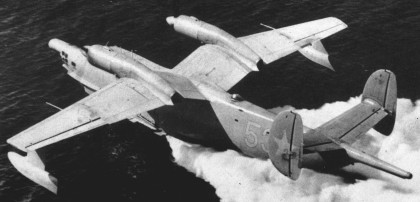
Beriev Be-12 / M-12

The lessons learned in the design of the R-1 and Be-10 were incorporated in the design of a much improved flying-boat based loosely on the Be-6 and identified originally by NATO as a re-engined version of the older type.

Beriev Be-12 Article

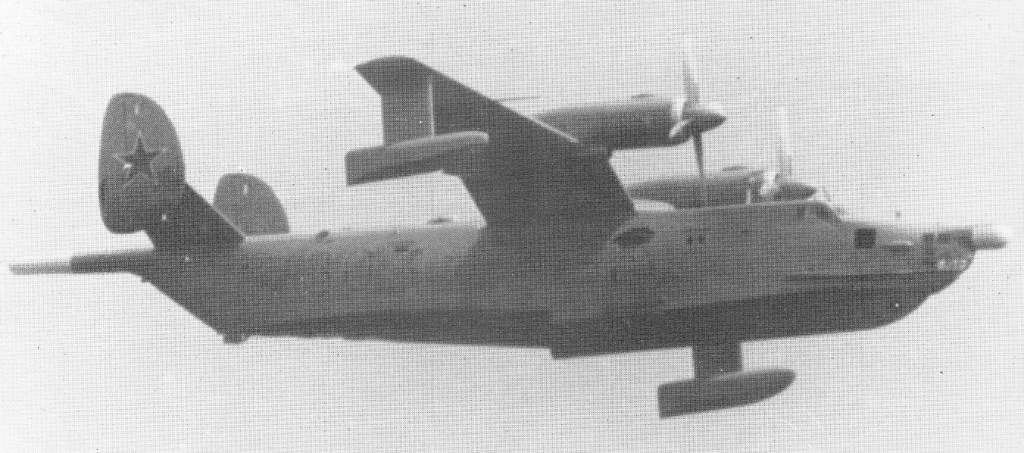
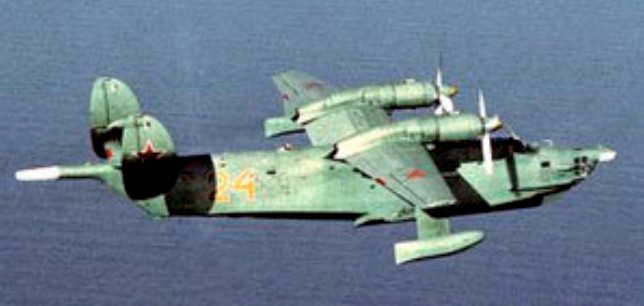
The Be-12 Tchaika (Seagull), designated M-12 in AV-MF service, has the gull-wing layout and twin tail of its predecessor. The greater power and lighter weight of the turboprop engines have permitted a forward extension of the hull, with a new planing bottom. The prominent spray suppressor around the bows of the Be-10 is also a feature of the turboprop aircraft.

The addition of a retractable landing gear makes the Be-12 amphibious. MAD (magnetic anomaly detection) gear extends 15 ft behind the tail. The search and mapping radar projects far ahead of the glazed nose, and much of the hull is filled with equipment and there is a weapon and sonobuoy bay aft of the wing with watertight doors in the bottom aft of the step.

The Be-12 turboprop aircraft, first seen at the 1961 Moscow Aviation Day at the same time as the swept-wing Be-10, has fast become the Soviet Union’s standard large marine aircraft.
The weight-lifting capability of the Be-12 was demonstrated in a series of class records for amphibians set up in 1964, 1968 and 1970, suggesting a normal weapons load as high as 5000kg. The Be-12 can load on the water through large side hatches in the rear fuselage, and stores can be dropped through a watertight hatch in the hull aft of the step.
Be-12s have set many class records for speed, height and load-carrying. They were based all around the Soviet shores and in Egypt and, possibly, other countries.
NATO code name ‘Mail’.
It is also believed to have been used for mapping, geophysical survey and utility transport. By Soviet standards the type was not built in large numbers, only 95 being reported in service in the late 1980s.

Be-12 (M-12) Tchaika
Engines: 2 x Ivchenko AI-20D single-shaft turboprops, 4,190 ehp / 2940kW
Wing span: 97 ft 6 in (29.7 m)
Wing area : 1030.007 sqft / 95.69 sq.m
Wing load : 63.14 lbs/sq.ft / 308.00 kg/sq.m
Length overall: 99 ft (30.2 m)
Height on land: 22 ft 1½ in (7 m)
Empty weight: approx 48.000 lb (21.772 kg)
Max take off weight : 65047.5 lb / 29500.0 kg
Max. speed : 329 kts / 610 km/h / 379mph
Cruising speed 199 mph (320 km/h)
Initial climb rate : 2992.13 ft/min / 15.20 m/s
Service ceiling 38.000 ft (11582 m)
Range with full equipment: 2160 nm / 2.485 miles (4000 km)
Armament: at least 6600 lb (3000 kg) sonobuoys and AS bombs in internal weapon bay; one to three external hard points for stores under each outer wing.
Crew: 6-10

Beriev Be-10 / M-10        

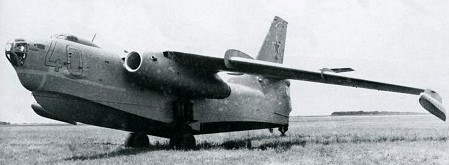
Developed from the R-1, the Be-10 flew for the first time on 20 July 1956 and was first seen in public on the 1961 Soviet Aviation Day, when four of the type flew past in formation.

Beriev Be-10 Article

The Beriev Be-10 ‘Mallow’ has the distinction of being the only turbojet-powered flying-boat in the world to have attained true production status. During 1961, and under the designation M-10, the type established 12 world class records. Among them were a speed record over a 15/25km course of 912km/h, piloted by Nikolai Andrievskii, and a speed of 875.86km/h over a 1000km closed circuit with a payload of 5000kg and an altitude record of 12733m with a 10000kg payload, with Georgi Buryanov at the controls.

The all-metal Be-10 was a high-wing monoplane with sharply sweptback wings; these had considerable anhedral, and incorporated two wing fences and a fixed wing-tip stabilising float on each wing. Armament comprised two 23mm NS-23 cannon in the nose, plus two more operated under radar control in a tail barbette.

Engines: 2 x Lyulka AL-7PB turbojets, 6500kg each.
Take-off weight: 46500 kg / 102515 lb
Empty weight: 24100 kg / 53132 lb
Wingspan: 22.3 m / 73 ft 2 in
Length: 31.1 m / 102 ft 0 in
Wing area: 111.8 sqm / 1203.40 sq ft
Max. speed: 912 km/h / 567 mph
Ceiling: 14962 m / 49100 ft
Range: 4800 km / 2983 miles
Armament: 4 x 23mm cannon, 2000kg of weapons

Beriev Be-8

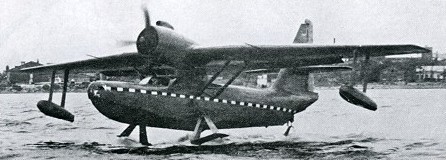
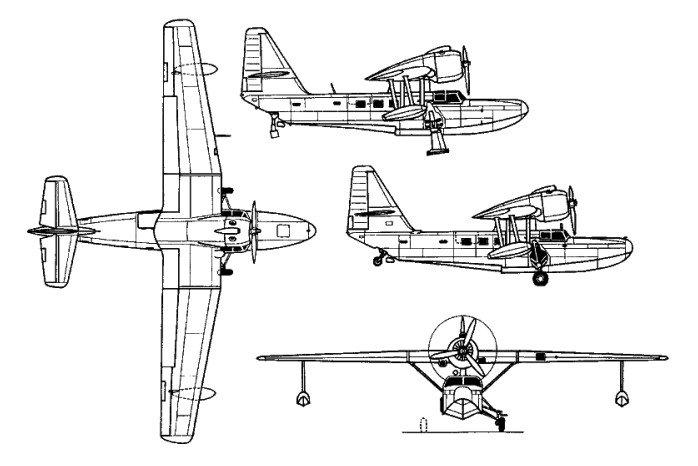
The Beriev Be-8 ‘Mole’ of 1947 was an all-metal utility amphibian flying-boat, with the main units of the landing gear retracting into the sides of the hull just below the pilot’s cabin. The wing was supported above the hull by a central pylon, together with a pair of parallel struts on each side. The passenger cabin accommodated six. A small batch of Be-8s was built, and examples were used in a variety of roles including flying ambulance, liaison, and training.

Engine: 1 x Shvetsov ASh-21 radial, 522kW
Take-off weight: 3624 kg / 7990 lb
Loaded weight: 2815 kg / 6206 lb
Wingspan: 19.0 m / 62 ft 4 in
Length: 13.0 m / 42 ft 8 in
Wing area: 40.0 sqm / 430.56 sq ft
Max. speed: 266 km/h / 165 mph
Ceiling: 5550 m 18200 ft
Range: 810 km / 503 miles

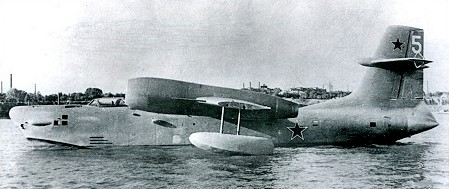
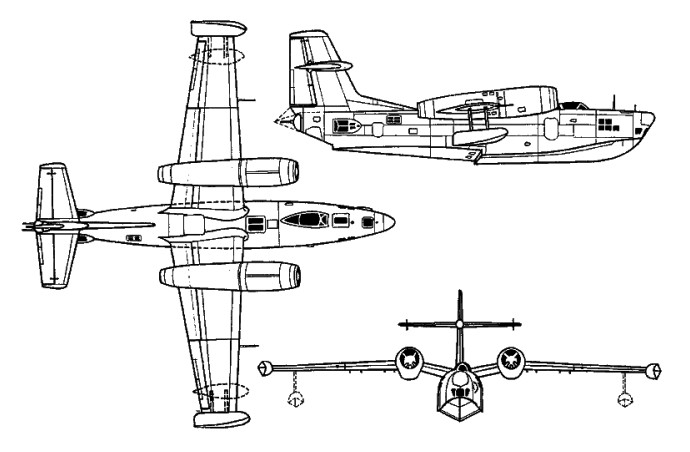
Beriev R-1

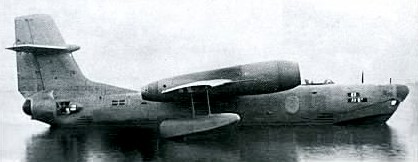
The first jet-propelled flying boat built in the USSR. The R-1 was first flown on 30 May 1952 by I M Sukhomlin. Only one prototype built.

Engine: 2 x VK-1, 2700kg each
Take-off weight: 20000 kg / 44093 lb
Wingspan: 20.0 m / 65 ft 7 in
Length: 19.8 m / 64 ft 12 in
Height: 7.1 m / 23 ft 4 in
Wing area: 58.0 sqm / 624.31 sq ft
Max. speed: 800 km/h / 497 mph
Ceiling: 11500 m / 37750 ft