
Made in 1973, the Grasshopper was the first of the Birdman line. It is a standard Rogallo (class A).
Made in 1973, the Grasshopper was the first of the Birdman line. It is a standard Rogallo (class A).

In November 1976 Birdman announced that their latest glider, the Moonraker was now in production and at an introductory price of £ 375.00 + VAT. The sail is made in 3.8 oz Howe and Bainbridge Dacron and features an aerofoil shaped centre pocket.

A Moonraker was the first hang glider to cross the British Channel, in the late seventies (after a balloon launch).
Made in 1977, the Moonraker 77 was a high performance glider suitable for more experienced pilots. Very light to control with a wide speed range. The Moonraker 77 was without the truncated tips, plus triple deflexor instead of one.

The Moonraker 77 was the winner of several speed and speed range tests in the 1977 British League. Priced at £440.00 ex VAT, it has a very ‘clean’ sail even at maximum speed.
The Moonraker 78 was for experienced pilots with cross country flying in mind for the 1978 thermal season. The glider has diffused fixed tips, a deep subventral fin and fully battened sail.

The Moonraker 78 air frame is in 2 inch O.D. x 18 G tube. The sail is 3.8 oz Howe and Bainbridge dacron and can be supplied to customer’s colour choice. Two sizes were available: 175 sq ft and 210 sq ft.
Moonraker
Sail area 190 sq ft
Nose angle 108 deg
Leading edge 20 ft
Span 32 ft
Aspect ratio 5.38
Billow 0.5 deg
Moonraker 77
Leading edge: 20 ft
Nose angle: 108 deg
Wingspan: 32 ft
Sail area: 190 sq ft
Aspect ratio: 5.38
Billow: 0.5 deg
Root chord: 10 ft,
L/D: 8:1
Min. sink: 200 fpm.
Moonraker 78 175
Nose angle: 130 deg
Aspect ratio: 7
Span: 35 ft
Root chord: 7 ft
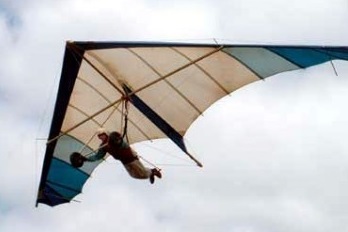
The Cherokee was a new machine in 1979 that has such mellow handling characteristics that it is suitable for intermediate right through to expert pilots.
The Cherokee sail is built in 3.8 oz material with 6 oz reinforcing panels. It is fully cambered and is the result of a constant R & D programme pursuing higher performance and better handling. The airframe is in 1 3/4 x 18 g HT30TF aluminium, inner and outer sleeved where appropriate. The control frame is 1 1/8 x 14 g and folds with the removal of a single button pin. A centre box system is used to allow quick and easy rigging.
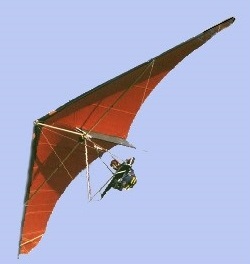
The Cherokee was in its day a great, easy to handle, land and take off. Even many years on there were a few that still fly them on the sand dunes where they are right at home for the low slow flying. They also do not get sand build up inside their frame work.
Cherokee medium
Leading edge: 19 ft 4 in
Keel: 13 ft 2 in
Root chord: 10 ft 6 in
Sail area: 170 sq ft
Nose angle: 120 deg
Span: 30 ft 6 in
Aspect ratio: 5.47
Weight: 61 lb
Tandem
Wing area: 17 sq.m
Max pilot weight: 120kg
Birdman Sports is the oldest manufacturer in the UK, Ken Messenger, his boss, designed the Moonraker 78, the Cherokee and now Comanche” High quality Hang Gliders “, as it is written on all their devices, is his main motto.
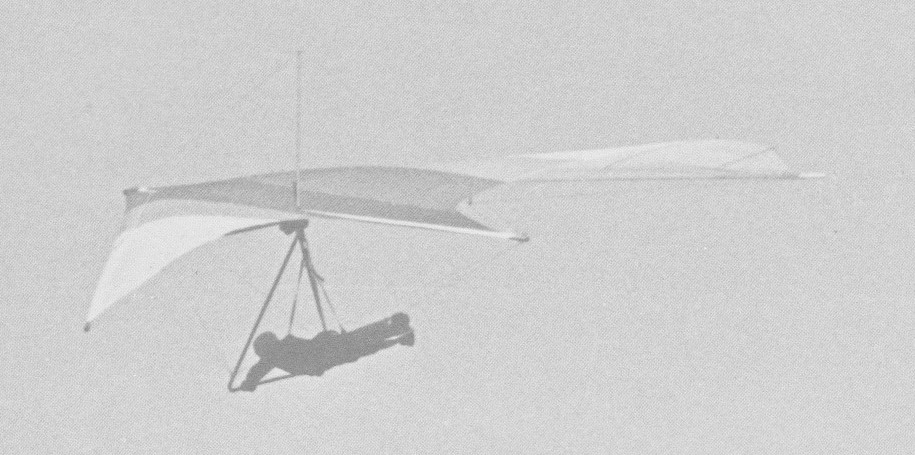
The Sky Raider was designed for advanced pilots. The glider came with a 60 inch control bar, adjustable wires for either seated or prone, J-wire, double deflexers, cambered keel, and seat assembly.
The airframe is made from 6061-T6 1 5/8in x .058 clear anodised seamless tubing. Spars and exterior sleeving are precision drilled. Crush proof stainless steel bushings, plastic end caps and plastic saddles are used. The keel is cambered by use of a J-wire.
Top and bottom rigging is 3/32in 7×7 PVC coated stainless steel aircraft cable. J-wire is 1/8in 7×7 stainless steel aircraft. Turnbuckles are used on J-wire, top rigging and deflexers. Tail rig quick pin is used on top rigging. All cable ends are double nico pressed.
Nose plate, tangs, kingpost bracket, control bar bracket and shackles are stainless steel. Nuts and bolts are aircraft quality.
The custom sail, 3.8oz stabilised Howe and Bainbridge dacron, was available in 11 colours. Stress points are reinforced with 10oz dacron. Seams are double zig-zag stitched. The tip cord extension is supported by fibreglass battens.
The seat is constructed with webing or 5/16in polypropelene rope. A backstrap was standard. A prone harness was available – Simpson or UP.
21×15
Leading edge: 21 ft
Keel length: 15 ft
Wing span: 32.5 ft
Wing area: 182 sq,ft
Aspect ratio: 5.9
Nose angle: 100˚
Sail billow: 1.5˚
Weight: 45 lb
Pilot weight: 120-155 lb
Takeoff speed: 12 mph
Stall speed: 16 mph
Max speed: 45 mph
Best glide ratio (L/D): 7-1
Best L/D speed: 22 mph
Min sink: 225 fpm
22 x 16
Leading edge: 22 ft
Keel length: 16 ft
Wing span: 34.5 ft
Wing area: 200 sq,ft
Aspect ratio: 6.0
Nose angle: 100˚
Sail billow: 1.8˚
Weight: 47 lb
Pilot weight: 150-200 lb
Takeoff speed: 12 mph
Stall speed: 16 mph
Max speed: 45 mph
Best glide ratio (L/D): 7-1
Best L/D speed: 22 mph
Min sink: 225 fpm
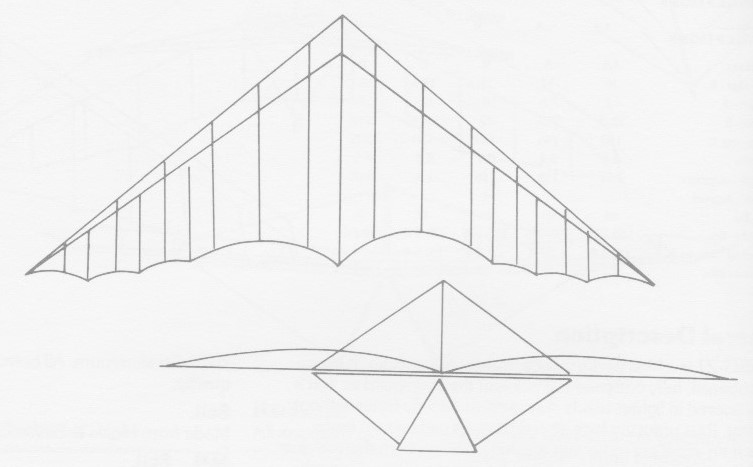
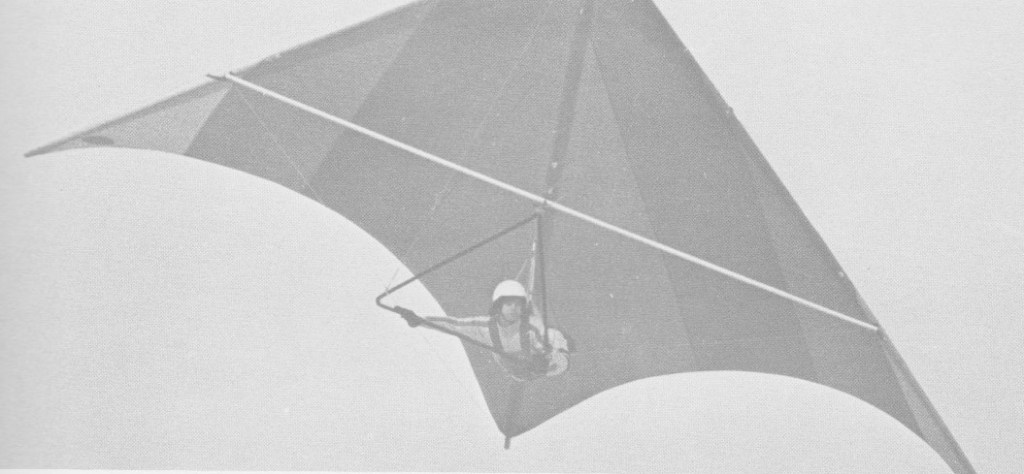
The circa 1972 Shadow was designed for beginner and advanced pilots, as a stable, easy to fly, glider.
The airframe is made from 6061-T6, 1 5/8in x .058 clear anodised seamless tubing. The spars are precisin drilled and the use of crush proof stainless steel bushings and plastic caps eliminate the need for wood dowelling. Cables are 3/32in 7×7 stainless aircraft and were available plain or PVC coated. The kingpost wires have turnbuckles and quick pin for assembly. All cable ends are nico pressed.
The nose plate, tangs, kingpost bracket, control bar bracket and shackles are stainless steel, and all nuts and bolts are aircraft grade.
The glider came equipped with a 50in control bar, adjustable wires for either seated or prone flying, and one piece waterproof bag. Deflexers, 60in control bar, J-wire, and vinyl-coated wires were optional.
Avialable in three sizes, the smallest was also used for towing. Stainless steel control bar with quick release, floats, fully battened sail, boat quick release and a 135 ft tow line were standard equipment on the 18×16 ft tow kite. A boat pylon was optional.
A custom sail was available in 11 different colours, made from 3.8oz stabilised dacron. All seamsdouble zig-zag stitched and cut for wing spar deflection. Tapered, applied leading edge pockets were standard.
The seat was constructed with webbing of 5/16in polypropelene rope, with a backstrap as standard. Simpson or P prone harnesses were available.
18×16
Leading edge: 18 ft
Keel length: 16 ft
Wing span: 25.5 ft
Wing area: 163 sq,ft
Aspect ratio: 3.84
Nose angle: 90˚
Sail billow: 4˚
Weight: 40 lb
Pilot weight: 100-150 lb
Takeoff speed: 12 mph
Stall speed: 15 mph
Max speed: 40 mph
Best glide ratio (L/D): 5-1
Best L/D speed: 24 mph
Min sink: 375 fpm
19×17
Leading edge: 19 ft
Keel length: 17 ft
Wing span: 27 ft
Wing area: 190 sq,ft
Aspect ratio: 3.84
Nose angle: 90˚
Sail billow: 4˚
Weight: 42 lb
Pilot weight: 130-180 lb
Takeoff speed: 12 mph
Stall speed: 15 mph
Max speed: 40 mph
Best glide ratio (L/D): 5-1
Best L/D speed: 24 mph
Min sink: 375 fpm
20×18
Leading edge: 20 ft
Keel length: 18 ft
Wing span: 28.5 ft
Wing area: 203 sq,ft
Aspect ratio: 3.84
Nose angle: 90˚
Sail billow: 4˚
Weight: 43 lb
Pilot weight: 160-210 lb
Takeoff speed: 12 mph
Stall speed: 15 mph
Max speed: 40 mph
Best glide ratio (L/D): 5-1
Best L/D speed: 24 mph
Min sink: 375 fpm
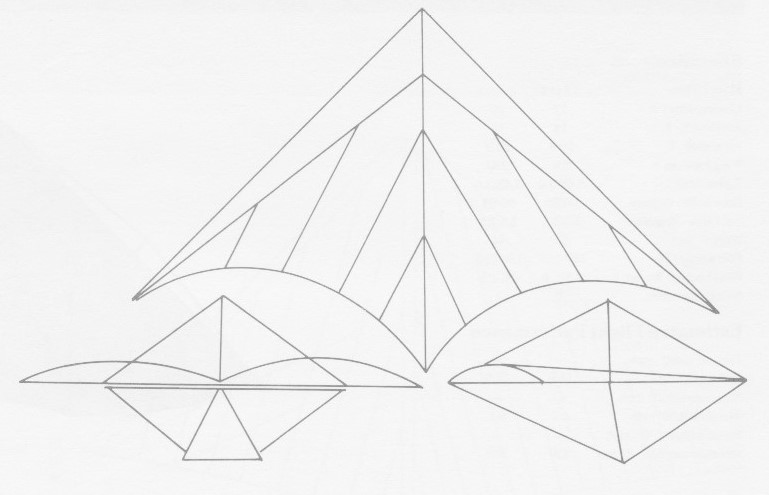
Made in 1976, the Firebird is capable of soaring in very low wind speeds and is capable of being rigged very quickly. The Firebird was offered as an intermediate glider in two sizes of leading edges 19 ft and 20 ft. The price was £265.00 in 1976.
Made in 1977, the Firebird ‘S’ was for new to intermediate pilots. A very easy handling glider, performance was as high as possible whilst retaining forgiving characteristics. Two sizes were available, 190 sq ft and 215 sq ft, with the 190 priced at £363.00 ex VAT. This glider replaced the existing Firebird.
Firebird S
Wing area: 190 sq.ft
Leading edge: 19 ft
Keel: 16 ft
Nose angle: 96 deg
Aspect ratio: 4.12
Span: 28 ft
L/D: 6.5:1
Min sink: 280 fpm
Firebird S
Wing area: 215 sq.ft
Amongst the early enthusiasts who were amongst the first to buy, build or fly a hang glider during early seventies who later went on to become manufacturers was Ken Messenger who founded Birdman.
Birdman Enterprises has been making hang‑gliders since 1972 and ultralights since 1977.
1984: 7939-A Argyll Rd, Edmonton, Alberta, Canada T6C 4A9.
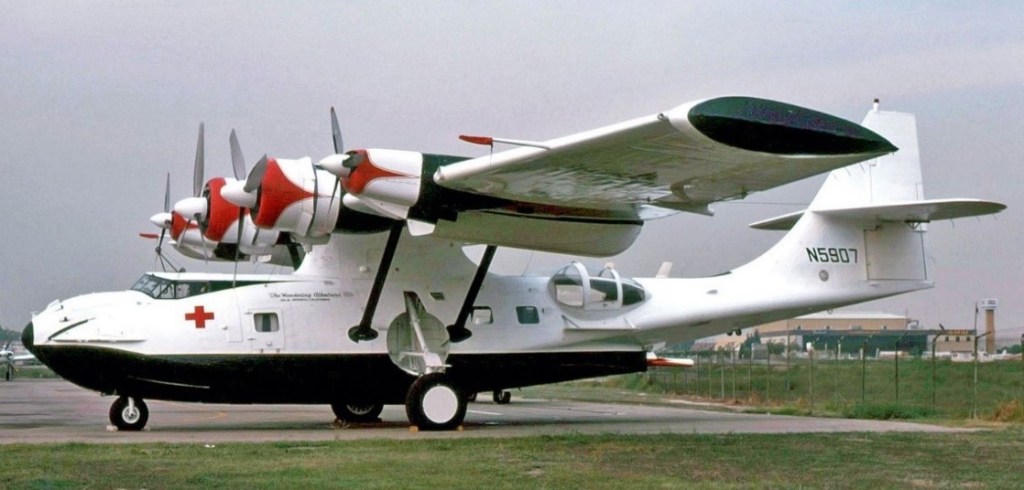
During the late 1960s Forrest Bird designed, and his Bird Corporation developed a conversion for the PBY Catalina to improve performance.
The Catalina was modified by adding two 340 hp (254 kW) Lycoming GSO-480-B2D6 engines positioned outboard of the original Pratt & Whitney radials to increase range and performance. (These engines and cowlings had originally been installed on the McKinnon four engine Grumman Goose. When they were removed by McKinnon to convert the Goose to twin turboprop power, they were purchased by Bird for his PBY Innovator conversion. Engineering for the Innovator conversion was performed by Spectro engineering of Los Angeles).
The wing attach fittings were strengthened and fuel capacity increased by adding fuel bladders to the outer wing panels. The engineer’s controls were previously moved to the cockpit by Southern California Air Service during their “Landseaair” conversion to allow operation without a Flight Engineer. Propeller control for the two Lycomings was electrical. The Lycoming’s propellers were fully reversible, distinctly improving the handling dexterity on the water. The main engine propellers were controlled by the standard mechanical linkage. The larger “Super Cat” rudder and increased power main engines (1830–94) had been installed at an earlier time. The angle of incidence of the wing and horizontal surfaces were not modified during the conversion.
First flying in 1967, the effect of the extra engines exceeded expectations, such that it was capable of a cruising speed of 152 mph (244 km/h) on four engines, and of maintaining 124 mph with one of the main engines feathered. The original PBY cruised at about 125 mph. The downside of the Innovator conversion was the gross weight of the aircraft increased to over 29,000 lbs. This exceeded the 27,000 lbs maximum that the US Military considered safe for water operations.
Only one Innovator was converted, a 28-5AMC Canso A (This was a Consolidated built aircraft. Built in November 1941 (under a contract for Canada), registration N5907, formerly RCAF serial number 9746, which was already used by Dr. Bird as a flying classroom/salesroom for medical equipment. Bird Corporation registered it as N81RD, and sold it in 1976, when its registration reverted to N5907. In the late 1970s, Pyramid Corporation purchased the Innovator and converted it to a camera platform to count whales along the west coast of the Americas. A plastic bubble with camera was installed in the nose and cameras were installed in the right blister and air stair door.
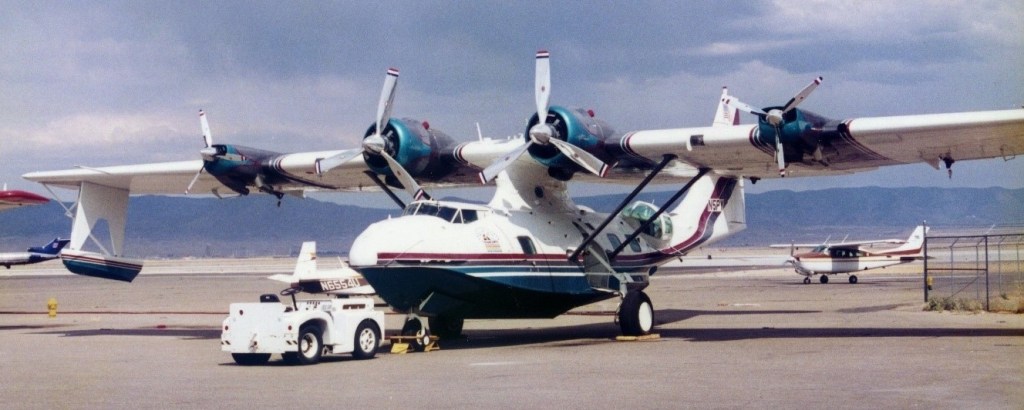
The Innovator was stored in Titusville, Florida at the end of this contract. While in storage a local law enforcement official decided that, since it was a large seaplane, it must have been used for illegal purposes and the aircraft was confiscated. Many years of lawsuits later, the Innovator was exonerated but time and the Florida sun had taken its toll. In the early 1990s, a New Mexico aircraft salesmen bought the Innovator, registered it as N5PY and spent the better part of a year restoring the aircraft to flying status. In 1997, during inspection, the new owners found an improper repair to the main keel truss from an earlier gear-up landing in the 1960s.
The extent of the damage, the previous attempt at repair and corrosion issues showed the need for a major IRAN (Inspect and repair as necessary) of the aircraft. At this time it was decided that, due to the extreme weight gain and aging complexity of the Innovator conversion, returning the aircraft to its original twin engine “Landseaire” condition was the safest and best option for the future preservation of the aircraft. As of 2013, restoration continues with the bow, pylon, and tail sections completely restored and a complete new keel truss, keelson, stringers, and bottom skins currently being installed; currently registered as N5PY.
Innovator
Engines: 2 × Pratt & Whitney R-1830-94 Twin Wasp, 1,350 hp (1,010 kW) with 3-bladed Hamilton Standard constant-speed propellers & 2 × Lycoming GSO-480-B2D6, 340 hp (250 kW) with 3-bladed Hartzell 83XF-3A fully-feathering reversible-pitch propellers
Wingspan: 104 ft 0 in (31.7 m)
Wing area: 1,400 sq ft (130 m2)
Aspect ratio: 7.73
Length: 63 ft 10 in (19.46 m)
Height: 20 ft 2 in (6.15 m)
Gross weight: 29,000 lb (13,154 kg) +
Fuel capacity: 1,750 US gal (1,457 imp gal; 6,624 l) main tank + 375 US gal (312 imp gal; 1,420 l) in 3x additional bladder wing tanks
Cruise speed: 174 kn (200 mph, 322 km/h) maximum
137 kn (158 mph; 254 km/h) at 34,000 lb (15,422 kg) gross weight and 5,000 ft (1,524 m)
132 kn (152 mph; 244 km/h) at 64% power and 11,000 ft (3,353 m)
125 kn (144 mph; 232 km/h) starboard auxiliary engine feathered
124 kn (143 mph; 230 km/h) port auxiliary engine feathered
112 kn (129 mph; 207 km/h) both auxiliary engines feathered
110 kn (127 mph; 204 km/h) starboard main engine feathered
108 kn (124 mph; 200 km/h) port main engine feathered
Service ceiling: 15,000 ft (4,600 m) one main engine inoperative
Service ceiling: 10,000 ft (3,048 m) with both port engines inoperative
Rate of climb: 750 ft/min (3.8 m/s) at 75% power at sea level
Take-off run: 1,000 ft (305 m) at 34,000 lb (15,422 kg)
Take-off at 85% power: < 2,000 ft (610 m) at 34,000 lb (15,422 kg)
Crew: 2
Germany
In conjunction with Schempp-Hirth KG, Binder Aviatik KG began production in 1966 of the CP 301 S Smaragd. Built under license, this aircraft was a deluxe version of the Piel Emeraude.

