The Blackburn Cirrus Bombardier was a British, inline, four-cylinder aircraft engine that was developed and built by the Blackburn Aircraft company in the mid-1950s. The engine featured fuel injection.
Variants: Cirrus Bombardier 203 Military version, 203 hp (151 kW). Cirrus Bombardier 702 Civil version, 180 hp (134 kW).
Applications: Auster AOP.9 Cierva W.14 Skeeter IIIB Miles Messenger
Cirrus Bombardier 203 Type: Inline, air-cooled, inverted 4-cylinder Bore: 4.8 in (122 mm) Stroke: 5.5 in (140 mm) Displacement: 398 cu in (6.5 L) Length: 45.3 in (1,151 mm) Width: 19 in (483 mm) Height: 30.95 in (786 mm) Dry weight: 325 lb (147.4 kg) Valvetrain: 1 inlet and 1 exhaust valve per cylinder Fuel system: Fuel injected Fuel type: 100 octane petrol Cooling system: Air-cooled Power output: 203 hp (151 kW) at 2,100 rpm Compression ratio: 7:1 Power-to-weight ratio: 0.62 hp/lb (1 kW/kg)
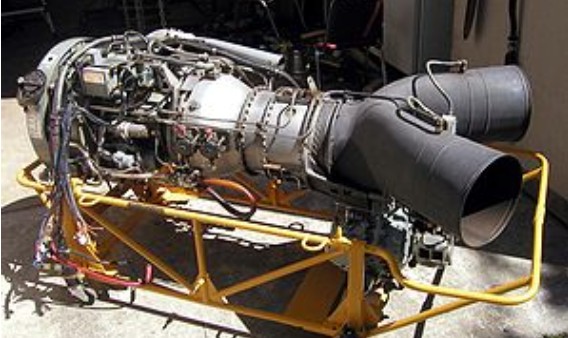
The Bristol Siddeley Nimbus, later known as the Rolls-Royce Nimbus, was a British turboshaft engine developed under license by Blackburn Aircraft Ltd. from the Turbomeca Turmo in the late 1950s. First run in July 1958, it was used on the Westland Scout and Westland Wasp helicopters.
The Nimbus is a turboshaft engine comprising a gas generator section, which consists of a three-stage compressor, (two axial stages and one centrifugal stage), driven by a two-stage turbine in conjunction with an annular combustion chamber, and a power output section consisting of a single-stage free turbine driving an output shaft via a two-stage reduction gearbox.
In the Scout and Wasp the main rotor drive is taken from the front of the gearbox and is transmitted beneath the gas generator via a flexible coupling, while the drive for the tail rotor is taken from the rear of the gearbox.
The fuel system is designed to control and govern the engine under all operating conditions and to provide safeguards against malfunctions, the pilot selecting rotor speed and the governing element automatically maintaining the rotor speed within close limits under varying conditions of load. The lubrication system is self-contained, the oil tank being integral with the air intake casing. Engine and helicopter accessories are mounted on a gearbox located on the air intake casing.
Variants: The Nimbus engines were produced in two main variants, the Mark 103/503 and the Mark 105/502. The Mark 103/503 is generally similar to the Mark 105/502 except that the former has a double-caliper disc brake incorporated in the output drive shaft to provide adequate braking of the helicopter’s rotor in the high winds encountered over the deck of a fast moving ship, whereas the 105/502 has a single caliper unit. Blackburn-Turbomeca A.129 BnN.1 Nimbus BnN.2 Nimbus BnN.2/1 Nimbus BnN.2/2 Nimbus Nimbus 500 Nimbus 502 (Mk.105) Nimbus 503: (Mk.103) Nimbus Mk.103 Nimbus Mk.105
Applications: Westland Scout Westland Wasp Saunders-Roe SR.N2, Hovercraft
Specifications Type: Turboshaft Length: 73.7 in (187.2 cm) Diameter: 38.7 in (98.3 cm) across exhaust ducts Dry weight: 670 lb (304 kg) Compressor: Two-stage axial, single-stage centrifugal Combustors: Annular Turbine: Two-stage axial gas generator, single-stage power Fuel type: NATO F-30,34,40,42,44 Diesel, Gasoline(100 hrs) Oil system: Dual scavenge, NATO O-149 Maximum power output: 968 shp (722 kW) Overall pressure ratio: 6.4:1 Turbine inlet temperature: 877c internal / EGT 550c max Fuel consumption: 595 lbs/hr (270kg/hr) Specific fuel consumption: 0.681 Power-to-weight ratio: 1.44 shp/lb (2.37 kW/kg)
The Specification was known as the N.A.39 (its official number was M.148T) and Blackburn, once their tender was accepted, were given just under three years to get the first aircraft into the air, the target date for first flight being April 1958. To speed development, the Ministry of Supply ordered a large batch of twenty pre production aircraft, enough to carry out all the aerodynamic and engine development, the systems and weapons development and to equip the I.F.T.U. with the Navy.
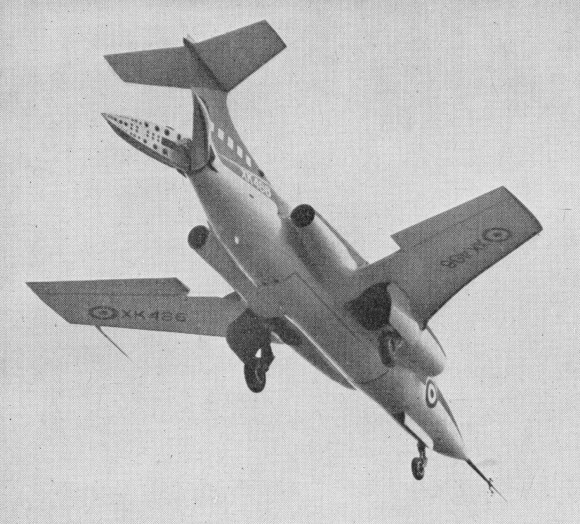
Flight development brought about alterations as problems were encountered, and solved. A flutter problem was discovered in the high tailplane and fixed by the installation of inertia weights in the tailplane tips. Originally the aircraft had been intended to have a retractable flight refuelling probe but this was found unsatisfactory and a re¬movable probe was standardised. On 30th April 1958 Derek Whitehead took XK486, the first Blackburn N.A.39, on its maiden flight from the R.A.E. airfield at Thurleigh, Beds. Initially the Buccaneer was powered by two D.H. Gyron Juniors.
The twenty aircraft ordered and given the serial numbers XK486-XK491 and XK523 XK536 inclusive, and nine of these were to be used primarily by Blackburn’s for development of the whole weapons system, five were for Ministry of Supply trials work, and six for the Royal Navy for use by the Intensive Flying Trials Unit. The first navalised Buccaneer appeared in January 1959, an interim naval aircraft, but with arrester hook and folding wings.
In September 1958 a production contract for forty Buccaneer S.1 aircraft was signed and they were allocated the serial numbers XN922 XN935, XN948-XN973.
Buccaneer S.1
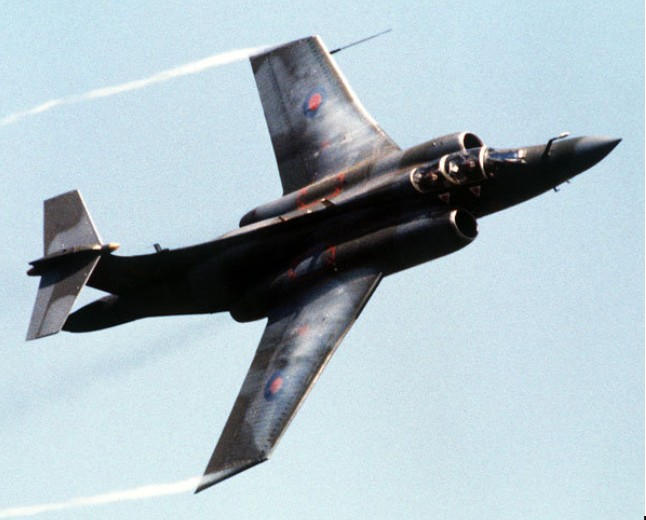
The Buccaneer features mid-set wings with compound sweepback, swept tail services, with tailplane mounted at the top of the fin. The ailerons droop to supplement flaps during landing. Air is blown over wings, ailerons, flaps and tailplane to reduce take-off and landing speeds. The tail-cone splits along the centreline to act as an airbrake. The outer wings fold upwards for stowage on board ships.
The whole production run came out of Brough between July 1962 and December 1963. The Buccaneer. S.1 entered operational service with the Royal Navy in July 1962. Able to carry an 8,000 lb (3,628 kg) load of conventional or nuclear weapons, distributed between internal stowage and underwing pylons, it was superseded by the more powerful Spey engined Buccaneer S.2 in October 1965.
Buccaneer S.2B
Although the Buccaneer S.1 had proved reasonably satisfactory, certain drawbacks came to light during its service. These centred around the Gyron Junior engine. The first was that, with the possibility of an engine failure on take off or landing (when the full BLC blow was operating), the single engine performance of the aircraft was critical; the second disadvantage was lack of range.
Hawker Siddeley re engined the aircraft with Rolls Royce Speys. Two of the DB machines were returned from Ministry of Supply trials work for modification into the prototypes for the new Spey engined version, to be known as the Buccaneer S.2. These aircraft were XK526 and XK527; the former flew first in the new configuration on 17th May 1963, being followed by the second on 1 9th August 1963.
The first batch of ten production aircraft had by then been ordered and given he serials XN974 XN1983. The first of these was completed and flown a year later on 6th June 1964, by which time the first two prototypes were completing a satisfactory programme of development flying. XN974 was the first production S.2 aircraft, making its first flight from the British Aerospace airfield at Holme-on-Spalding Moor on 5 June 1964. It went straight to the Royal Aeronautical Establishment, Bedford, for work trials and then to HMS Eagle for sea trials. In 1965 it went to the USA for hot weather testing and achieved a record on its return flight from Goose Bay to Lossiemouth by becoming the first Fleet Air Arm aircraft to fly the transatlantic route non-stop without refuelling; on 4 October 1965, completing the 1,950 miles (3,138 km) between Goose Bay, Labrador, and Lossiemouth, Scotland, in 4 hrs 16 mins.
Four of this batch went for R. & D. work, XN974, ‘975, ‘976 and ‘983. XN975 and XN974 flew the Boscombe trials, the former doing the deck landing trials in several stints aboard Ark Royal.
Eighty four production Buccaneer S.2s were built in the years that followed with the following serial allocations: XN974 to XN983; XT269 to XT288; XV152 to XV168; XV332 to XV361; and XV863 to XV869.
The first operational Buccaneer S.2 squadron was No. 801 which served aboard H.M.S. Victorious.
In August 1964 it was reported that South Africa, rebuffed by the US State Department in bid to buy Grumman Intruders because of its race policies, was buying British Buccaneers instead.
During the early 1970s the Buccaneer was acquired for the R.A.F. and was equipped to use the Martel air to surface missile. 43 new S.Mk 2Bs were built for the RAF, the last of them delivered in 1977. This development provided a spin off for the Royal Navy and in the mid 1970s the F.A.A.’s Buccaneers were re¬designated as S.2C (non Martel) and S.2D (Martel equipped). This gave the squadron a greatly enhanced anti ship capability and in September 1974 the squadron embarked for the first time in Ark Royal with a full complement of S.2Ds. The squadron began its last commission in April 1978. On 27th November 1978 No. 809 took off from Ark Royal for the last time, in the Mediterranean, flew its aircraft direct to the R.A.F. Maintenance Unit at St. Athan, and disbanded there.
It left FAA service with the decommissioning of HMS Ark Royal in 1978, with the remaining 62 examples being transferred to the RAF. The last squadrons were disbanded in 1993.
From 1972 two squadrons of Buccaneers served in RAF Germany until replaced by Tornados in 1984. Maritime strike/attack and reconnaissance then became the aircraft’s primary role, along with the secondary task of carrying laser designator equipment for precision attacks.
South Africa operated 16 of the S.50 version from 1965 to 1991.
A total of 144 aircraft were built for the Royal Navy.
Royal Air Force Buccaneers first saw combat during the 1990-91 Gulf War (Operation ‘Granby’), 22 years after entering service. Twelve Buccaneers were deployed at short notice to the Gulf during Operation ‘Granby’ to designate targets for Royal Air Force Tornados and Jaguars. Although the Buccaneer was seen in 1969 as an interim type pending the development of the Panavia Tornado, the last examples were not retired until March 1994.
S.1 Engines: 2 x de Havilland Gyron turbojet, 7100 lb. Wing span: 44 ft 0 in (13.41 m). Width wings folded: 20 ft Length: 63 ft 5 in (19.33 m). Height: 16 ft 3 in (4.95 m). Max TO wt: 45,000 lb (20,412 kg). Max level speed: 720 mph (1159 kph).
S.2 Wing span: 13.4m (44 ft). Hardpoints: 4. Seats: 2 Engines: two Rolls-Royce RB Spey Mk.101 turbofans, 11,100 lb thrust. Maximum speed at sea level: 690 mph (Mach 0.92) Tactical radius: 500-600 miles Range: 2000 miles.
S.Mk 2B Engine: two 11,100 lb, 50.4kN thrust Rolls Royce RB 168 1A Spey Mk 101 turbofan. Take-off weight: 20800 kg / 45856 lb Wingspan: 13.0 m / 42 ft 8 in Length: 19.0 m / 62 ft 4 in Height: 4.9 m / 16 ft 1 in Wing area: 46.5 sq.m / 500.52 sq ft Max. speed: 1159 km/h / 720 mph Cruise speed: 1038 km/h / 645 mph Range w/max.fuel: 3456 nm / 6200 km / 3853 miles Crew: 2 Max internal /external weapon load: 16,000 lb (7,257 kg).
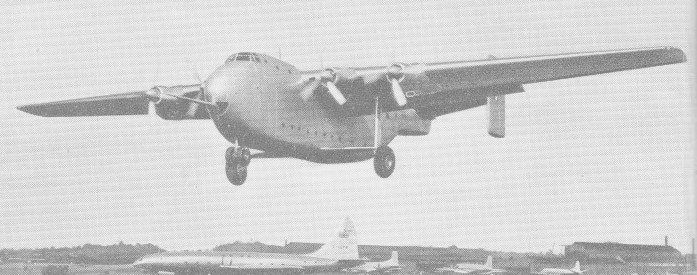
General Aircraft Ltd was asked to build a prototype of its submission for C.3/46; the aircraft was designated GAL‑60 and based on the Hamilcar cargo glider built by General Aircraft, and named Universal Freighter in recognition of its civil and military potential. Work began at Feltham on the contracted prototype, and on a number of long‑lead items for an anticipated second aircraft. During 1948, discussions between General Aircraft Ltd and the Humberside firm of Blackburns led to a merger of the two companies under the joint name of Blackburn & General Aircraft Ltd. The new company was formed on 1 January 1949 and it was proposed that all work in progress at the various factories be completed as originally planned; assembly of the half‑finished Universal prototype was therefore continued at Feltham and work proceeded normally until its completion in October of that year. Only then was decided that Hanworth Aerodrome adjoining the Feltharn premises ‑ was totally unsuitable for the first flight of sue a massive aeroplane. As a result of this discovery, the whole thing was taken apart again and loaded on to lorries for the journey to Brough, where it was reassembled after considerable difficulty, and successfully flown as WF320 on 20 June 1950.
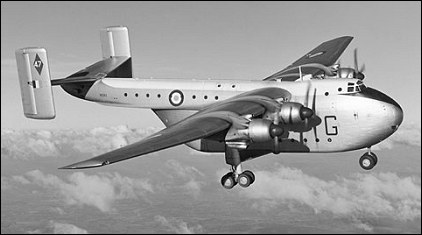
The aircraft was a big one; 28 tons of metal built on almost architectural principles concealed a main freight hold 36ft long, 15.5ft high and 10ft wide. The forward hold underneath the flight deck was 15ft long, with a headroom of nearly 7ft, and the tail boom provided a rabbit warren of individual compartments sloping down towards the main hold and punctuated by structural frames. The 162ft wing stood over 20ft from the ground and the tailplane span was 42ft. The single mainwheel tyres were over 6.5ft in diameter.
The aircraft was designed for a rough field environment, and the possibility of battle damage had been considered from the outset. At any time it could be called away from a convenient airfield servicing unit and flown into primitive, and perhaps hostile, areas with minimal maintenance facilities. Everything had to be kept as simple as possible: no pressurisation, no pneumatics, no retractable undercarriage or fancy structural techniques that could fall apart under the considerable stress of rough field operations at gross weights in excess of 100,000 lb.
Part of Spec C.3/46 called for a service ceiling of 18,000ft. This led to discussions with the Engine Division of The Bristol Aeroplane Company which agreed to develop a special Hercules unit with a two–speed supercharger and other refinements that would push its take off power to 2,040hp at 2,800rpm. The engines were mounted as self contained, un handed powerplants that were fully interchange¬able, each driving a 14ft diameter Rotol constant-speed propeller with feathering and reverse pitch facilities.
Beverley C.1
After the successful first flight, the company’s chief test pilot, ‘Tim’ Wood who had originally been with General Aircraft Ltd set about the initial handling trials with D. G. Brade as his co pilot. The simplicity of construction and the overall soundness of the design, made it possible to complete all the essential clearances in 21 flights.
The anticipated second prototype was ordered at the 1950 SBAC display, where WF320 had made every other exhibit look tiny. The new aircraft was to be significantly re designed around four 2,850hp Bristol Centaurus engines: the rear fuselage shape would be altered to accommodate removable clamshell doors and the tail boom would be enlarged and structurally re designed to provide seating for up to 42 passengers. At this time the manufacturers were still hopeful of civil sales and were quoting a fly away price of just under £400,000.
For nearly 18 months the first aircraft was used on a series of trials. The loading ramp and rear doors were removed, and the single mainwheels were replaced by four-wheel boogie units. Structural considerations prevented full modification of the tailboom but heavy dropping was done to look at possible load exit problems and aircraft trim changes during violent centre of gravity movement.
Permission to go ahead with construction of the second machine was given during the Spring of 1952. Although the new aircraft amounted to a major redesign of the original Universal Freighter, it was completed in 15 months. Many of the heavy components that were made at Feltharn during 1948 49, particularly for the wing and centre fuselage were virtually unchanged and could almost be used from stock, The Universal Mk2 (WZ889) made an uneventful first flight from Brough on 14 June 1953.
In September 1952 the Air Ministry, which was by then satisfied with the final re design, gave approval for an initial batch of 20 for the RAF under the type name Beverley CMkl. Production began almost immediately, with work being shared between the company’s factories at Dumbarton and Brough. Most of the important sub assemblies were manufactured at Dumbarton and then taken by road to the aircraft production line at Brough. By the time the first machine was recognisable as a Beverley under construction, the RAF’s commitment to the type had jumped to 47.
The second batch was ordered during May 1954 and it guaranteed continuous production until the summer of 1958.
The first two production Beverleys (X13259 and XB260) were flown during January and March 1955: they were retained for some time as development machines, as were the second pair (XB261 and XB262), both of which were delivered to Boscombe Down in July 1955 for the usual acceptance, handling and flight limitations programme. Squadron life for the Beverley began on 12 March 1956, when XB265 was delivered to the Abingdon based No 47 Squadron. By May 1958, three other squadrons (Nos 53, 30 and 84) had re equipped with the air¬craft, and a flight of four machines was attached to No 48 Squadron in Singapore. This flight was later to receive another aircraft and achieve full squadron status (as No 34 Squadron) in March 1959.
The aircraft’s withdrawal front the RAF took place in 1967 68 at the time of the RAF’s acquisition of the Lockheed C 130K Hercules.
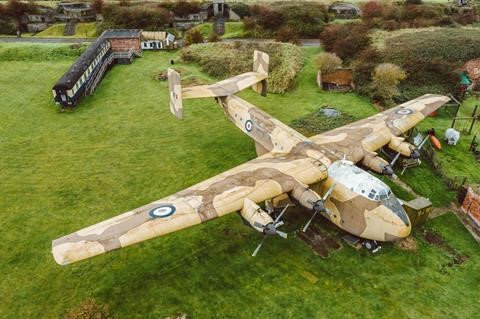
The last Blackburn B-101 Beverley, XB259 had been part of the display at Fort Paull, a former gun battery and heritage centre on the Humber, since 2003 but the site’s closure threatened its future.
Forty-six years after its final flight Martyn Wiseman, managing director of Condor Aviation, with an anonymous colleague bought the four-engined Bristol Centaurus-powered aircraft, and needed to raise £100,000 ($132,000) to dismantle it and carry it to its new home, where it will be the center-piece of a larger exhibit at Birchwood Lodge, a private airfield in Yorkshire, close to the original factory.
Blackburn Beverley C.1 Engines: 4 x Bristol Centaurus 173 Wingspan 162 ft Length 99 ft 2 in Mauw 135,000 lb Max speed: 238 mph at 5700 ft
Blackburn B-101 Beverly C.1 Engines: 4 x Bristol “Centaurus” 273, 2125kW, 2811 hp Max Take-off weight: 64864 kg / 143001 lb Empty weight: 35940 kg / 79235 lb Hold capacity: 6,000 cu.ft Payload: 22400kg / 49384 lb or 94 troops or 70 paratroopers Wingspan: 49.38 m / 162 ft 0 in Length: 30.3 m / 99 ft 5 in Height: 11.81 m / 38 ft 9 in Wing area: 270.9 sq.m / 2915.94 sq ft Max. speed: 207 kts / 383 km/h / 238 mph Cruise speed: 278 km/h / 173 mph Service ceiling: 4875 m / 16000 ft Range: 1129 nm / 2092 km / 1300 miles
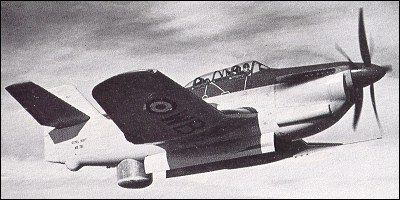
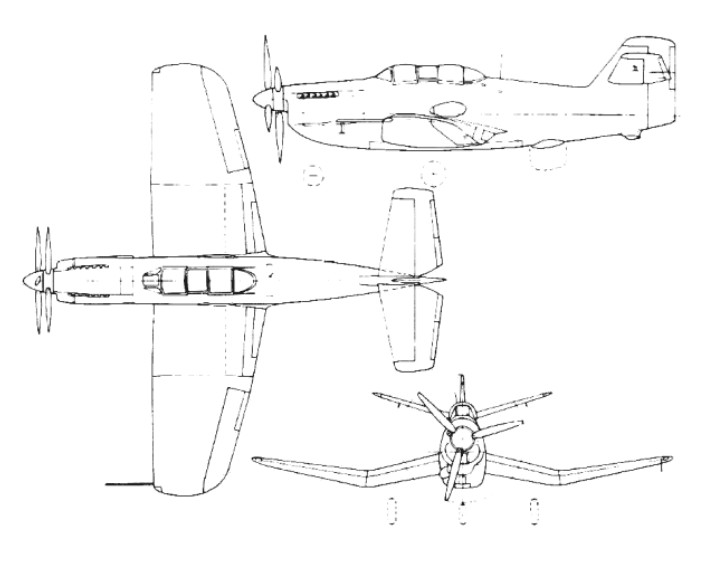
The first prototype, two-seat B-54 with the Rolls-Royce Griffon 56 piston engine and counterrotating propellers flew on 20 September, 1949. The second prototype with a crew of three flew on 3 May 1950. The third prototype was a turboprop-powered B-88 flown on 19 July 1950.
Y.B.1 Double Mamba powered 3 seat and two set Y.A.5 Griffon powered
No series production followed.
B-88 Engine: 1 x Armstrong Siddeley Double Mamba, 2200kW Take-Off Weight: 5938 kg / 13091 lb Wingspan: 13.46 m / 44 ft 2 in Length: 13.0 m / 42 ft 8 in Height: 5.11 m / 16 ft 9 in Max. Speed: 515 km/h / 320 mph Crew: 3
The Blackburn Aeroplane Company was founded by Robert Blackburn, who had designed and built his first aircraft in 1909. The Blackburn Aeroplane & Motor Company was created in 1914. A new factory was built at Brough, East Riding of Yorkshire in 1916.
November 1911
Throughout the company’s history the emphasis was on the design and production of naval aircraft; its first for the Royal Navy was the twin-engined GP seaplane of 1916. A similar landplane, the Kangaroo, was supplied to the RAF in 1918. Aircraft to serve with the Navy include the Baffin, Blackburn, Buccaneer, Dart, Firebrand, Ripon, Roc, Shark and Skua. In 1930 acquired Cirrus Hermes Engineering Co. By acquiring the Cirrus-Hermes company in 1937, Blackburn started producing aircraft engines – the Blackburn Cirrus range. Blackburn Aircraft Company founded 1936. The company’s name was changed to Blackburn Aircraft Limited in 1939.
During 1948, discussions between General Aircraft Ltd and the Humberside firm of Blackburn led to a merger of the two companies under the joint name of Blackburn & General Aircraft Ltd. The new company was formed on 1 January 1949 and it was proposed that all work in progress at the various factories be com¬pleted as originally planned.
Company name reverted to Blackburn Aircraft Ltd. in 1959, when Blackburn & General became the holding company. Its aircraft production operation was absorbed into Hawker Siddeley in 1960, and its engine operations into Bristol Siddeley, as part of the rationalisation of British aircraft manufacturers, and the Blackburn name was dropped completely in 1963.
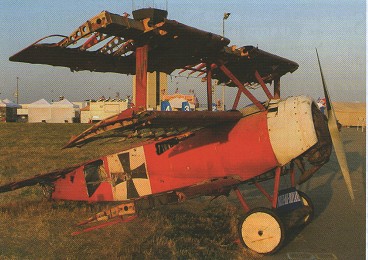
Bitz Flugzeubau in Germany built two Fokker Dr.1 triplanes in 1964 for the film industry. They featured in such films as ‘Blue Max’ and ‘Von Richthofen and Brown’.
After filming, one triplane, owned by ex-RCAF pilot Lynn Garrisin’s Blue Max Aviation, was stolen from storage Leixlip, Ireland. It resurfaced in a ‘Wing and Wheels’ auction in Florida years later however title was regained through the Courts and it was moved to Chino for restoration. From here it was stolen again. It was then abandoned at a Los Angeles A&P technician’s shop and following closure of the business, stored in the ‘owners’ back yard. After being overgrown in shrubbery, new owners of the house discovered it many years later. The legal process began again and the aircraft returned to the Garrison family.
The two were: c/n 001 G-ATIY, became EI-APW c/n 002 G-ATJM, EI-APY, N78001
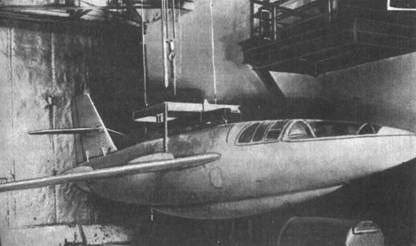
Bisnovat “5” in the TsAGI before the modifications.
The Bisnovat 5 experimental aircraft was developed in 1948 with the aim of testing the influence of the 45º swept wing on the range of supersonic flight speeds. Two prototypes were built and tested in a glider configuration due to difficulties in setting up the selected power plant.
Based on the concept of the DFS 346, the Bisnovat “5” featured an overall configuration similar to that of the Bell X-1, which would be the first manned aircraft to break the sonic barrier.
The effectiveness of wing sweep in achieving high flight speeds was demonstrated at the end of the 1940s. The 35º swept wing did not allow to overcome the sonic barrier, as it generated too much resistance. The calculations showed the need to test a new wing with 45º sweep and increase the engine power.
In the TsAGI they developed a wing with these characteristics, but the T-106 wind tunnel did not allow it to be tested at speeds above Mach 0.9. This required the construction of experimental aircraft.
This happened at the end of 1946, when in the former premises of the main constructor Boljovitinov, in the Factory No. 293 of the MAP a new OKB was created at the head of which was MR Bisnovat located. This new OKB was tasked with developing a supersonic experimental aircraft in order to test characteristics in flight and piloting conditions at speeds of Mach 1.1.
The aircraft received the designation “5” and had to be built according to an aerodynamic composition based on the 45º swept wing and TsAGI 12045bis and P2 (2M) profiles. Its development was carried out in parallel with the tests by OKB-2 of the captured German DFS 346 aircraft. The powerplant selected was the Dushkin RD-2MZVF liquid reactive engine capable of developing 2000 kg of thrust and was conditional on the fact that a higher power engine did not exist in the USSR.
Due to the low capacity of the engine, the ascent to a height of 10,000 meters had to be done by a mother plane. Once this height was reached, the plane released and the rocket engine was started. The calculations showed that, in addition to a speed of Mach 1.1, the “5” would reach 15,000 meters (from 10,000 m) in just 68 seconds. The duration of the flight with full power would be only 2.5 minutes.
The development task was officially approved in a new experimental construction plan that was signed on March 11, 1947.
The “5” was conceived as an all-metal monoplane with a double spar mid-set wing and 45º taper along the 25% chord line. The wing profiles were suggested by TsAGI : TsAGI 12045bis in the wing root and P2 (2M) in the extremities. The wingspan reached 6.4 m. Two aerodynamic fins were installed on each console on the upper wing surface to break the flow. In order to study the pressure distribution throughout the wing at high speeds, drains were made in three sections in the right wing.
The monocoque-type fuselage had an oval section and a length of 9.92 meters. The front part consisted of a sealed cabin. Flying in an airplane at high speed implied a high risk, so the cabin was designed in such a way that in emergencies it was separated from the rest of the plane. The transparent cover was aerodynamically inserted into the fuselage. Behind the wing, on both sides of the fuselage, aerodynamic brakes were added.
In the tail section was located a reactive double chamber RD-2M-3F engine, designed by LS Dushkin with a power of 2000 kg at 8000 meters and 1610 kg of thrust at sea level. The chemicals (kerosene and nitric acid) and hydrogen peroxide (for turbocharger feed) were calculated for a flight time of about two minutes at full power.
As the “5” aircraft was designed to be launched from a mother plane, the landing gear consisted of a ski located in the lower part of the fuselage, two stabilization supports on the wings and a small skid on the tail section.
The high tail had sweep. The stabilizer had a span of 2.4 meters. The aircraft could be controlled using the stabilizers, which were connected to the flight stick. Boosters could be connected to reduce the pressure on the stick.
In order to guarantee the necessary safety, it was decided to first carry out the tests using a scale model that was called “6” and designed with full flight capacity. The “6” was built in factory 293, in conjunction with the OEZ TsAGI led by Kuznietsov. This model was built at 1: 2.75 scale, and equipped with a liquid reactive U-400-10 engine with 400 kg of thrust manufactured by Isayev and had an AP-14 autopilot system.
The “6” model had to be towed by a Tupolev Tu-2 bomber up to a height of 9000 meters and after detaching it had to connect the reactive engine to reach a supersonic speed of Mach 1,225 in straight flight. To record the flight data the “6” was included in the model a data recording system.
The recovery of the “6” was carried out by means of parachutes operated in sequence. Initially, the braking parachutes located on the wings were opened, with an area of 1 sq.m. Later the main braking parachute located in the tail area and with an area of 100 sq.m was opened.
In total, 4 examples of the Model “6” were built and tested in September – November 1947, at Gumpak airfield, near Stalingrad.
The first model (No.61) after the detachment quickly moved away from the Túpolev Tu-2, reaching great speed. The following La-7 soon lost sight of the model and it was never found.
The second model (No.62) after detaching began to present large oscillations around the axles and this resulted in the engine turning off with only 8 seconds of work. The model opened its parachutes and could be recovered without problems. The recorded speed was only 230 – 240 meters per second.
The third model (No.63) worked without problems, but after 44 – 45 seconds of flight, it plummeted and the brake parachutes were pulled away. The model was launched towards the ground, burying itself at a depth greater than 3 meters. During the impact the search equipment was badly damaged and some could not even be found in the metal mass. According to the measurements obtained from an MS-7 team and assuming that they were taken during the flight in a straight line at 8,300 meters, a speed of 1405 km / h (Mach 1.28) could be calculated.
The fourth model (No.64) flew without problems for 51 – 52 seconds, presenting only some oscillations in relation to the transverse axis. After the engine finished working, the main parachute did not open, so that only with braking the model began to descend, burying itself about 80 centimeters into the ground. In this case it was possible to recover the result of the measurements of the recording equipment, which yielded a model speed of 1230 km / h (Mach 1.11)
The figures obtained allowed the MAP to consider that the speed of the models corresponded to that calculated and to consider the tests as successful, but the direction of the VVS disagreed. Bershinin wrote in January 1948 to the Minister of the Armed Forces NA Bulganin:
“ In relation to the tests with the help of the Bisnovat manufacturer’s models, we can deduce that as a result of their lack of completion as aerodynamic models and the lack of objectivity of the flight data, objective conclusions cannot be made and they can only be considered as a first step in the use of flying models in the investigation of high flight speeds. “
The need to develop a dozen “6” models and repeat the tests ensuring the preservation of the recordings of the measuring instruments was strongly discussed. This never took place because very soon the first prototype of the plane “5 ” was ready which was known as “5-1”.
The first prototype “5-1” during testing.
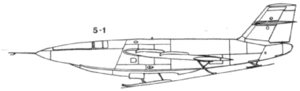
The first prototype with full flight capacity was named ” 5-1 “. The towing system was replaced by the under-wing attachment of a mother aircraft, in this case a Petlyakov Pe-8 (No. 4291) with Ash-82FN engines, which was specially prepared for this task. Under the right wing, between the fuselage and the inner engine console and installed a special bracket from which the ” 5 ” was hung. The launch was carried out at heights of 7000 – 7500 meters. The weight of the plane in glider configuration reached 1565 kg.
The delivery of the engine suffered delays, reason why the first ” 5-1 ” sample began to be tested in July 1948 in a glider configuration, in order to check the behavior of the aircraft at low speeds. The “5” plane was flown by Colonel Pajomov and the Pe-8 mother plane by test pilot MA Samusiev and Ziemskov.
The flight plan included a dive after detachment, with departure to horizontal flight with an overload of 2 -3g, increase in speed until the plane reached 1500 – 2000 meters in height, when the tasks stopped and the plane was preparing for landing. During the landing, the behaviour of the plane at low speeds was studied.
In the first flight the 14 of July of 1948, there was a rending of the alar coating at the time of the release of the mother aircraft, affecting directional stability. The pilot managed to control and land the plane, but off the runway. The ” 5-1 ” was damaged and was sent to the factory for repair.
During this process some modifications were made. To prevent the plane from hitting the mother plane again at the time of detachment, the fixation system was modified. The flight control system was modified.
Rear view of the Bisnovat “5-1”.
The second flight on September 3 was quite positive, but it showed a lack of transverse stability and the lack of effectiveness of the ailerons to correct it. It was decided to study this phenomenon in depth on the third flight on September 5, but another accident occurred during the landing. Upon landing the plane hit the ground with one wing, then the other. The pilot was unable to control the landing and ended up burying his nose, which caused the destruction of the plane. The pilot was unhurt but the plane could not be rebuilt.
Prototype “5-1” destroyed after its third flight.
The commission created to analyze the accident was headed by the replacement of the head of the TsAGI laboratory, VN Matvieyev. It was found that the cause of the accident was the lack of lateral stability of the plane at low speeds after extending the landing pad and the increase in resistance in the aileron control system; as well as the incorrect ground connection and the deterioration of visibility due to the condensation of water vapor that appeared on the cabin cover. It was recommended to build a second specimen taking into account the recommendations recorded and to modify and test the landing system at TsAGI.
These accidents delayed the obtaining of the expected results in “5”. In 1947 at the request of the VVS and with the support of the Moscow committee of the CPSU, the MAP was directed to carry out the necessary actions to equip the TsAGI with wind tunnels capable of testing the new speed environments. In the second half of that year, the new T-112 tunnel began to operate at TsAGI .
Drawing of the prototype “5-1”
The dimensions of the work area of this tunnel was not large, measuring only 0.7×0.6 meters, but the flow velocity reached Mach 2. This tunnel still lacked the necessary instrumentation to carry out the measurements, but it was considered that it was enough to determine the effectiveness of the wing at 45º.
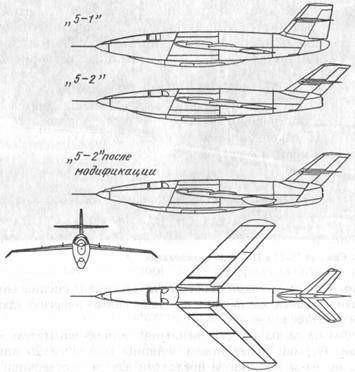
A second ” 5-2 ” prototype was built and ready by January 1949. It was practically no different from the first prototype, but to improve directional stability it was lengthened and increased the sweep of the vertical fin, which led to an increase in the length of the aircraft to 11.2 meters. The stabilization wing supports for landing were replaced by amortized skids capable of absorbing energy during impact with the ground.
Drawing of the prototype “5-2”
It was first decided to continue the tests in a glider configuration. The LII test pilot G. M. Shiyanov was selected as the pilot. The Pe-8 mothership was piloted by Gintsie and Chistyakov.
Between 26 January and 9 of June of 1949 the ” 5-2 ” carried out a total of nine glider flights, in October-November four, none with engine, even though it had been installed on the model and tested on the ground.
During the tests the weight of the aircraft reached 1710 kg, the maximum speed obtained in the dive flights reached Mach 0.775. The plane showed good behaviour and the flight control with the help of hydraulic boosters was practically no different from the conventional one.
Despite the promising results, everyone understood that the ” 5 ” had lost its “moment”. Reactive engines, characterized by their dangerousness, short working time and capricious behavior, now gave way to the increasingly capable turbojets, which had already demonstrated their ability to reach sonic speeds. The MAP leadership, in this situation, decided to turn its back on the project and, without much explanation, stopped financing it.
During the tests of the “5” for the first time in the USSR , the launching test system for rocket aircraft from the wing of a mother aircraft was tested and the accumulated experience was of great use for the development of new types of aircraft and missiles.
On the basis of the aircraft “5” Bisnovat and Isayev developed the air-surface missile R-1.
Drawing of the Bisnovat “5”
“5” Powerplant: 1 RD-2M-3VF liquid reactive, 1610 kg thrust Wingspan: 6.40 m Length: 9.92 m Wing area: 11.18 m² Empty weight: 883 kg Maximum takeoff weight: 3184 kg Wing loading: 95.6 kg / m² Maximum speed: 1200 km / h Accommodation: 1
Views of the different variants of the Bisnovat “5”.
Made in 1974 the Albatross was the second production glider for the Birdman company. During 1975 Birdman acquired the U.K. dealership for Ultralight Products of California. The UP Dragonfly was imported and proved to be of superior performance to the Hawk and Albatross. As an interim measure updating kits of prone A frames and deflexers were produced. The high performance conversion for the Hawk reduced the sail billow to nearer 3 deg.