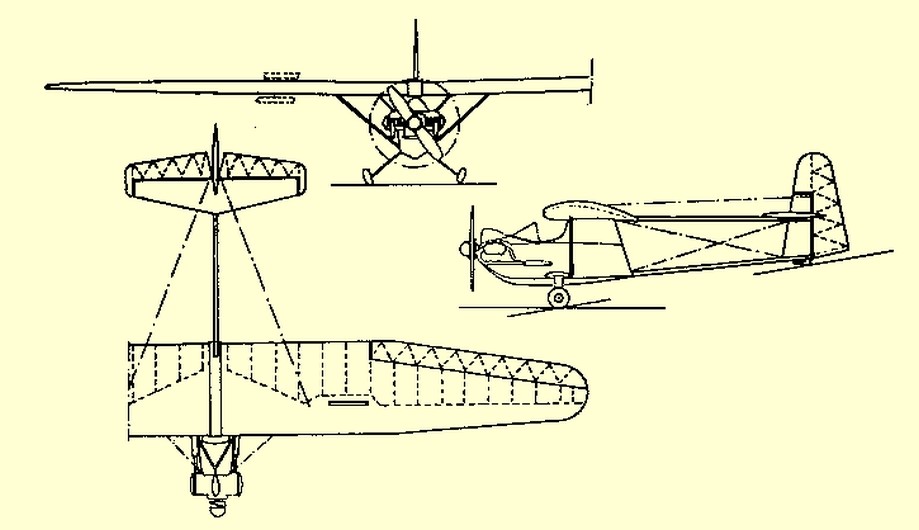
Bowers Namu II

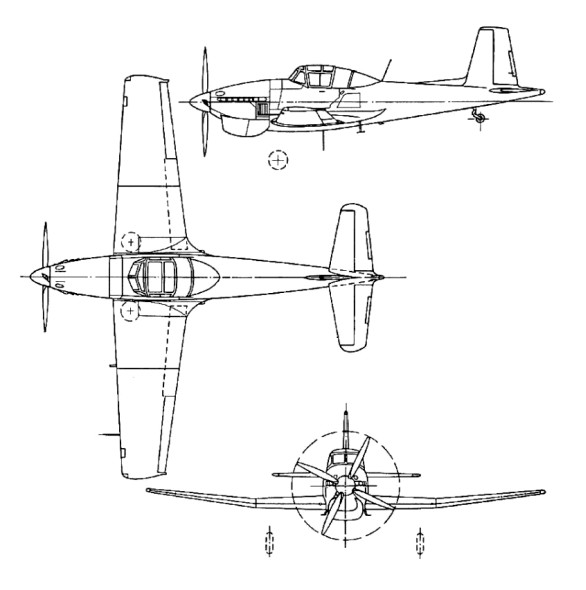
Peter Bowers designed and built the prototype of the Namu II two seat aircraft, which first flew on 2 July 1975.
The Namu, named after the famous whale, first flew in 1975. The side-by-side two-seater features an enclosed canopy, dual controls and conventional tailwheel type gear. Its low-wing configuration is constructed from wood, with Dacron fabric covering the wings and tail section and plywood covering the fuselage except for the rear decking. Fuel is carried in one main tank just aft of the firewall, and baggage is carried under and behind the seats.
The Namu II has a three piece single-spar with spruce flanges and plywood webs. The leading edge torsion box is a sandwich of two sheets of aluminium with glassfibre cloth between, epoxy-cemented together and formed over plywood nose ribs. With a fixed undercarriage and wooden tail unit, all fabric covered.
Another Namu II, with a different canopy, has been completed by Richard Lower and Tom Godbey of Seattle.

Engine: Lycoming O-290G, 125 hp, 93 kW
Wingspan: 33 ft / 10.06m
Wing area: 150 sq.ft / 13.9 sq.m
Length: 21 ft 6 in / 6.55m
Max tak off weight: 1850 lb / 839 kg
Empty weight: 1200 lb / 544 kg
Fuel capacity 32 USG.
Max level speed: 140 mph / 225 kph / 122 kt
Cruise speed: 126 mph / 225 kph / 109 kt
Stall: 50 mph.
Climb rate 950 fpm
Service ceiling: 15,000 ft / 4570m
Range max fuel: 500 miles / 434 nm / 804 km
Baggage capacity: 45 kg / 100 lb

Boulton Paul P120

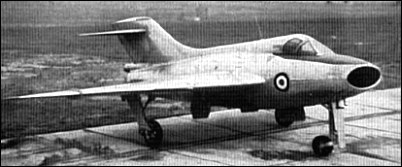
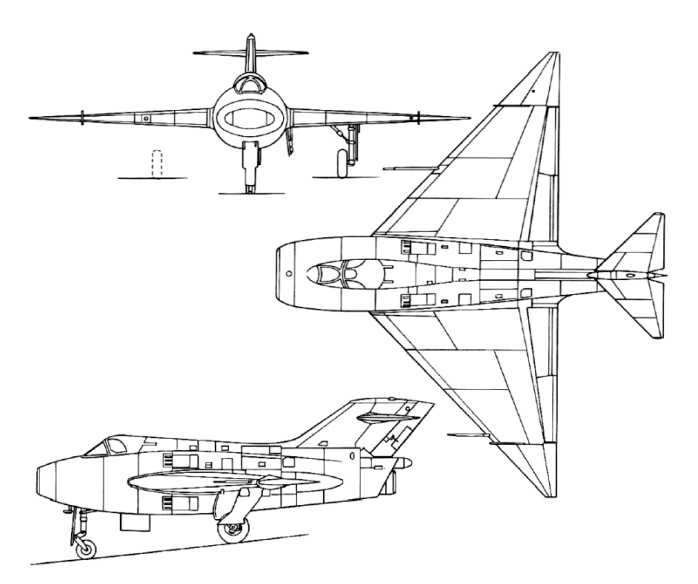
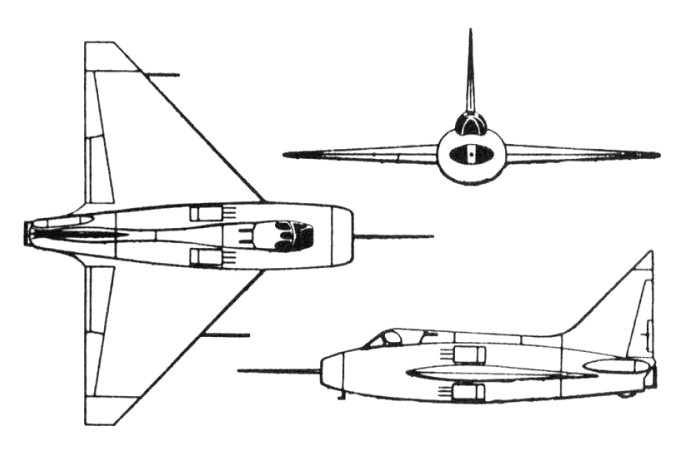
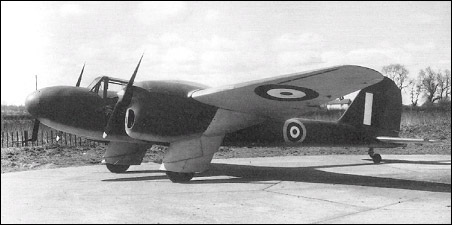
The Boulton Paul P.120 delta wing research aircraft, built to Air Ministry Specification E.27/49, was used to investigate high speed characteristics of the delta wing.
The P.120, flown on 6 August 1952, was similar in general layout to the P.111 but had an all-moving tailplane mounted on a squat fin. The aircraft was lost on 29 August, in an accident thought to have been caused by tail flutter.

Engine: 1 x 2315kg Rolls-Royce RN.2 Nene
Wingspan: 10.19 m / 33 ft 5 in
Length: 9.02 m / 29 ft 7 in
Height: 2.90 m / 9 ft 6 in
Wing area: 26.95 sq.m / 290.09 sq ft
Take-off weight: 5711 kg / 12591 lb
Empty weight: 4838 kg / 10666 lb

Boulton Paul P111

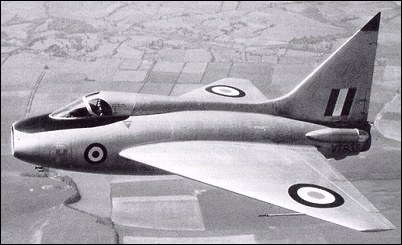
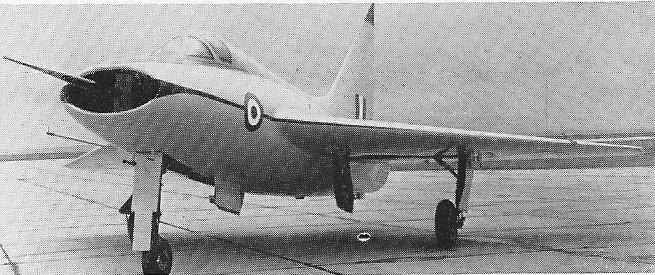
The Boulton and Paul P.111 research aircraft was built to specification E.27/46, to further investigation into delta wing characteristics at transonic speeds.

Boulton Paul P111 Article

The only example, VT935, first flew on October 6, 1950, and was powered by a Rolls Royce Nene turbojet of 5,100 lb st. It featured a 45 degree delta wing with detachable tips to enable comparative tests of blunt and pointed wings to be made. The fin tip was also removeable. Data recording equipment, including a fin mounted camera, was fitted. It originally flew in natural metal finish and was supplemented from August 1952 by the P.120.
A critical feature, that of total hydraulic, irreversible, powered flying controls allowed artificial feel for the pilot was by way of built in springs which could not be fully trimmed to take into account the very fine degree of control necessary, particularly with the minimal input demanded at high IAS. The design work was carried out at Farnborough, and all of the early flying was by Aero Flight pilots including Bob Smythe CO, Jim Harrison, and Jock Elliot. Jock carried out most of the flying with 52 flights totalling some 26 hours. He commented on the sensitivy of the controls at IAS, stating that, at 500 kts IAS, 1/4″ stick movement gave 1″g” of acceleration, and observed that the possibility of a strong reflex input was very real and would have catastrophic results. Following a belly landing by Jim Harrison the design was near to being shelved, when Jock came up with the idea for variable gearing between stick and surfaces; this facility would be available to the pilot in flight and would allow a choice ranging between 1:1 to 4:1. Jock pointed out that the idea was not new and that some of the Schneider Trophy aircraft had incorporated the idea.
The idea was discussed at a meeting with Dennis Higton, aerodynamicist at RAE, JD North of BP, and Jock, and the outcome was that it was incorporated into the design, as the BP P111A.
The point has been made that Jock’s concept of variable gearing was an crital break through for the aviation industry and virtually paved the way for Concorde and all high speed aircraft that followed.
In 1953 the aircraft underwent internal modification, and also had four rectangular air brakes fitted around the fuselage behind the cockpit a nose probe. Redesignated P.111A, it made its first flight in this form on July 2, 1953. Ben Gunn flew the aircraft in it’s P111A form. Its research programme at RAE Bedford ended on June 20, 1958, by which time it had attained Mach. 0.93 in level flight.

P.111A

In April 1959 it was purchased from the Ministry of Aviation by the College of Aeronautics at Cranfield, Beds. It was then used in their Department of Aircraft Design to demonstrate variable gearing power flying control systems and general hydraulic services, and also for basic research on the ground resonance of a low aspect ratio wing.
The P.111A survives in the Midland Air Museum at Coventry’s Baginton Airport.

P.111A
Engine: 1 x Rolls Royce “Nene”, 2313kg
Wingspan: 10.21 m / 33 ft 6 in
Length: 7.95 m / 26 ft 1 in
Height: 3.82 m / 12 ft 6 in
Wing area: 18.58 sq.m / 199.99 sq ft
Take-off weight: 4354 kg / 9599 lb
Empty weight: 2948 kg / 6499 lb
Climb rate: 9,400ft/min
Max. speed: 0.98M, 650 m.p.h
Crew: 1

Boulton Paul P108 Balliol / Sea Balliol

Balliol

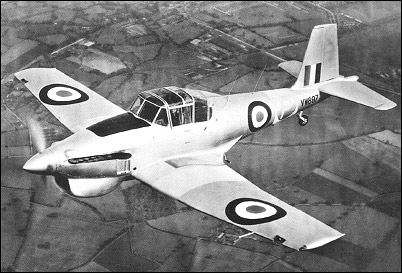
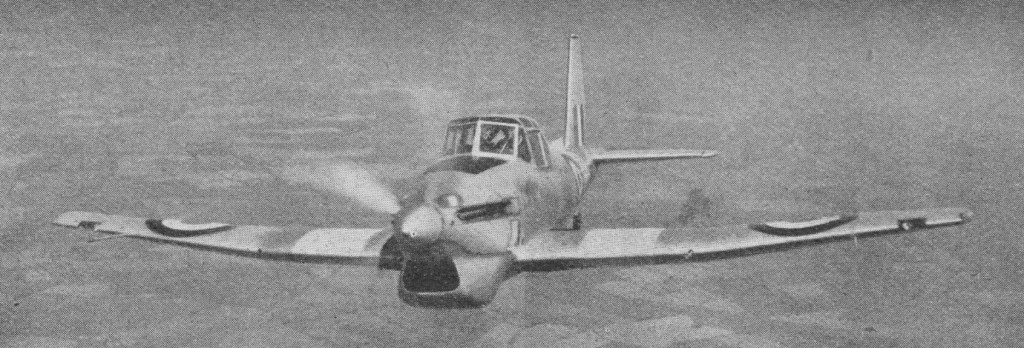
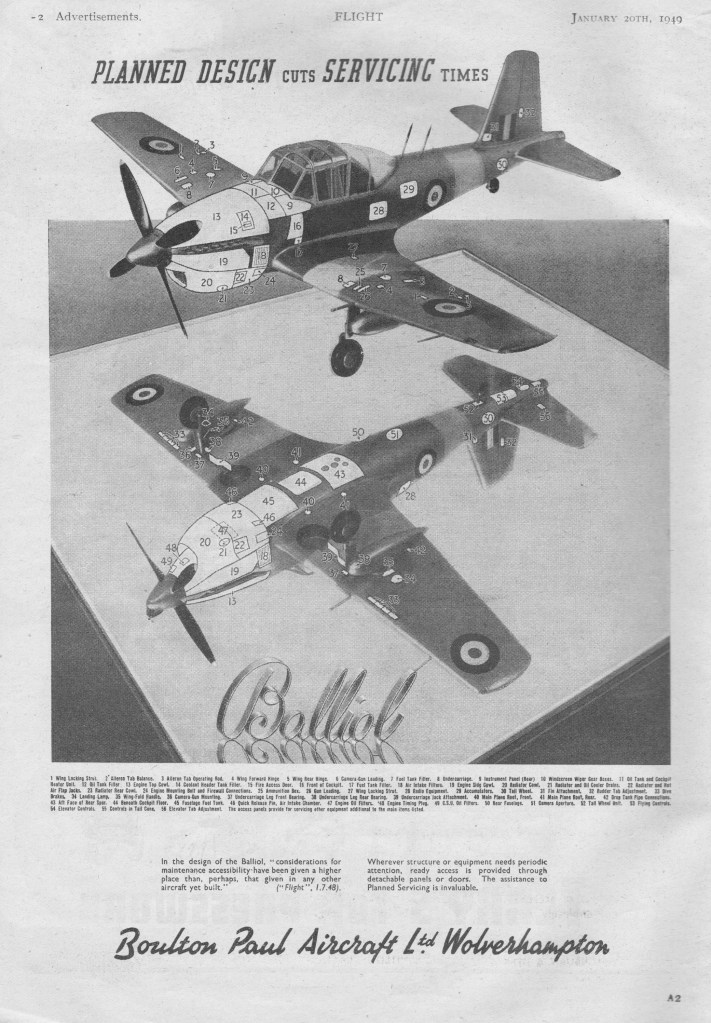
The P.108 Balliol was first flown on 30 May 1947, powered by a Bristol Mercury 25 radial. The Balliol was originally designed as an all-purpose advanced trainer to be fitted with turbo-prop engine to specification T.7/45.

With modification of RAF requirements, the Balliol was modified to take the Merlin 35 piston engine as the Balliol T.2, 187 being built.

Balliol T.2 – Rolls Royce Merlin 35 – 1949

Three versions were produced:
Balliol T.1 three-seater with a Mamba engine, first flown in prototype form on 24 March 1948 to become the first aeroplane in the world to fly solely on turboprop power

Balliol T.2 two-seater, produced for the RAF (162) with a 928kW Rolls-Royce Merlin 35 piston engine.

Sea Balliol T.21 WL732, RAF Cosford

Sea Balliol T.21 for the Royal Navy with deck-landing capability (30 built).

Jan 1949

Gallery

Balliol T.1
Engine: 1 x 1000shp Armstrong Siddeley Mamba
Take-off weight: 3562 kg / 7853 lb
Empty weight: 2724 kg / 6005 lb
Wingspan: 11.99 m / 39 ft 4 in
Length: 11.13 m / 36 ft 6 in
Height: 3.23 m / 10 ft 7 in
Wing area: 23.23 sq.m / 250.05 sq ft
Max. speed: 494 km/h / 307 mph
Ceiling: 11201 m / 36750 ft
Seats: 3

Balliol T.2
Engine: 928kW, 1245 hp Rolls-Royce Merlin 35
Wingspan: 39 ft 4 in
Wing area: 250 sq.ft
Length: 35 ft 1.5 in
Height: 12 ft 6 in
Empty weight: 6730 lb
Loaded weight: 8410 lb
Max speed: 288 mph
Cruise: 200 kt @ 10,000 ft.
ROC: 1790 fpm
Service ceiling: 32,500 ft
TO dist 50ft: 1350 ft.
Seats: 3
Armament: 1 x .303 Browning mg
Bombload: 4 x 60 lb

Sea Balliol T.21
Engine: Rolls-Royce Merlin 35, 1245 hp
Wingspan: 39.337 ft / 11.99 m
Length: 35.138 ft / 10.710 m
Max take off weight: 8412.1 lb / 3815.0 kg
Max. speed: 250 kts / 463 km/h
Range: 573 nm / 1062 km
Seats: 3
Armament: 1x MG 7,7mm, 4x 27kg ext.

Boulton Paul P92/2

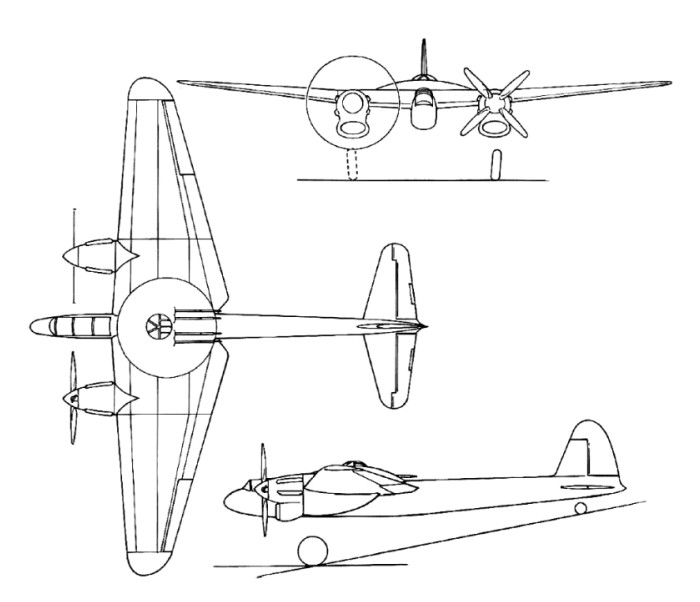
The P.92/2 was a half scale flying model of the P.92 built for Boulton Paul by Heston Aircraft for aerodynamic testing. The P.92 was cancelled before this ever flew.

P.92/2
Engine: 2 x 130hp de Havilland Gipsy Major II
Take-off weight: 1261 kg / 2780 lb
Wingspan: 10.11 m / 33 ft 2 in
Length: 8.38 m / 27 ft 6 in
Height: 2.34 m / 7 ft 8 in
Max. speed: 245 km/h / 152 mph
Cruise speed: 217 km/h / 135 mph

Boulton Paul

Established as a building constructor in Norwich, Norfolk, turned to subcontract construction of aircraft in First World War, including RAF F.E.2d, Sopwith 1/2-Strutter and Sopwith Camel. Known originally as Aircraft Department of Boulton & Paul Ltd. As the war neared its end, the company decided to continue in aircraft industry and the aircraft division of Boulton & Paul was incorporated as an independent company, Boulton Paul Aircraft in 1934. First original design P.3 single-seat biplane fighter which did not enter production. Designed and built P.6 research aircraft, which provided much data for later P.9. P.7 Bourges twin-engined fighter-bomber built at the end of 1918, followed later by similar Bugle. Neither entered RAF service. Continued to build small numbers of civil aircraft during inter-war years. Sidestrand 3/4-seat medium bomber entered RAF service with one squadron in April 1928. Replaced by improved Overstrands, with power-operated gun turret, in 1934. When production ended, in 1936, company re-established at Wolverhampton, Staffs. Name of Boulton Paul Aircraft Ltd. adopted 1934. Designed and built P.82 Defiant for RAF, prototype first flew 11 August 1937; two-seat fighter with power-operated gun turret was entirely new concept and enjoyed initial operational success. Production ended 1943 after more than 1,000 built. Designed P.108 Balliol three-seat advanced trainer for RAF, 162 built subsequently as two-seat Balliol T.2, of which 30 built under subcontract by Blackburn Aircraft Ltd. Built P.111 and P.120 for research into behavior of delta wing at transonic speeds.
In 1961 the company became part of the Dowty Group.

Borzęcki JB-4 Skowronek               

Józef Borzęcki choose Olesno Śląskie as his place of residence. There, he designed and built the fourth ultra-light structure called JB-4 “Skowronek”.

In the fall of October 29, 1989, in the presence of Elżbieta’s daughter, “Skowronek” made several successfully completed take-offs and landings. A year later, on October 14, 1990, he made his last flight. From a height of 200 m, while descending to land, the left wing girder was broken. On this day, Józef Borzęcki died.

Borzęcki Altostratus

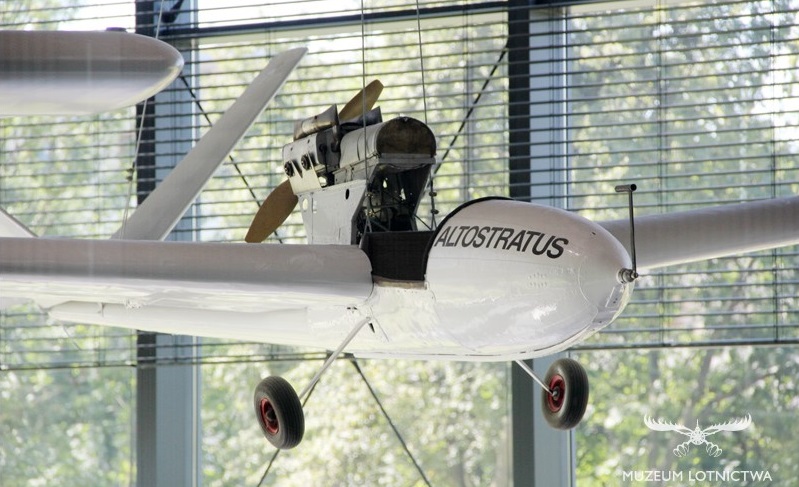
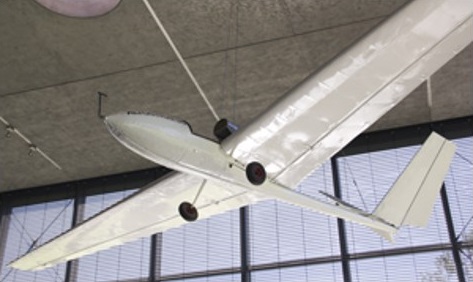
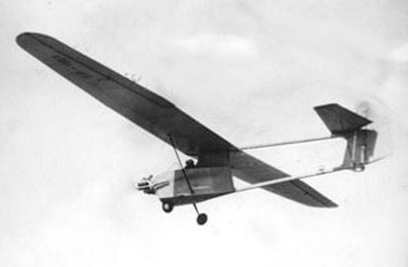
In late 1960s Józef Borzęcki undertook a rebuilding of his Stratus motor glider. The aircraft was fitted with wings from Komar (mosquito) glider, lighter and providing better glide ratio and flat two-stroke four-cylinder RB2 engine, designed by J. Borzęcki out of two connected Riedel starter engines from German Junkers Jumo 004 turbojet engine from World War II.

After this rebuilding the motor glider was named Altostratus and first flew in 1972. It remained in use until 1982.

Since 1994, “Altostratus”, as the only surviving structure of Józef Borzęcki, was transferred to the Polish Aviation Museum in Krakow.

Engine: RB2 Four-cylinder two-stroke, 18 kW (24 hp)
Span: 10 m (32.8 ft)
Length: 5.5 m (18 ft)
Empty weight: 90 kg (198 lb)
Take-off weight: 160 kg (353 lb)
Glide ratio: 20
Sink rate: 0.9 m / s
Maximum speed: 100 km / h (54 kt)
Minimum speed: 48 km / h (30 kt)

Borzęcki Cirrus  

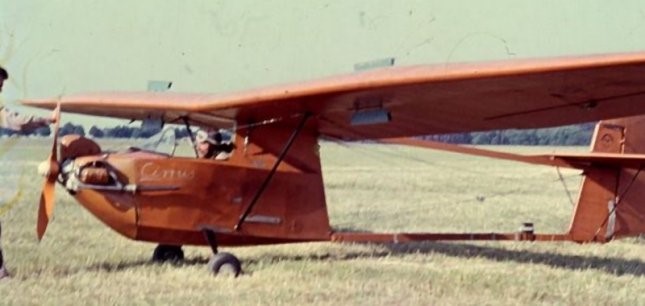
In the autumn of 1967, Józef Borzęcki began preparations for the construction of the “Cirrus” motor glider (“Salamandra moto”). In its construction, he used the experience gained while working on the “Stratus” motor glider. In the airframe, the designer used a number of wooden construction details from the school glider IS-A “Salamandra 53” (SP-1161) Kiibelwagen. He used a Volkswagen Kübelwagen car engine that he converted. A technical curiosity was the so-called elastic chassis, made of special shock-absorbing steel. The chassis on a single spring shank in the shape resembling the letter M was made of railway spring steel. This type of chassis designed and constructed by Borzęcki was the first of its kind in Poland to be used for light aircraft. The plane had, like “Stratus”, coupled control only by means of a joystick.

Looking for new solutions and constructional improvements, he used, among others double engine speed control system. It consisted in the fact that the aircraft also had a gas throttle mounted on the inside of the pilot’s cabin (as in a normal plane), and a car-type foot pedal, whose pressure increased the engine speed. These two control systems operated independently. The builder of Cirrus took the propeller-engine assembly very seriously. He took an exhaust gas analyzer, connected to the engine exhaust system, to the cabin. Flying at different heights, the amateur designer and pilot simultaneously selected the optimal composition of the gas-air mixture. The end result of these efforts was a significant engine economy with good performance of power.

“Cirrus” was flown on October 22, 1967. It had the characteristics of an ordinary glider after switching off the engine in flight. The powered glider carried out many flights in different weather conditions and seasons. Some of them on the ceiling 3000-4000 m and sometimes lasted 2-3 hours, with the engine turned on and off, circling in the thermals, enjoying a slow flight. For several years of using Cirrus, there were no accidents. The constructor flew about 2000 hours on it.

The constructor’s activities were revealed by a press article in 1968 and in 1969, unknown perpetrators destroy the motor glider, which, however, was rebuilt and flown. From 1971, the motor glider was hangar in the hangar of the Wroclaw Aeroclub, where in 1972 unknown perpetrators destroy Cirrus again, this time completely.

Engine: Volkswagen, 21 kW (28 HP).
Span: 12.5 m
Length: 6.5 m
Height: 1.95 m
Wing area: 16.8 sq.m
Empty weight: 200 kg
Total weight: approx. 300 kg.
Permissible speed: 140 km / h
Max speed: 120 km / h
Landing speed: 45 km / h
Minimum speed: 42 km / h
Rate of climb – 1.4 m / s
Glide: 12 / 1.3-1.5 m/s
Theoretical ceiling: 5000 m
Range: 400 km

Borzęcki Stratus

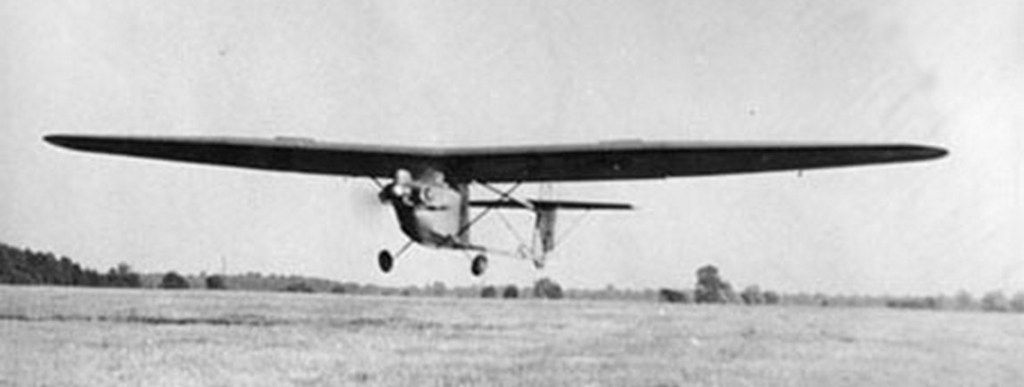
Józef Borzęcki was absorbed in the idea of building a simple, amateur glider for everyone. It was created under the influence of information about the pre-war Polish glider Bąk, designed by Adam Kocjan. His interest in aviation matters grew. He collected aerial books and magazines. He visited libraries and private collections. Despite many classes at work and family responsibilities, he devoted every spare moment to design work on his dream glider. Independently acquired the knowledge necessary to carry out the construction project.

During 1952–1961 Józef Borzęcki designed and built a motor glider called Stratus. He even built his own dyno to choose the right engine. He made this engine himself, based on a Czech circular saw engine. He designed and made the propeller himself, then he began making parts and assembling the airframe. He made all parts, from the smallest ones (e.g. he tapped several thousand rivets!) By himself. The construction of the powered sailplane was carried out in extremely difficult conditions – an apartment and a garage served as a workshop. The designer believed that all parts should be made perfectly, because flight safety depends on them. At the same time, he strived for its construction to be characterized by simplicity of operation and reliability of operation.

It was initially powered by an engine from a Czech chainsaw and wings from Żuraw (crane) glider. It initially featured classic flight control system with a control stick and rudder pedals, subsequently replaced by a “coupled” control system, designed by Borzęcki, in which the stick was used to control the aircraft in all axes (pitch, roll and yaw). It was aimed at facilitating flight training and increasing comfort in non-professional conditions.

The construction of the powered sailplane was completed in 1960 and J. Borzęcki began the first tests. During an attempt to take off, during Easter 1962, the wing was seriously damaged. Failures broke the constructor’s stubbornness. He no longer wanted to repair the glider, but he returned to work on it. He used in it (later used in all its constructions) so-called coupled control, i.e. only with a joystick that deflects the rudders and provides longitudinal and transverse control. Control of this kind, which he developed and developed completely independently, took him two years of hard work. Coupled control system of J. Borzecki’s idea had a number of advantages, especially significant in the case of little experience of amateur pilot. He again began the tests, which showed the correct flight properties of the powered sailplane. Over the next few months, he often performed test flights, which slowly turned into flying for pleasure. During 1961–66 the Stratus was flown illegally and in secrecy.

In July 1966, the designer invited the pilot of the flight and the editor of the newspaper Polish Word – editor Andrzej Macko to perform a test flight. He made several test flights, issuing a very favorable opinion about him. Articles by A. Macko published in Kulisach and the Polish Word about Józef Borzęcki’s motor glider started a nationwide discussion on amateur aviation in Poland.

In May 1967, an extensive article on amateur aviation was published in Winged Poland, a lot of space was devoted to the glider “Stratus”. In the press and everywhere where there were people interested in aviation, from aeroclubs to the Department of Aviation, there was a discussion about the future of amateur aviation in Poland.

In late 1960s the constructor undertook a rebuilding process. After this rebuilding the motor glider became the Altostratus.