The Austrian engineer, Ferdinand Brandner, who had previously worked as a prisoner of the Soviet Union on the development of the Kuznetsov NK-12 turboprop that was the powerplant of the Tupolev Tu-95 bomber, moved to Egypt to lead a team to design an engine to power the Helwan HA-300 jet fighter that was simultaneously being designed by a team of Germans led by Willy Messerschmitt. The new turbojet engine underwent bench testing in 1963, and was flight tested under the wing of an Antonov An-12, before being installed in a HAL HF-24 Marut for high speed testing, in which form it flew on 29 March 1967. The E-300 was installed in the third prototype HA-300 (the first two powered by Bristol Siddeley Orpheus engines), it flew at least one time and successfully, but the programme of HA-300 being abandoned in May 1969.
Variants:
E-300-A Military version for HA-300
E-300-C1 Civil version of E-300-A, proposed for Project 206 three-engined airliner.
E-300-C2 Proposed growth version of E-300-C1.
E-300-AF Projected turbofan development.
Specifications: Type: Afterburning turbojet Length: 4,300 mm (169.3 in) Diameter: 840 mm (33 in) Dry weight: 860 kg (1,896 lb) Compressor: nine-stage axial compressor Combustors: can-annular combustion chamber Turbine: two-stage axial turbine Maximum thrust: 32.4kN (6,275 lbf) dry, 47.2 kN (10,582 lbf) with reheat Overall pressure ratio: 6:1
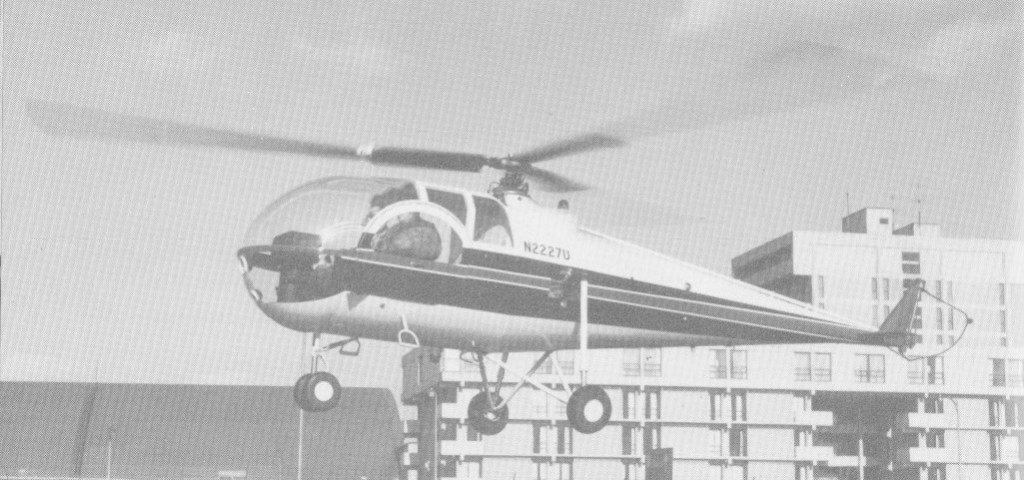
Brantly produced an enlarged B-2, named the Model 305 which had a longer forward fuselage providing a rear 3-passenger bench seat. The new five seater (N2200U) made its first flight in January 1964, powered by a 305hp Lycoming IVO-540-A1A engine and received its type certificate on 29 July 1965. The cabin has two bucket seats forward, seating for three aft, capacity for 200 lb of baggage, can fly 120 mph and sold for $48,900.
Brantly immediately commenced production but the Model 305 suffered from persistent ground resonance problems and they only built 45 examples.
It differs from the B2B externally by having a small variable-incidence tail-plane, and an enlarged cabin accommodates a total of five persons on two side-by-side forward seats, and an aft bench seat for three. The rotor system and airframe was the same as the B-2B, but enlarged and conventional direct mechanical flying controls.
The landing gear was a choice of skid, wheel or float gear. Skid type has four oleo struts, two on each side, and small retractable ground handling wheels. Wheel gear has single mainwheels and twin nosewheels, all with oleo-pneumatic shock-absorbers of Brantly manufacture. Goodyear mainwheels and tyres size 5.00-5, pressure 1.93 bars. Goodyear single-disc hydraulic brakes on mainwheels.
The 227.4kW Textron Lycoming IVO-540-B1A flat-six engine, was mounted vertically, with dual cooling fans. One rubber fuel cell under engine, capacity 163 litres. Refuelling point in port side of fuselage. Oil capacity 9.5 litres.
A rear compartment for 113kg of baggage, with downward hinged door on starboard side.
Model 305
44 were built during the 1960s and another four built by Hynes Aviation in 1985 as the H-5. Michael K. Hynes, owner of the type certificates, established Brantly-Hynes Helicopter Inc. on 1 January 1975, initially to provide product support for the large number of Brantly helicopters in use. He subsequently started up a production line for the B-2B, and also the larger Model 305.
Improved prototype with redesigned rotor head and new blade aerofoil completed about 30 hours flying by mid-January 1990. New main rotor bearing fitted. Cabin streamlined. New production was to begin 1993, but none built.
Engines: Lycoming IVO-540-B1A, 305 hp, 227kW Main rotor diameter: 8.74m Fuselage length: 7.44m Height: 2.44m Disc loading: 4.5 lb/sq.ft. Pwr loading: 9.5 lb/hp. Max TO wt: 1315kg, 2900 lb. Empty wt: 816kg, 1732 lb. Equipped useful load: 1106 lb. Payload max fuel: 854 lb. Range max fuel/ cruise: 199 nm/ 1.9 hr. Range max fuel and payload: 354km Service ceiling: 3660m, 11,000 ft. Max speed: 193km/h Max cruise: 177km/h, 104 kt. Max range cruise: 95 kt. ROC: 975 fpm. HIGE: 4000 ft. HOGE: 1500 ft. Max sling load: 800 lb. Fuel cap: 252 lb. Seats: 5.
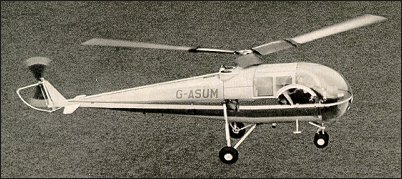
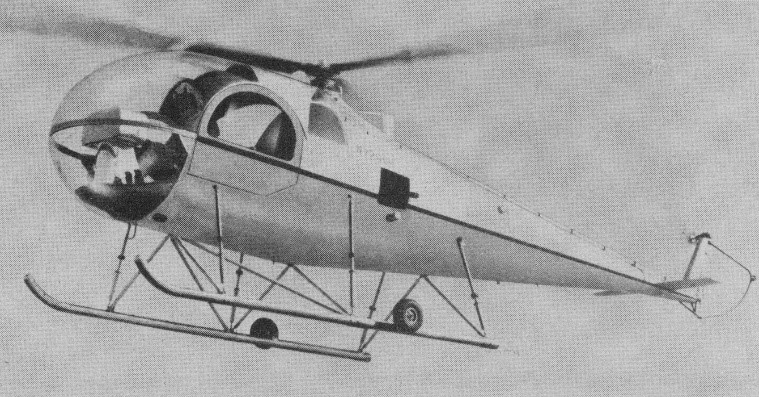
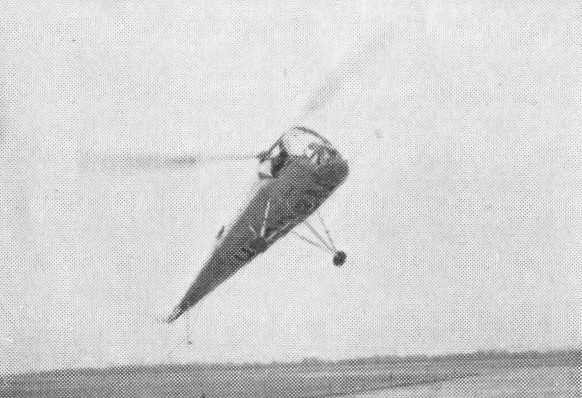
Developed from coaxial twin-rotor B-1 by Newby Brantly, the B-2 with single main rotor and anti-torque tail rotor configuration first flew on 21 February 1953. An improved second prototype flew on 14 August 1956. This was to enter production in 1958 receiving FAA certification on 27 April 1959.
1955 B-2
A total of 194 B-2s and 18 B-2As (with additional headroom) were produced between 1960 and 1963 and the improved Model B-2B with metal rotor blades and fuel-injected Lycoming IVO-360-A1A engine was certified on 1 July 1963. A total of 165 were built between 1963 and 1967 (the company owned by Gates Learjet from 1966).
B2A
Type certificates for the Brantly Bs were purchased in 1971 by Michael Hynes and revised as the 2 H2/YHO 3BR. Michael K. Hynes established Brantly-Hynes Helicopter Inc. on 1 January 1975, initially to provide product support for the large number of Brantly helicopters in use. He subsequently started up a production line for the B-2B and built one (as H-2) in 1975, and also the larger Model 305. James T. Kimura was the third owner of the B-2 type certificate, and delivered his first B-2B on 25 August 1990. Brantly Helicopter Industries (BHI) took over manufacturing and marketing rights and production facilities in 1989 with three were built under this name, which received the FAA production certificate on 19 July 1996. The first new-build B-2B (N25411 c/n 2001) was flown on 12 April 1991. In 1992, a B-2B cost US$120,000 to US$135,000 depending on equipment fit. On 23 December 1994, Brantly International obtained the type certificates for the Brantly B-2B and 305 helicopters from Japanese-American businessman James T Kimura’s Brantly Helicopter Industries, which had acquired them in May 1989. In 2002, Brantly employed 40 in its 2,790 ha facility. By 2002, Brantly Helicopter Inc of Vernon, Texas were again producing the B2B.
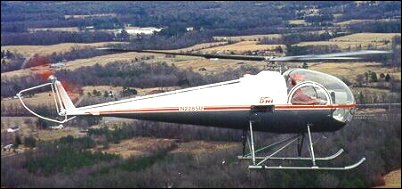
Brantly B2B
British Executive Air Services had acquired a production licence for the B-2. In 2003 the cost was US$170,000 basic equipped.
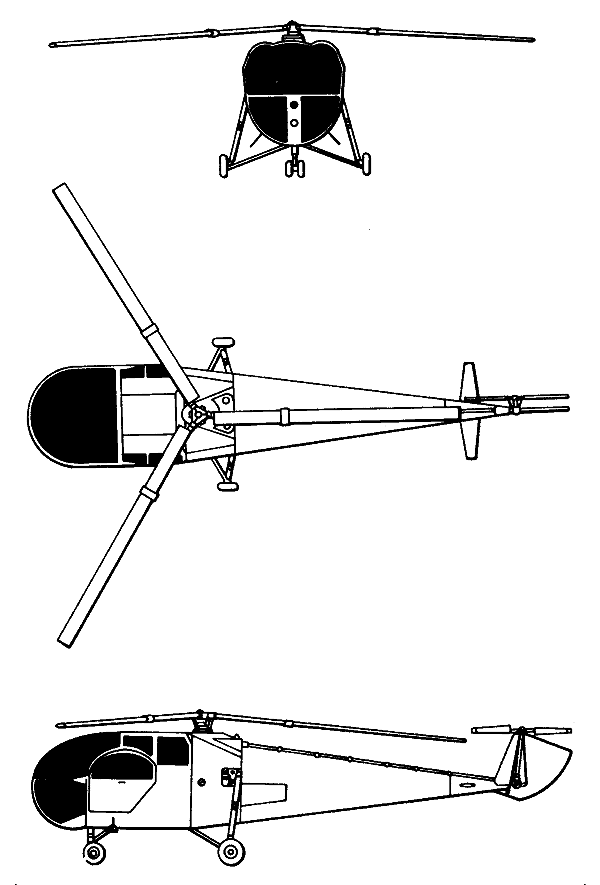
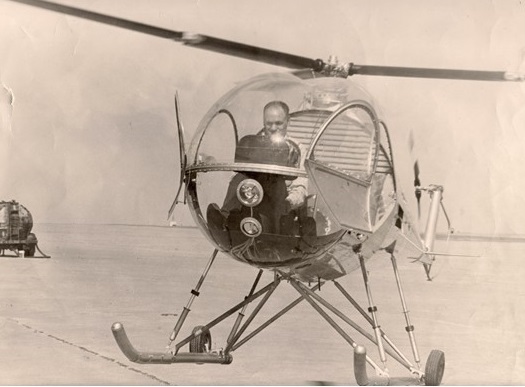
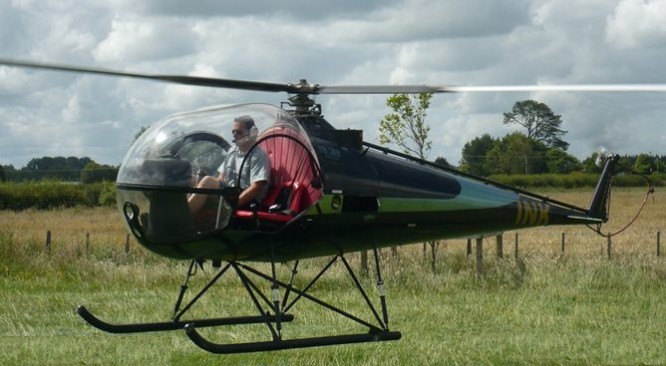
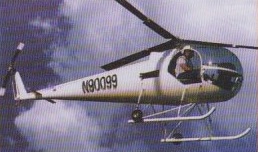
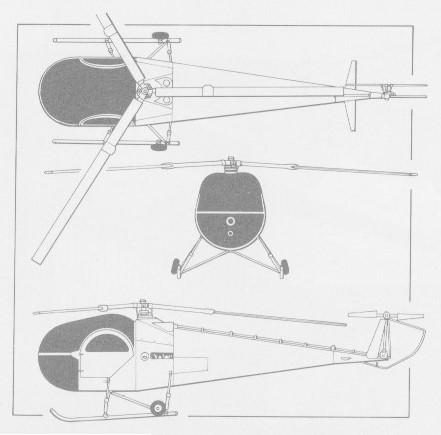
A relatively simple design, with blown main transparency and constant-taper fuselage. Double-articulated three-blade main rotor with pitch-change and flapping hinges close to hub and flap/lag hinges at 40% blade span; symmetrical, rigid, inboard blade section with 29% thickness/chord ratio, outboard section NACA 0012; outer blades quickly removable for compact storage; rotor brake standard; two-blade tail rotor mounted on starboard side, with guard. Transmission through automatic centrifugal clutch and planetary reduction gear. Bevel gear take-off from main transmission, with flexible coupling to tail rotor drive-shaft. Main rotor/engine rpm ratio 1:6.158; tail rotor ratio 1:1. Main rotor minimum speed 400 rpm; maximum 472 rpm. Conventional and manual controls; small fixed tailplanes on port and starboard sides of tailcone. A semi-monocoque fuselage with alloy-stressed skin. Inboard rotor blades have stainless steel leading-edge spar; outboard blades have extruded aluminium spar; polyurethane core with bonded aluminium envelope riveted to spar. All-metal tail rotor blades. Fixed skid type landing gear with oleo-pneumatic shock-absorbers; small retractable ground handling wheels, size 10×3.5, pressure 4.12 bar; fixed tailskid. Optional inflatable pontoons attach to standard skids for over-water operation. One 134kW Textron Lycoming IVO-360-A1A flat-four air-cooled piston engine, mounted vertically. Fuel contained in two interconnected bladder tanks behind cabin, total capacity 117 litres of which 115 litres are usable. Oil capacity 6.9 litres. Two seats, side by side in enclosed cabin; forward-hinged door on each side. Dual controls and cabin heater standard. Ground accessible baggage compartment, maximum capacity 22.7kg in forward end of tailcone.
In 1959 the Army procured five examples of the Brantly Model B-2 light helicopter for evaluation in the observation role. The five machines obtained by the Army (serials 58-1492 through -1496) were designated YHO-3 and tested at both Fort Rucker and the Naval Air Test Center at Patuxant River, Maryland. The aircraft was ultimately judged to be too small to be of practical military use and all five examples were eventually returned to the manufacturer.
Brantly B-2B
B-2 Engine: Lycoming 135 hp Rotors: 3-blade main 2-blade tail Rotor diameter: 23 ft Loaded weight: 1,250 lb Seats: 2
B2B Engines: Lycoming IVO-360-A1A, 180 hp,134kW. Main rotor diameter: 7.24m Fuselage length: 6.63m Height: 2.06m Disc loading: 3.7 lb/sq.ft. Pwr loading: 9.3 lb/hp. Max TO wt: 1670 lb / 757kg Empty wt: 1032 lb / 463kg Equipped useful load: 576 lb. Payload max fuel: 390 lb. Range max fuel/ cruise: 152 nm/1.8 hr. Range max fuel / range: 196 nm/ 2.3 hr. Service ceiling: 12,500 ft / 3290m Max speed: 161km/h Max cruise: 87 kt / 145km/h Max range cruise: 87 kt. ROC: 1400 fpm. HIGE: 4300 ft. HOGE: 2500 ft. Max sling load: 400 lb. Fuel cap: 186 lb. Seats: 2.
2 H2/YHO 3BR Engine: Lycoming IVO-360-A1A, 180 hp. TBO: 900 hrs. Main rotor: 23.7 ft. Length: 28 ft. Height: 6.8 ft. Max ramp weight: 1670 lbs. Max takeoff weight: 1670 lbs. Standard empty weight: 1069 lbs. Max useful load: 601 lbs. Zero fuel weight: 1490 lbs. Max landing weight: 1670 lbs. Max sling load: 400 lbs. Disc loading: 3.7 lbs/sq.ft. Power loading: 9.3 lbs/hp. Max usable fuel: 183 lbs. Max rate of climb: 1330 fpm. Service ceiling: 12,500 ft. Hover in ground effect: 4,300 ft. Hover out of ground effect: 2500 ft. Max speed: 87 kts. Normal cruise @ 3000 ft: 78 kts. Fuel flow @ normal cruise: 72 pph. Endurance @ normal cruise: 2.4 hr. Seats: 2.
Brantly B-2B Engine: Lycoming IVO-360, 180 hp Rotor span: 7.24 m Blade area: 0.203 sq.m MAUW: 757 kg Empty weight: 463 kg Max speed: 161 kph Cruise speed: 145 kph Climb rate: 9.6 m/s Seats: 2
Brantly Helicopter Industries Founded by N. P. Brantly, who designed the Brantly B-1, with co-axial rotors, in 1943. From this design he developed the improved Model B-2, using the rotor evolved for the B-1, a two-seat helicopter which first flew on August 14,1956. Subsequently entered production as Model B-2A, superseded by B-2B in 1963. Larger Model 305, a five-seat aircraft, first flew in January 1964. Company acquired by Lear Jet Industries Inc in May 1966. The Brantly helicopter interests, which had been acquired by Lear Jet Industries in 1966, passed to in 1969, and to Brantly Operations Inc in late 1970. On January 1, 1975 Michael K. Hynes founded Brantly-Hynes Helicopter Inc., having gained ownership of the Brantly interests, later becoming just Hynes Helicopter as division of Hynes Aviation Industries Inc. Production of Model B-2B two-seater and Model 305 five-seater continued. Rights to helicopters acquired by businessman James Kimura from Hynes Aviation Industries 1989, forming Brantly Helicopter Industries.
1998: Brantly Intrnational Wilbarger County Airport 12399 Airport Dr TX 76384 Vernon USA
A single seat ultralight was designed and built by R.G.Bracewell at Gorleston, UK, in 1945, Registered G-AGOO, it used some or all of the Gunton Special G-AFRW.
It was not completed and broken up in December 1946.
Built by Beech Engineer Jack W Bowyer who drew the plans and along with his wife who bucked a vast majority of the rivets. They built it in their shop on weekends and evening while he worked at Beech. He also designed and constructed the prop.
A pure flying wing design construction was completed in late 1963 or early 64.
It first flew during 1964 with the registration N5401E. It flew several times out of an airport in Newton, Kansas. The aircraft was damaged in a landing accident and not rebuilt.
It is now in a hanger in southwest Missouri where the original builder is working once again on restoring it to the original condition, although he has no plans to fly it.
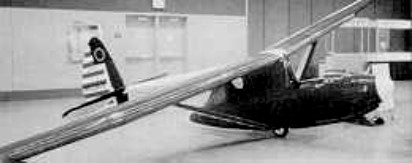
The Bumblebee was designed by William Hawley Bowlus and built in 1946. A powered sailplane with vertical tail and two small stabilizers mounted on a single boom, the Bumblebee was equipped with manually retracting undercarriage and 16 hp pusher engine.
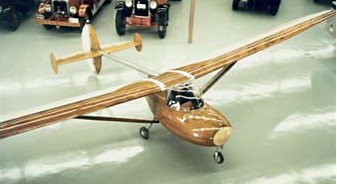
The Dragonfly, NX1955, designed by Hawley Bowlus, was the first auxiliary-powered self-launching glider to be produced in the U.S.A. The designers nicknamed this design the Bumblebee but they sold the powered glider under the official moniker, Dragonfly. Rebuilt from Bumblebee and with tricycle gear, it featured 2-place, side-by-side seating, retractable tricycle landing gear and a Nelson engine. Some were powered by 48hp Nelson H-63CP engine. The marketing was sponsored by the Nelson Engine Company as a vehicle for their two- cycle four cylinder 25hp engine. The cockpit pod was molded plywood, aluminum boom, 2-spar wood wing with plywood D-tube, fabric cover aft of spar.
While the concept was good, the airplane never achieved real success, because it didn’t perform well, and because Nelson took his engine and left the partnership. The beautiful wooden fuselage pod made up of layers of mahogany was very labour intensive and thus very expensive. Some Dragonflys had the engine removed, converting them to pure sailplanes. The Dragonfly features a fully retractable tricycle landing gear with stearable nosewheel, dual control and a ratchet-wire pull starter in the cockpit for engine starts in flight or on the ground.
Of less than 10 built, 2 survived in 2008 at the National Soaring Museum. NX/NC34921 was restored in New York in 1964.
John Hess Auction Service Inc, Manheim, PA 17545, United States, consigned a Nelson-Bowlus BB-1 Dragonfly N33687 Glider and Culver Rigid Midge N215 jr. Racing Glider in May 2015.
The two-place Baby-Albatross was created by lengthening the molded pod of the BA-100 Baby Albatross approximately two feet for a second seat beneath the monospar strutted wing, with porthole windows on each side. The Baby Albatross was built with an aluminum tube tail boom, wood wing, wood tail group, and fabric covered. The first built had the Bowlus control yokes while the second had conventional sticks. Those built up from BT-100 parts were known sometimes as the BTS-100. There were no approach control devices. One belongs to the National Soaring Museum and the Vintage Sailplane Association has plans.
The X-Wind was a one-of-a-kind homebuilt of Mr. Jack Bowling and it first flew in 1974. The aircraft had a 80hp Continental A80 engine and featured a corrugated aluminum fuselage and tail covering, not unlike that of early Junkers. The aircraft had wings taken from a Luscombe 8. The registration N6379 was cancelled in 2012.
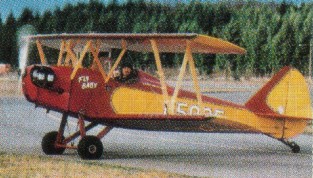
The prototype Fly Baby 1 B biplane, which first flew in 1969, could be converted from monoplane to biplane in around an hour. The two monoplane wing panels are replaced by four smaller ones, plus a center section for the top wing. The biplane wings take longer to build, since there are four panels and a center section, and they’re swept rather than straight. And there are some internal braces and external tangs that have to be added to the fuselage. This can be done after the fuselage is done (The prototype was converted after completion), but it is easier during construction. The biplane is slower, and the wings don’t fold.
In monoplane or biplane configuration, the Fly Baby does meet the US rules for Sport Pilot. In the United States, you do not need an FAA medical to fly a Fly Baby.
This plane is a structurally simple and easy-to-fly airplane designed to the requirements of the Experimental aircraft Association for home construction and storage in a space 7 x 8 x 20 feet, which is equivalent to the standard home garage. Great emphasis has been placed upon safe flight characteristics and good low speed performance for takeoff and landing at some sacrifice of high speed. The structure has been designed for standard airplane engines from 65 to 85 horsepower and the aerodynamic features are of sizes and proportions suited to obtaining the best all-around performance in this power range. Because of this, there is not enough advantage to be gained from using engines of significantly higher power to offset the cost and weight penalties. Increasing the power to increase the aerobatic capability is not recommended. Fly Baby will do simple recreational aerobatics very well but is not intended for rough air show or competition maneuvers.