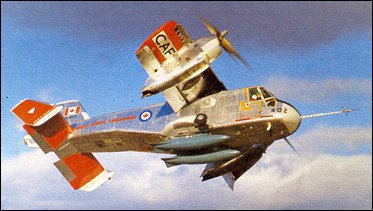
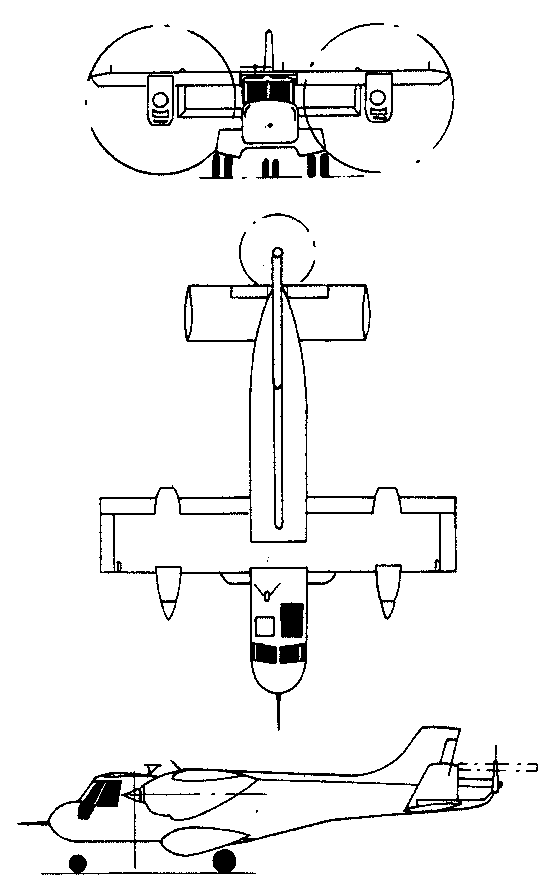
Canadair CL-84

With a research and development period from 1958 to 1963 before the first prototype was constructed, the design incorporated a number of innovations including a large chord wing which was to be covered by the propeller slipstream, all engines, rotors, and the tail rotor which were connected together by intricate shafts and gear boxes, and a stability augmentation system for reduction of pilot workload in low-speed flight conditions. There was considerable scale model testing in Canadian wind tunnels to ensure the design.
The CL-84 had a maximum height of 14 feet, seven inches, and a rotor tip-to-tip length of over 4.2m. The wings had a total area of 21.6sq.m with the trailing and leading edge flaps having of 4.7sq.m. The empty weight of the plane was 3380kg. In a maximum payload configuration, the plane could be loaded to 675kg for a pure VTOL mission, with 1620kg of payload available in a STOL or conventional mission.
The prototypes weighed about 3600kg, and the wings were 10m in length Mounted on the underside were a pair of Lycoming T53-LTCIK-4A turboprop engines with 4.3m-diameter propellers.
The horizontal tail was relatively low so that it was below the wing wake during cruising flight and always within the slipstream of the wing-tilt angle. The placement within the slipstream was to prevent abrupt changes in pitching moment as a function of wing-tilt angle.
Pitch control was provided by a pair of horizontally-mounted two-bladed propellers mounted on the rear of the aircraft. When in conventional flight, the props were stopped to minimize drag.
Roll control was maintained by differential thrust from the main engines while ailerons accomplished yaw control. A so-called mixing box brought all the control forces together to act as one as it linked the elevators, rudder, ailerons, and propeller blade angles together.
The first of four prototypes was built in two years, with the first vertical flight achieved in May 1965, followed by its first conventional flight seven months later.
The first total transition flight was accomplished on January 17, 1966, at the company’s Montreal facility. Transition was made from hover to forward flight and back. Flights were made in light snow with wind gusting to 25 miles per hour. The flight, with company pilot W.S.Longhurst at the controls, came seven months ahead of schedule.
The CL-84 was able to lift 2930kg of fuel and payload in a STOL take-off, or 1850kg of fuel and payload in a VTOL mode. It was found a 65km/h wind could double the VTOL payload capability.
An advantage of the CL-84 came from the pilot’s seat where it was piloted pretty much like a conventional aircraft. The pilot sat in the left seat, but dual controls were fitted. Even with its complex control mechanisms, the control stick and rudder pedals produced the desired control functions. A new flying technique wasn’t necessary. The pilot could fly the plane without knowing the wing angle.
Significant flying maneuvers were accomplished during the test program, including forward flight from hover (wing tilt 88 degrees) to 60km/h (wing tilt 48 degrees) and return to hover mode, demonstration of adequate control in winds gusting to 45km/h, rearward, sideward, and turning flight in and out of ground effect, and sustained flight with hands free of the controls.
By April 1966, the CL-84 began investigation into the high-speed regime followed undercarriage retraction tests, with speeds up to 370km/h in 60-degree banked turns being achieved. Other significant test accomplishments occurred during low-speed maneuvers. For example, the CL-84 easily completed 2G turns at only 165km/h, followed by 60m radius turns at 90km/h.
The plane also demonstrated exceptionally stable hovering flights, including hands free flight, and the CL-84 was hovered and landed vertically with the stability augmentation system not operating.
The first prototype was flown for two years by 16 pilots for a total of 145 flying hours. A number of military applications were tested, including dropping of external stores, mini-gun firing, simulated rescues from hover, use of a cargo sling, joint operations with a helicopter at seas, and hover downwash tests. A number of United States teams also evaluated the plane.
The first prototype was lost in a reliability test accident in September 1967, both pilots ejecting safely from the plane. The aircraft was flying at 980m at 280km/h in a forward velocity mode when the plane yawed to the left and quickly pitched downward. The investigation that followed identified the probable cause as a propeller failure. The plane was on its 306th test flight when the incident occurred.
The program continued with the construction of the three additional versions which incorporated a number of design changes from the original. Only two of them would actually fly. Two of the planes would be involved in non-fatal accidents due to mechanical problems.
The additional prototypes were built between February 1968 and February 1970. The testing of them would continue until 1974, over 20 years since the design work had started.
The CL-84 was demonstrated to the US Navy and the USS Guam also hosted a number of both STOL and VTOL flights from its deck. A flying demonstration took place off a hundred-square-foot pad at the Pentagon.
Neither the United States or the Canadian government showed enough interest to bring the program into production.
The second of the three prototypes produced is on permanent display at the National Aviation Museum of Canada in Ottawa. This particular plane made 196 flights with almost 170 flight hours. The plane was donated to the museum by Canadair in 1984.

Canadair CL-84
Engine: 2 x Lycoming LTC1K-4C turboshaft, 1119kW
Wingspan: 10.16m
Length: 14.41m
Height with wing in horizontal position: 4.34m
Height with a wing in 90deg position: 5.22m
Take-off weight vertical start: 5715kg
Take-off weight with a shortened run: 6577kg
Empty weight: 3827kg
Max speed: 517km/h
Cruising speed: 497km/h
Range: 547km
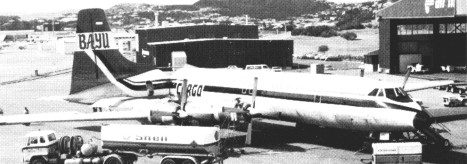
Canadair CL-44 / CC-106 Yukon

CL-44

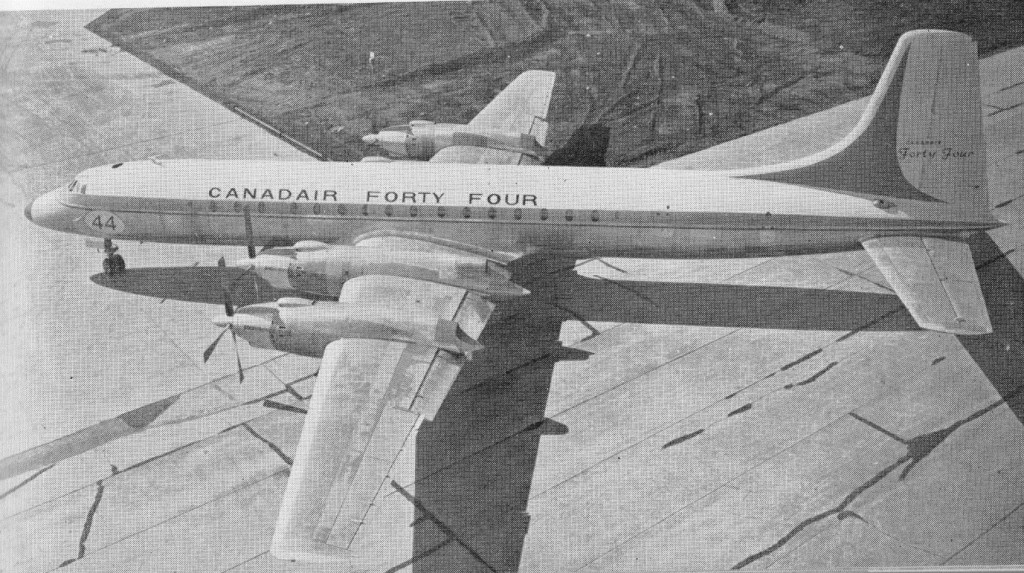
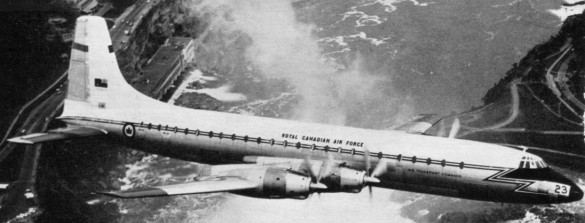
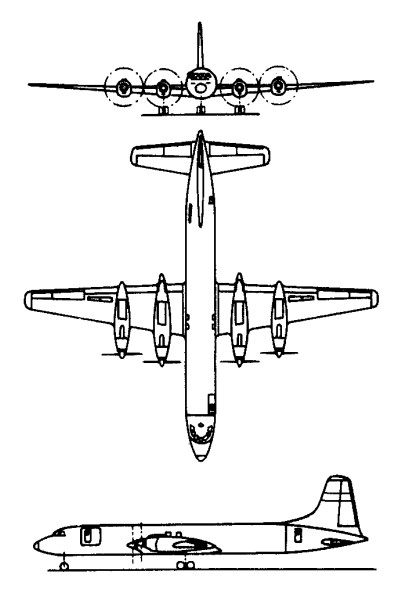
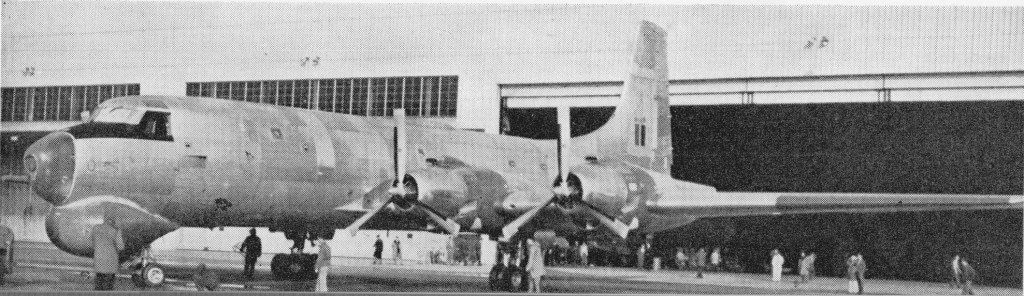
The RCAF was looking for replacements for it’s C-54GM North Star to provide personnel and logistics support for Canadian Forces in Europe. Canadair had already acquired a licence for the Bristol Britannia and announced in January 1957 plans for a fleet of long range transports based on the Britannia. Canadair received a contract for 8 aircraft, later increased to 12, designated CL-44-6 and CC-106 by the RCAF. The design used the modified Argus wings and controls. The fuselage was almost identical to the Britannia 300 with two cargo doors on the left-hand side. The cabin was pressurised to maintain a cabin altitude of 2.400m at 9.000m (30,000 ft). The Yukon could accommodate 134 passengers and a crew of nine and in the casualty evacuation role it could take 80 patients and a crew of 11. The RCAF had specified the CL-44 to be equipped with Bristol Orion engines but when the British Ministry of Supply dropped the Bristol Orion, the RCAF decided to use the Rolls Royce Tyne 11.

Canadair CL-44 Article

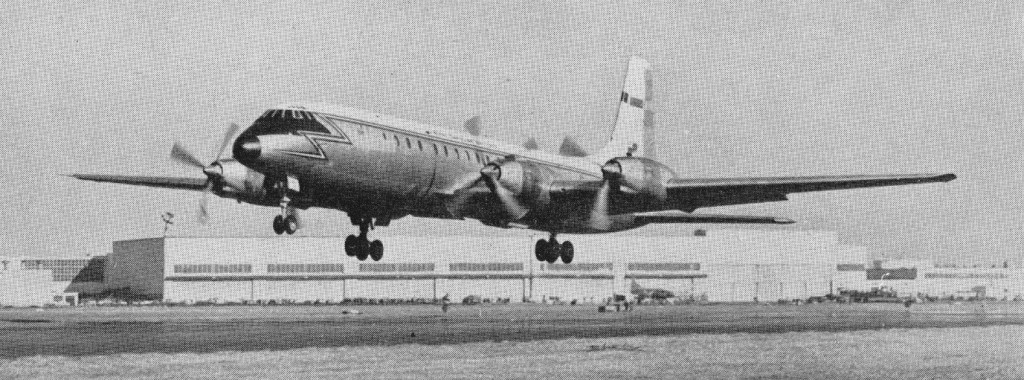
The roll out of the Yukon was a disaster all over. When the prototype was supposed to be pushed out of the hangar the tail was too high. The first plane took off 15 November 1959.

CL-44 No.1

During test flights all kind of problems where encountered from complete electrical failure to engines shaking loose and almost falling off. Rolls Royce had problems delivering engines resulting in “Yukon gliders” being parked outside Canadair as late as 1961.

Once in Service the Yukon proved very well and on December 1961 a Yukon set a world record for its class when it flew 10.860 Km (6.750mi) from Tokyo to Trenton, Ontario, in 17 hours three minutes at an average speed of 640 Km/h (400 mph). Later a Yukon even set a new record staying airborne for 23 hours and 51 minutes. These records stayed untouched until broken by the new 747SP in 1975. Eleven Yukons flew for 437 Transport Squadron. Two flew as VIP transports for 412 Squadron.

The RCAF needed an aircraft, which could operate as an in-flight refuelling tanker, and there was a chronic shortage of spares as the CL-44 had never gone into large-scale production. Consequently spare parts tended to be in short supply and relatively expensive. All Yukons were sold to South American and African operators since it could not be registered in Northern America or Europe since the Britannia windshields did not meet new security standards. The Yukons retired in March 1971 and were replaced by Boeing 707.

CC-106 Yukon

At a similar time as the Yukon contract came in Canadair announced its intentions to re-enter the civilian market with a slightly modified Yukon. The plane generated little interest with the passenger airlines, but cargo airlines found the cost projections made by Canadair compared with the high operating cost of Super constellations and DC-6B interesting.
The Flying Tiger Line and Seaboard World Airlines pushed Canadair to develop a system to load and unload the 29.5 tons of cargo in 45 minutes enabling turn-around in less then 60 minutes. This became the “Swingtail”. After the initial eight Yukons, Canadair built the first civilian CL-44 with a swingtail, designated CL-44D4. The APU that the Yukon carried in the nose was removed to increase payload and Canadair built the plane without a launch customer. This Aircraft, serial #9, used as a demonstrator for many years, was built in 1960 but not sold to Loftleidir until 1965.
While the prototype was being built a problem arose as the FAA refused to certify the Britannia type windshields for its vision standards. The Convair CV880/990 windshields were compatible enough to be adopted into the flight deck structure. A requirement was set for structural fatigue testing. The CL-44 had to simulate 80,000 flight hours in a watertank to be certified for 40,000 hours.
The Flying Tiger Line ordered 12 aircraft and Seaboard World Airlines ordered 7 aircraft. Pakistan ordered five aircraft, but the Canadian government refused to issue an export permit for Pakistan for fear of offending India. Saudi Arabia withdrew their two aircraft after the Pakistan cancallation. Japan Cargo Airlines ordered three Aircraft but cancelled after Japan airlines opposed the purchase. BOAC appeared to be a certain client until their management changed and stopped the discussion. (BOAC Cargo later leased a D4 from Seaboard while waiting for their new Boeing 707).

First flight of CL-44D, November 1959

In 1960 the USAF Military Air Transport Service (MATS) was thinking of buying up to 232 D4’s. The United States wanted Canada to bolster its northern fighter defences and proposed a deal whereby the Canadian would buy 100 F-101 Voodoo fighters plus a possible participation in the maintenance of the Pinetree early warning radar line. The quantity of D4’s had dwindled to 37 when Ontario conservatives objected on the grounds that it would be politically unacceptable to award a major aircraft contract to Quebec after having cancelled the Ontario-built Avro Arrow. MATS quickly changed their minds and bought Boeing C-135.Canadair built a Total of 39 CL-44 aircraft. 12 CC-106 Yukon and 27 CL-44D4. Seaboard World Airlines bought seven aircraft and The Flying Tiger Line bought twelve. Later Slick Airways ordered four more. This left Canadair with the unsold prototype and three CL-44D4s already finished but not sold. Canadair knew that the Icelandic low fare carrier Loftleidir was searching for alternatives to replace their ageing fleet of DC6B. Loftleidir bought those with the condition that they would all be stretched to accommodate more passengers. An engineering office in the United States on behalf of Loftleidir carried out a study to stretch the CL-44. Canadair carried out the work and the first stretched D4 flew on November 8, 1965. Loftleidir had already taken the other three D4s into service but returned them one after another in order to be converted.

CL-44D4-2 EL-AMC

Another D4 was converted by Jack Conroy Aviation of California into a CL-44-0 “Guppy”. This aircraft had its upper fuselage removed and replaced by an enlarged section, which raised the cabin height by 1.5m.The forty-four proved to be a nightmare for mechanics. But it was an extremely profitable aircraft to run. At the time the fuel burn of a CL-44 was half compared to a Boeing 707.
After 40 years, out of the 39 built, 17 either crashed or were destroyed in operation. 19 aircraft have been cut up.
No CL-44 has been preserved.

Gallery

Canadair CL-41 Tutor / CT-114

CL-41A

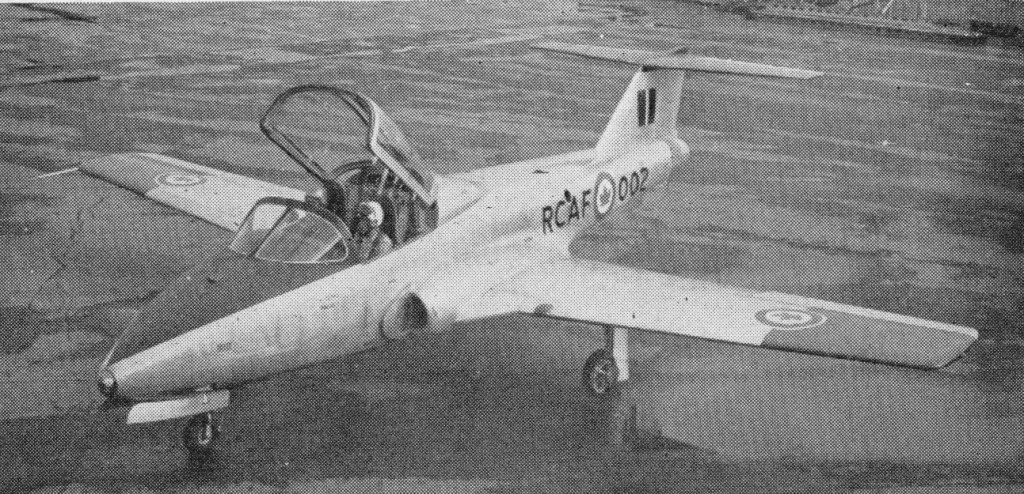
Canadair started design of a jet trainer in 1958 as a private venture. Controls and systems of the Tutor are relatively simple with hydraulic power to the landing gear, flaps and nosewheel steering, and manual flying controls. The cabin is pressurized and zero-level ejection seats are fitted. It is fully equipped for navigation, instrument and night flying training. The Tutor has side-by-side seating and a single turbojet engine built by Orenda Engines in Canada.

Canadair CL-41 Tutor Article

First flown on January 13, 1960, the 190 CL 41A aircraft were built for the Canadian air force as the CT 114 Tutor, ordered into production in 1961. It was used from 1963 until 2000 when it was replaced with the CT-156 Harvard II and the CT-155 Hawk as primary jet trainers.

The Tutor is best known in North America for the formation aerobatics of the Snowbird team who have performed from the Northwest Territories to Mexico. Officially known as 431 Air Demonstration Squadron, the team had fifteen Tutors, eleven of which travel with the team during the airshow season.

In 1965 Canadair was testing a prototype of a counter-insurgency version of the CL-41. The CL-41G was being tested by the USAF Air Commando Wing at Elgin AFB, Florida. Powered by a single Canadian built General Electric Orenda J85 turbojet rated at 3000 lb thrust, the -41G test version featured two 500 lb and two 250 lb bombs under wings, with pair of GE minigun pods under the fuselage.

Following the Canadian aircraft were 20 CL 41G Tebuan light attack derivative for Malaysia, production ending in 1967.
The CL-41R features an extended, pointed nose, as an NASARR (North American Search and Range Radar) electronics training version.

Gallery

CL-41
Engine: Pratt & Whitney JT-12

CL-41A / CT-114 Tutor
Engine: 2,650 lbs.t. (1202 kgp) Orenda built J85 Can 40 turbojet.
Max speed, 486 mph (782 kph) at 27,500ft (8382m)
Cruise, 356 mph (560 kph)
Initial climb, 4,420 fpm (22.45 m/sec)
Service ceiling, 44,500ft (13564 m)
Range, 944 mls (1519 km)
Empty weight, 4,840 lb (2195 kg)
Loaded weight, 7348 lb (3333 kg)
Max TO weight: 11,288 lb (5131 kg)
Span, 36 ft 4in. (11 m)
Length, 32 ft (9.75 m)
Wing area, 220 sq.ft (20.44 sq.m)
Height: 9 ft 3.75 in (2.84 m).

CL-41G Tebuan
Engine: 1 x General Electric J85-J4 turbojet, 13.1kN
Max Take-off weight: 5120 kg / 11288 lb
Empty weight: 2402 kg / 5296 lb
Wingspan: 11.13 m / 37 ft 6 in
Length: 9.75 m / 32 ft 0 in
Height: 2.76 m / 9 ft 1 in
Wing area: 20.44 sq.m / 220.01 sq ft
Max. speed: 772 km/h / 480 mph
Ceiling: 12860 m / 42200 ft
Range: 2157 km / 1340 miles
Crew: 2
Hardpoints: 6
Armament: 1814kg load

CL-41R

CL-41R

Canadair CL-28 Argus / CP-107

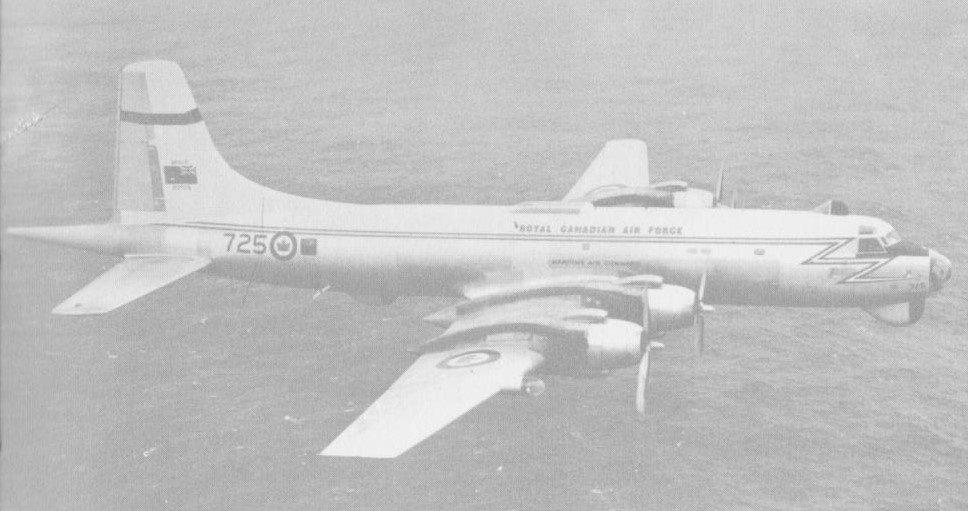
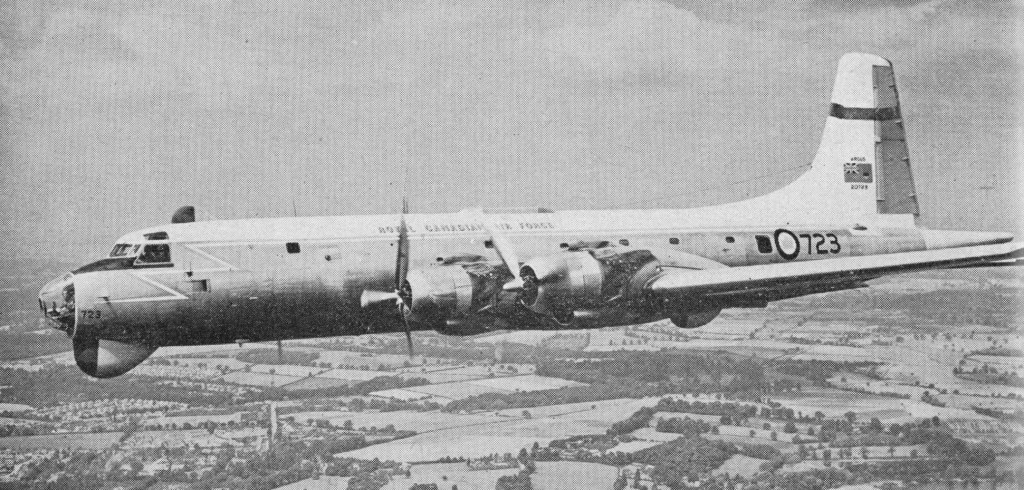
Argus Mk.I prototype

In 1949 had Canadair offered the RCAF a new maritime Patrol Aircraft based on the North Star version of the DC-4, to replace the Lancaster fleet

Canadair CL-28 Argus Article

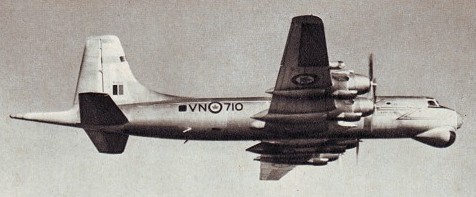
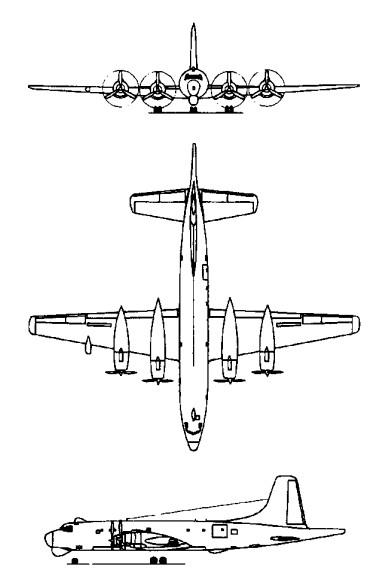
When the RCAF issued their specifications in 1952 Lockheed submitted a version of the Super Constellation as and Bristol submitted a version of the Britannia 100 Turboprop Airliner. In 1953 the RCAF decided on the Britannia. On February 23, 1954, Ottawa announced that Canadair would build the plane and on March 13 the licence agreement was signed. On May 27 the government awarded Canadair a contract to produce 13 maritime patrol/ASW aircraft based on the Bristol Britannia. It was designated Canadair CL-28 ARGUS.The Argus retained the Britannia’s wings, tail and the tab based flight control system. The fuselage was redesigned to accommodate two weapon bays, a forward crew compartment and a transparent nose. The turboprop engines where not considered ideal for low altitude operations, so the designers replaced the Britannia’s Proteus turboprops with 3700 bhp Wright R-3350 turbo-compound piston engines to provide the combination of high power and low fuel consumption. The Argus was equipped with latest in avionics and ASW. They ran of a fully paralleled AC electrical system. The aircraft was the first in history to synchrophase four 400-cycle systems in an aircraft.

Canadair Argus prototype before the first flight

The first Argus (VN710) made its first flight on 28 March 1957. The Argus completed RCAF acceptance trials in early 1958.

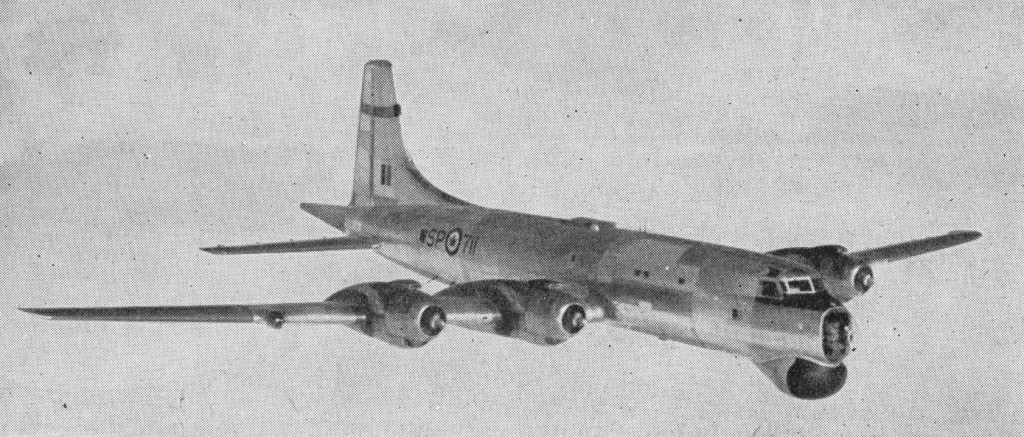
The first 13 built were Mk.1, with the American APS-20 search radar. All others Argus (22) were Mk.2 with British ASV-21 search radar with the smaller radome.

Argus Mk.II

The Argus flew with 404 and 405 Sqd at Greenwood, Nova Scotia; 415 Sqd at Summerside, Prince Edward Island; and 407 Sqd at Comox, British Colombia, as Canadair CP-107 Argus.

The Wright engines were fitted for low specific fuel consumption and, on the 31 may 1974, 711, a 407 Squadron Argus Mk.1 from Comox, flew 31.1 hours straight with no external or added fuel tanks.

The Argus served for 24 years and during this time only 2 of the 33 Arguses built were lost. 20727 of 404 Squadron crashed near Puerto Rico during night exercise on March 25 1965. 10737 crashed on landing at Summerside on March 31, 1977 when it collided with a Lockeed Electra, which Canadair had modified for Ice reconnaissance work.The last operation work took place on November 10 1980, replaced by the P-3 Orion. In 1982 Bristol Metal Industries of Toronto bought 24 Arguses and melted them down on the spot. It was argued that the Canadian government did not want them to fall into the wrong hands. The remaining Arguses have found a new role as display models at Air Bases and Canadian museums.

Gallery

CL-28 Argus
Engines: 4 x Wright R-3350-EA1 Cyclone, 2535kW, 3649 shp
Wingspan: 43.37 m / 142 ft 3 in
Length: 39.26 m / 129 ft 10 in
Height: 11.79 m / 39 ft 8 in
Wing area: 192.77 sq.m / 2074.96 sq ft
Max Take-off weight: 71214 kg / 157001 lb
Empty weight: 36741 kg / 81000 lb
Fuel capacity: 7188 Gal
Max speed: 507 km/h / 315 mph
Ceiling: 7620 m / 25000 ft
Service ceiling: 20,000 ft
Range: 9495 km / 5900 miles at 175-200 mph
Crew: 15
Armament: 3629kg internal weapons / 1724kg on external hardpoints

Canadair C-4 / C-5 / C-54G-M / North Star / Argonaut

Canadair C-4

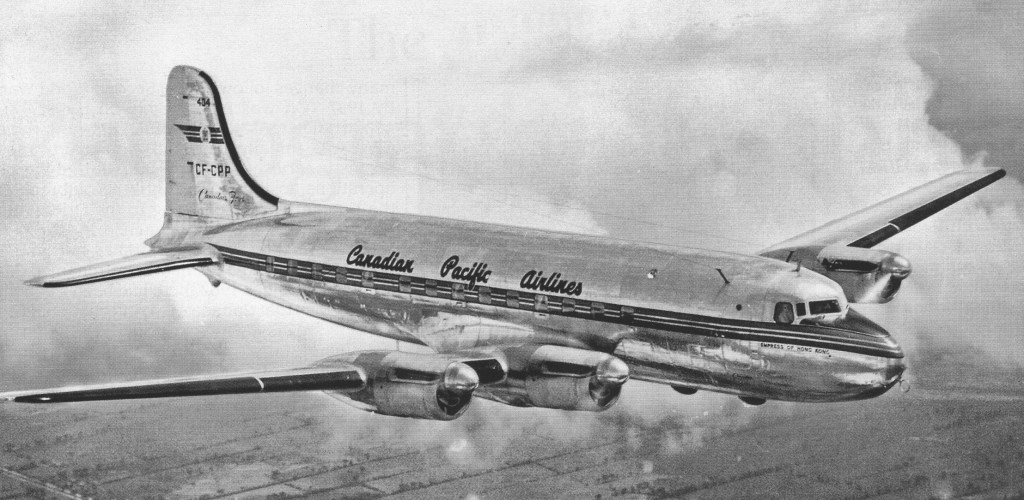
The Canadair Four is a progressive development of the DC-4M-2 which embodies features if both Douglas DC-4 and DC-6, and was adapted to take four 1730 hp Merlin 620 engines.

Canadair C-4 / C-5 / C-54G-M / North Star / Argonaut Article

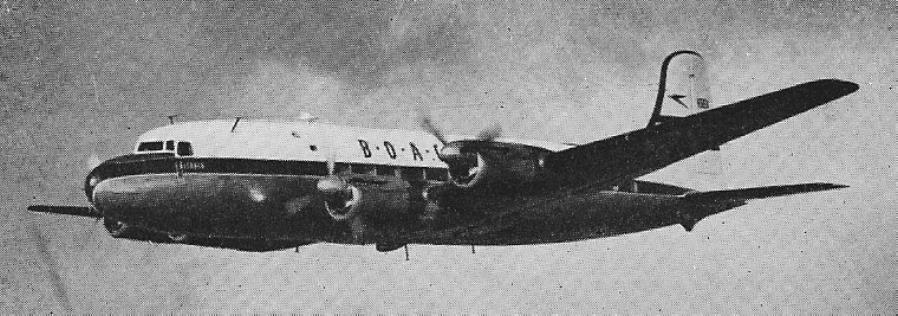
The DC-4M-2 is externally similar to the Canadair Four and was employed by the RCAF and Trans-Canada Air Lines. The Canadair Four has been delivered to Canadian Pacific Airlines and British Overseas Airways Corporation, the latter designating the type Argonaut.

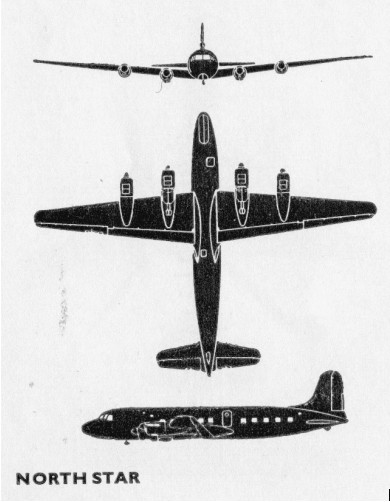
The R.C.A.F. uses a Canadian-built version of the Douglas C-54 known as the C-54G-M North Star, with Rolls-Royce Merlin 620 engines.

A total of seventy-four DC-4Ms and Canadair Fours were built by Canadair Ltd.

The single Canadair C-5 used by the R.C.A.F. is basically a North Star with 2,100 h.p. R2800 radials.

Canadair Four
Engine: Rolls-Royce Merlin 626, 1760 hp
Wing span: 117 ft 6 in
Length: 93 ft 7.5 in
Height: 27 ft 6.5 in
Empty weight: 46,832 lb
Loaded weight: 82,300 lb
Max cruise: 325 mph at 25,200 ft
Max cruise: 280 mph 12,800 ft
Service ceiling: 29,500 ft
Passenger capacity: 40

C-54G-M North Star

Canadair

Canadian Vickers Ltd was established 1911 at St Hubert, Montreal, as subsidiary of Vickers Ltd. Aircraft division formed 1922; first Canadian company to build aircraft commercially. First contract was for six U.K.-designed Viking IV amphibians for Canadian Air Force. These followed from 1924 by 61 Vedette single-engined flying-boats and amphibians, its most successful product, designed in Canada by W.T Reid. During the 1920s six other designs appeared: the Varuna, Vista, Vanessa, Velos, Vigil, and Vancouver. Of these, only the Varuna (eight) and Vancouver (six) flying-boats went into production. In the 1930s the company license-built Fairchild and Fokker designs and Northrop Deltas. During the Second World War built 40 Supermarine Stranraer flying-boats for the RCAF, 230 Consolidated OA-10 Catalinas for the USAAF, and 149 Canso amphibians for the RCAF, plus hulls for 600 more Catalinas and fuselages for 40 Handley Page Hampden bombers. Took over Canadian Associated Aircraft in 1941, and in following year moved to government factory at Cartierville, near Montreal. In December 1944 became a separate autonomous company under new name of Canadair Ltd.
Formed December 1944 at Cartierville, Montreal, from Aircraft Division of Canadian Vickers Ltd., as a “Crown Company.” Purchased 1946 by Electric Boat Company of New York; later that year became a subsidiary of General Dynamics Corporation. First contract (1944) to build the DC-4m (Merlin-engined version of the Douglas DC-4) for the RCAF. Eventually built 71, including commercial versions, and converted many wartime C-47s into postwar commercial DC-3s. Since 1949 has license-built more than 1,900 North American F-86 Sabre jetfightersforthe RCAF and the U.S. Military Assistance Program; more than 700 Lockheed T-33 SilverStar jettrainers; 200 Lockheed F-104 Starfighters for the RCAF; and 240 Northrop F-5s for the Canadian Armed Forces and Royal Netherlands Air Force.
Products of its own design have included the CL-28 Argus Maritime patrol aircraft (32 built); CL-41 jet trainer/ground-attack aircraft (210 for Royal Canadian and Malaysian Air Forces); 39 CL-44 Yukon and 44 military/civil transports; three prototypes of the CL-84 tilt-wing VTOL research aircraft; CL-215 twin piston-engined firefighting and utility amphibian (first flown October 1967) and its CL-215T twin-turboprop reengined derivative (first flown June 1989); and Challenger 600 wide-body business jet (first flown November 1978) and 601 follow up. Company was repurchased by the Canadian government in December 1975. Other programs included the CL-89 battlefield reconnaissance RPV, major subcontract work for the U.S. Navy’s P-3C Orion and its Canadian derivative, the CP140 Aurora, and manufacture of components for other companies.
Canadair became part of Bombardier Aerospace Group in December of 1986, renamed Bombardier Inc. Canadair.

Campbell-Jones Ladybird

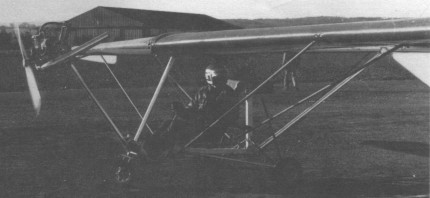
Single seat single engined high wing mono¬plane with conventional three axis control. Wing has swept back leading edge, unswept trailing edge and tapering chord; cruciforin tail. Pitch control by elevator on tail; yaw control by fully flying rudder with additional fin; roll control by wing warping; control inputs through stick for pitch/roll and pedals for yaw. Wing braced from below by struts; 100% double surface. Undercarriage has three wheels in tricycle formation; coil spring suspension on nose¬wheel and disc spring suspension on main wheels. Push right go right nosewheel steer¬ing connected to yaw control. Brake on nosewheel. Aluminium tube framework, without pod. Engine mounted at wing height driving tractor propeller.
Although the Ladybird is the first microlight to carry his name Mike Campbell Jones is no stranger to the micro¬light industry, having worked at one time or another for Hiway and Huntair in Britain, and Fulmar and the EMC 2 company in Belgium.
The Ladybird does not set out to be a high performance aircraft, at least not in terms of climb rate and speed. Instead, Mike has tried to create a light, simple machine with a good glide ratio and pleasant handling. The pro¬totype Ladybird was shown at the Long Marston fly in during August ’82 and was generally well received; however it was obviously in need of refinement and since then push rods and bell cranks have re¬placed control cables, the rudder has been down sized to eliminate over sensitivity and a differential movement has been built into the wing warping mechanism, to give the ‘up’ wing more movement than the ‘down’. The Ladybird’s most unusual feature is its wing warping mechanism, however, this mechanism is not just for roll control; a separate lever allows the pilot to twist both wings equally to adjust the speed range, thus permitting the pilot to select a slower stall speed in preparation for a tricky landing.
In 1983, the aircraft was powered by a Hiro engine, but Mike was not satisfied with its reliability and was consider¬ing substituting the 330 Robin for production aircraft.

Engine: Hiro Delta Mk I, 22 hp at 7500 rpm.
Propeller diameter: 54 inch, 1.37m.
Gearbox reduction, ratio 3.0/1.
Max static thrust 130 lb, 59 kg.
Power per unit area 0.16hp/sq.ft, 1.7hp/sq.m
Fuel capacity 4.8 US gal, 4.0 Imp gal, 18.2 litre.
Empty weight 250 lb, 113kg.
Max take off weight 475 lb, 215kg.
Payload 225 lb, 102 kg.
Max wing loading 3.49 lb/sq.ft, 17.1 kg/sq.m.
Max power loading 21.6 1b/hp, 9.8kg/hp.
Load factors +6.0, 3.0 design
Length overall 18.0 ft, 5.50 m.
Height overall 7.4ft, 2.26m.
Wing span 36.1ft, 11.00m.
Chord at root 4.6ft, 1.40m.
Chord at tip 3.0ft, 0.90m.
Dihedral: 2deg.
Sweepback: 7.5deg
Tailplane span 6.3 ft, 1.91 m.
Fin height 2.0 ft, 0.61 m.
Total wing area 136 sq.ft, 12.6 sq.m.
Fin area 1.5sq.ft, 0.14 sq.m.
Rudder area 9.5sq.ft, 0.88 sq.m.
Tailplane area 10.0 sq.ft, 0.93 sq.m.
Total elevator area 22.0 sq.ft, 2.04 sq.m.
Wing aspect ratio 9.64.
Wheel track 5.0 ft, 1.52 m.
Wheelbase 5.5 ft, 1.68 m.
Nosewheel diameter overall 13 inch, 33 cm.
Main wheels diameter overall 13 inch, 33 cm.
Floats, dimensions length 12 ft, 3.7 m.
Max level speed 55 mph, 88 kph.
Never exceed speed 65 mph, 105 kph.
Max cruising speed 50 mph, 80 kph.
Economic cruising speed 45mph, 72kph.
Stalling speed 25 28mph, 40 45kph.
Best glide ratio with power off 13/1 at 45 mph, 72 kph.
Take off distance 150 ft, 45 m.
Land¬ing distance 100ft, 30m.
Service ceiling 3000ft, 910m.
Range at average cruising speed 100 mile, 161 km.

Campbell Cougar

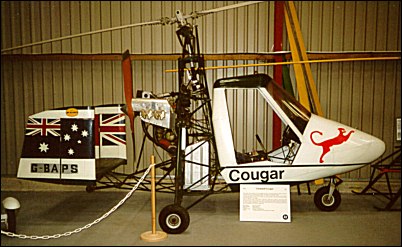
The Campbell Aircraft Company was founded in the late 1950’s to develop and build autogyros and in 1969 began production of the single seat Cricket autogyro. This was later followed by a two-seat project and the construction of a single seat prototype was carried out by Western Airways at Weston-super-Mare Airport in early 1973. Powered by a single Rolls Royce Continental O-240-A 4-cylinder ‘flat-four’ piston engine it first flew in April 1973.

Cricket autogyros were still being manufactured in 2007, and Peter Lovegrove who was the original designer of the Cougar and Cricket was still involved.

Campbell Aircraft Ltd      

Based at Hungerford, Berkshire, Campbell acquired U.K. rights for manufacture and sale of Bensen range of U.S. Gyro-Gliders and Gyro-Copters in 1959. First license-built example flew August 1960. Bensen range reduced to two models in 1969, when Campbell designed own two-seat light autogyro, the Curlew. Development abandoned in favor of the single-seat Cricket in July 1969; 47 were built by April 1972. Cougar single/two-seat prototype flew March 1973, but was not produced.