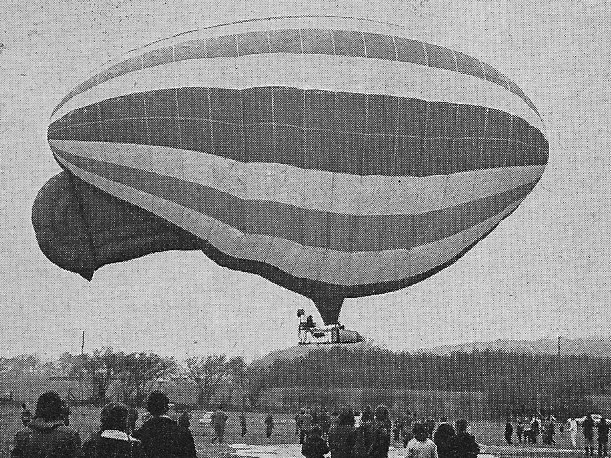
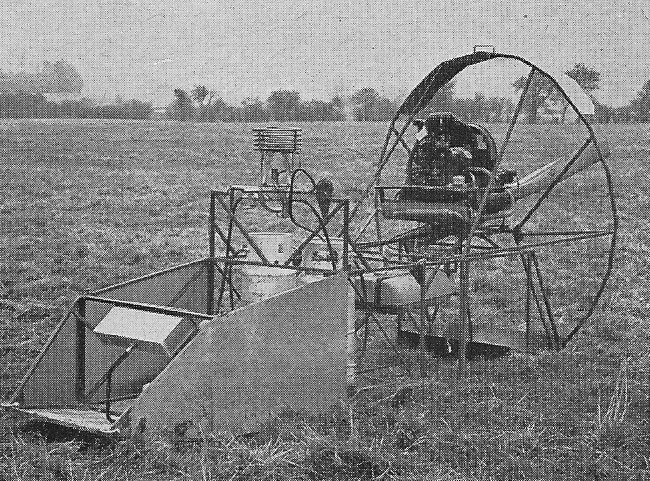
Cameron M Srs

M-53
1972
Persons: 2
Diameter: 49 ft
Height: 64 ft
Volume: 53,000 cu.ft
Weight: 425 lb
Payload: 1160 lb
Burner: 9.5 Million BTU/hr
Fuel capacity: 20 USG
Cost: (1972): US$ 7320
FAI AX-6

M-63
1972
Persons: 3
Diameter: 52 ft
Height: 67 ft
Volume: 63,500 cu.ft
Weight: 540 lb
Payload: 1270 lb
Burner: 9.5 Million BTU/hr
Fuel capacity: 30 USG
Cost: (1972): US$ 8030
FAI AX-7

M-70
1972
Persons: 3
Diameter: 55 ft
Height: 70 ft
Volume: 70,500 cu.ft
Weight: 600 lb
Payload: 1410 lb
Burner: 9.5 Million BTU/hr
Fuel capacity: 40 USG
Cost: (1972): US$ 8700
FAI AX-7

M-77
1972
Persons: 4
Diameter: 56 ft
Height: 72 ft
Volume: 77,500 cu.ft
Weight: 640 lb
Payload: 1550 lb
Burner: 9.5 Million BTU/hr
Fuel capacity: 40 USG
Cost: (1972): US$ 8850
FAI AX-7

Cameron V- Viva

V-65

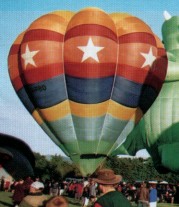
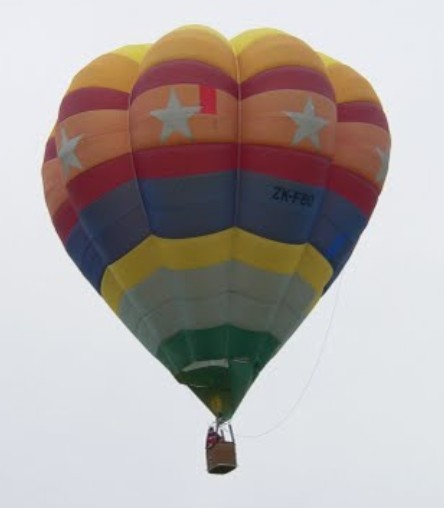
The V designation indicates the Viva model of envelope which consists of eight bulbous gores (segments).

Cameron V65 Viva

Viva
1972
Persons: 3
Diameter: 50 ft
Height: 75 ft
Volume: 56,000 cu.ft
Weight: 349 lb
Payload: 1120 lb
Burner: 9.5 Million BTU/hr
Fuel capacity: 20 USG
Cost: (1972): US$ 5500
FAI AX-6

V-65
Envelope cap: 65,000 cu.ft

V-77
Envelope cap: 77,000 cu.ft

V-90

Cameron A Srs

A-180

A-105
up to 4 plus pilot

A-120
up to 5 occupants plus pilot

A-140
up to 6 occupants plus pilot

A-180
up to 8 occupants plus pilot

A-210
Capacity: 210,000 cu.ft.
up to 10 occupants plus pilot

A-250

A-275
up to 12 occupants plus pilot

A-340
Crew: 1.
Pax cap: 20

A-300
up to 16 occupants plus pilot

A-500

1974 Cameron Balloons A-500

1974 Cameron Balloons A-500
Size: Pilot plus six passengers to pilot plus 28 passengers
Burners: Burners available in Double, Triple or Quad formation
Fabric: Nomex base with Nylon (Polyurethane-coated) and/or Hyperlast (Silicone-coated on both sides)
Colours: Choice of 26 + new shiny silver & gold.
Deflation System: RDS (Rapid Deflation System), Lock-top, Velcro Rip or Standard Parachute
Rotation Vents: 1 or 2 Envelope rotation vents available
Ancillary: Comprehensive range of baskets available from Standard to Safari specification

A-530
up to 28 occupants plus pilot

Cameron Balloons

Cameron Balloons is a company established in 1971 in Bristol, England by Don Cameron to manufacture hot air balloons. Cameron had previously, with others, constructed ten hot air balloons under the name Omega. Production was in the basement of his house, moving in 1972 to an old church in the city. In 1983 Cameron Balloons moved into its current premises in the former Robinsons paper bag/printing factory (built in 1887 in the Bedminster area of the city). In 1989 the company received the Queen’s Award for Export.

Output has grown to around 500 balloons per year. As of December 2007[update], Cameron Balloons accounted for 1,073 of the 1,553 hot air balloons registered with the United Kingdom Civil Aviation Authority.[1] Cameron Balloons is also famous for its special shapes, the first being Robertson’s Golly, constructed in 1975. Most special shapes are made for commercial advertising, but some have been bought privately. Notable amongst these private buyers is the late Malcolm Forbes of Forbes magazine, who commissioned a number of special shapes, including Harley-Davidson motorbike, Sphinx, bust of Beethoven, French Chateau, Pagoda and Minaret.

The Bedminster factory occupies three floors. Most factory space (first and second floors) is devoted to laying out the hundreds of yards of fabric which is sewn together by machinists. If the detail on the balloon is intricate, to save cost and weight, the designs may be sprayed or painted on instead.

The company also makes airships, helium balloons and static inflatables. It has been involved in record breaking balloon flight attempts including trans-Atlantic, altitude and distance records.

1982: Cameron Balloons, 3600 Elizabeth Road, Ann Arbor, Michigan 48103, USA.
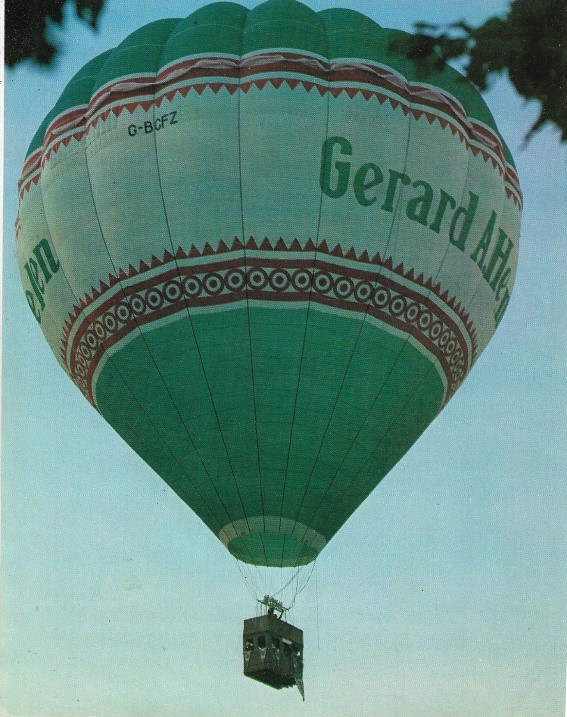
Cameron builds balloons varying in envelope size from 31,000 to 210,000 cubic feet (the company also built a 500,000 cubic foot, 32 ¬passenger monster for Heineken). Standard equipment includes an inflation scoop, instru¬ments in an oak case, appropriate number of tanks, fire extinguisher and envelope bag. Prices range from $7,285 to $24,000 in 1982.

Later in 1994, Airborne Group Plc (UK), and its various divisions, including Thunder & Colt Ltd., UK were placed into receivership. The hot air ballooning division, Thunder & Colt Ltd. (UK), was purchased in December 1994 by Cameron Balloons Ltd.

Cameron has integrated the Thunder & Colt product range, notably the AS-series hot air airships, into its own catalogue, while Sky’s products have been discontinued. Lindstrand Balloons continues to operate as an independent company with separate management and its own designs and products.

In the late-1990s, Cameron Balloons and its owner Don Cameron acquired two-thirds ownership of Lindstrand Balloons. Cameron bought the majority stake in Lindstrand Balloons from Rory McCarthy, a British industrialist associated with Richard Branson, who had invested in Lindstrand to support Branson’s series of record-setting balloon flights. The remaining third of the company is owned by its founder Per Lindstrand.

Despite Cameron’s ownership, Lindstrand Balloons continues to operate as an independent company with separate management and its own distinct designs and products. Per Lindstrand also independently operates a separate company, Lindstrand Technologies, which designs and builds gas balloons, innovative buildings, specialized aerospace equipment (including an advanced parachute for the Beagle 2 Mars-lander) and inflatable structures including aircraft hangars, plugs for fire-containment for road tunnels and flood prevention systems.
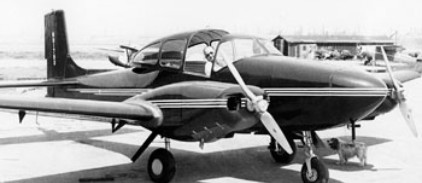
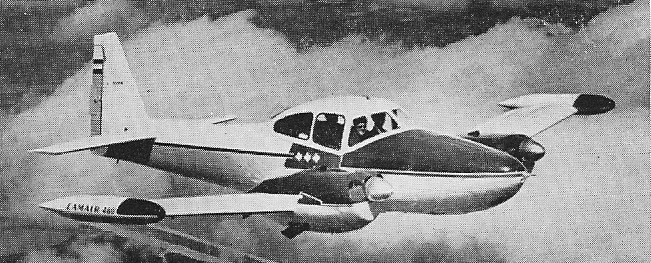
Camair Twin Navion

The Camair flew for the first time in 1953 and was designed to meet the requirements of the Cameron Iron Works. The company was so pleased with the results of the prototype (powered by two 225 hp Continentals) that it decided to produce similar conversions of the Navion single-engine airplane on a commercial
basis.

The designation Camair 480 indicates the combined power of the twin 240 hp Continental powerplants used in the production model. Starting with a North American/Ryan Navion, structural modifications were carried out to allow for the increased horsepower and weight of the two engines, while aerodynamic, comfort, and styling refinements were added, including increased fin and rudder area, a longer fuselage nose, and two 29 Imp.Gal wingtip tanks. Building of new aircraft was suspended; however, the Camair Aircraft Corp. continued to supply spare parts to Twin Navion owners.

Camair 480

In all, four models were built: the Model A prototype with two 225 hp Continentals, the Model B with twin 240 hp Continentals, the Model C with twin 260 hp Continentals, and the Model D with two 300 hp Continentals.

480
Engines: 2 x Continental O-470-B, 240 hp
Span: 34 ft approx.
Length: 27 ft 11 in
Empty weight: 2730 lb
Loaded weight: 3930 lb
Cruise 75 %: 192 mph
ROC: 1750 fpm
Service ceiling: 22,000 ft
Range: 900 mi

D
Engines two 300 hp fuel-injected Continentals
Gross wt. 4,500 lb
Empty wt. 3,000lb
Fuel capacity 188-200USG
Top 215 mph
Cruise 200 mph
Stall 60 mph
Initial climb rate 2,000fpm
Ceiling 22,000ft
Range 900sm
Takeoff run 400ft
Landing roll 600ft
Seats 4

Call-Air Model A

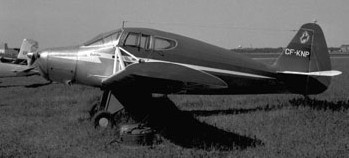
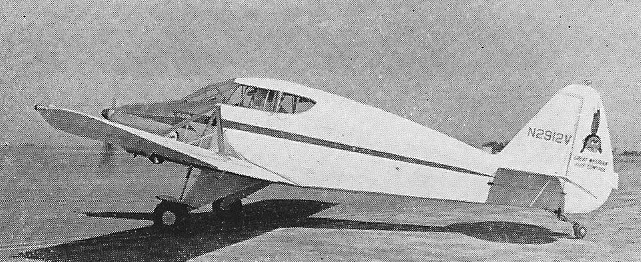
The first CallAir flew in 1941 and was designated the Model A. The last version was introduced in 1957 and was named the A-6. Throughout the years of its existence, the basic difference between any of the models was the powerplant; otherwise, the Model A-4 differed little externally from the original Model A. The CallAir was built with mixed construction: fabric-covered wooden wings and a fabric-covered steeltube fuselage.

The Model A-2, with a 125-hp Lycoming, and the Model A-3, with a 125-hp Continental, were produced during the years between 1946 and 1948.

Call-Air 100 Model A-2

The first production models of the A-4 appeared in 1955, and the major refinement was the addition of 25 more horsepower with the installation of a 150-hp Lycoming. All models shared the same two-to three-seat cabin and low wing with exposed struts.

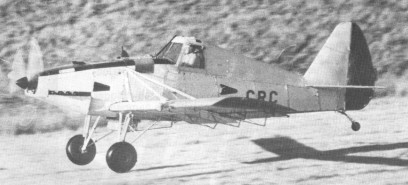
Another version of the CallAir was introduced in 1956 and was basically an agricultural development of the Model A-4. Designated the A-5, it was normally flown as a single-seater with the cockpit offset to the starboard side due to the inclusion of the dust hopper.

The Model A-6 flown in 1957 was identical, apart from another jump in horsepower to a 180-hp Lycoming.

CallAir A-9                                        courtesy Larry in NC

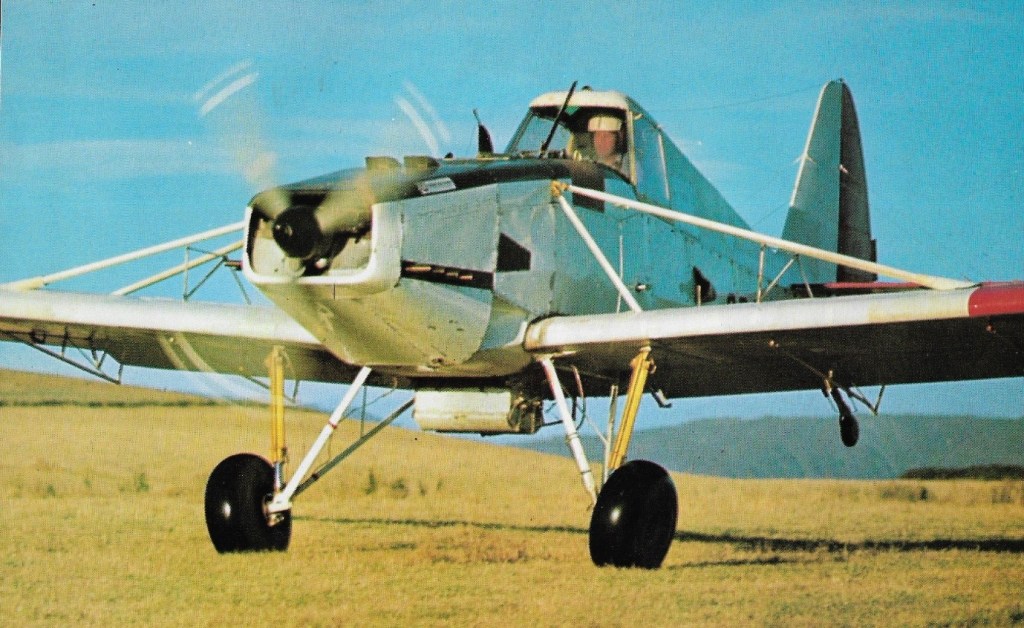
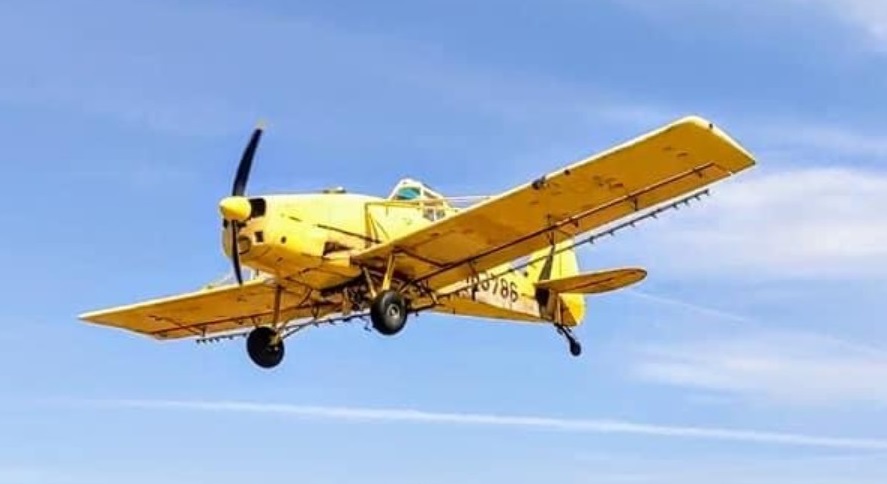
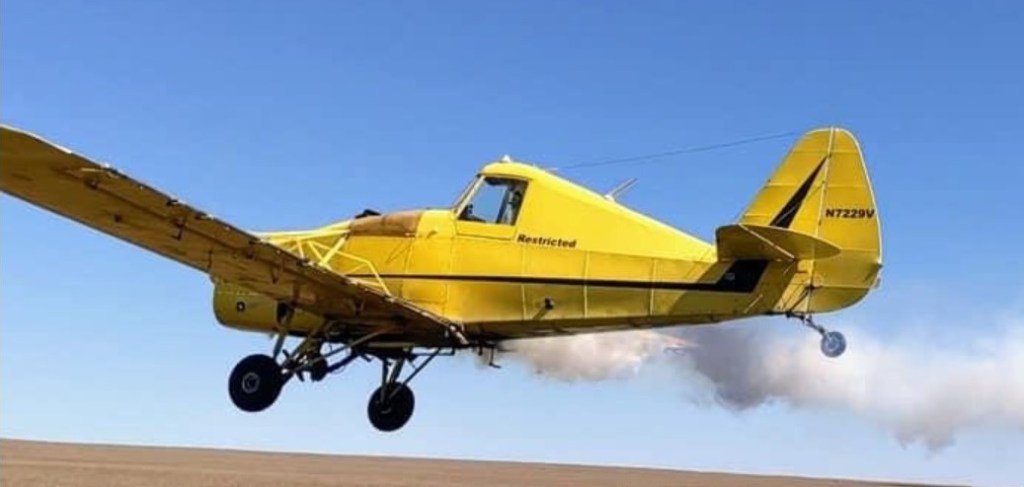
The Intermountain Manufacturing Co. developed a series of low-priced agricultural aircraft from the CallAir, and the first airplane rolled off the production line in 1963. The A-9 featured a 235-hp Lycoming; its top speed was now 130 mph, and its climb rate was now 650 fpm. The dust hopper was moved to a position in front of the cockpit.

CallAir A-9                                        courtesy Larry in NC

A-1
Seats 2-3
Gross wt. 1,550 lb
Empty wt. 1,000 lb
Fuel capacity 25 USG
Engine 100-hp Lycoming
Top 115 mph
Cruise 105 mph
Stall 40 mph
Initial climb rate 500fpm
Ceiling 13,000ft
Range 260sm

A-2
Seats 2
Gross wt. 1,550lb
Empty wt. 975lb
Fuel capacity 30USG
Engine 125- hp Lycoming
Top 120 mph
Cruise 109 mph
Stall 45 mph
Initial climb rate 1,000fpm
Ceiling 17,500ft
Range 456sm
Takeoff run 426ft
Landing roll 300ft

A-3
Seats 2
Gross wt. 1,550lb
Empty wt. 975lb
Fuel capacity 30USG
Engine 125- hp Continental
Top 120 mph
Cruise 109 mph
Stall 45 mph
Initial climb rate 1,000fpm
Ceiling 17,500ft
Range 456sm
Takeoff run 426ft
Landing roll 300ft

A-4
Engine 150-hp Lycoming
Seats 2-3

A-5
Seats 1

A-6
Engine 180-hp Lycoming

A-9
Engine 235-hp Lycoming
Top speed 130 mph
Climb rate 650 fpm.

Call-Air / Callair

Call Aircraft Company formed originally as Call-Air in 1940-1941 by Renel, Ivan and Spencer Call to design and develop the Call-Air Model A two-seat light Cabin monoplane with Continental flat-four engine. Updated version with Lycoming flat-four certificated in 1946. Other models were the A-2 (Lycoming) and A-3 (Continental). Named changed to Callair Incorporated around 1950, producing the Model 150 (Callair A4) in 1955. A-5 and A-6 (uprated) were agricultural adaptations. Callair was purchased by Intermountain Manufacturing Company in 1962, and this company continued the development of aircraft for agricultural use.