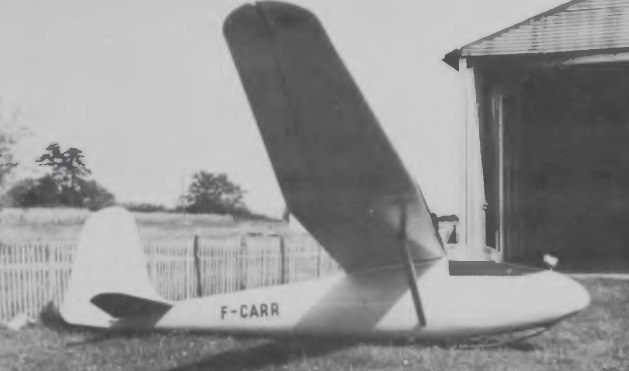
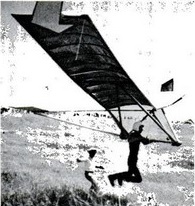
This single-seater first flew in 1950 and was intended for training in performance and distance flying, and for pilots who aimed to qualify for the French ‘D’ licence.
It is a semi-cantilever high wing monoplane with a small bracing strut each side for the singlespar wooden wing, which is covered partly with plywood and partly with fabric. The air brakes consist of two staggered rows of three semi-circular metal plates on each side of the wing just outboard of the bracing strut; these rotate on their axes to protrude above and below the wing surface or to be withdrawn into the wing section. No flaps are fitted, And the oval-section fuselage is of all-wood construction with the pilot sitting under a small canopy. The landing gear consists of a fixed monowheel with a sprung nose-skid and a tailskid, and the tail unit is also of wooden construction.
There were still about seven examples of the C 311P on the French register in 1979.
Castel C311P Span: 45 ft 11 in Wing area: 158 sq ft Aspect ratio: 13.3 Empty weight: 345 lb Max weight: 537 lb Speed at best gliding angle: 40.3 mph Min sinking speed: 2.1 ft/sec
Established at Sao Paulo, Brasil; developed Casmuniz 52, first all-metal twin built in Brazil. Designed for short-field, limited- maintenance operations, with two Continental E185 engines. The four/five-seat Casmuniz 52 was first flown in April 1952 and subsequently taken over for flight test and production by Oficina de Mantencao e Recuperacao de Avioes Ltda.
The cassutt 111 M Sport Racer was designed as a Formula 1 racing aircraft by Tom Cassutt, an airline pilot, built in 1954, and is mid-wing. The Cassutt is a single place, full cantilever, high performance aircraft. It is fully aerobatic and meets the specifications for competitive racing, “G” loading, safety characteristics and visibility.
The airframe is basically a welded chrome moly steel tube structure, the fin being built integral with the fuselage. Similarly, the full span ailerons, tailplane, rudder and elevators are welded steel tube and fabric covered members. The area of the cockpit is skinned with aluminium alloy sheet or molded fiberglass cowlings from the cockpit forward. A sheet metal spine decking rounds off the sharp apex of the fuselage behind the cockpit.
The wing is one piece of constant chord and incorporates 18 built up ribs spruce, 3 ply laminated main spar, solid leading edge and rear spar and covered with a 45 degree bias ply skin. Truss ribs are built of spruce with skins comprised of four sheets of 3 ply plywood. The ultimate load factor is +-12g. The undercarriage consists of a spring steel one piece main gear bolted to the fuselage with four bolts and a steerable tailwheel. A 9 Imp gallon fuel tank is located behind the firewall. Full span ailerons driven by two push rods within the fuselage. Stabilizer and elevator are one piece tube assembly. Stabilizer mounts to longeron with four bolts and elevator mounts to stabilizer with three hinges. The length, height and width of the canopy and cockpit can be altered as desired during construction as required to fit the builder.
As part of a scheme to introduce this kind of air racing in Britain, Airmark Ltd built in 1969 their first Airmark/ Cassutt 111 M. Powered by a 95 hp RollsRoyce/Continental engine it has a maximum level speed of 196 mph (315 km/h).
Powered by the Continental 0-200, 100 H.P. engine, it cruises at 185-200 MPH at approximately 6 gallons per hour.
IIIM Engine: 1 x Continental C-95, 95 hp. Wing span: 14 ft 0 in (4.54 m). Length: 16 ft 0 in (4.88 m). Height: 4 ft 3 in (1.3 m). Max TO wt: 830 lb (376 kg). Max level speed: 207 mph (333 kph).
Sport Model Engine Continental 0-200, 100 hp Wing span 17 foot Wing cord 54 inch Wing area 76.5 sq.ft Wing loading 11.1 lbs/sq ft. Fuselage length 16 feet Overall height 4 feet Cockpit length 4 ft 6 in Fuel capacity 15 USgallons Range 450 miles Empty weight 500 lbs Gross Weight 850 lbs Stall speed 65 mph Climb rate 2000 ft/min G load limit 7 G load ultimate 11 Top speed 200 mph plus Cruising speed 190 mph plus fully aerobatic.
Engine: Continental O-200 Wing span: 4.57 m Wing area: 6.28 sq.m MAUW: 400 kg Empty weight: 250 kg Fuel capacity: 53 lt Max speed: 440 kph Cruise speed: 300 kph Minimum speed: 105 kph Climb rate: 12.5 m/s Seats: 1 Plan price (1998): $125 Kit price (1998): $11,850
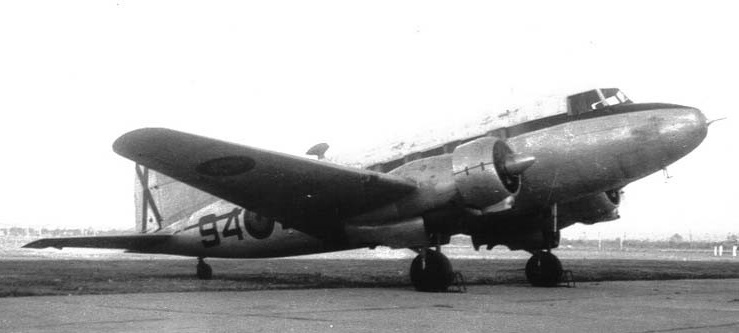
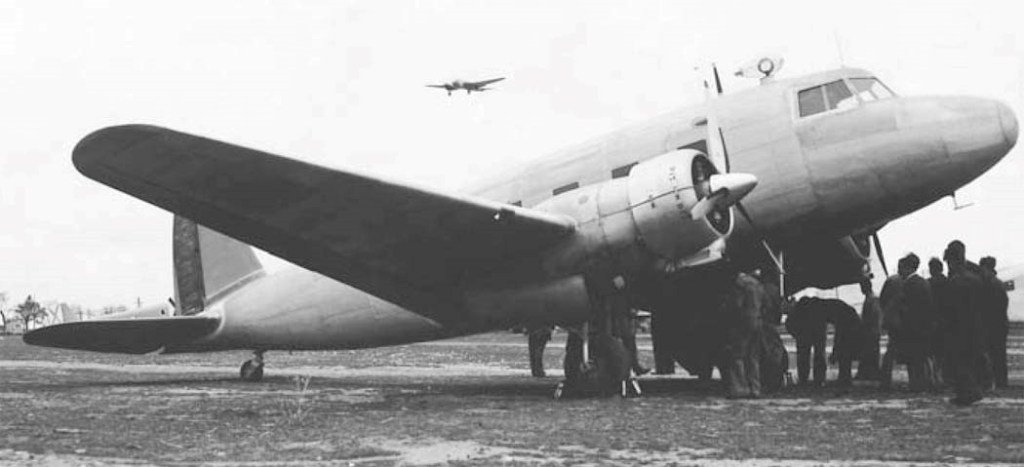
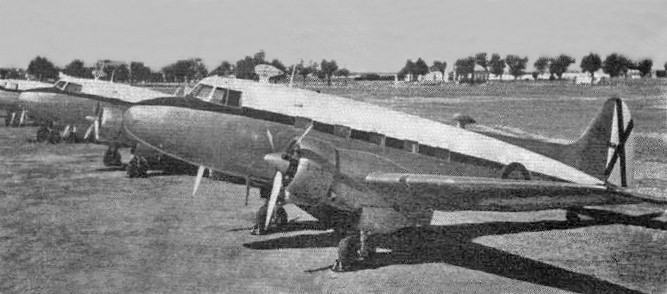
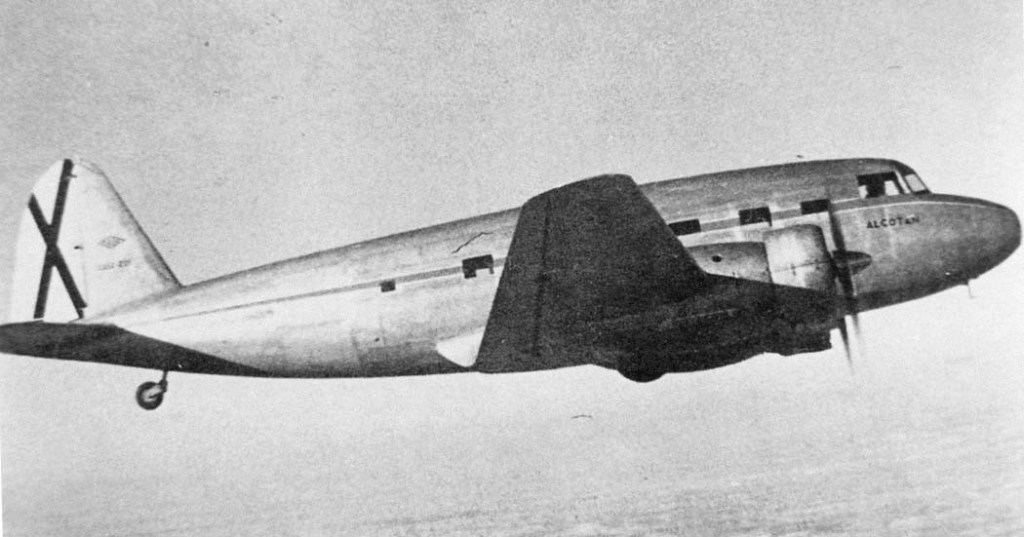
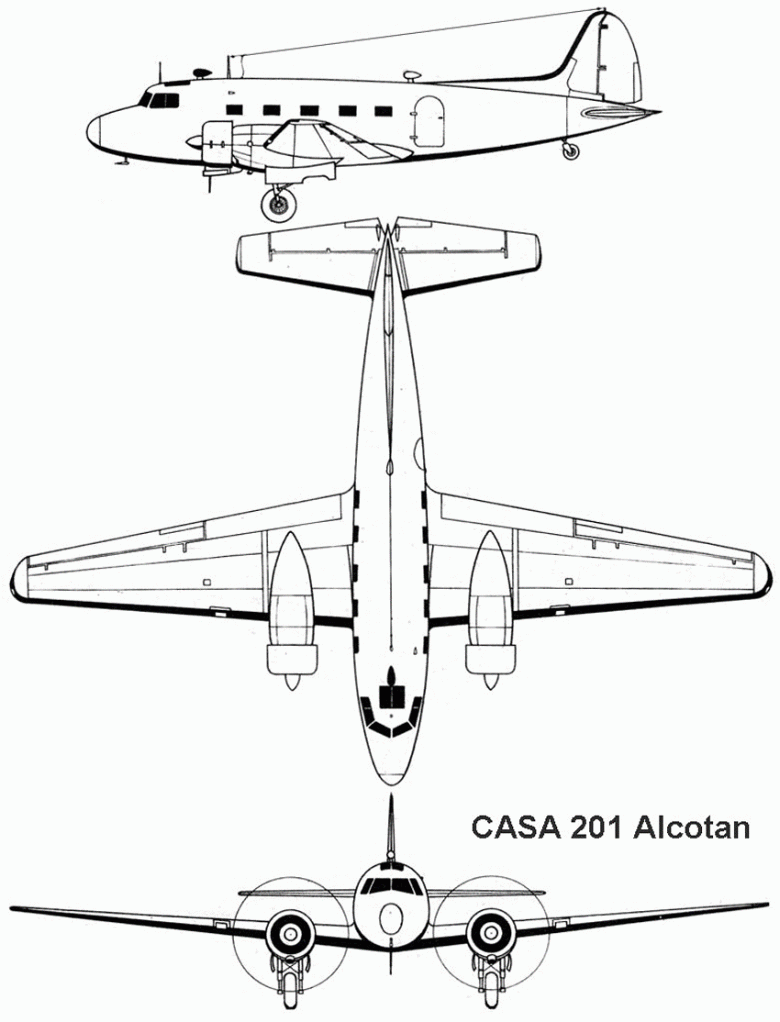
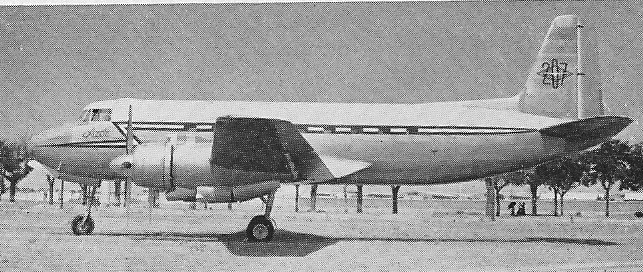
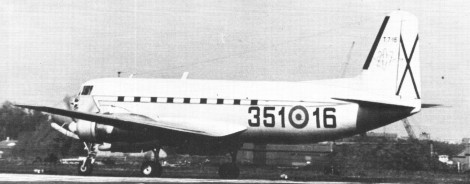
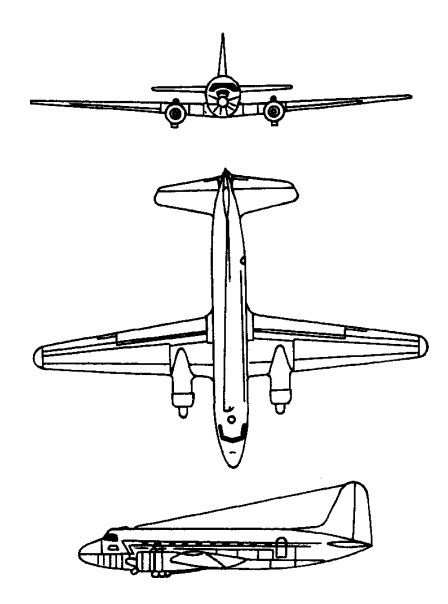
The C-201 was the result of an agreement between the Spanish government and manufacturer Construcciones Aeronáuticas SA (CASA), to develop a transport aircraft for the air force capable of carrying a payload of one tonne over a range of 1,000 km (620 mi). The design was a twin-engine low-wing cantilever monoplane of conventional configuration. The main units of the tailwheel undercarriage retracted into the engine nacelles.
Prototype C-201
Two prototypes were constructed, and the first of those first flew on 11 February 1949. An order for twelve pre-production aircraft and one hundred (100 by the Spanish Air Force as T.5) series aircraft was then placed. The pre-production machines were planned to demonstrate a range of different equipment fits for the airframe, enabling it for a variety of roles including personnel transport, training for bombing and photo-reconnaissance work, and instrument flying training. A number of engines were also to be evaluated, including the Armstrong Siddeley Cheetah that had powered the prototypes, the Pratt & Whitney R-1340, and the locally produced ENMASA Sirio.
The Alcotán project stalled, due to problems in the supply of powerplants and propellers. Spain’s domestic engine industry was not capable of producing powerplants in sufficient quantity for the project, and Spain was unable to afford to import foreign engines. The production run had been scheduled to be completed before 1955, but the shortage of engines meant that by 1956, only eleven complete aircraft had been finished and delivered to the Spanish Air Force, designated T.5. In 1962, the project was finally cancelled, without the engine problem ever having been resolved. By then, CASA had 96 complete airframes in storage awaiting powerplants. Those were scrapped, and the Spanish government compensated the manufacturer for the debacle.
Variants: C-201A – personnel transport with Armstrong Siddeley Cheetah 27 engines C-201B – personnel transport with ENMASA Sirio S.VIIIA engines C-201D – instrument flying, navigation, and radio training version with Armstrong Siddeley Cheetah 27 engines C-201E – bombing and photo-reconnaissance training version with Armstrong Siddeley Cheetah 27 engines C-201F – instrument flying, navigation, and radio training version with ENMASA Sirio S.VIIA engines C-201G – bombing and photo-reconnaissance training version with ENMASA Sirio S.VIIA engines
C-201A Powerplant: 2 × Armstrong Siddeley Cheetah XXVII, 354 kW (475 hp) each Wingspan: 18.40 m (60 ft 4 in) Wing area: 41.80 m2 (450 ft2) Length: 13.80 m (45 ft 3 in) Height: 3.85 m (12 ft 8 in) Empty weight: 3,560 kg (7,830 lb) Gross weight: 5,100 kg (11,230 lb) Maximum speed: 325 km/h (203 mph) Range: 1,000 km (620 miles) Endurance: 4 hours Service ceiling: 5,600 m (18,370 ft) Crew: Two pilots Capacity: 10 passengers
201-D Crew trainer Engines: 2 x Armstrong Siddeley Cheetah 27, 475 hp Wingspan: 60 ft 4 in Wing area: 450 sq.ft Length: 45 ft 3 in Height: 12 ft 8 in Empty weight: 7830 lb Loaded weight: 11,230 lb Max speed: 203 mph Service ceiling: 18,370 ft Range: 621 mi Endurance: 4 hr
201-E Crew trainer Engines: 2 x Armstrong Siddeley Cheetah 27, 475 hp Wingspan: 60 ft 4 in Wing area: 450 sq.ft Length: 45 ft 3 in Height: 12 ft 8 in Empty weight: 7830 lb Loaded weight: 11,230 lb Max speed: 203 mph Service ceiling: 18,370 ft Range: 621 mi Endurance: 4 hr
201-F Engines: 2 x E.N.M.A. Sirio-VII-A, 500 hp Wingspan: 60 ft 4 in Wing area: 450 sq.ft Length: 45 ft 3 in Height: 12 ft 8 in Empty weight: 7920 lb Loaded weight: 12,100 lb Max speed: 219 mph Service ceiling: 20,000 ft Range: 621 mi Endurance: 4 hr
201-G Engines: 2 x E.N.M.A. Sirio-VII-A, 500 hp Wingspan: 60 ft 4 in Wing area: 450 sq.ft Length: 45 ft 3 in Height: 12 ft 8 in Empty weight: 7920 lb Loaded weight: 12,100 lb Max speed: 219 mph Service ceiling: 20,000 ft Range: 621 mi Endurance: 4 hr
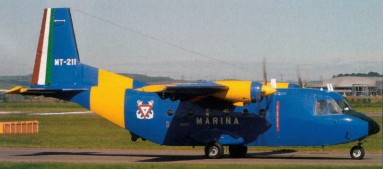
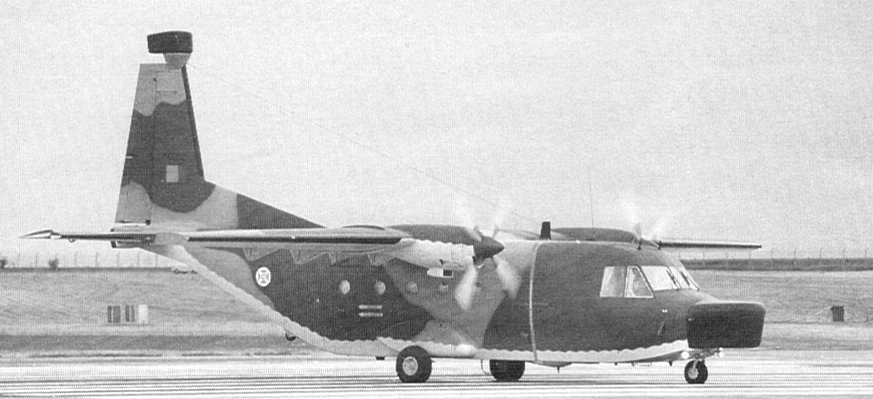
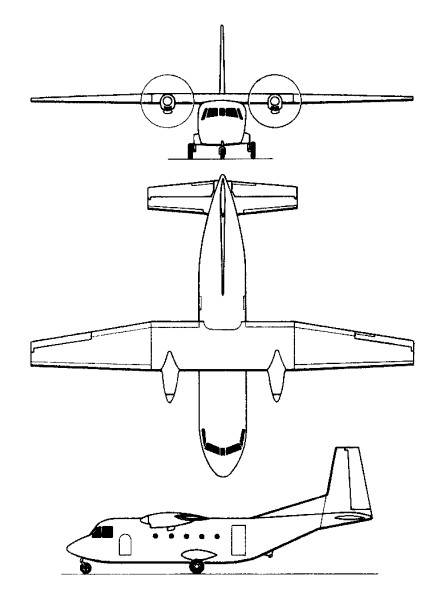
Design of the Aviocar originated to provide the Spanish Air Force with a general purpose transport and first flight was made on 26 March 1971. Active military roles include ASW and Maritime Patrol, with nose-mounted radar, specified role equipment and fuselage hardpoints for torpedoes, rockets or depth charges. Specially equipped ELINT/ECM versions of the Aviocar are used by Portuguese Air Force and others.
Powered by two 776 hp AiResearch TPE331 251C turboprops driving four blade propellers, the C.212 has an unpressurized fuselage with full section rear doors for heavy freight or for paradropping. Able to operate from unimproved 2,000-foot strips, loads, with a flight crew of two, include 2000 kg (4410 lb) of cargo, 15 paratroops and jumpmaster, or 12 stretcher patients and three attendants or sitting casualties. Versions are available for navigational instruction, air survey and other special roles, and studies have been made of armament schemes which include stores pylons for guns, bombs or rockets under the fuselage and wings. The prototype flew on March 26, 1971, and by late 1976 well over 100 had been sold. Since early 1987 the standard production version was the Series 300, which has an increased maximum take-off weight of 8,000kg (for the military variant), improved range and payload, and structural modifications including a redesigned nose and glassfibre wingtips. The military version can carry two 500 litre auxiliary fuel tanks on underwing hardpoints. The 26-seat commercial Series 300 flew in September 1984. Several special-mission Aviocars are offered, including an Elint/ECM version and an ASW/maritime patrol model. The ASW/maritime patrol model is equipped with a nose-mounted 270Oscan APS-128 search radar for maritime patrol or a 3600 radar for ASW duties. Two underwing hardpoints are provided. The Mexican Navy purchased nine Aviocars for maritime duties (plus another for VIP transport) without radar but retaining other maritime equipment. The 212 was manufactured under licence by IPTN from 1976 as the NC-212. By 1990 a total of 435 aircraft were built.
Engines two 908 shp Garrett-AiResearch turboprops Seats 26. Gross wt. 16,091 lb Empty wt. 9,072 lb Fuel capacity 555 USG Top speed 242 mph Initial climb rate 1,730 fpm Ceiling 28,000 ft Range 1,070 miles. Takeoff distance (50 ft) 1,588 ft. Landing distance (50 ft) 1,700 ft.
C-212-200 Engines: 2 x Garrett TPE331-10 turboprops, 671kW Max Take-off weight: 7450 kg / 16425 lb Loaded weight: 3915 kg / 8631 lb Empty wt: 4115 kg. Payload: 2770 kg. Wingspan: 19 m / 62 ft 4 in Length: 15.16 m / 49 ft 9 in Height: 6.68 m / 21 ft 11 in Wing area: 40 sq.m / 430.56 sq ft Cruise speed: 385 km/h / 239 mph Initial ROC: 455 m / min. Ceiling: 8500+ m. T/O run: 440 m. Ldg run: 250 m. Fuel internal: 2000 lt. Range w/max.fuel: 1620 km / 1007 miles Range w/max.payload: 760 km / 472 miles Crew: 2 Passengers: 15-26
C.212-200 CC First built: 1971. Engines: 2 x Garrett TPE-331-501 C, 900 shp. Props: Hartzell 4-blade, 110-in. Seats: 28. Length: 49.8 ft. Height: 21.8 ft. Wingspan: 62.3 ft. Wing area: 430 sq.ft. Wing aspect ratio: 9. Maximum ramp weight: 16,537 lbs. Maximum takeoff weight: 16,427 lbs. Standard empty weight: 9700 lbs. Maximum useful load: 6272 lbs. Maximum landing weight: 16,207 lbs. Wing loading: 38.2 lbs/sq.ft. Power loading: 9.1 lbs/hp. Maximum usable fuel: 3538 lbs. Best rate of climb: 1735 fpm. Service ceiling: 28,000 ft. Maximum single-engine rate of climb: 345 fpm @ 112 kts. Single-engine climb gradient: 182 ft/nm. Single-engine ceiling: 11,500 ft. Maximum speed: 200 kts. Normal cruise @ 10,000ft: 192 kts. Fuel flow @ normal cruise: 650 pph. Endurance at normal cruise: 4.9 hrs: Stalling speed clean: 84 kts. Stalling speed gear/flaps down: 71 kts. Turbulent-air penetration speed: 147 kts.
CASA C 212-300 Aviocar Engine: 2 x AlliedSignal TPE 331 10R, 662 shp Length: 53.15 ft / 16.2 m Height: 20.669 ft / 6.3 m Wingspan: 66.929 ft / 20.4 m Wing area: 441.324 sqft / 41.0 sqm Max take off weight: 16978.5 lb / 7700.0 kg Weight empty: 10650.2 lb / 4830.0 kg Max. weight carried: 6328.4 lb / 2870.0 kg Max. speed: 200 kts / 370 km/h Landing speed: 83 kts / 154 km/h Cruising speed: 166 kts / 308 km/h Initial climb rate: 1574.80 ft/min / 8.00 m/s Service ceiling: 26083 ft / 7950 m Wing load: 38.54 lb/sq.ft / 188.0 kg/sq.m Range: 329 nm / 610 km Crew: 2 Payload: 23-26 pax
The prototype, completed in August 1955, was powered by two 2040 hp Bristol Hercules 730 engines.
Following the production of ten of the basic C-207-A 30-passenger transport aircraft for the Spanish Air Force (designated T.7A), CASA completed ten C-207-C (T.7B) Azors equipped for cargo carrying.
C.207C Azor
C-207 Engines: 2 x Bristol Hercules 730, 1522kW Max Take-off weight: 16500 kg / 36376 lb Empty weight: 10600 kg / 23369 lb Payload: 3000kg / 6614 lb Wingspan: 27.8 m / 91 ft 2 in Length: 20.85 m / 68 ft 5 in Height: 7.75 m / 25 ft 5 in Wing area: 85.8 sq.m / 923.54 sq ft Max. speed: 420 km/h / 261 mph Cruise speed: 400 km/h / 249 mph Ceiling: 8000 m / 26250 ft Range w/max.payload: 2350 km / 1460 miles Crew: 4 Passengers: 40
The second aircraft of original design to be produced in Spain, the CASA 202 Halcon flew for the first time on 21 May 1953. Twenty were being produced for Iberia’s internal routes.
CASA 202 Halcon Engines: 2 x ENMA Beta B-4, 775 hp Wingspan: 70 ft 9 in Wing area: 617.6 sq.ft Length: 52 ft 6 in Height: 12 ft 6 in Empty weight: 11,615 lb Loaded weight: 17,900 lb Max speed: 192.5 mph at SL / 230 mph at 23,950 ft Cruise 70%: 205 mph Service ceiling: 23,950 ft Passenger capacity: 14-18 Crew: 3
CASA C 202 B Halcon Engine: 2 x Wright Cyclone R 1850 56, 1282 hp Length: 53.576 ft / 16.33 m Height: 20.899 ft / 6.37 m Wing span: 67.52 ft / 20.58 m Wing area: 602.784 sq.ft / 56.0 sq.m Max take off weight: 21278.3 lb / 9650.0 kg Weight empty: 13825.4 lb / 6270.0 kg Max. speed: 233 kts / 432 kph Cruising speed: 215 kts / 398 kph Service ceiling: 24934 ft / 7600 m Wing load: 35.26 lb/sq.ft / 172.0 kg/sq.m Range: 1485 nm / 2750 km Crew: 2 Payload: 8pax
Construcciones Aeronauticas SA formed 3 March 1923, with a factory at Getafe, to produce all-metal aircraft for the Spanish Air Force. Began by license-building Breguet XIX reconnaissance-bomber biplanes, followed by other aircraft of foreign design including Dornier Wai flying-boats (at Cadiz), Vickers Vildebeest torpedo-bombers, Gotha Go 145C biplane trainers, Junkers Ju 52/3m transports, Bucker Bu 131, and 133 aerobatic trainers and Heinkel He 111 medium bombers. Opened a design department after the Second World War; first series product was Dornier Do 27 general-purpose lightplane, followed by CASA-201 Alcotan, CASA-202 Halcon and CASA-207 Alcotan twin-engined transports of own design. Completed 70 Northrop F-5 fighters under license for Spanish Air Force. In 1972 took over Hispano Aviacion, followed by the ENMASA aero- engine concern in June 1973. Currently has three divisions, namely Aircraft, Maintenance, and Space: Aircraft division activities include design of aircraft and integrated structures; share in international Airbus, Eurofighter, and FLA programs; manufacture of structural parts and components for Boeing, Eurocopter, Northrop Grumman, and Saab aircraft; continuing development and production of C-101 Aviojet advanced and lead-in jet trainer/light attack aircraft (first flown June 1977), C-212 Aviocar (first flown March, and currently offered in Series 400 form as first flown April 1997) in transport and maritime versions, and development of the new ATX family of advanced trainers and light combat aircraft; and production of CN 235 via international Airtech company.
USA Formed in 1963 at Perkasie, Pennsylvania, to develop conversion schemes to improve payload and performance of standard U.S. light helicopters, i.e., Bell 47 and Hiller UH-12. A four-seat conversion of three-seat Bell 47G called the Carson Super C-4 was also produced. Company later became a helicopter overhaul organization and charter operator.
Doug Carmichael’s 1974 Home Grown I was designed and built as a student project at Cal State Poly, San Luis Obispo. The airframe is aluminium tubing, control surfaces are wood framed, and covering is aluminized Mylar. The tip-rudders are controlled by a drum on the right-hand hang tube.