Italy
Centra Volo a Vela, Politecnico di Mario, fundamentally a research and development center attached to Milan Polytechnic after Second World War to study soaring flight. Production included gliders and sailplanes, but in the late 1940s/early 1950s the Centra Volo a Vela also produced prototypes of the P.110 three/four-seat cabin monoplane and P.M. 280Tartuca single-seat low-wing monoplane.
Post WW2
CTA Heliconair HC-I Convertiplano
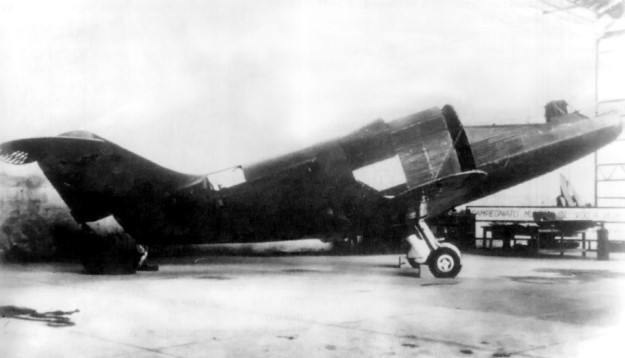
The Heliconair HC-Ib Convertiplano sits nearly finished in a hangar. The slit behind the cockpit was the intake for air used to cool the fuselage-mounted R-3350 engine. The scoop on the upper fuselage brought air to the engine’s carburetor. Note the Spitfire wings and main gear.
Immediately following World War II, Germany was prohibited from designing and manufacturing aircraft. Post war, Henrich Focke assisted with helicopter development in France and worked for a car company in Germany. He also spent some time in the Netherlands, where he began to design a VTOL aircraft that was capable of relatively high speeds. In 1952, Focke was recruited by the CTA (Centro Técnico de Aeronáutica or Technical Center of Aeronautics) to work in the recently established ITA (Instituto Técnico de Aeronáutica or Technical Institute of Aeronautics). The ITA was the first of four institutes formed by the CTA, all of which were located in São José dos Campos, Brazil. Brazil was working on building an aeronautics and aerospace industry and was actively recruiting German engineers. In addition to Focke, many of his associates and former co-workers were also recruited.
The CTA was impressed with Focke’s VTOL aircraft design and approved its construction. The CTA believed that the aircraft’s capabilities would allow it to reach remote parts of Brazil. Focke set to work on the aircraft—a tiltrotor convertiplane design that was partially inspired by the Fa 269. The aircraft was known as the Heliconair HC-I Convertiplano. Its fuselage and wings were fairly conventional for an aircraft, but it had of two sets of rotors. One pair of rotors was placed near the nose of the aircraft, and the other pair was placed between the wings and tail. All of the rotors were of a tractor configuration and rotated up for vertical flight. The HC-I accommodated two pilots in the cockpit and four passengers in the fuselage. The aircraft’s estimated performance included a top speed of 311 mph (500 km/h) and a range of 943 miles (1,517 km).
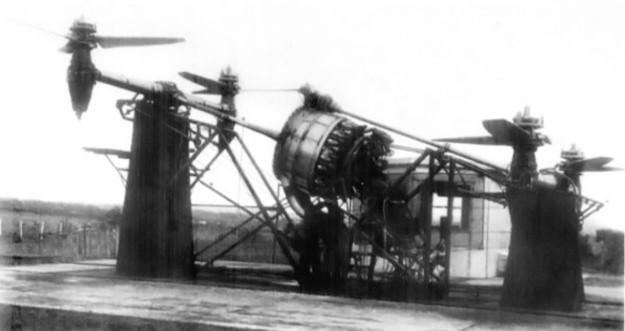
The test rig for the engine, transmission, gearboxes, shafts, right-angle drives, and rotors illustrates the complexity of the HC-Ib’s power system. The R-3350 engine did not have any Power Recovery Turbines, which means it was not a Turbo Compound engine.
To save time and money, the decision was made to build the HC-I using the wings and the horizontal stabilizer from a Supermarine Spitfire. A Spitfire XIVe (RM874) was purchased without its Rolls-Royce Griffon 65 engine from Britain by the Brazilian Air Attaché on 19 December 1952. A new fuselage was built to house a 3,000 hp (2,237 kW) Armstrong Siddeley Double Mamba turboprop engine behind the passenger compartment. However, Armstrong Siddeley and the British did not want one of their new, advanced engines being used in such a radical project and declined selling a Double Mamba engine to Brazil.
Focke and the Convertiplano team changed the HC-I’s design to accommodate a 2,200 hp (1,641 kW) Wright R-3350 radial engine and redesignated the aircraft HC-Ib. The R-3350 was larger and heavier than the Double Mamba, and it produced less power. Some sources state a Turbo Compound R-3350-DA3 (3,250 hp / 2,424 kW) was used, but images show that there are no Power Recovery Turbines on the engine installed in a test rig. Extensive modifications to the aircraft’s fuselage were required to accommodate the air-cooled engine. The passenger compartment was omitted, and the R-3350 was installed in the middle of the fuselage. An annular slit behind the cockpit was added to bring in cooling air for the engine. After passing through the engine’s cylinders, the air exited via a jet-like duct at the rear of the aircraft. The Spitfire’s landing gear was strengthened to compensate for the R-3350’s weight.
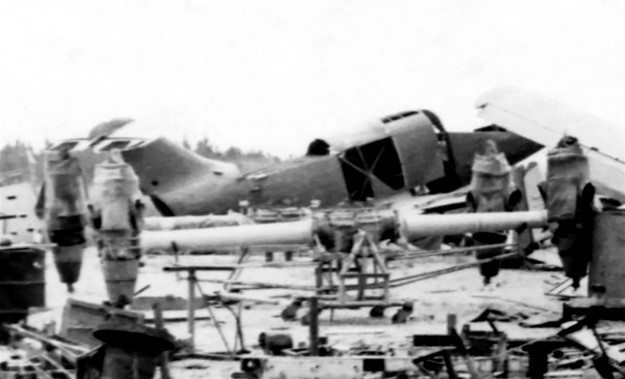
The HC-Ib sits in the background with the front and rear gearboxes and rotor drives in the foreground. The rotor blades, the only surviving component of the Convertiplano project, are not seen in the image. Note the opening at the rear of the fuselage, which was the exit for engine cooling air.
A gearbox transmission mounted to the front of the R-3350 split the engine’s power to two shafts. The front shaft extended from the engine to the front gearbox. The front gearbox had shafts that extended to the left and right. These shafts led to right-angle gearboxes that powered the front rotors. Power delivery for the rear rotors was more complex. A shaft extended vertically from the transmission on the front of the engine and met a right-angle gearbox positioned directly above the engine. From the right-angle gearbox, a shaft extended back to the rear gearbox. The rear gearbox had the same shafts and right-angle drives for the rear rotors as the front gearbox. The transmission and gearboxes were designed by Willi Bussmann and built by BMW in Germany. Bussmann was a former BMW employee and had worked with Focke on several Focke-Achgelis projects.
Each rotor consisted of three blades. The blades were built in Sweden and made of a steel frame that was covered with wood. The blades’ pitch automatically adjusted and had collective and cyclic control. The rotors were counter-rotating, with the right rotors turning counterclockwise and the left rotors turning clockwise. The HC-Ib had a 37 ft 6 in (11.42 m) wingspan and was 35 ft 3 in (10.74 m) long.
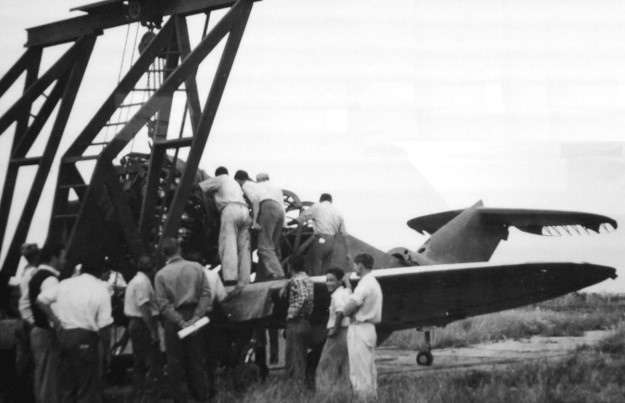
Given the state of the aircraft and the surrounding unchecked growth of vegetation, it can be assumed this image is of the R-3350 engine being removed sometime after the HC-Ib project was cancelled. The image does give proof that the engine was installed in the airframe at one point.
A rig was built, and tests of the engine, gearboxes, shafts, right-angle drives, and rotors began in late 1953. However, vibrations from the radial engine caused some issues that took time to resolve. The HC-Ib airframe was almost completely constructed and had its engine installed when the project was cancelled in 1955. The aircraft was more expensive than anticipated, and interest in the HC-1b had steadily declined after the switch to the R-3350 engine. To make matters worse, many of the Germans returned to Europe or went to the United States as their contracts with the CTA expired. Some Germans did stay and ultimately became part of Embraer. After the project was cancelled, the HC-Ib Convertiplano was left to rot in outside storage for some time and was eventually scrapped in the 1970s. There are some reports that the rotor blades are the only part of the aircraft that survived.
Centra Tecnico de Aeronautica / CTA
Centra Tecnico de Aeronautica, established at Sao Jose dos Campos as aeronautical research center in late 1950s by Brazilian Air Ministry; CTA originally had two divisions. A group within the IPD (Research and Development Division), Departamento de Aeronaves or PAR, was responsible for the BF-1 Beija-Flir (Humming Bird) two-seat helicopter, first to be designed, built and flown in Brazil.
Cavalier Aircraft Corp
Successor to Trans-Florida Aviation, acquired during 1960s type certificate for North American F-51 Mustang, producing tandem two-seat business/sport conversions of F-51D as Cavalier 2000 series, and building new single-seat F-51Ds for the USAF counterinsurgency Military Assistance Program. Prototype of Mustang II, two-seat COIN patrol/attack version equipped with heavier armament, flew December 1967; prototype Turbo Mustang III (with Rolls-Royce Dart) in 1969. Second prototype flew in April 1971, equipped with Lycoming TSS engine, by which time the program had been sold to the Piper Aircraft Corporation, but then the company was dissolved.
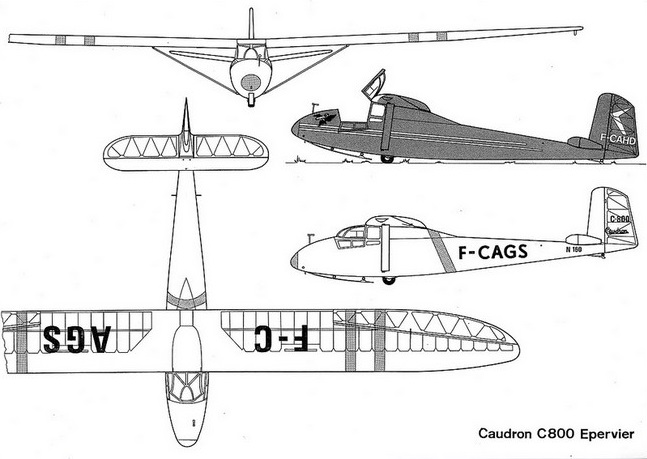
Caudron C.800 Epervier
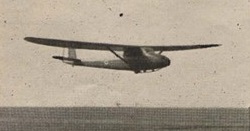
In the immediate postwar period, the French aerospace industry launched several campaigns to reactivate the activities of aircraft manufacturers. This gave rise, among other things to the exceptionally competative “Air 100” glider allowing the French to later participate in the International Competition Soaring. Meanwhile, other French companies also studied various kinds of gliders during the war years including Guerchais Roche.
Caudron was also one of these and at the request of the Ministry of Youth and Sport, which was looking for a twin seat trainer glider for all the French gliding clubs, designed the C800 in 1941 for just that purpose.
The first prototype flew in the free zone in 1942, before the German invasion. The training glider has always been known as the Caudron C-800 although its production was undertaken by SNCA du Nord at Meaulte (Somme) after SNCAN had absorbed the Societe Anonyme des Avions Caudron-Renault at the end of 1945 and taken over its designs.
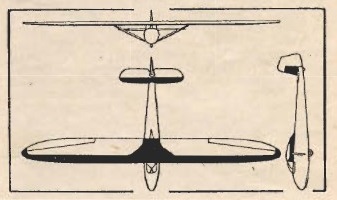
The C-800 is of conventional all-wood construction with mixed plywood and fabric covering; the high wing is braced and there is dihedral on the tailplane. The wing, with a wingspan of 16 m, was linen covered, as were the elevators and rudder. The landing gear consists of a fixed monowheel with brake with a sprung wooden skid under the forward fuselage and a tailskid. The two pilots have dual controls and there is an extra transparent panel below the cockpit canopy on each side that hinges downwards. The canopies complex appearance had numerous vertically opening sections and the whole was hinged at the top to allow the canopy to fall backward over the wing root. The seats were side by side and slightly offset, giving it an impressive fuselage width for a glider. Equipment includes spoilers, elevator trimmer, and complete panel of instruments.
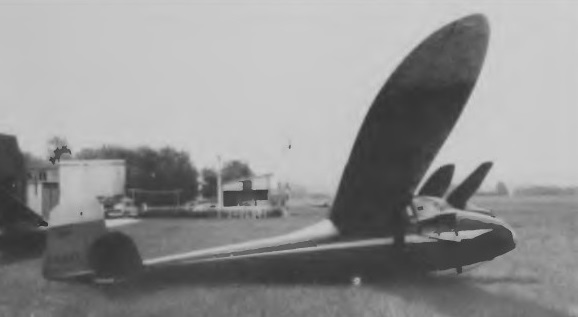
In 1946 the French Government ordered no less than 300 C-800s for use at clubs and elementary flying training schools. Repeat orders were also placed, and the type was at first known as the Epervier (or Sparrowhawk), although this name did not catch on and was later applied to the Morane-Saulnier MS 1500 light COIN aircraft of 1957.
By November 1947, 250 had been built. About two dozen C-800s were still on the French civil register in 1979.
Performance flights have included:
Climb to 17,000 ft at St.Auban, 11 November 1945 – unofficial French record
French duration record, 17 hr 10 min, at Avignon
French goal record, Beynes-Chateaudun, 63 miles
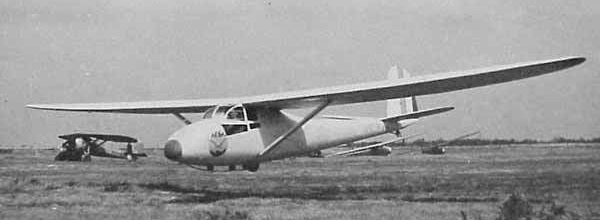
From 1944 following the end of WW II, more than 300 were built, particularly in the Aire sur Adour factory of the Fouga company and for more than 20 years the C 800 has been the French standard trainer glider, being inexpensive to fly, forgiving of trainee pilots, well known for its robustness and ease of servicing. It was able to achieve a high performance level in the hands of a good pilot e.g.: ceiling height of 5300 m, 17 hours duration, 180 km distance. It was also used by the French Air Force and Naval Aviation.
Span: 52 ft 5in
Length: 27 ft 4 in
Wing area: 237.3 sq ft
Aspect ratio: 11.6
Empty weight: 530 lb
MAUW: 930 lb
Normal gliding speed: 45mph
Max glide ratio: 19 @ 4 mph
Min sink: 3.1 # 40 mph
Vne: 100 mph
Caudron C.440 Goëland / C.444 Goeland / C.445 / C.449 / AA.1
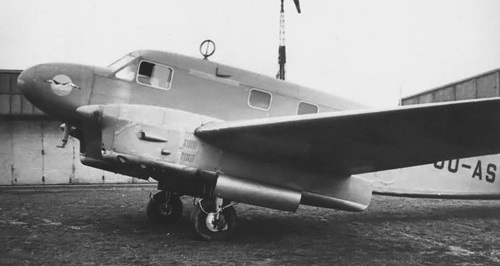
Originally produced in 1934 as the C.440, The Goeland was produced throughout the occupation of France by Caudron-Renault for both Vichy Government and the Luftwaffe. After the liberation of France and the incorporation of the Caudron factory into the SNCA du Nord, production of the Goeland was continued as the C.445-3 and C.449-1 versions. A total of 325 post-war machines being built.
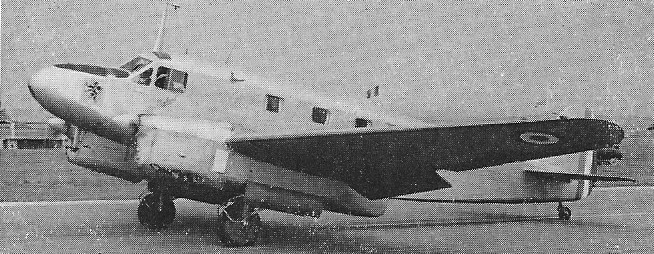
About 1,700 examples of C 440 (later AA.1) Goeland, twin-engined six-passenger transport were built in about ten years.
C.440
C.445-3
Engines: 2 x Renault 6Q-10 or 6Q-11, 220 hp
Passenger capacity: 6
C.449-1
Engines: 2 x Renault 6Q-20 or 6Q-21, 220 hp
Wingspan: 57 ft 7 in
Wing area: 430 sq.ft
Length: 44 f 9 in
Height: 15 ft 9 in
Empty weight: 6005 lb
Loaded weight: 8140 lb
Max speed: 191 mph
Cruise: 163 mph
Service ceiling: 21,320 ft
Range: 350 mi
Passenger capacity: 6
Caudron / Societe Anonyme des Avions Caudron / Societe Caudron-Renault / Ateliers Aeronautiques d’lssyles-Moulineaux
Gaston and Rene Caudron established an airplane factory as Caudron Freres at Romiotte (Seine) in 1910. Initial flight of the first of a series of highly successful biplanes (G.I, II, and III) was in February 1911. The G.III was considered extremely reliable and used widely as a trainer in the First World War. A single-seat monoplane trainer was produced in 1912. G.IIIAs were built for military use in 1914 and used extensively by France, U.K., Belgium, Russia, and Italy as two-seat reconnaissance/ artillery observation aircraft. Several hundred were built, mostly in France, but also by British Caudron and in Italy. The series continued with the G.IV (1915), several military variants, and also in that year the prototype R.4 three-seat bomber appeared. The R.II with five Lewis machine guns was produced a few months before the Armistice was declared.
The company had moved to Issy-les-Moulineaux (Seine) by 1919, and postwar products included the C 23 (and/or C 232) two-seat biplane, which inaugurated French commercial air services on February 10, 1919 with a flight from Paris to Brussels, the C 61 three-engined six/eight passenger biplane, a three-engined seven-seat development of C 61, the C 183, a further modernisation of two previous aircraft of which one only was built, in 1925.
The company, known as Societe Anonyme des Avions Caudron, ran into financial difficulties and was reorganized as Societe Caudron-Renault. Next became notable for distinctive streamlined aircraft from its designer Marcel Riffard, who joined in 1932. His C363 took second place in the 1933 Coupe Deutsch race, and developed versions took first three places in 1934 and 1935, and the first two places in 1936. Derivatives of these included the Rafale series of single- and two-seat sporting/racing aircraft of the late 1930s. Fifteen C 690Ms were built as advanced trainers for the Armee de I’Air. The series ended with the C 720. These were followed by the single-seat C 580 and C 680, C 600 Aiglon series, C 620/C 630 Simoun four-seat cabin monoplane, C 640 Typhon series, the C 670 ground-attack prototype, and the single-seat C 860, built in 1938 for an attempt (never made) on 1936 Paris-Tokyo flight record established by a Simoun. About 1,700 examples of C 440 (later AA.1) Goeland, twin-engined six-passenger transport were built in about ten years. Two series of light fighters were developed from the Coupe Deutsch racers. Following the C 710 and C 713 prototypes, the four-gun C 714 entered service. Improved variants of the CR 760 and 770 were under development when France collapsed. The factories built aircraft for Germany during the Occupation. Later nationalised as Ateliers Aeronautiques d’lssyles-Moulineaux, and incorporated into SNCAN in late 1947.
Catto CA-15
Powered hang-glider.
Catto Aircraft
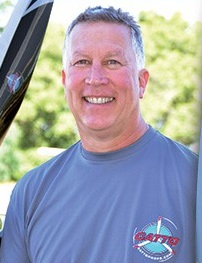
The Icarus II motorization began in 1975, when Catto was just 15—before he even had a driver’s license (though he had just gained his glider ticket). “I can’t believe my parents let me do that,” he quips, as he recounts the story. When I ask how he had the confidence to attack such a project, he laughs and simply says, “I had no clue. I didn’t know any better.”
The Icarus II was a foot-launched glider, and when Catto first took his motorized version to the sand dunes along Pismo Beach (south of San Jose where he grew up), the rat finks in their dune buggies laughed at the tall geeky kid with the Rube Goldberg contraption of wings and wires. Undaunted, Catto dove into the wind, at first “barely moonwalking over the ground,” he laughs, but soon buzzing along 12 feet above the dunes, a bevy of Super Beetles trailing behind and cheering him along as he flew up several miles of coastline. He landed with his 15 minutes of fame secured, and an entrepreneur. His first aviation business was selling the Icarus II motorization kits—complete with hand-carved propeller, of course.
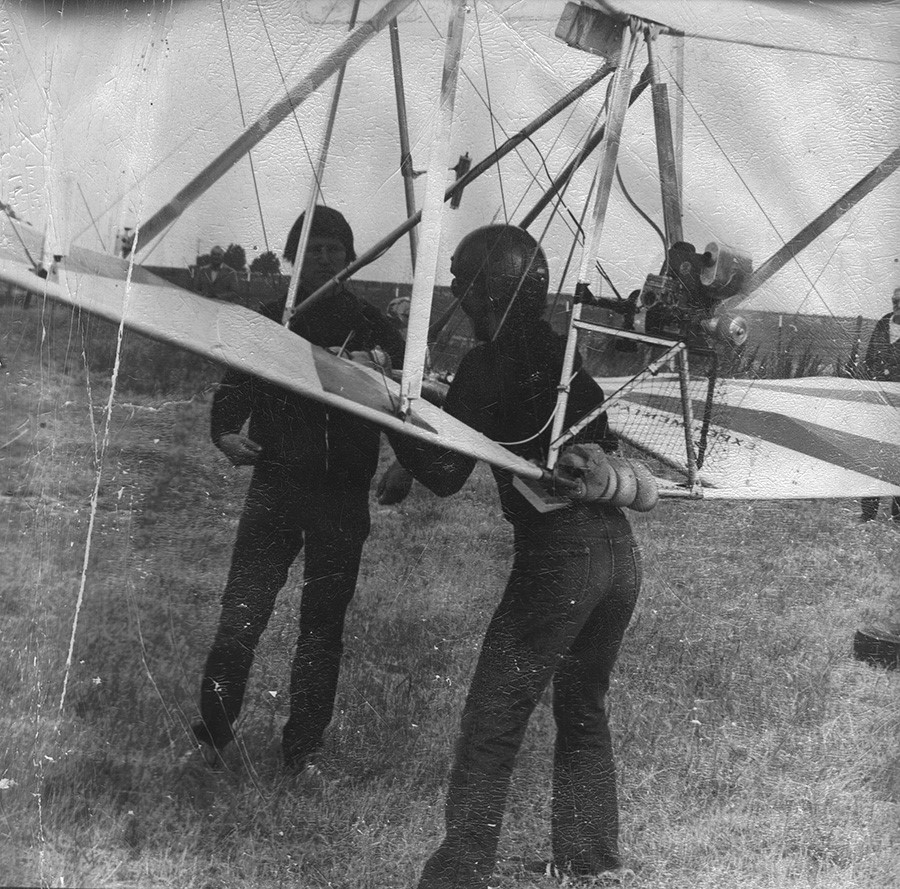
Within two years, he was selling kits for a pair of flying-wing gliders of his own design, the CA-14 (wood wing) and CA-15 (fiberglass and stamped aluminum). He still has the informational brochure, which is surprisingly professional in its layout for someone fresh out of high school (Catto graduated high school in just two years). He continued to buzz around in ultralights of his own design, winning “best float” at the 1977 Everett, Washington 4th of July Parade (flying 200 feet above the parade route with the King Broadcasting logo on the underside of his wings), and being featured on the TV show, To Tell the Truth, that same year, and in People magazine a year later. All while still a teenager.
In 1979 Catto jumped into a Citabria and went airport hopping along the west coast, north from Grass Valley, down south to Mariposa, looking for a place to set up shop (to the relief of his parents’ neighbors, no doubt). At Jackson County Airport, about 40 miles southeast of Sacramento in the foothills of the Sierras, he found a large hangar he could rent for $500 per month. There he established a factory to build kits for a canard ultralight he’d designed called the Goldwing.
In conjunction with Brian Glenn, to whom he had licensed the rights, Catto built more than 1500 kits—his first large production success. “The first six months were great, but then Glenn realized he wasn’t making any money, and things got harder after that,” says Catto.
When production ended in 1982, Catto decided to build propellers full time. He moved his shop up to his home atop Mokelumne Hill, where it has been ever since, until moving back down the hill to a new 10,000 square foot facility at Jackson Airport earlier this year. That said, Catto’s curiosity and entrepreneurial spirit run wide and his professional work extends far beyond propellers: in addition to hang gliders and ultralights, he built two airplanes of his own design, the Solo (a composite ultralight resembling the Cessna 150) and Acro-X (a composite knockoff of a Star Wars TIE-fighter). He has built wings and tails for several gold class Formula 1 Reno racers (Endeavor, Outrageous and Scarlet Screamer), patented an articulating snowboard, and even sold his design for a solar-powered electric standup scooter to a Japanese company.
Craig Catto is nearing his fifth decade building propellers for Experimental aircraft. Those first propellers still hang above his desk: small hand-carved wood props that spun at 8000 rpm in front of the McCulloch 12-hp two-stroke go-kart engine he was using to motorize his Icarus II hang glider. He tells the story of testing them in the backyard of his childhood home, using bathroom scales to measure thrust and methanol to send the tips past Mach 1.
Word quickly spread to other Experimental communities about the performance of Catto props. His props have a four- to six-month wait time, and if he gets the type certificate for Super Cubs, he figures he’ll be able to take orders for $1,000,000 worth of props over the three days of the Alaska Aviation Trade Show.
Catto’s propellers dominate the biplane class at Reno and hold numerous world records in speed, time to climb, and altitude. His props have powered the last four consecutive winners in the Experimental bush class at the Valdez fly-in STOL competition, helped take Bruce Hammer and his Glasair 1 to first place in last year’s AirVenture Cup, and pulled NASA’s Pathfinder to more than 80,000 feet in 1998. Recently, Catto props have become popular among unlimited aerobatic pilots due to their excellent performance and low inertia; Australian unlimited aerobatics champion Paul Bennett has a Catto up front on his.
Castel-Mauboussin
Pierre Mauboussin joined forces with glider designer Robert Castello in 1942, their designs being known under the Castel-Mauboussin name and assigned CM designations. Fouga had been producing designs by Mauboussin since 1936 and, in 1944, made Mauboussin their Director of Aviation Services working alongside Robert Castello.
Fouga retained the CM designation sequence (which was distinct from their earlier Castel C- numbers). In May 1958, Fouga was bought by Potez which also retained CM designations for Castello-Mauboussin designs and their derivatives.

