Condor Shoestring K-10

The original Shoestring was designed by Rod Kriemendahl and was built in Van Nuys, California, by Carl and Vince Ast, with help. Shoestring is a Formula One airplane. Its 19-foot wing has an aspect ratio of over five. All Formula One racers are required to have a minimum of 66 square feet of wing area, but Rivets and Shoestring stand alone with their tapered, longish wings. Apparently, the better overall efficiency of the higher aspect ratio wings is well worth the slight increase in drag because these two airplanes consistently bring home all the trophies.

The original drawings and engineering studies done by Kriemendahl in 1949 were lost or destroyed, a fact that worried John Anderson, one of the several past owners of the original Shoestring. Before Anderson sold the airplane to Ray Cote, he commissioned Ketner, a Piper engineering draftsman at Vero Beach, to go through the airplane with a tape measure and dividers and come up with a set of drawings he could use for repair work in case he ever dinged it. Ketner measured until he had enough dimensions to make up a complete set of working drawings. He had an engineering study run on the main spar and it was increased in thickness to bring it up to a 10-G strength. He has proof loaded the fuselage structure to 9 Gs with no deformation.

Constructed from the conventional combination of steel tubing, wood, and fabric, the racer is powered by a 100-hp O-200 Continental engine. By 1974, the Shoestring racer had accumulated 14 first places in major air race competitions. Other recommended engines are the Continental 85-and 90-hp versions.

The aircraft first flew in 1949 and entered its first competition race in 1950.

Yellow Jacket, the first reproduction of Shoestring, was built by Jim Strode of Melbourne, Florida. The plans for the airplane are produced by Landis Ketner and Jim was building parts as fast as Landis could make the drawings. Building Shoestring Yellow Jacket took just over a year.

Strode made four different cowlings before he got the shape and weight he wanted. This one weighs only 11 pounds. The cowling, wing fairings, landing gear fairings, and the canopy fit into their own little recesses, making everything flush. The wing is completely wooden construction, with plywood skins.

Gallery

Engine: 85-100 hp.
Span: 19’.
Wing area: 66 sq.ft.
Length: 17’8”.
Max wt: 800 lbs.
Empty wt: 565 lbs.
ROC: 3000 fpm.
Max speed: 225 mph.
Stall: 65 mph.
Cruise: 173 kts.
Fuel cap: 10 USG.
Takeoff run 500 ft.
Range 360 miles.
Seats: 1.

Commonwealth Aircraft Inc           

USA
Formed in Kansas City October 1942, after the acquisition of Rearwin Aircraft & Engines Inc. by New York interests. In 1943 it received substantial orders for Waco CG-3A and -4A troop-carrying gliders for the USAAF. It obtained manufacturing rights in 1945 for the Trimmer three-seat twin-engined light amphibian (prototype only), formerly built by Allied Aviation. In 1946 Commonwealth Aircraft Inc. began producing Model 185, a development of the prewar Rearwin Model 175. Early that year the company took over the Columbia Aircraft Corporation, all manufacturing being transferred to the letter’s Valley Stream factory. In March 1946 it acquired a non-aircraft company at Port Washington as a manufacturing base for the Trimmer, which did not go into series production. The Skyranger model was built in small numbers in 1946-1948.
As the anticipated post-war boom in civil aviation had not started, Commonwealth went bankrupt in 1947.

Commonwealth Aircraft Corp / CAC R795 Cicada

CAC designed the R795 Cicada which was intended to be used in the Winjeel. The Cicada was designed to be built using existing tooling that CAC had previously used to produce Pratt & Whitney R-1830 engines. The Cicada was a 7-cylinder geared radial engine of 795 cubic inch (13 litre) capacity; like the Pratt & Whitney R-985 that was eventually fitted to all Winjeels it developed 450 horsepower (340 kW). Because of its lower cubic capacity the Cicada was more complex (and thus significantly heavier) than the R-985 and also had higher fuel consumption. Only two development examples of the Cicada were ever built, one of which was actually fitted to Winjeel prototype (RAAF serial) A85-364. The two engines accumulated about 650 hours before the programme was terminated in September 1953.

Commonwealth Aircraft Corp / CAC CA-28 Ceres

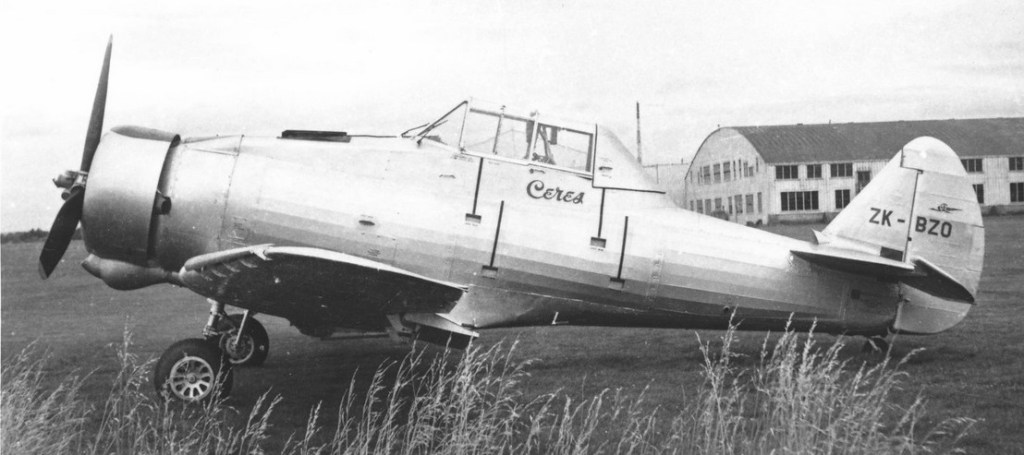
The CA-28 agricultural aircraft was designed around components of the wartime Wirraway. It first flew in the southern summer of 1958. Basically a single-seater, it also had a rear-facing seat behind the pilot for ferrying. There was a 40 cu.ft. hopper forward of the pilot. No hydraulic or electrical systems were fitted. The Ceres did have leading edge slats and manually operated flaps.

Commonwealth Aircraft CA-28 Ceres Article

Fourteen were registered in Australia and five in New Zealand in the early 1960’s.

Commonwealth Aircraft CA-28 Ceres C ZK-BZO

Engine: Pratt & Whitney R-1340-AN-1, 600 hp.
Wingspan: 14.30 m / 47 ft 11 in
Length: 9.36 m / 31 ft 9 in
Height: 2.74 m / 9 ft 0 in
Wing area: 29.0 sq.m / 312.15 sq ft
Take-off weight: 3048 kg / 6720 lb
Empty weight: 1995 kg / 4398 lb
Cruise speed: 179 km/h / 111 mph
Accommodation: 1-2

Commonwealth Aircraft Corp / CAC CA-22 / CA-25 Winjeel

Commonwealth CA-25 Winjeel

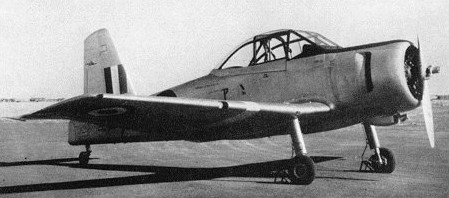
In 1948, the RAAF issued a specification for a new training aircraft to replace both the Tiger Moth and Wirraway. The new trainer was to seat three, and was to be of simple but robust construction. Economy of operation and ease of maintenance were other requirements. And, above all, it was to have safe handling characteristics. The CAC answer to meet this specification was the CA-22, for which the Aboriginal word for “young eagle” was selected, Winjeel. CAC designed a simple, fixed undercarriage, tailwheel machine with aluminium clad tubular steel fuselage, stressed skin wings and fabric covered flying controls.

Two CA-22 prototypes were built, A85-618 and A85-364, each with a 450 hp (335kW) Pratt and Whitney, R-985-AN-2 Wasp Junior engine. It was planned to develop the CAC-designed 450 hp Cicada engine for production aircraft but, in the event, all Winjeels were powered by Wasp Juniors. The first prototype, A85-618, was test flown on 3 February 1951 by CAC test pilot John Miles. It was soon joined by A85-364 and the two aircraft were used for a prolonged series of trials. These tests showed that CAC had met the requirements for a safe aircraft, because it was found that the Winjeel had a reluctance to spin – an excellent feature for most aircraft, but not for a trainer. Consequently, the rear-positioned fin was fitted with a dorsal fairing and a larger rudder. A later modification resulted in a taller fin without the dorsal fairing, and with the rudder moved forward. A revised engine cowling was also designed and these later features were incorporated in the production Winjeels.

The CA-25 first production version, A85-401, first flew on February 23, 1955. On 16 September 1955, the CAC Managing Director, Sir Lawrence Wackett, officially handed over the log-books of this aircraft to Air Marshal Sir John McCauley. During this ceremony, Flight Lieutenant L. Evans of the RAAF’s Aircraft Research and Development Unit (ARDU) gave a spirited demonstration of the Winjeel’s capabilities.

CA-25 Winjeel

62 Winjeels were ordered, production taking place between February 1955 and August 1957. The last Winjeel, A85-462, was delivered to the RAAF early in 1958.
The trainers operated with No 1 Basic Flying Training School (later renamed No 1 Flying Training School) at RAAF Uranquinty until the unit was transferred to RAAF Point Cook in December 1958. The Winjeel was eventually replaced at No 1 Flying Training School in 1975 by the CT-4 Airtrainer.
A few remaining Winjeels were used as hacks, a half dozen examples became instructional airframes at Wagga, NSW for apprentice engineer training and four FAC machines remained at Williamtown with No 4 Flight, later as part of No 76 Squadron, until these aircraft were replaced by the PC-9/A in 1994. A number of off surplus machines found their way into the hands of nostalgic civilian owners to be used for recreational flying and air display work.

1955 CAC CA-25 Winjeel A85-404

Initially the Australian CAA would not permit the operation of the type on the civil register however, with a relaxation of the rules, eleven were registered in the warbird category. Operated by the RAAF as a three seater, a number have been modified to four seat by civil owners. The radial engined taildragger features a 165 mph cruise with a five hour 30 minute endurance.

Gallery

Engine: 1 x Pratt & Whitney R-985-AN-2 Wasp junior 9-cyliner radial, 450 hp.
Wingspan: 11.77 m / 39 ft 7 in
Wing area: 249 sq.ft (23.13 sq.m)
Length: 8.55 m / 28 ft 1 in
Height: 2.77 m / 9 ft 1 in
Take-off weight: 1970 kg / 4343 lb
Empty Weight: 3,400lbs (1,542kg)
Maximum Take-Off Weight: 4,341lbs (1,969kg)
Max. speed: 299 km/h / 186 mph
Cruise speed: 265 km/h / 165 mph at 8,500 ft (2 590 m)
Ceiling: 5490 m / 18000 ft
Rate-of-Climb: 1,500ft/min (457m/min)
Service Ceiling: 15,000ft (4,572m)
Maximum Range: 551miles (886km)
Endurance: 5.5 hr
Armament: None
Accommodation: 2-3

Commonwealth Aircraft Corp / CAC CA-15 Kangaroo

During 1943, following the success of CAC and chief designer Fred David, in rapidly designing and mass producing the small Boomerang fighter for the Royal Australian Air Force (RAAF), CAC began design work on a fully fledged interceptor and bomber escort. Basing on RAAF specification No. 2/42, preliminary work on a very ambitious long-range fighter aircraft started, which received the factory designation CA-15. Layout was an all-metal cantilever low-wing construction with retractable undercarriage and the pilot’s position in a closed cabin.
Although the CA-15, also known unofficially as the CAC Kangaroo, bore a superficial resemblance to the North American P-51 Mustang, the CAC design was not based directly on the U.S. aircraft and had quite different performance objectives and dimensions. David had been impressed by assessments of captured Focke-Wulf Fw 190s and intended using a radial engine rather than an inline. Development of the CA-15 was slowed by a recommendation from CAC head Lawrence Wackett, that the company build Mustangs under licence, rather than bear the cost of developing a unique design. By the later stages of its development, it was believed that the CA-15 would have capabilities enabling it to replace the P-51.

In 1943, a mockup of the aircraft was built, although the development process was delayed because the project engineers wanted to accomodate the fighter to low heights. By August 1943, the RAAF accepted the new concept of the machine by specification No. 2/43. In 1944, the mounting of the structural elements of the first prototype started, although in August 1944 the R-2800-21W engine turned out not to be available. At first, the CAC designers planned to use the 2,300 hp (1,715 kW) radial Pratt & Whitney R-2800, with a turbocharger. However, that engine became unavailable, causing further delays in development. The choice fell on British engines; the Rolls-Royce “Griffon” type 120 or 125, although the radial Bristol “Centaurus” had been proposed. The Griffon turned out to have the smallest frontal surface, however, the Griffon 120/125 version had not yet reached its serial production stage, so the British decided to replace it with the 2,035 hp/1,517 kW Griffon 61 version.

Engines for a prototype were leased from Rolls-Royce. The first two copies of the Griffon 61 arrived in Australia in April 1945. The first prototype of the CA-15, as RAAF A62-1001, was completed in February 1946, five months after the end of the war in the Pacific Ocean.

Development was further slowed by the end of the war, with the prototype flying for the first time on 4 March 1946, and was flown by CAC test pilot Jim Schofield, who also flew the first Australian built P-51. The prototype was assigned RAAF serial number A62-1001.

From June 27th, 1946, the prototype performed test flights at the No.1 Aircraft Performance Unit (No.1 APU) at Laverton. Until then, the prototype already had executed 23 flights of joint 16 hours and 45 minutes. It achieved a calibrated level flight speed of 448 mph (721 km/h) at 26,400 ft (8,046 m). Test flights came to an abrupt ending when Flt Lt J. A. L. Archer suffered a hydraulic failure (later found to be a leaking ground test gauge) on approach to Point Cook on 10 December 1946, which left him no choice but to orbit and burn off fuel. The main gear was only halfway down and unable to be retracted or lowered any further but the tail wheel was down and locked. On landing, the tail wheel struck the airstrip first causing the aircraft to porpoise and finally, the airscoop dug in. The aircraft settled back on the fuselage and skidded to a stop, heavily damaged.

The CA-15 after crash landing at RAAF Point Cook

On 19 May 1948 the aircraft was transferred to the Aircraft Research and Development Unit (ARDU),
where several farthest test flights were executed. During a flight on May 25th, 1948, Flt. Lt. J. Archer at the controls, the aircraft gained an unofficial speed record, achieving 502.2 mph (803 km/h) on level flight after levelling out of a dive of 4,000 ft (1,200 m) over Melbourne. In May 1950, the machine was transferred to the No. 1 Aircraft depot, where it was scrapped the same month.

By this time, however, it was clear that jet aircraft had far greater potential and no further examples of the CA-15 were built. The prototype was scrapped in 1950, and the engines were returned to Rolls-Royce.

Gallery

CA-15 Kangaroo
Engine: 1 × Rolls-Royce Griffon, 2,035 hp (1,517 kW) at 7,000 ft (2,134 m)
Wingspan: 36 ft 0 in (10.97 m)
Wing area: 253 sq ft (23.50 sq.m)
Length: 36 ft 2½ in (11.04 m)
Height: 14 ft 2 in (4.32 m)
Empty weight: 7,540 lb (3427 kg)
Loaded weight: 9,500 lb (4,309 kg)
Max. takeoff weight: 12,340 lb (5,597 kg)
Maximum speed: 448 mph (390 knots, 721 km/h) at 26,400 ft (8,050 m)
Range: 1,150 mi (1,000 nmi, 1,850 km)on internal fuel
Service ceiling: 39,000 ft (11,887 m)
Rate of climb: 4,900 ft/min (24.9 m/s)
Crew: one
Armament: Guns: 6 × 0.50 in. (12.7 mm) machine guns (250 rounds each)
Rockets: provision for 10 × rockets
Bombs: 2 × 1,000 (450 kg) bombs

Commonwealth Aircraft Corp / CAC / Aerospace Technologies of Australia

In 1935 the Chief General Manager of Broken Hill Proprietary (BHP), Essington Lewis, visited Europe and formed the view that war was probable. On his return to Australia, concerned at the lack of manufacturing capabilities there and at the possibility of aircraft not being available from ‘traditional’ (i.e. British) sources during wartime, he commenced a lobbying campaign to convince the Australian Government to establish a modern aircraft industry. The government required little persuasion and encouraged negotiations between a number of Australian companies. The outcome of these negotiations, begun in August 1935, was the formation of CAC the following year. Initially the companies involved were BHP, General Motors-Holden Ltd., and Broken Hill Associated Smelter Pty. Ltd. These were joined by Imperial Chemical Industries of Australia and New Zealand Ltd., the Orient Steam Navigation Company Ltd. and the Electrolytic Zinc Company of Australasia Ltd. at the time of CAC’s formation (the company was incorporated in Melbourne on 17 October 1936). By September 1937 a factory had been completed at Port Melbourne.
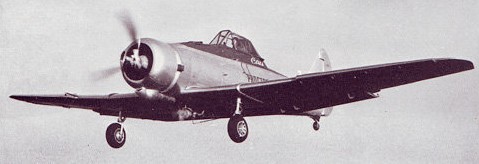
Shortly after the establishment of CAC, Mascot-based Tugan Aircraft was purchased. This led to Lawrence Wackett joining the company; he immediately became the General Manager. In 1935 Wackett had led a technical mission to Europe and the USA to evaluate modern aircraft types and select a type suitable to Australia’s needs and within Australia’s capabitities to build. The mission’s selection was the North American NA-16; with CAC’s modifications this became the Wirraway. CAC also undertook production of the Pratt & Whitney R-1340 engine used in the Wirraway and also built some propellers when supplies from alternative sources became problematic. The North American NA-33, built under license as CA-1 to CA-16 Wirraway for RAAF, starting in July 1939.

Followed by Wackett-designed prototype CA-2 Wackett two-seat trainer, production version designated CA-6.

Company also produced the only Australian-designed fighter to serve in Second World War, the CA-12,13, 14, 19 Boomerang.

CAC Melbourne Sept 1940 – Dec 1945 Gallery

Later designs during World War II were the sophisticated Woomera and CA-15, however these types were destined to fly only in prototype form. Postwar products included the prototype CA-22 and production CA-25 Winjeel trainer for the RAAF, the CA-28 Ceres agricultural aircraft, and over 200 North American Mustangs built as CA-17 and 18.

Other, jet-powered aircraft designs in the 1950s and 1960s did not even leave the drawing board, however in 1951 CAC was given the go-ahead to design and manufacture a version of the F-86 Sabre with a Rolls-Royce Avon turbojet and armament. The Sabre was developed and produced concurrently with the indigenous Winjeel trainer, with Sabre manufacture coming to an end in 1961.

In 1964 after a large amount of political lobbying CAC began producing components for the Sabre’s replacement, a version of the Dassault Mirage III, as a subcontractor to the Government Aircraft Factory (GAF). In 1967 CAC commenced licence production of a version of the Aermacchi MB-326 optimised for Australian conditions as Aermacchi M.B. 326H, this programme ended in 1972.

In 1971 CAC joined the small number of aircraft manufacturers which have built both fixed- and rotary-winged aircraft, when it began production of a variant of the Bell Kiowa for the Australian Army and Royal Australian Navy, the last of these was delivered in 1977. The same year CAC embarked on a Life Of Type Extension (LOTEX) programme for the Macchi, which was suffering fatigue problems. The LOTEX programme lasted until 1984. Other contracts included workfor Boeing, Sikorsky, Pratt & Whitney and Hawker Siddeley. Finally specialized in the manufacture and repair of gas turbine engines.

Became a public company in 1975 and CAC became a fully owned subsidiary of Hawker de Havilland in 1985 and was renamed Hawker de Havilland Victoria Limited in 1986. The Commonwealth Aircraft Corporation was renamed AsTA (Aerospace Technologies of Australia) in 1986. This company was purchased by Boeing Australia in 2000.

The Kiowa was the last type built by CAC. The company was part of the Australian Aircraft Consortium which designed the A10 Wamira, but this programme was cancelled in 1985 shortly after the prototype was completed. At the time of purchase by Hawker de Havilland, CAC had begun delivering components for the GAF-built version of the F/A-18 Hornet.

During its existence the Commonwealth Aircraft Corporation produced over 1700 aircraft of all types, including prototypes and aircraft assembled locally from imported components. Of these, almost 550 were examples of aircraft types wholly designed by the company. The designations used by CAC reflected production or design work in fulfillment of different in-house projects or government contracts rather than different types produced (for instance the different designations for the Wackett and Winjeel prototypes compared to their production versions). Early types were given consecutive manufacturer’s construction numbers (c/nos.), while later types (beginning with the production version of the Winjeel) were given c/nos. with the model number as a prefix. Construction numbers 1210 to 1224 appear not to have been assigned. The list of company designations and construction numbers is:

CA-1 First Wirraway production contract; 40 built (c/nos. 1-40).
CA-2 Wackett prototypes; two built (c/nos. 101, 102).
CA-3 Second Wirraway production contract; 60 built (c/nos. 41-100).
CA-4 Woomera prototype; one built (c/no. 435).
CA-5 Third Wirraway production contract; 32 built (c/nos. 103-134).
CA-6 Wackett production contract; 200 built (c/nos. 235-434).
CA-7 Fourth Wirraway production contract; 100 built (c/nos. 135-234).
CA-8 Fifth Wirraway production contract; 200 built (c/nos. 436-635).
CA-9 Sixth Wirraway production contract; 188 built (c/nos. 636-823).
CA-10 Proposed Wirraway variant not built
CA-11 Woomera production contract for 105 aircraft. Contract cancelled, only one aircraft flew (101 c/nos. assigned, 1225-1325).
CA-12 First Boomerang production contract; 105 built (c/nos. 824-928).
CA-13 Second Boomerang production contract; 95 built (c/nos. 929-1023).
CA-14 Experimental Boomerang fitted with turbocharger; one built (c/no. 1074).
CA-15 Single-seat fighter; one built (c/n 1073).
CA-16 Seventh (and final) Wirraway production contract; 135 built (c/nos. 1075-1209).
CA-17 First Mustang production contract; 80 assembled from imported components (c/nos. 1326-1405, 1326-1345 also assigned North American c/nos. NA110-34366 to -34385).
CA-18 Second Mustang production contract; 120 built, production of a further 50 cancelled (c/nos. 1406-1525).
CA-19 Third (and final) Boomerang production contract; 49 built (c/nos. 1024-1072).
CA-20 Contract to modify Wirraways for use by the RAN (see CAC Wirraway); 17 modified.
CA-21 Third (and final) Mustang production contract for 100 aircraft; contract cancelled, none built.
CA-22 Winjeel prototypes; two built (c/nos. 1526, 1527).
CA-23 Designation of a two-seat twin-engined supersonic jet fighter design. None built.
CA-24 Contract for production of 72 of variant of the Hawker P.1081; none built.
CA-25 Winjeel production contract; 62 built (c/nos. CA25-1 to -62).
CA-26 Sabre prototype; one built (c/no. 1528).
CA-27 Sabre production contract; 111 built (c/nos. CA27-1 to -111).
CA-28 Ceres production, built as private venture; 21 built (c/nos. CA28-1 to -21).
CA-29 Production sub-contract for wings, fins, rudders, tailcones and engines of GAF-built variant of Mirage IIIE; 101 airframe shipsets and 140 engines built.
CA-30 Macchi production contract; 20 assembled from imported components plus 77 built (c/nos. CA30-1 to -97, CA30-1 to -13 and -15 to -21 also assigned non-consecutive Aermacchi c/nos. between 6351 and 6395)
CA-31 Jet trainer design; none built (Macchi built instead).
CA-32 Kiowa production contract; 12 assembled from imported components plus 44 built (c/nos. CA32-13 to -56, all 56 aircraft also assigned Bell c/nos. 44501-44556).
CA-33 Contract for modifications to the RAAF fleet of Lockheed P-3C Orions; installing the Barra Sonobuoy system (developed for the RAAF and Royal Air Force by the Defence Science and Technology Organisation (DSTO)) and associated systems after delivery of each aircraft from the USA; 20 aircraft modified (contract completed as HdHV).
CA-34 Designation used for CAC’s participation in the A10 Wamira project.
CA-35 Contract for modifications to a Fokker F27 Friendship (registration VH-EWP) to install the LADS system developed by the DSTO (contract completed as HdHV).
CA-36 Production sub-contract for the wing pylons, engine access panels, aft nozzle fairings, aircraft-mounted accessory drive gearboxes and engines for the GAF-built version of the F/A-18 Hornet; 73 airframe shipsets and 158 complete engines built, plus parts of another 17 engines (contract completed as HdHV).

Engine types produced by CAC include the:

Pratt & Whitney R-1340 built for the Wirraway.
Pratt & Whitney R-1830 built for the Boomerang, Woomera and DAP Beaufort.
Rolls-Royce Merlin built for the GAF Lincoln.
Rolls-Royce Nene built for versions of the de Havilland Vampire manufactured by de Havilland Australia.
Rolls-Royce Avon built for the Sabre and GAF Canberra.
SNECMA Atar built for the Mirage.
Bristol Siddeley Viper built for the Macchi.
General Electric F404 built for versions of the F/A-18 Hornet manufactured by the Government Aircraft Factory/Aerospace Technologies of Australia.