Continental Motors

Founded in 1929, Continental Motors, Inc. is an aircraft engine manufacturer located at the Brookley Aeroplex in Mobile, Alabama. Although Continental is most well known for its engines for light aircraft, it was also contracted to produce the air-cooled V-12 AV-1790-5B gasoline engine for the U.S. Army’s M47 Patton tank and the diesel AVDS-1790-2A and its derivatives for the M48, M60 Patton and Merkava main battle tanks. The company also produced engines for various independent manufacturers of automobiles, tractors, and stationary equipment (pumps, generators and machinery drives) from the 1920s to the 1960s.

In 1929, Continental introduced its first aircraft engine, a seven-cylinder radial designated as the A-70, with a displacement of 543.91 cu in (8.91L) that produced 170 hp (127 kW). In August 1929, the Continental Motors Company formed the Continental Aircraft Engine Company as a subsidiary to develop and produce its aircraft engines.

During the late 1930s, early 1940s the Gray Marine Motor Company adapted Continental engines for maritime use. On 14 June 1944 the company was purchased by Continental for US$2.6 million. John W. Mulford, the son of one of Gray’s founders was appointed general manager of Gray by Continental. Gray’s continued to make marine engines in the post-war period until its closure by Continental in about 1967.

As the Great Depression unwound, 1930 saw the company introduce the 37 hp (28 kW) A-40 four-cylinder engine. A follow-on design, the 50 hp (37 kW) A-50 was introduced in 1938 and was used to power the Taylor Cub and derivative Piper Cub. As the Second World War started in 1939 Continental commenced building aircraft engines for use in British and American tanks. Continental formed Continental Aviation and Engineering (CAE) in 1940 to develop and produce aircraft engines of over 500 hp (373 kW) Continental ranked 38th among United States corporations in the value of wartime production contracts.

During the late 1930s, early 1940s the Gray Marine Motor Company adapted Continental engines for maritime use. On 14 June 1944 the company was purchased by Continental for US$2.6 million. John W. Mulford, the son of one of Gray’s founders was appointed general manager of Gray by Continental. Gray’s continued to make marine engines in the post-war period until its closure by Continental in about 1967.

During the 1950s, the A-65 was developed into the more powerful 90 hp (67 kW) C-90 and eventually into the 100 hp (75 kW) O-200. The O-200 powered a very important airplane design milestone: the Cessna 150. By the 1960s turbocharging and fuel injection arrived in general aviation and the company’s IO-520 series came to dominate the market.

In 1969, Teledyne Incorporated acquired Continental Motors, which became Teledyne Continental Motors (TCM). That same year, the Continental Tiara series of high output engines were introduced, although they were dropped from the line after 1978. The company brought the TSIO-520-BE for the Piper PA-46 to market in 1984 and it set new efficiency standards for light aircraft piston engines. Powered by a liquid-cooled version of the IO-240, the Rutan Voyager was the first piston-powered aircraft to circumnavigate the world without refueling in 1986.

NASA selected Continental to develop and produce GAP in 1997, a new 200 hp (150 kW) piston engine to operate on Jet-A fuel. This was in response to 100-octane aviation gasoline becoming less available as a result of decreased demand, due to smaller turboprop engines becoming more prevalent.

In 2008, Teledyne Continental’s new president, Rhett Ross announced that the company was very concerned about future availability of 100LL avgas and as a result would develop a diesel engine in the 300 hp (220 kW) range for certification in 2009 or 2010. By the fall of 2009 the company was feeling the effects of the economic situation and the resulting reduced demand for aircraft engines. The company announced that it would close its plant for two one-week periods in October 2009 and January 2010. Salaried employees would move to a four-day work week with one week vacations for Thanksgiving and Christmas, with the aim “to protect as much of our valuable employee base as possible”.

On December 14, 2010, Continental’s parent Teledyne announced that Teledyne Continental Motors, Teledyne Mattituck Services and its general aviation piston engine business would be sold to Technify Motor (USA) Ltd, a subsidiary of AVIC International, for US$186 million in cash. AVIC is owned by the Chinese government. In May 2011, the transaction was reported as complete and the company renamed Continental Motors, Inc.

Diesel engines are manufactured in Germany by Continental Motors Group, Ltd., an AVIC International Holding Corporation company. Previously the company was known as Centurion Aircraft Engines before its 2013 acquisition by Continental. Several diesel engines were available from Continental in 2016: the CD-135 and CD-155 four cylinders and V6 CD-300, producing 310 hp.

Diesel engines are manufactured in Germany by Continental Motors Group, Ltd., an AVIC International Holding Corporation company. Previously the company was known as Centurion Aircraft Engines before its 2013 acquisition by Continental. Several diesel engines were available from Continental in 2016: the CD-135 and CD-155 four cylinders and V6 CD-300, producing 310 hp.

A90
A100
C90
C145
C175
E250
GR-9A
Voyager 200
Voyager 370
Voyager 550
O-110
O-200
O-240
O-255
O-315
O-368
O-520
O-526
OL-200
OL-370
Continental-Honda OL-370
OL-1430
V-1650 (Merlin)
XH-2860
R-545
227
300
320
324
325
352
354
356
500
TD-300
TS325
TP-500
R-20
RJ35 Ramjet
RJ45 Ramjet
RJ49 Ramjet
T69
Continental Copters El Tomcat

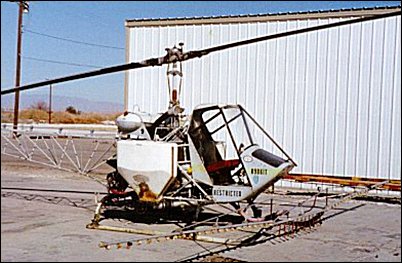
In 1959, Continental Copters Inc. of Fort Worth, Texas, developed and produced a specialised single-seat agricultural aircraft based on the Bell Model 47G-2. Payload is increased by deletion of unnecessary structure and equipment. Known as the El Tomcat Mk.II, this aircraft flew for the first time in April 1959 and received an FAA supplementary type certificate soon afterwards. An improved variant, the El Tomcat Mk.III, made its maiden flight in April 1965 as an improved version of the Mk.II, and subsequent variants were progressively introduced. The Tomcat Mk.III weighs empty 540kg and 1105kg loaded.
The El Tomcat Mk.IIIA was flown in January 1966 with 200hp Franklin 6V4-200-C32, 210hp 6V-335-A or a 235hp 6V-350-A engine.
The El Tomcat Mk.IIIB of 1967 had a still lower and repositioned windscreen, modified glassfibre nose, lower cabin roof and a 6V-350 engine.
The Mk.IIIC of 1968 was an improved version with a 200-235hp 6V4-200-C32, 6V-335-A or 6V-350A engine and was first flown in May 1968.
The Mk.V (first flown in June 1968) entered production in 1968 with a 220hp Lycoming VO-435-B1A engine (empty weight 620kg and maximum weight 1105kg), followed by the improved Mk.V-A with a 260hp VO-435-A1F engine and a folding jump-seat to permit carriage of a flagman to distant work sites. The latest version is the 265hp VO-435-BlA-engined Mk.V-B.

El Tomcat Mk.II

El Tomcat Mk.III
Empty weight: 540kg
Loaded weight: 1105kg

El Tomcat Mk.IIIA
Engine: 200hp Franklin 6V4-200-C32, 210hp 6V-335-A or 235hp Franklin 6V-350-A

El Tomcat Mk.IIIB
Engine: Franklin 6V-350

El Tomcat Mk.IIIC
Engine: 200-235hp Franklin 6V4-200-C32, Franklin 6V-335-A or Franklin 6V-350A

El Tomcat Mk.V
Ngine: 220hp Lycoming VO-435-B1A engine
Empty weight: 620kg
Maximum weight: 1105kg

El Tomcat Mk.V-A
Engine: 260hp VO-435-A1F
Disc loading: 2.6 lb/sq.ft.
Pwr loading: 9.42 lb/hp.
Max TO wt: 2450 lb.
Empty wt: 1420 lb.
Equipped useful load: 991 lb.
Payload max fuel: 817 lb.
Range max fuel/ cruise: 81 nm/ 1.3 hr.
Service ceiling: 10,500 ft.
Max sling load: 844 lb.
Cruise speed: 65 kt.
Working endurance: 1.5 hr.
ROC: 1500 fpm.
HIGE: 5900 ft.
HOGE: 1400 ft.
Fuel cap: 174 lb.
Seats: 1.

El Tomcat Mk.V-B
Engine: 265hp VO-435-BlA

Mk.VI-B
Engine: Lycoming TVO-435-B1A, 260 hp.
Seats: 1.
Disc loading: 2.6 lb/sq.ft.
Pwr loading: 10.9 lb/hp.
Max TO wt: 2850 lb.
Empty wt: 1490 lb.
Equipped useful load: 1321 lb.
Payload max fuel: 1147 lb.
Range max fuel/ cruise: 50 nm/ 0.8 hr.
Service ceiling: 10,500 ft.
Max sling load: 1194 lb.
Cruise speed: 65 kt.
Working endurance: 1.5 hr.
ROC: 1800 fpm.
HIGE: 5900 ft.
HOGE: 1400 ft.
Fuel cap: 174 lb.

Continental Copters Inc

USA
From 1959 produced assorted versions of the El Tomcat, specialized single-seat agricultural conversions of Bell Model 47 helicopter. Successive variants included Mks IIIA, IIIB, IIIC, V, V-A, V-B, VI, Vl-A, and Vl-B, of which many completed; also marketed kits for operator conversion. Developed JC-1 Jet-Cat as special agricultural modification of Bell JetRanger. Also assembled Bell 47G series helicopters to order using spare and surplus components.

Consolidated 37 / XC-99

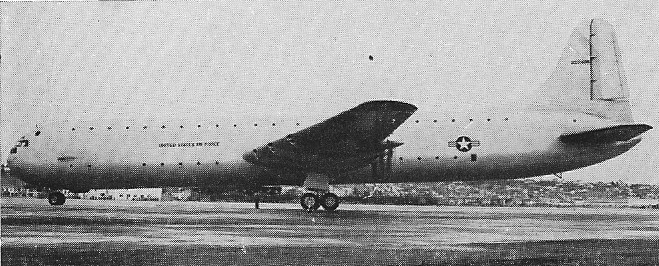
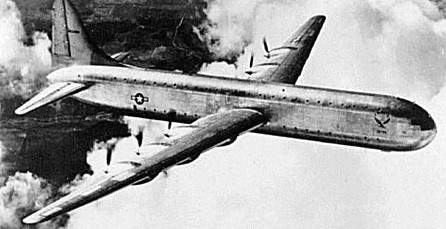
Shortly after starting to develop the B-36 bomber, Convair began the parallel design of a transport late in 1942 (Model 37). The XC-99 used the same wings, empennage, landing gear, and six 3,500hp (2,600kW) Pratt & Whitney Wasp Major engines as in the ‘Peacemaker’, but it had a large pressurized, double-decked fuselage capable of carrying 400 troops or more than 100,000lb (45,350kg) of cargo.

Only a single aircraft was built which flew on 23 November 1947, it subsequently acquired bogie main wheel units and weather radar. By 1955 it had carried 35 million pounds of freight in 4,000 flying hours. It was used successfully by the US Air Force for special transport operations until retired in 1957.

Engines: 6 x Pratt & Whitney R4360-41 Wasp Major, 3,500hp (2,600kW).
Span: 230 ft
Length: 182 ft 6 in
Height: 57 ft 6 in
Empty weight: 132,000 lb
Loaded weight: 265,000 lb
Max. Speed: over 300 m.p.h.
Service ceiling: 30,000 ft
Payload: 400 troops or 100,000+lb (45,350kg) of cargo.
Maximum range w/10,000 lb: 8100 miles

Consolidated Aircraft Corp

Gallaudet Airplane Corp was dissolved 1923 and factory acquired by Consolidated Aircraft Corporation with Reuben H.Fleet.
Original factory was quickly outgrown by the company formed May 29,1923 and moved to Buffalo, NY, in 1924, leasing part of a wartime Curtiss factory. In the 1920s and 1930s produced small numbers of civil types, but main output was military and between 1924-1932 included more than 770 PT-1 /311 and NY primary training biplanes for the USAAC and Navy, plus a small batch of similar 0- 17s for observation duties.
The creation of the civil Model 14 “Husky”trainer led to the creation of the Fleet Aircraft Division in 1929.
Thomas Morse Aircraft acquired 1929. In the 1930s Consolidated specialized in marine aircraft, P2Y twin-engined patrol flying-boats being built 1931-1933; followed by P-30 single-seat fighter monoplanes for the Army in 1933-1935.
In autumn 1935 company moved to San Diego, California, gaining a harbor for testing its maritime designs, which continued with the P3Y/PBY Catalina family. During a ten-year production life 2,400 Catalinas were built by Consolidated and hundreds more by other companies. Production of PB2Y Coronados began in 1939. In 1940 Hall Aluminium Co acquired. Company began a five-year program of building more than 11,000 B-24/C- 87/PB4Y/RY Liberator and Privateer bomber, transport, and patrol aircraft for the U.S. Services and the RAF. Liberator production was also undertaken by Ford, Douglas, and North American. Final wartime product was the TBY Sea Wolf. A 34 percent controlling interest in Consolidated acquired December 1941 by Vultee Aircraft Inc., and management links from then led to merger of the two companies on March 17,1943 as Consolidated Vultee Aircraft Corporation.
Amalgamation from March 17,1943 of Consolidated Aircraft Corporation and Vultee Aircraft Inc., whose wartime production programs are listed under these separate headings. By the end of Second World War Consolidated Vultee was largest aircraft manufacturing organization in the U.S.A., with factories at San Diego and Vultee Field, California; Fort Worth, Texas; Nashville, Tennessee; Wayne, Michigan; New Orleans, Louisiana; Miami, Florida; and Allentown, Pennsylvania; plus modification centers at Tucson, Arizona; Elizabeth City, North Carolina; and Louisville, Kentucky.
Late-war/early post-war programs included B-32 Dominator long-range bomber, L-13 liaison/observation aircraft and multi-engined B-36 intercontinental bomber. The company entered the commercial field with first flight, in summer 1946, of twin-engined Model 110, from which later stemmed well-known 240/340/440 Metropolitan series of medium-sized shorthaul airliners. Various noteworthy military prototypes included the XB-46 jet bomber, XP-81 single-seat mixed-power escort fighter, XF-92 rocket-powered interceptor, XA-41 close-support aircraft, and XF2Y Sea Dart hydro-ski fighter. A small number of R3Y Tradewind four-engined transport flying-boats Were built for the U.S. Navy. In the early 1950s Consolidated Vultee began calling its products “Convair” types, and on April 30,1954 it became the Convair Division of General Dynamics Corporation, which was then the major shareholder.

Conroy Aircraft

USA.

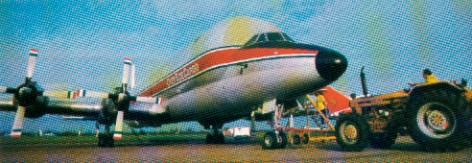
Formed 1968-1969 by Jack M. Conroy at Santa Barbara airport, California, offering aircraft and services for the petroleum and other “bulk” cargo industries. First ventures included turboprop conversions of Douglas DC-3 (Conroy Turbo Three) and Fairchild C-119 Flying Boxcar. Conroy developed original Guppy series of giant transports (see Aero Spacelines); also converted Canadair CL-44D- 4 swing-tailed, long-range freighter as Conroy CL-44-0, with enlarged-diameter fuselage (flown November 1969); and Stolifter (flown 1969) single-turboprop conversion of Cessna Super Skymaster, with upward-opening aft fuselage. Turboprop conversion of Grumman Albatross amphibian flown February 1970; company ceased trading shortly afterwards.