USA
Formed at Alexandria, Minnesota, in 1959, from the former Northern Aircraft Inc to continue production of the Bellanca Model 14. Built the Model 14-19-2 Cruisemaster and the Downer Bellanca 260 Model 14-19-3. Further development was undertaken by Inter-Air Inc. Following merger with American Aviation Corp of Freeland, Michigan, supplied parts and conversion kits for Seabee.
Post WW2
Douglas F5D Skylancer
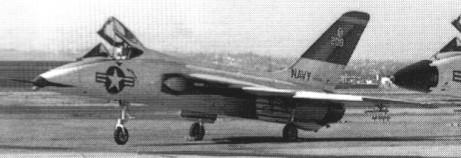
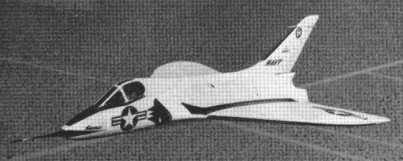
The Douglas F5D was envisaged originally as an improved all-weather development of the F4D (F-6) Skyray, and two prototypes were ordered in 1953 under the designation F4D-2N.
Substantial changes, including wings of much reduced thickness/chord ratio, a lengthened fuselage, revised vertical tail surfaces and the introduction of a new cockpit canopy brought the redesignation F5D-1 (subsequently named Skylancer) before the first flight was recorded on 21 April 1956.
The F5D Skylancer was basically an enlarged version of the Skyray with a fuselage of increased fineness ratio and a wing of reduced thickness/chord ratio for higher supersonic performance on the power provided by a Pratt & Whitney J57-P-8 afterburning turbojet.
The first of four XF5D prototypes went supersonic on its initial flight, and by then, nine preproduction and 51 production examples had been ordered, but following early flight testing the programme was cancelled except for two of the preproduction aircraft. The performance of the F5D was little better than that of the Chance Vought F8U-1 which was on the point of entering service.
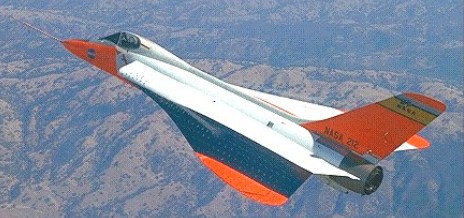
By 1957 two prototypes of the XF5D-1 Skylancer were flying.
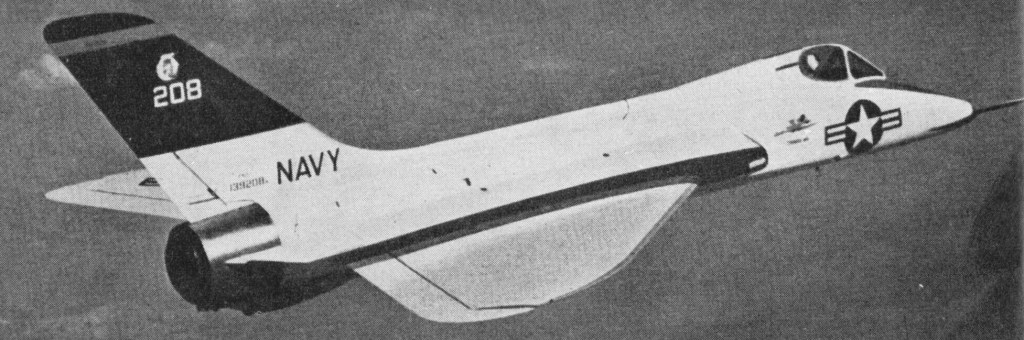
The four F5D-1s were used by the US Navy as flying testbeds for a variety of equipment before they were handed over to NASA for experimental use.
Two prototypes given to NASA in late 1960 essentially as castaways. Neil Armstrong flew one of the F5Ds on 26 September 1960 during a visit to NASA Ames and realised the F5D could serve well in a study of Dyna-Soar abort procedures because its wing planform was a match for the X-20.
Armstrong began flight tests in the F5D in July 1961, and after no fewer than 10 flights, developed an effective maneuver of X-20 abort. His last flight in the F5D was 1 November 1961.
Neil Armstrong’s last flight as a Flight Research Centre employee occurred on Friday 28 September 1962. It was another low L/D flight in an F5D.
F5D
Engine: 1 x Pratt-Whitney J57-P-8, 7250kg
Max take-off weight: 12733 kg / 28072 lb
Empty weight: 7912 kg / 17443 lb
Wingspan: 10.21 m / 33 ft 6 in
Length: 16.4 m / 53 ft 10 in
Height: 4.52 m / 14 ft 10 in
Wing area: 51.75 sq.m / 557.03 sq ft
Max. speed: 1760 km/h / 1094 mph
Cruise speed: 1025 km/h / 637 mph
Ceiling: 17500 m / 57400 ft
Range: 2140 km / 1330 miles
Crew: 1
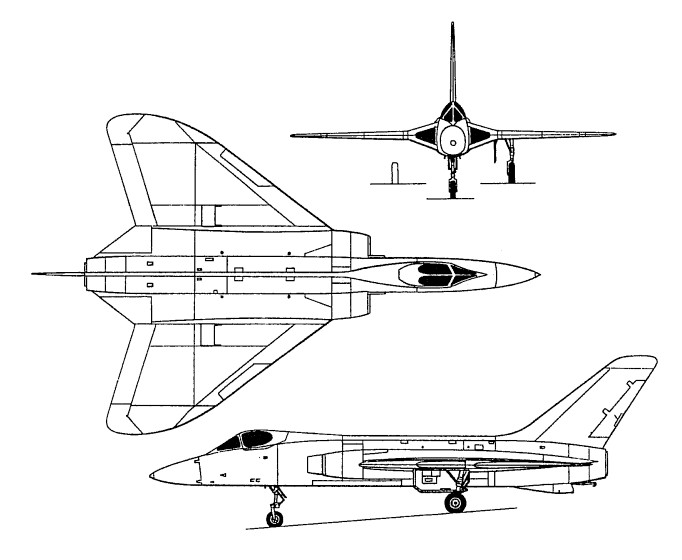
Douglas F6 / F4D-1 Skyray
US Navy interest in German delta-wing research led, in 1947, to the design by Douglas of a carrier-based interceptor with a variation of the pure delta wing. Approval of the Douglas design was signified by the award of a contract for two Douglas XF4D-1 prototypes on 16 December 1948, the first making its maiden flight on 23 January 1951 powered by a 2268kg thrust Allison J35-A-17 engine. This represented an emergency powerplant, resulting from delays in development of the Westinghouse J40 turbojet which had been the planned engine. Both prototypes were flown subsequently with the XJ40-WE-6 developing 3175kg thrust and the XJ40-WE-8 which had a rating of 5262kg with afterburning, but problems with this engine programme led to final selection of the Pratt & Whitney J57 engine for production aircraft.
Douglas F6 / F4D-1 Skyray Article
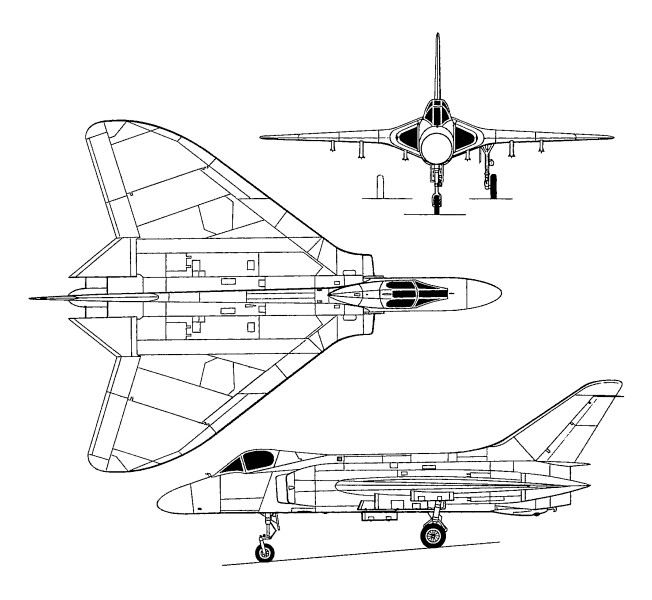
The F4D Skyray was a cantilever mid-wing monoplane, the wing of modified delta configuration incorporating elevons to serve collectively as elevators or differentially as ailerons. The tail unit had only swept vertical surfaces, landing gear was of retractable tricycle-type. The pilot was accommodated well forward of the wing.
The potential of the F4D was demonstrated effectively by the second prototype on 3 October 1953, then powered by the XJ40-WE-8 turbojet, which set a new world speed record of 1211.746km/h.
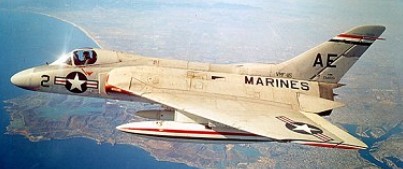
The first production F4D-1 was flown on 5 June 1954, powered by a Pratt & Whitney J57-P-2 turbojet developing 6123kg thrust with afterburning, but it was not until 16 April 1956 that deliveries began, initially to US Navy Squadron VC-3. The 419th and last production aircraft was delivered on 22 December 1958, but in the intervening period a change had been made by installation of the higher-rated J57-P-8 engine. All aircraft retained the F4D-1 designation, the popular (derived) name being Ford.
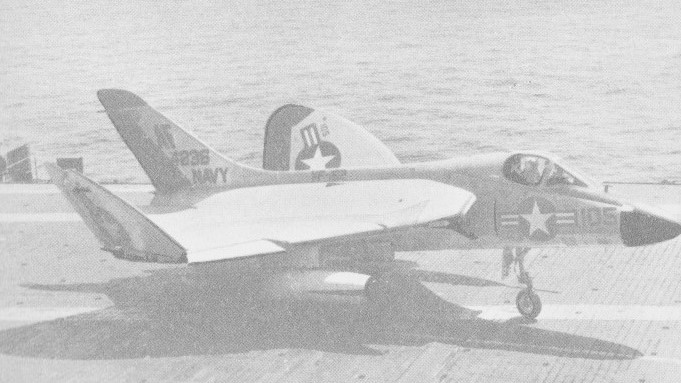
The new Douglas factory at Torrance (Plant B-6) in May 1954 was in volume production with both the AD-5 and 6 Skyraider and the F4D-1 Skyray, the latter with the J57 turbojet with afterburner. This leaves the El Segundo division almost clear to turn out twin-jet Skywarriors. Navy contracts for the Skyray were sufficient to keep Torrance busy until the end of 1956. Reports came to the effect that a new variant, the F4D-2, was being developed “with some configuration changes.” After manufacture at Torrance, Skyrays are put aboard a flat truck and taken to El Segundo, where final operational equipment is installed preparatory to flight testing.
At the peak of its utilisation, the Skyray equipped 11 US Navy, six US Marine and three reserve squadrons, but none was used operationally. The type survived in first-line service until the late 1960s, with two front-line squadrons not converting to the type until 1964. It was redesignated F-6A in September 1962.
F4D
Engine: 1 x Pratt & Whitney J57-P-8B turbojet, 64.5kN / 9700 lb with afterburner
Max take-off weight: 11340 kg / 25001 lb
Empty weight: 7268 kg / 16023 lb
Wingspan: 10.21 m / 33 ft 6 in
Length: 13.93 m / 45 ft 8 in
Height: 3.96 m / 12 ft 12 in
Wing area: 51.75 sq.m / 557.03 sq ft
Ceiling: 16765 m / 55000 ft
Range: 1931 km / 1200 miles
Crew: 1
Armament: 4 x 20mm cannons, 1814kg of weapons on six hardpoints
F4D-1
Engine: Pratt & Whitney J57-P-2 turbojet, 9,7001b. thrust
Wingspan: 33 ft. 6 in
Length: 42 ft.
Loaded weight: approx. 16,000 lb.
Max. speed: approx. 750 m.p.h.
Ceiling: 50,000 ft.
Endurance: 45 min.
Armament: 4×20 mm. Cannon
Bombload: 2x 1,000 lb. bombs, 6 pods of 7×2.75 in. rockets or 4 pods of 19×2.75 in. rockets.
Crew: 1.
F4D-1
Engine: Pratt & Whitney J57-P-8, 14,550 lb with reheat
Wingspan: 33 ft 6 in
Wing area: 557 sq.ft
Length: 45 ft 8.25 in
Height: 13 ft
Empty weight: 16.024 lb
MTOW: 27,000 lb
Max speed SL: 722 m[h / M0.95
Max speed 36,000 ft: 693 mph M1.05
Max ROC: 18,000 fpm
Service ceiling: 55,000 ft
Max range: 950 miles
External fuel: 2 x 250 gal underwing
Armament: 4 x 20mm cannon
Douglas F10 / F3D Skyknight
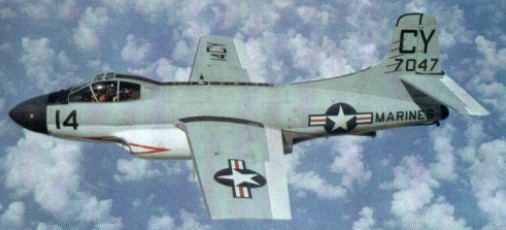
Unique in being the US Navy’s first jet-powered night-fighter, the Skyknight began development in 1945, Douglas being awarded a contract for three XF3D-1 prototypes in April 1946.
The type emerged as a cantilever mid-wing monoplane of all-metal construction, the wings incorporating hydraulic folding for carrier stowage. The circular-section fuselage mounted hydraulically actuated speed-brakes, provided side-by-side pressurised accommodation for the pilot and radar operator, and carried at the rear a tail unit very similar to that of the D-558-1 Skystreak. An unusual feature was a crew escape tunnel, extending from the rear of the cabin to the underside of the fuselage. Landing gear was retractable tricycle-type, and the powerplant of the prototypes was two 1361kg thrust Westinghouse J34-WE-24 turbojets, mounted on the lower edges of the forward fuselage, beneath the wing roots.
The first prototype made its maiden flight from Muroc (now Edwards AFB) on 23 March 1948, this event being followed in June by an order for 28 production F3D-1 (later redesignated F-10A) fighters while company testing was still in progress. The first of these was flown on 13 February 1950. Service acceptance trials were conducted by VC-3 at Moffett Field from December 1950, the type then being handed over to Marine Night Fighter Squadron VMF(N)-542. The F3D-1 differed from the prototypes by having improved avionics and equipment and, as delivered initially, had 1361kg thrust J34-WE-32 turbojets. These engines were uprated subsequently to 1474kg thrust, becoming redesignated J34-WE-34. In the event, the F3D-l did not see action.
Before delivery of the first F3D-1, Douglas had received a contract for production of an improved F3D-2 (F-l0B), which was to be the major and ultimate production version, with a total of 237 built in the early 1950s. It was intended that the F3D-2 should be powered by 2087kg thrust J46-WE-3 turbojets, but development of this engine was abandoned and, instead, they were all powered by J34-WE-36s. Improvements included the provision of an autopilot and updated systems and equipment. The first of these F3D-2s was flown on 14 February 1951 and all had been delivered just over a year later. It was this model which made the Skyknight’s combat debut with VMF(N)-513 in June 1952.
The Skynight saw extensive use in Korea, this all-weather fighter accounting for the majority of all victories scored by the US Navy and US Marine Corps. On the night of 2 November 1952, it succeeded in downing a North Korean Yakovlev Yak- 15, this marking the first recorded kill in a jet-versus-jet combat at night. Even more remarkable is the fact that the F3D ended the Korean War as the most successful naval fighter type in terms of aircraft destroyed in air combat.
In US Navy service, the F3D enjoyed only a brief front-line career, being quickly relegated to radar intercept training duties as the F3D-2T and F3D-2T2 (TF-10B), the last example being retired in the early 1960s. US Marine Corps composite squadrons continued to use the F3D-2Q (EF-10B) type in ECM duties, however, and the type again saw action in Vietnam with VMCJ-1 until 1969 when it was finally replaced by the Grumman EA-6A Intruder.
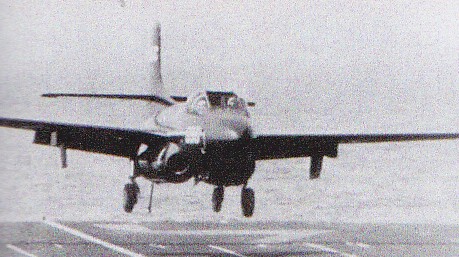
Two examples of the Skyknight were used by the US Army in support of air defence missile testing at White Sands, New Mexico.
A proposed swept-wing version known as the F3D-3 was cancelled in 1952, but other service variants were the missile-armed F3D-1M and F3D-2M (MF-l0B).
F3D-1 Skyknight
Engines: 2 x Westinghouse J34-WE-32 turbojets, 3000 lb thrust.
Wingspan: 50 ft
Length: 45 ft. 5 in.
Loaded weight: 27,000 lb.
Max speed: approx. 530 m.p.h.
Range: about 1,200 miles.
Armament: 4 20 mm cannon
Crew: 2.
F3D-2 / F 10B Skyknight
Powerplant: two 1542-kg (3,400-lb) thrust Westinghouse J34-WE-36/36A turbojets.
Wing span 15.24 m (50 ft 0 in)
Length 13.84 m (45 ft 5 in)
Height 4.90 (16 ft 1 in)
Wing area 37.16 sq.m (400 sq.ft).
Maximum speed 909 km/h (565 mph) at 6095 m (20,000 ft)
Cruise speed: 628 km/h / 390 mph
Service ceiling 11645 m (38,200 ft)
Range 2478 km (1,540 miles)
Empty weight: 8237 kg (18,160 lb)
Maximum take-off 12556 kg (27,681 lbs).
Armament: four 20-mm cannon, plus two 907-kg (2,000-lb) bombs.
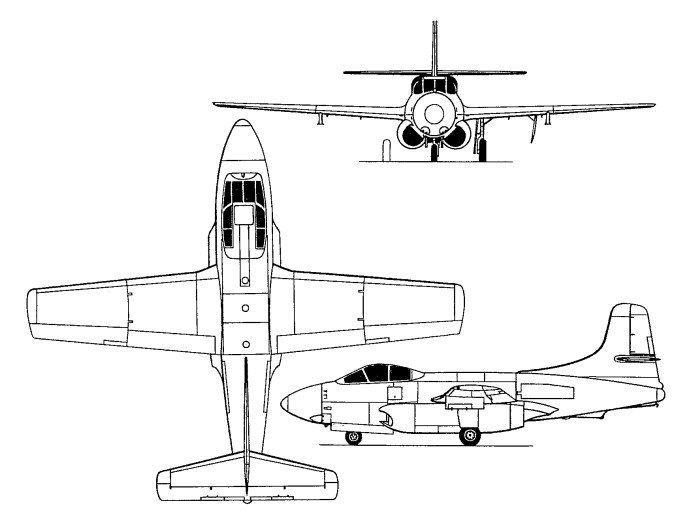
Douglas DC-10 / KC-10

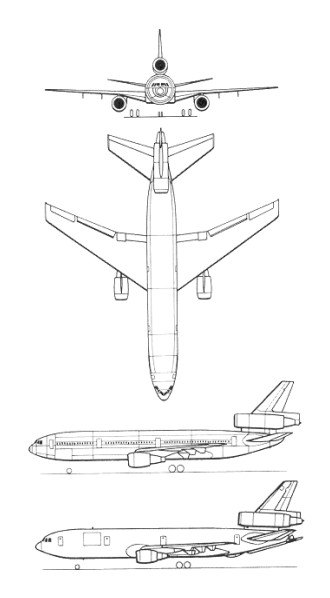
Douglas designed the DC-10 in 1966, competing directly with Lockheed to produce an airbus capable of operating from normal-length runways. By designing the DC-10 around three General Electric CF6-6 turbofan engines, Douglas avoided the financial difficulties encountered by Lockheed with the Rolls-Royce RB.211. In a multi-company manufacturing agreement, Convair produces the fuselage and Aeritalia the fins (vertical stabilizers). The -10 is a short/medium-haul version; the long-range -30 and -40 have an extra forward-retracting main gear, uniquely mounted on the centreline. An aircraft with a fixed wing sweep (the DC-10 wing, designed just before the advanced supercritical form was introduced, is broad and strongly swept) cannot be best for all ranges, but the DC-10’s sales record of 250 testifies to its attraction as a sophisticated wide¬bodied jet that can fly global routes.
The Series 10, able to accommodate up to 380 economy class passengers on domestic routes, was first flown on 29 August 1970, certified on 29 July 1971, and made its first scheduled passenger flight with American Airlines on 5 August 1971. Introduction of DC-10 service-between Los Angeles and Chicago came one week after American formally accepted the trijet from McDonnell Douglas. It was followed by the inter-continental range Series 20, which flew for the first time on 28 February 1972.
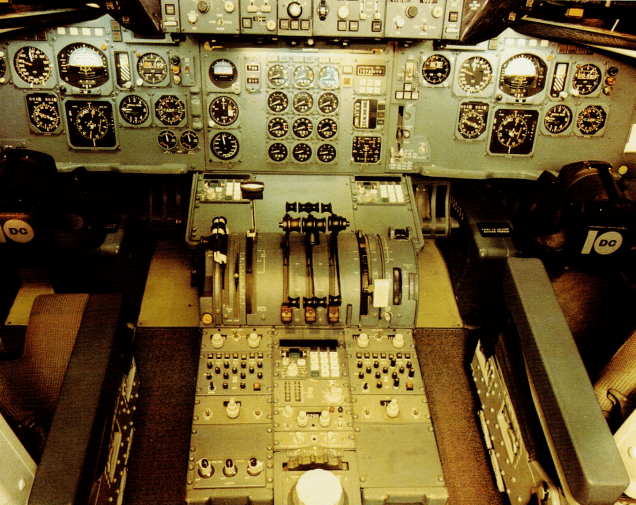
Conversion of the CF6-50A engines to -50C standard increases the thrust from 49,000 lbs to 51,000 lbs.
Turkish airlines took delivery of three DC-10-10 between December 1972 and February 1973; TC-JAU, TC-JAV, and TC-JAY. TC-JAV was lost at Paris in 1974.
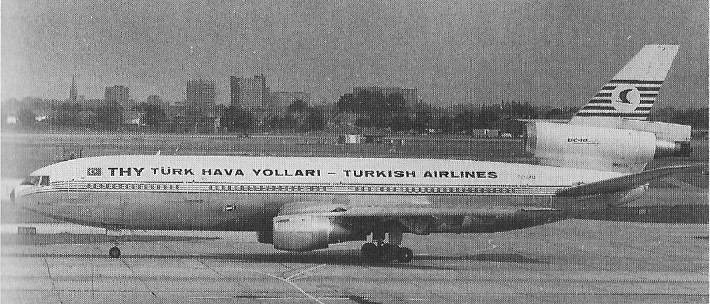
First flight of the long range Pratt & Whitney JT9D powered McDonnell Douglas DC 10 20 took place on February 28, 1972. Northwest Airlines having ordered 14, with 14 more on option

A derivative of the commercial DC-10-30CF, selected in 1977 as the USAF’s advanced tanker/cargo aircraft (ATCA), the first KC-10A flew in July 1980. The aircraft has high-flow-rate, 5,680lit/min refuelling boom plus an independent, 2,2701it/min hose-drogue system. As a transport the KC-10 has a cargo capacity comparable with that of the C-5 to 8,300km range, but is superior over longer ranges up to 18,500km.
Some 445 DC 10s were delivered since the first went into service in 1971, the last in July 1989 to Nigerian Airways.

DC 10 Srs 10
Engines: 3 x General Electric CF6 6D turbojets, 40,000 lbs thrust each.
Length: 181 ft 4.75 in.
Wingspan: 155 ft 4 in.
Ceiling: 35,000 ft.
Range: 2,429 mls.
DC-10-30
Engines: 3 x CF6-50C, 51,000 lbs thrust.
Wing span: 165.3 ft.
Max takeoff weight: 259.45 tonnes.
Max landing weight: 182.79 tonnes.
Fuel capacity 111.40 tonnes.
Pax cap: 247.
Range: 10,232 km.
DC-10-30ER
Engines: 3 x CF6-50C2, 233.5 kN.
Wing span: 50.4m.
Length: 55.5m.
Height: 17.7m.
Max speed: 0.88M @ 7620m.
Max range (full load): 7410 km.
Crew: 3.
Accommodation: 243 pax.
DC-10-30CF / KC-10A Extender
Engine: 3 x GE CF6 turbofan.
Installed thrust: 701 kW.
Span: 50.4 m.
Length: 55.3 m.
Wing area: 339 sq.m.
Empty wt: 109,350 kg.
MTOW: 267,620 kg.
Payload: 78,840 kg.
Max speed: 956 kph.
Initial ROC: 20 min to 8530 m.
Ceiling: 12,800 m.
T/O run: 2590 m.
Ldg run: 790 m.
Fuel internal: 200,940 lt.
Range: 11,110 km with 45,400 kg payload.
Air refuel: Yes.
McDonnell Douglas KC 10 A Extender
Engine : 3 x General Electric CF6 50C2, 229064 N / 23350 kp
Length : 181.759 ft / 55.4 m
Height : 58.071 ft / 17.7 m
Wingspan : 165.354 ft / 50.4 m
Wing area : 3957.923 sqft / 367.7 sq.m
Max take off weight : 590102.1 lb / 267620.0 kg
Weight empty : 241072.7 lb / 109330.0 kg
Max. payload weight : 349029.5 lb / 158290.0 kg
Max. speed : 530 kts / 982 km/h
Landing speed : 138 kts / 256 km/h
Cruising speed : 490 kts / 908 km/h
Initial climb rate : 2755.91 ft/min / 14.0 m/s
Service ceiling : 32808 ft / / 10000 m
Wing load : 149.24 lb/sq.ft / 728.0 kg/sq.m
Range : 9989 nm / 18500 km
Crew : 6
Fuel capacity : 132330 lt
Douglas DC-9 / C-9 Nightingale
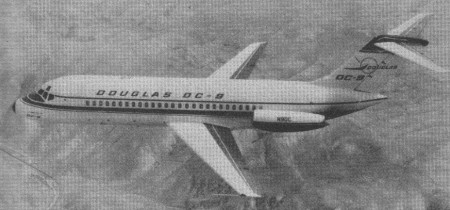
McDonnell Douglas’s only four engined civil jet airliner, the DC 8, preceded the company’s very successful DC 9 twin jet, which first flew at Long Beach, California, on February 25, 1965.
By 1962 Douglas’s Model 2086 had become a firm design, and the subject of negotiations with several opera¬tors. At last Delta agreed to buy a fleet and the Model 2086 became the DC-9 on 8 April 1963. In April 1963 the company announced that it would build the DC 9 and John Brizendine, who ten years later became President of Douglas Aircraft, was named programme manager. The programme was given top priority with more than 40,000 man hours a week expended on the project. The primary aims of the project were to produce a simple and reliable, easy to operate and maintain airliner. Construction of the prototype began in July 1963 and the first DC-9 flew from Long Beach on 25 February 1965. US airlines made no advance orders. Douglas’ own capital was tied up in modifications to the DC-8, so the company reduced the risk by utilizing the DC-8’s flight deck, and persuading major suppliers to design and manufacture different parts, receiving payment only as each aircraft was delivered to a customer. De Havilland Canada produced the complete wing, rear fuselage and tail. Later, the Douglas Aircraft Company bought part of their Toronto factory, and continued production there. By producing a series of stretched versions, to stay abreast of the demand for larger capacity aircraft, Douglas outsold all competitors in the same category.
A big manufacturing programme was launched, with DH Canada making the wings, rear fuselage and tail. From the start Douglas planned to offer different versions, and the original DC-9 Series 10 could weigh anything from the basic 77,000lb with JT8D-5 engines of 12,000-lb thrust to 90,000 lb with extra fuel and 14,000-lb JT8D-1 or -7 engines. The first off the line flew a month early, on 25 February 1965, and services began with Delta on 8 December the same year. A total of 137 were built.
Douglas offered a stretched ‘DC-9B’ and on 25 February 1965 and won an Eastern order. The designation was changed to DC-9 Series 30, with 14,500-lb engines and a considerable stretch both to the span and length. The weight was 98,000 lb, matched by full-span slats and double-slotted flaps. The first Srs 30 flew on 1 August 1966. Subsequently the Srs 30 (503 sold) grew to 108,000 lb with more-powerful engines, seating up to 115.
Then came the Srs 20, for operation out of difficult airports by SAS. It combined the wings and engines of the Srs 30 with the original short fuselage. On 28 November 1967 Douglas, by now part of McDonnell Douglas, flew the DC-9 Srs 40, with engines of up to 16,000-lb thrust, enabling weight to rise to 122,000lb. The fuselage was stretched yet again, to seat up to 132. To meet airline demand for a DC 9 with larger capacity the 40 was developed with a longer fuselage enclosing a 132 seat configuration. Below floor cargo space was also increased. This version entered service in March 1968.
Last of the original DC-9 variants was the Srs 50, first flown on 17 December 1974. This introduced many attractive new features, but the main difference was that, still keeping at 122,000-lb weight, the body was stretched yet again to seat 139. The 50 began airline operation in August 1975.
Each DC 9 was, in practice, a stretched version of the Series 10. The 20 carried 115 passengers and featured a longer wingspan and a high lift wing system of leading edge slats for short field performance. The 30 was the most widely used. US Air Force versions were designated C 9A Nightingale and VC-9C and C 9B Skytrain for the US Navy.
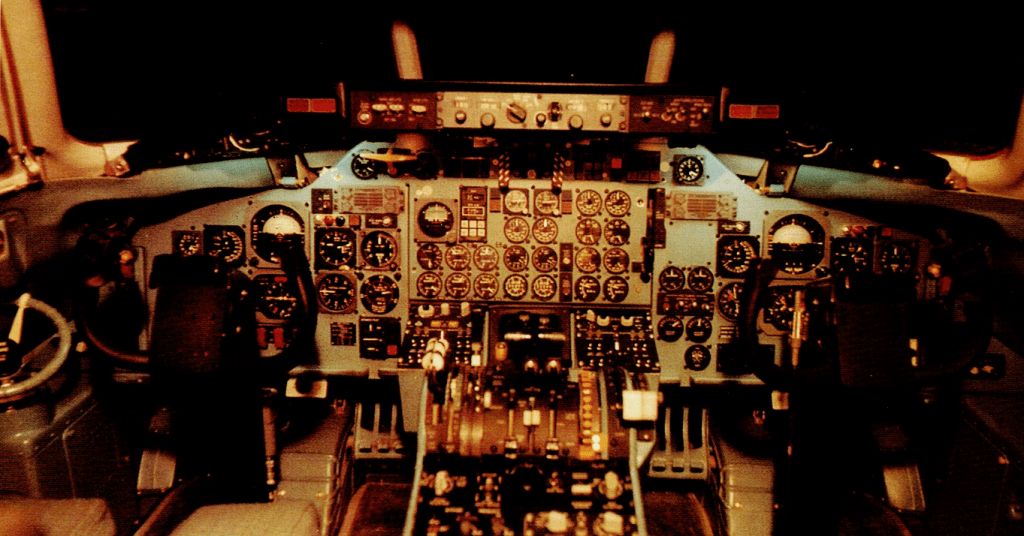
Douglas also offered various cargo and convertible versions. A total of 649 DC-9s had been delivered by 1 February 1972. This includes the C-9A variant for the 375th Aeromedical Wing of the USAF MAC. Important orders were also placed by the US Air Force and Navy (Marines) for the C-9A Nightingale aeromedical aircraft, the C-9B Skytrain II (longest-ranged of all versions) and VC-9C for VIP missions. Each of the C-9A can carry 30-40 litter patients, two nurses and three aeromedical technicians, and have intensive care compartments. Ten were converted. The final aircraft off the assembly line, a DC¬9 30, was transferred to the US Navy as a C 9B in October 1982.
Thrust for the 976 DC 9s completed over an 18 year production run was provided exclusively by the Pratt & Whitney JT8D family of engines. In mid 1998 there were in excess of 870 of the type being flown by over 70 operators worldwide.
A new version was launched as the DC-9 Super 80, with an order from Swissair, closely fol¬lowed by Austrian and Southern, in October 1977. The first aircraft flew on 18 October 1979. Changes included a further (and very large) stretch to the fuselage, an extension to the span at both the wing roots and tips, a digital electronic flight guidance system, a further increase in fuel capacity and, not least, fitting the JT8D-200 series engine. The refanned engine, used initially in -209 form at 18,500-lb thrust, dramatically reduced noise and eliminated worries over impending noise legislation. Seating capacity was typically up to 172.
In 1983 the company at last abandoned the famed ‘DC’ and adopted ‘MD’ for its designations, McDonnell Douglas launched the MD-80.
Altogether Douglas sold 976 DC-9s, production being completed in September 1982.
DC 9 Srs 10
Engines: 2 x Pratt & Whitney JT8D 5 turbofans, 12,250 lb / 53.4kN thrust each.
Length: 31.8 m / 104 ft 4.75 in.
Wingspan: 89 ft 5 in.
Height: 8.3 m / 27 ft 3 in
Wing area: 85.9 sq.m / 924.62 sq ft
Max take-off weight: 35245 kg / 77702 lb
Max. speed: 895 km/h / 556 mph
Ceiling: 25,000 ft.
Range 1,311 mls.
Pax cap: 90.
Crew: 2
Passengers: 65-90
DC-9-10
Engines: 2 x Pratt & Whitney JT8D-1 or -7, 12,000-14,000 lb.
Length: 104 ft 4 ¾in.
Pax capacity: up to 90.
MTOW: 77,000-90,000 lb.
Engines: 2 x 14,000 lb. (6,350 kg.) thrust Pratt & Whitney JT8D.
Length 119.25 ft. (36.37 m.)
Wing span 93.4 ft. (28.47 m.)
Weight empty 52,935 lb. (24,010 kg.)
Max cruise: 565 m.p.h. (909 kph)
Range: 1,725 miles (2,775 km.) with 50 passengers.
DC-9-20
Engines: 2 x Pratt & Whitney JT8D.
Length: 104 ft 4 ¾in.
Pax cap: 90.
Entered service: 1968.
DC-9-30
Engines: 2 x Pratt & Whitney JT8D, 14,000 lb.
Pax capacity: up to 115.
Max wt: 108,000 lb.
Length: 119.3 ft.
Entered service: 1967.
Wing span: 93 ft 5 in (28.47 m).
Length: 119 ft 3.5 in (36.37 m).
Height: 27 ft 6 in (8.38 m).
Max level speed: 565 mph (909 kph).
DC-9-40
Engines: 2 x Pratt & Whitney JT8D, 15,500 lbs.
Pax capacity: up to 132.
Max wt: 122,000lb.
Length: 125.6 ft.
Entered service: 1968.
DC-9-50
Engines: 2 x Pratt & Whitney JT8D, 16,000 lbs.
Pax capacity: up to 139.
Length: 133.5 ft.
Entered service: 1975.
DC-9-80
Engines: 2 x Pratt & Whitney JT8D-209, 18,500 lbs thrust.
Length: 147 ft 10 in.
Pax capacity: up to 172.
MTOW: 108,000 lb.
Entered service: 1980.
McDonnell Douglas C 9 A Nightingale
Length : 117.126 ft / 35.7 m
Height : 26.903 ft / 8.2 m
Wingspan : 91.535 ft / 27.9 m
Max take off weight : 107163.0 lb / 48600.0 kg
Weight empty : 59224.1 lb / 26859.0 kg
Cruising speed : 501 kts / 928 km/h
Cruising altitude : 34797 ft / 10606 m
Range : 1739 nm / 3220 km
Engine : 2 x Pratt & Whitney JT8D-9, 64501 N / 6575 kp
Crew : 8
Payload : 40 Pax

Douglas DC-8
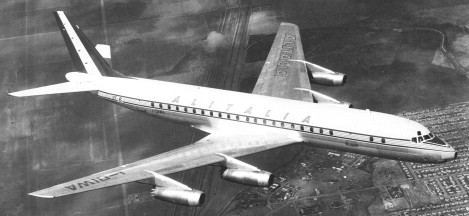
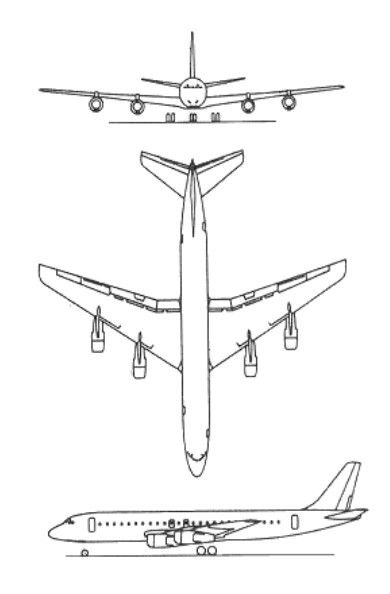
The Douglas Aircraft Company announced its intention, on 7 June 1955, to enter the pure jet stakes with the DC-8. Originally powered by the same Pratt & Whitney JT3 turbofans as the 707, it had a fractionally more slender body, less wing sweep, and fully powered flight controls. To reduce drag and avoid stress between wing and fuselage, the aerofoil changes shape toward the root, becoming flatter on top and more curved beneath. Douglas began assembling the first DC-8 in February 1957 and, there being no prototype as such, was rolled out and first flew on 30 May 1958.
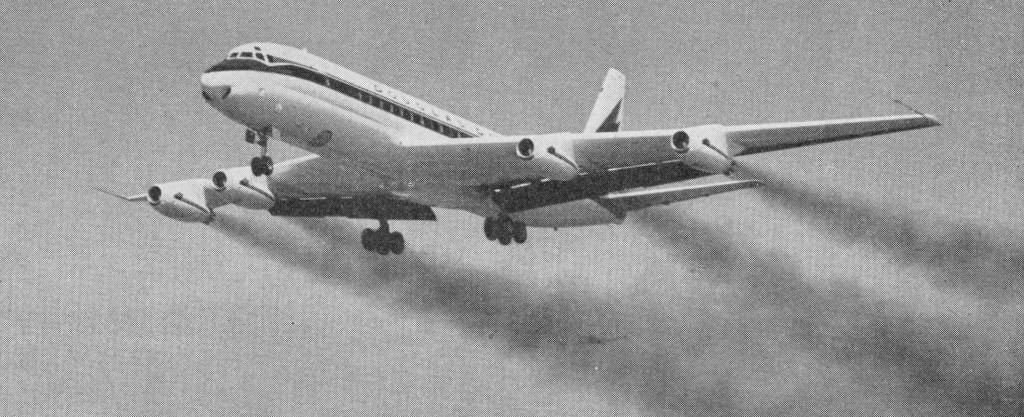
There are four main families of DC-8s: Douglas made the first five versions the same size differing only in power and fuel capacity. Douglas had announced that all projected versions would have the same overall dimensions. It adhered to this policy until 1965, and the first five versions of the DC-8 have an identical airframe, with uniform electrical, hydraulic, control and air conditioning systems. The intercontinental versions differ from the domestic models only in having extra fuel capacity and the structural modifications needed to carry the additional fuel. The modifications are limited to the use of thicker skin and stronger material within the wing structure, the aft portion of the fuselage and the tailplane. The landing gear is also more robust in the case of the heavier intercontinental versions.
It was offered in several models, the series 10 for domestic services, the series 30 for longer ranges and the Series 40 powered by the Rolls Royce Conway bypass engine for Trans Canadian Airlines, Air Canada.
On 23 July 1959 the first DC-8 with Rolls-Royce Conway engines made its first flight from Long Beach, California. It was the ninth DC-8 to fly in 14 months.
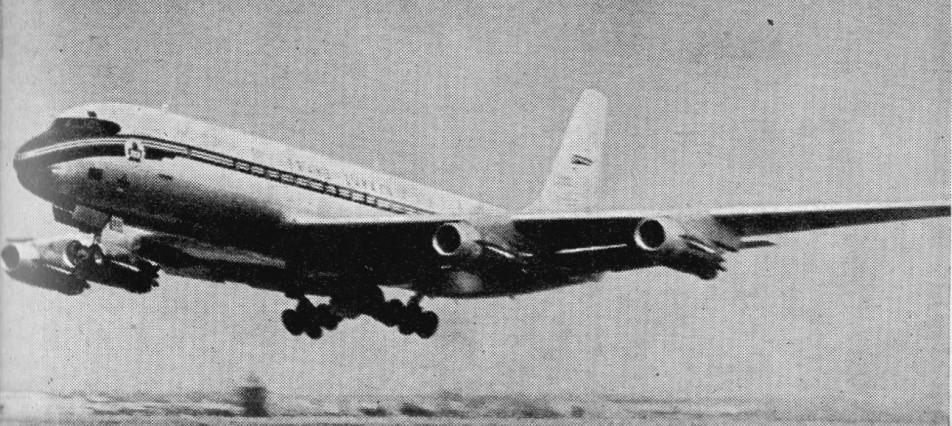
A DC-8-40 became the first jet airliner to exceed the speed of sound when, in 1961, it reached Mach 1.012 (667 mph) in a shallow dive. In 1959 Douglas introduced an extended wing leading edge and slightly extended tips, allowing weight to reach 310,000 lb.
The DC-8 with JT-3C engines received its FAA Type Approval on 31 August 1959 and went into service with United Airlines and Delta Airlines on 18 September 1959.
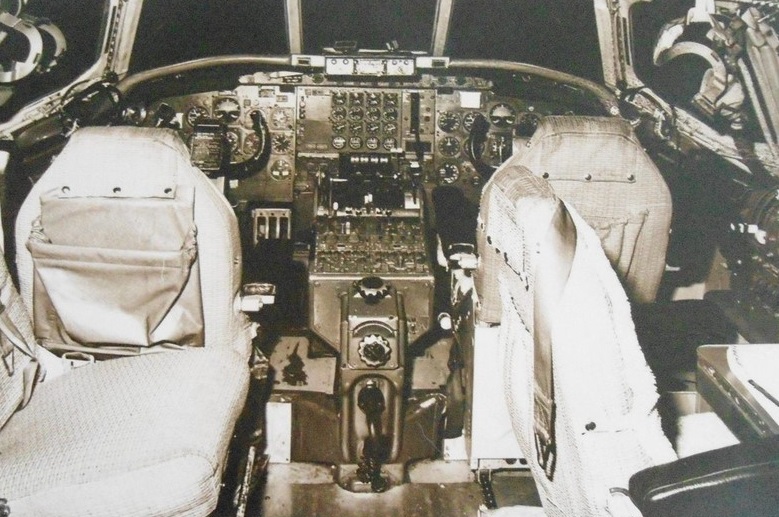
In 1960 the Series 50 introduced the JT3D turbofan engine, with weights up to 325,000lb. The Series 50 evolved after Pratt and Whitney developed the new JT3D turbofan housed in new nacelles with distinct exhaust louvres on either side. The 50 range was developed into the 51 for domestic operations, the 52, 53 and 55 for long range versions differing in the model of engine fitted. A subsequent version, the 54, was developed as a freighter.
The Series 50 DC 8 had a still air range of around 6900 miles with a maximum cruise of 580 miles an hour at 220,000 lb. The series 52 had a total fuel capacity of 150,055 lb. The forward freight compartment had a capacity of 690 cu ft and the rear a usable capacity of 700 cu ft.
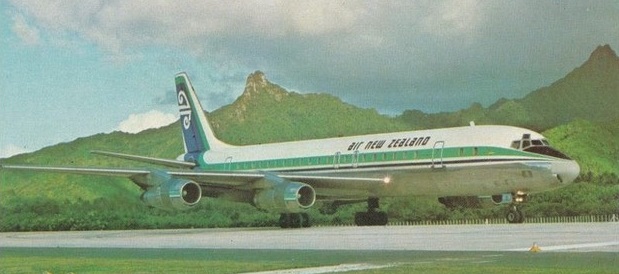
In April 1965 Douglas announced the Super Sixty series. This comprised the DC-8-61, stretched by 36ft 8in to seat up to 259 pas¬sengers; the -62 with only a small stretch, to seat 189, but with extra fuel for very long range, enhanced by an improved wing and engine pods; the -63, fuselage lengthened by 36.7 ft. (11.18 m.), an extended wing span. Powered by JT3Ds of up to 19,000-lb thrust, these extended the DC-8 line from 293 to 556, production continuing until 1972. The Super Sixties proved such good aircraft that in the early 1980s 110 were retrofitted with the CFM56-2 engine as the DC-8-71.
A total of 556 DC-8s were produced before the production line closed in early 1972.
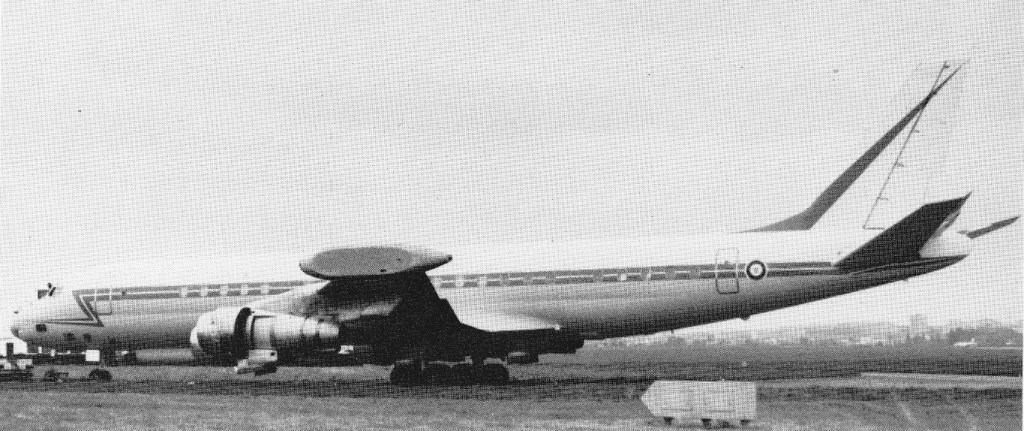
The French Air Force operated an electronic reconnaissance version of the DC-8. They were equipped with large antenna pods on both wingtips and under the fuselage. Reconnaissance squadron Escadron Electronique 51 ‘Aubrac’ operated at least two converted DC-8, 45570 and 46043, from 1977 from Evreux airfield. The first ELINT DC-8 was ordered as early as 1973.
DC-8-10
MTOW: 211,00 lbs.
DC-8-40
Engine: 4 x Conway.
DC-8-50
Engines: 4 x P&WJT-3 D-1 turbofan, 75.7kN
Wingspan: 43.4 m / 142 ft 5 in
Length: 45.9 m / 150 ft 7 in
Height: 12.9 m / 42 ft 4 in
Wing area: 257.6 sq.m / 2772.78 sq ft
Empty weight: 57000 kg / 125664 lb
Max take-off weight: 142880 kg / 314998 lb
Cruise speed: 932 km/h / 579 mph
Range w/max.fuel: 11100 km / 6897 miles
Range w/max.payload: 9200 km / 5717 miles
Crew: 3-5
Passengers: 105-189
DC-8-54
Engine: 4 x JT3D3B turbofan.
DC 8 Super 61
Engines: 4 x Pratt & Whitney JT3D 3B turbofans, 18,000 lbs thrust.
Length: 187 ft 5 in.
Wingspan: 142 ft 5 in.
Ceiling: 30,000 ft.
Range: 3,750 miles.
Pax cap: 259.
DC-8-62
MGTOW: 350,0001b (157,500kg).
Fuel cap: 163,0001b (73,350kg).
DC-8 Super 63
Engines: 4 x 19,000 lb. (8,618 kg.) Pratt & Whitney JT3D.
Length: 187.4 ft. (57.12 m.)
Wing span 148.4 ft. (45.23 m.)
Height: 42 ft 5 in (12.92 m).
Weight empty 153,749 lb. (69,739 kg.)
Max TO wt: 350,000 lb (158,760 kg).
Max. capacity: 251 passengers
Max cruise 600 m.p.h. (965 kph)
Range 4,600 miles (7,400 km.) with max. payload.
Max range: 7,700 miles (12,400 km).
Max level speed: 600 mph (965 kph).
DC-8-71
Engines: 4 x CFM56-2.
Douglas DC-7
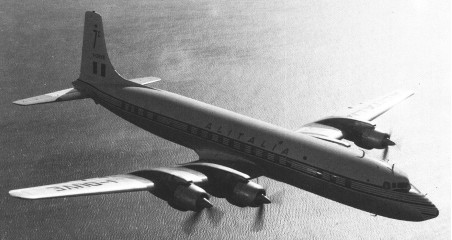
Design and development of the Douglas DC-7 were prompted by American Airlines, which was seeking an aircraft superior in performance to the Lockheed Super Constellation being used by TWA. To meet the requirement of American Airlines it was decided to develop an improved version of the DC-6B using Wright Turbo-Compound engines, each of which had three exhaust-driven turbochargers giving some 20 per cent more output than the standard unit powerplant.
Originally assigned to the civilian version of the C-74 Globemaster (which did not proceed) ‘DC-7’ was later used for Wright R-3350-powered derivatives of the DC-6, but those were completely different airplanes.
American Airlines produced up-front funding for 25 new airliners, enabling Douglas to invest in its own Wright R-3350 Turbo Compound-powered airliner, the DC-7. The initial DC-7 was a direct development of the DC-6B, with the fuselage lengthened by 3 ft 4in to permit the inclusion of one additional row of seats. With the 2424kW R-3350 Turbo Compounds, gross weight went up to 15,200lb / 6895kg and required some strengthening of the landing gear structure. There were also some minor changes in detail, but externally the DC-7 appeared little different from the DC-6B.
One hundred and five DC-7s were built, followed by 112 DC-7Bs, the latter having only minor improvements. In the DC-7B, the engine nacelles were extended further aft to permit the installation of saddle tanks within the rear of the nacelles, made of the new metal titanium. The additional fuel capacity enabled Pan American Airlines to initiate non-stop London-New York service with the DC-7B on 13 June 1955.
The fuel capacity was marginal for North Atlantic services. With a full load and normal headwinds, DC-7Bs which were used to operate the east-to-west service, frequently had to divert for a refuelling stop. Douglas set about the task of developing a version of the DC-7B with greater range.
The third version was designated DC-7C and had, therefore, increased span to provide for greater fuel capacity. This was achieved by inserting a new parallel-chord wing section between the fuselage and the inboard engine nacelles, which had the added advantage of improving the cabin environment by reducing engine noise. During the development of the DC-7C, Curtiss-Wright was able to offer a further increase in engine power up to 3,700 hp and, as a result, the fuselage was lengthened by the insertion of a 1.02m plug to provide accommodation for up to 105 passengers.
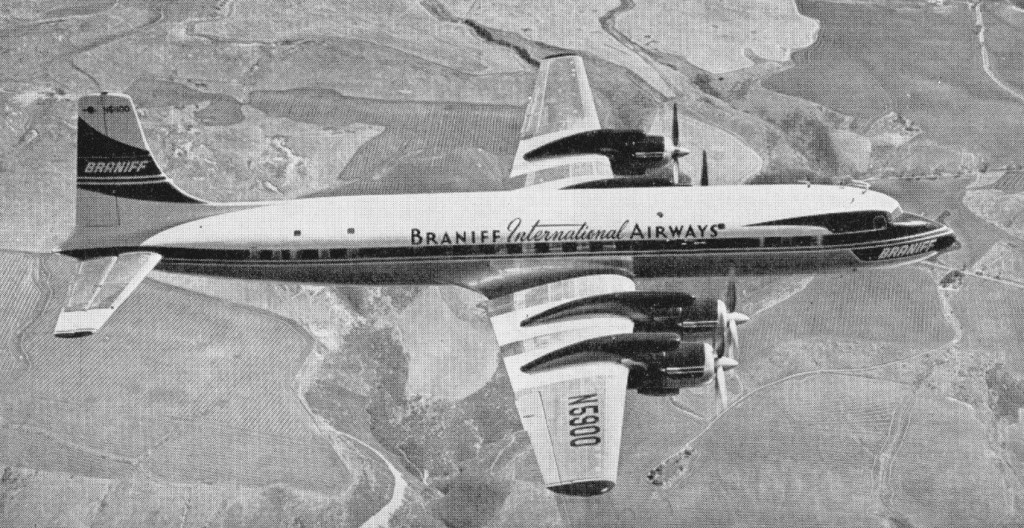
Production of DC-7Cs totalled 120. Not only were they used on North Atlantic and Pacific Ocean services, but they also made possible non-stop scheduled operations across the continental USA, and were used also by SAS to inaugurate a Europe-to-Far East route over the North Pole. An improved DC-7D was planned, to be powered by four 4273kW Rolls-Royce Tyne turboprop engines, but the emergence of the Boeing 707 and the Douglas Company’s purpose-built DC-8 jetliner meant that this remained only as an unfulfilled project.
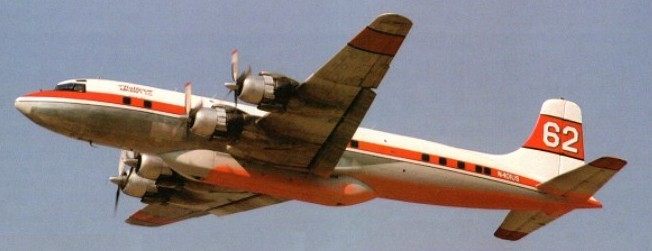
DC-7
Engines: 4 x Wright R-3350 Turbo-Compound, 3250 hp.
Max wt: 152,000 lb.
Maximum speed: 406 mph at 21,700ft.
Normal cruising speed: 355mph.
Range max payload: 4,605 miles.
Service ceiling: 21,700 ft.
Wing span: 127ft 6in.
Length 112ft 3in.
Height: 3lft l0in.
Wing area: 1,637 sq.ft.
DC-7C
Engines: 4 x Wright R-3350 Turbo-Compound, 2500kW.
Maximum speed: 406 mph / 650 km/h at 21,700ft.
Normal cruising speed: 355mph.
Range max payload: 7400 km / 4,605 miles.
Service ceiling: 21,700 ft.
Wing span: 38.8 m / 127ft 6in.
Length: 34.2 m / 112ft 3in.
Height: 9.7 m / 3lft l0in.
Wing area: 152.0 sq.m / 1,637 sq.ft.
Empty weight: 35785 kg / 78893 lb
Max take-off: 143,000 lb / 64865 kg.
Crew: 3-5
Passengers: 48-105
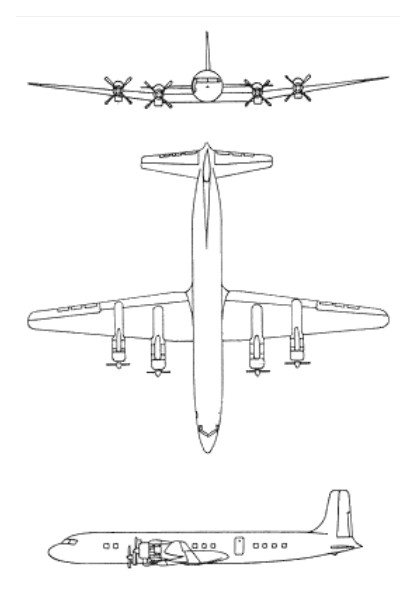
Douglas DC-6 / C-118
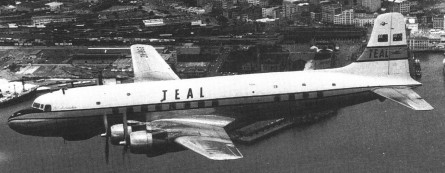
The US Army Air Forces financed the building of a pressurised prototype aircraft based on the DC-4 but with the square, rather than round, windows which were to be an identifying feature of the future DC-6. The prototype, designated XC-112A, also had 2,100-hp / 1,565kW Pratt & Whitney R-2800-34 Double Wasp engines and an 81-inch extension of its fuselage. The XC-112A flew at Santa Monica on 15 February 1946.
American Airlines placed the first order for 50 examples of the new four-engined Douglas, now called DC-6 and first flown on 29 June 1946. The DC-6 was configured to transport between 52 and 86 passengers, depending upon the class of accommodation used. A total of 175 DC-6 were built.
The windowless DC-6A freighter followed in 1949, powered by 1,788.5kW Double Wasps, with reinforced floor and double cargo doors.
The DC-6A, a strengthened, some¬what elongated version powered by water-injection versions of the Double Wasp engine, flew on 29 September 1949. Most DC-6As were built initially as cargo-haulers but were later converted into passenger carriers by their airline users. They had a reinforced floor and cargo-loading doors. The DC-6A was 1.52m longer than the DC-6 (101 going to the USAF as C-118A transports). The term DC-6C was used to refer to aircraft in this series built from the beginning with passenger accommodation. Seventy-four aircraft of the DC-6A/DC-6C type were built, the last being delivered in 1959.
The DC-6B flew on 2 February 1951, a passenger ship lacking the floor and cargo door of its immediate predecessor. Improved 2,500-hp Double Wasp engines with paddle-blade propellers powered the DC-6B. With 288 examples delivered between 1951 and 1958, the DC-6B was the most numerous of variants in the DC-6 series, 704 of which were delivered in all and was put into service on 29 April 1951, by American, Panagra and Braniff, among others.
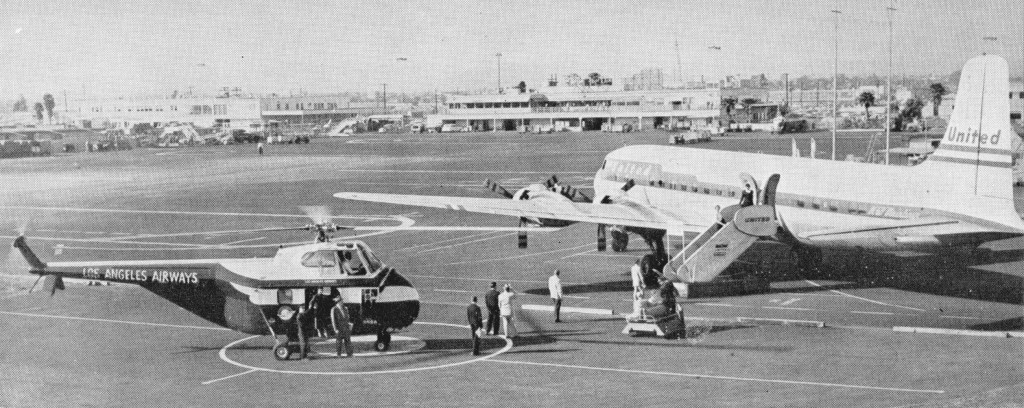
The DC-6B, with accommodation for 54-102 passengers, first flew on 2 February 1951 and also had the longer fuselage. American Airlines introduced DC-6B on its US transcontinental services on 29 April 1951.
The US Navy was the first military customer to order a DC-6 variant in some numbers, acquiring 65 DC-6As in the late 1940s and early 1950s. These were designated R6D-1 and VIP/staff transport examples were called R6D-1Z. The single C-118 (length 100ft 7 in) is V.I.P. transport.
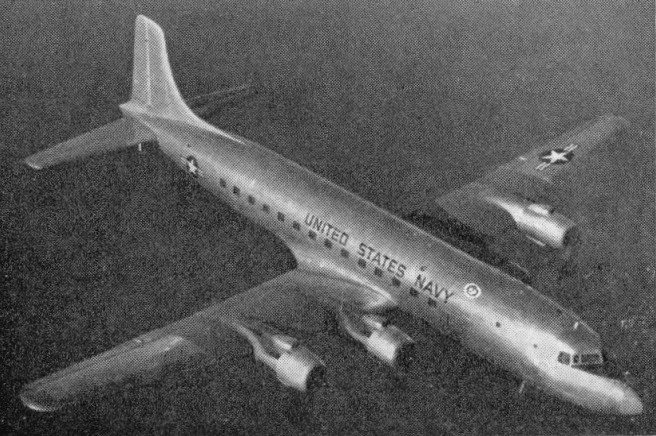
After the Navy, the US Air Force acquired 101 DC-6A aeroplanes, designated C-118A, and employed them on MATS’ worldwide routes. These aircraft could carry up to 27,000 lb of cargo or 81 fully-armed troops. In 1962, the two Naval variants were redesignated C-118B and VC-118B and 40 of them were transferred to the USAF.
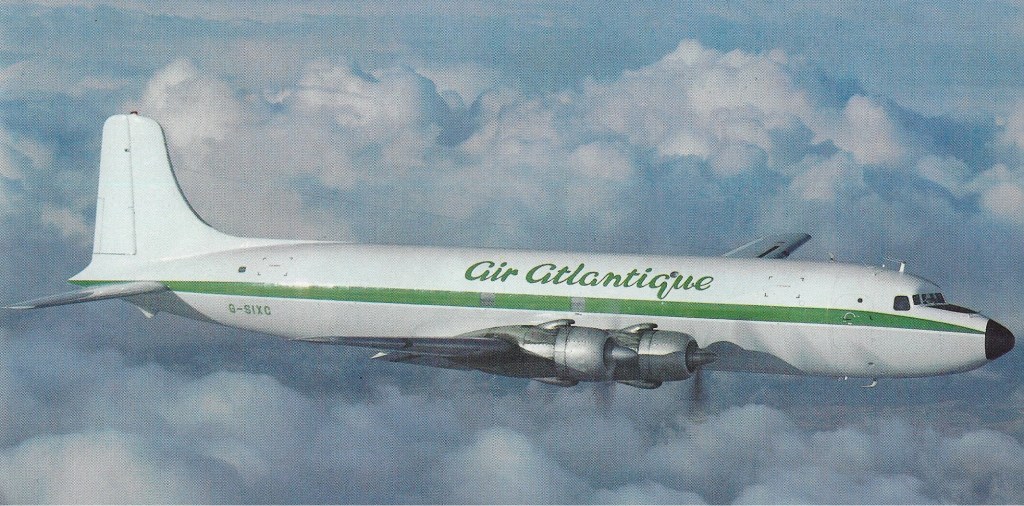
Regularly scheduled operations of the commercial passenger DC-6 continued until 1967 and many of the DC-6 series were later converted to freighters.
XC-112A
Engines: 4 x Pratt & Whitney R-2800-34 Double Wasp, 2,100-hp.
Wing span: 117 ft 6in.
Wing area: 1,463 sq.ft.
Length: 100 ft 7in.
Height: 29ft 1 in.
Empty weight: 53,623 lb.
Max take-off weight: 97,2001b.
ROC: 900 fpm.
Cruise: 328mph.
Service ceiling: 29,000ft.
DC-6
Engines: 4 x Pratt & Whitney R-2800-34 Double Wasp, 2,100-hp.
Wing span: 117 ft 6in.
Wing area: 1,463 sq.ft.
Length: 100 ft 7in.
Height: 29ft 1 in.
Empty weight: 53,623 lb.
Max take-off weight: 97,2001b.
ROC: 900 fpm.
Cruise: 328mph.
Service ceiling: 29,000ft.
DC-6A
Engines: 4 x Pratt & Whitney R-2800 Double Wasp.
DC-6B
Power: 4 x Pratt & Whitney R-2800 Double Wasp radials, 2400 hp.
Max speed: 356 mph @ 20,000 ft.
Span: 117 ft 6 in.
Length: 100 ft 7 in.
MAUW: 97,200 lbs.
Range: 3860 mile.
Cruise: 328mph.
Pax cap: 107.
DC-6BF
Engines: 4 x Pratt & Whitney R-2800-CB Double Wasp, 2400 hp.
Wing span: 117 ft 6 in.
Length: 103 ft 6 in.
Height: 28 ft 6 in.
MTOW: 103,800 lb.
Empty wt: 56,000 lb.
Cruise: 225 kt.
C-118
Length: 100 ft 7 in
C-118A
Payload: 27,000 lb or 81 fully-armed troops.
C 118B Liftmaster
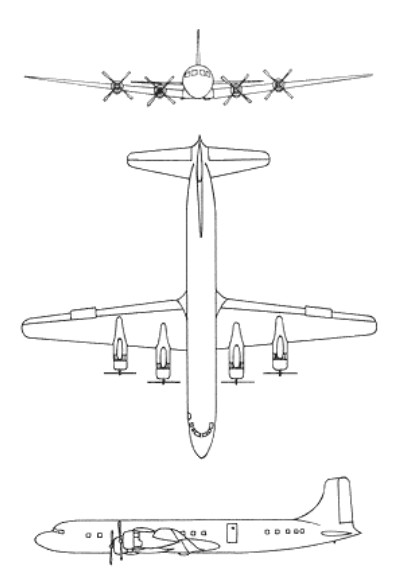
Douglas DC-4 / C-54 / R5D
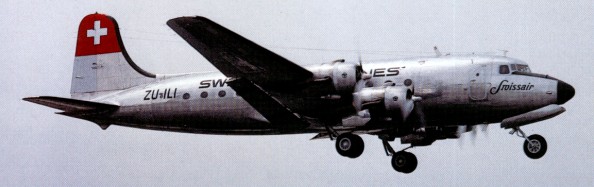
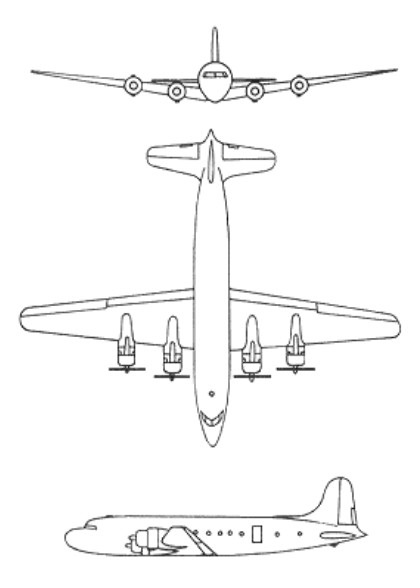
In response to the requirements of five major US airlines, Douglas designed and built the large 52-passenger DC-4, which made its first flight on 7 June 1938. This type was not put into production; instead 61 smaller unpressurised development were ordered by American, Eastern and United Air Lines. This, too, bore the designation DC-4 and the original aeroplane became the DC-4E.
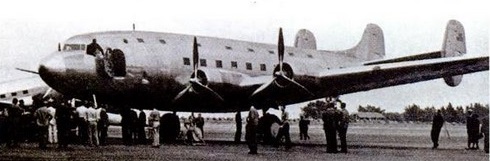
The DC 4 actually saw its first service as the wartime C 54 Skyrnaster (first flight 14 February 1942) when all 24 DC-4A built were taken by the armed forces (designated R5D Skymaster by the Navy).
The DC-4 had a retractable nosewheel undercarriage and was powered by four 820-1,080kW Pratt & Whitney Twin Wasps. It was a long-range heavy logistic transport with a payload of up to 9,980kg.
A total of 207 C-54A were built, followed by increased-capacity C-54B, similar C-54D with Pratt & Whitney R-2000-11 radials, C-54E with convertible cargo/passenger interiors, and C-54G with new engines. Nine hundred and fifty-two Skymasters were completed for the USAAF and 211 for the US Navy.
The C 54D-15DC (USAAF variant of the DC 4, with the DC suffix indicating Douglas Chicago) with four 1,200 hp Pratt and Whitney R2000 7 radials, was operational for the last year of WW2.
USAAF C¬54s were allocated to the USN in July 1945; 92 so transferred.
The C 54Q had R2000 11 engines.
After the war Douglas built 79 civil DC-4-1009 and many of the military aircraft became available for airline operation – mostly with 44 seats but later with as many as 86. On 7 March 1946 American Airlines was first to introduce DC-4 on US domestic services, between New York and Los Angeles. However in October 1945 American Overseas Airlines had introduced DC-4 on North Atlantic services.
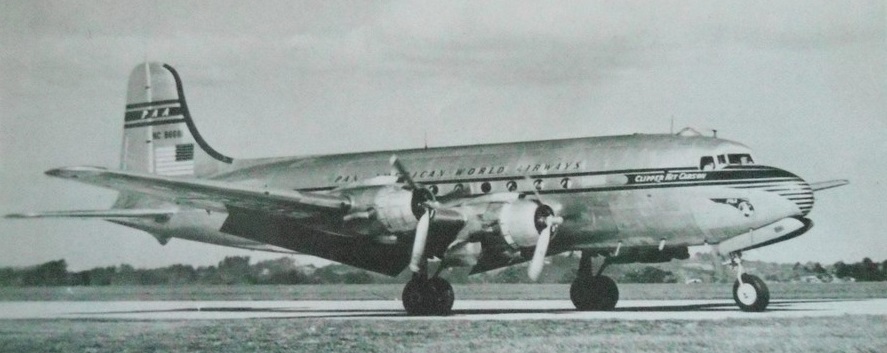
From it were developed the larger DC 6 and DC 7 series the Merlin engined Canadair C 4 and the Aviation Traders Carvair nose loading vehicle transport.
One, the VC-54C-DO Sacred Cow, served as President Roosevelt’s special aircraft and a C-54B-1-DO was used by Prime Minister Winston Churchill.
During the first years of the Berlin Airlift corridors, the pilots had to be wary about mock attacks by Soviet MiG fighters or near misses. The mutual mistrust inevitably caused a number of incidents. In April 1952 an Air France DC-4 was shot-up in one of the Airlift corridors by two Russian MiG-15a. A stewardess and two passengers were seriously injured.
A C-54 made the Berlin Airlift’s last flight on 30 September 1949.
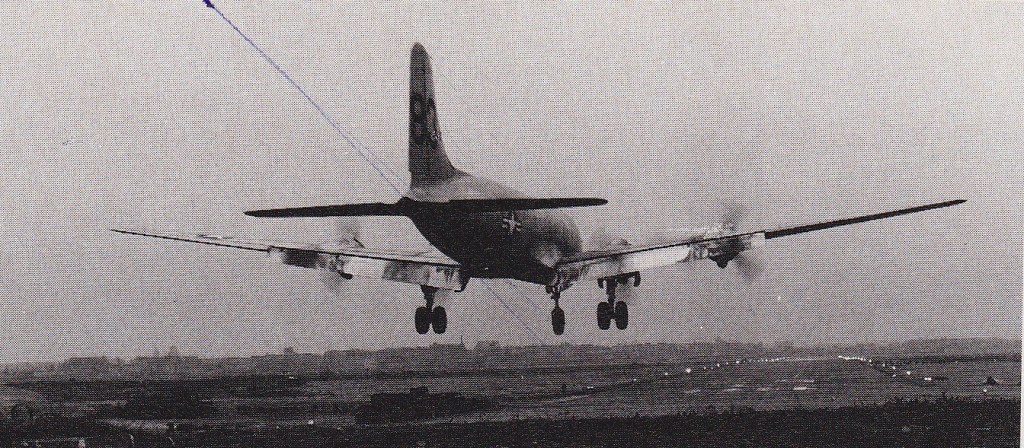
The 1956 R5D2-2 radar and radio research aircraft in the US Navy featured a retractable mast with instruments.

When production ceased in 1947, 1,242 had been built, of which hundreds served to re-equip civil airlines during the first postwar years.
In 1963 the Peruvian Air Force bought three DC-4B’s from US dealer Aircraft Corp of Charlotte, NC. Two for passenger transport and the third for use by Peru’s president.
Variation:
Canadair C-54 / C-4 / C-5
DC 4
Engines: 4 x Pratt & Whitney R 2000 SD13G Twin Wasp, 1,450 hp.
Wing span: 117 ft 6 in (35.80 m).
Length: 93 ft 11 in (28,63 m).
Gross weight: 73,000 lb (33,112 kg).
Typical cruising speed: 204 mph (328 kph) at 10,000 ft (3,050 m).
Accommodation: Crew of 5 plus 44 86 passengers.
Typical range: 2,140 miles (3,444 km) with max payload at 201 mph (323 kph).
DC 4
Engines: 4 x P&W R-2000-25, 1065kW
Max take-off weight: 33140 kg / 73062 lb
Empty weight: 20000 kg / 44093 lb
Wingspan: 35.8 m / 117 ft 5 in
Length: 28.6 m / 93 ft 10 in
Height: 8.4 m / 27 ft 7 in
Wing area: 136.0 sq.m / 1463.89 sq ft
Max. speed: 450 km/h / 280 mph
Cruise speed: 365 km/h / 227 mph
Ceiling: 6900 m / 22650 ft
Range w/max.fuel: 6000 km / 3728 miles
Range w/max.payload: 2200 km / 1367 miles
Crew: 4
Passengers: 40-44
Douglas C 54 B Skymaster
Engine : 4 x Pratt&Whitney R-2000-7, 1332 hp
Length : 93.93 ft / 28.63 m
Height : 27.526 ft / 8.39 m
Wingspan : 117.487 ft / 35.81 m
Wing area : 1462.935 sq.ft / 135.91 sq.m
Max take off weight : 73012.0 lb / 33112.0 kg
Weight empty : 38206.0 lb / 17327.0 kg
Max. speed : 238 kt / 441 km/h
Cruising speed : 208 kt / 385 km/h
Service ceiling : 21998 ft / 6705 m
Cruising altitude : 15207 ft / 4635 m
Wing load : 50.02 lb/sq.ft / 244.0 kg/sq.m
Range : 3389 nm / 6276 km
C-54M Skymaster
Engines: 4x Pratt & Whitney R2000-11, 1,350 h.p.
Wingspan: 117 ft. 6 in.
Length: 93 ft. 10 in.
Loaded weight: 73,000 lb
Max. speed: 274 m.p.h.
Ceiling: 22,500 ft.
Typical range: 1,500 miles at 220 mph at 10,000 ft.
Crew: 6
Capacity: 50 passengers, 30 stretchers or cargo.
C 54D-15DC
Engines: 4 x Pratt and Whitney R2000 7, 1,200 hp.
C 54Q
Engines: 4 x Pratt and Whitney R2000 11.
 All Aero