EoN AP.7 / EoN Primary / EoN Eton

Elliott AP.7 EoN Primary

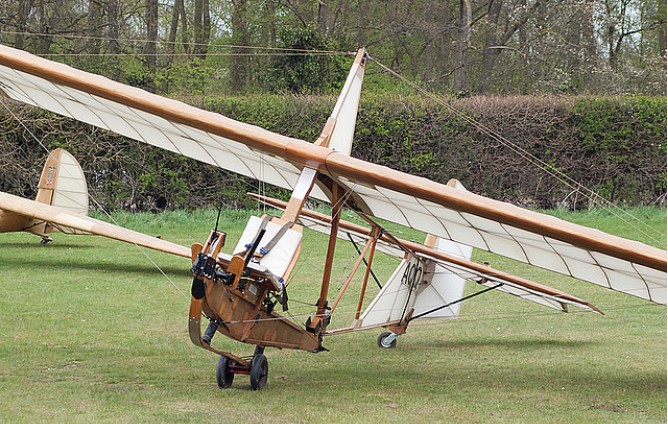
The EoN Primary, or Elliotts AP/7 Primary EoN as it is known in full, is a more modern but essentially very similar version of the Dagling/SlingsbyT-3 Primary and SG 38 formula of the 1930s for a simple single-seater basic training glider.

The prototype made its first flight in February 1948, and the first production model flew in April that year; the type was used not only by clubs but by the Air Training Corps and Combined Cadet Force under the service name of Eton TX Mk 1 to replace the Daglings previously used for Cadet instruction. It could also be supplied with a static training stand which acted as a simple flight simulator in which the glider was balanced on a pivot and wind forces assisted the trainee pilot to get the feel of the controls.

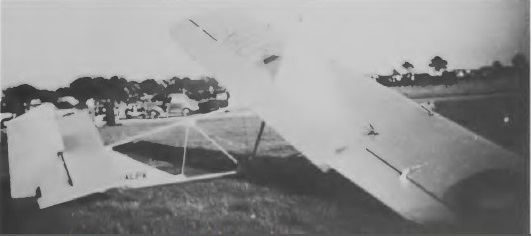
The constant chord wooden wing is wire-braced and has a high lift section of 12% thickness/chord ratio; it has a plywood leading edge and fabric covering, with fabric-covered wooden ailerons. Plywood leading edge spoilers are featured for use during ground-slides only. The fuselage is a flat wooden open girder-type structure supported by a horizontal beam with the landing skid underneath, with sprung compression legs; the pilot has a single open seat with minimum controls. Unlike the Dagling and Slingsby Primary, the EoN design did not have the option of a nacelle to provide some protection for the pilot. The tail unit is of fabric covered wooden construction and strut and wire braced, effective fin area being provided by filling in part of the open rear fuselage in front of the rudder.
EoN Primary

Production of the EoN Primary ended in 1958 after 80 had been built, but a number of these were still at Elliotts’ works at Newbury ready for final assembly in the spring of 1965, not long before Elliotts ceased all glider production.

Span: 34 ft 0 in 10.36 m
Length: 20 ft 6 in / 6.25 m
Height: 8 ft 0 in
Wing area: 180 sqft / 16.72 sq.m
Aspect ratio: 6.0
Empty weight: 250 lb / 113 kg
Max weight: 490 lb / 222 kg
Wing loading: 2.8 lb/sq.ft / 13.7 kg/sq.m
Max speed: 73 mph / 117 kph
Max aero-tow speed: 54 mph / 87 kph
Stalling speed: 27 mph / 43.5 kph
Max L/D: 8
Eon 1 / Type 4 Eon 2

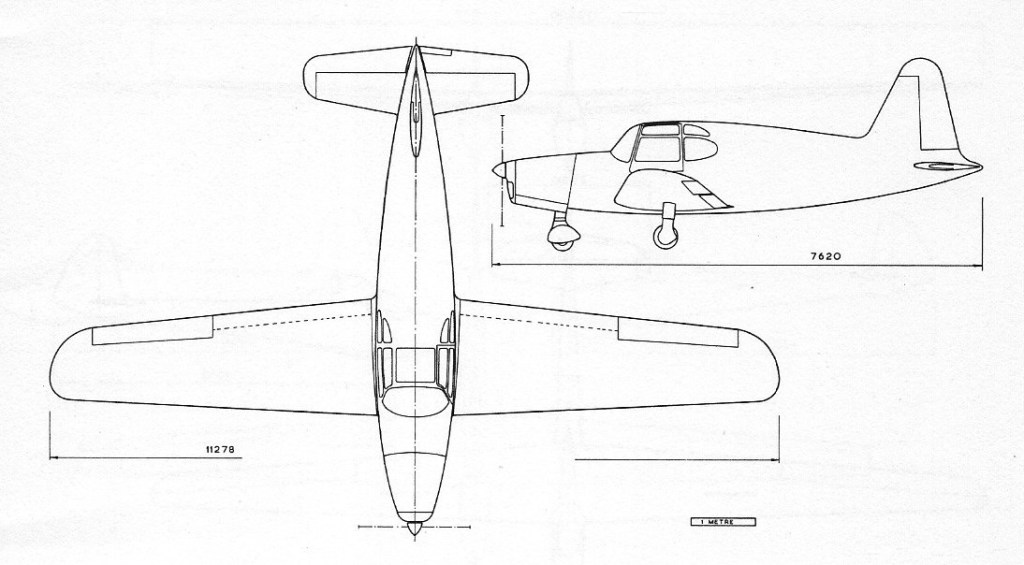
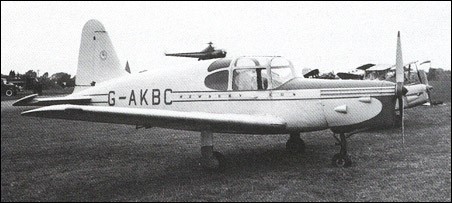
A four-seat single engine light aircraft built by Elliots of Newbury Ltd, of all wood construction. The undercarriage was fixed tricycle.

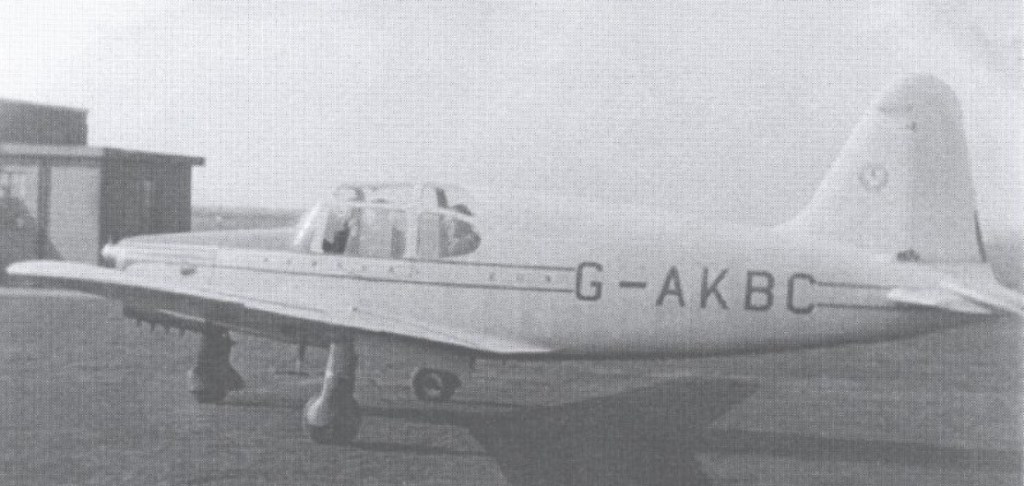
On 8 August 1947 the Type 4 first flew, registered G-AKBC powered by a 100 hp (75 kW) Blackburn Cirrus Minor, at Welford, Berkshire.

The prototype was later altered to have a DH Gipsy Major engine as the Eon 2.

The sole completed Eon aircraft was used as a glider-tug to demonstrate the company’s gliders. The aircraft met its end at Lympne airfield, Kent, on 14 April 1950, when, with a glider attached the pilot started the aircraft by swinging the propeller with the aircraft’s wheels not secured by chocks. The engine started, and the craft moved forward; the pilotless aircraft and the glider were damaged as the aircraft passed through a boundary hedge. The glider pilot had also abandoned his cockpit when he realised what was happening.”

EoN 1
Engine: Blackburn Cirrus Minor II
Wingspan: 11.28m / 37 ft 0 in
Wing area: 15.5 sq.m / 173 sq.ft
Aspect ratio: 8
Length: 7.62 m / 25 ft 0 in
Empty weight: 596 kg / 1314 lb
AUW: 882 kg / 1950 lb
Max speed: 180 kph / 112 mph
Cruise: 160 kph / 100 mph
Seats: 4

Eon 2
Powerplant: 1 × de Havilland Gipsy Major 10, 145 hp (108 kW)
Propeller: 2-bladed fixed-pitch, 6 ft 0 in (1.83 m) diameter
Wingspan: 37 ft 0 in (11.28 m)
Wing area: 173 sq ft (16.1 m2)
Aspect ratio: 8:1
Airfoil: NACA 2R.12
Length: 25 ft 6 in (7.77 m)
Height: 9 ft 9 in (2.97 m)
Empty weight: 1,714 lb (777 kg)
Max takeoff weight: 2,350 lb (1,066 kg)
Fuel capacity: 18 imp gal (22 US gal; 82 L)
Maximum speed: 136 mph (219 km/h, 118 kn)
Cruise speed: 116 mph (187 km/h, 101 kn)
Stall speed: 50 mph (80 km/h, 43 kn) (flaps down)
Range: 350 mi (560 km, 300 nmi)
Service ceiling: 13,400 ft (4,100 m)
Rate of climb: 675 ft/min (3.43 m/s)
Take-off run to 50 ft (15 m): 1,635 ft (498 m)
Landing run from 50 ft (15 m): 1,500 ft (460 m)
Crew: 1
Capacity: 3 passengers

Elliots of Newbury (EoN)

Elliots of Newbury grew out of an old-established joinery works that had existed oa a part of the Albert Works, Newbury, Berkshire site since the mid-nineteenth century. After the 1914-18 wat a change to furniture manufacture was made. During the Second World War Elliots became involved with glider manufacture, one of a number of furniture manufacturers that co-operated in the building of the large transport gliders. Elliots built about one third of the total Horsa production including the development of the hinged nose for the Mark 2 version, and it was also responsible for powered version of the Hamilcar glider. However, Elliots prime interest was the making of furniture. At the end of the war, when the contracts for transport gliders were coming to an end, the firm was hoping to resume furniture manufacture but, for technical reasons, was not “designated” by the Board of Trade for the manufacture of “Utility” furniture.

Early in 1945 the company was approached by Chilton Aircraft Ltd to make one pair of wings for the Chilton Olympia. Elliots had, by then, already planned to manufacture the Newbury Eon four-seat light aircraft but they agreed to make one pair of wings only for the Chilton prototype. Elliots refused to sell Chilton’s the wing jigs and maintained legal rights and ownership of their own manufactured jigs. Chilton’s later gave up all aircraft work and an agreement was subsequently reached whereby Elliots purchased from Chilton the production rights, fuselage jigs, and work in hand on all Olympia sailplanes.

Quantity production of the Eon Olympia commenced in 1946, and was followed in 1948 by the production of two further ex-German designs, the Grunau Baby sailplane and the SG.38 primary glider. Elliots, and their design consultants Aviation & Engineering Products Ltd, introduced improvements in each of the designs before commencing production.

Meanwhile, the Newbury Eon aircraft had its first flight in August 1947, and, in conjunction with their consultants, they produced a Design Study and tendered to the Air Ministry specification T.16/48 for a two-seat training aircraft in competition with Percival, Handley Page, and Auster. No further aircraft were produced by Elliots but aircraft parts were made, under sub-contract.

In 1954 a new version of the Olympia was produced as the original design was nearly fifteen years old. The Olympia 4, later known as the 401, was the first in a series of gradual stages of improvement and led to the 402 in 1956, the 403 in 1957, and finally, in 1958, to the Open Class 419 with its companion the 415 for the fifteen-metre Standard Class. Limited production of these latter types was then initiated. A completely new Standard Class sailplane was introduced in 1961 known as the Type 460. This was put into production and became very popular in Britain, resulting in a special version, the Type 465, being developed for the 1965 World Championships.

In the summer of 1965 the Managing Director of Elliots, M H.C.G. Buckingham died. He had been a keen supporter of the gliding movement for many years. After his death Elliots carried out a review of the firm’s activities and decided that it was time to end glider production due to its increasing unprofitability. A joint advertisement in the April 1966 “Sailplane & Gliding” announced that Slingsby Sailplanes Ltd had taken over the production of Eon Sailplanes. However, no Elliots designed gliders were ever built at Kirkbymoorside although spares were supplied and repairs undertaken.

Elicotteri Meridionale

Italy
Formed by Agusta in 1963 as part of industrialization program in south Italy, operating Frosinone factory, which opened in October 1967, overhauling helicopters for Italian services. In April 1968 concluded agreement for license production of Boeing-Vertol CH-47C Chinook for Italian Army and for Iran. Also developed Agusta-designed EMA124 three-seat helicopter based on Agusta-Bell 47. Now known simply as Sesto Calende (VA) facility of Agusta.

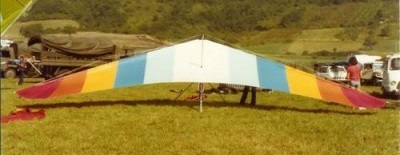
Electra Flyer Olympus

A 1978 hang glider.

Olympus 140
Wing area: 12.9 m²
Wing span: 9.9 m
Aspect ratio: 7.83
Hang glider weight: 22 kg
Minimum pilot weight: 50 kg
Maximum pilot weight: 65 kg
Packed length: 5.75 m
Packed length short: 3.5 m
Number of battens: 14
Nose angle: 121°

Olympus 160
Wing area: 14.86 m²
Wing span: 10.5 m
Aspect ratio: 7.65
Hang glider weight: 24 kg
Minimum pilot weight: 65 kg
Maximum pilot weight: 80 kg
Packed length: 6 m
Packed length short: 3.5 m
Number of battens: 14
Nose angle: 121°

Olympus 180
Wing area: 16.6 m²
Wing span: 10.75 m
Aspect ratio: 7.2
Hang glider weight: 24 kg
Minimum pilot weight: 80 kg
Maximum pilot weight: 100 kg
Packed length: 6.15 m
Packed length short: 3.5 m
Number of battens: 14
Nose angle: 121°

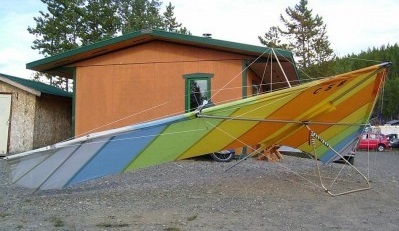
Electra Flyer Cirrus          

A high speed performance glider, the Cirrus features diffused leading edges, ram air injected tapered leading edge pockets which create an airfoil, and full batten sails. It has a quick response. Broad speed range, stability at low speeds, and mild stall characteristics. It was designed for the Hang III pilot.

The Cirrus can be converted for towing. No tools are requires for set-up or take-down.

The airframe is made of 6061-T6 1.5in x .049 clear anodised aluminium throughout. Tubing ends are capped with solid aluminium plugs to prevent crushing. Rigging is 3/32in 7×7 stainless steel vinyl coated nico swedged. Out rigger cables are 1/16in 1×19 stainless steel. A cam operated quick release system for kingpost wires is fitted.

All nuts and bolts are aircraft quality and all parts are gold and black anodised. The pilot support is a “Backsaver” prone harness.

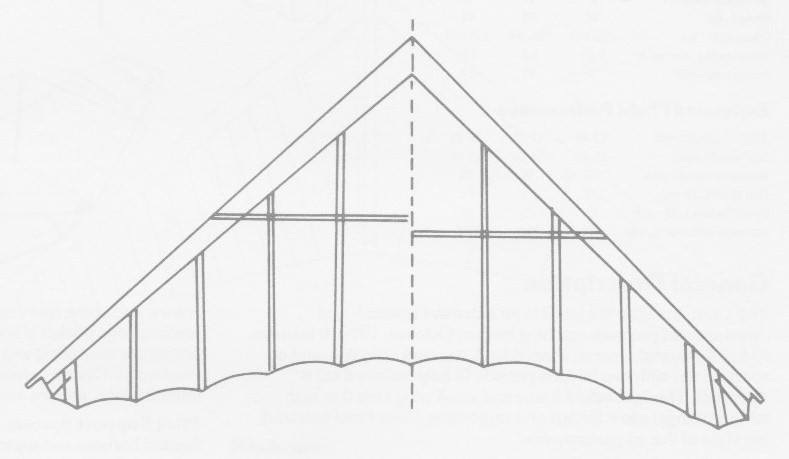
The sail is 3.8oz stabilised dacron in a choice of 11 colours, fitted with aluminium and plastic ribs.

It was one of the first gliders with battens. They were made of flexible plastic strips, and kept the sail from flapping.

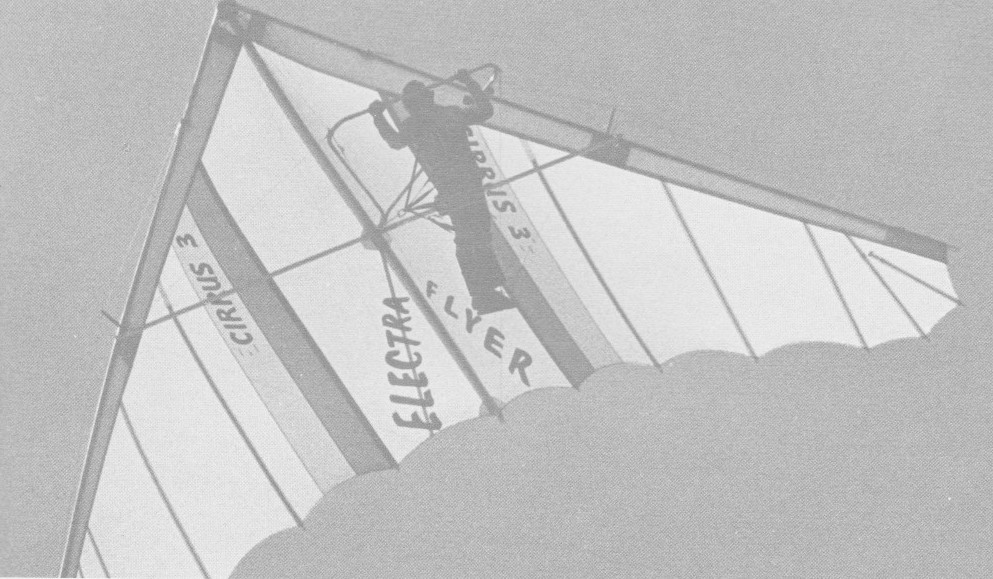
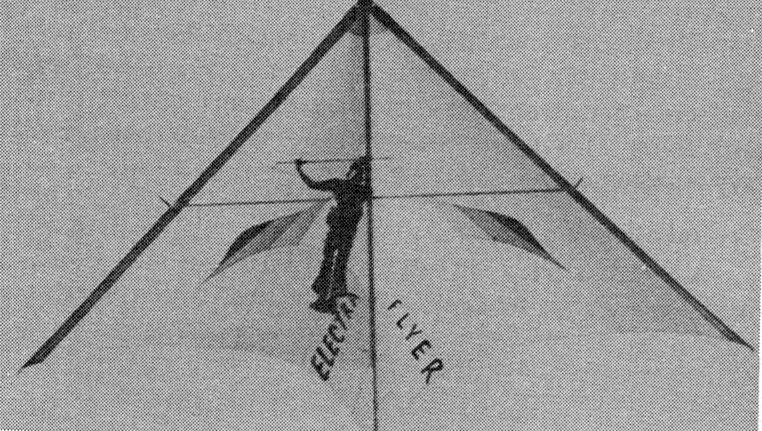
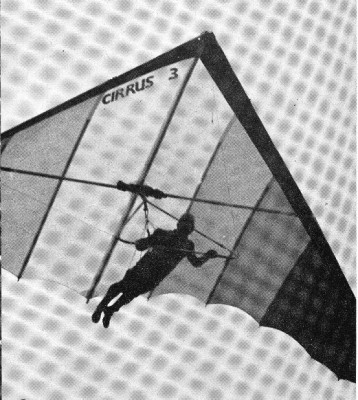
Cirrus 3

The 1976 Electra Flyers Cirrus 3 was very tough in turn, with considerable roll-over loss. The 3 deflexors settings were very important to give the correct contour in flight. But if the wing landed on the ground they bent or often broke.

Cirrus 5B

The Cirrus 5 was introduced in 1977 in four sizes, with the C5A being the largest and the C5D being the smallest. The C5B had a keel pocket and six flexible battens per side. Although designed for the novice pilot, it was quite tail-heavy and inclined to tip-stall during low-speed turns. Its handling and sink rate did not approach that of the Olympus, but it had better penetration at speed. Manufacture was discontinued in 1981.

Cirrus 2
Leading edge: 20 ft
Keel length: 13 ft
Wing span: 31 ft / 9.15 m
Wing area: 195 sq,ft / 17.9 sq.m
Aspect ratio: 5.63
Nose angle: 98˚
Sail billow: 1.25˚
Weight: 42 lb / 19 kg
Pilot weight: 180-225 lb / 80-100 kg
Takeoff speed: 10 mph
Stall speed: 10 mph / 10 kph
Max speed: 47 mph
Best glide ratio (L/D): 8:1
Best L/D speed: 25 mph
Min sink: 250 fpm
Number of battens: 12
Packed length: 5.8 m

Cirrus 3
Leading edge: 19 ft
Keel length: 13 ft
Wing span: 28 ft / 8.54 m
Wing area: 180 sq,ft / 16.5 sq.m
Aspect ratio: 4.35
Nose angle: 91˚
Sail billow: 1.25˚
Weight: 39 lb / 18 kg
Pilot weight: 135-190 lb / 60-85 kg
Takeoff speed: 10 mph
Stall speed: 10 mph / 16 kph
Max speed: 50 mph
Best glide ratio (L/D): 8:1
Best L/D speed: 26 mph
Min sink: 250 fpm
Packed length: 5.8 m
Number of battens: 12

Cirrus 4
Leading edge: 20 ft
Keel length: 9 ft
Wing span: 31 ft
Wing area: 120 sq,ft
Nose angle: 98˚
Sail billow: 1˚
Weight: 40 lb
Pilot weight: 150-190 lb
Takeoff speed: 10 mph
Stall speed: 10 mph
Max speed: 47 mph
Best glide ratio (L/D): 8.5:1
Best L/D speed: 25 mph
Min sink: 235 fpm

Cirrus mini
Wing area: 14.77 m²
Wing span: 8.1 m
Aspect ratio: 4.61
Hang glider weight: 17 kg
Minimum pilot weight: 40 kg
Maximum pilot weight: 60 kg
Minimum speed: 16 km/h
Max glide ratio (L/H): 8
Packed length: 5.6 m
Number of battens: 12
Nose angle: 91°

Eldred Flyer’s Dream

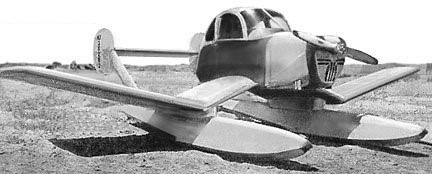
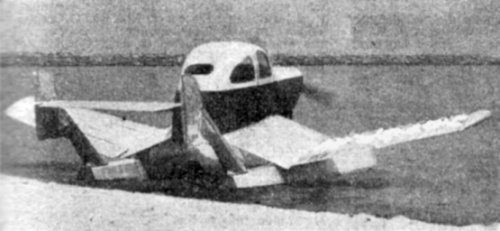
Dewey Eldred’s Flyer’s Dream NX36282 was a very original prototype floatplane designed by Dewey Eldred and Sol Fingerhut. Built in 1946 in Willoughby, Ohio, it featured an automobile-like nacelle mounted on top of a 30-ft span W-shaped wing placed in lowermost position. Its tail was mounted at the end of twin-booms extending attached to the rear of the floats. It used a 125 hp engine and first flew June 4, 1946.

Eklund TE-1

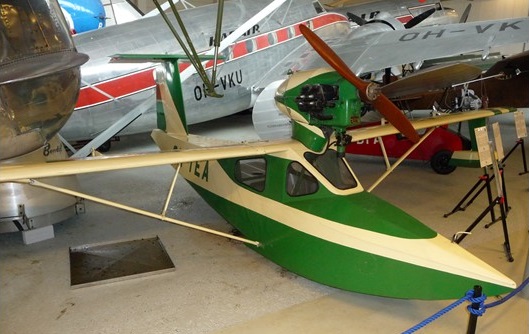
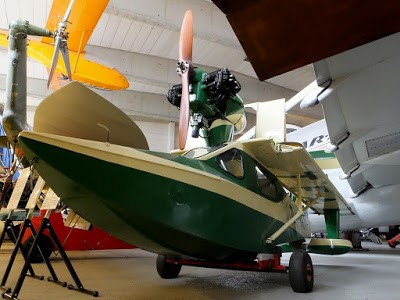
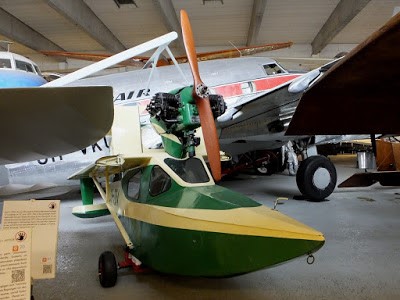
Originally designed by engineer Torolf Eklund as an amphibian with a 28 HP engine. The plane made its first flight on 23 February 1949. Underpowered, a 40 HP engine was installed and the landing gear removed, resulting in the world’s smallest flying boat.

The plane was in the aircraft register in 1954 – 1969 as OH-TEA Serial number: 1. Deposited at the Finnish Aviation Museum since 1981.

OH-TEA