EMBRAER EMB-200 / EMB-201 Ipanema / EMB-202 / EMB-203

Design of an agricultural aircraft, to a specification laid down by the Brazilian Ministry of Agriculture, was initiated in May 1969 by the Departmento de Aeronaves of the nation’s Centra Te’chnico de Aeronautica. Following the establishment of EMBRAER on 2 January 1970, responsibility was transferred to EMBRAER.

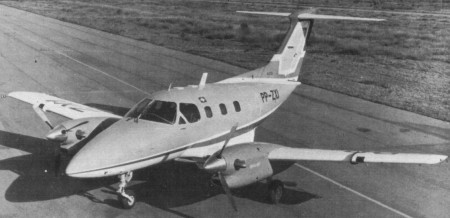
The first prototype, registration PP-ZIP, was flown for the first time on 31 July 1970, at Embraer’s headquarters in São José dos Campos, State of São Paulo.

Designated originally EMBRAER EMB-200 Ipanema (the name was chosen in honor of the Ipanema farm, located in Iperó, 128 km (80 miles) far from the city of São Paulo), the aircraft was a cantilever low-wing monoplane of all-metal construction with fixed tailwheel landing gear and power provided by a 260 hp / 194kW Avco Lycoming O-540-H2B5D engine, fixed-pitch propeller, hydraulic spraying system, and a 580 liter hopper.

Brazilian type certification was gained on 14 December 1971 and initial production versions were the EMB-200 and EMB-200A which differed by having fixed-pitch and variable-pitch propellers respectively. The Corsário de Aviação company from the State of Goiás, ordered ten aircraft, in March 1971, and was the Ipanema’s first customer. In February 1972, the first airplane, registration number PT-GBA, was delivered and entered service in the fight against pests that threatened cotton crops.

In 1974, after 73 EMB-200 series aircraft had been built, production of an improved EMB-201 began; this latter differed by having a 224kW IO-540 engine with a constant-speed propeller and detail improvements.

In November 1973, the 100th airplane was delivered to Serviços Agro Aéreos do Sul. In 1975, Uruguay’s Ministry of Agriculture and Fishing ordered ten Ipanemas, along with five EMB 110 Bandeirantes, marking Embraer’s first exports. A total of 200 EMB-201s was built.

In 1977, the updated EMB-201A first flown on 10 March, entered production. This introduced a new wing profile, improved systems and revisions in cockpit layout.

In 1980, Embraer acquired Indústria Aeronáutica Neiva, a company founded in 1954 and that produced small airplanes. With the merger of the two companies, the Ipanema’s production was transferred to Botucatu, São Paulo, in 1982. A total of 355 had been ordered by 1990, bringing total Ipanema sales to more than 630. In 1988, by which time 600 had been delivered, a further improved Ipanema was launched, but without a new designation, and options include a three-bladed Hartzell propeller, larger wheels, more powerful 300 HP engine, tail wheel with a larger diameter, new shock absorbers and wing profile, among others.

The EMB-201R is a single-seat glider-tug aircraft for the Brazilian Air Force. Three were built for the Air Force Academy gliding club. Brazilian Air Force designation U-19.

Certified in November 2015, the EMB-203 with a 320 hp Lycoming engine, has a wingspan of 13.3 m and its winglets redesigned, increasing control and improving the efficiency of spraying.
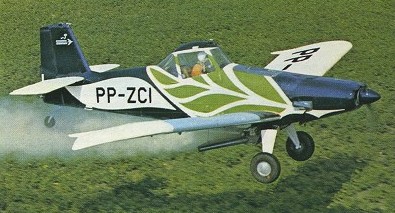
By August 2010, the Ipanema is the leader of Brazil’s agricultural aviation, with more than 1,100 planes delivered and 75% of the fleet in operation, nationwide.

On 15 March 2005, the 1000th Ipanema was delivered. Coincidentally, that was also the first model with the 320 HP ethanol-powered engine, which is the same fuel developed in Brazil used mainly by the nation’s automobiles. The project was developed in a partnership with the Department of Aerospace Science and Technology (Departamento de Ciência e Tecnologia Aeroespacial – CTA). From that point on, Embraer began to offer ethanol conversion kits for the airplanes powered by aviation gasoline (AvGas). Currently, around 25% of the Brazilian fleet uses ethanol.

Gallery

EMB-200
Engine; 1 x Avco Lycoming IO-540-H2B5D, 260hp
Wingspan: 36 ft 9 in / 11.20 m
Length: 24 ft 4.5 in / 7.43 m
Max payload norm: 1212 lb / 550 kg
Max payload restricted: 3963 lb / 1800 kg
Cruise 67%: 114 kt / 131 mph / 211 kph
ROC SL: 705 fpm / 215 m/min
Max range: 507 nm / 584 mi / 941 km
Seats: 1
Hopper capacity: 149.5 ImpG / 680 lt
Cockpit length: 3 ft 11.25 in / 1.20 m
Cabin width: 2 ft 9.5 in / 0.85 m
Cabin height: 4 ft 4.5 in / 1.34 m

EMB-200A
Prop: CS VP

EMB-201
Engine; 1 x Avco Lycoming IO-540-K1D5, 300hp / 224kW
Prop: CS VP

EMB-201A
Engine; 1 x Avco Lycoming IO-540-K1J5D, 300hp / 224kW
Max take-off weight; 1800 kg / 3968 lb
Empty weight; 1011 kg / 2229 lb
Wingspan; 11.20 m / 36 ft 9 in
Length; 7.43 m / 24 ft 5 in
Height; 2.22 m / 7 ft 3 in
Wing area; 19.94 sq.m / 214.63 sq ft
Max. speed; 225 km/h / 140 mph
Cruise speed; 204 km/h / 127 mph
Ceiling; 3470 m / 11400 ft
Range; 877 km / 545 miles

EMB-202
Powerplant: 1 × Textron Lycoming IO-540-K1J5D, 224 kW (300 hp)
Wingspan: 11.69 m (38 ft 4 in)
Length: 7.43 m (24 ft 5 in) (tail up)
Height: 2.20 m (7 ft 3 in) (tail down)
Wing area: 19.94 m2 (214.6 sq ft)
Aspect ratio: 6.9:1
Empty weight: 1,020 kg (2,249 lb)
Max takeoff weight: 1,800 kg (3,968 lb) (restricted category)
Fuel capacity: 264 litres (70 US gal; 58 imp gal) usable fuel
Hopper capacity: 950 litres (250 US gal; 210 imp gal) liquid or 750 kilograms (1,650 lb) dry
Maximum speed: 230 km/h (140 mph, 120 kn)
Cruise speed: 213 km/h (132 mph, 115 kn) (75% power)
Stall speed: 92 km/h (57 mph, 50 kn) (power off)
Never exceed speed: 272 km/h (169 mph, 147 kn)
Range: 938 km (583 mi, 506 nmi)
Service ceiling: 3,470 m (11,380 ft)
Rate of climb: 4.7 m/s (930 ft/min)
Take-off run to 15 m (50 ft): 332 metres (1,089 ft)
Landing run from 15 m (50 ft): 412 metres (1,352 ft)
Crew: 1 pilot

EMB-203
Engine: 320 hp Lycoming
Wingspan: 13.3 m

EMBRAER EMB-121 Xingu

The pressurised EMBRAER EMB-121 Xingu featured a reduced-span version of the EMB-110P wing, a fuselage of circular cross-section similar to that of the Brasilia, and followed the same general configuration with twin turboprop engines and retractable tricycle landing gear, but differed by having a cantilever T-tail.

EMBRAER EMB-121 Xingu Article

The first pressurized twin turboprop general purpose transport to be built in Brazil, it had accommodation for a crew of two and nine passengers.
The prototype Xingu (PP ZXI) flew for the first time on 10 October 1976, followed by the first production aircraft just over six months later.
The Xingu has PT6A 28 engines, six psi pressurisation, an anticipated cruise of 265 knots at 12,000 feet, a five to nine place cabin and max gross of 11,000 pounds.
The original version, designated EMB-121A Xingu I, was powered by two Pratt & Whitney Canada PT6A-28 turboprop engines. From this was developed the EMB-121A1 Xingu II with 559kW PT6A-135 turboprops, these being available also as retrofits for the Xingu I. Thirty-two earlier machines were later reworked to this standard.
A prototype of the EMB-121V Xingu III was flown. It was generally similar to its predecessors except that it had the fuselage lengthened by 0.89m, and was powered by two 634kW PT6A-42 engines. Seating the same number of passengers but in greater comfort, the Xingu III featured an optional ‘club’ layout for seven passengers, with folding tables and a galley.
A total of 111 were built, including six for use by the special transport group of the Brazilian air force under the designation VU-9 as a VIP transport. Other users include the French navy and air force with 41 aircraft as multi-engined trainers and liaison aircraft, and five others serve with the SABENA pilot training school.
Production of the Xingu 121 ended in 1986.

EMB-121A Xingu I
Engines: 2 x Pratt & Whitney Aircraft of Canada PT6A-28 turboprops, 507kW
Max take-off weight; 5670 kg / 12500 lb
Loaded weight; 3620 kg / 7981 lb
Wingspan; 14.45 m / 47 ft 5 in
Length; 12.25 m / 40 ft 2 in
Height; 4.74 m / 15 ft 7 in
Wing area; 27.5 sq.m / 296.01 sq ft
Max. speed; 450 km/h / 280 mph
Cruise speed; 365 km/h / 227 mph
Ceiling; 7925 m / 26000 ft
Range; 2270 km / 1411 miles

EMB-121 Xingu II
Engine: 2 x P&WAC PT6A.
Installed pwr: 1120 kW.
Span: 14.4 m.
Length: 12.2 m.
Wing area: 27.5 sq.m.
Empty wt: 3710 kg.
MTOW: 5670 kg.
Payload: 780 kg.
Cruise speed: 465 kph.
Initial ROC: 550 m / min.
Ceiling: 8540 m.
T/O run: 580 m.
Ldg run: 560 m.
Fuel internal: 1720 lt.
Range/payload: 1630 km with 780 kg.
Capacity: 7 pax.

EMB-121V Xingu III
Engine: 2 x 634kW PT6A-42
Length: 13.09 m.
Span: 14.4 m.
Wing area: 27.5 sq.m.
Capacity: 7 pax.

EMBRAER EMB-110 Bandeirante / EMBRAER YC-95 / EMBRAER EMB-111

EMB-110P2

In 1965 a government initiative to develop a light twin turbo-prop for the Brazilian Air Force led to the formation of Embraer four years later. Though initially this design requirement was for a military transport of only 7-9 seats, it was quickly realised that a substantial civil market also existed.
Designed under the guidance of French designer Max Holste, the first of three prototypes, designated YC-95, flew for the first time on 26 October 1968. Though initially still only a 7-9 seater, the final design had the development potential to be stretched to meet the larger 15-seat and upward commuter market.
The first EMB.110 flew on August 9, 1972, and deliveries to the Brazilian Air Force began in February 1972.

EMBRAER EMB-110 Bandeirante Article

In early 1973 the first three production EMB-110 Bandeirantres were formally delivered to the Brazilian Air Force.
At about this stage an airworthiness certificate was also granted for the 15-seat civil version, the EMB-110C and later that year a further three were delivered to the private domestic airline Trans Brazil. Powered by twin 680 shp Pratt and Whitney PT-6A-27 turboprops with reversible pitch and auto feathering capability, these first Bandeirantes had a range of around a thousand miles and speeds up to 220 knots. Seating was for 15 passengers and two crew. However it was not until 1975 that the Bandeirante achieved its first real breakthrough, when the Brazilian Government established a third-level network. Though in part this was to release the major carriers from the necessity to continue servicing uneconomical routes with large aircraft, the other result was to provide a vastly extended market for the Bandeirante. Over the next few years a number of third-level carriers re-equipped with Embraer’s commuter-liner until some 45 Bandeirantes were in service throughout Brazil on the regional network.
Embraer produced the P1 and P2 variants, specifically designed for the export market. Both aircraft engined with the PT6A-34 of 750 shp, and carry up to 21 passengers in three-abreast seating. Each model is identical, except for their door arrangement. The P1 Bandeirante being designed as a quick change airliner with airstairs at the front and big top-hinged cargo door at the rear. The P2 version comes with dual airstairs front and rear, for fast whistlestop turnarounds. Both aircraft are designed for a 30,000 hour life cycle.
France issued airworthiness certfication in late ‘77. U.S. and United Kingdom certification followed in August 1978.
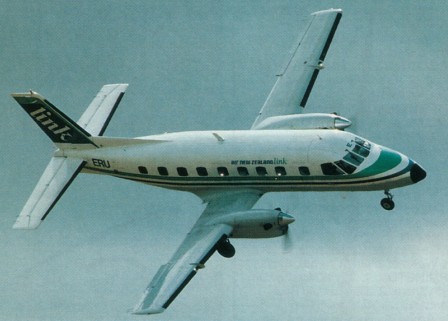
A cantilever low-wing monoplane, primarily of metal construction, the Bandeirante has a conventional fuselage and tail unit, retractable tricycle landing gear and power provided by two Pratt & Whitney Aircraft of Canada PT6A-34 free-turbine turboprops in wing-mounted nacelles. The two Pratt & Whitney PT6A turboprop engines are flat-rated at 750 shp maximum continuous power at 2,200 propeller rpm. The propellers are three-blade Hartzells with automatic synchronization and full beta-control reversing. Seating varies according to role, but the EMB-110P2 has accommodation for a maximum of 21 passengers. There’s a crew/passenger door at the front and passenger/baggage door at the rear, both on the port side.
By the beginning of 1979, 219 Bandeirantes of various models had been sold to some 40 operators around the world. The Bandeirante was available in more than 14 versions, differing in their equipment for specialized missions.
The EMB-110B1 Bandeirante was specially developed for aerophotogrammetric missions. Gyro-stabilised camera platform, electrically-operated ventral sliding camera hatch and dark-room cum toilet, all make for a specialised aircraft which can nevertheless still be easily reconverted back to a basic transporter.
Other specialist use versions include the EMB-110S1 for geophysical survey. Equipped with the more powerful PT6’s from the P1 and P2 aircraft, and with increased fuel capacity, the S1 has up to nine hours endurance.

Military versions of the EMB.110 are the P1K utility transport and the P1K SAR. The P1K SAR is fully equipped for over-water and overland search and rescue missions, as well as for medevac duties. This has accommodation for observers and a variety of rescue equipment, plus space for up to six stretcher patients. Five are operated by the Brazilian air force under the designation SC-95B. Others are the EC-95B calibration and XC-95B rain research versions.

EMB-111

The EMB-111 was developed as a land based maritime reconnaissance aircraft to meet the needs of the Comando Costeiro (Coastal Command) of the FAéB (Brazilian Air Force) and the first example (2262) flew on 15 August 1977.
Based on the EMB 110 Bandeirante, it differed primarily by the in¬troduction of a nose radome for search radar and the addition of wingtip fuel tanks and began to enter service in April 1978. In use with the Brazilian Air Force and the Chilean Navy.
Powered by a pair of 750 shp (560 kW) Pratt & Whitney PT6A-34 turboprops, the EMB¬111 features a nose-mounted ALL AN/APS-128 (SPAR-1) search radar, a wing mounted searchlight, tip tanks, wing-tip fuel tanks and wing hard-points for the carriage of weapons.
Ordered for the Brazilian air force, which designates them P 95, the first entered service in 11 April 1978 with ten hours endurance.
Examples have been supplied also to the Chilean navy and the air force of Gabon.

When production ceased in 1990, 500 Bandeirantes had been ordered and built, variants including the EMB-110, EMB-110/C-95, EMB-110 A/EC 95, EMB-110B/R-95, EMB-110B1, EMB-110C, EMBHOE(J), EMB-110K1/C-95A, EMB-110P, EMB-110P1K and EMB-110S1. The final production versions, progressive developments of earlier aircraft, included the EMB-110P1/C-95B for quick-change passenger/cargo operations; EMB-110P2/C-95C third-level commuter transport; and two versions corresponding to the foregoing for operations at a higher gross weight which have the respective designations EMB-110P1/41 and EMB-110P2/41 A pressurised version designated EMB-110P3, did not proceed.

Gallery

EMB-110
Engines: UACL, 600shp.
TBO: 3500hr.
Max cruise: 228mph.
Econ cruise: 183mph.
Fuel cap: 2920lb.
Service ceiling: 25,500ft.
SE service ceiling: 10,000ft.
ROC: 1700fpm.
SE ROC: 300fpm.
Min field length: 1803ft.
Payload with full fuel: 901lb.
Max range: 1109sm.
High speed range: 1020sm.
Max payload: 1966lb.
Range with max payload: 315sm.
Seats: 8.
Gross wt: 12,410lb.
Equipped empty wt: 9380lb.
Useful load: 3030lb.

EMB-110P2
Engines: 2 x P&W PT6A-34, 750 shp / 559kW
Props: Hartzell 3-blade, 93-in.
Seats: 21.
Length: 49 ft 6 in / 15.08 m
Height: 16 ft 2 in / 4.92 m
Wingspan : 50.262 ft / 15.32 m
Wing area : 312.156 sqft / 29.0 sq.m
Wing aspect ratio: 8.1.
Maximum ramp weight: 13,073 lbs.
Maximum takeoff weight: 13,007 lbs.
Standard empty weight: 7955 lbs.
Maximum useful load: 5118 lbs.
Zero-fuel weight: 12,015 lbs.
Maximum landing weight: 12,566 lbs.
Wing loading: 39.9 lbs/sq.ft.
Power loading: 8.3 lbs/hp.
Maximum usable fuel: 2948 lbs.
Best rate of climb: 1660 fpm.
Service ceiling: 22,500 ft.
Maximum single-engine rate of climb: 428 fpm @ 115 kts.
Single-engine climb gradient: 214 ft/nm.
Single-engine ceiling: 11,000 ft.
Maximum speed: 230 kts.
Normal cruise @ 10,000ft: 225 kts.
Fuel flow @ normal cruise: 638 pph.
Endurance at normal cruise: 4.1 hrs:
Stalling speed clean: 92 kts.
Stalling speed gear/flaps down: 73 kts.
Turbulent-air penetration speed: 169 kts.
Takeoff distance (50 ft.): 2,215 ft
Landing distance (50 ft.): 2,790 ft.
Crew: 2
Passenger capacity: 21

EMB-111
Engines: two 750 shp Pratt & Whitney Aircraft of Canada PT6A 34 turboprop.
Wing span: 52 ft 4.5 in (15.96m).
Length: 48.655 ft / 14.83 m
Height: 15.551 ft / 4.74 m
Wing area: 312.156 sq.ft / 29.0 sq.m
Max take off weight: 15435.0 lb / 7000.0 kg
Cruising speed: 172 kts / 318 km/h
Wing loading: 49.41 lbs/sq.ft / 241.0 kg/sq.m
Range: 1458 nm / 2700 km
Crew: 5

EMB-111

Emair

In 1970 the Emair division of Emroth Company began production at Harlingen, Texas, of Emair MA-1 agricultural biplane (Boeing-Stearman Model 75 derivative). The type had received FAA certification in Hawaii, though built by Air New Zealand and first flown in that country July 1969. Emair’s production of 25 ended January 1976. More powerful MA- 1B Diablo 1200 flew 1975 and deliveries followed. Special features included new wings and hopper forming integral part of fuselage.

EoN Olympia 4 / Olympia 402 / Olympia 403 / Olympia 409 / Olympia 415 / Olympia 419

The first three marks of Olympia, which formed the bulk of the production of this type, differed little from the DPS Meise, but in the 1950s Elliotts began development of a new family of high performance Olympia variants
incorporating laminar flow wings, and leading to the Olympia 419, which was sufficiently different from the first three marks of this design as to be almost a new type.

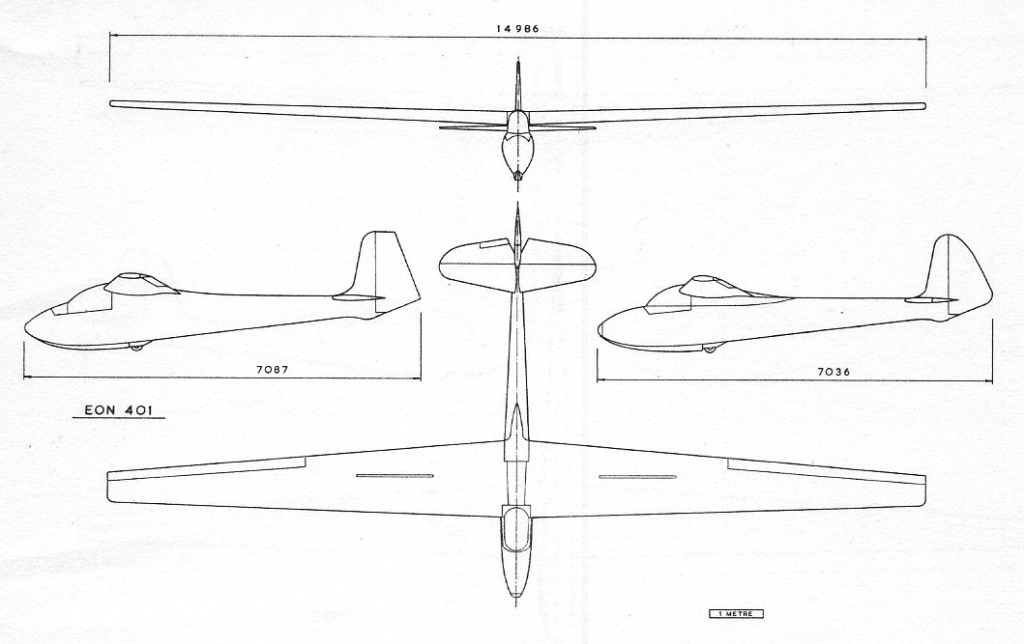
First of these new variants was the Olympia 4, later known as the 401, first flying in 1954, which was a Mk 2, G-ALNF, fitted with a laminar flow wing of NACA 64-series section, identical in span (15m) and plan form to the previous wing. The 401 had a revised fuselage nose section, square-cut rudders and elevators. Frise ailerons were featured but these were found to have only marginal power at low speeds and, after the 401’s debut in the 1954 World Gliding Championships, these were enlarged and the wing itself modified. G-ALNF was then fitted with a 17m span wing of the same aerofoil sections at root and tip, thus becoming the Olympia 402; aileron chord and span were increased. It was flown by Bill Ivans of the USA into fifth place in the 1956 World Championships, but was lost in an accident on the last day of the competition.

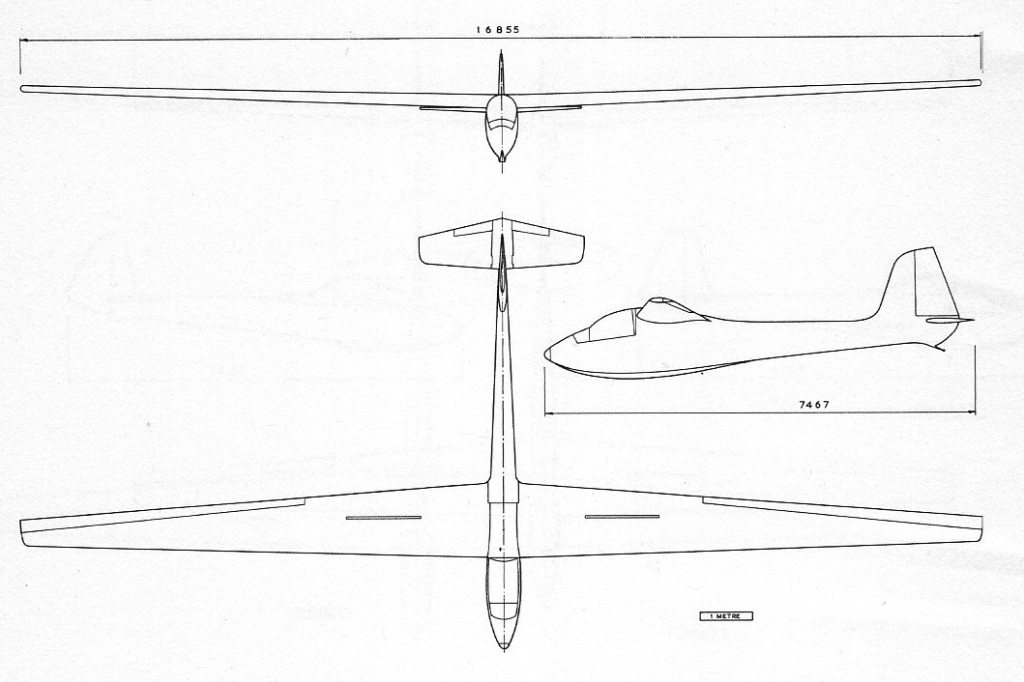
For the 1956 World Championships the Olympia 4 prototype was converted to 17 m / 55 ft 3.5 in as the Olympia 402.

The Olympia 4 / 401 was succeeded by the Olympia 403 prototype, G-APEW, which retained the 17m span wing with a slightly thickened root but introduced some important design changes; this made its debut at the 1957 British national championships. The tail surfaces were entirely redesigned with increased area, the tailplane now being an all-moving surface which could be hinged upwards for transport. It had an anti-balance and trimming tab which at first covered the full span but was later reduced to half span. The fuselage was extended 10in forward by inserting an extra bay between the main bulkhead and the cockpit, and both the cockpit canopy and fuselage ‘neck’ were widened, that part of the fuselage under the wing being redesigned. The first flight of the 403 was in 1957.

The 403 was subsequently fitted with type 419 tailplane.

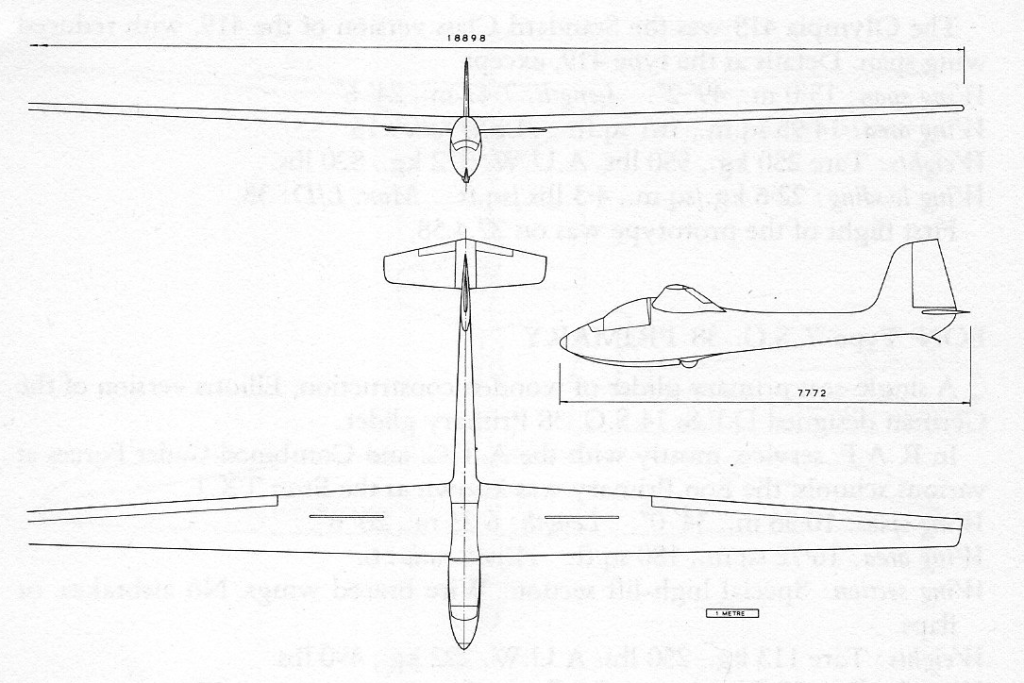
The next variant was the Olympia 419, which had the wing span increased to 18.9m (62ft), longer span Frise ailerons, a slightly longer nose than the 403 and greater rudder area, these changes giving better low speed performance and tailplane balance than the 403. The NACA 64-series laminar flow wing section was used. The 419 was constructed mainly of spruce, and all surfaces were covered by birch ply except for the rudder, tailplane and wings inboard of the ailerons. Balsa wood was used extensively as a filling for the wing ribs and as a non-structural material for wing tips and fairings.

The undercarriage consisted of a jettisonable twin wheel main unit and a tailskid, and the main landing skid under the forward fuselage was of stainless steel. Both the Olympia 419 prototype and the Olympia 415, which was a 15m span version of it, first flew in 1958; the latter did not go into production but the 419 was marketed at a price of £2,150 and in the end eight were built. These put up some good performances in both World and British National championships flown by such pilots as Nicholas Goodhart and Peter Scott.

On the 419X there was a main skid only, with droppable wheels.

The Olympia 415 was the Standard Class version of the 419, with reduced wing span. The first flight of the prototype was on 27 April 1958.

Variants:

EoN Type 5 Olympia 4
New wing section
Wingspan: 15.0 m / 49 ft 2 in
Length: 7.27 m / 23 ft 10 in
Wing area: 15.33 sq.m / 165 sq.ft
Aspect ratio: 15
Wing section: NACA 64,3 618 root / 64,4 421
Empty weight: 204.12 kg / 450 lb
AUW: 322.0 kg / 710 lb
Max L/D: 36

EoN Type 5 Olympia 401
Revised 4, with new nose and square-cut empennage. 180 mm (7 in) shorter.
Wingspan: 15.0 m / 49 ft 2 in
Length: 7.09 m / 23 ft 3 in
Wing area: 15.33 sq.m / 165 sq.ft
Aspect ratio: 15
Wing section: NACA 64,3 618 root / 64,4 421
Empty weight: 204.12 kg / 450 lb
AUW: 322.0 kg / 710 lb
Max L/D: 36

EoN Type 5 Olympia 402
As 4, modified for 1956 World Gliding Championships with 17.0 m (55 ft 3.5 in) span.
Wingspan: 17.0 m / 55 ft 3.5 in
Length: 7.27 m / 23 ft 10 in
Wing area: 15.33 sq.m / 165 sq.ft
Wing section: NACA 64,3 618 root / 64,4 421
Empty weight: 204.12 kg / 450 lb
AUW: 322.0 kg / 710 lb
Max L/D: 36

EoN Type 6 Olympia 403
1957 development of Olympia 402, with strengthened and shortened fuselage (7.47 m (24 ft 6 in). New fin and rudder, all moving tailplane.

Eon Type 6 Olympia 415
1958 Standard class (15.0 m (49 ft 3 in)) span version of 419.
Span: 49 ft 3 in / 15.0 m
Length: 24 ft 6 in / 7.47 m
Wing area: 161 sq.ft / 14.95 sq.m
Aspect ratio: 15
Empty weight: 550 lb / 250 kg
Max weight: 820 lb / 372 kg
Wing loading: 22.6 kg/sq.m / 4.3 lb/sq.ft
Min sinking speed: 1.84 ft/sec at 46 mph
Best glide ratio: 35:1 at 52 mph

Eon Type 6 Olympia 419 / 419X
Long span, long fuselage version of 403.
Span: 62 ft 0 in / 18.9 m
Length: 25 ft 6 in / 7.77 m
Wing area: 186 sq.ft / 17.28 sq.m
Aspect ratio: 19.9
Empty weight: 606 lb / 275 kg
Max weight: 900 lb / 408 kg
Wing loading: 21 kg/sq.m / 4.3 lb/sq.ft
Min sinking speed: 1.84 ft/sec at 46 mph
Best glide ratio: 38:1 at 52 mph

EoN 463
Span: 49 ft 2.5 in / 15.0 m
Length: 21 ft 0 in / 6.4 m
Height: 5ft 8 in
Wing area: 132 sqft / 12.26 sq.m
Aspect ratio: 18.0
Wing section: NACA 643618/421
Empty weight: 400 lb / 181 kg
Max weight: 630 lb / 286 kg
Water ballast: None
Max wing loading: 23.33 kg/sq.m / 4.78 lb/sq ft
Max speed: 136 mph / 117.5 kt / 218 km/h (in smooth air)
Max rough air speed: 74 kt / 137 km/h
Stalling speed: 30 kt / 56 km/h
Min sinking speed: 2.2 ft/sec / 0.67 m/sec at 42.5 mph / 37 kt / 69 km/h
Best glide ratio: 32:1 at 48 mph / 42 kt / 78 km/h

Olympia 4
Type 6 Olympia 403
Olympia 419
Olynpia 463

EoN 10 Olympia / Chilton Olympia

Chilton Olympia

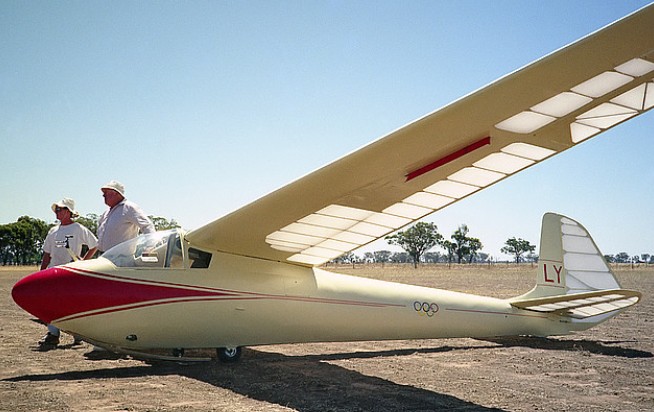
Just after the war, when sporting gliding was getting started again, it was evident that there would be a need for new sailplanes to supplement the surviving prewar ones, and to fill the gap until such time as postwar designs could go into production it was a logical step to build some of the best German prewar designs, some captured examples of which had been brought to Britain, in British factories.

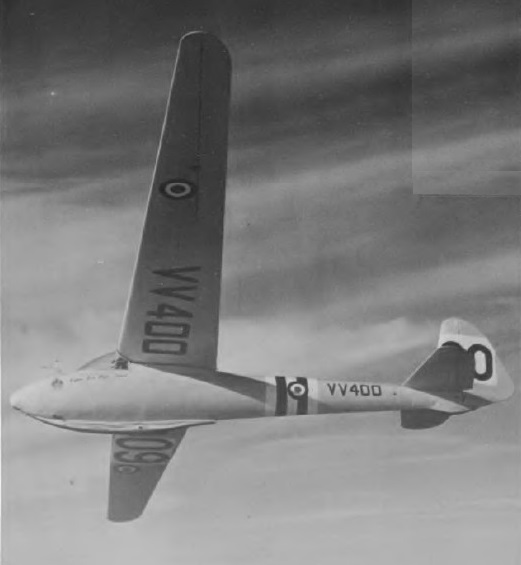
A combination of a desire to make use pre-war glider experience and refusal by the Board of Trade to allow Elliotts to return to its prewar furniture-making activities led to a decision to enter glider manufacturing, starting with the production of an improved version of the well known DPS Meise known as the Olympia. The Olympia’s heritage goes back to when Hans Jacob’s glider won the contest to design a standard glider for the 1940 Helsinki Olympic Games (hence the Olympia name). Elliotts of Newbury took up the production of an internally modified version of this glider after the war, with the first example flying in mid January 1947.

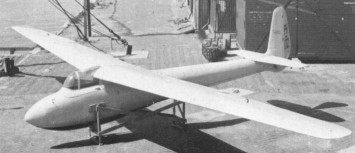
This was originally to have been built in Britain by Chilton Aircraft Co Ltd, makers of the prewar DW1 ultralight, but after building a prototype, first flying in January 1947, Chilton disposed of the manufacturing and sales rights and associated drawings to Elliotts in 1952.

An initial production batch of 100 was started; the type soon proved to be popular with private owners and clubs, also being exported to a number of countries.

A single-seat sailplane of conventional wooden construction, Elliots improved and developed version of the Chilton Olympia, The Olympie 1 had no flaps, but airbrakes were fitted. The undercarriage was the main skid, plus tail skid. The prototype had its first flight at White Waltham on 17 January 1947, and the price in 1947 was £495.

The Olympia was built in three versions differing only in the landing gear; the Mk 1 had a central steel-sheathed ash skid under the forward fuselage very similar to the Meise’s, while the Olympia 2 had a built-in fixed central monowheel and the Mk 3 had a jettisonable dolly wheel landing gear.

A one-piece quickly detachable bubble canopy for the pilot with a sliding ventilation and clear-vision panel on the port side replaced the Meise’s framed canopy, and there was an aerobatic harness and provision for a back-type parachute.

Otherwise the Olympia is very similar to the Meise; the high cantilever wings are of wooden construction with plywood and fabric covering, with D-spars in the leading edge and DPS air brakes, while the wooden ailerons are fabric-covered. The all-wooden monocoque fuselage has a luggage compartment under the wing root with an access door on the port side. The tail unit is of wooden construction with plywood and fabric covering, and there is a trim tab in the starboard elevator. Price of the Olympia 2 in 1960 was £850.

Six Olympia gliders were built by Fokker under licence.

Olympia 1
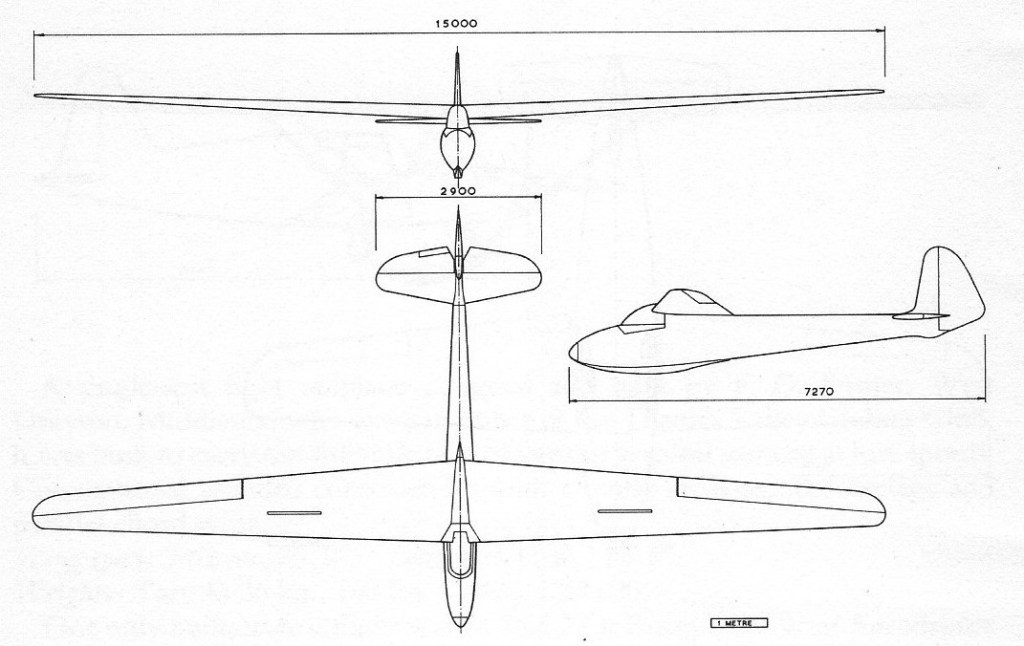
Wingspan: 15.0 m / 49 ft 2 in
Length: 7.27 m / 23 ft 10 in
Wing area: 15.33 sq.m / 165 sq.ft
Aspect ratio: 15
Wing section: Gottingen 549 root / 676 tip
Empty weight: 204.12 kg / 450 lb
AUW: 303.9 kg / 670 lb
Wing loading: 20 kg/sq.m / 4.09 lb/sq.ft
Max L/D: 25
Min sink: 0.67 m/sec at 63 kph / 2.2 ft/sec at 39 mph

Olympia Mk.II
Span: 49 ft 2.5 in
Length: 21 ft 5 in
Wing area: 161.5 sq.ft
Aspect ratio: 15.0
Empty weight: 430 lb
Max weight: 670 lb
Max speed: 129 mph
Min sinking speed: 2.2 ft/sec at 39 mph
Best glide ratio: 25:1 at 45 mph

Olympia 2B
Wing span: 15.0 m (49 ft 2.5 in)
Length: 6.61 m (21 ft 8 in)
Wing area: 15.0 sq.m (161.5 sq ft)
Wing section: Gottingen 549/676
Aspect ratio: 15.0
Empty weight: 195 kg (430 lb)
Max weight: 304 kg (670 lb)
Water ballast: None
Max wing loading: 20.27 kg/sq.m (4.15 lb/sq.ft)
Max speed: 112 kt (208 km/h)
Stalling speed: 27 kt (50 km/h)
Min sinking speed: 0.67 m (2.2 ft)/sec at 34 kt (63 km/h)
Max rough air speed: 69 kt (128 km/h)
Best glide ratio: 25 at 39 kt (72.5 km/h)

EoN 460 / EoN 463 / EoN 460/463 / Elliotts AP/10 / EoN 465

EoN 460

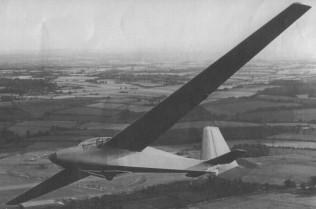
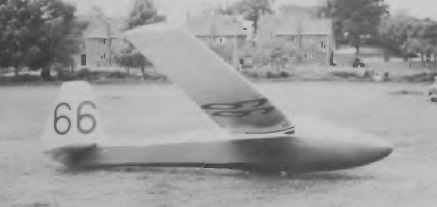
Intended as a Standard Class 15m span single-seater to replace the popular Olympia, the EoN 463, also known as the EoN 460/463, was the production version of the EoN 460 and incorporated the design experience and certain features of the laminar flow Olympia variants, especially the Olympia 403 and 419.

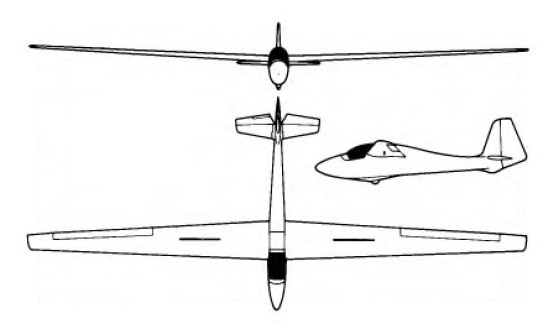
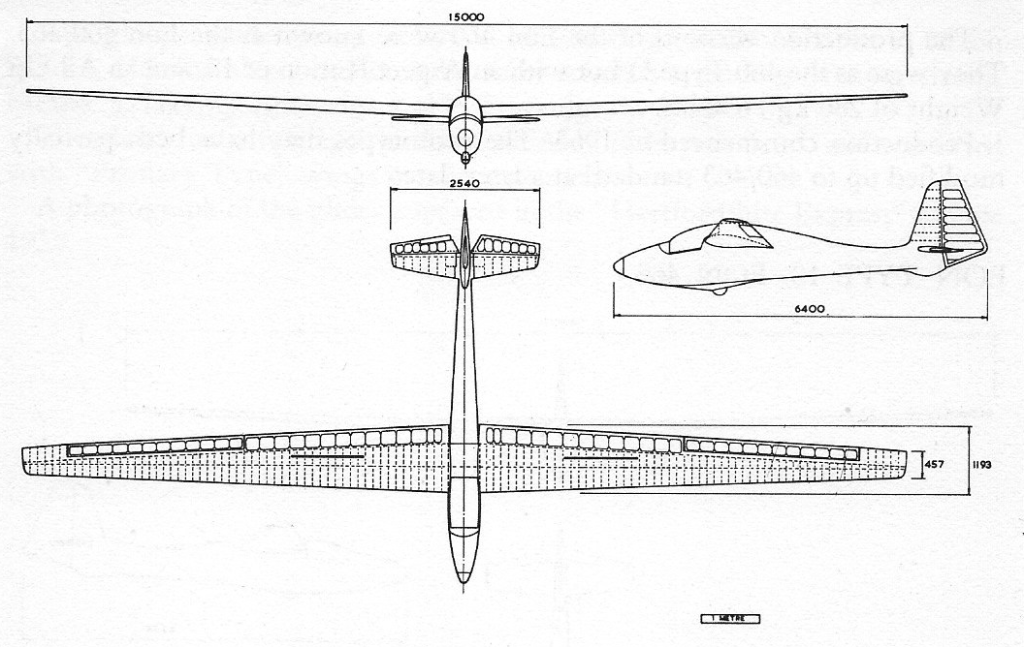
The EoN 460, or Elliotts AP/10 Type 460 as it was also known, first flew in prototype form on 26 April 1960 and only the five prototype 460s were built; the first had an aspect ratio of 20 and an all-up weight of 600 lb, the second and third had an aspect ratio of 18 and an all-up weight of 630 lb, the fourth was the same as the first but with a modified one-piece canopy and the fifth prototype was the same as the fourth but had modified outer wing sections. The tail unit was very similar to the Olympia 419’s and, as on the latter, the tailplane could be folded upwards for transport. The shoulder wings were set slightly lower than the Olympia’s and the centre and forward fuselage were similar to the Olympia 419’s, while the same NACA 64-series laminar flow wing section as on the 419 was used.

The Type 10 C EoN 460 was fitted with a modified cockpit canopy. The Type D was as the Type C but with modified sections to the outer wing. All types were fitted with folding tailplanes and the wings have Frise type ailerons.

The production versions of the EoN 460 were known as the EoN 460/463. They wee as the 460 Type D but with an aspect ratio of 18, and an AUW of 286 kg / 630 lb.

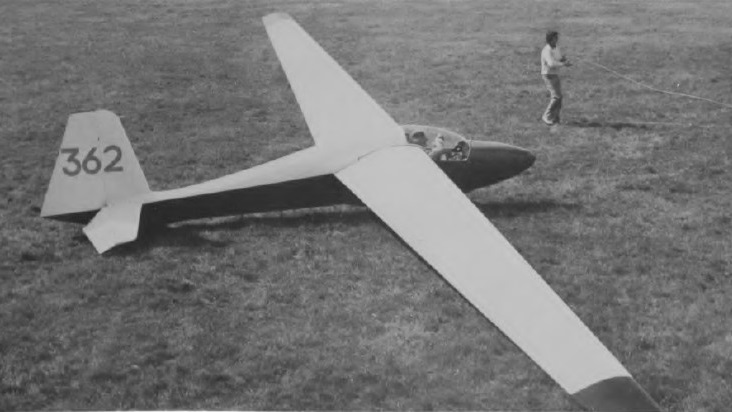
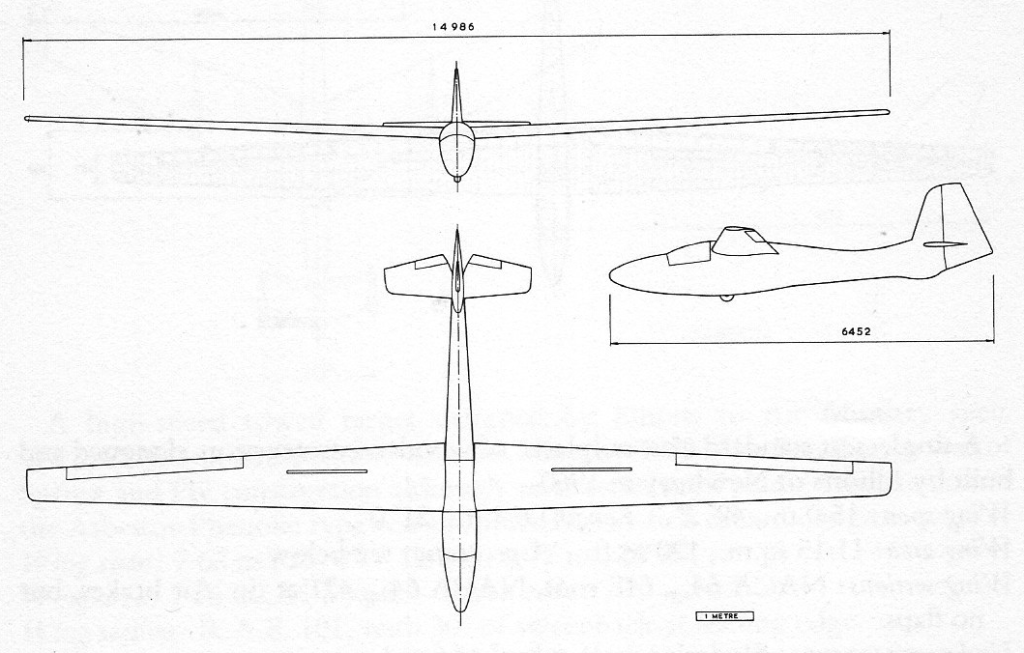
The production EoN 463 first flew in April 1963 and a total of 48 were built; this was practically the same as the fifth prototype 460, with an aspect ratio of 18 and an all-up weight of 630lb. The fabric and stringer top fuselage fairing of the 460 was now replaced by a glassfibre one on the 463, which also had a glassfibre instead of plywood nose section and a new cockpit canopy.

Both the 460 and 463 have wooden wings with light alloy spars, plywood-skinned and with overall fabric covering; the wings are similar to the Olympia 419’s except for the reduced span, the Frise ailerons being fabriccovered and the DFS-type air brakes of plywood. The fuselage, like the 460’s, is a wooden Warren girder type structure with plywood covering and a glassfibre rear fairing. The tail unit is a conventional fabric-covered wooden structure and the tailplane, unlike the all-moving surface of the Olympia 403 and 419, reverts to conventional elevators with a trim tab in the starboard one. There is a fixed unsprung mono-wheel with an internal expanding brake, and a tailwheel. The pilot’s canopy has direct vision panels and a demister, and oxygen and radio can be fitted if desired.

The 463 was followed by the EoN 465, developed for the 1965 World Championships, only two of these being built, the first one, the Series 1, making its maiden flight on 8 March 1965. The 465 had the fuselage height reduced and the pilot seated in a reclining position to reduce cross sectional area and hence drag; the main landing gear skid was deleted and the monowheel centre raised. An all-moving tailplane was reintroduced which did not fold up for storage. Pendulum sealed ailerons were fitted. The EoN 465 Series 1 had an all-up weight of 680lb and the second one, known as the Series 2, had a thinner wing section than the Series 1 and a strengthened main spar; its all-up weight was 700lb and wing area was increased to 140sq ft.

The 465 Srs.1 first flew in March 1965 and the Srs.2 in April 1965.

Following the death of Elliott’s managing director, Mr H. C. G. Buckingham, in the summer of 1965 the firm’s board of directors, after reviewing the situation, decided to end glider production due to its increasing unprofitability.

EoN 465

Type 10 EoN 460 Type A
Wingspan: 15.0 m / 49 ft 2 in
Length: 6.4 m / 21 ft 0 in
Wing area: 11.15 sq.m / 120 sq.ft
Aspect ratio: 20
Wing section: NACA 64,3,618 root / NACA 64,4,421 tip
Empty weight: 159.21 kg / 351 lb
AUW: 272 kg
Max speed: 215 kph / 134 mph
Aerotow speed: 152 kph / 95 mph

Type 10 EoN 460 Type B
Wingspan: 15.0 m / 49 ft 2 in
Length: 6.4 m / 21 ft 0 in
Wing area: 11.15 sq.m / 120 sq.ft
Aspect ratio: 18
Wing section: NACA 64,3,618 root / NACA 64,4,421 tip
Empty weight: 159.21 kg / 351 lb
AUW: 286 kg
Max speed: 215 kph / 134 mph
Aerotow speed: 152 kph / 95 mph

EoN 463
Span: 49 ft 2.5 in / 15.0 m
Length: 21 ft 0 in / 6.4 m
Height: 5ft 8 in
Wing area: 132 sqft / 12.26 sq.m
Aspect ratio: 18.0
Wing section: NACA 643618/421
Empty weight: 400 lb / 181 kg
Max weight: 630 lb / 286 kg
Water ballast: None
Max wing loading: 23.33 kg/sq.m / 4.78 lb/sq ft
Max speed: 136 mph / 117.5 kt / 218 km/h (in smooth air)
Max rough air speed: 74 kt / 137 km/h
Stalling speed: 30 kt / 56 km/h
Min sinking speed: 2.2 ft/sec / 0.67 m/sec at 42.5 mph / 37 kt / 69 km/h
Best glide ratio: 32:1 at 48 mph / 42 kt / 78 km/h

EoN 465 Srs.1
Span: 49 ft 2.5 in / 15.0 m
Length: 21 ft 2 in / 6.45 m
Height: 5ft 8 in
Wing area: 132 sqft / 12.26 sq.m
Aspect ratio: 18.0
Wing section: NACA 643618/421
Empty weight: 400 lb / 181 kg
Max weight: 680 lb / 308.44 kg
Water ballast: None
Max wing loading: 23.33 kg/sq.m / 4.78 lb/sq ft
Max speed: 136 mph / 117.5 kt / 218 km/h (in smooth air)
Max rough air speed: 74 kt / 137 km/h
Stalling speed: 30 kt / 56 km/h
Min sinking speed: 2.2 ft/sec / 0.67 m/sec at 42.5 mph / 37 kt / 69 km/h
Best glide ratio: 32:1 at 48 mph / 42 kt / 78 km/h

EoN 465 Srs.2
Span: 49 ft 2.5 in / 15.0 m
Length: 21 ft 2 in / 6.45 m
Height: 5ft 8 in
Wing area: 132 sqft / 12.26 sq.m
Aspect ratio: 18.0
Wing section: NACA 643618/421
Empty weight: 400 lb / 181 kg
Max weight: 700 lb / 317.52 kg
Water ballast: None
Max wing loading: 23.33 kg/sq.m / 4.78 lb/sq ft
Max speed: 136 mph / 117.5 kt / 218 km/h (in smooth air)
Max rough air speed: 74 kt / 137 km/h
Stalling speed: 30 kt / 56 km/h
Min sinking speed: 2.2 ft/sec / 0.67 m/sec at 42.5 mph / 37 kt / 69 km/h
Best glide ratio: 32:1 at 48 mph / 42 kt / 78 km/h

Type 10 EoN 460
EoN 460/465

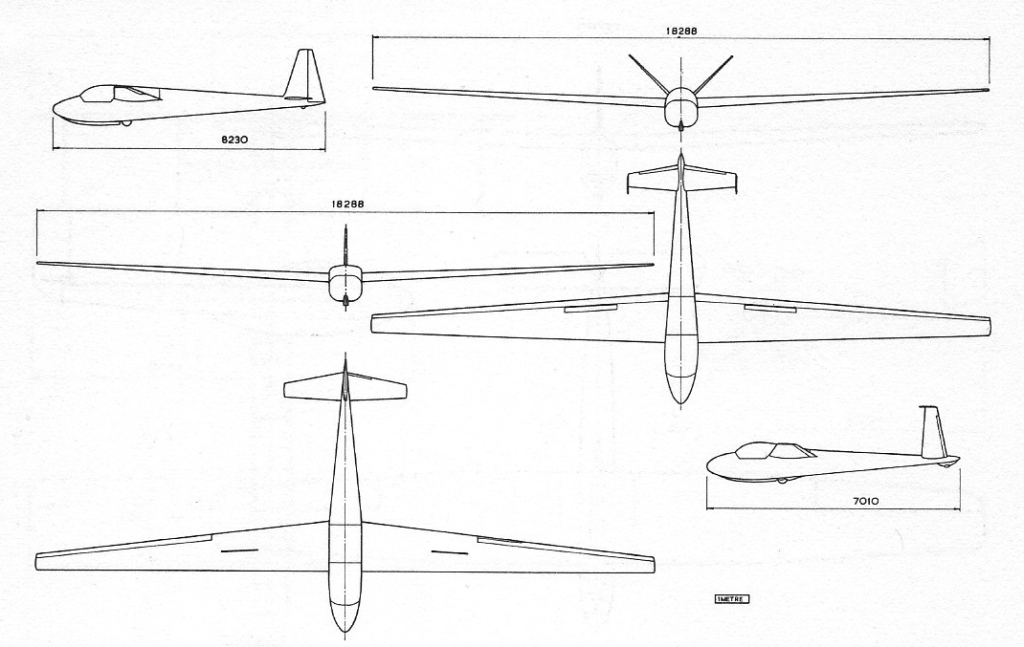
Elliots of Newbury Eon Type 9 / Kendall Crabpot / Kendall K.1

The initial version, known as the Crabpot, was designed by H. Kendall for the 1947 B.G.A. Two-seat Sailplane Competition. Conventional wooden construction, apart from the wings which had several spanwise webs and few ribs. The webs were 15mm thick, and the ribs were spaced at from 900 to 1200 mm pitch.

A cantilever wing, no flaps but airbrakes were fitted. All moving tailplane.

A project only, it won the competition.

Having one the competition, the Crabpot was re-designed. The wing section was altered, a “V” tail introduced, and the fuselage shortened. The wing material was altered and it was decided to manufacture it using an asbestos reinforced low pressure thermos setting plastic structure, a method that involved the use of heated concrete moulds and tailored felts. The wing was manufactured by F.G. Miles Ltd at Redhill Aerodrome, under the designation Miles M.76, but when tested, it broke up at a fraction of the design load. The K.1, as the Crabpot was by then known, was later built, using the traditional wooden construction methods, by Elliots of Newbury, as the EoN Type 9.

Only one was built, the first flight being at Lasham in March 1954, with full span ailerons. No CofA was issued as the K.1 was abandoned due to unsatisfactory flying characteristics, particularly unsolvable spinning problems.

Kendall Crabpot / K.1
Wingspan: 18.3 m / 60 ft 0 in
Length: 8.24 m / 27 ft 0 in
Wing area: 18.58 sq.m / 200 sq.ft
Aspect ratio: 18
Wing section: NACA 43018 root, NACA 43012A tip
Empty weight: 232 kg / 516 lb
AUW: 414 kg / 911 lb
Wing loading: 21.0 kg/sq.m / 4.3 lb/sq.ft
Max L/D: 27 at 77 kph / 49 mph

EoN Type 9
Wingspan: 18.3 m / 60 ft 0 in
Length: 7.01 m / 23 ft 0 in
Wing area: 18.58 sq.m / 200 sq.ft
Aspect ratio: 18
Wing section: NACA 66,3,418, NACA 64,2,415 tip
Empty weight: 300 kg / 661.5 lb
AUW: 453.6 kg / 1000 lb
Max speed: 200 kph / 125 mph
Stall: 64 kph / 40 mph
Max L/D: 35