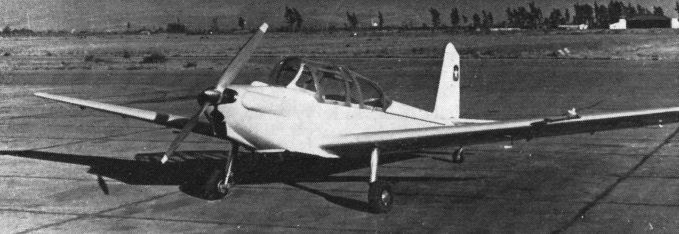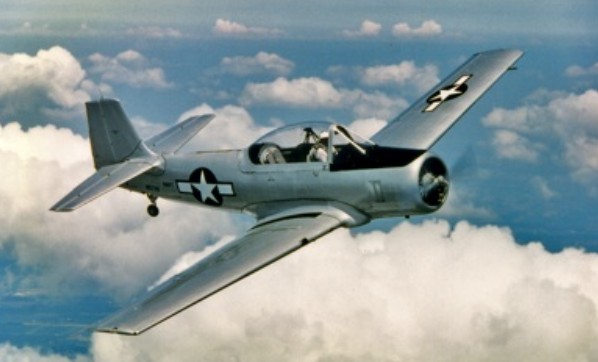
Fairchild M-92 / XNQ-1 / T-31

Towards the end of the Second World War the US Navy set out to issue specifications for a replacement for the basic and primary aircraft trainers that were used during the war. These specifications were released to industry on 26 April 1945 by the Bureau of Aeronautics (BuAer).

Three companies entered designs – Temco entered the T-35 Buckaroo, adapted from the Globe Swift, Beechcraft entered the T-34 Mentor, a tandem seat adaptation of the Bonanza and Fairchild chief engineer, Armand Thiebolt, entered a custom-designed aircraft that had the Navy designation XNQ and the later USAF designation T-31.

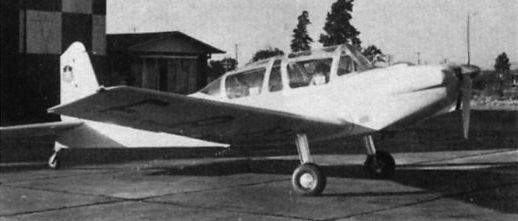
The Fairchild XNQ (T-31) (Model M-92) was the fastest primary trainer to date. The Model M-92 featured a controllable pitch propeller, flaps, electronically operated retractable landing gear and all-metal skin with fabric-covered rudder, ailerons and elevators.

Its unobstructed, one-piece bubble canopy provided instructors and students seated in tandem with all-round visibility, and its cockpit instruments were arranged to match those found in a 600 mph jet fighter or a 5,000-mile, long-range patrol plane. To help students recognize the instruments, the landing gear handle was in the shape of a tiny landing gear wheel, and the flap handle was shaped like the airfoil of a flap.

The Fairchild XNQ-1/T-31 was designed in 1945. The first of three constructed made its maiden flight in 1946. Of the three XNQs/T-31s, one was destroyed for structural testing, and one was destroyed in a landing accident.

Two prototypes were flown as XNQ-1 [75725/75726]. Registered with a civilian tail number N5726, the first XNQ, built at Fairchild’s Hagerstown, Maryland, plant, made its first flight there on 10 February 1947 with Fairchild’s chief test pilot, Richard Hansen, at the controls. The 20-minute maiden flight was uneventful and showed only some simple rework of the aileron tabs were necessary. After a series of company test flights, the XNQ was delivered to the US Navy at Anacostia, Washington for formal evaluation. After an initial series of flights in the Washington DC area, the flight test program continued at NAS Patuxent River after which the aircraft returned to Fairchild to prepare it for evaluation by the USAF as the T-31.

The third ship built, s/n 75726, was first flown on February 10, 1947. On its first flight, the test pilot forget to lower the landing gear. The second aircraft (BuNo. 75726) with a larger stabilizer was evaluated by the USAF in 1949 as a replacement for the AT-6, being selected on 24 March 1949 as a primary trainer. Designed to be acrobatic to teach pilots basic maneuvers, such as stalls, spins, rolls and dive pullouts, Fairchild received a contract for 100 aircraft as the model 129, USAF designation T-31. However, the order was cancelled later in 1949, in favor of the Beech T-34 Mentor.

In November 1948, it was pointed out that normal procurement channels had not been followed, and Beech requested a fly-off competition even before the YT-34 was test flown. On March 17, 1949, the Chairman of the Evaluation Board voted the XNQ-1 first, the T-34 second, and the T-35 third. In September of 1947, the USAF requested XNQ procurement as follows:

January 1950 – 50
April 1950 – 114
July 1950 – 176

The influence of the Korean War, politics, and the tricycle gear were factors leading to the eventual selection of the T-34.

Delivered to the U.S. Navy in 1947 for trials, they were rejected. Tests had revealed problems with exhaust fumes leaking back into the cockpit. The first prototype was subsequently to receive a number of engine upgrades, first powered with 320 hp Lycoming R-680-13, then finally with an inline 350 hp Lycoming GSO-580. The aircraft was destroyed in a crash in 1950.

Both XNQs as T-31s were flown to Randolph AFB outside of San Antonio, Texas, for their formal USAF evaluation in a fly-off with both the Beech and Temco candidates. At the time the USAF also considered the De Havilland Canada DHC-1 Chipmunk as well as the British Boulton Paul Balliol, but both were quickly eliminated from consideration, leaving Fairchild, Beech, and Temco remaining in the USAF evaluation. Like the US Navy, the USAF selected the Beech T-34 Mentor, again, its tricycle landing gear layout being one of its strong points. It was the second rejection of the Fairchild design. The aircraft was passed on to the US Navy where it was flown by student test pilots at the US Navy’s Test Pilot School at NAS Patuxent River and after a gear up landing that resulted in only minor damage in 1953, the Navy declared the unique aircraft surplus to its needs after it had only amassed just over 1,000 flight hours.

Fairchild dropped plans to develop the design as the company concentrated on other production contracts, including the Fairchild C-119. The second aircraft, privately owned, was still on the civil register on 15 January 2006 and airworthy.
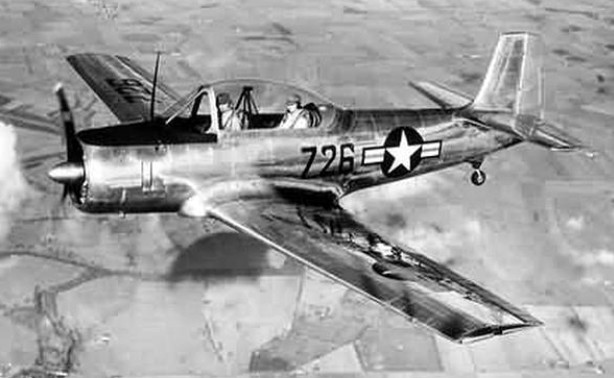
The wing commander for the National Capital Wing of the Civil Air Patrol arranged to take ownership of the XNQ and in October 1953 the aircraft was repaired at NAS Patuxent River before being flown to a small airfield south of Alexandria, Virginia where it was stationed for the next 2 years, only clocking 12 flight hours in that time period. Part of the problem with the XNQ wasn’t its performance or handling, but that its wingspan was just over a foot too wide for the standard 40-foot hangar at the airfield and it ended up spending most of its time outdoors which adversely affected its condition. In 1955 the aircraft was ferried to Rockville, Maryland, but again, was stored outdoors which resulted in further deterioration. When that small airfield was closed, the Fairchild was abandoned in situ.

John St. Clair, the operations officer of the Congressional Squadron of the Civil Air Patrol, trucked aircraft to his home 8 miles away to try and save it given its unique history. He later assumed formal ownership of the aircraft to keep it from going to the junkyard. Fast forward to 1978, the aircraft is still on the St. Clair farm in rural Maryland and Armand Thiebolt’s son visited John St. Clair and asked about purchasing the aircraft, the deal of which fell through. Later, Robert Taylor, the founder of the Antique Airplane Association, asked St. Clair if he would donate the XNQ to a museum, which he agreed to and a crew from the association trucked what was left of the aircraft to Waco, Texas with plans of restoring her to flight status. The history of the XNQ took a new turn after its arrival in Waco when general aviation pilot Don Pellegrino and his wife were weathered in at the airport and he found the XNQ in storage in a hangar and approached Taylor about purchasing the aircraft.

While negotiations proceeded, the aircraft was moved to Oklahoma City in 1982 but still no restoration work had started. At a fly-in in Iowa, Taylor approached Pellegrino and told him “Make me an offer I can’t refuse” and with that, Pellegrino become the XNQ’s new owner for $800. In September that year Pellegrino trucked the aircraft to his farm in Iowa and began restoration work in earnest.
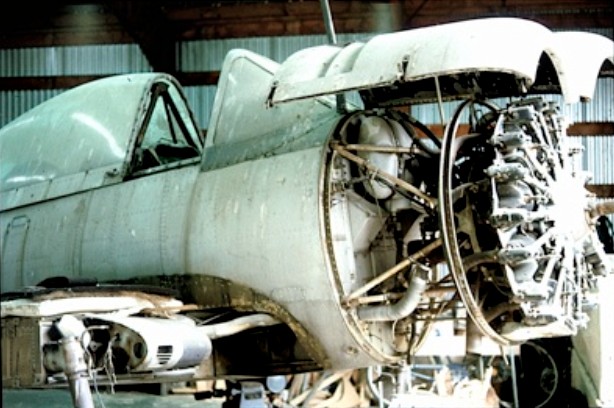
Ten years were spent rebuilding the aircraft in an Iowa barn. The rebuilding process involved re-skinning the bottoms of the center section, the wings, the horizontal stabilizer, and the cowling. Needless to say, numerous “small” parts were also rebuilt. The Lycoming R-680-13 engine and all the instruments needed to be replaced. Having been exposed to the climate and moves from Maryland to Texas and Oklahoma, and finally Iowa, the basic airframe was hurting but rebuildable.

After ten years of working on it in his free time, the XNQ made its second maiden flight on 1 June 1992, the first time the aircraft had flown since 1955. Pellegrino flew the 25 FAA-required hours of flight testing himself and since then he has since moved to Rhome, Texas, just outside of the Dallas-Fort Worth area and has flown the XNQ to airshows around the country. She still has her same tail number of N5726.

Gallery

Engine: 1 × Lycoming R-680-13 radial, 238 kW (320 hp)
Wingspan: 12.4 m (40 ft 8 in)
Length: 8.3 m (27 ft 3 in)
Height: 2.7 m (8 ft 10 in)
Empty weight: 1,338 kg (2,974 lb)
Gross weight: 1,754 kg (3,898 lb)
Fuel: 80 USG
Maximum speed: 282 km/h (175 mph)
Cruise: 135-140 mph
Range: 1,537 km (955 miles)
Service ceiling: 4,880 m (16,000 ft)
Crew: two, pilot and instructor
Fairchild M-84

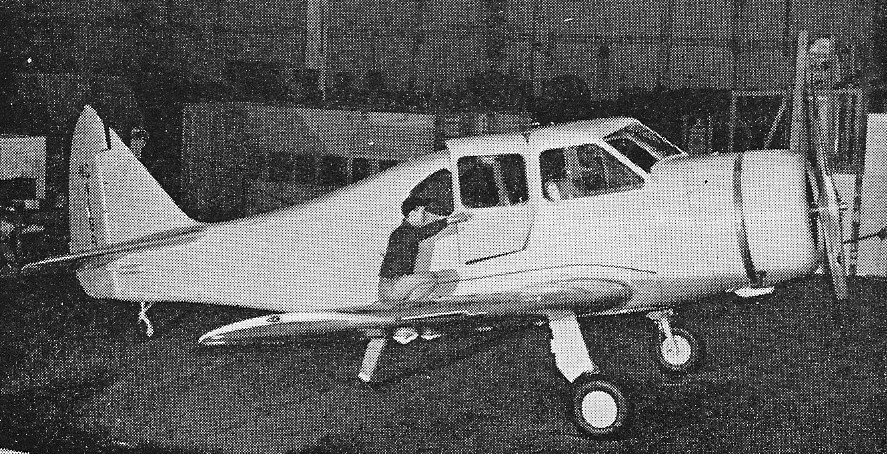
Immediately after WW2 Fairchild turned to the personal aircraft market. Described as a PT-23 trainer with a four-seat cabin fitted immediately aft of the trainer’s rear seat. The PT-23 wings and centre section were utilised, as well as the same engine and mount, but an NACA cowling was installed and a constant speed airscrew fitted.

The undercarriage was similar to that of the T-6 Texan.

The resulting M.84C was certified but only one prototype was built.

The sole M.84C was turned over to one of the schools in Hagerstown, Maryland, where it was used as an instructional item until finally broken up.

M.84C
Engine: 220 hp Continental W-670-6N
MAUW: 3300 lb
Fuel capacity: 48 USG
Max speed: 175 mph
Cruise: 150 mph
Range: 450 mi

Fairchild F-11 Husky

First flown on 14 June 1946, this type had a large cabin, nine seat, big doors on both sides and a very useful ventral hatch to facilitate lengthy cargo such as building material, pipes, and so forth. Constructed entirely of metal, it could be fitted with floats, skis or wheels. With a gross weight of 6,400 lbs, the prototype was underpowered with its 450 bhp Pratt and Whitney R985.
On floats the F-11 weighed 4,200 lbs empty and grossed at 6,400 lbs. Its 54 ¬foot, 9 inch wing had an area of 355 square feet. It cruised at 105 knots and stalled at 51 (flaps 30). On wheels it was 9 knots faster.
Only 12 examples were built; the last in 1948. The Husky design was sold to HuskyAircraft Ltd. in 1955.
Husky Aircraft was formed in 1955 to reestablish a production line for the Fairchild F-11 Husky. Production models were offered in land or floatplane versions, designated F-11-2 Leonides Husky and F-11-3/4 Super Husky.

F 11 Husky
Engine; P & W Wasp Junior R-985 SB 3, 450 hp
Wing span: 16,70 m
Length: 11,40 m
Height: 5,41 m
Wing area; 32,98 sq.m
Empty weight: 1790/1905 kg
MAUW: 2903/2988 kg
Wing loading: 88 kg / sq.m
Power loading: 6,451 / 6,64 kg / hp
Max speed: 222 kph at 670 m
Cruise: 195/235 km / h
Rate of climb: 206/244 m /min
Stall: 93/92 kmh
Ceiling: 4300 / 4900 m
Range: 240 km / 1240 km (with opt. Fuel)

Fairchild

As a result of the recognition achieved with the KRA Midget, Kreider-Reisner began manufacturing the Challenger, which became a popular sport plane in the 1920s. In the Spring of 1929, Fairchild acquired 82% of the common stock in Kreider-Reisner, making the Hagerstown company a subsidary of the Fairchild Aviation Corporation, which eventually became Fairchild Aircraft Company.

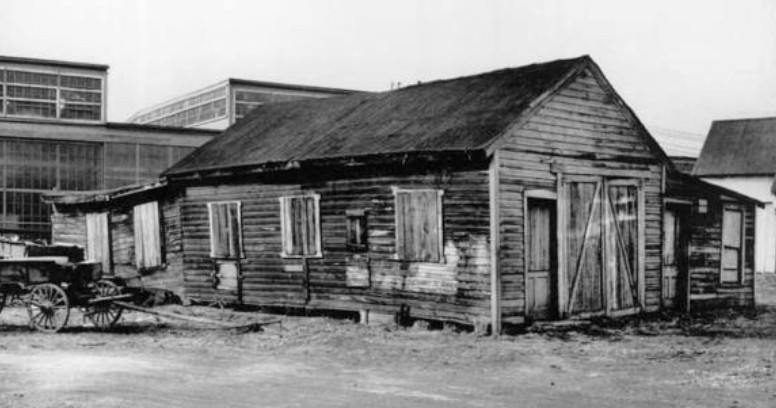
The “Little Green Shed” off Pennsylvania Avenue in Hagerstown was part of the original Kreider-Reisner factory complex.

Sherman Fairchild founded Fairchild Airplane Manufacturing Corporation in 1925. Changed to Fairchild Aviation Corporation in 1929 with premises at Lonqueil, Quebec, and the parent company withdrew manufacturing license from Canadian Vickers. When The Aviation Corporation acquired a controlling interest.

Sherman Mills Fairchild Article

Sherman Fairchild withdrew in 1931, retaining a subsidiary, Kreider-Reisner Corporation, Hagerstown, Maryland, which was renamed Fairchild Aircraft Corporation in 1935. This became Fairchild Aircraft Division, Fairchild Engine and Airplane Corporation, in 1939; Fairchild Stratos Corporation in 1961. Fairchild Hiller Corporation in 1964 on acquisition of Hiller Aircraft Company.

In 1964 Fairchild-Stratos Corp purchased Hiller Aircraft with cash, not stock transactions. Hiller capabilities fitted into one of Fairchild’s primary goals – vertical takeoff and landing aircraft. The Hiller plant was to remain in Palo Alto.

Acquiring Republic Aviation Corporation in September 1965 and this becoming the Republic Aviation Division of Fairchild Hiller Corporation and, later, the Fairchild Republic Company division of Fairchild Industries; Fairchild Industries Inc in 1971 (acquired 90 percent interest in Swearingen Aviation Corporation in November 1971, which became Fairchild Aircraft Corporation in 1982). Metro Aviation, with 97 percent shareholding in Fairchild Aircraft Corporation, sold by Fairchild Industries to GMF Investments, but in 1990 Fairchild Aircraft filed for bankruptcy protection and was sold to Fairchild Acquisition Incorporated that year. The name for producer of Metro, Merlin, and Expediter series of twin-turboprop commuter airliner, executive transport and freighter aircraft (plus MMSA multi-mission surveillance aircraft variant of Metro 23) became Fairchild Aircraft Incorporated. Finally, in June 1996 parent company Fairchild Aerospace bought 80% of the German manufacturer Dornier Luftfahrt from Daimler-Benz Aerospace, resulting in Fairchild Aerospace owning all of the renamed Fairchild Dornier U.S.A. Fairchild Aircraft Incorporated and 80% of Fairchild Dornier Germany Dornier Luftfahrt GmbH.

Fairchild built FC-1, FC-2 and Model 71 lightplanes 1925-1931. Continued production of Kreider-Reisner Model 24C8, later supplied in four-seat version as USAAF UC-61 Forwarder and as RAF Argus. M-62 Cornell trainer introduced 1940 with variety of engines. Wartime production was Bristol Bolingbroke for RCAF, and 300 Curtiss Helldivers for U.S. Navy 1943-1945. AT-21 gunnery trainer entered production in 1942. C-82 Packet twinboom cargo/troop transport flown September 1944; superseded by developed C-119, first flown November 1947. In the early 1950s, the number of Fairchild employees reached approximately 10,000 who built 1112 C-119s between 1948 and 1952. Manufactured 326 C-123 Providers 1954-1958, designed by Chase Aircraft. License-production of Fokker F-27/FH- 227 airliner began 1957; 205 built. Hiller UH-12 and H-1100 helicopters continued in production after acquisition of Hiller company. Production of Pilatus Turbo-Porters begun June 1966; 15 of COIN version delivered to USAF as AU-23A Peacemaker, transferred to Royal Thai Air Force. In 1967 work initiated on 52 USAF AC-119 gunships. Contracts awarded after acquisition of Republic for weapons delivery enhancement of F-105 Thunderchief, subcontract assemblies for McDonnell Douglas F-4, Boeing 747.

In 1964 Fairchild-Stratos Corp purchased Hiller Aircraft with cash, not stock transactions. Hiller capabilities fitted into one of Fairchild’s primary goals – vertical takeoff and landing aircraft. The Hiller plant was to remain in Palo Alto.

Won USAF A-X competition for close-support aircraft, prototype YA-10A flown 10 May 1972; production of A- 10A Thunderbolt II ended 1984 after 713 built, and were in U.S. service in A-10A attack and OA-10A forward air control variants with the USAF, Air National Guard and Air Force. Main feature of A-10A is nose-mounted GAU-8/A Avenger 30 mm seven-barrel cannon with 1,174 rounds of armor-piercing ammunition. Also manufactured wings for Merlin and Metro twin-turboprop aircraft.

Fagan EF5

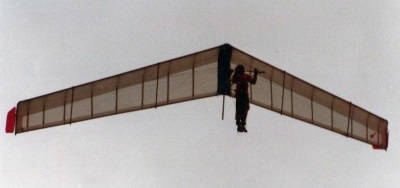
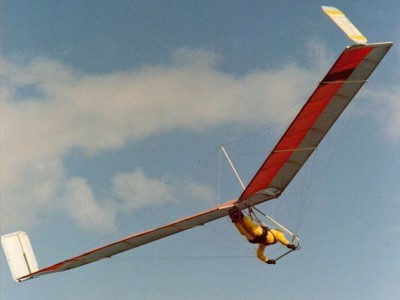
A 1977 hang glider, the EF5 is an Australian rigid designed by Ewen Fagan. Very similar to Manta Fledging, it was sold as a plan and kit by its designer. It was later (early 80’s) sold by Skyland Kites, Qld, Australia. It was sold as a kind of kit, you could buy the machined parts, the cables and the sewn sails. The aluminum tubes had to be purchased on site.

Graham John had the company Skyland Kites and manufactured and sold a range of hang gliders from about 1975 to 1980 on the Gold Coast of Australia. He had an EF5 in his shop and may have manufactured a few.

Piloting similar to Fledge. The EF5 was mostly a Manta Fledge copy with a few modifications. Like all the older tip rudder controlled rigid wings it was a bit difficult to ground handle in wind as rudder application dragged the tips back – not down. Also roll lagged yaw a bit – ie the wing would yaw first then roll. But in the air it was much more responsive than the flex wings of the day (pre billow shift). It is reactive in pitching and quickly accelerates in dive. Put it in dynamic stall with a rudder engaged and one will spin: engage the other rudder and it comes out. If you gradually put it in stall with both rudders engaged, it will stop and descend vertically – a good way to lose altitude fast enough without gaining speed. When flying along the terrain with a wing close to the ground, using the opposite control automatically raises the wing close to the ground, with a control wing tips that does not have a conventional delta.

The EF5 12 metre could be chopped down to a 10 metre around. It liked the fast descent you could do by pulling both rudders on at once. It could do a breathtakingly fast dive and interesting spins.

EF5-12M
Wing span: 12 m

EF5
Wing area: 13 m²
Wing span: 9.8 m
Aspect ratio: 7.3
Hang glider weight: 30 kg
Nose angle: 150°

Dihedral: 7°
Washout: 7°
LD: ≈11:1

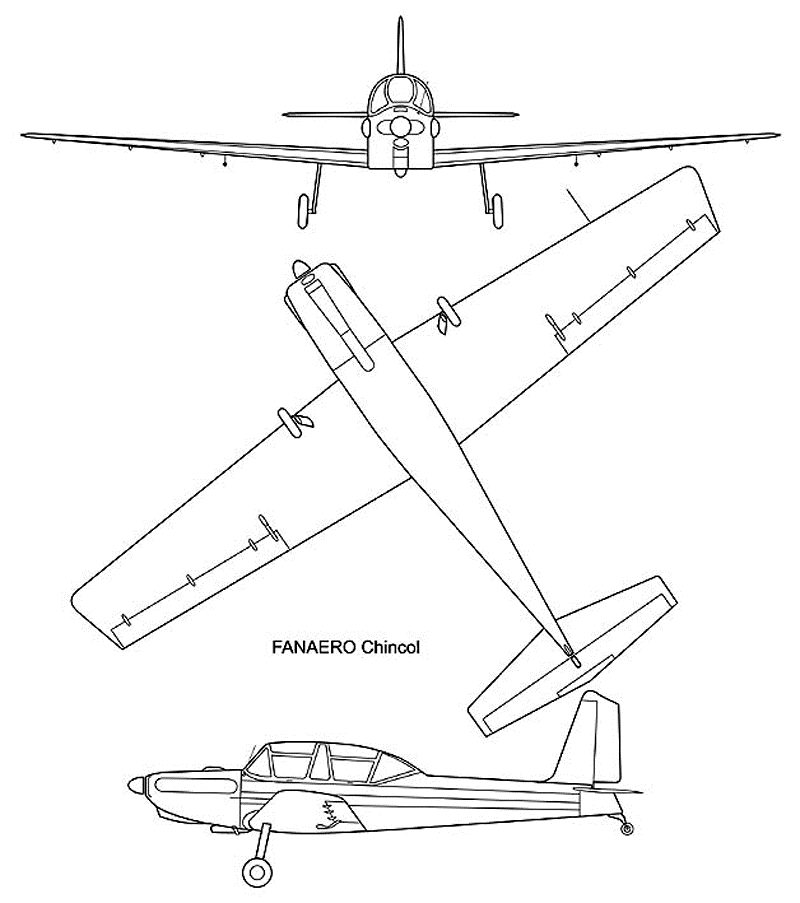
Fabrica Nacional de Aeronaves Chincol

Chincol is a two-seat aircraft for initial training, designed and built at the Fabrica Nacional de Aeronaves plant at the “El Bosque” military base in Santiago, Chile.

The tandem-seat, fully aerobatic, primary trainer Chincol has mixed wood and metal construction and has a 215-h.p. Continental O-470-11 air-cooled flat-six engine. A Chilean wood called Manio is used for the cantilever wing and parts of the welded-steel fuselage. Although not so equipped on the prototype, the production Chincol was to have split flaps. The undercarriage is fixed.

On December 14, 1955, the “Chincol” first flew.

The Chilean Air Force became interested in the aircraft and preparations began for its serial production of 50 copies, but they refused on financial problems.

Engine: Continental 0-470-11, 215 hp
Wing span: 10.40 m
Wing area: 15.70 sq.m
Length: 7.22 m
Height: 2.10 m
Empty weight: 740 kg
Maximum take-off weight: 1050 kg
Maximum speed: 210 km / h
Cruising speed: 183 km / h
Service ceiling: 17,716 ft
Range: 650 km / 404 mi
Rate of climb: 246 m / min
Seats: 2

Explorer PG-1 Aqua Glider

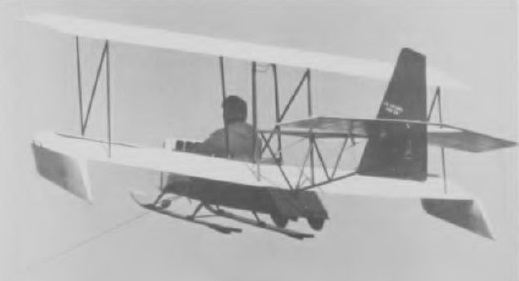
One of the very few waterborne gliders, the Aqua Glider single-seater is also unusual in being a biplane; it is intended for tethered gliding by unlicensed pilots, and is towed behind any speedboat that can attain a speed of 30kt (35mph). The pilot can also cast off from the speedboat when airborne and make a free flight before landing back on the water, but to do this he must have a licence. The Aqua Glider was designed by Col William L. Skliar, USAF (Ret’d), who began design work on it in September 1958, the prototype making its first flight in July 1959. After making about 1,000 flights and being flown by about 60 pilots, the prototype was donated to the Experimental Aircraft Association Museum in Milwaukee.
Approximately 1,000 sets of plans have now been sold to amateur constructors in more than 20 countries all over the world, and about 200 Aqua Gliders were under construction; about 12 are known to have flown, in the Bahamas, Brazil and Japan as well as in the USA. The forward staggered single bay biplane wings are conventional single-spar wooden structures with fabric covering, and there are spoiler-type light alloy ailerons on the lower wing only, immediately behind the main spar.
Balance floats – basically just plate-type fairings – are carried at the extremities of the lower wing tips. The pilot sits in an open cockpit in the unstopped watertight wooden hull and, instead of a conventional planing bottom, take-offs are made on a pair of standard jumper skis, 6 ft in length, attached to small wire-braced struts below the hull. The latter is of spruce with a mahogany plywood bow, bottom skins and sides, the plywood being glass fibre covered below the waterline. There is a towing hook on the nose. The wire-braced tail unit is of spruce with plywood and fabric covering, and is carried on a boom of welded steel tube or wire-braced wooden construction. The rudder is conventional and the tailplane an all-moving one-piece surface.

Span: 4.87m / 16 ft
Wing Area: 14.28 sq.m / 95 sq.ft
Aspect ratio: 5.0
Airfoil: NACA 4412
Length: 13 ft 8 in
Height: 5 ft 0 in
Empty Weight: 83 kg / 180 lb
Payload: 100 kg / 220 lb
Gross Weight: 182 kg / 400 lb
Wing Load: 20.61 kg/sq.m / 4.5 lb/sq.ft
Max speed: 65 mph (in smooth air)
Stalling speed: 35mph
L/DMax: 6.5 at 72 kph / 39 kt / 45 mph
Seats: 1