Fiat G.46

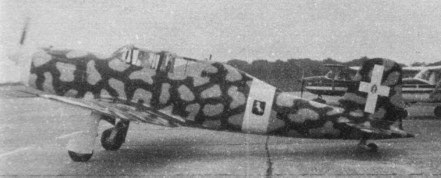
The Fiat G.46 was developed by Giuseppe Gabrielli as a military trainer in Italy shortly after World War II, the all metal G.46 was a conventional, low-wing monoplane with tailwheel undercarriage, the main units of which retracted inwards. The pilot and instructor sat in tandem under a long canopy hinging to the right.

The first prototype G.46 1, powered by a 205 hp (153 kW) Alfa Romeo 115-Ibis engine driving a two blade constant speed propeller, made its maiden flight on 25 June 1947.

Testing revealed excellent flying characteristics and suitability for aerobatics, and the type was ordered into production.
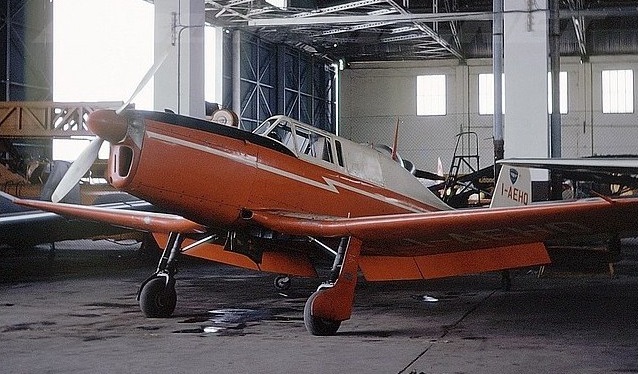
Production versions were the G.46 2 with a 205 hp de Havilland Gipsy Six or 250 hp Gipsy Queen 30, and the 3, 4 and 5 with 225 hp Alfa 115ter.

223 were built: The Italian Air Force operated 141 Fiat G.46 from 1949 until 1960; the Argentine Air Force operated 70 Fiat G.46; the Syrian Air Force operated 12 G-46Bs; and the Austrian Air Force operated five former Italian Air Force G-46Bs.
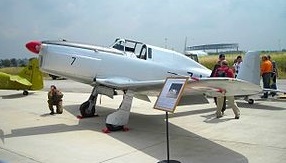
Austrian Fiat G.46

Gallery

Variants:

G.46-1B
two-seater with Alfa Romeo 115bis engine, one prototype and initial production of 25 for the Italian Air Force.

G.46-2B
two-seater with de Havilland Gipsy Queen engine for the Argentine Air Force, 70 built with an additional 12 for the Syrian Air Force.

G.46-3B
two-seater with Alfa Romeo 115ter engine for the Italian Air Force, 25 built.

G.46-4B
two-seater with Alfa Romeo 115ter engine for the Italian Air Force, 55 built.

G.46-5B
two-seat navigation trainer (prototype only)

G.46-4A
single-seater with Alfa Romeo 115ter engine for the Italian Air Force, 35 built.

Specifications :

G.46 2
Maximum speed: 325 km/h (200 mph)
Gross weight: 1430 kg (3150 lb)

G.46-4B
Engine1 × Alfa Romeo 115-1ter, 168 kW (225 hp)
Length: 8.48 m (27 ft 10 in)
Wingspan: 10.40 m (34 ft 1¼ in)
Height: 2.40 m (7 ft 10 in)
Wing area: 16 m2 (173 ft2)
Empty weight: 1,110 kg (2,442 lb)
Gross weight: 1,410 kg (3,102 lb)
Maximum speed: 311 km/h (194 mph)
Cruising speed: 263 km/h (164 mph)
Range: 900 km (560 miles)
Service ceiling: 5,300 m (17,400 ft)
Rate of climb: 5.8 m/s (1,150 ft/min)
Crew: 2, pilot and instructor
Fiat

ITALY
Aeronautica d’ltalia SA was the aeronautical branch of Fiat, occupying the factories of the old Ansaldo company which it had absorbed by the 1920s, although the Ansaldo name was still used. For this company and the Societa Italiano Aviazione the name Fiat (or Fiat-Aviazione, or Fiat- Divisione Aviazione) was used after 1924.
Renamed FIAT, SOCIETA PER AZIONE 1949 to succeed Aeronautica d’ltalia, inheriting its plant and program. (Fiat’s Divisione Aviazione merged subsequently with Aerfer as Aeritalia formed November 12,1969, fully operational January 1,1972.) Fiat G49 advanced trainer flown September 1952. G80 jet trainer with de Havilland Goblin 35 engine, first flown December 9,1951, was first postwar Italian jet aircraft. In conjunction with Macchi built 80 de Havilland Vampire FB.52As; built 221 F-86K all-weather fighters for Italy, France, and West Germany, first example completed June 1955. G91 adopted as NATO light tactical fighter; prototype flown August 9,1956 and several hundred built subsequently. Prototype of G91Y variant first flew December 27,1966; 65 built for Italian Air Force. License-built 205 F-104S Starfighters for Italian Air Force. G222 twin-turboprop military transport project initiated before establishment of Aeritalia.
Aeritalia was created in 1969 by a merger of Fiat’s aviation divisions with two smaller companies.

FFT / Gesellschaft Fur Flugzeug- Und Faserverbund-Technologie Mbh

Gyroflug Ingenieursgesellschaft Mbh was founded 1978 to develop the SC 01 Speed Canard as full production aircraft based on U.S. Rutan VariEze. 1989 renamed FFT / Gesellschaft Fur Flugzeug- Und Faserverbund-Technologie Mbh, and became subsidiary of Justus Dornier Group 1984. Also developed manned and unmanned surveillance versions, but this program halted. Also took over development of FFA-2000 trainer from FFA, becoming Eurotrainer 2000A.

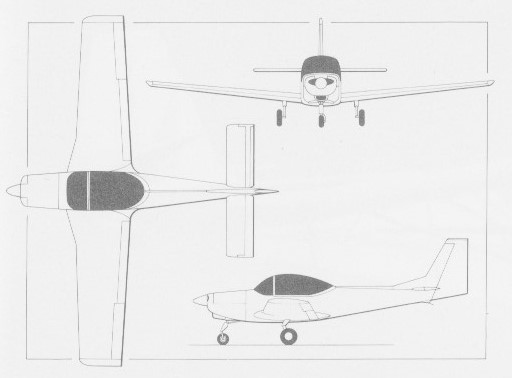
FFA AS.202 Bravo

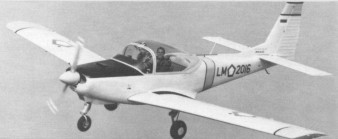
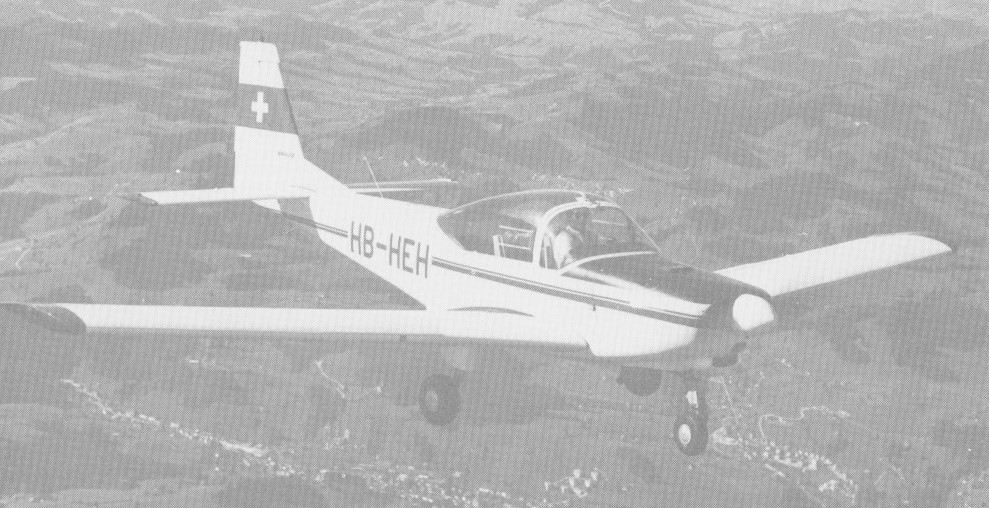
The Bravo first flew in March 1969, with a 112kW engine, as the 202/15. After completing an agreement with SIAI-Marchetti to produce the AS.202 Bravo, the Swiss developed the AS.202/18A. This suffix indicated its uprated 180-hp (134-kW) Lycoming engine and full aerobatic capability. The Swiss company Flug- und Fahrzeugwerke AG Altenrhein flew the first example (HB-HEY) of the AS.202/18A, a two/three-seat aerobatic development of the Italian SIAI-Marchetti AS.202 Bravo on 22 August 1974. These were followed by the 195kW 202/26 in 1978. Civilian and military operators have bought 166 Bravos up to 1987.

FFA AS.202 Bravo Article

AS.202/15
Engine: Lycoming O-320-E2A, 150 hp
Wingspan: 31 ft 11.75 in / 9.75 m
Length: 24 ft 7.25 in / 7.50 m
Empty weight: 1388 lb / 630 kg
Max payload: 595 lb / 270 kg
Max cruise 75% 8000ft/2440m: 114 kt / 131 mph / 211 kph
ROC SL: 633 fpm / 193 m/min
Service ceiling: 14.000 ft / 4265 m
Max range: 498 nm / 574 mi / 925 km
Seats: 2
Cabin length: 7 ft 0.5 in / 2.15 m
Cabin width: 3 ft 4.25 in / 1.02 m
Cabin height: 3 ft 7.25 in / 1.10 m
Rear baggage: 220 lb / 100 kg

AS.202 Bravo
Engine: 1 x Lycoming AEIO-540, 195 kW.
Span: 9.8 m.
Length: 7.5 m.
Wing area: 13.9 sq.m.
Empty wt: 795 kg.
MTOW: 1200 kg.
Warload: 195 kg.
Max speed: 265 kph.
Initial ROC: 360 m / min.
Ceiling: 5700 m.
T/O run: 185 m.
Ldg run: 210 m.
Fuel internal: 160 lt.
Range: 850 km.

FFA AS 202 / 18A Bravo
Length: 24.606 ft / 7.5 m
Height: 9.186 ft / 2.8 m
Wingspan : 32.152 ft / 9.8 m
Wing area : 149.62 sqft / 13.9 sq.m
Max take off weight : 2381.4 lb / 1080.0 kg
Weight empty : 1565.6 lb / 710.0 kg
Max. weight carried : 815.9 lb / 370.0 kg
Max. speed : 130 kts / 241 km/h
Landing speed : 49 kts / 90 km/h
Cruising speed : 110 kts / 203 km/h
Initial climb rate : 787.40 ft/min / 4.00 m/s
Service ceiling : 16995 ft / 5180 m
Wing load : 15.99 lbs/sq.ft / 78.00 kg/sq.m
Range : 616 nm / 1140 km
Engine :
Lycoming AEIO 360 B1F, 132 hp
Crew : 2

AS 202-18A-3 Bravo

AS.202/26 Bravo
Engine: 1 x Lycoming AEIO-540, 195 kW.
Span: 9.8 m.
Length: 7.5 m.
Wing area: 13.9 sq.m.
Empty wt: 795 kg.
MTOW: 1200 kg.
Warload: 195 kg.
Max speed: 265 kph.
Initial ROC: 360 m / min.
Ceiling: 5700 m.
T/O run: 185 m.
Ldg run: 210 m.
Fuel internal: 160 lt.
Range: 850 km.

FFA P-16

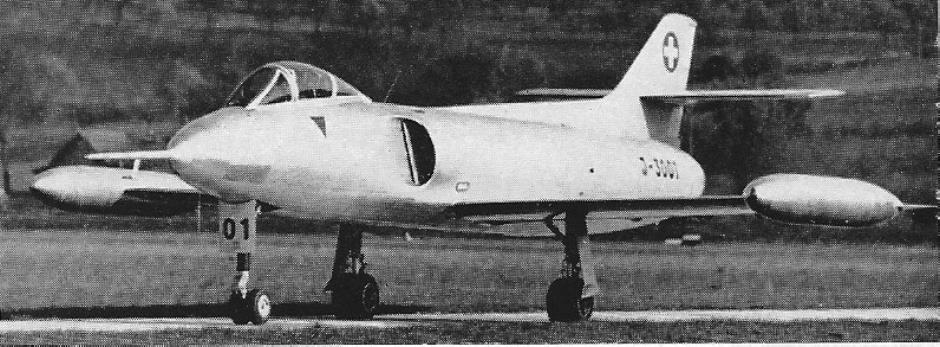
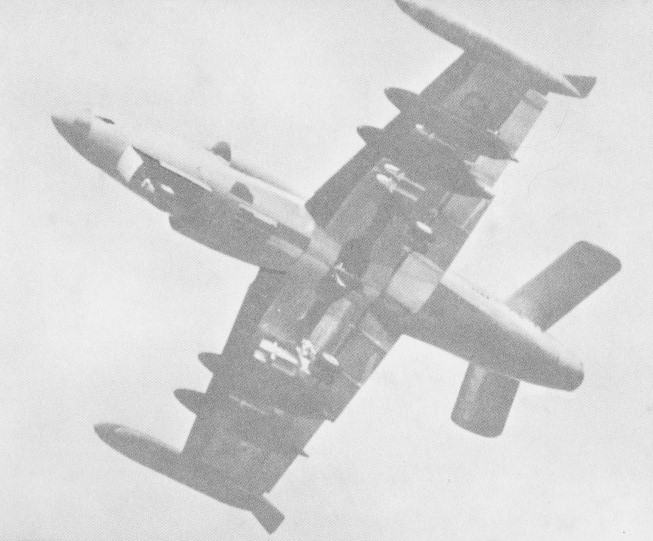
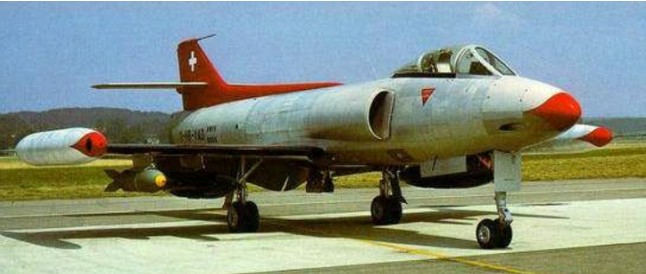
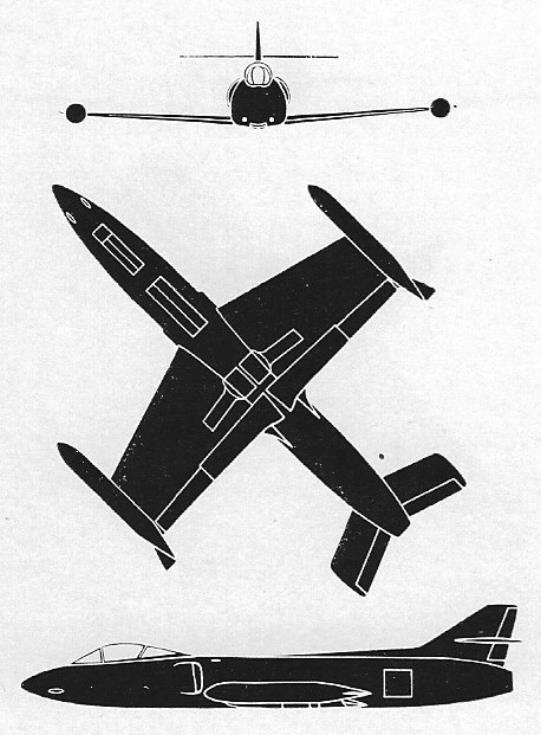
FFA was awarded development contract July 1952 for P-16.04 interceptor/ground-attack aircraft with Armstrong Siddeley Sapphire, first flown April 28,1955. Fitted with leading-edge flaps, the first prototype had a wing thickness/chord ratio of between 5 and 6%. The second prototype was reduced to 4% and a higher powered turbojet.

P-16.04

The airframe is low wing, with 20o sweepback. Swept tail surfaces, have a variable incidence tailplane mounted mid-way up the fin, with conventional rudder and elevators. The ailerons can be lowered with Fowler flaps to provide additional flap area. Full-span leading edge flaps and an air-brake is fitted on each side of the rear fuselage. A tricycle undercarriage, with twin wheels on each unit, main wheels retracting inwards into the fuselage and the nose wheel retracts reward.

Internal fuel capacity is 550 gal, including fixed wingtip tanks. The is provision for two 100 gal underwing jettisonable tanks. Armament is two 30mm Hispano cannon in the nose and 44 air-to-air unguided rockets in fuselage pack.

The prototype Mk.III first flew in March 1960.

Mk.III

Program cancelled by Swiss Government but continued as private venture until June 1960; five aircraft built.

The P-16 wing formed the basis of the Gates Learjet design.

1st prototype
Engine: Armstrong Siddley Sapprire A.S.Sa.6, 7900 lb
Loaded weight: 17,857 lb
Max speed: 630 mph approx.
Armament: 2 x 30mm Oerlikon 302RK cannon

Engine: Armstrong-Siddeley Sapphire Sa.7
Length: 11.14 m
Span: 12.3 m
Max T/O weight: 11700 kg
Weapons load: 3000 kg
Max. horizontal speed: 1140 km/h / M 0.92
Altitude: 14000 m
T/O and Landing roll: < 500 m
Range: 1480 km

P-16 Mk.III
Engine: Bristol Siddeley Sapphire, 11,000 lb
Wingspan: 36 ft 7 in
Wing area: 320 sq.ft
Length: 46 ft 9 in
Height: 13 ft 5 in
Empty weight: 15,520 lb
MTOW: 27,795 lb
Internal fuel: 550 gal
Max speed: 696 mph SL
Service ceiling: 46,000 ft
Max range: 620 mi
Armament: 2 x 30mm Hispano cannon
Hardpoints: 4
Wheel track: 10 ft 2 in
Wheel base: 18 ft

FFA / Flug- und Fahrzeugwerke AG

Founded 1948, the reorganized Swiss Domier-Werke Alntenrhein, Flug- und Fahrzeugwerke AG discontinued development of Morane-Saulnier piston-engined fighters after completing prototype D-3803. Awarded development contract July 1952 for P-16.04 interceptor/ground-attack aircraft with Armstrong Siddeley Sapphire, first flown April 25,1955. Program canceled by Swiss Government but continued as private venture until June 1960; five aircraft built. Participated in license-production programs for de Havilland Vampire and Venom, Pilatus P-3, Mirage IIIRS, and HIS. Designed and manufactured Diamant glassfiber sailplane. Currently named FFA Flugzeugwerke Altenrhein AG., continues to produce (under original agreement with SIAI-Marchetti signed in 1967) the AS-202 Bravo two-seat trainer/aerobatic aircraft (first flown 1969). FFA-2000 programme was transferred to FFT.

Fawcett 120

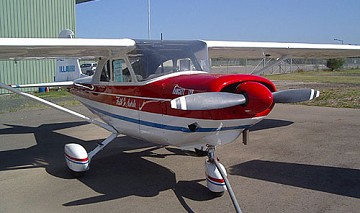
This Australian 4-seat high-wing cabin monoplane was designed by Luigi Pellarini in 1953 and built by Fawcett Aviation of Bankstown, as a replacement trainer to the Tiger Moth for their subsidiary, the Illawarra Flying School.
First flight November 1954.
Only one prototype was constructed; after unsuccessfully competing for an Army contract, it was stored at Bankstown until the late 1970s, when it was rebuilt with a four cylinder horizontally-opposed engine. The aircraft has always carried the registration VH-BQC.

Fawcett 120 Article

Of all metal construction (quite new in its day for light aircraft), the Fawcett 120 has a tricycle undercarriage, has dual controls and is fully aerobatic.
Wingspan: 10.87 metres, length 6.91 metres, height 2.06 metres, maximum speed 204.36 km/h, ceiling 14,600 feet.
Originally powered by a 130 hp de Havilland Gipsy Major 1 Series 1 four cylinder in-line piston engine, the aircraft was re-engined in 1979 with a four cylinder horizontally -opposed piston engine.