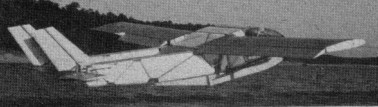
Design begun in 1966 and first first flown in October 1970, the Flightsail VII can either be towed behind a 70-hp ski boat or it can have a 90-hp Continental pylon mounted above the fuselage to fly the Flightsail under its own power. The structure is built from bolted aluminum, foam and epoxy. This two-seater amphi¬bian features twin booms and twin tails.
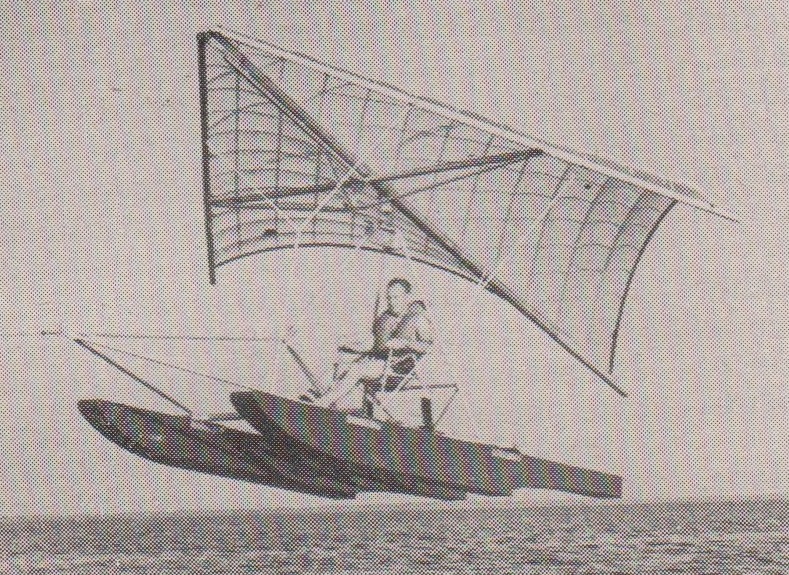
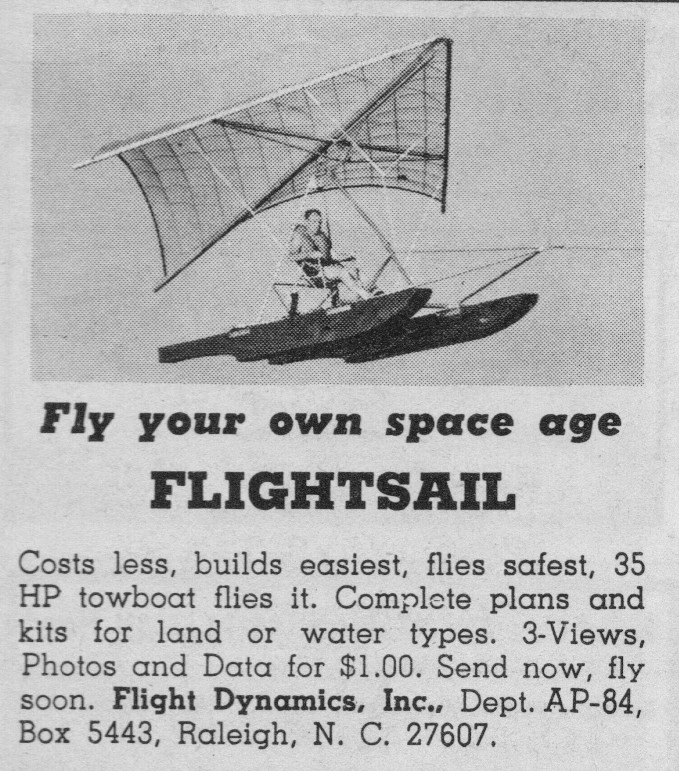
Flight Dynamics Inc, of Raleigh, NC, were promoting in 1963 The Flightsail. An adaptation to sport of the flexible wing developed for the National Aeronautics and Space Administraion. The wing is a polyethylene covering on an airframe of commercial aluminium tubing and angle stock.
Capable of taking off from land or water, Flightsail is controlled in flight by an aircraft-type control stick that regulates the tilt of the wing.
Easily towed aloft by a 40 – 50 hp outboard, flying is best with a breeze of about 5 mph, lift-off being between 25-50 mph ground speed.
In 1963 it was claimed the Flightsail could be built at a total cost of US$250, including wheels and floats.
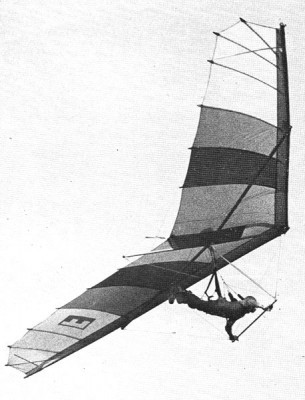
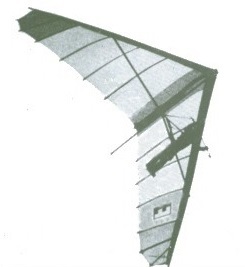
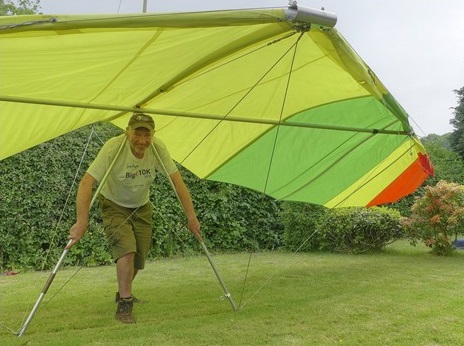
A 1978 hang glider, the Skyline has no wing wires, just a simple rugged airframe and a carefully cambered sail. It was a wing that folded to 4 meters by removing the leading edges. The wing tip locked in negative by wingtips Low weight and advanced sail technology give a light ‘inertia free’ feel to the handling. Roached tips, short keel and high aspect ratio contribute to the performance, whilst slow speed characteristics add to the pleasure.
The Skyline was offered in four sizes covering weight range 8-16 st, priced at £475.00 inc VAT and bag.
Skyline medium Pilot weight: 10-12 st Aspect ratio: 6.4 Sail area 175 sq ft Span: 33 ft 8 in Keel 8 ft Weight: 49 lb
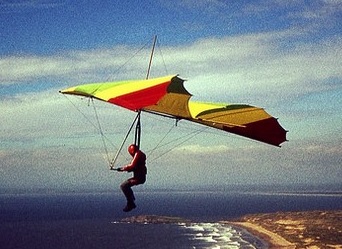
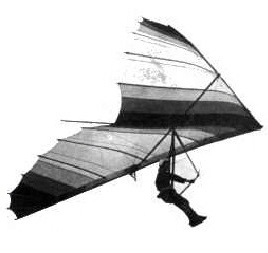
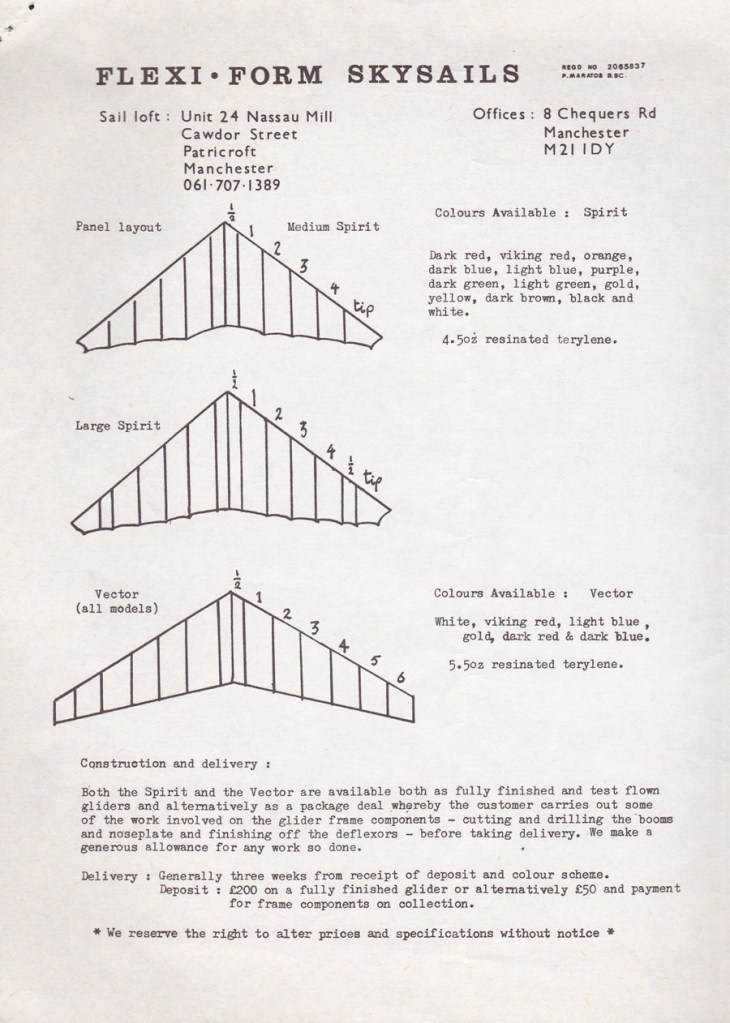
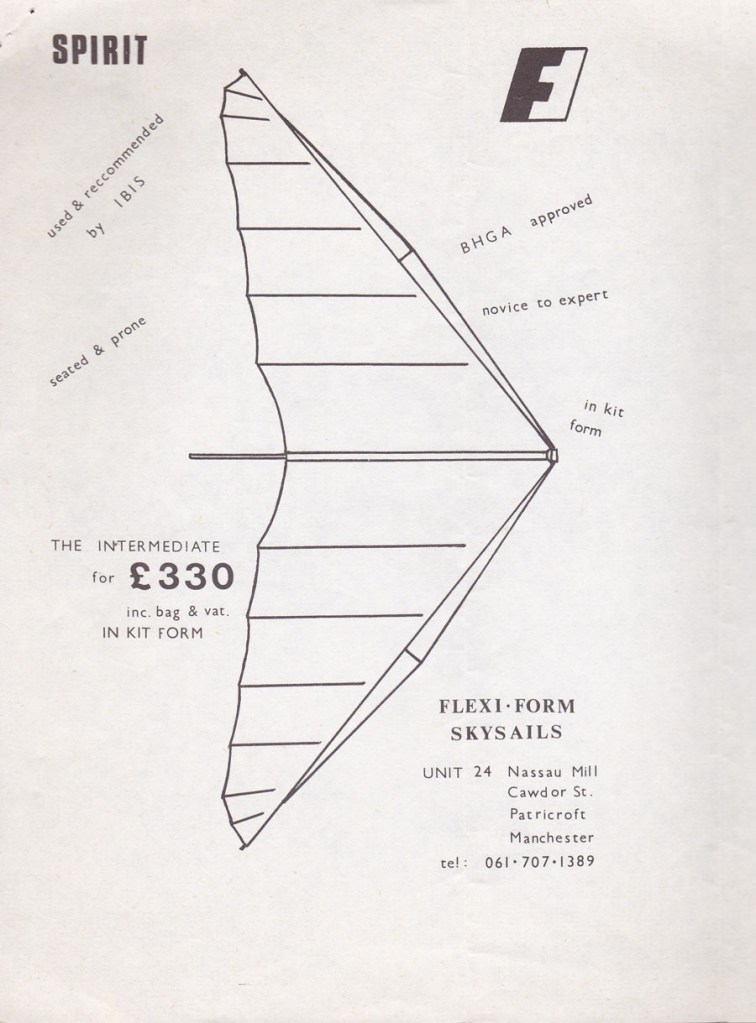
The Flexi-Form78 Spirit was a 1976 hang-glider that was available in kit-form from Paul Maratos of Flexiform Sailwings.
Spirit
The Spirit was designed by Paul Maratos and features a fully battened sail with a small roached tip and relatively short keel. The sail is not cambered, the kite being tuned by fully adjustable double wing wires and keel camber wire. The Glider came in two sizes, priced at £400.00 or £330.00 for kit option, including factory assembly and tuning, pulley system, zipped kite bag, velcro sail ties, sail colour choice and VAT.
Spirit (Medium) Nose angle 102 deg Weight 52 lbs Area 190 sq ft, Leading edge 20 ft 6 in Keel (rc) 10 ft 6in
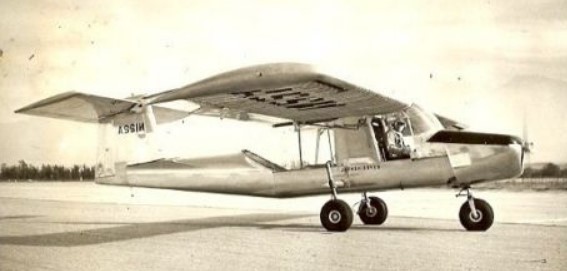
The FL-23 prototype was designed and built as a private venture, it was a high-wing cantilever monoplane with an all-moving tailplane mounted at the top of the fin. It had a fixed tricycle landing gear and powered a 225-hp (168 kW) Continental E225 piston engine. It had room for a pilot and observer in tandem; the observer had an unusual acrylic plastic enclosure to give an all-round visibility.
The US Army issued the specification for a two-seat liaison and observation monoplane and the prototype was entered into the competition. During trials the aircraft was badly damaged in a flying accident when it lost its tail, and was withdrawn from the competition. The competition was won by the Cessna 305A which became the L-19 Bird Dog.
Powerplant: 1 × Continental E225, 235 hp (175 kW) Propeller: Hartzell 7 ft (2.1 m) diameter Wingspan: 33 ft 4 in (10.16 m) Length: 28 ft 4 in (8.64 m) Height: 8 ft 1 in (2.46 m) Wing area: 277 sq ft (25.7 m2) Airfoil: NACA 4412 Empty weight: 1,500 lb (680 kg) Gross weight: 2,450 lb (1,111 kg) Fuel capacity: 60 US gal (50 imp gal; 230 L) Maximum speed: 133 mph (214 km/h, 116 kn) Cruise speed: 118 mph (190 km/h, 103 kn) Stall speed: 38 mph (61 km/h, 33 kn) (flaps extended) Range: 485 mi (781 km, 421 nmi) Service ceiling: 19,500 ft (5,900 m) Rate of climb: 1,180 ft/min (6.0 m/s) Crew: 2
John Thorp was interested in armed light aircraft and in 1948 he demonstrated the prototype Sky Skooter at Fort Bragg. At the start of the Korean conflict Thorp sold his basic armed lightplane concept to Wendell and Maurice Fletcher. The result was the FD-25 series. Developed by the Fletcher brothers and John Thorp it was aimed at a perceived need in the US armed forces for a cheap and lightweight counter insurgency (COIN) attack aircraft.
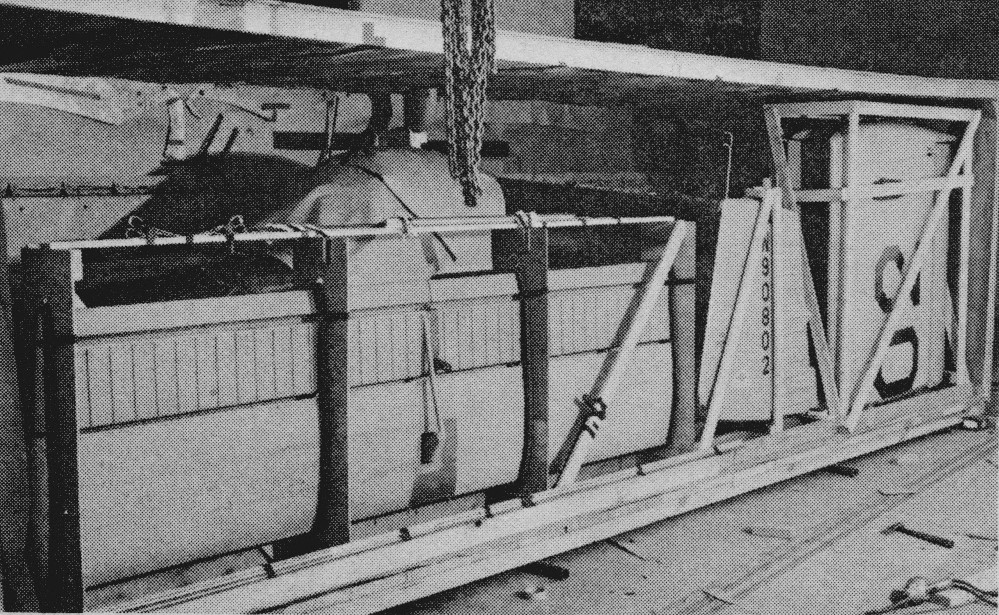
The prototype FD-25, N90802, received the green light from the Fletcher management on 1 November 1950. Five engineers, including Thorp, and five engineers were assigned to the project. The prototype flew on 14 April 1951. The single seat FD25 was manufactured from Dow magnesium rather than aluminium. According to Thorp was “economically marginal because of the extra processing, equivalent to anodising, that was required to resist corrosion”.
Prototype magnesium FD-25 Marine HQ, Quantico, Virginia. Pilot Roy Cusick.
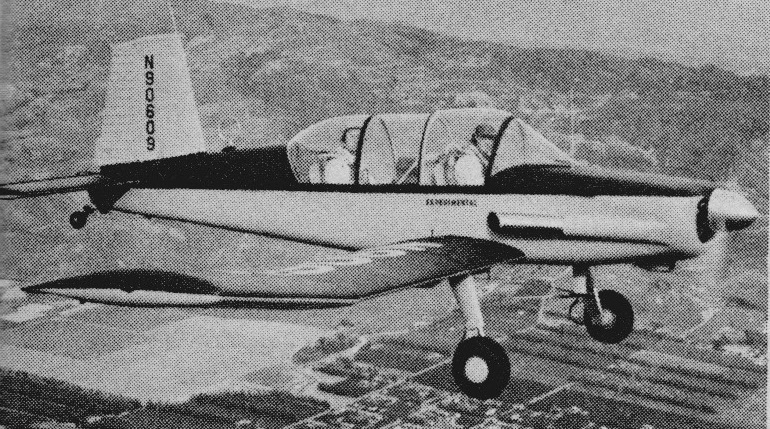
The FD-25A two-place version was begun before the single-place flew. The aircraft, N90609, had a magnesium wing and aluminium fuselage. Heavy navigation equipment resulted in a critical aft c-of-g condition that contributed to the FD25A crashing during flight trials in 1952, killing several Fletcher employees.
FD-25A – pilot Roy Cusick, engineer Leland Lord. Both were killed in the plane
It was the two-place version that was built in Japan.
Protype FD-25 crated for shipment to Toyo Aircraft in Tokyo, Japan
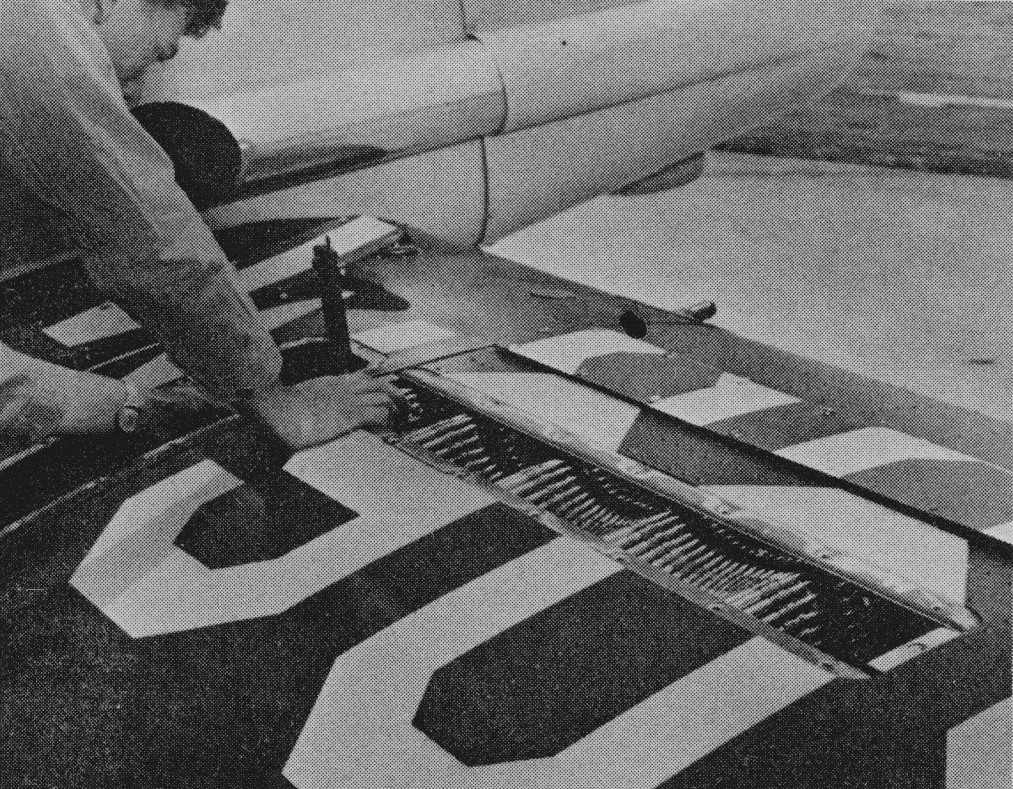
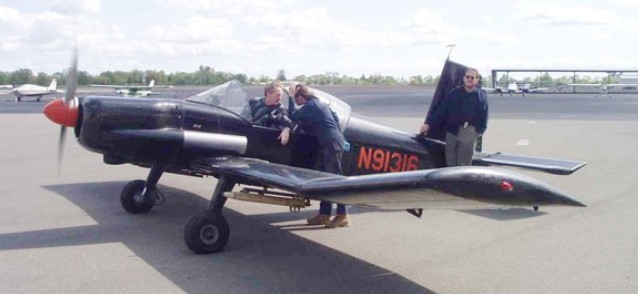
Fletcher then took nine months to complete the all-aluminium FD-25B N91316. Two 30-calibre machine guns were imbedded in the wings, mounted outboard of the fuel cells and firing outside the propeller arc procured on bailment from the office of Admiral Richardson, then Chief of Naval Aviation. Each gun had space for 1000 rounds of ammunition.
Thorp, who made the initial flights in all the FD-25s, also fired the first in-flight rockets on the range at Inyokern, California. In preliminary ground firing, the cap on the back of the 5-in HVAR rockets ejected with such force that it damaged the stabiliser. The rocket rails were then moved farther outboard.
The plane was to depend on surprise attack and was built without armour plate or self-sealing tanks. The FD-25 was created to stop Russian T-36 tanks used by the North Koreans.
The FD25B undertook very successful demonstrations with the US armed forces. The FD25B was a performer and was enthusiastically supported by US military personnel but unfortunately received no US Government support.
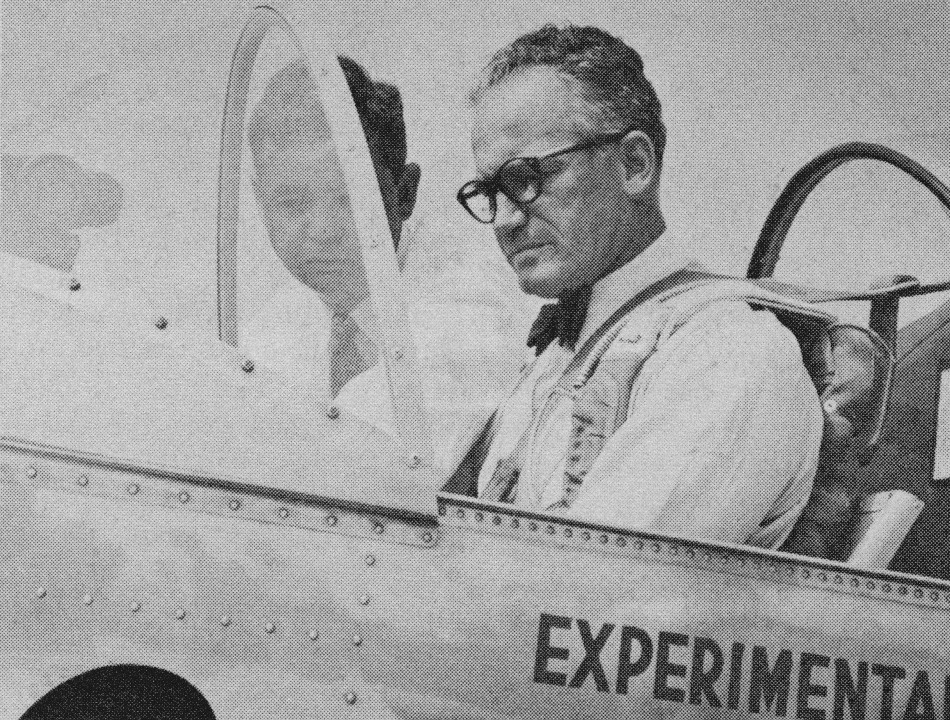
Senator Barry Goldwater flew the experimental FD-25B solo, as did Chuck Yeager.
Senator Barry Goldwater in the FD-25B, Washington-Virginia airport in 1953.
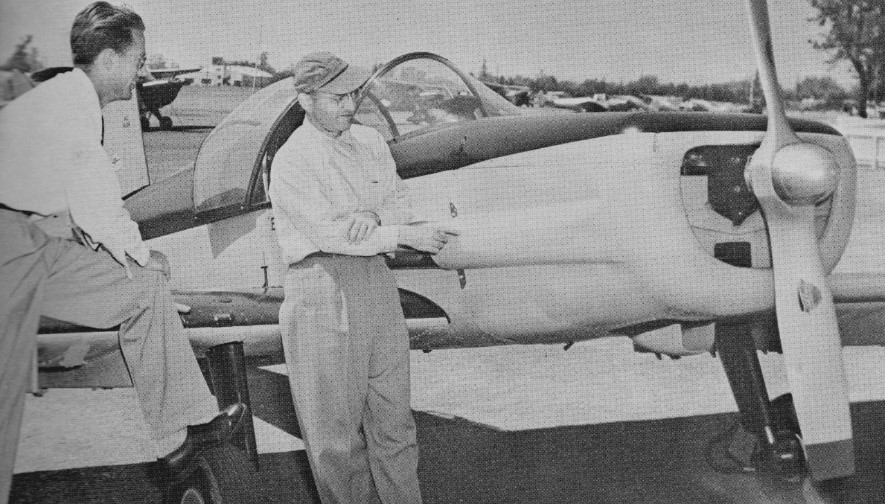
Circa 1951, John Thorp (right) and Don Downie with prototype FD-25. The fixed pitch propeller was later changed to a Hartzell controllable.
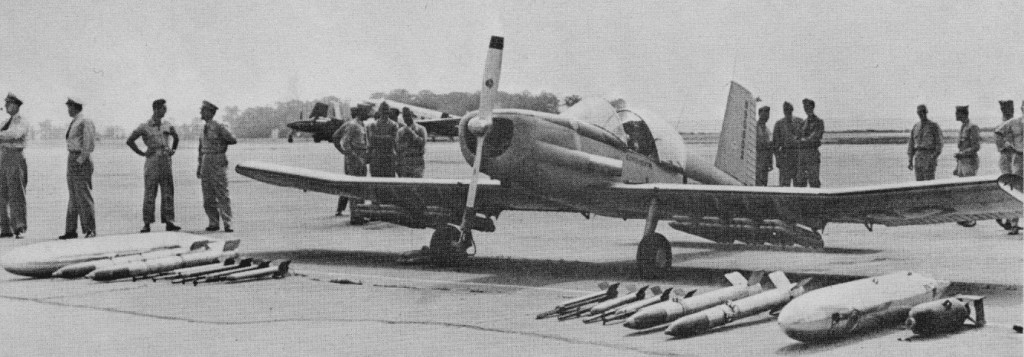
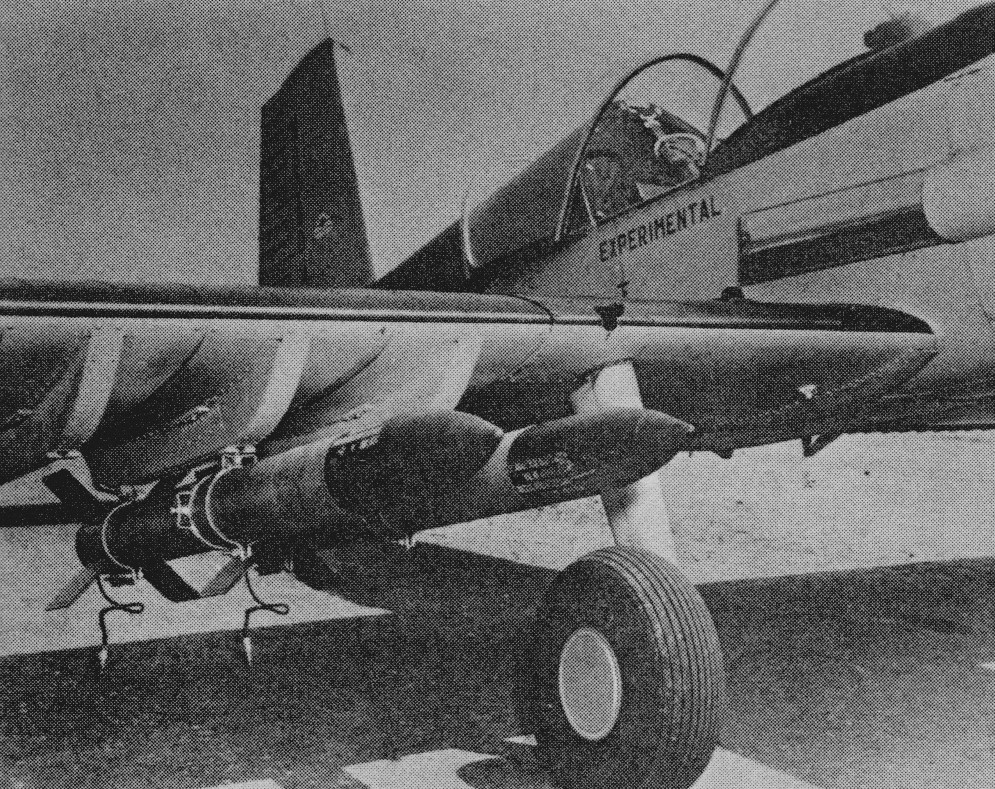
The FD25B armament consisted of a pair of wing mounted racks for two 33-gallon napalm tanks. Additionally two 250 lb. fragmentation bombs and up to 40 2.75 inch folding fin air rockets of four 5.0 inch heavy rockets or twenty 80 mm Oerliken rockets could be fitted.
Fletched ceased production after three examples to then concentrate on the development of the FU-24. However, further FD25 production was undertaken under license in Japan by the Toyo Aircraft company.
The first Toyo example, a FD25B, was flown in March, 1953 and soon after sales of four FD25A and four FD25B were made to the Royal Cambodian Air Force. These were followed by an unclear number, possibly two each FD25A and FD25B, to the North Vietnamese Air Force. The fate of these airframes is unknown.
Cambodian Air Force FD-25
Much of the demonstration life of the FD-25B was flown with a full dull black paint job. The FD-25 was designed to sell originally for $25,000 or less.
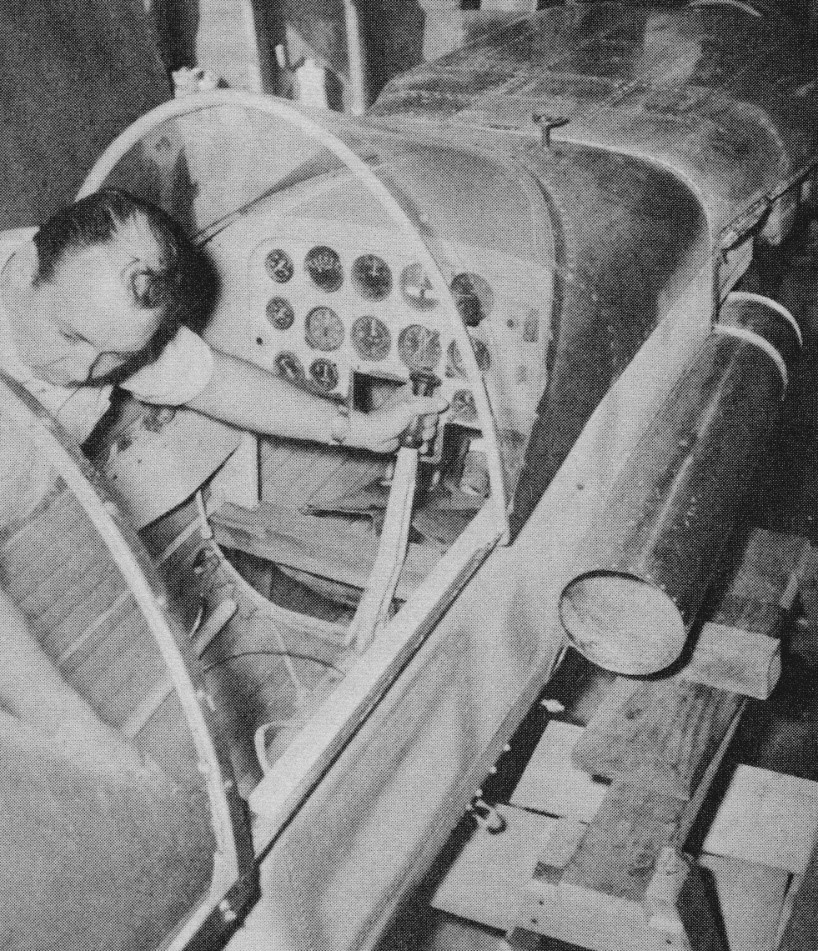
Ex-WW2 fighter pilot Jim Castor took over the FD-25 project after Don Downie and obtained the only known 25 in existence. He obtained it from the company after it had collected dust for eight years and refurbished it in his garage in La Mirada, California. Part of Castor’s agreement with Fletcher Aviation was to demonstrate the airplane to any potential customer on request.
Jim Castor inspects the FD-25B prior to re-assembly
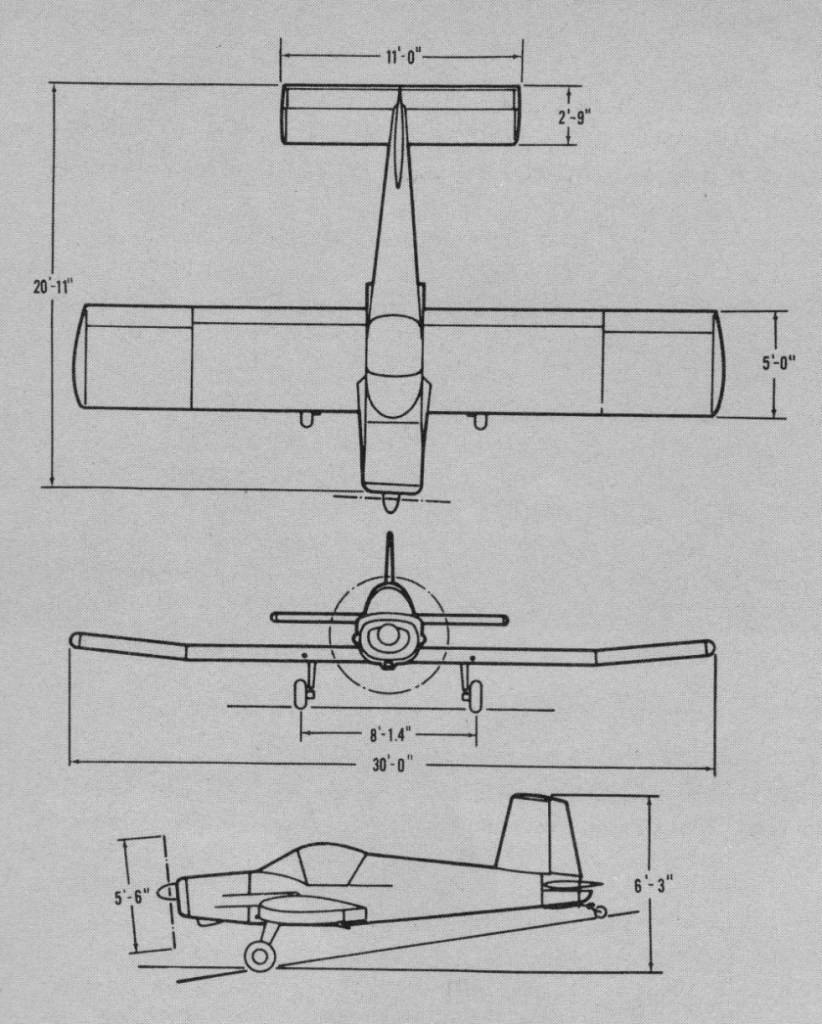
Engine: Continental E225-8, 225 hp. Wingspan: 30 ft Length: 20 ft 11 in Height: 6 ft 3 in Wing area: 150 sq.ft Empty weight: 1228 lb MTOW: 2500 lb Fuel capacity: 50 gal Max speed: 187 mph SL Cruise speed: 162 mph SL Service ceiling: 16,500 ft Range: 630 mi Armament: 2 x 0.30in mg Hardpoints for: 2 x 33 gal nalpalm, 2 x 250 lb bombs, 40 x 2.75in rockets, or 4 x 5in rockets
FD-25B Engine: Continental E225, 250 hp Propeller: Hartzell controllable pitch Wingspan: 30 ft Wing area: 150 sq.ft Airfoil: NACS 652-415 Aspect ratio: 6-1 Chord: 60 in Outer wing dihedral: 6 deg Length: 20 ft 11 in Height: 6 ft 3 in Gross weight: 2700 lb Empty weight: 1428 lb Useful load: 1272 lb Fuel capacity: 60 USG Max speed: 187 mph Cruise speed: 162 mph Landing speed: 45 mph ROC: 1725 fpm Service ceiling: 16,500 ft Cruise range: 630 mi Take-off distance: 500 ft Landing distance: 330 ft Fin area: 8 sq.ft Rudder area: 4 sq.ft Wlevator area: 9 sq.ft Stabiliser area: 21 sq.ft Seats: 1
Fletcher Aviation Corporation was an aircraft manufacturer founded by three brothers, Wendell, Frank, Maurice Fletcher, in Pasadena, California in 1941, developing FBT-2 trainer and CQ-1A two-seat target-control aircraft. The initial aim of the company was to produce a wooden basic trainer aircraft (the FBT-2) that Wendell had designed, but despite brief interest by the Army in the type to use as a target drone, nothing came of this aircraft. FL-23 two-seat observation/liaison aircraft built for 1950 USAF competition, followed in 1953 by FD-25 Defender light ground-support aircraft. After relocating to Rosemead, California, later projects involved a family of related designs, including (the 1954 FU-24) with 296 produced in New Zealand as an agricultural aircraft with many still operating today.
During the Korean War the company purchased Rosemead Airport from Bob and Jack Heasley. The roughly triangular property is located south of the 10 freeway, although the airport pre-dates the freeway. The property extended from Rosemead Boulevard on the west to the Rio Hondo river basin on the south and east.
In 1953, the same year the FU-24 debuted, they also produced a prototype amphibious vehicle known as the Fletcher Flair. The vehicle was powered by a 4-cylinder Porsche 356 drivetrain, modified to make it a four-wheel drive. The company hoped to sell the vehicle to the US Army but the vehicle performed poorly in the water and the Army passed.
Purchased by AJ Industries, it changed its name to Flair Aviation in 1960, and produced aircraft fuelling equipment, including drop tanks and hose reels for inflight refuelling. Moved to El Monte, California, its name was changed back to Fletcher and then Sargent Fletcher in 1964 before abandoning aircraft manufacturing in 1966. Manufacturing and sales rights for FU-24 series sold to Air Parts (NZ) Ltd. in 1964.
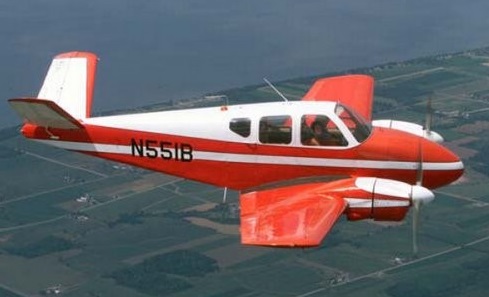
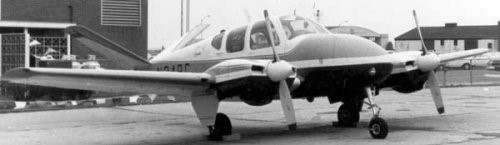
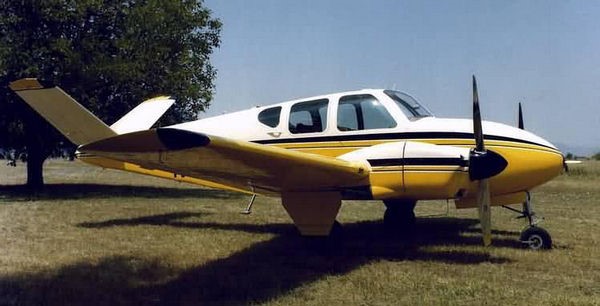
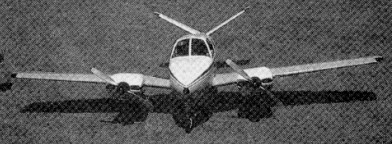
All of the twin V-tails are converted single-engine Bonanzas. A prototype flew in 1956 and was built by Mr. David G. Peterson and his Skyline, Inc. At the time, Peterson was chief pilot for Sinclair Oil Company in Tulsa, Okla¬homa.
To help sales, a Pan American World Airways pilot, ‘Chuck’ Banfe, flew a Super-V round the world, to and from Honolulu, between 15 and 24 October, 1960, covering some 21,000 miles (33,800 km) in 212 hours. This aircraft (originally c/n SV 101) was later rebuilt by Fleet as SV 116 and became the company’s demonstrator.
Rights then went to Oakland Airmotive (later renamed Bay Aviation) in 1959, who converted several Bonanzas renamed Oakland Super V. The modifications to twin engine were so extensive that the Super V was certificated as new aircraft by the FAA. Bay assigned construction numbers SV 110 and SV 111 but the aircraft were not built.
Bay sold tooling, engineering data and type certificate for the Super V to Fleet Aircraft, Inc., of Buffalo in 1961. Arrangements had been made in 1961 to move the basic conversion programme to Fort Erie, where work was started in January 1962. Several modifications and design improvements were made by Fleet, including new engine cowls for the Lycoming O-360-A1A engines which had replaced the A1B fuel-injection engines previously used; a nose-cone for a landing light; better soundproofing; an improved entry door; and a revised instrument panel. Canadian certification was also obtained. Five more were produced in 1962/1963.
Although the structural details of the original Super-V were generally similar to those of the Bonanza, the modifications were extensive enough to require recertification as a new aircraft. The wings and fuselage were similar, but greatly strengthened, and engine mountings had to be designed for the wing. A glass-fibre fairing covered the nose, where the additional capacity was used for baggage. The leading edges of each wing were sealed to provide integral tanks for 30 US gal (114 litres), giving a total fuel capacity of 100 US gal (378 litres).
The five new Super-Vs built by Fleet in Canada were: SV 112 (N249C), SV 113 (N551B), SV 114 (N4559V), SV 115 (N1T) and SV 117 (N457B). The respective c/ns of the Bonanzas used for these conversions were D-1243, 1569, 1388, 422 and 1474. SV 110 and 111 were not built, and two SV 102 and 103, had by the end of 1963 been destroyed.
The Super V was not a marketing success and some 14 were actually produced.

 All Aero