Formed 1941 at Coffeyville, Kansas, successor to Akron Aircraft Inc., to market Funk Bros. Model B two-seat monoplane. Production resumed after Second World War, aircraft redesignated B-85-C Bee, with Continental C-85 engine. Manufacturing rights acquired in 1962 by Thomas H. McLish of Sharon, Pennsylvania.
Post WW2
Fulton FA-2 Airphibian / FA-3 Airphibian / Continental Inc Airphibian / FA-2 / FA-3
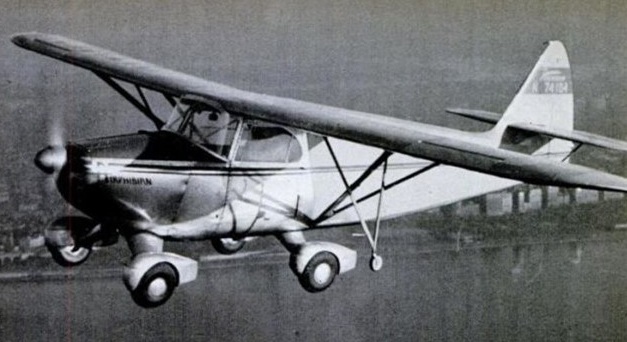
Robert Edison Fulton, an engineer of Danbury, Connecticut, in 1946 built a roadable aircraft which entered production, albeit only in very limited numbers, as the first fully licensed flying automobile in the United States.
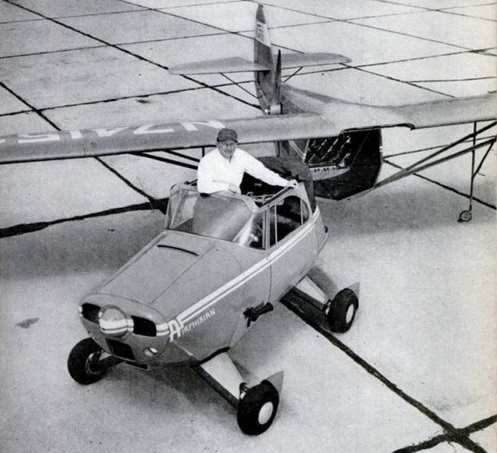
His Airphibian was a four wheeled, two seat, high wing monoplane with a removable airframe which could be rolled away on its own retractable wheels after disconnection, leaving an aluminium bodied soft top coupe car.
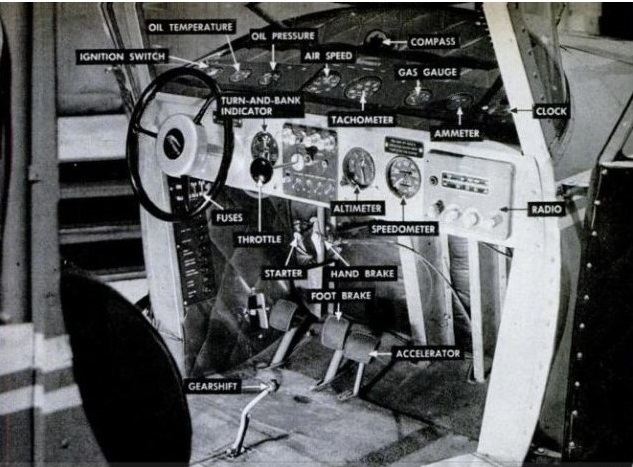
Fulton used a 165 hp Franklin aero-engine for air and road drive, with automatic hook up of all flying controls. The aircraft’s rudder pedals became brake and accelerator in the car, while landing lights doubled as headlamps. A safety device prevented the engine starting with the propeller installed unless all flying controls were connected and locked.
The airphibian was used extensively on business and pleasure trips.
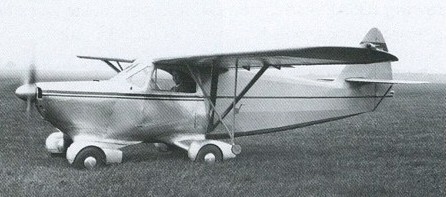
The prototype Airphibian flew on November 7,1946, and was certificated in December 1950 as the Fulton Model FA-2 Airphibian. A production model, designated FA-3, appeared in 1954.
Life magazine published a photo story of a flying visit to the theatre by the Fultons, who flew 100 km (62 miles) from their Connecticut home to New York’s La Guardia Airport at 180 kph (110 mph), unhitched the aircraft portion and drove across town to Broadway, all in less than an hour. A fabric top was buttoned from the windscreen for driving in bad weather.
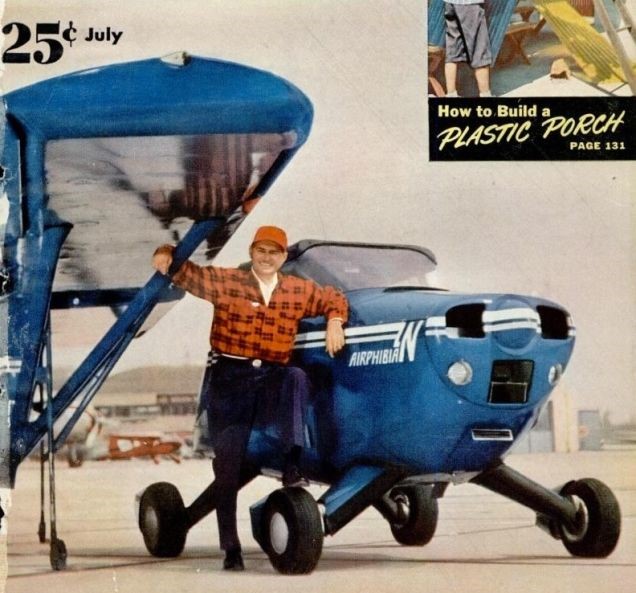
So successful was the Airphibian that Fulton announced in 1949 that he would build production versions for sale at $7000 to $9000 each. ‘It flew fine,’ a test pilot reported during the Airphibian’s certification trials, ‘and it drove well, too, but it just didn’t perform in the air because of all that weight and drag.’ By 1950 the first three Airphibians had been driven over 322,000 km (200,000 miles) and made more than 6000 car/plane transformations. In all eight were built before Robert Fulton sold the rights to the design to private investors who never pursued it.

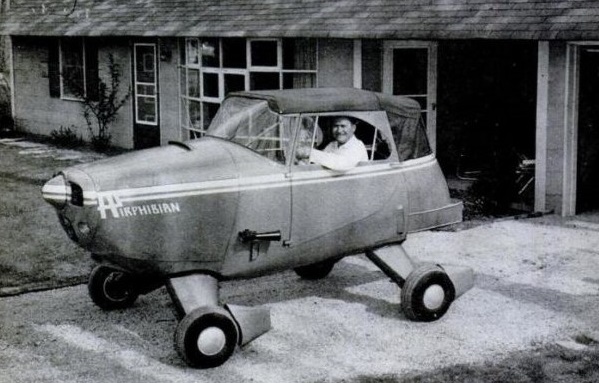
The Fulton FA-3 Airphibian two-place, powered by a 160 hp Franklin engine featured improvements including cantilever wings and outrigger wheels, which support the wings when detached, which retract. They were fixed in previous types.

Fulmar
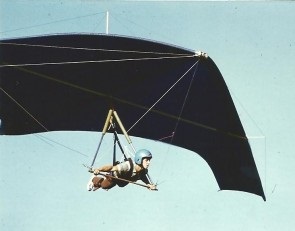
Fulmar was one of the first manufacturers in Europe to motorise a hang glider, their Fulmar I, of 183 sq.ft (17.0 sq.m) area, using a Soarmaster American supplied engine, as the Fulmar 1B.
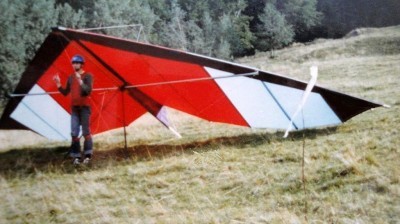
Fulmar 1B
Engine: Soarmaster.
Wing area: 183 sq.ft (17.0 sq.m).
Fulmar Ultralight Diffusion / Delta Fulmar
Fulmar first saw the light of day in 1978 and was one of the first manufacturers in Europe to motorise a hang glider, their Fulmar I, of 183 sq.ft (17.0 sq.m) area, using a Soarmaster American supplied engine. The company was incorpo¬rated into SPRL in July 1981, at which time Fulmar Ultralight Diffusion not only made single seater and two seater trikes using Robin 244, 333 and 432cc engines under wings of their own design and manufacture, but also built Weedhoppers on behalf of the European dealer Media Systems. 50 machines were built in this way.
1983: Fulmar Ultralight Diffusion, rue des Palais 285A, B 1000 Bruxelles, Belgium; tel (02) 216.79.30. Designer: Pierangelo Mezzapesa.
Fuji FA-300 / Rockwell Commander 700
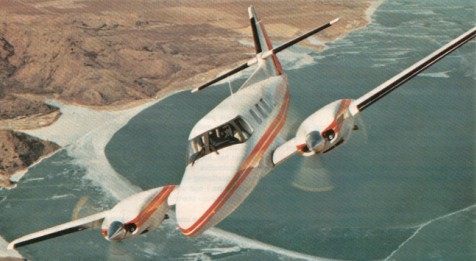
Fuji heavy industries and Rockwell International joined forces to manufacture a seven passenger pressurized twin that will be called in the US the Rockwell Commander 700.
But in order to compete directly in the American marketplace, Fuji needed a dealership organization that could both sell and service the airplane.
Rockwell’s problem was their Aero Commander basic design of 30 years had run out of growth potential.
The resulting agreement: Fuji builds the airframe, wings and tail assembly in Japan, then ships them to Rockwell’s Oklahoma plant, where they are assembled and fitted with engines, landing gear, interiors and other American-made components, which make up approximately 80 percent of the complete airplane. The design is certificated in both countries; Fuji will market the airplane in Australia and Asia, while Rockwell, through its dealer network, will sell the Commander 700 in America and Europe.
The first of five flying prototypes of the Fuji FA 300/Rockwell Commander 700 made its maiden flight at Utsonomiya on 13 November 1975 and the first flight in the U.S. was in late February 1976.
Three air¬planes were involved in U.S. certification, and two in a companion pro¬gram in Japan. The Rockwell Commander 700 was certified by Japan in 1975. It features two 340 hp turbocharged Lycomings. First deliveries of the 700 were scheduled for February 1977.
The 700 is a pressurized piston twin powered by two Lycoming TIO 540s that put out 340 horsepower at 2,500 rpm and have a TBO of 1,800 hours; they’re geared and turbocharged and are much the same engines Piper uses in the Navajo Chieftain. Their cooling is updraft, with air exiting out the upper rear of each nacelle through a single mo¬tor driven cowl flap that opens inward. Each wing carries 624 pounds of fuel in a single tank that supplies gas directly to its respective engine. The remainder of the fuel system is comprised of two shutoff valves, a single cross flow valve for emergency situations and two boost pumps. Pressurization was 5.5 psi, for a 5,000 foot cabin at 20,000 feet. The cabin is large 360 cubic feet including 53 cubic feet for baggage in the pressurized area.
On the first flight, a cruising speed of about 200 knots was attained at 10,000 feet. Preliminary figures indicate a top speed of 240 knots at 20,000 feet. Total fuel capacity will be 190 gallons, for an en¬durance of about five hours.
The airframes will be fabricated in Japan and shipped to Rockwell’s Bethany, Oklahoma plant. Engines, systems, accessories, avionics and interiors will be installed there as the airplane is assembled. Eighty percent of the total aircraft will be of U.S. manufacture.
Development of the airplane started in the mid 1960s, with Rockwell entering the picture in the early 1970s. The specifications were refined, discussed and negotiated, and an agreement as to the final design for the 700 was reached in June 1974.
The airfoil section was designed by Fuji and combines with an efficient flap system to produce a relatively low stalling speed in spite of a relatively high wing loading. The 700 has 200 square feet of wing area and the projected gross weight is 6,800 pounds.
An extensive wind tunnel program was conducted on the design. Engine cooling drag has been minimized, and extensive use of metal bonding has resulted in smooth surfaces.
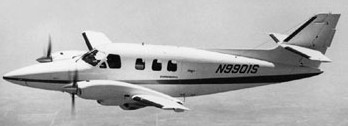
Rockwell and Fuji Jet Industries terminated their agreement on the Commander 700 in December 1979.
Aerostar Aircraft Corp acquired the design and production rights to Aero Commander.
Rockwell Commander 700
Engines: Lycoming TIO 540 R2AD, 340 hp at sea level.
TBO: 1,800 hrs.
Props: three blade, constant speed, 81 in diameter.
Length: 38 ft. 2 in.
Height: 13 ft. 4 in.
Wingspan: 42 ft. 5in.
Wing area: 200 sq.ft.
Wing loading: 33.8 lb/sq.ft.
Power loading: 9.9 lb/hp.
Seats: 6.
Empty weight: 4,740 lbs.
Useful load: 2,010 lbs.
Payload with full fuel: 762 lbs.
Gross weight: 6,750 lbs.
Usable fuel capacity: 208 USG/1,248 lbs.
Maximum landing weight: 6,600 lbs.
Maximum rate of climb: 1,633 fpm.
Single engine rate of climb: 273 fpm.
Single engine climb gradient at 101 kts. (Vyse): 256 ft/nm.
Service ceiling: 32,000 ft.
Certificated ceiling: 25,000 ft.
Single engine service ceiling: 12,000 ft.
Maximum speed: 221 kts.
Max cruise, 75 % power at 24,000 ft: 218 kts.
Econ cruise, 65 % power at 16,000 ft: 190 kts.
Duration at max cruise: 5.9 hrs.
Duration at econ cruise: 6.8 hrs.
Stalling speed, clean: 85 kts.
Stalling speed, full flaps: 67 kts.
Pressurization differential: 5.5 psi.
10,000 ft. cabin at: 26,000 ft.
Max SL cabin alt: 12,500 feet.
Aerostar 700
Engines: two 350hp Lycoming TI0-540-U2A
Wingspan: 36’8″
Length: 34’10”
Useful load: 1715 lb
Max speed: 328 mph
Cruise: 282 mph
Stall: 84 mph
Range: 1151 mi
Ceiling: 30,000′.
Seats: 4-6
Aerostar Super 700
Engines: 2 x modified Lycoming I0-540-SIA5
Seats: 4-6
Fuji LM-1 Nikko
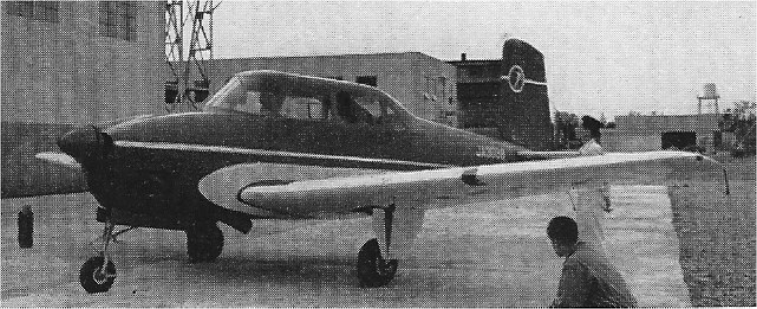
The Fuji LM-1 Nikko is a four-seat liaison aircraft adapted from the design of the Beech T-34 Mentor which was built under licence by Fuji for the Japanese Self-Defense Force.
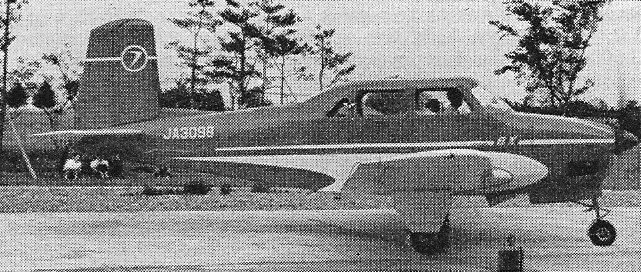
Flown for the first time on 6 June 1955, the LM-1 employs the wing, undercarriage and tail assembly of the Mentor, and a new centre fuselage.
Engine: 225 hp Continental O-470-13
Wing span: 32 ft 9.5 in
Wing area: 177.6 sq.ft
Length: 25 ft 11 in
Height: 9 ft 7 in
Empty weight: 2234 lb
Loaded weight: 3375 lb
Max speed: 185 mph
Cruise: 157 mph
Service ceiling: 17,399 ft
Fuji KM-2 / T-2 / T-5
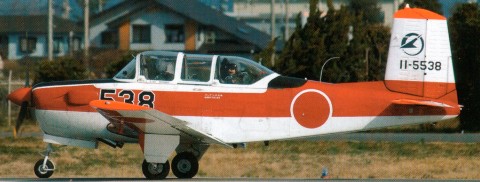
The original LM/KM series aircraft were four-seat developments of the Beech T-34A Mentor, the first flying in 1955, and large numbers were delivered to the JMSDF and JGSDF for liaison and training. A tandem two-seat derivative of the Beech T-34 with a Lycoming IGSO-480-AIA6 piston engine entered production in the mid¬1970s as the KM-2B for the JMSDF, and later as the T-3 for the JASDF. Fuji in Japan flew the prototype (JA3725) of the KM-2B two-seat primary trainer on 26 September 1974; this development of the earlier KM-2 combined the airframe and powerplant of that aircraft with the tandem-seat cockpit arrangement of the Beech T-34A Mentor.
Ten KM-2 were ordered for the JMSDF, for delivery by February 1963. Further contracts were to follow, to replace the 45 North American SNJs (Harvards) then in naval service. The prototype KM-2 received its certificate of airworthiness February 1961.

Fuji has tested a company owned four-seat KM-2 utility aircraft with an Allison 250-B17 turboprop, under the designation KM-2D.
The first KM-2D, flown on 28 June 1984, was a straight conversion of a company-owned piston KM-2 retaining the original four-seat cabin structure.
The JMSDF considered re-engining its fleet of tandem-seat KM-2B trainers, but has now elected to purchase new-build KM¬2Kais, with the first funded in 1986/87. These will be turboprop powered, and will retain the tandem seating of the KM-2B. Deliveries are scheduled for 1988, to begin replacement of the oldest KM-2Bs.
The Japanese Maritime Self-Defence Force took delivery of the definitive turbo-prop powered KM-2D prototype (first flown on 27 April 1988) in August 1988 which was to be tested by the service until March 1989. This prototype, a conversion of a MSDF KM-2B, embodied extensive cabin redesign.
KM 2
Engine: Lycoming IGSO-480 A1A6, 340 hp.
Max speed: 227 mph (365 kph) at 16,400ft (5000 m)
Cruise, 183 mph (295 kph)
Initial climb, 1,560 fpm (7.92 m/sec)
Service ceiling, 29,200ft (8900 m)
Range, 765 mls (1235 km).
Empty weight, 2387 lb (1083 kg)
Loaded weight, 3,296 lb (1495 kg).
Span, 32 ft 9.75 in (10 m)
Length, 26 ft 0.75 in (7.95 m)
Wing area, 177.6 sq.ft (16.49 sq.m).
KM-2B
Engine: Lycoming IGSO-480.
T-3
Engine: Lycoming IGSO-480
T-5
Engine: Allison 250B-17D.
Fuji T-1 Hatsitaka
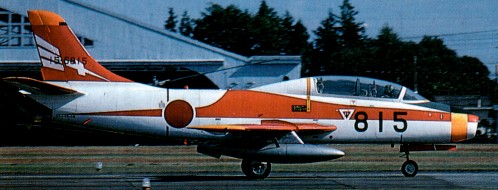
First post-war jet aircraft of Japanese design, the prototype T1F2 flew for the first time on January 19, 1958, powered by a 4,000 lb thrust Bristol Siddeley Orpheus 805 turbo-jet. Two production batches of 20 of this version were built as standard two-seat intermediate jet trainers for the Japanese Air Self-Defence Force, under the designation T1A.
They were followed by the all-Japanese T1F1 (JASDF designation TIB) with a 2,645 lb thrust J3 IHI 3 turbojet produced by Ishikawajima-Harima. The prototype of this version flew on May 17, 1960, and 20 production models were ordered by the JASDF for delivery between August 1962 and March 1963.

T1A / T1F2
Engine: 1 x 4,000 lbs.t. (1814 kgp) Bristol Siddeley Orpheus 80506.
Span: 34 ft 5.5 in (10.5 m)
Length: 39 ft 9.25 in (12.12 m)
Wing area: 239 sq.ft (22.22 sq.m)
Height: 13ft 3in
Empty weight: 5,335 lb (2 420 kg)
Loaded weight: 9,150 lb (4 238 kg)
Gross weight: 10,6701b
Max speed: 576 mph (921 kph) at 20,000ft (6100 m)
Cruise: 397 mph (640 kph)
Initial climb: 3,460 fpm (17.3 m/sec)
Ceiling: 52,490 ft (16000 m)
Range: 806 mls (1297 km).
Max rate of climb at SL: 6,100 ft/min
T1B / T1F1
Engine: 1 x 2,645 lbs.t. (1200 kgp) J3 IHI 3.
Fuji Jukogyo Kabushaikikaisha
1961:
So 18,
2-chrome,
Marunouchi,
Chiyoda-ku,
Tokyo
Successor to Nakajima Aircraft Company, established 15 July 1953 with factory at Utsunomiya City. Built Cessna L-19E Bird Dog observation aircraft under license. Concluded agreement with Beech in November 1953 to manufacture Beech B45 Mentor trainers; total of 124 built, deliveries commencing August 1954. From Mentor Fuji developed LM-1 Nikko four-seat liaison aircraft, first flown June 1955. Similar two-seat KM-2 developed. KM-2B with widened fuselage and tandem seating for two selected as JASDF primary trainer in August 1975. Fuji assembled or built more than 120 Bell 204B/B2 helicopters from 1962.
Fuji T-1 two-seat jet trainer was first postwar Japanese jet aircraft. Forty T-1 As built with Bristol Orpheus engines, and 20 T-1 Bs with Japanese engines. FA-200 Aero Subaru four-seat light aircraft first flown August 31,1965 (nearly 300 built). Work on FA-300 twin-engined light transport began 1971, continued as joint venture with Rockwell International, U.S.A., following agreement signed June 28,1974, as Rockwell Commander 700; prototype first flown in Japan on November 13,1974 and 30 delivered before cooperation ended in 1980 (also development of the higher-powered FA-300/Commander 710 then ended). Current programs include production of the T-5 primary/basic trainer for the JMSDF (as turboprop development of the KM-2, with KM-2Kai prototype flying in April 1988) AH-1S attack helicopter, 205B/UH-1J general purpose helicopters (205Bs from 1995, military UH-1s from 1993), participation in the Mitsubishi F-2 program, subcontract work on the Mitsubishi F-15J and Kawasaki P-3C and T-4, manufacture of assemblies for a range of Boeing airliners, production of UAVs, and participation in space programs.
Frontline Helicopter Corp
Frontline Helicopter was acquired by Glenview Metal Products circa 1950.
 All Aero