Thirty of these tandem two-seat primary training gliders have been built by 1961, since August 1953, when the prototype made its first flight. Construction is conventional, with a fabric-covered steel-tube fuselage nacelle and fabric-covered two-spar braced wooden wing.
Horikaw A H-22B-3 Span: 40 ft l in Length: 23 ft Wing area: 181 sq.ft Gross weight: 661 lb Empty weight: 375 lb Max L/D: 14.2 at 41,5 mph Min sink: 3.8 ft/sec at 34 mph
Mr. Hisao Hagiwara of Tokyo formed the Jiyu Koku Kenkyusho (Liberty Aeronautical Research Institute) in 1952 in order to develop a helicopter with a jet-driven main rotor.
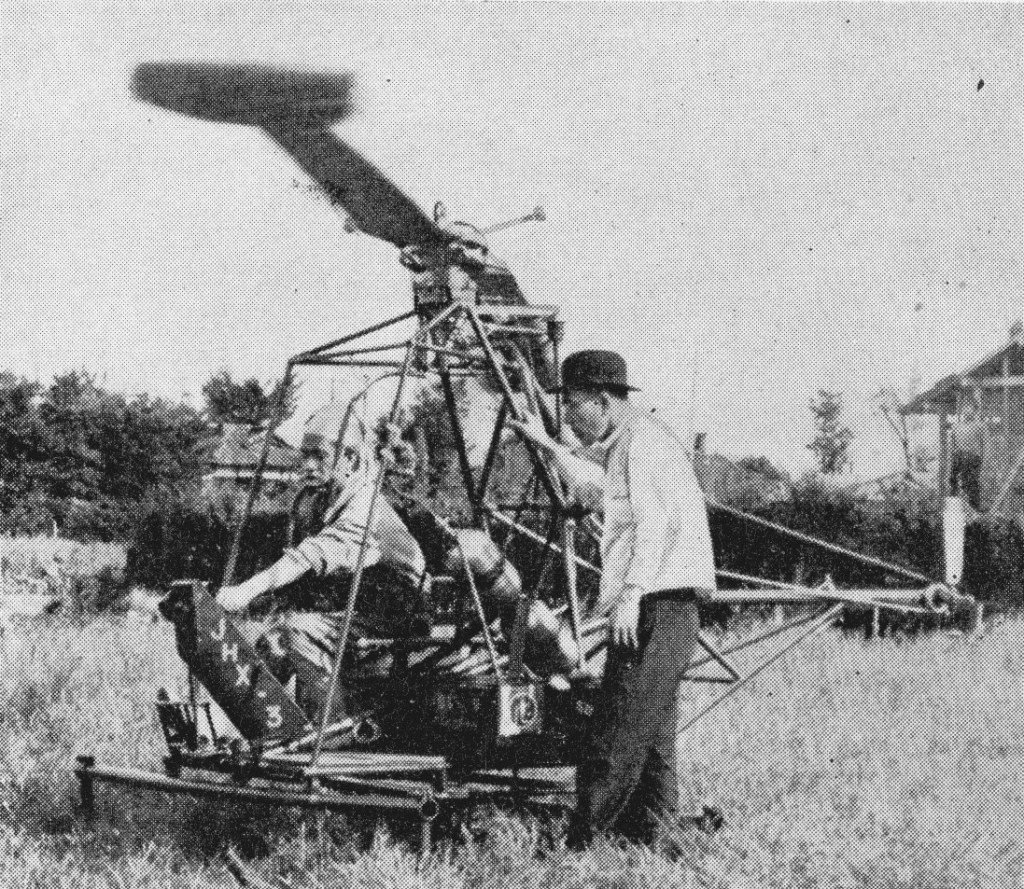
The JKK completed the design and construction of its first prototype in August, 1952. It was a light single-seat aircraft with a two-blade rotor of 7.3m diameter. Troubles with the transmission system and jet-nozzles led to its abandonment before the end of the year. No greater success was achieved with the original 100mm pulse-jet engine, designed by Mr. Takeo Kimura to power the helicopter, because it proved difficult to ignite and its noise level was unacceptable. Subsequent prototypes have had ramjet engines. Two of these prototypes, designated the JHX-2 and JHX-3, were completed in March and September, 1955 respectively. Two years later the JKK was disbanded, but Mr. Hagiwara has continued his work with technical assistance from the Civil Aeronautics Agency and the Tokyo Metropolitan Aeronautical Engineering School. The first result of this collaboration is the JHX-4 helicopter.
JHX-3
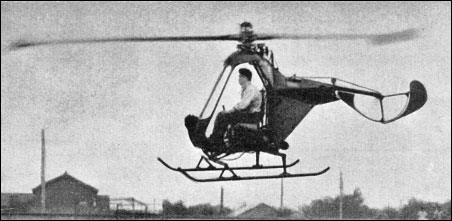
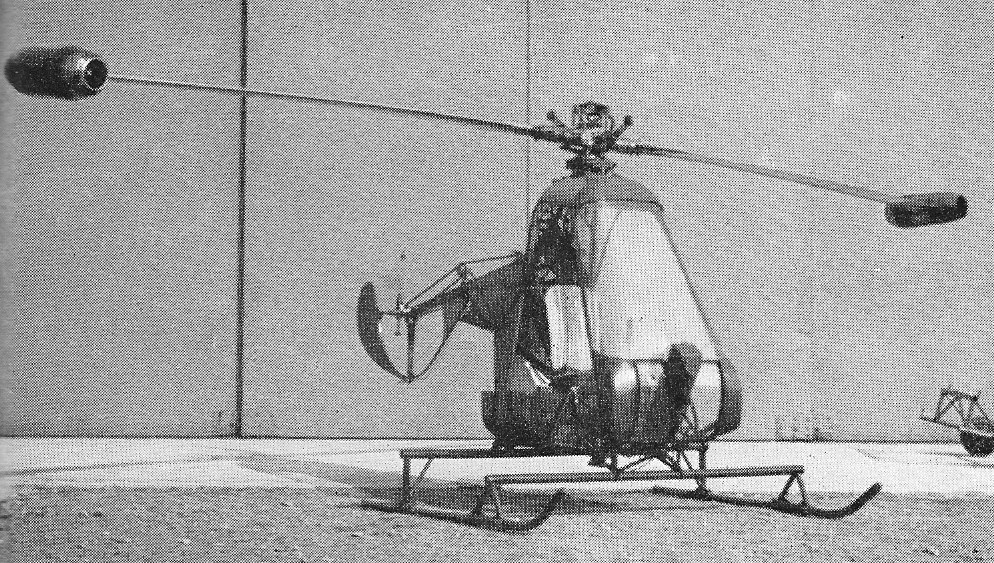
First flown in late September, 1958, the JHX-4 is a single-seat light helicopter with a two-blade main rotor which is driven by tip-mounted ramjet engines.
JHX-4
The rotor turns at 600 rpm. The JHX-4 has an endurance of 30 minutes.
Hagiwara JHX-4 Power: 2 x Hagiwara ramjet, 44 lb thrust Rotor diameter: 7.3m / 23 ft 9 in Height: 2.2m / 7 ft 2 in Length: 3.8m / 12 ft 5 in Empty weight: 396 lb Crew: 1
Mr. Hisao Hagiwara of Tokyo formed the Jiyu Koku Kenkyusho (Liberty Aeronautical Research Institute) in 1952 in order to develop a helicopter with a jet-driven main rotor.
UK Formed in 1969 to develop gyroplanes designed by Ernest Brooks, who was killed when his ultralight Mosquito gyroplane crashed. Gyroflight produced a small number of Hornet single-seat gyroplanes and gyrogliders in the early 1970s.
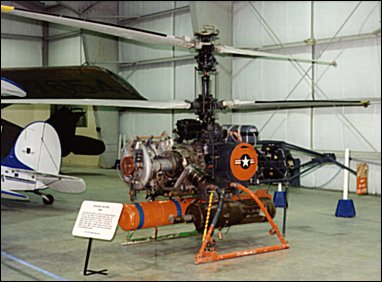
In 1956, Gyrodyne XRON-1 experiments led to development of the QH-50 unmanned drone versions of the XRON-1 and Gyrodyne delivered over 60 production QH-50Cs for operation from Naval frigates.
QH-50C Engine: 1 x T50-BO8A turboshaft, 243kW Rotor diameter: 6m Take-off weight: 1036kg Empty weight: 524kg Max speed: 148km/h Ceiling: 5000m Range: 132km Armament: 2 x Mk-44 torpedos or 1 x Mk-46 torpedo
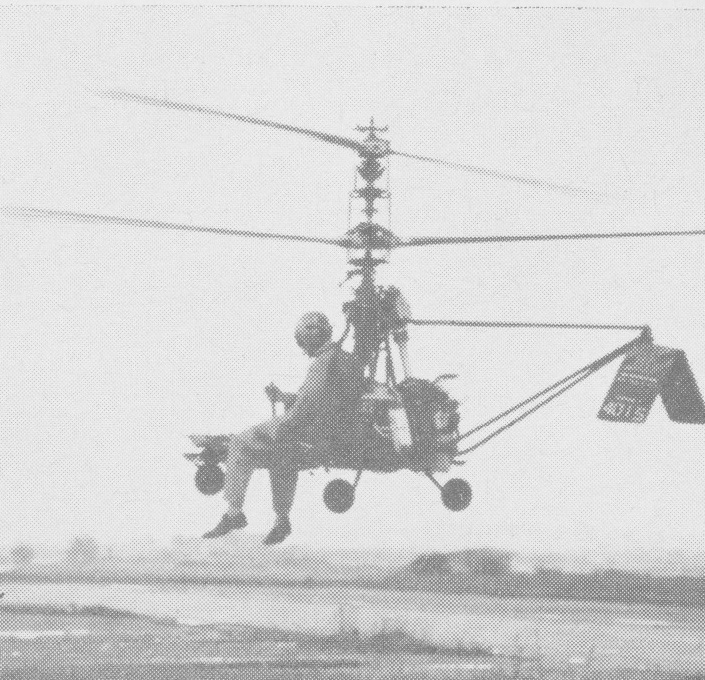
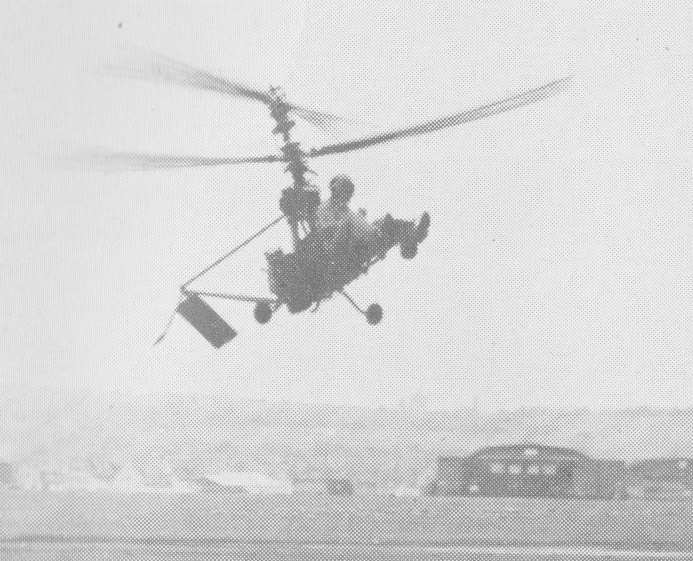
In 1956, Gyrodyne entered the competition to produce a single seat “personal” helicopter for operation off destroyer heli-decks for fleet observation, and for battlefield support, and built ten examples of the XRON-1 for the U.S. Navy. These also had a coaxial rotor layout and a 40hp Nelson H.59 engine – later replaced by a 60hp Porsche. This experiment led to development of the QH-50 unmanned drone versions and Gyrodyne delivered over 60 production QH-50Cs.
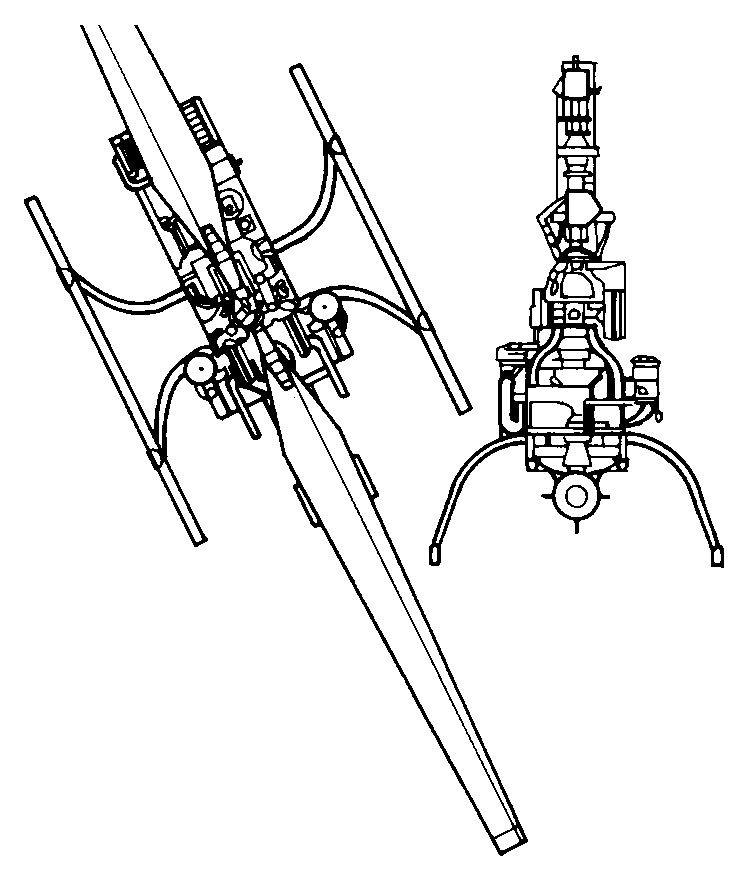
The inverted V-tail assembly is for stability only. All control is achieved through the overhead rotors. A feature is tip brakes mounted on the ends of the rotor blades which provide smooth directional control.

 All Aero