Soaring plane, Germany, 1962
Post WW2
Holleville RH-1 Bambi
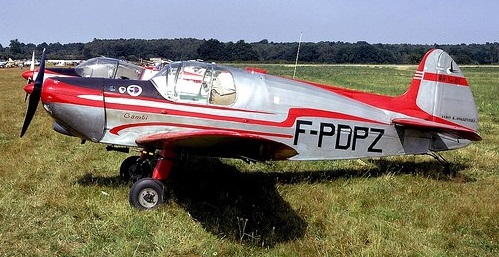
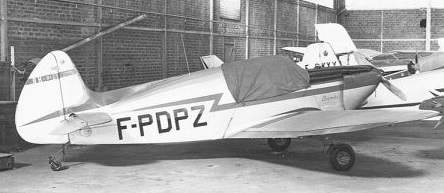
The French-built Holleville RH.1 Bambi was designed and built by Monsieur Roger Holleville and flown for the first time on July 27, 1953. It is a side-by-side two-seat aircraft and was unusual at the time to be among self-build types to make extensive use of synthetic resins and sandwich construction. It was originally intended to make construction plans available to clubs and groups, however, the design was sophisticated and plans to market kits were abandoned.
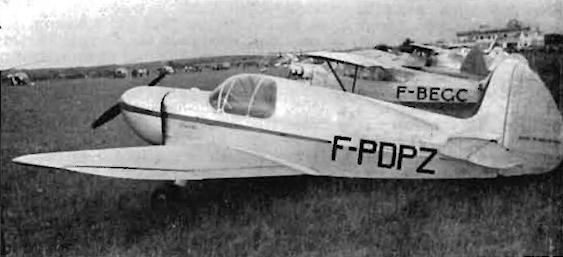
The Bambi is basically of wooden construction and the exceptional cleanliness of the overall design results in an outstanding performance on a 65 h.p. engine.
The aircraft has a low-wing layout and a fixed tail-wheel undercarriage.
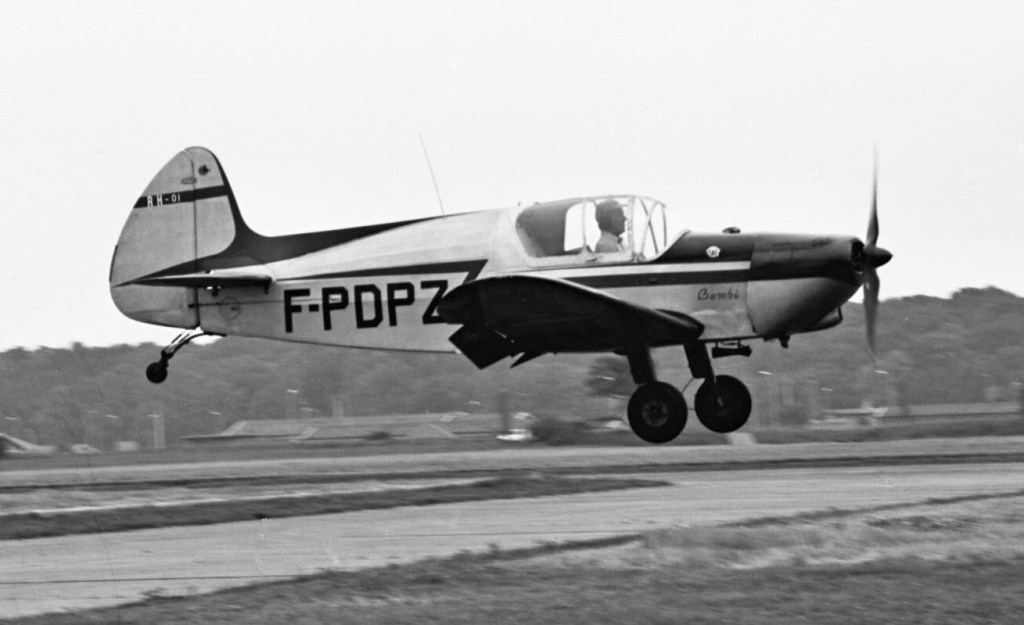
The Bambi was initially operated by its designer from Guyancourt airfield to the west of Paris. By 1964 it was owned by Monsieur Gerard Chaplain and based at St Dizier.
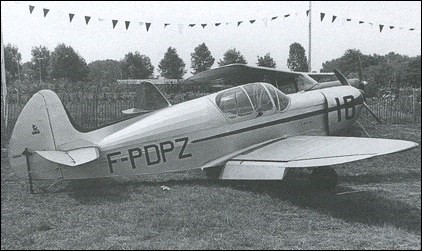
It has visited the United Kingdom to attend light aircraft rallies including at Biggin Hill airport in Kent in 1967. The sole Bambi received a 90 hp Continental C90-8F engine in the early-1980s. In October 2001 the aircraft was donated to the GPPA (Groupement pour la Préservation du Patrimoine Aéronautique) which is operating the Musée Régional de l’Air at Angers Loire Aéroport, Marcé near Angers, France. The Bambi is preserved in airworthy condition in the Musee Regional de l’Air at Angers Aerodrome, 20 km north east of the town.
Engine: 1 × Continental A65, 48 kW (65 hp)
Wingspan: 8.38 m (27 ft 6 in)
Wing area: 9.9 sq.m (107 sq ft)
Length: 6.71 m (22 ft 0 in)
Height: 2.24 m (7 ft 4 in)
Empty weight: 289 kg (637 lb)
Gross weight: 499 kg (1,100 lb)
Maximum speed: 200 km/h; 108 kn (124 mph)
Cruise speed: 169 km/h; 91 kn (105 mph)
Endurance: 4.5 hours
Service ceiling: 4,500 m (14,700 ft)
Rate of climb: 5.5 m/s (1,080 ft/min)
Crew: 1
Capacity: 1 passenger
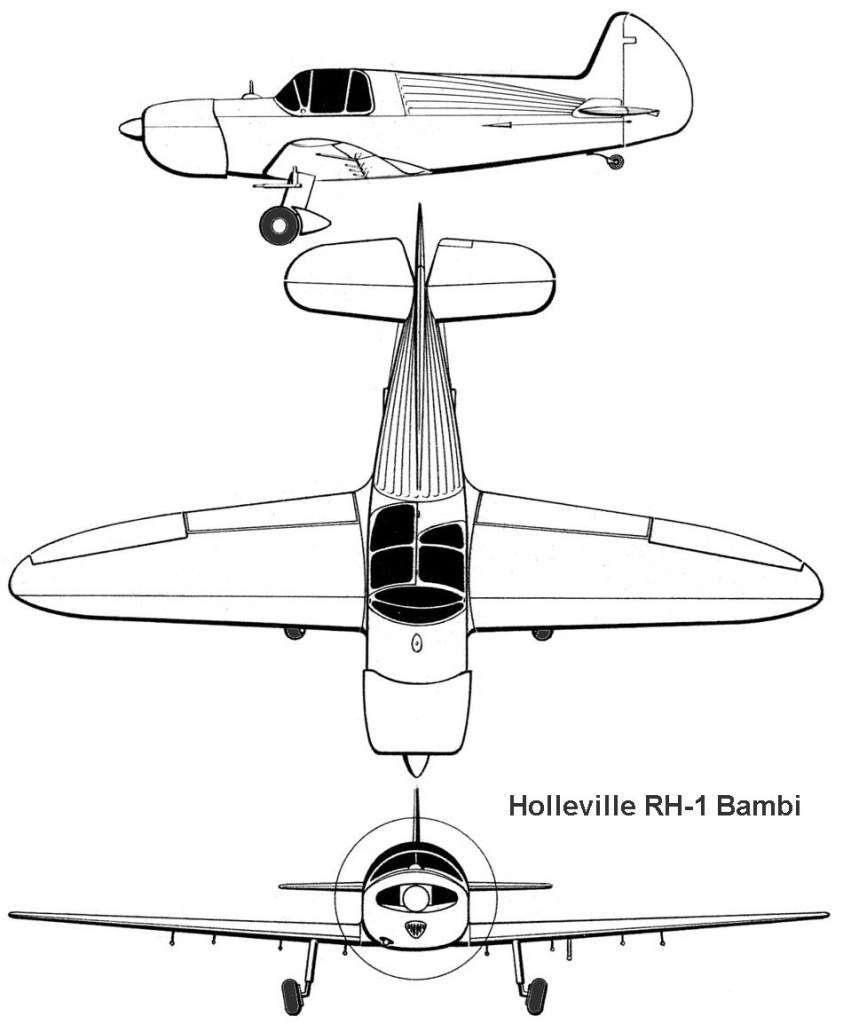
Hollandair HA-001 Libel
One example only of the Hollandair HA-001 Libel (Dragonfly) single-seat agricultural aircraft was built in 1957.
Hollandair TB
Netherlands
Formed as an aeronautical trading concern in 1956 specialising in the overhaul of aircraft and engines. One example only of the Hollandair HA-001 Libel (Dragonfly) single-seat agricultural aircraft was built in 1957.
Hoffman X-3 The Girlfriend
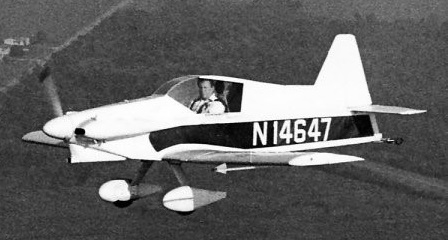
The Hoffman X-3 “The Girl Friend” N14647 c/n 1 was the second land plane of Mr. Edward C. Hoffman and first flew late-1974. At that time, it was fitted with a 75hp Continental A65 engine. The A75 was later replaced by a 85hp C85 for an improved overall performance.
Hoffman X-2
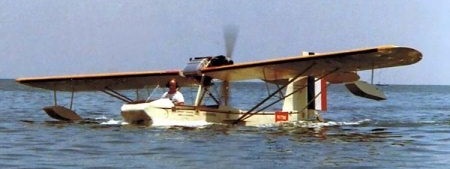
The X-2 designation was used for two light flying boats designed by Edward C. Hoffman. The first X-2 (registered N9159R and first flown 1962) was named Little Orphan Annie and was built by Hoffman. Engine was a 75 hp Continental A75 and in the construction the wings of a Taylorcraft BC-12D were used.
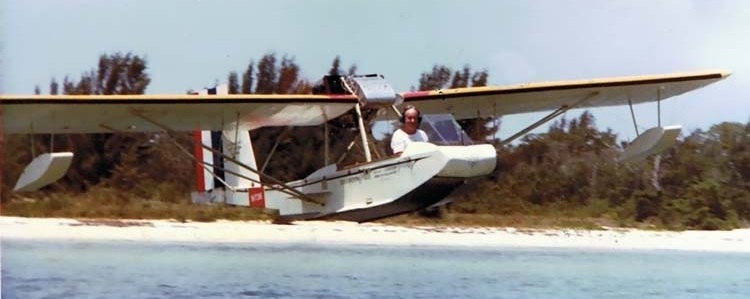
The second X-2 (N1736 and known as the PBY) was in 1964 completed by another amateur constructor and had a 108 hp Lycoming O-235 engine. Other changes were new built wings and a slightly taller vertical tail. The PBY was later also acquired by Hoffman, but it was lost in an accident.”
Hoffman X-1 Sweet Patootie
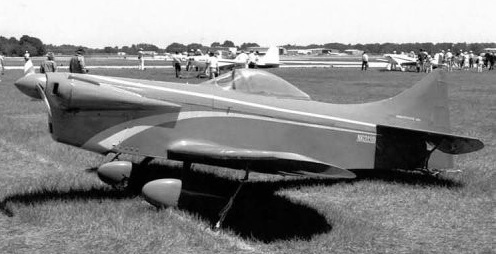
Built by Edward C. Hoffman, the X-1 Sweet Patootie was first flown on 24 February 1960 and initially fitted with a 65hp Continental A65 engine. The following year N6313D was re-engined with a 90hp Continental C90 and it also received some modifications such as a tear drop canopy.
Ed inherited his love for aviation from his father, Edward C. Hoffman II. Edward. In 1970 the original design, the Hoffman X-1, nicknamed Sweetpotootie, was flown to the Oshkosh fly-in.
Sweetpotootie was built in an open barn by Lake Tarpon that was tucked away by the orange groves. The airplane took one year and four days to build from beginning to first flight. The prop was built by well-known EAA member Ray Hegy. About 2007, Ed stopped flying Sweetpotootie due to an issue with fuel starvation and rough flight. When EAA reached out to him this March about bringing the airplane back for the 50th celebration, Ed realized that the plan he had to rebuild it after he retired would need to start early.
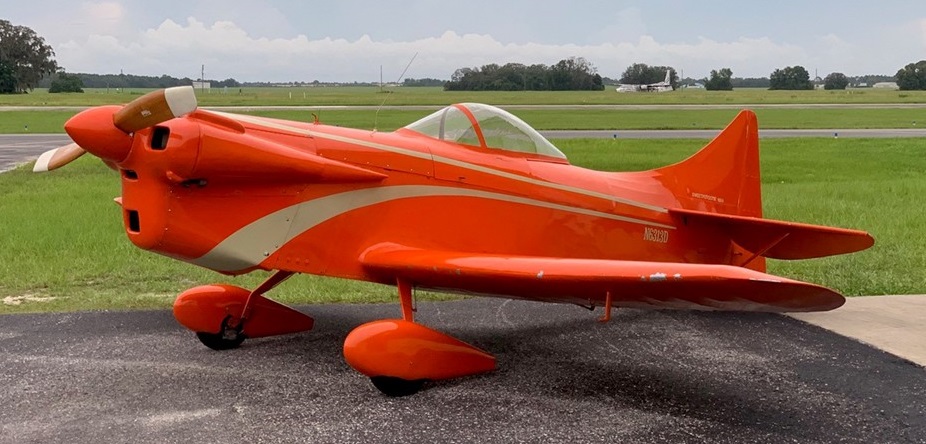
The restoration for Sweetpotootie started in March 2019, and on July 6, 2019, it was airborne once again. The all-wood airplane built with Weldwood glue needed a new carburetor, restored brakes, fresh spark plugs, and some cosmetic work. One thousand hours of restoration work has been put into the aircraft to make it flyable again. This uniquely designed airplane has a 90-hp Continental engine and is iconic in the southern United States.
With only a few months before the 50th consecutive fly-in, the priority of the restoration was making the airplane airworthy and less on cosmetic work.
“It looks like a 60-year-old plane. It has all the battle scars, but that makes it sentimental,” Ed said. He plans to find his father’s logbook from his first flight to Oshkosh and make the same trip. “I want to make the same fuel stops, same flight path. I want this flight to be a tribute to my father,” Ed said.
Hoffman, Edward C.
Mr. Edward C. Hoffman, during the 1960/1970s, produced several original homebuilt designs and his X-series included the X-1 and X-3 single-seat land planes. In addition, Mr. Hoffman built several flying boats (X-2, X-4 and X-5) and made maximum use of the Florida weather and available water areas.
Hodek HK-101
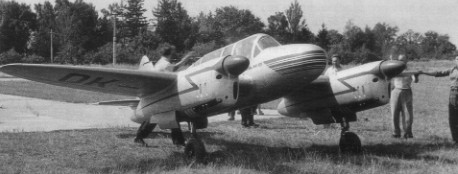
One of three new Czechoslovak prototypes unveiled at an international airshow held at Prague-Ruzyne airport on September 7, 1947, was the civil HK-101 light twin.
Engines: 2 x Walter Minor 4-III.
Hobson Rogallo
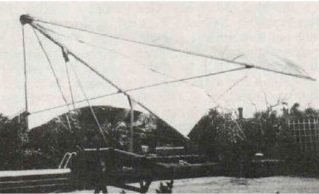
James Hobson of Tarzana, California, took only 11days to produce his Rogallo Wing Hang-Glider in 1962. It cost about $50.
Hobson was producer-director for the Welk TV show and it was used in a musical sequence.
James Hobson showed his 1962 Rogallo Wing Hang Glider at Dockweiler flying site, to editor of E.A.A. sports aviation magazine, and on the Lawrence Well Show for national and international audiences.
Wngspan: 20 ft
Length: 13 ft 2 in
Capacity: one person
 All Aero