Kaman HTK-1

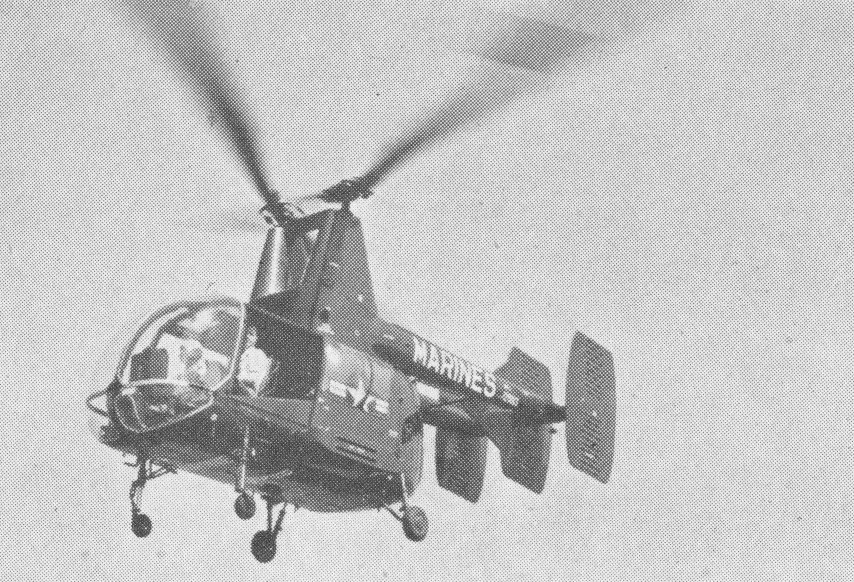
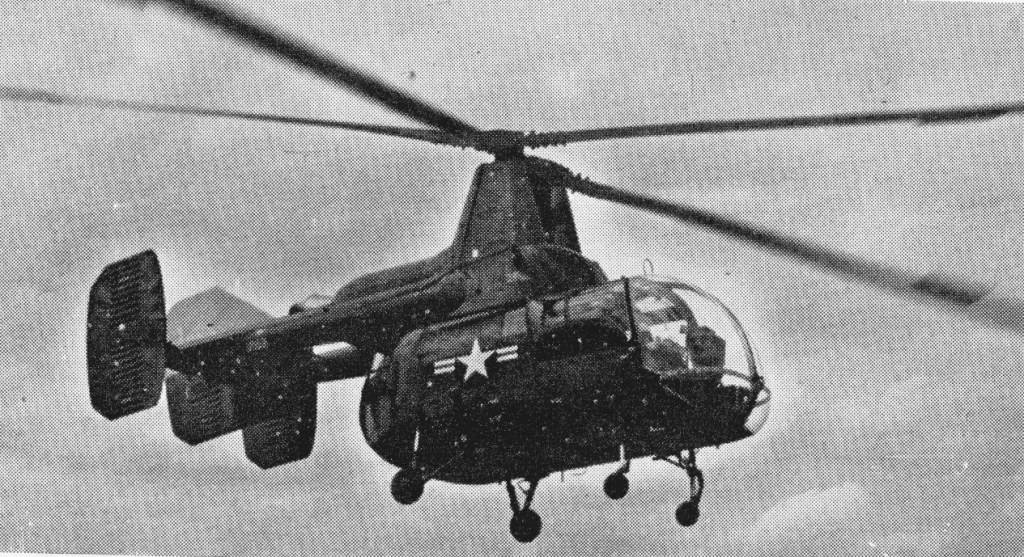
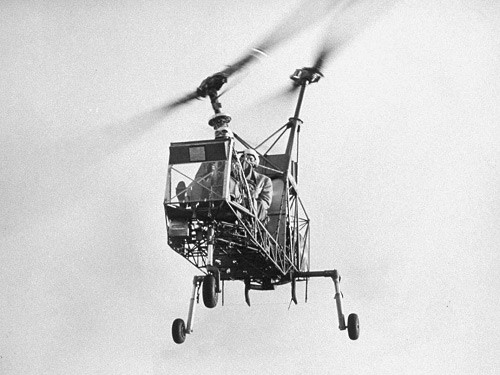
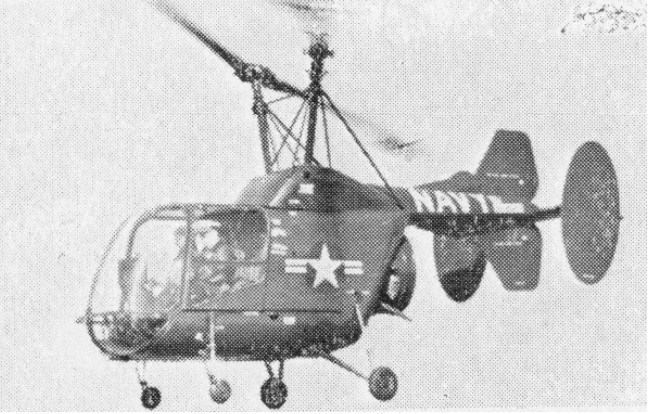
Ordered into production for the U.S. Navy at the same time as the HOK-1“off the drawing board “, the HTK-1 also uses the Kaman system of inter-meshing rotors, controlled through servo flaps.

The HTK-1 was delivered to the U.S. Navy as trainer/ambulance, and also adopted as remote-controlled drone. For ambulance work it can carry a stretcher and medical attendant in its cabin, and two casualties on Stokes litters externally, one on each side.

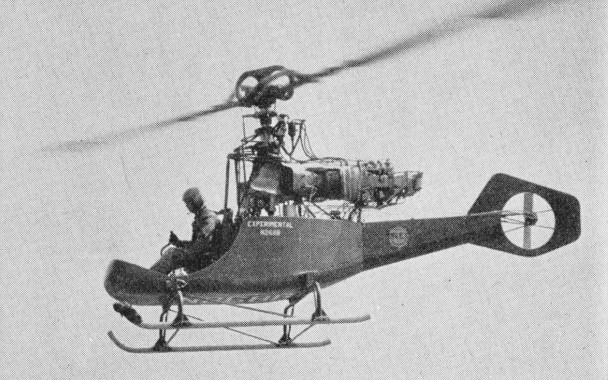
One HTK-1 has been fitted experimentally with two Boeing T50 gas turbines.
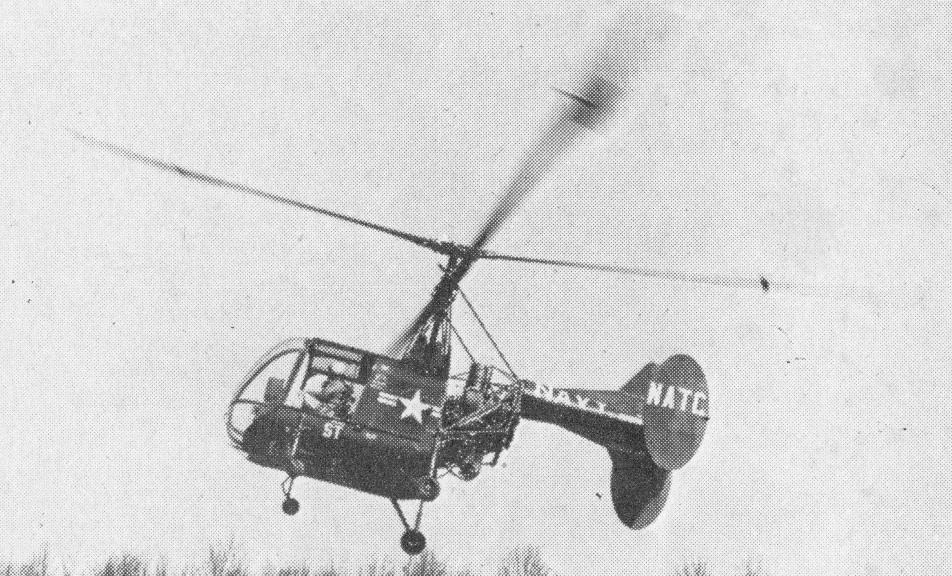
Boeing YT-50-BO-1 powered

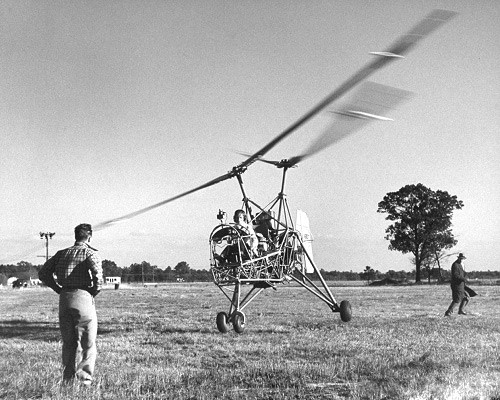
During 1958, Kaman completed a research project in which this HTK-1 was flown on electric power. The 240 hp Lycoming engine was replaced by an electric motor of equivalent power, connected to a ground power source by cable.
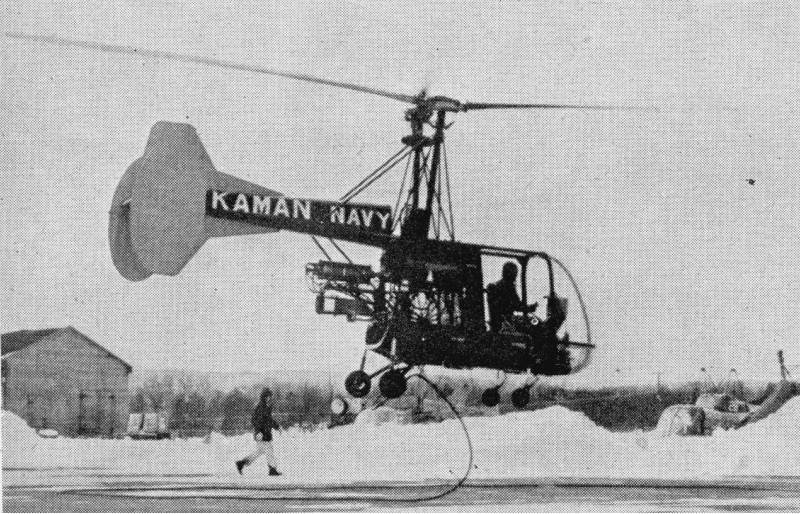
HTK-1 electric
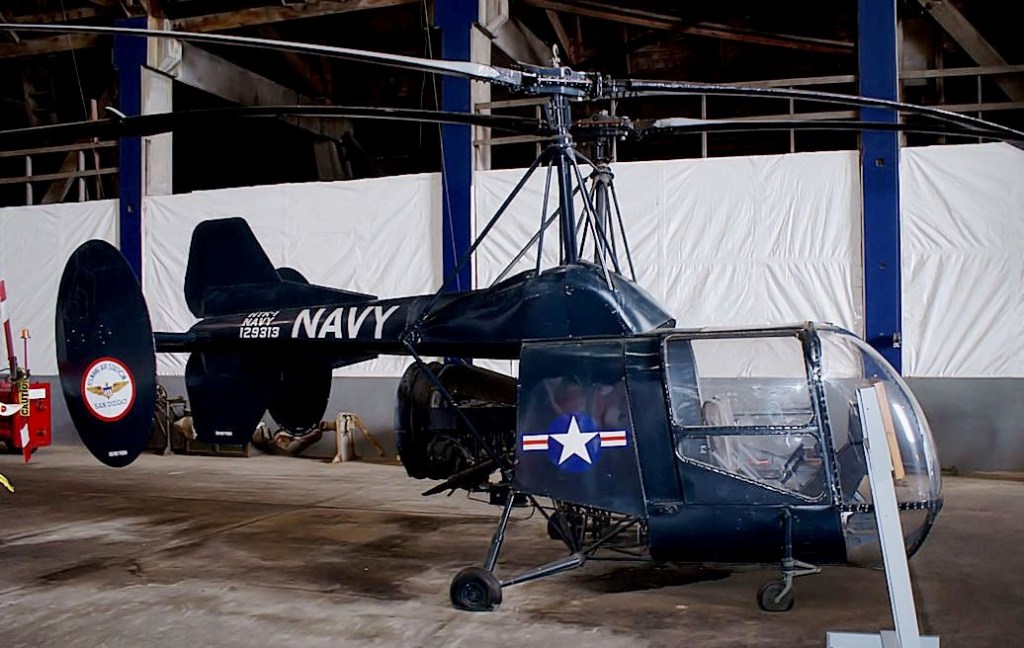
HTK-1 Huskie BuNo. 129313 C/N 422

Twenty-nine HTK-1s were built between 1951 and 1953. Powered by a 240 hp Lycoming O-435-4 piston engine, they served with the Navy at Pensacola until 1957.

HTK-1 Huskie BuNo. 129313 C/N 422

Engine: 235 h.p. Lycoming O-435-4
Rotor dia.: 40 ft
Fuselage length: 23 ft
Max Weight: 2,750 lb
Max. Speed: 75 mph
Ceiling: 10,000 ft
Typical range: 194 miles at 70 mph with full load
Seats: 3

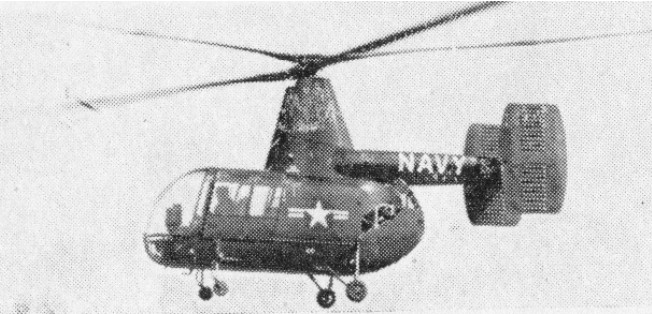
Kaman HOK-1

Following evaluation of the Kaman K-225, the US Navy chose the HOK-1 design as best of several submitted in competition for a liaison helicopter. Using the same rotor systems as the K-225, the HOK-1 was put into production off the drawing-board and delivered in quantity to the U.S. Navy and Marines during 1950s. It normally carries four people; but as an ambulance will accommodate two stretcher patients and one sitting patient or medical orderly, in addition to the pilot. Stretcher loading is through the nose, as on the HTK-1.

In service with the U.S. Navy in 1955 as a 4-seat liaison and casualty evacuation helicopter.

As part of a general development programme, several piston-engined helicopters, such as this Kaman HOK-1, were re-engined with gas turbines.

Engine: 800 hp Pratt & Whitney R1340-48
Rotor dia.: 46 ft.
Max Weight: 3,500 lb.
Seats: 4

Kaman K-225 / YH-22

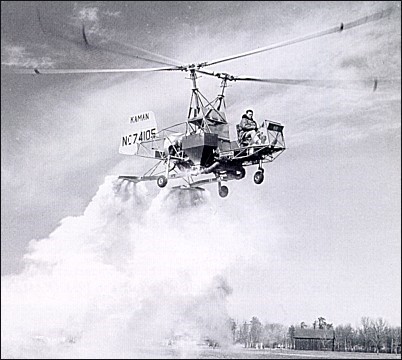
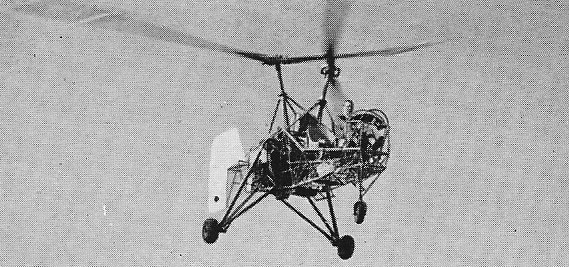
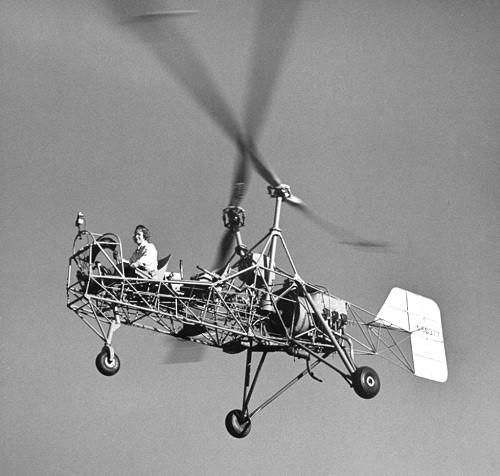
A progressive development of the K-125A and K-190 of 1947 and 1948, Kaman’s second helicopter, the K-225, first flew on 10 December 1951.Kaman put the K-225 into limited production in 1949 as the YH-22.

The K-225 is powered by a 225 hp Lycoming O-435.

Certified by the CAA, there were eleven K-225s produced and they were used in the crop-dusting role.

As a single-seat crop duster, the K-225 was supplied to the Turkish Department of Agriculture.

Testing by the U.S. Navy influenced the award of contracts for the HOK-1 and HTK-1 to the company.

Under U.S. Navy contract, Kaman fitted a 175-h.p. Boeing YT-50 gas-turbine engine to a K-225, and this was the first helicopter, with turbine-driven rotors, flying on 10 December 1951.

Engine: 225 hp Lycoming O-435
Rotor diameter: 38 ft
Fuselage length: 23 ft
Height: 11 ft 6 in
Empty weight: 1800 lb
Loaded weight: 2700 lb
Max speed: 73 mph
Cruise: 65 mph
ROC: 1000 fpm
Ceiling: 12,000 ft
Range: 194 mi at 65 mph
Seats: 3

Kaman K-16

K-16B

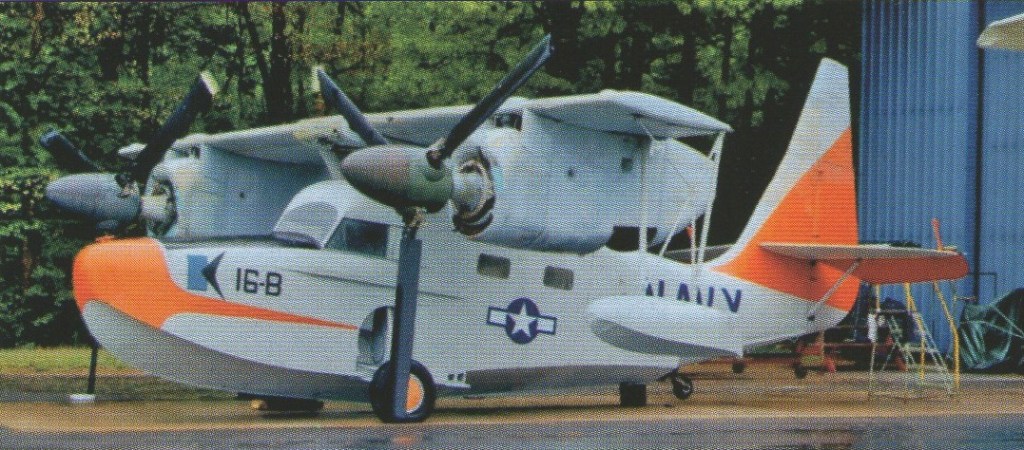
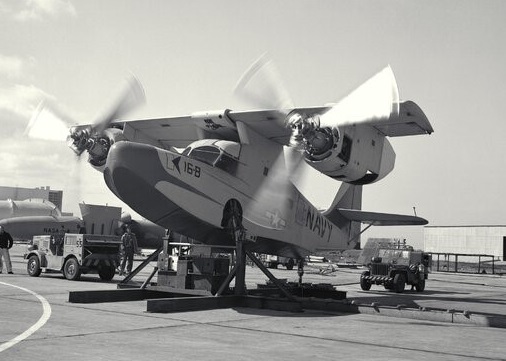
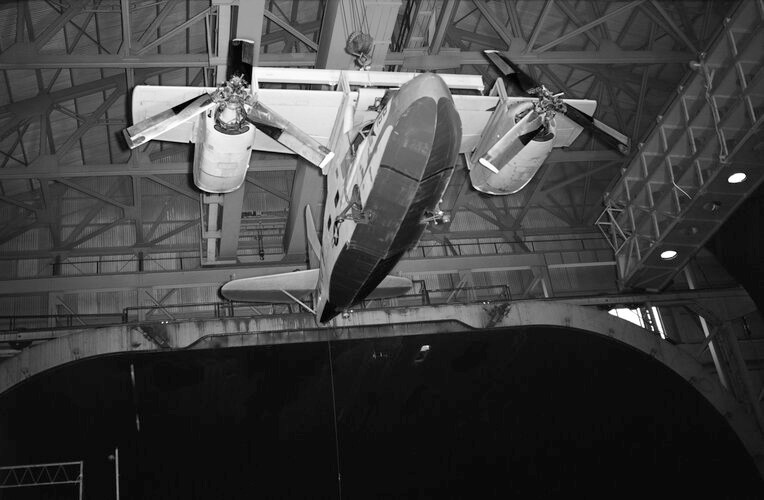
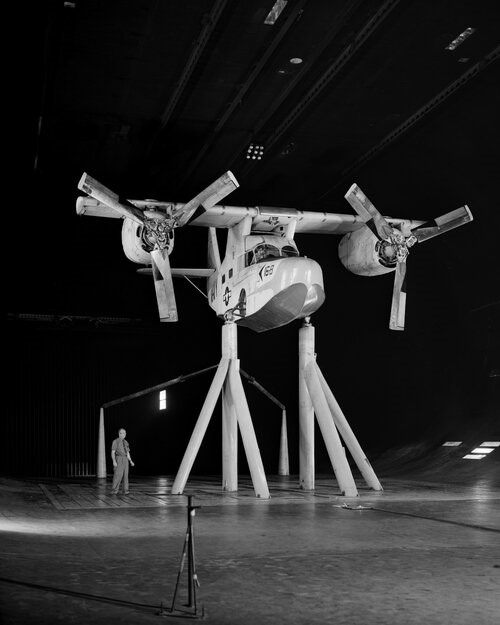
NASA Ames Research Center conducted wind tunnel tests on the K-16B.

The sole Kaman K-16B is resting in the New England Air Museum, Hartford, Connecticut.

Kaman K-16B tilt-wing STOL research aircraft

Engines: 2 x GE T-58-2A, 1024 hp
Wing span: 34 ft
Length: 38 ft 4 in
Height: 19 ft 3 in
Normal gross: 9295 lb
Design max speed SL: 211 kt
Deign max speed 15,000ft: 215 kt
Max ROC: 6000 fpm
Vertical climb: 400 fpm
Service ceiling: 36,000 ft
Hover ceiling: 2400 ft
Range w/1000lb fuel: 205 nm
Max range speed: 130 kt
TO to 50 ft 12,000 lb: 514 ft
Mean aerodynamic chord flap extended: 112.1 in
Prop Airfoil: NACA 16-500
Prop diameter: 14 ft 10 in
Prop blade chord: 18 in
Flapping hinge radius: 9.2%
Blade pitch range: 15-45 deg
Max wing tilt: 50 deg
Wing flap deflection: 60 deg
Rotor blade flap collective: 13 deg max
Rotor blade flap cyclic: +/- 25 deg

Kaman Aircraft Corp / Kaman Aerospace

Formed in 1945 by Charles H. Kaman as Kaman Aircraft Corporation to develop a special servo-flap control system for helicopter rotors and “synchropter” lntermeshing twin rotor system, with aim of eliminating anti-torque tail rotor. K-125A built in 1947; K-190 in 1948; K-225 built in small numbers as YH-22 from 1949. HOK-1 delivered in quantity to U.S. Navy and Marines during 1950s; HTK-1 to Navy as trainer/ambulance, and also adopted as remote-controlled drone. By late 1960s well over 200 H-43 Huskie turbine-powered rescue helicopters were serving with the USAF. H-2 Seasprite naval rescue and utility helicopter first flown July 1959, retaining servo-flap system, though on a conventional main rotor. Seasprite developed in many versions, early production models using a single turboshaft engine and later models with twin turboshafts; experiments included stub wings serving as sponsons and gunship version with Minigun chin turret among other weapons.
In the late 1960s much subcontracting undertaken, together with development of Rotorchute and allied devices. Became Kaman Group in 1965 with extended activities, with Aerospace subsidiary subsequently taking the present name Kaman Aerospace Corporation as part of Kaman Group. Current programs include producing upgraded SH-2Fs as SH-2G Super Seasprites for antisubmarine/ anti-shipping, over-the-horizon targeting, SAR, mine countermeasures, vertrep and other roles, for delivery to Royal Australian Navy, Royal New Zealand Navy, Egypt, and U.S. Navy Reserve; production of K-MAX “Aerial Truck” single-seat, turboshaft-powered and twin intermeshing rotor external-lift helicopter (first flown December 1991); and subcontract work on Boeing airliners and for various military aircraft including AH-1, C-17, Comanche, F-22, and V-22.

1995: Old Windsor Rd, PO Box 2, Bloomfield, Conneticut 06002, USA.
In 2000 Kaman Aerospace was se¬lected by MD Helicopters (MDHI) to be the sole supplier of fuselages for its line of single-engine helicop¬ters, including the MD600N, MD520N, MD530F and the MD500E. The agreement is worth a reported $100 million.

Jurca MJ-2 Tempete

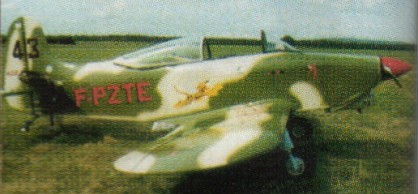
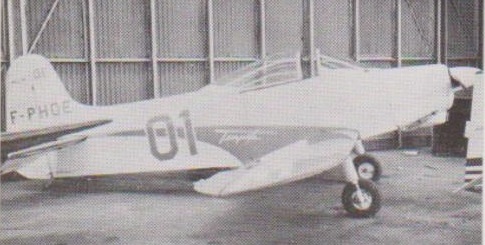
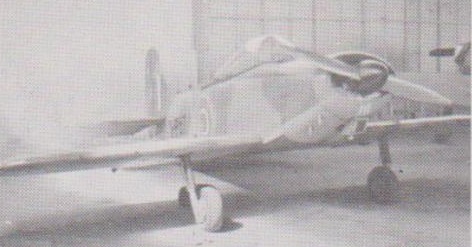
Marcel Jurca incorporated many Jodel Components in the design of the MJ-2 Tempete. The Tempete is a cantilevered low-wing monoplane that can be fitted with engines ranging in horsepower from 65 to 125.

MJ-2 Tempete prototype – Guyancourt, 1965

The single-seat wood/fabric aerobatic MJ.2 Tempete was first flown in 1956.

The standard version is powered by a 65-hp engine. Another common version powered by a 90-hp engine cruises at 120 mph and climbs to 3280 in three minutes.

MJ-2 LX-PUT cn 18, Findel, Luxembourg 5 August 1975. Built as F-PNUD Continental O-200-A

Engine: Lycoming, 110 hp.
HP range: 65-180.
Height: 7.8 ft.
Length: 18.5 ft.
Wing span: 19.5 ft.
Wing area: 85.9 sq.ft.
Weight empty: 639 lbs.
Gross: 950 lbs.
Fuel cap: 16 USG.
Speed max: 120 mph.
Cruise: 102 mph.
Range: 375 sm.
Stall: 62 mph.
ROC: 555 fpm.
Take-off dist: 820 ft.
Landing dist: 800 ft.
Service ceiling: 11,500 ft.
Seats: 1.
Landing gear: retractable tail wheel.

Jurca, Marcel

France
Developed a very extensive range of light aircraft, available for home construction from plans. These include MJ.2 Tempete single-seat wood/fabric aerobatic monoplane (first flown 1956), MJ.5 Sirocco tandem two-seat aerobatic monoplane (first flown 1962), MJ.8 as 75 percent scale replica of Fw 190 fighter, MJ.9 as 75 percent scale replica of Bf 109 fighter, MJ.10 Spitfire as 75 percent scale wooden replica of Supermarine fighter, MJ.12 as 75 percent scale replica of P-40 fighter, MJ.53 Autan side-by-side two-seater (first flown 1991), MJ.77 Gnatsum as 75 percent scale wooden replica of P-51 Mustang fighter, and a range of full-size replicas of Second World War fighters, including MJ.80/Fw-190, MJ.90/Bf- 109 and MJ.100/Spitfire.

1998:
2, allée des bordes
F-94430 Cheneviére
France

Marcel Jurca died in October 2001, aged 81.