Lambie Hang Loose

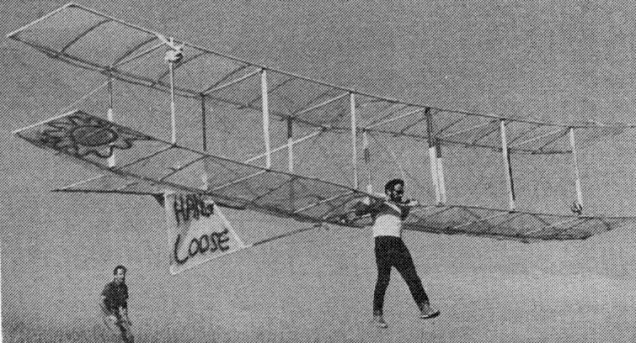
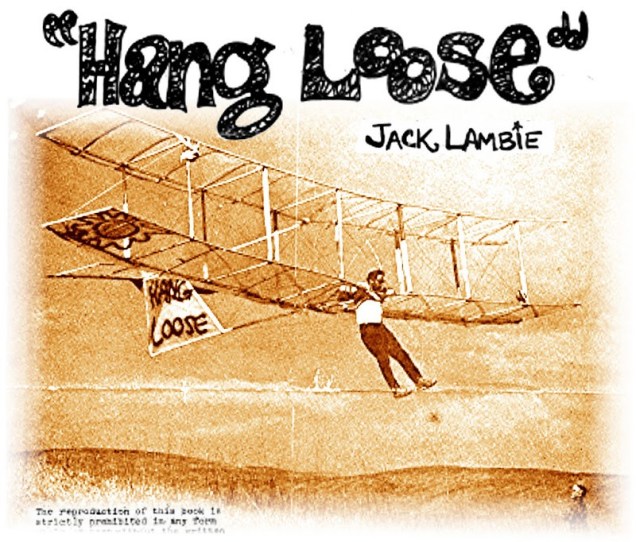
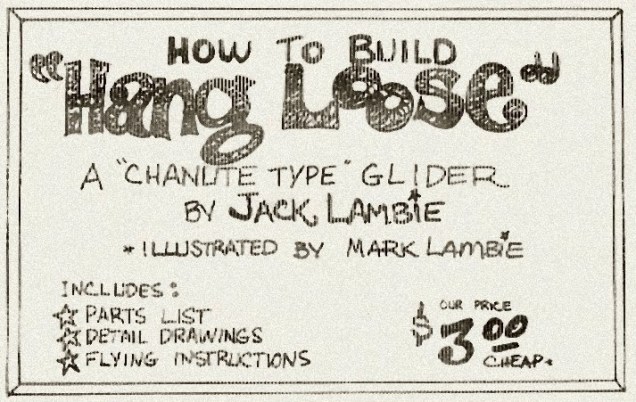
In 1972 a guy named Jack Lambie wrote an article for Soaring magazine and published a set of plans on “how to build your own Chanute-style hang glider”. He called his design “Hang Loose” (hey it was the 70’s 😉

Experience:
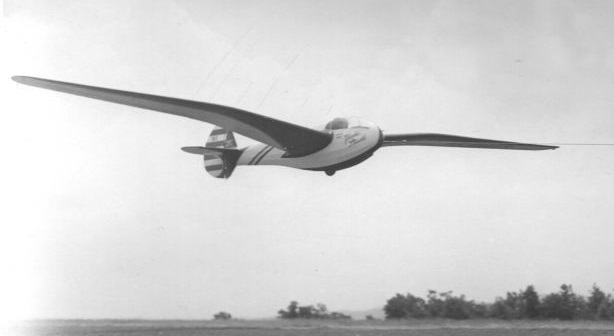
When I saw that article, I knew instantly I had to build one. I can remember sketching ideas for such craft since I was in 5th grade. So I ordered the plans Carleton and I built one. On one of the days of testing we happened to get photographed and interviewed by the local newspaper. (I think the reporter was just happening by at the time)

We had to make some changes to the design: for one thing we could not get bamboo to make the ribs. Instead I cut them out of 1/8″ plywood, about 1″ thick top to bottom and mounted the ends between two pine blocks. Heavier than the bamboo but a better fit to the shape for sure.

We also could not get the yellow pine that was suggested and used spruce I think, but it had some very small knots in it that did cause a problem at one point. (Spar failure in flight!)
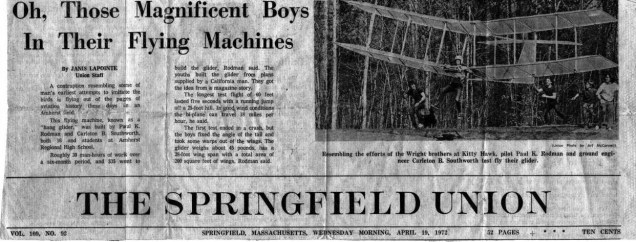
At the time, I already had a sailplane pilot’s license (you can solo at 14 and it was cheaper than flying power planes) and of course I had flown a lot of model airplanes, so I was elected the test pilot. You can see me in that photo with my leg out to move the CG (centre of gravity) forward a bit.

The angle of the tail was not set properly so I could not get the angle of attack enough and basically just fell down with the thing. After fixing that back at Carleton’s house (right across from the field in the picture) it worked great. We both flew it many times down a little 20′ grassy drop-off.

The feeling of the glider lifting you up as it gained speed was AWESOME.

You could not really turn the thing at all…too much stability in roll. We talked about adding some tip-dragger rudders or ailerons but the flight times were short enough you didn’t really need any left – right steering.

We had a few snafus but by never flying higher than it was safe to fall we didn’t get hurt. Spectators would offer to hook us up to their cars with a rope and and tow us …but we were too smart for that 😉
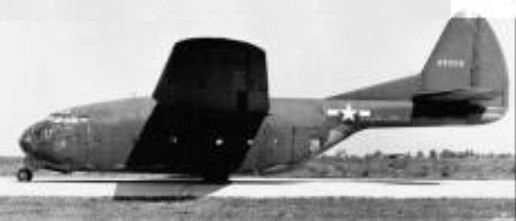
Laister-Kauffmann XCG-10A Trojan Horse

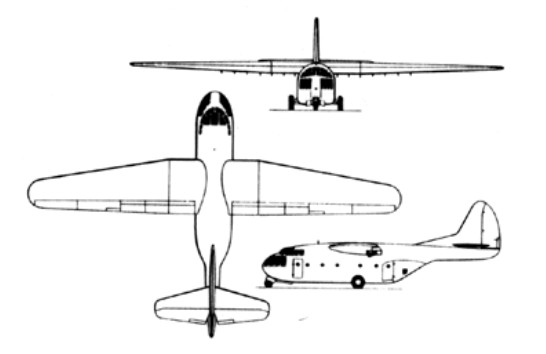
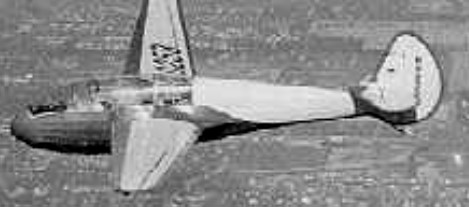
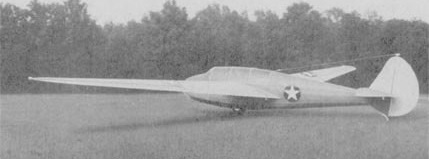
The XCG-10 is a large military glider capable of accommodating 30 troops or a freight load of 5 short tons. It is a high-wing cantilever monoplane with a deep forward fuselage tapering to a tadpole boom which supports the tail unit. At the break in the bottom lines of the fuselage clam-shell doors give access to the main hold 30 ft.(9.15m) long, 7 ft. (2.14m) wide and 8 ft. 6 in. (2.59m) high, which can accommodate a 155mm howitzer or a 2 1/2 ton truck. Structure is entirely of wood with plywood covering. The wings are fitted with Fowler-type landing flaps and have an overall span of 105 ft. (32m).

The XCG-10 and XCG-10A were two different craft. The 10A was 42 place. Although some sources say the 10 did not exist and the project was changed to 10A in design stage, the 10 was built both as a static test article and a flight test article. The internal hold size was slightly larger for the 10A to accommodate the GM 6X6 truck. The wingspan stayed the same.

Laister-Kauffman XCG-10 / XCG-10A
Crew: 2
Armament: none

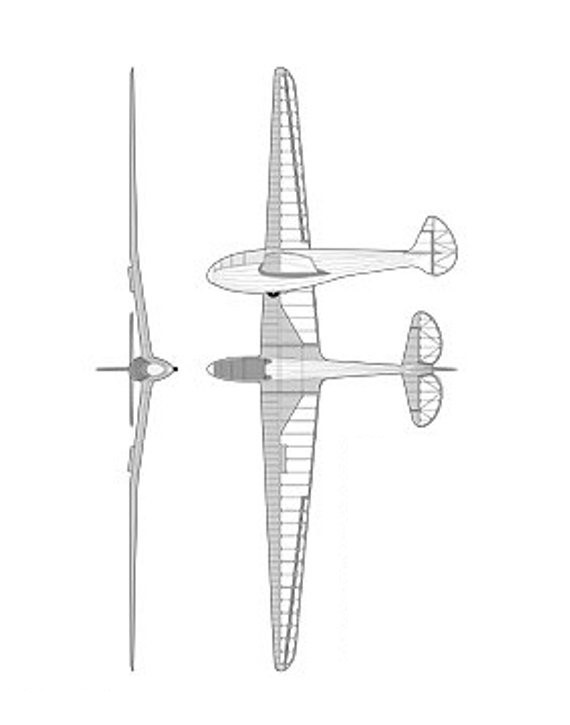
Laister-Kauffmann LK-10A / Lawrence Tech Sailplane / TG-4

LK-10A

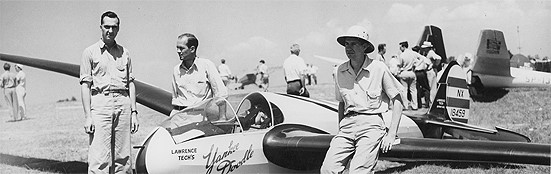
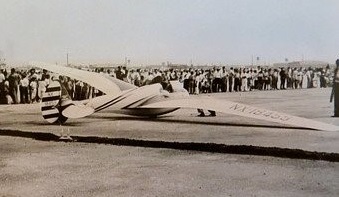
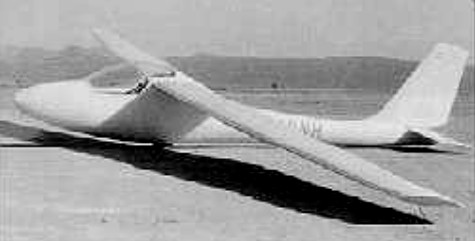
In 1938 Jack Laister completed a gull-wing sailplane, which was referred to as the Lawrence Tech Sailplane after its sponsor. Repainted red, white and blue and renamed the ‘Yankee Doodle’ it competed in a 1939 aerobatic competition at the Paris airshow.

Yankee Doodle

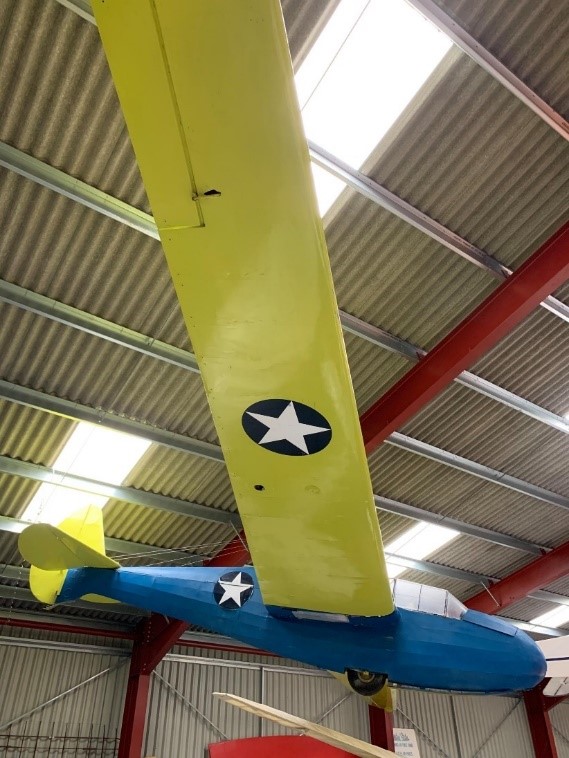
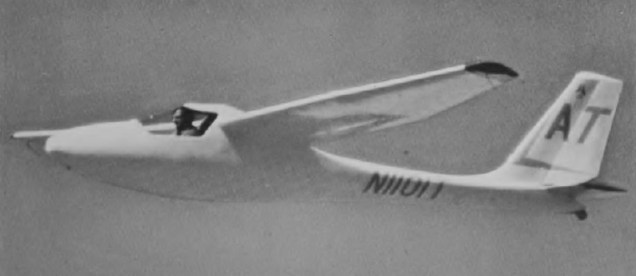
With the need for military trainers on the outbreak of World War II, Laister designed the two-place Yankee Doodle 2 from the original that utilized some of the features and technology from the LT-IV but transitioned to a dual cockpit and straight wing arrangement.

Lawrence Tech

A flat-top Version with increased performance also has an ATC. A ‘bunnynose’ LK, flown by Harold Hutchinson, held the national multiplace goal record of 399 km/ 248 miles from 1956 to 1967.

The Vintage Sailplane Association has copies of the military manuals, color scheme drawings and paint chips available.

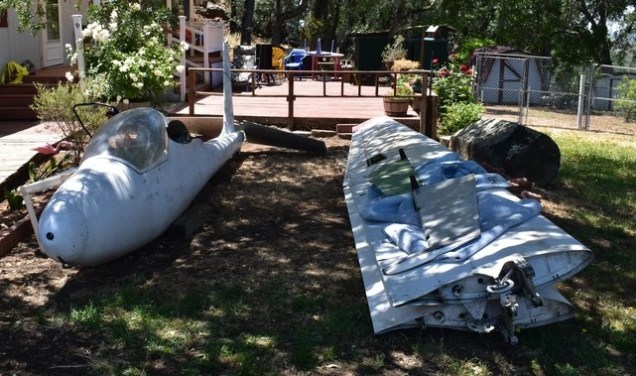
One LK-10A belongs to the National Soaring Museum.

LT IV
Laister-Kauffman TG-4A

LT IV
Wing Span: 14.173 m
Wing Area: 12.5 sq m
Structure Weight: 124.7 kg
Flying Weight: 214.3 kg
Wing Loading: 17.14 kg/sq m
Root Chord: 137.2 cm
Tip Chord: 50.8 cm
Aspect Ratio: 16
Fuselage Length: 5.867 m
Stabilizer Span: 269.2 cm

LK-10A
Wing span: 15.2m /50ft
Wing area: 13.33sq.m / 165sq.ft
Empty Weight: 215kg / 475lb
Payload: 181kg / 400lb
Gross Weight: 396kg / 875lb
Wing Load: 29.7kg/sq.m / 5.27lb/sq.ft
L/DMax: 22 89 kph / 45 kt / 55 mph
MinSink: 0.98 m/s / 3.2 fps / 1.90 kt
Aspect ratio: 15.1
Airfoil: NACA 4418, 4409
Seats: 2
No. Built: 156

Lawrence Tech IV

Laister LP-46 / LP-49

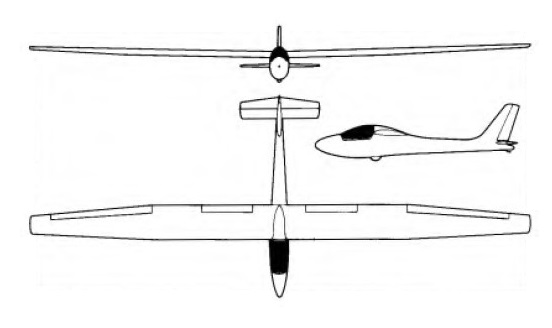
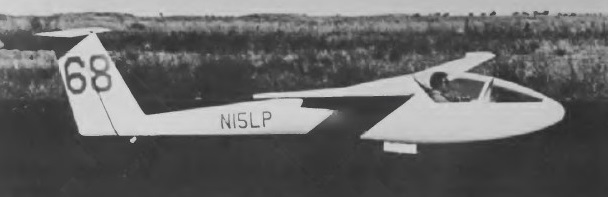
The LP-49, popularly known as the ‘Forty Niner’, is a Standard Class single-seater that was first rolled out in prototype form, designated LP-46, on 4 July 1966. It is of metal and glassfibre construction, but designed to be sold in kit form for the amateur constructor, and more than 50 LP-49 kits had been sold by early 1976, about 35 of which had been completed and flown.

The high cantilever wings are of laminar flow section, the extruded aluminium main spar booms being curved in a chordwise direction to follow the aerofoil section; the roll contoured aluminium sheet wing skin is butt jointed and flush riveted with blind pop rivets. The semimonocoque fuselage is made up of two premoulded glassfibre halves joined over aluminium bulkheads and fittings. The tail unit is of aluminium with a swept back fin and rudder, and the landing gear consists of a shock- strutted retractable monowheel with a brake and a glassfibre nose skid with a steel shoe; a fixed shrouded tailwheel replaces the retractable tailwheel of early production aircraft. The LP-49 has an automatic aileron and dive-brake control hookup and internal control- surface counterweights.

LP-49

The ship is approved for spins, loops and wing-over, and has been static tested to 12 g. The LP-49 was sold in both kit form and as a complete, ready-to-fly sailplane.

Jerry Haynes
haynesja@yahoo.com
Need help to find Stabilizer ? Elevator / pictures / drawings to build a new tail group

28 May 2018

LP-46
Span: 13.56 m. / 44.5 ft.

LP-49
Span: 15.0 m / 49 ft 2.5 in
Length: 20 ft 7.25 in
Wing area: 13.29 sq.m / 143 sq ft
Aspect ratio: 16.9
Airfoil: NACA 64(3)-618
Empty Weight: 215 kg / 475 lb
Gross Weight: 408 kg / 900 lb
Payload: 125 kg /275 lb
Water ballast: None
Max wing loading 30.72 kg/sq.m / 6.29 lb/sq ft
Max speed: 135 mph /117 kt / 217 km/h
Stalling speed: 30 kt / 56 km/h
Max rough air speed: 117 kt / 217 km/h
Min sinking speed: 0.63 m/sec / 2.07 ft/sec at 50 mph / 43 kt / 80 km/h
Best glide ratio: 36.5:1 at 58 mph / 50 kt / 92.5 km/h
No. of Seats: 1
No. Built: 53

LP-49

Laister LP-15 Nugget

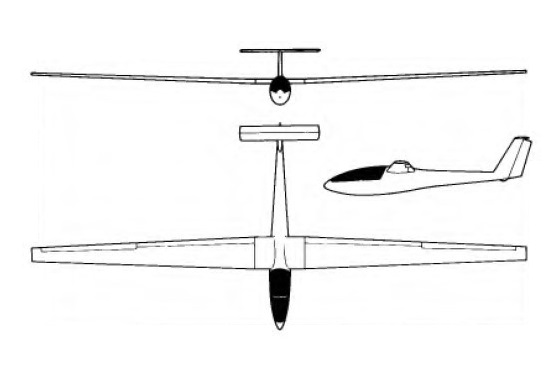
Laister-Kauffman Aircraft Corp was later succeeded by Laister Sailplanes Inc and in 1970 Jack Laister and his son Bill, an aerodynamicist, started design work on the LP-15 Nugget Standard Class single-seater of metal construction.

It is a cantilever shoulder-wing monoplane with a T-tail and long-span flaps which are raised slightly for high speed flight, are lowered 8° for soaring in thermals and can be extended to 85° for use as air brakes. Up to 185lb of water ballast can be carried on the center of gravity. The wings and top-hinged plain ailerons are of Chem-Weld bonded aluminium alloy construction, while the semi-monocoque fuselage has the forward portion of moulded glassfibre and the rear part of bonded aluminium alloy construction which incorporates the swept fin. Landing gear consists of a retractable monowheel and the pilot sits in a semi-reclining seat under a two-piece canopy with a removable section and a sliding ventilation panel.

They decided to wait for the recommendations of the CIVV conference on Standard Class requirements before starting construction of the prototype in February1971, and this first flew in June that year, its maiden flight also being a contest flight; the Nugget was certificated in mid-1975.

The ship was available only as a factory-built product and 15 were built. One Nuget belongs to the National Soaring Museum.

Wingspan: 15.0 m / 49 ft 2.5 in.
Wing area: 10.13 sq.m / 109 sq.ft
Airfoil: Wortmann FX 67170/150
Wing aspect ratio: 22.2
Length: 6.1 m / 21 ft
Height: 1.27 m / 4 ft 2 in
Gross Weight: 408 kg / 900 lb
Empty Weight: 193 kg / 425 lb
Wing loading: 40.27 kg/sq.m / 8.26 lb/sq ft
Payload: 215kg / 475lb
Water Ballast: 84 kg / 185 lb
Max airspeed: 135 kts 126 kt / 233 km/h
Rough air speed: 126 kt / 233 km/h
Stall: 34 kt / 63 km/h
Lift to drag: 37 at 93 kph / 50 kts / 58 mph
Sink: 0.66 m/s / 2.16 fps / 1.29 kt at 43 kts
Seats: 1

Laister / Laister-Kauffmann

One of the pioneer US sailplane designers, John W. (or Jack) Laister built his first design, a gull-winged acrobatic sailplane in 1938 and later formed, with John R. Kauffman, the Laister-Kauffman Aircraft Corp. This produced, among other types, the TG-4A training glider version of the LK-10 for the USAAF and was one of the 16 firms taking part in the Waco CG-4A Hadrian programme, building 310 out of the nearly 14,000 CG-4As completed. Laister-Kauffman also produced one of the biggest troop-carrying gliders of the war, the 42-seat XCG-10A, which had a span of 105ft and could carry a 155mm howitzer or a 2½ ton truck.

Ladd Taylor Chihuahua

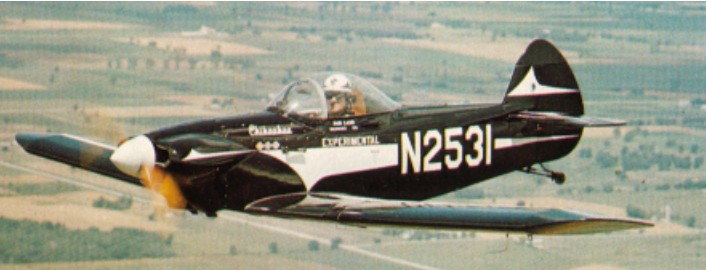
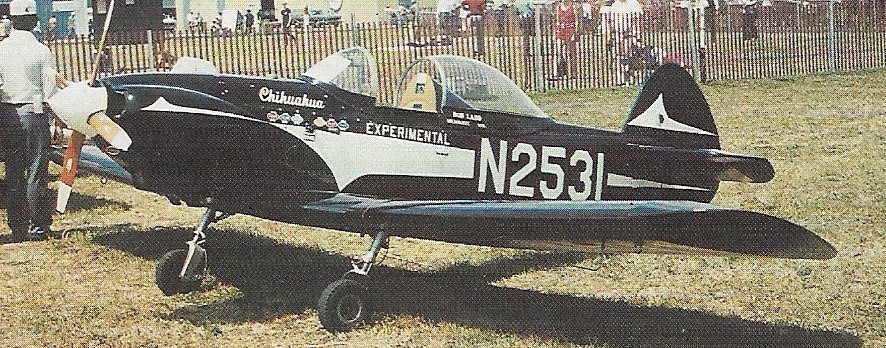
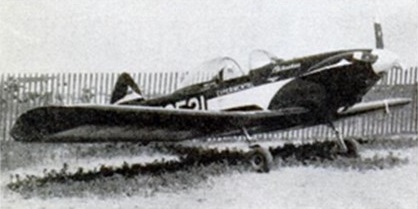
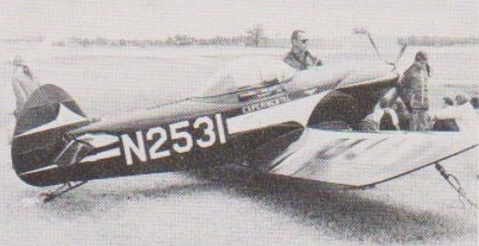
Built by Robert Ladd in 1967, the Taylor Chihuahua single place, enclosed low wing monoplane, was developed from the British John Taylor monoplane. One was built, N2531, was first flown in September 1967.

Engine: 53hp VW
Wingspan: 21’0″
Length: 15’6″
Cruise speed: 118 mph
Stall: 60 mph
Range: 250 mi

Taylor Monoplane built by Bob Ladd of Milwaukee, 4-blade prop, at Oshkosh 1974

Laco LACO-125

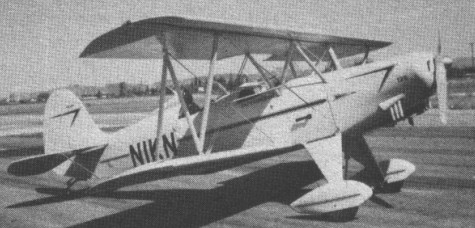
The LACO-125 is a sturdy two-seat biplane that is easy to fly yet very agile. To aid the builder, there are no castings, forgings or other difficult-to-build or obtain parts. The fuselage is a Warren truss type of chrome-moly tubing with wood formers and stringers. The wings are conventional two-spar construction with wood ribs and chrome-moly fittings for strength. This homebuilt derives its designation from the use of a 125-hp Continental in the prototype which is interchangeable with the 145-hp engine. The weight distribution of the LACO-125 is such that larger four-cylinder powerplants can be substituted.

The first, N1KN, was flown on 29 May 1977.

LACO-125
Engine Continental C-125, 125-hp
Wingspan: 22’9”
Length: 19’6”
Gross Wt: 1400 lb
Empty Wt: 860 lb
Fuel capacity: 24 USG
Top speed: 124 mph
Cruise: 113 mph
Stall: 56 mph
Climb rate: 900 fpm
Range: 325 miles
Seats: 2

Lacey M-10 / M-10 VW Twin

Lacey M-10

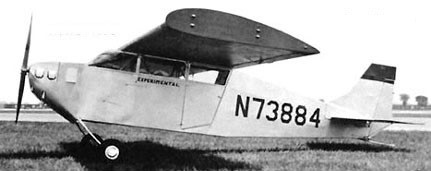
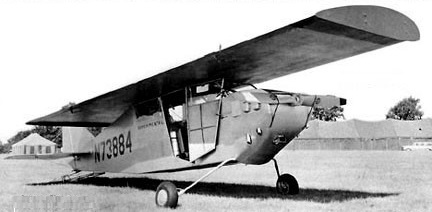
Built by Joseph L Lacey in 1962, the the two place Lacey M-10 had a pivoting unbraced wing stowed fore-and-aft for trailing or hangaring. One was built, N73884, first flying on 7/6/62.

The Lacey is one of the simplest designs for the homebuilder to construct. In the words of its designer, “There are no com¬pound curves and very few simple ones. The wing has no wash-in, no washout, no dihedral, and no incidence angle (the bottom is flat, and fits flat on top of the fuselage). It has no taper, no slots, no flaps, no spoilers, no wingtips, no struts, no wires, no braces, no spars.” The two-place, towable Lacey is propelled by a 90-hp Continental.

One M-10 VW Twin was built, N187LH, in 1968.

M-10
Engine: 95hp Continental C-90
Wingspan: 20’0″
Length: 19’6″
Gross Wt. 1118 lb
Empty Wt. 638 lb
Fuel capacity 20 USG
Useful load: 400 lb
Top speed: 140 mph
Cruise speed: 120 mph
Stall: 38 mph
Climb rate: 1000 fpm
Ceiling: 25,000′
Range: 440 miles
Takeoff run: 600 ft
Landing roll: 600 ft
Seats: 2

M-10 VW Twin
Engine: 2 x 40hp VW
Wing span: 20’0″
Length: 19’6″
Seats: 2