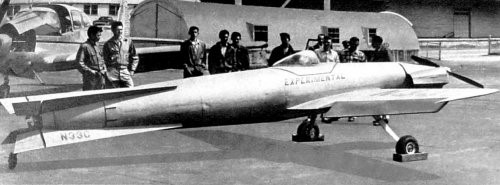
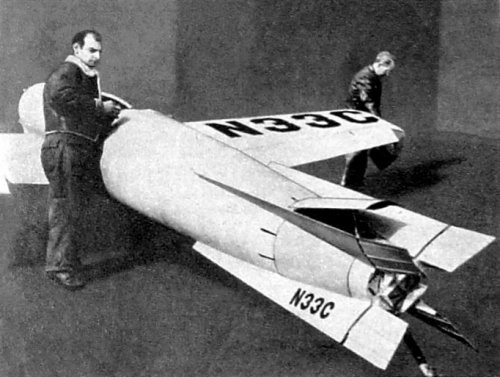
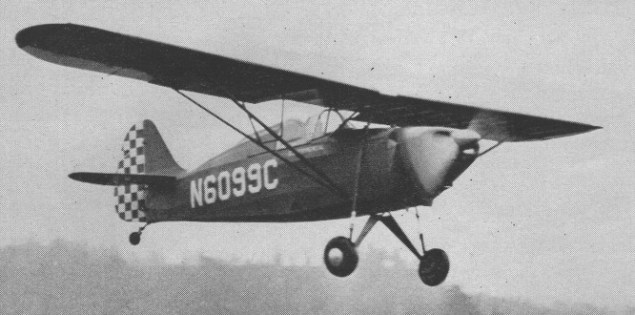
Kysor 1950 monoplane

Cliff Kysor’s torpedo-shaped plane of 1950 had tail controls built flush with fuselage. The conventional elevators and rudder were eliminated to minimize air drag and permit greater speed. The four control surfaces at the top, bottom and sides of the tail section, were operated by a stick and by rudder pedals. Small tabs at the trailing edge of the fins were used only to trim the aircraft.

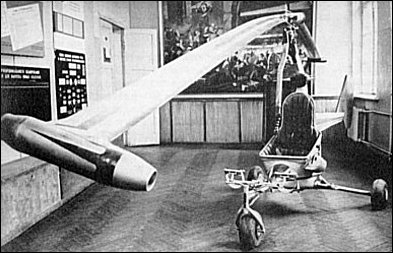
KAI Vikhr-1

An experimental helicopter, built in 1956 by students at the Kuibushevskij Aviatsionnyj Institut. Single-seat machine was powered by pulse-jets attached to the tips of the main rotor blade. Pod and boom fuselage was very basic, pilot was seated in the ‘bare seat’ with control stick hanging from above.
The helicopter carried no tail rotor.

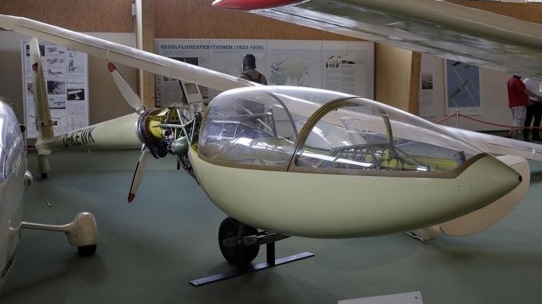
Kuffner WK-1

Built by Werner Kuffner (WK) as a one off in 1975, the WK-1 is a two seater motor glider with a BMW R90/S, 600cc 58 HP motor driving a foldable 3 blade prop that spins around the fuselage behind the cabin. The engine runs a toothed belt that spins a metal ring on which folding propeller blades are mounted.

It is in the Glider Museum Wasserkuppe.

Wing span: 18.80m
Empty weight: 430kg
Best glide ratio: 33.2
Seats: 2

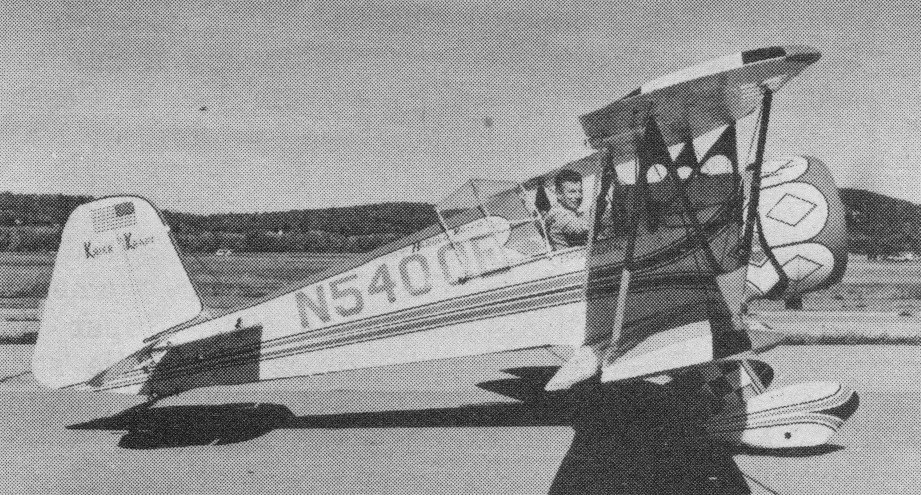
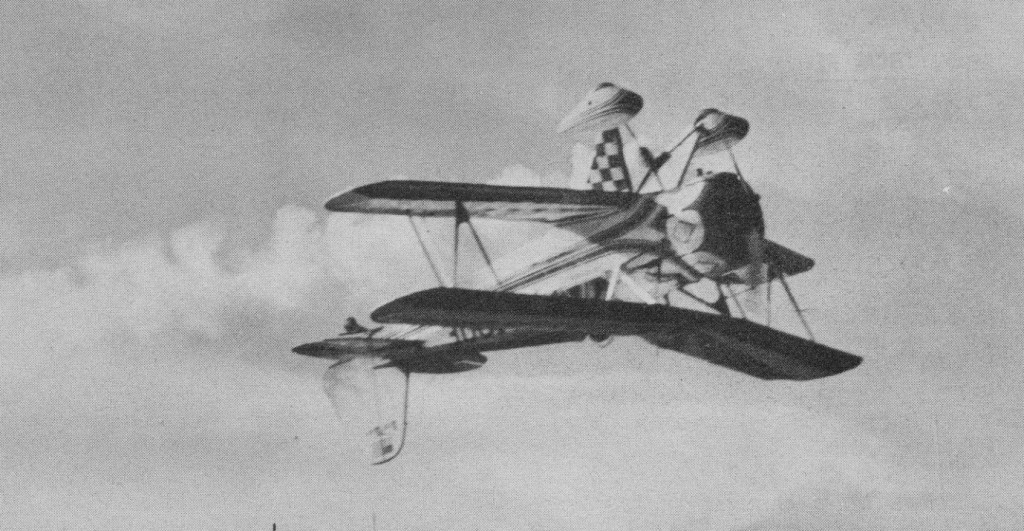
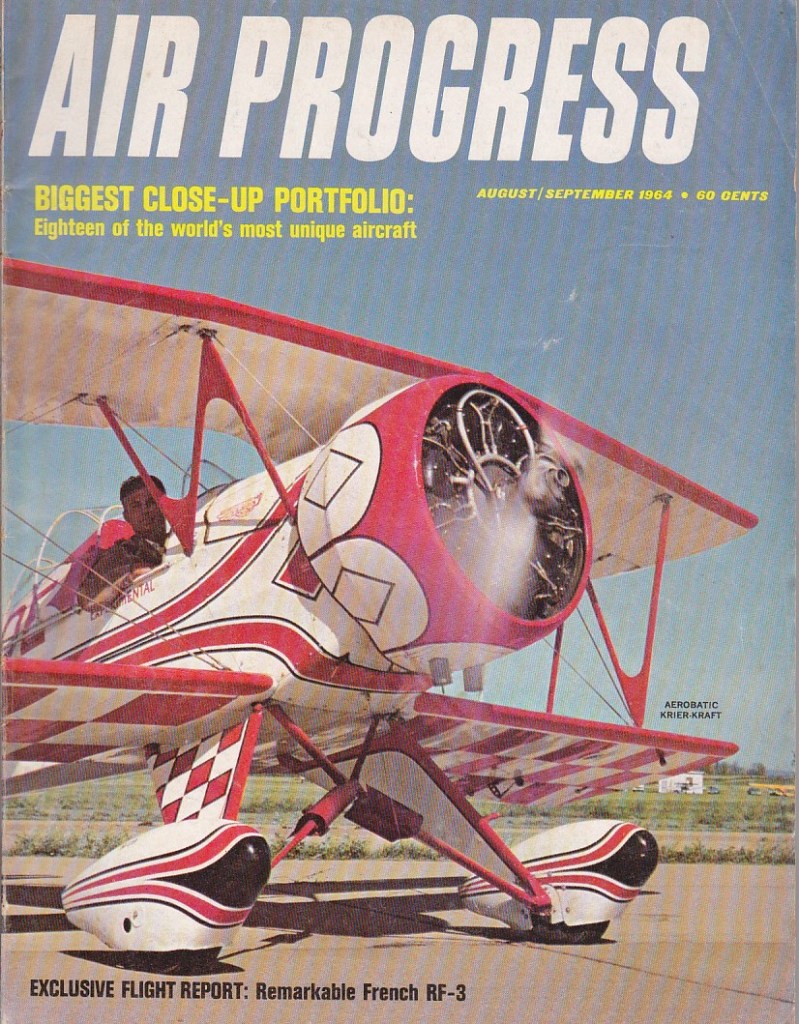
Krier-Kraft Acromaster

The 1964 Krier-Kraft Acromaster was an original aerobatic biplane built by Harold Krier, Wichita, Kansas, USA.

A performer for National Airshows, the Acromaster has a number of features to Bucker Jungmeister and Great Lakes and fully inverted engine and took nine months to build.

Engine: Warner 185J, 185 hp
Prop: Aeromatic 220-085
Wingspan both: 23 ft 8 in
Sweepback: 10.5 deg
Chord: 43 in
Length: 19 ft 8 in
Empty weight: 875 lb
Aerobatic weight: 1198 lb
Cruise: 120-125 mph

Kramme & Zeuthen KZ.X / SAI KZ.X

The SAI KZ X was a light aircraft produced in Denmark for army co-operation duties in the early 1950s. It was a strut-braced, high-wing monoplane of conventional design with fixed tailwheel undercarriage and was derived from the KZ VII.

First flown on 29 September 1951, deliveries to the Danish Army commenced in 1952, but by the summer of that year, two had already crashed.

The investigations of these crashes were conducted with technical assistance from Britain’s Royal Aircraft Establishment, but no underlying defect in the aircraft design was uncovered and the KZ X was returned to service. However, when two more crashes took place in 1954, the type was withdrawn from service. Of the 12 built, most KZ Xs were scrapped, with the only surviving example now in the Danmarks Flymuseum

Engine: 1 × Continental C145, 108 kW (145 hp)
Wingspan: 9.41 m (30 ft 11 in)
Wing area: 13.0 sq.m (140 sq.ft)
Length: 6.50 m (21 ft 4 in)
Height: 2.20 m (7 ft 3 in)
Empty weight: 529 kg (1,160 lb)
Gross weight: 860 kg (1,890 lb)
Maximum speed: 215 km/h (134 mph)
Range: 800 km (500 miles)
Service ceiling: 4,400 m (14,400 ft)
Crew: One, pilot
Capacity: 3 passengers