Renato Levi did produce a microlight called the Levi RL10 Magpie.
Its registration G-MBYW was cancelled on 17 May 1990 as permanently withdrawn from use.
Renato Levi did produce a microlight called the Levi RL10 Magpie.
Its registration G-MBYW was cancelled on 17 May 1990 as permanently withdrawn from use.
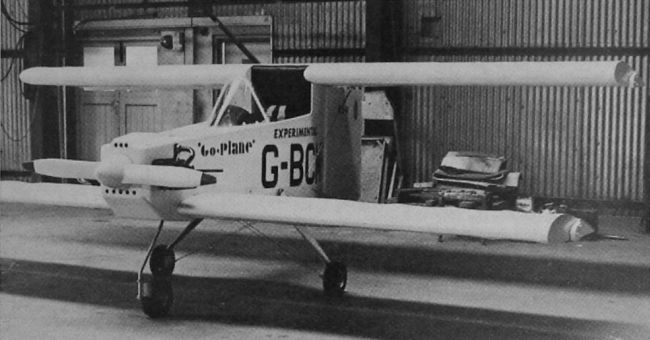
The Levi RL-6 Go-Plane is a single-seat tandem wing design with tricycle undercarriage. Either a double monoplane or a staggered biplane, with its rudder integrated into the fuselage but no tail, in the traditional sense, or tailplanes.
By the end of 1974 Renato Levi of Newport, Isle of Wight was conducting test on the RL-6 Go-Plane G-BCMF c/n EAA3678, at Bembridge. It was a Bembridge Airfield on 16 November 1974 for the purpose of its maiden flight. It was damaged beyond repair in the course of that on 16 November 1974.
The CAA cancelled the registration of G-BCMF on 5 December 1983.
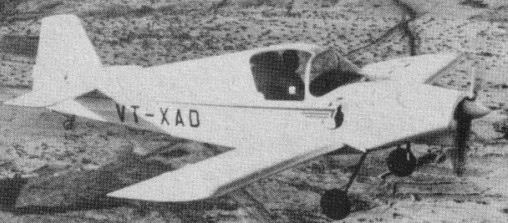
This two-place, low-wing taildragger was first built in India by an Italian engineer who studied in England and France and was available to American homebuilders through Canadian company Aie-Craft Supplies. It is of conventional all-wood construction and covered with fabric. The prototype, VT-XAD, was powered by a Continental 85-hp engine. Some are also built to house a 125-hp Lycoming.
Gross Wt. 1500 lb
Empty Wt. 870 lb
Fuel capacity 28 USG
Wingspan 25’l0”
Length 20’3”
Top speed 130 mph
Cruise 115 mph
Stall 45 mph
Climb rate 800 fpm
Takeoff run 500 ft
Landing roll 700 ft
Range 600 miles

Born to Italian parents in British India, Karachi in 1926, educated there and in France, Renato ‘Sonny’ Levi flew Spitfires in the RAF near the end of WWII, and studied aeronautical engineering in England after the war.
Joining his father’s boatyard in Bombay, it was his victory in the Daily Express Cowes-Torquay offshore powerboat race in 1963 that brought his name to prominence as a successful designer.
Sonny Levi was a man who developed a huge range of ideas which in his early including light aircraft, inflatable boats, cars and sailing yachts. More recently he turned his hand to pure art, creating over 100 canvases.
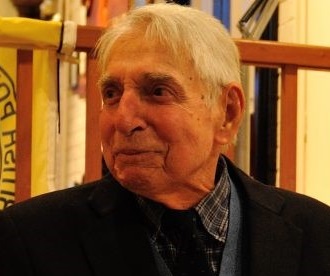
Renato ‘Sonny’ Levi, died peacefully at the age of 90 at his home on the Isle of Wight on November 12, 2016.
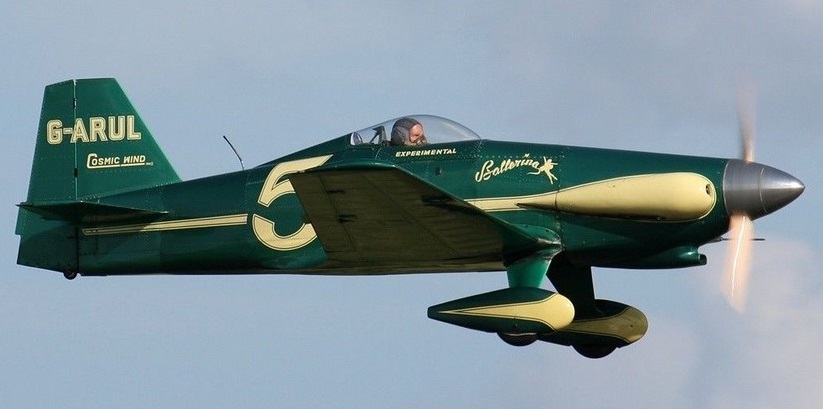
The Le Vier Cosmic Wind is an all-metal Formula One racing aircraft designed by Toni Le Vier and built by a consortium of Lockheed employees at Burbank.
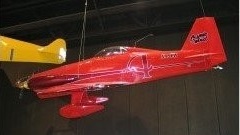
Three were imported to the UK;
c/n 101
‘Little Toni’ first flown as NX67888, later re-registered N20C. Sold to Pacific Air Racers, then to M.Blair.
Sold to R.McCowen in 1971 and moved to the UK as G-AYRJ. Modified and fitted with a Rolls-Royce/Continental O-200-A and first flown as such on 28 January 1971 at Blackbushe.
c/n 103
‘Ballerina’ Registered N22C and sold to Pacific Air Racers, then to M.Blair.
Sold to the Tiger Club in 1961 and moved to the UK as G-ARUL. Sold to P.G.Bannister but badly damaged in a crash at Halfpenny Green on 17 April 1968. Rebuilt from 1969 onwards as PFA.1511. It flew again in 1973 as ‘Ballerina II’.
c/n 1067
A fifth airframe built under Lockheed supervision to meet the USAF ‘Mighty Mouse’ specification for an ultra-small counter-insurgency aircraft. It was not finished.
The hulk was bought by Robin Voice and moved to the UK in 1973 as G-BAER. It was completed as PFA.1571. First flew at Redhill in 1973 with a Continental C90, named ‘Filly’ after Robin’s wife.
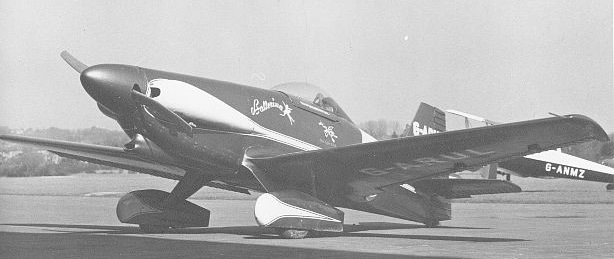
Engine: Continental C85
Wingspan: 18.11 ft
Length: 16.08 ft
A 1951/52 multiplace twin-engined training aircraft project, seems to be a planned successor for Si 204 / Aero C-3. Two V-12 (M-446) engines.
A 1949 jet trainer fighter project: M-003 engine, maximum speed 580 km/h
A postwar piston fighter project with M-211 (Jumo 211) engine; not unlike the Mustang.
Czech Air Force designation for a trainer of 1950. Powered by an M 411R.
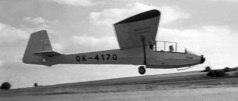
The 1950 LF-109 Pionyr two seat glider later was licenced to the Soviet Union.
Length: 25.492 ft / 7.77 m
Wingspan: 44.193 ft / 13.47 m
Aspect ratio: 9.0
Wing area: 217.433 sq.ft. / 20.2 sq.m
Max take off weight: 970.2 lb / 440.0 kg
Weight empty: 551.3 lb / 250.0 kg
Max. payload: 419.0 lb / 190.0 kg
Max. speed: 76 kt / 140 km/h
Landing speed: 30 kt / 55 km/h
Cruising speed: 33 kt / 62 km/h
Wing load: 4.51 lb/sq.ft / 22.00 kg/sq.m
Glide ratio: 18.0
Crew: 2
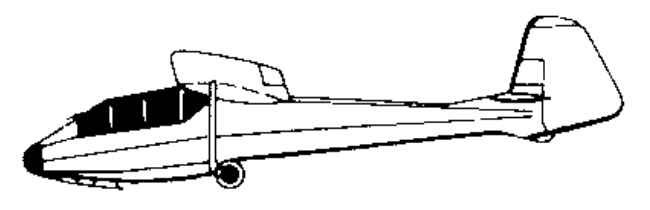
 All Aero