Argentina
Formed in 1958 by Lockheed and Industtrais Kaiser SA at Cordoba to build the LASA-60 4/6-seat utility.
Post WW2
Lockheed-Azcarate sa
Mexico
Formed by Juan F. Azcarate in 1957 with Lockheed, to design an aircraft specifically to suit Central American conditions. Built the LASA-60 4/6-seat utility aircraft in 1959. Construction undertaken by Lockheed-Azcarate, Macchi and Aviones Lockheed-Kaiser. Lockheed acquired a substantial holding in Aermacchi 1959.
Lockheed CL-595 / Model 186 Aerogyro / Model 286 / XH 51A Aerogyro

Lockheed began developing its rigid rotor concept with the CL-475 helicopter design in 1959 and the performance of the CL-475 encouraged Lockheed to continue development. Lockheed submitted the CL-475 to the Army as a candidate to replace the Bell OH-13 Sioux and Hiller OH-23 Raven observation helicopters. Lockheed also tested the commercial market waters without success. However, in February 1962, Lockheed’s Model 186, a new design based on the CL-475 rigid rotor, was selected as the winner for a joint Army-Navy program to evaluate the rigid rotor for high-speed flight capability.
Two four-seat, three-bladed XH-51As were ordered and built for the program. Powered by the 550 shp (410 kW) Pratt & Whitney Canada PT6B-9 turboshaft engine, XH-51A (serial number 61-51262) first flew on 2 November 1962. As flight testing progressed, the original three-bladed, rigid rotor system demonstrated instability at higher speed ranges. Lockheed engineers solved the problem by modifying the aircraft with a four-bladed rotor system. In 1963, the Army’s Technology Research and Evaluation Command (TRECOM) contracted with Lockheed to modify one of the XH-51 aircraft into a compound helicopter.
The second XH-51A (serial number 61-51263) was subsequently converted by adding wings with a span of 16.1 ft (4.9 m), and a 2,500 hp (1,864 kW) Pratt & Whitney J60-2 turbojet engine mounted on the left wing to increase performance. The XH-51A Compound first flew without powering up the turbojet on 21 September 1964, while tests were conducted for balance and handling. The aircraft’s first flight as a true compound helicopter took place on 10 April 1965, and on 29 November 1967 achieved a speed of 263 knots (302.6 mph, 486.9 km/h).
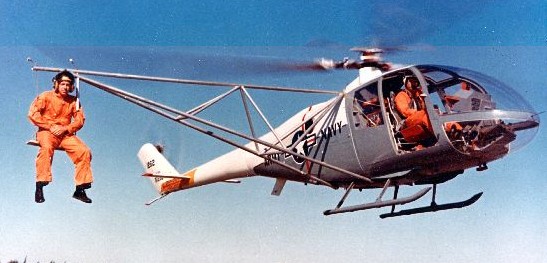
In June 1964, NASA ordered a five-seat, three-bladed variant, the XH-51N (NASA 531) as a helicopter test vehicle.
Lockheed built two demonstrator aircraft, designated the Lockheed Model 286, to market to the public (registration numbers N286L and N265LC). These aircraft had the five-seat configuration of the XH-51N with the four-bladed rotor system of the XH-51A. The Model 286 was certificated for civil operation by the FAA on 30 June 1966, but Lockheed never sold any aircraft. Lockheed used the aircraft for several years as executive transports, eventually sold them to a collector where they were destroyed by fire in 1988.
The two XH-51A examples (Serial Numbers 61-51262 and 61-51263) are stored at the United States Army Aviation Museum at Fort Rucker.
Variants:
186
Civil version of 286/XH-51
Rotor dia: 35 ft
Length: 32 ft
286 / XH-51A
four place, three-bladed rotor
Engine: 1 × Pratt & Whitney Canada PT6B-9 turboshaft, 550 hp (410 kW)
Length: 40 ft 9 in (12.40 m)
Rotor diameter: 35 ft 0 in (10.67 m)
Height: 8 ft 2½ in (2.50 m)
Disc area: 962 ft² (89.4 m²)
Empty weight: 2,790 lb (1,265 kg)
Max takeoff weight: 4,100 lb (1,864 kg)
Maximum speed: 151 knots (174 mph, 280 km/h)
Cruise speed: 139 knots (160mph, 257 km/h)
Range: 226 NM (260 mi, 418 km)
Service ceiling: 16,000 ft (4,876 m) (hover ceiling (in ground effect))
Rate of climb: 2,000 ft/min (10 m/s)
Disc loading: 4.26 lb/sq.ft (20.9 kg/sq.m)
Power/mass: 0.27 hp/lb (0.44 kW/kg)
XH-51A Compound
modified with a four-bladed rotor and stub wings and an auxiliary 2,900 hp Pratt & Whitney J60-2 engine.
Rotor diameter: 31 ft 7 in
Length: 31 ft 7 in
Model 286
five place civilian or military light helicopter offered for sale, none were sold.
Model 286 / XH-51N
five place, three-bladed rotor modified for NASA test purposes.
Lockheed CL-475
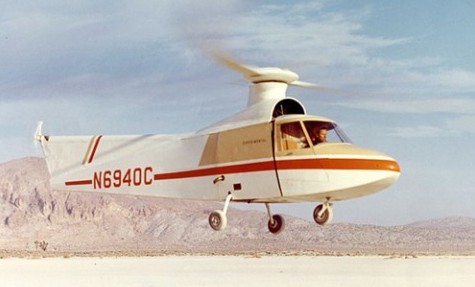
The concept of the rigid rotor coupled to a gyroscope system was developed by an Advanced Concepts Group led by Irven Culver to seek significant improvements in performance, cost, reliability, and handling characteristics of helicopters. Following testing of a small radio-controlled vehicle – with a 1.52m diameter, two blade, hingeless rotor driven by a McCoy 60 model aeroplane engine – the small design team undertook in July 1959 to design and build an experimental two-seat helicopter for full-scale demonstration of the new concept.
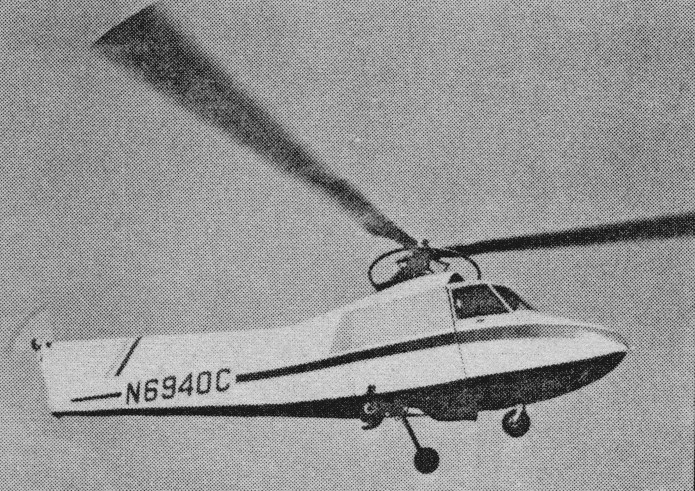
Designated CL-475, this research helicopter had a steel and aluminium tubing covered frame with fabric and a Plexiglass cabin with side-by-side seats. Its 140hp Lycoming VO-360-AIA four-cylinder air-cooled engine initially drove a two-blade wooden rotor, with gyroscopic control being provided by a double metal ‘lollipop’ attached to the blades and connected to the swashplate by springs. In this form the CL-475, which was registered N6940C, was completed in autumn 1959 and was trucked to Rosamond Lake in the Mojave Desert where initial trials could be made without attracting undue attention.
Excessive vibration was encountered during the first flight on 2 November, 1959, and forced Irv Culver’s team to experiment during the next six months with a variety of three- and four-blade wooden rotor designs. The vibration problem, however, was brought within reasonable limits only after the adoption of a three-blade metal rotor and the installation of a new gyroscopic ring attached directly to the swashplate. The CL-475, which in mid-1960 had been moved to the Lockheed facility at Rye Canyon, was then evaluated by FAA, NASA and military pilots and proved to be easy to fly. In fact, a pilot without previous helicopter experience was once able to ferry it alone. Pleased with the results, Lockheed incorporated the rigid-rotor concept in its entry for the US Army light observation helicopter (LOH) competition in 1961. Although the Army did not select this Lockheed design, it had sufficient confidence in the new concept to order jointly with the Navy two Lockheed XH-51 research helicopters.
At the end of its trial programme, the CL-475 was put in storage until 1975, when it was donated by Lockheed to the National Air and Space Museum, Smithsonian Institution. It has now been loaned to the US Army Aviation Museum at Fort Rucker, Alabama.
Lockheed began developing its rigid rotor concept with the CL-475 helicopter design in 1959 and the performance of the CL-475 encouraged Lockheed to continue development. Lockheed submitted the CL-475 to the Army as a candidate to replace the Bell OH-13 Sioux and Hiller OH-23 Raven observation helicopters. Lockheed also tested the commercial market waters without success. However, in February 1962, Lockheed’s Model 186, a new design based on the CL-475 rigid rotor, was selected as the winner for a joint Army-Navy program to evaluate the rigid rotor for high-speed flight capability.
Lockheed CL-475 prototype
Registration: N6940C
Engine: 1 x 140 hp Lycoming VO-360-AIA
Main rotor: three-blade
Main rotor diameter: 32 ft
Weight: approx 2,000 lb
Seats: two side-by-side
Lockheed AH-56A Cheyenne

In March 1966 Lockheed began development of an advanced armed heli¬copter, designated as the AH 56A Cheyenne. Known as a compound helicopter, being provided with small low set cantilever wings to off load the main rotor in high speed flight, it was designed to have a maximum level speed 244 mph (393 km/h). Army support came to an end in 1969, and economic considerations eventually caused Lock¬heed to end its development programme.
AH-56A Cheyenne
Engines: 1 x General Electric T64 GE 16, 3925 shp.
Rotor dia: 51 ft 3 in (15.62 m).
Length: 60 ft 1 in (18.31 m).
Height: 13 ft 8.5 in (4.18 m).
Max TO wt: 18,300 lb (8300 kg).
Max level speed: 244 mph (393 kph).
Range: 1,225 miles.
Ceiling: 20,000 ft.
Lockheed YO-3A

Potential of the QT-2 / Q-Star was such that Lockheed produced a refined version for the US Army: The YO-3A. Also based on the Schweizer SGS 2-32 Sail-Plane wings and tail unit, but with wings mounted low on the fuselage, retractable landing gear, upgraded (SLAE) avionics, State-Of-The-Art Sensor (NVAP with LTD) and the Tactical Observer seated forward for better visibility. A 156.5kW IO-360D Continental Engine provided propulsion power. The YO-3A was deployed in Southeast Asia from mid-1969 to late-1971.
It was the first military aircraft to employ an integrated NOD Sensor with a YAG Laser. It also had an Infrared Illuminator for other tactical sensors (INFANT LLTV, NODs, etc). The YO-3A was deployed in Vietnam for more than a year.
It was later operated by the Louisiana Dept of Wildlife & Fisheries (LDWF) and FBI. NASA operated the former 69-18010 as NASA 818 (or similar).
One YO-3A is preserved in the Army Aviation Museum at Fort Rucker, Alabama. YO-3A 69-18005 is on display at the Museum of Flight in Seattle, Washington. YO-3A 69-18006 is on display at the Pima Air and Space, Tucson AZ. YO-3A 69-18007 is in storage at the Western Museum of Flight in Torrance, California. As of 2014, YO-3A 69-18010 (NASA 818) is in flyable storage at Armstrong Flight Research Center.
YO 3A
Engine: Continental, 210 hp.
Wing span: 57 ft 0 in (17.40 m).
Length: 30 ft (9.14 m).
Gross weight: 2,167 lb (983 kg).
Max speed: 149 mph (240 km/h).
Crew: 2.

Lockheed QT-2 / Q-Star
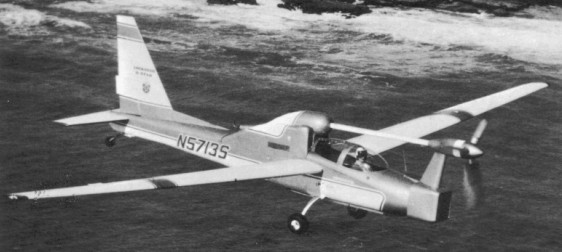
Faced with the military requirement for a quiet observation aircraft, Lockheed Missiles & Space Co. (LMSC) developed the “Q” Series Aircraft: QT-1 (conceived, but not constructed), QT-2 (N2471W and N2472W) later modified to QT-2PC configuration (#1 and #2), and Q-Star. Note: “QT: for Quiet Thruster.
The Q-Star Aircraft was LMSC’s “House Aircraft” for evaluating “quiet recon” concepts. Eighteen propeller/reduction systems and other items were evaluated. It flew early versions “Black Crow” Sensors and was the first aircraft to use a rotary combustion chamber (Wankel) engine for primary power.
Two Schweizer 2-32s (67-15345 and 67-15346) from the U.S. Naval Test Pilot School X-26 Program (USNTPS) were modified to QT-2 configuration (QT for Quiet Thruster) by the Lockheed Missiles & Space Co. (LMSC) and civil registered as N2471W and N2472W.
In 1967 the aircraft were modified by adding a Continental O-200 engine, V-Belt RPM reduction system, four-bladed fixed pitch wood (Fahlin) propeller, and airframe upgrades. The QT-2 first flew in August 1967.
After demonstrating quiet flight, the aircraft were again modified to military QT-2PC configuration, known only as Tail Numbers “1” and “2”, with GFE avionics and camouflage for night operation. They were successfully evaluated in Southeast Asia (Prize Crew OpEval) for covert (“stealth”) tactical airborne observation in the spring of 1968 (during Têt). Arriving in South Vietnam just before the 1968 TET Offensive, they accumulated approximately 600 hours flying exclusively tactical night missions during the first three-month deployment. They continued to operate in Vietnam during most of 1968 (Prize CrewII) and were then transferred to the Navy (NTPS Pax. R.) as X-26Bs in 1969. The QT-2PCs were the first military aircraft to use “Starlight Scopes”.
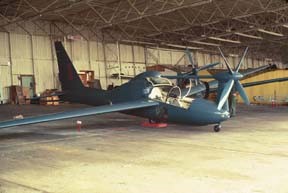
The two QT-2PCs were returned to USNTPS in 1969 and re-designated X-26Bs.
The #1 QT-2PC was re-designated “67-15345” and the #2 aircraft was used for spare parts.
The #1 ship is now at USAAM at Ft. Rucker, AL. The #2 ship QT-2PC N2472W was retro-verted to SGS 2-32 configuration and is operated by Mile High Gliders in CO.
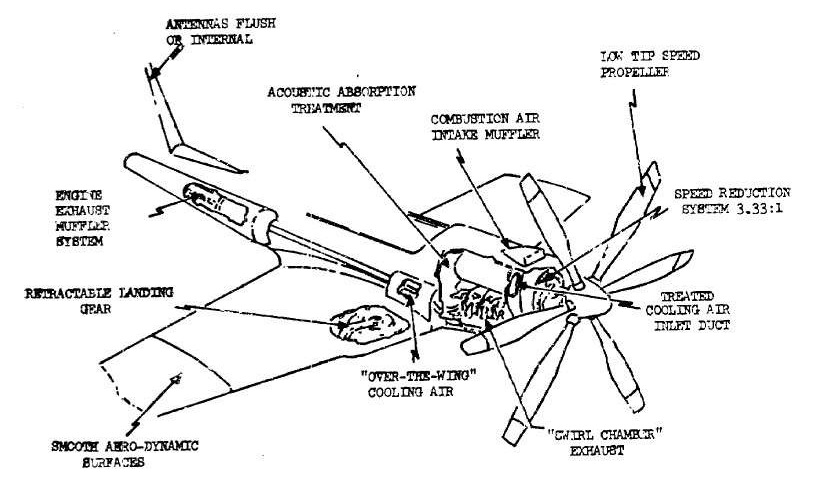
Lockheed Aircraft Corp. offered the rotating combustion engine its first chance to fly. Under a Navy contract, Lockheed was experimenting with ul¬tra quiet aircraft for undetected low altitude reconnaissance. Several air¬frame configurations, were developed culminating in the QT 3. Basically the QT 3 (QT for quiet thruster) consisted of a highly modified Schweizer 2 32 sailplane equipped with art amidship mounted Continental 100 horsepower engine turning a large slow turning propeller through a reduction drive and long overhead propeller shaft. The QT 3 yielded airframe and propellor noise so low that the most noticeable remaining sound was valve action in the engine. Endeavoring to eliminate valve noise, Lockheed’s engineers seized upon the RC engine since it has no valves, only ports.
Replacing the air cooled Continen¬tal with an RC 2 60 U5 liquid cooled engine required extensive reengineer¬ing. A Corvette aluminum radiator was grafted to the nose and redesigned reduction gearing was required. A 5.34/1, two stage ‘V’ belt reduction system reduced 6,000 rpm at the en¬gine down to 500 propeller rpm. Only 185 horsepower was used in the Q Star due to carburetor limitations. Nevertheless, power was increased by 85% with only a 6% increase in air¬frame weight. A three blade 90 100in constant speed propeller converted power to thrust. Laminated birch was used for blade material but at least one propeller had a balsa wood core covered with glass fibre.
Throughout the QT proj¬ect, Lockheed tested five 4 blade, two 6 blade, and two 3 blade props.
Flight testing revealed previously un¬attainable levels of quiet flight. Com¬pound muffling culminated in a discharge pipe pointing straight up. Re¬sidual noise was thereby directed away from the ground. As a test a Cessna 182 and the Q Star, both load¬ed to 2,600 pounds gross weight, were flown over the airport at 800 feet. The 182 was easily detectable by engine and propeller noise; Q Star was almost impossible to detect. Even at 400 feet the Q Star sounded only like leaves rustling in a light wind. In the cockpit, engine noise is similar to the hum of an electric motor and even then, most noise in the cockpit seemed to be aerodynamically originated.
Potential of the QT-2 / Q-Star was such that Lockheed produced a refined version for the US Army: The YO-3A.
Engine: 1 x Cont. IO-360, 154kW
Wingspan: 17.4 m / 57 ft 1 in
Length: 9.2 m / 30 ft 2 in
Wing area: 17.0 sq.m / 182.99 sq ft
Crew: 2
QT-2PC
Engine: 1 × Continental O-200, 100 hp (75 kW)
Propeller: Ole Fahlin four-blade, 8 inch chord, fixed-pitch 100 inch diameter
Wingspan: 57 ft 1.5 in (17.37 m)
Wing area: 185 ft² (16.7 m²)
Wing aspect ratio: 18
Length: 30 ft 9 in (9.33 m)
Height: 9 ft 3 in (2.74 m)
Loaded weight: 2,500 lb (kg)
Fuel Capacity: 20 gallons (nominal)
Service ceiling: 13,000 ft (m)
Rate of climb: 200 ft/min (m/s)
Quiet cruise speed: 70 – 80 mph
Wing loading: kg/m² (lb/ft²)
Flight endurance: Planned = 4+ hours; demonstrated = 6.7+ hours
Crew: two
Lockheed S-3 Viking

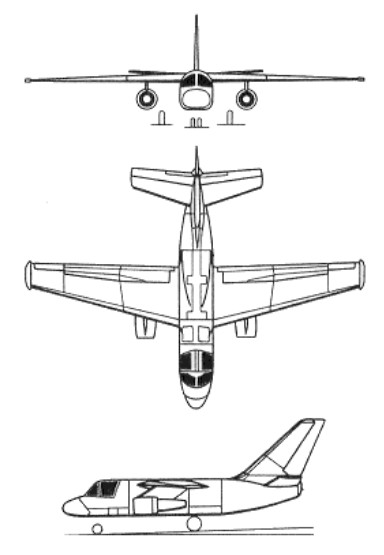
The S-3 is a carrier-based, subsonic, all-weather, long-range, multi-mission aircraft. It operates primarily with carrier battle groups in anti-submarine warfare roles. It carries automated weapon systems and is capable of extended missions with in-flight refueling.
The Viking’s primary flight controls are fully powered and are integrated with the automatic flight control system to relieve the pilot of routine anti submarine warfare manoeuvring. Primary flight controls are servo operated by dual hydraulic systems the loss of either hydraulic system results in the loss of half the available hinge moment. Reversion to manual control is automatic if both hydraulics are lost. In normal powered operation series inputs to the elevator and rudder servos compensate for pitching moments and provide turn co ordination and yaw damping. During autopilot operation parallel inputs to the power servos permit the pilot to, anticipate automatic manoeuvres.
The roll axis is controlled by short-span ailerons aug¬mented by differential spoilers mounted on the upper and lower surfaces of each wing. The servo actuators have artificial feel built in to minimise variations in manoeuvring forces throughout the flight envelope. Ailerons and spoilers act together for rolling, with the spoilers acting alone as airbrakes when required. During emergency manual opera¬tion when there is no hydraulic power the spoilers are inhibited and the control column operates only the ailerons.
The pitch axis is controlled by a hydraulically powered elevator servo; trim is via an electrically powered actuator. The elevator servo can be operated in normal powered, series or parallel modes. In the emergency manual mode, and in the normal powered mode, the servo is controlled by the pilot. In the series mode during manual approach with the approach power compensator on the servo is under the joint control of the pilot and the automatic flight control system.
Rudder control allows an engine failure to be coped with at low speed or following asymmetric stores release. The rudder servo, like that for the elevator, can operate: in normal power, series, parallel or emergency manual modes. During the fin folding sequence rudder pedal input to the rudder servo is disconnected to enable the pilot to continue steering the aircraft on the ground using the rudder pedals.
The first S 3A Viking was rolled out at Lockheed’s Burbank, California factory on November 8 1971 and was first flown on 21 January 1972. The S-3A Viking replaced the piston-engined Grumman S-2 Tracker and entered fleet service in 1974. The last production S-3A was delivered in August 1978.
Used exclusively by the US Navy (firstly VS-41 in February 1974), a total of 187 were built before production ended in 1978, these being powered by two 9,275 lb thrust General Electric TF34 GE 2 turbofan engines.
Lockheed received an initial contract in April 1986 to supply 22 production conversion kits to modify S-3As to upgraded S-3B standard. Two S-3As were modified by Lockheed in 1984/85 to serve as S-3B prototypes, the first flying on 13 September 1984. The S-3B incorporates increased acoustic processing, expanded ESM coverage, improved radar processing, a new sonobuoy reference system, and Harpoon ASM capability. The S-3B version can be fitted with buddy stores, external fuel tanks that refuel other aircraft, to act as an airborne tanker.
Sixteen S-3As were converted to ES-3A Shadows for carrier-based electronic reconnaissance (ELINT) duties.
The Lockheed US 3A Viking car¬rier on board delivery development aircraft, a version of the S 3A Viking, was flown for the first time on 2 July1976. Four US-3As are used for COD. A few units were also converted for utility and limited cargo duty, known as the US-3B, all of which were retired by 1998.
Since the submarine threat has been perceived as reduced Vikings have had their antisubmarine warfare equipment removed and are now used primarily for sea and ground attack, sea surface search, over the horizon targeting, and aircraft refueling. As a result, crews are now usually limited to two people, but three people crews are not unusual with certain missions. Navy plans called for the retirement of all Vikings by 2009.

On May 1, 2003, US President George W. Bush rode in the co-pilot seat of a Viking that landed on the aircraft carrier USS Abraham Lincoln, where he delivered his “Mission Accomplished” speech announcing the end of major combat in the 2003 invasion of Iraq. That Navy flight is the only one to use the callsign “Navy One”.
S-3A
Engines: 2 x General Electric TF34-GE-2 turbofan, 9275 lb (4207 kgp) thrust.
Wing span: 68 ft 8 in (20.93 m).
Length: 53 ft 4 in (16.26 m).
Height: 22 ft 9 in (6.93 m).
Wing area: 55.6 sq.m / 598.47 sq ft
Max take-off weight: 19280 kg / 42505 lb
Empty weight: 12070 kg / 26610 lb
Max. speed: 815 km/h / 506 mph
Cruise speed: 650 km/h / 404 mph
Ceiling: 11000 m / 36100 ft
Range w/max.fuel: 5700 km / 3542 miles
Crew: 4
S-3 Viking
Engines: 2 x General Electric TF-34-GE-400B turbofan engines rated at 9,275 lb thrust each
Length: 53 feet, 4 in
Wingspan: 68 ft, 8 in
Height: 22 feet, 9 in
Weights
Empty weight: 26,650 lb
Maximum takeoff weight: 52,539 lb
Speed: 518 mph
Ceiling: 40,000 ft
Range: 2,645 mi
Armament: Up to 3,958 lb
Crew: Four
Unit Cost: US$27 million
S-3B Viking
ES-3A Shadow
US-3A
US-3B
Lockheed L.186 / P-3 Orion / Canadair CP-140 Aurora
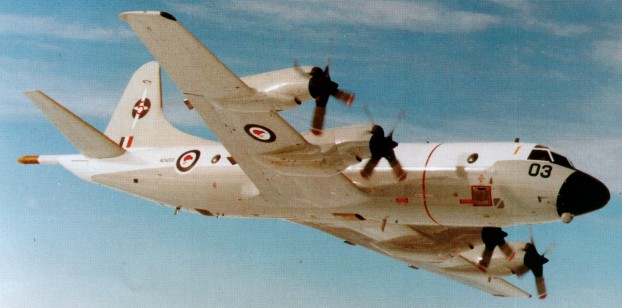
When in August 1957 the US Navy needed an advanced ASW/maritime patrol aircraft, it was suggested that a variant of a type then in production would be most suitable for this requirement. Lockheed proposed a developed version of the L-188 Electra, gaining an initial research and development contract on 8 May 1958.
Lockheed’s Model 186, which retained the wings, tall unit, power plant and other components of the commercial Electra, as well as much of the fuselage structure which was, however, shortened and provided with a 6.9m3 weapons bay, and there are 10 under-wing pylons for a variety of stores. The first Lockheed P 3 Orion, NP 3A BuNo 148276, was converted from the third L.188 Electra airliner by removing 7ft (2.1m) from the fuselage, flying from Burbank in August 1958. The air¬craft saw extensive use as an aero-dynamics test bed. It was eventually transferred to NASA.
Pressurised for the higher altitudes, the aircraft can operate from sea level, (usually 200ft minimum) up to 30,000 ft with a speed range from 140 to 405 knots. The engines are four x 4600 hp Allison turbo props with Hamilton Standard propellers. Maximum all up weight at take off is 14,500 lbs (6577 kg) higher than the original airliner at 127,500 lbs (57,800 kg) including a maximum of 60,000 lbs (34,000 lites) of fuel.
This was followed by the Lockheed YP3V-1 operational prototype, later named Orion, which first flew on 25 November 1959. The first production P3V-1 was flown on 15 April 1961, with initial deliveries being made to US Navy Patrol Squadrons VP-8 and VP-44 on 13 August 1962, by which time the type had been redesignated the P-3.

In August 1963 a US Navy crew flew a P-3A nonstop from California to Japan, 5280 miles, in 14 hr 30 min. After several demonstration flights it returned nonstop in 14 hr 5 min.
One hundred and fifty seven P-3As and 144 P-3Bs followed and production switched to the origi¬nal P-3C in 1968. P-3C is powered by 4,910 ehp (3 661 kW) Allison T56-A-14 turboprops. Progressive development of the P-3C’s systems through Update I and II has led to the production P-3C Update III model. The first P-3C Update III, with IBM Proteus acoustic processors, was delivered in May 1984. Update IV will improve the P-3’s ASW capability by the use of new acoustic processing systems and Litton AN/ALR-77 tactical ESM equipment. The P-3G would also feature Allison 501 turboprops in place of the T56-A-14s of the preceding model.
By 1994, production in Georgia was with wings built by Daewoo Aerospace in Korea and tail surfaces by Jetstream Aviation at Prestwick in Scotland, and remaining in production in the U.S.A. until 1995.
The first Kawasaki-assembled P-3C Orion was accepted by the Maritime Self-Defence Force at Gifu, Japan, on 27 May 1982. Flown for the first time on 17 March 1982, this aircraft was built from knocked-down components, and Kawwasaki was scheduled to deliver four more by March 1983. All were to be assigned to the 4th Air Group at Atsugi AB, near Tokyo.
Following the assembly in Japan of four P-3C aircraft from Lockheed-built components, Kawasaki produced the Lockheed Martin P-3C Orion for the JMSDF; 101st and final aircraft delivered in 1997, when four EP-3/UP-3D electronic intelligence/training variants remained to be delivered up to the year 2000.
Other export P-3s feature various equipment changes: Australian P-3Cs used Marconi Avionics AQS-901 acoustic processing; the 21 Canadian CP-140 / CP-140A Auroras have S-3 Viking avionics; and New Zealand’s P-3Bs are fitted with Boeing’s UDACS display and control consoles.
The US Customs Service became the first customer for Lockheed’s P-3 (AEW&C) airborne early warning aircraft in May 1987. These aircraft will have a reduced mission system suitable for their task, while the full AEW&C aircraft would have a General Electric AN/APS-138 radar and APA-171 rotodome above the fuselage, together with a M1L1553A communications and data handling system. During 1984 Lockheed converted an ex-RAAF P-3B to serve as the AEW&C prototype, featuring the dorsal “rotodome”.
Designated EP-3Es and converted from P-3As, twelve versions serve with the US Navy to provide electronic surveillance. The EP-3s are equipped with APS-120 radar plus extensive jamming, detection and analysis equipment.
The significantly upgraded Australian Orions, designated AP-3C, were introduced into service in 2002 and are fitted with a variety of sensors, including digital multi-mode radar, electronic support measures, electro-optics detectors (infra-red and visual), magnetic anomaly detectors, identification friend or foe systems, and acoustic detectors.
The major changes since the Orion entered service have been in avionics equipment and capability, and more than 640 have been built to 1989, with the type then continuing in production (at Marietta, Georgia) until 1995/56 for South Korea, who ordered eight P-3C Update Ills in December 1990. Other Orions were in service in Iran, the Netherlands, New Zealand, Norway, Pakistan, Portugal, Spain and NASA and NOAA.
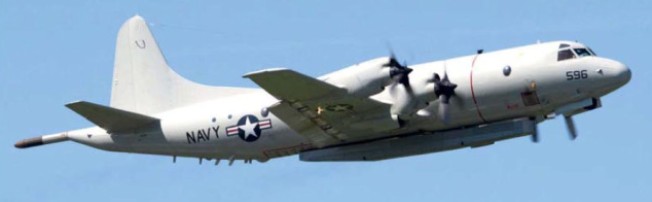
The last of 18 upgraded AP-3C Orions was formally handed over to the RAAF in 2005. The first upgrade was performed by L-3 Communications in the USA and the remainder by L-3 and then Tenix in Australia. The programme was completed four years behind schedule.
L-3 Communications re-delivered the first of six P-3Ks to the RNZAF with sensor, communications and navigation systems upgrades in July 2005.
P3V-1 Orion
Engines: 4 x Allison T56-A-10W, 4500 hp
Wing span: 99 ft 8 in
Length: 116 ft 8 in
Height: 33 ft 8 in
Wing area: 1300 sq.ft
MTOW: 125,500 lb
Max speed: 460 mph at 20,000 ft
Service ceiling: 27,000 ft
Endurnce -2 engines: 8 hr at 220 mph at 1000 ft
P-3B Orion
Engines: 4 x Allison, 4910 shp.
Wing span: 99 ft 8 in (30.37 m).
Length: 116 ft 10 in (35.61 m).
Height: 33 ft 8.5 in (10.29 m).
Max TO wt: 134,000 lb (60,780 kg).
Max level speed: 476 mph ( 765 kph).
P-3C Orion
Engine: 2 x Allison T56-A-14 turboprop, 4910 shp / 3661kW.
Installed thrust: 14,640 kW.
Wingspan: 30.38 m / 99 ft 8 in
Length: 35.61 m / 116 ft 10 in
Height: 10.27 m / 33 ft 8 in
Wing area: 120.77 sq.m / 1299.96 sq ft
Empty wt: 27,890 kg / 61492 lb
MTOW: 127,500 lb (57834 kg)
Heavywt model MTOW: 135,000 lb (61,236 kg).
Warload: 9070 kg.
Max speed: 476 mph @ 15,000 ft.
Cruise: 340 kt.
Initial ROC: 880 m / min.
Ceiling: 8600 m.
T/O run: 1290 m.
Ldg run: 845 m.
Fuel internal: 34,830 lt.
Max range: 4500nm.
Endurance: 3 hr on station.
Crew: 10
Air refuel: No.
Armament: 9000kg
P 3K
Engines: 4x Allison T56.
Length: 36m.
Wingspan: 30m.
Height: 10m.
Weight: 57,800kgs.
Max range: 7100kms (3850 NM).
Cruise speed: 260 750 km/hr.
Endurance: 15hrs with 2 engines shut down to conserve fuel.
Cruise speed: 195 205 km/hr.
Equipment: Rescue winch 270kg max load, nightsun search light, nightvision goggles.
Armament: 2 x M60D 7.62 machine guns.
Crew: 2 pilots, 2 flight engineers, 2 navigators, 1 air electronics officer, 3 air electronics ops, 1 air ordnanceman
Seating: up to 20.
NP 3A
EP-3E Orion
Engine: 2 x Allison T56-A-14 turboprop, 4910 ehp (3661 kW).
Lockheed Martin AP-3C Orion
Engine: Four Allison T56-A-14 (4600 shaft horsepower)
Length: 35.6m
Height: 10.44m
Wingspan: 30.8m
Maximum weight: 61,200Kg
Maximum speed: 750 km/h (405 knots),
Cruise speed: 650 km/h (350 kts) at 26,000 feet
Loiter speed:370 km/h (200 kts)
Endurance: 15 hours
Crew: 13, two pilots (captain and co-pilot), two flight engineers, tactical co-ordinator, navigator/communication officer, sensor employment manager, six airborne electronic analysts.
Lockheed P 3 Sentinel
Engine: 4 x T 56 A14, 3314 shp
Length: 116.798 ft / 35.6 m
Height: 33.793 ft / 10.3 m
Wingspan: 99.738 ft / 30.4 m
Wing area: 1300.291 sq.ft / 120.8 sq.m
Max take off weight: 142024.1 lb / 64410.0 kg
Weight empty: 61497.5 lb / 27890.0 kg
Max. payload weight: 80526.6 lb / 36520.0 kg
Max. speed: 410 kt / 760 km/h
Landing speed: 112 kt / 208 km/h
Cruising speed: 328 kt / 608 km/h
Initial climb rate: 1968.5 ft/min / 10.0 m/s
Service ceiling: 28297 ft / 8625 m
Wing loading: 109.27 lb/sq.ft / 533.0 kg/sq.m
Range: 2071 nm / 3835 km
Crew: 10

Lockheed P-2 Neptune

The first US Navy contract for two XP2V-1 Neptune maritime-reconnaissance bombers was placed in April 1944.
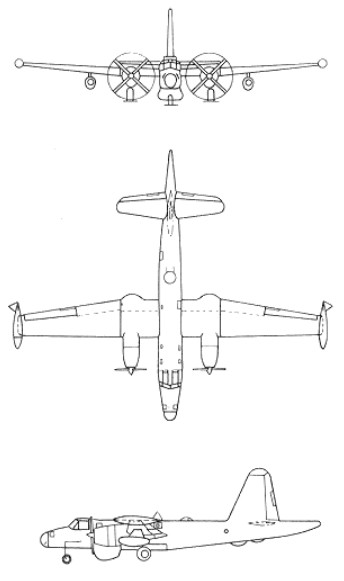
The P2V / P-2 has mid-set unswept wing, unswept tail surfaces, and conventional control surfaces. The ailerons drop 10 degrees when the Lockheed-Fowler flaps are fully extended. The tricycle undercarriage has a single wheel on each unit with the nosewheel retracting rearward and mains forward into the engine nacelles.

The first prototype flew on 17 May 1945. From then Lockheed received contracts for the P2V-1 to P2V-7 versions which were subsequently redesignated in the P-2 category.
Last versions in operational service were the P-2E (formerly P2V-5) which introduced the glazed nose, MAD tailboom, Julie/Jezebel ASW systems, etc, and later fitted with auxiliary underwing turbojets; SP-2E, as for the P-2E but with modernised equipment; P-2H, the first version to introduce auxiliary underwing turbojets and incorporating equipment and detail changes; and the SP-2H, as for the P-2H but with modernised equipment. These served with the Argentinian Navy (P-2H), Australian Air Force (SP-2H), Brazilian Air Force (P-2E), French Navy (P-2H), JMSDF (P-2H, and Kawasaki P-2J), Netherlands Navy (SP-2H), Portuguese Air Force (SP-2E) and the US Navy (SP-2H).
The USA supplied Britain with P-2 Neptune under the Mutual Defence Aid Pact. British Neptunes served in four squadrons from 1952 to 1957.
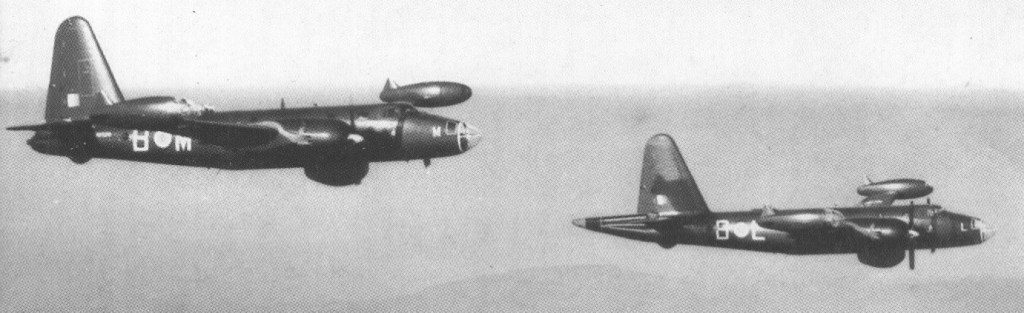

In 1946 US Navy Neptune ‘Truculent Turtle’ flew non-stop 11,229 miles from Perth, Australia, to Columbus, Ohio.
The P 2H Neptune was a variant used by the Maritime Patrol Command of the Canadian Armed Forces.
On 6 November 1951 a Lockheed P2V Neptune from VP-6 Squadron of the US Navy was shot down over the Sea of Japan near the Soviet naval base at Vladivostok. The Neptune, with a crew of 10 on board, was to have reconnoitred the weather near the Siberian coast.
On 18 January 1953 an American P2V-5 Neptune maritime reconnaissance aircraft was shot down by Chinese MiG fighters near (over?) the coastal town of Swatou, opposite Taiwan. All thirteen crew were killed. The number of occupants appears to be a little on the high side for a normal patrol flight. In those days it was not unusual for American aircraft to drop secret agents over the People’s Republic of China. Such ‘cover-flights’ were usually flown from Nationalist Chinese Taiwan.
On 4 September 1954 the third Neptune went down. A P2V-5 of the American Naval Squadron VF-19 was shot down by two Soviet MiG-15 over the Sea of Japan, about 40 miles from the Siberian coast. The Neptune, originating from Atsugi airbase in Japan, forced-landed in the sea after the attack. Nine of the ten crew escaped and were rescued later.
On 22 June 1955 Soviet jets attached an American P2V-5 Neptune from Patrol Squadron VP-9 over the Bering Strait. With the starboard engine on fire the Neptune had difficulty in fore-landing near Gambell on St. Lawrence Island, barely 60 miles / 100 km from the Soviet coast but United Stated territory. Three crew members were injured during the Soviet attack. Washington demanded compensation of $724,947 but later accepted a Soviet offer of half that.
A small number of P2V 2 and P2V 7 Neptunes were in service with ski landing gear for operations in the Antarctic.
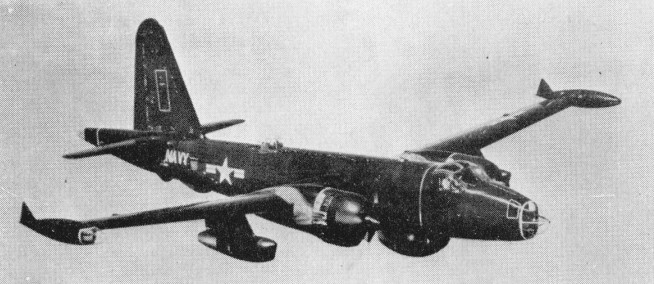
Kawasaki developed from the Lockheed P 2H Neptune a new ASW and maritime patrol bomber which has the designation P 2J. First flown in July 1966, the P-2J ¬differed from the P-2H in having a lengthened fuselage, and 2,850 ehp General Electric T64-1HI-10 turboprops replacing original piston engines, plus underwing 3,085 lb st (1400 kgp) J3-1H1-7C turbojets.
Entering service with the JMSDF in 1969, the last of`82 production aircraft was delivered in 1979. Sixteen P2V-7 were supplied from the USA before Japanese production began. Armament of the P 2J comprises up to 8,000 lb (3,628 kg) of bombs, depth charges, or tor¬pedoes carried internally, and 16 5 inch rockets underwing.
An approach in Vietnam was the monitoring of electronic sensors on the ground, the signals being received by the AP 2E Neptune.
Between 1945 and 1962, 1195 were manufactured.
The CIA purchased seven Lockheed P2V-7U Neptunes for the USAF for clandestine missions along the Iron Curtain and beyond. The US Navy had not wished to be involved but the Navy bought the aircraft and the USAF operated them, with USAF markings. The USAF stated at the time they were purchased as RB-69 radio trainers.
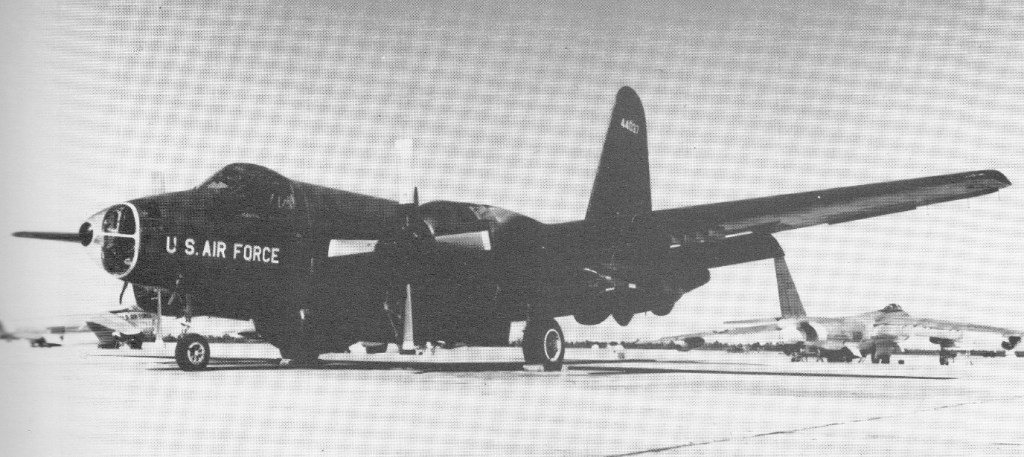
The RB-69 were converted by Lockheed into multi-purpose spying aircraft. They were able to perform low-level photographic reconnaissance, and with advanced ELINT equipment, electronic surveillance flights. Agents could be dropped through a panel in the belly, and tens of thousands of pamphlets could be dropped. Flights were planned from Eglin Air Base in Florida.
The USAF Neptunes were observed from 1957 in Taiwan, in Japan, and on Wiesbaden airbase in West Germany. From Wiesbaden the blue-black RB-69 flew with a number of additional bulges and with two pencil-shaped antennas alongside the fuselage. The aircraft carried the first sideways-looking radar system and operated until modified to ordinary SP-2H Neptunes for anti-submarine warfare.
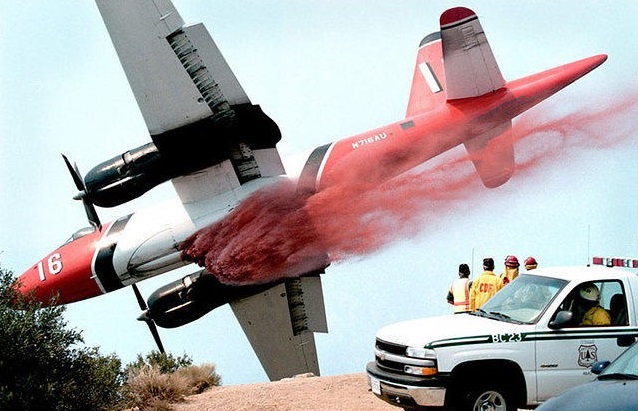
Hawkins & Powers enveloped civil conversions of C-130 and P2V-7 under TC A19NM, A30NM, and A34NM in the Restricted category as borate bombers for forest fire control.
P-2 Neptune
Engines: 2 x Wright R-3350-32W, 2575kW
Max take-off weight: 36191 kg / 79788 lb
Empty weight: 22592 kg / 49807 lb
Wingspan: 31.7 m / 104 ft 0 in
Length: 27.9 m / 91 ft 6 in
Height: 8.9 m / 29 ft 2 in
Wing area: 92.9 sq.m / 999.97 sq ft
Max. speed: 648 km/h / 403 mph
Ceiling: 6800 m / 22300 ft
Range w/max.fuel: 5930 km / 3685 miles
Armament: 2 x 12.7mm machine-guns, bombs, missiles, torpedos
Crew: 7
P2V-5 Neptune
Engines: 2 x Wright, 3250 hp.
Wing span: 102 ft 0 in (31.08 m).
Length: 81 ft 7 in (24.87m).
Height: 28 ft 1 in (8.56 m).
Max TO wt: 76,152 lb (34,542 kg).
Max level speed: 341 mph ( 549 kph).
P2V Neptune
Length: 91.667 ft / 27.94 m
Height: 29.331 ft / 8.94 m
Wingspan: 103.904 ft / 31.67 m
Max take off weight: 80085.6 lb / 36320.0 kg
Max. speed: 309 kts / 573 km/h
Service ceiling: 22014 ft / 6710 m
Range: 3202 nm / 5930 km
Engine: 2 x Wright R-3350-32W, 3452 hp
Crew: 7
Armament: 3630kg
P2V-7 Neptune
Engines: 2 x Wright R3350-30W Turbo-Cyclone 3,250 hp, 2 x Westinghouse J34 turbojets, 3600 lb
Wingspan: 103 ft. 10 in
Length: 91 ft. 8 in.
Height: 29 ft 4 in
Wing area: 1000 sq.ft
Empty weight: 49,808 lb
Loaded weight: 72,000 lb
Fuel capacity: 1832 gal
Opt bomb bay fuel: 583 gal
Crew: 7
Max speed: 421 m.p.h.
Ceiling: 31,000ft
Service ceiling: 22,000 ft
Range: 3,700 miles at 175 mph at 1000 ft
Armament: 2x.50 in. machine-guns later 4 x 20mm canon
Bombload: 2×294 mm. rockets or 8,000 lb; plus 16 x 5-in. rockets under wings.
AP 2E
Kawasaki P 2J
Wing span is 97 ft 8.5 in (29.78 m).
Max cruise: 250 mph (402 km/h).
 All Aero